Burgess on page and screen

Over at  Alex on Film I’ve posted my notes on the 2014 film Hellmouth, which was written by the lyric-surrealist horror maestro Tony Burgess. I thought Hellmouth looked great, but it wasn’t a strong story (and had nothing to do with The Hellmouths of Bewdley, Burgess’s first story collection).

Over the years I’ve reviewed a bunch of Burgess’s stuff, most of which I like a lot. I think he’s one of a handful of writers whose reputation  will last, mainly on the basis of books like Pontypool Changes Everything (loosely adapted into the film Pontypool), People Live Still at Cashtown Corners, and Ravenna Gets. Also under review is the bizarre YA meta-novel Idaho Winter, a Burgessian vision of the apocalypse in The n-Body Problem, and the Civil War zombie flick Exit Humanity (included because Burgess has a cameo).

Bava-rama

But which do you enjoy more, Christopher?

But which do you enjoy more, Christopher?

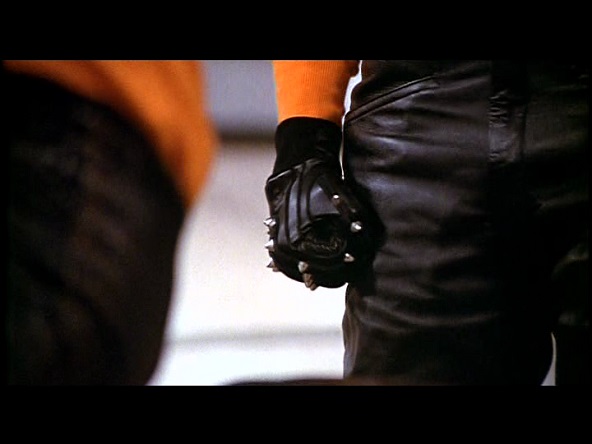
Over at Alex on Film I’ve been watching a bunch of movies directed by Mario Bava. Bava made a great deal of trash, but some classic trash as well, which is a status I don’t disparage.

Black Sunday (1961)
Hercules in the Haunted World (1961)
The Whip and the Body (1963)
Blood and Black Lace (1964)
Planet of the Vampires (1965)
Kill, Baby . . . Kill! (1966)
Hatchet for the Honeymoon (1970)
Five Dolls for an August Moon (1970)
A Bay of Blood (1971)

Se7enty Times Se7en, and the First of the Se7enty-First

There has to be a clue here somewhere . . . but what is it?

There has to be a clue here somewhere . . .

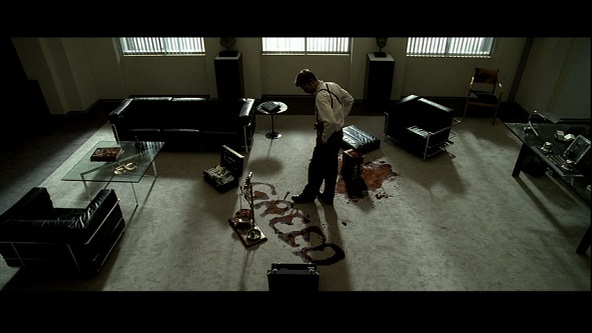
Over at Alex on Film I’ve added my notes on Se7en (1995). I’m not as big a fan of this movie as most people seem to be, and in my write-up I try to explain why. Chances are you’ll disagree.

I’m a little concerned at how extensive these film commentaries are getting. My original plan was to just write a few quick thoughts for each, but I find they’re often ending up running over 1,000 words (and my notes on Se7en are twice that). I have to start cutting back.

Psycho women from hell!

playmisty2

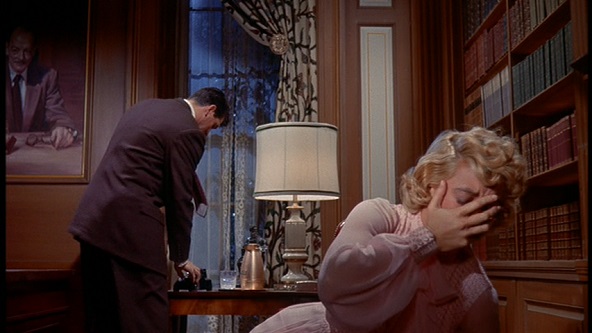
Over at Alex on Film I’ve been watching a bunch of movies about crazy ladies. Dangerous crazy ladies. Most of them fell into one of two categories: the brief-lived hagsploitation genre beginning with What Ever Happened to Baby Jane? and the sexual predator, probably most famously represented in Fatal Attraction. There are, however, outliers, and of course no two psychos are perfectly alike.

What Ever Happened to Baby Jane? (1962)
Hush . . . Hush, Sweet Charlotte (1964)
Pretty Poison (1968)
What’s the Matter With Helen? (1971)
Play Misty for Me (1971)
Whoever Slew Auntie Roo? (1972)
Fatal Attraction (1987)
Misery (1990)
Single White Female (1992)
Disclosure (1994)
To Die For (1995)
Gone Girl (2014)
The Babadook (2014)

We who are about to die . . .

Let the games begin.

Let the games begin.

Over at Alex on Film I’ve been checking out a number of f not-quite classic films dealing with the spectacle of violent entertainment in a dystopian future. First up are a couple of titles from the mid-’70s: Death Race 2000 and Rollerball. Next there’s a trashy Italian flick from Lucio Fulci: Warriors of the Year 2072. Then we have the Arnold Schwarzenegger vehicle The Running Man, and finally Battle Royale and Battle Royale II: Requiem. The first Battle Royale is considered a cult classic in some circles, but there’s a pretty strong consensus that Requiem is one of the worst sequels ever made.

An interesting question: With the ratings provided by sites like IMDb and Rotten Tomatoes I wonder if it could be determined with some polling accuracy what the worst sequel ever made was. Would you judge based on the score of the sequel, or the gap in score between the first film and the second? Troll 2, for example, is often considered one of the worst films (or “best worst films”) ever made, and at IMDb it has a score of 2.7. However, Troll (I’m taking this as the first Troll film even though Troll 2 really isn’t a “sequel”) only has a score of 4.3, for a gap of 1.6. Battle Royale, meanwhile, has a score of 7.7 and Requiem a score of 4.7, for a gap of 3.0. So is Requiem a worse sequel?

In any event, it’s an interesting theme that’s often been dealt with in speculative fiction: taking sports competition to what seems the logical next level. If sports are a proxy for the struggle for survival, why not cut out all pretense and embrace blood sports as our new bread and circuses? Most of these films are clearly forms of satire, pushing recognizable games and events that extra bit over the top. What over-the-top means, in each case, is murder. Because really, that’s the only place there is left to go.

Smooth as Sirk

writtenonthewind6

Over at Alex on Film I’ve been checking out a couple of Douglas Sirk melodramas (read: soaps) from the 1950s: Magnificent Obsession and Written on the Wind. I’m not a big fan, but I can see why Sirk’s reputation, at least among film scholars, has grown so much in recent years. These are movies that make you scratch your head. How seriously are we meant to take them? What cultural impact did they have, particularly on the forging of our Technicolor vision of a mythic 1950s America? And finally how did Rock Hudson, a dreamboat to be sure, become such a romantic star when he doesn’t possess an iota of sexuality? Were women that afraid of sex in the 1950s?

Reports on business

Over the past week I’ve been revisiting the 2007-08 subprime mortgage crisis, on page and on screen. A good place to start is Charles Ferguson’s documentary Inside Job, with more detail available in his companion volume Predator Nation. Also good as backgrounders are John Lanchester’s I.O.U. and (more journalistic) All the Devils are Here by Bethany McLean and Joe Nocera.

Hollywood has had several kicks at the can. The best, in my opinion, is Margin Call (2011), a taut drama focusing on character and condensing the crisis into the events of a single day. Oliver Stone’s Wall Street: Money Never Sleeps (2010) had a lot of potential, all of it unrealized. It’s a pointless sequel to an ’80s classic. Finally there is The Big Short (2015), a film based on Michael Lewis’s book of the same name. For some reason this film got rave reviews. I found it to be silly.

Ruination

A nice view from up there, but it's a bitch to get down.

A nice view from up there, but it’s a bitch to get down.

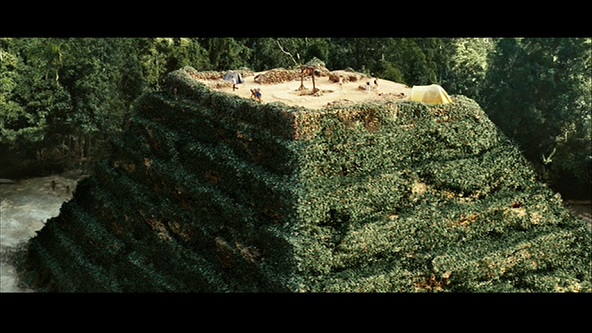
Over at Alex on Film I’ve added my notes on The Ruins (2008), a film based on a novel by Scott Smith that I reviewed when it came out. It’s one of the more original but also more ridiculous concepts for an American horror film from the past decade. That may not be a coincidence. Perhaps an original idea has to be kind of ridiculous, because otherwise someone would have already thought of it. Like a cursed videotape. Though I don’t want to give the book or the movie too much credit for breaking new ground. Man-eating plants are nothing new, and basically this is another variation on the tourists-in-trouble theme, and a cautionary tale for what might happen to you if you take the road less travelled.

The myth of the Marquis

I’m not a big fan of the writings of the Marquis de Sade. He seems long-winded, obsessive, and simple-minded to me. I’m also not a fan of the man himself, for what I think should be obvious reasons. He has, however, become a mythological figure, and not just in popular culture. In films like Peter Brook’s Marat/Sade (1967) and the more recent Quills (2000), we see him as a sexy rebel figure, representative of the counterculture’s struggle against authority. But even today’s biographers find him sympathetic. Francine Du Plessix Gray’s At Home With the Marquis de Sade and David Carter’s brief Marquis de Sade both seem to me to be overly apologetic. I don’t think we have to burn de Sade, but at the same time I don’t think we should romanticize him. That we continue to do so says a lot about our us and our need for a certain kind of hero. Who knew we were still so repressed?

Pirates!

seahawk2

Over at Alex on Film I’ve been watching pirate movies. The pirate movie is a very conventional genre, quite limited in its necessary elements, and one that has only enjoyed a couple of Hollywood heydays. I think this is because a pirate movie is such an expensive proposition. You can’t do a pirate movie on the cheap. As for measuring up Errol Flynn and Johnny Depp, to each their own. I like the earlier films more, though I can appreciate the professionalism of the Pirates of the Caribbean franchise. It’s just that they seem so much.

The Black Pirate (1926)
Captain Blood (1935)
The Sea Hawk (1940)
The Black Swan (1942)
Pirates of the Caribbean: The Curse of the Black Pearl (2003)
Pirates of the Caribbean: Dead Man’s Chest (2006)
Pirates of the Caribbean: At World’s End (2007)

piratesofthecaribbean1