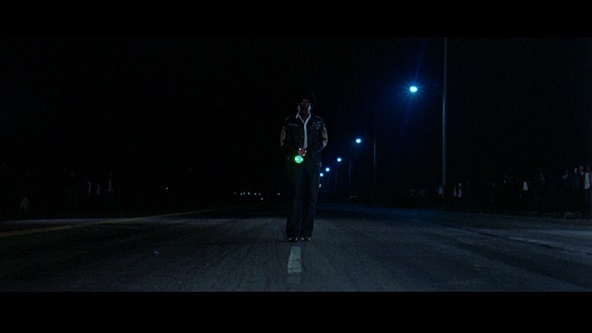
Over at Alex on Film I’ve added some notes on a few entries from the curious Prom Night franchise. Curious for two reasons: (1) all of these movies were terrible, and in no need of a sequel or re-set; and (2) they’re each terrible in their own way. I didn’t look at all of the Prom Night movies, but only the original Prom Night (1980), the first sequel, Hello Mary Lou: Prom Night: Prom Night II (1987), and the re-set Prom Night (2008). The first is a derivative and poorly constructed slasher pic, the second (which has no relation to the first) is a Nightmare on Elm Street rip-off, and the third is a surprisingly tame and totally uninspired re-set, the violence watered down so as to receive a PG-13 rating.
watching movies
Our Miss Julie
Over at Alex on Film I’ve added my notes on two adaptations of August Strindberg’s play Miss Julie. The first is the 1951 Swedish version directed by Alf Sjöberg, which takes greater liberties with the text but is a more satisfying film. The 2014 version directed by Liv Ullman and starring Jessica Chastain and Colin Farrell is good, but finally seems to me to be less contemporary. Which is odd given that is was made over sixty years later. There’s an angry, nasty edge to Strindberg that both films miss. But it’s Strindberg’s Miss Julie who I still seem to run into the most.
Gangsters!
Over at Alex on Film I’ve spent the last few months watching gangster movies. Or crime movies. Or tough-guy movies. Pick your label. I’ve included links below to my notes on all the ones I covered. The dates tell a story. The golden age was the 1930s, and for a couple of decades after that the genre virtually disappeared, only to be revived by the New Wave and the New Hollywood. In later years style would overwhelm substance, turning the gangster into a fashionable form of costume drama (The Untouchables, Public Enemies). I’ve included a lot of the greatest hits, as well as some less well-known gems that are worth searching out (Caliber 9 being perhaps the best of these). Other titles on the list include some that are, in my eyes, wildly overrated (Once Upon a Time in America) or just terrible (Savages). Enjoy!
The Musketeers of Pig Alley (1912)
Little Caesar (1931)
The Public Enemy (1931)
Smart Money (1931)
Scarface (1932)
The Petrified Forest (1936)
A Slight Case of Murder (1938)
The Amazing Dr. Clitterhouse (1938)
The Roaring Twenties (1939)
High Sierra (1941)
Dillinger (1945)
Key Largo (1948)
White Heat (1949)
Bonnie and Clyde (1967)
Point Blank (1967)
Get Carter (1971)
Caliber 9 (1972)
The Italian Connection (1972)
The Boss (1973)
The Friends of Eddie Coyle (1973)
Mean Streets (1973)
Rulers of the City (1976)
The Long Good Friday (1980)
Scarface (1983)
Once Upon a Time in America (1984)
The Untouchables (1987)
The Killer (1989)
Miller’s Crossing (1990)
Bugsy (1991)
Reservoir Dogs) (1992)
Hard-Boiled (1992)
Killing Zoe (1993)
La Scorta (1993)
Casino (1995)
Jackie Brown (1997)
Donnie Brasco (1997)
Lock, Stock and Two Smoking Barrels (1998)
The Limey (1999)
Sexy Beast (2000)
Get Carter (2000)
Infernal Affairs (2002)
Sin City (2005)
The Departed (2006)
Payback: Straight Up (2006)
American Gangster (2007)
In Bruges (2008)
Public Enemies (2009)
Savages (2012)
Parker (2013)
Sin City: A Dame to Kill For (2014)
Boldly going
Over at Alex on Film I’ve added notes on a few of the Star Trek films. I grew up on the TV show and, for better or worse, it’s always going to be a big part of my mental make-up. That said, the movie franchise has been disappointing, starting with Star Trek: The Motion Picture (1979). This was followed up by Star Trek II: The Wrath of Khan (1982), which is the only one of these movies I can re-watch with any enjoyment. More recently the franchise has “re-set” with a couple of movies by J. J. Abrams: Star Trek (2009) and Star Trek: Into Darkness (2013). Despite being well cast, these are just generic twenty-first century effects movies, and didn’t interest me at all.
On the road, again and again
Over at Alex on Film I’ve added my notes on three classic counterculture road movies: Easy Rider (1969), Vanishing Point (1971), and Two-Lane Blacktop (1971). Easy Rider is the best known today, but mostly for its historical significance. It’s really not a very good movie, though still watchable. Vanishing Point I find the most interesting. Two-Lane Blacktop has Warren Oates as GTO, and not much else going for it. But that’s enough.
Charters and Caldicott on the case
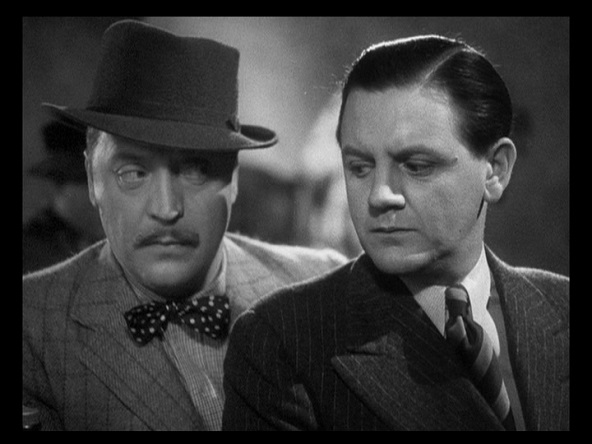
Over at Alex on Film I’ve added my notes on the first three movies featuring the not-quite-dynamic duo of Charters and Caldicott (played by Naunton Wayne and Basil Radford): their debut in The Lady Vanishes (1938), the follow-up Night Train to Munich (1940), and finally as the stars in Crook’s Tour (1941). They were very popular at the time, but quickly disappeared. In the 1980s they had their own BBC series but it only ran for one season and I had never heard of it before I started doing some research. Perhaps they were just a wartime phenomenon, or perhaps they just never grew up enough. They remained a charming couple, but representatives of a limited type. In a supporting role, however, they had a certain magic presence.
News coverage
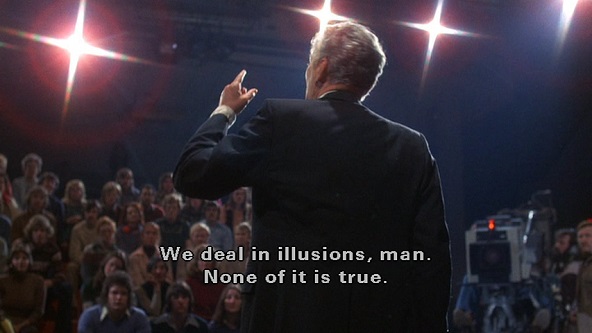
Over at Alex on Film I’ve finished a miniseries of updates on movies about the news industry. Hollywood doesn’t like television, and has always been cynical about the news (being expert on the construction of reality in the media). Starting things off is Ace in the Hole (1951), Billy Wilder’s satire on the extremes a fallen newsman will take to get back in the game. Next up is Network (1976), which still holds up pretty well thirty years later as a vision of where things were heading. Then there’s To Die For (1995), which has a great lead performance from Nicole Kidman and a slick documentary-style presentation that covers up for a fairly conventional story of aspirations gone too far. I didn’t think Anchorman: The Legend of Ron Burgundy (2005) was funny at all, and have trouble seeing why it was such a hit. But that’s often the way it is with comedy. Finally, Nightcrawler (2014) is an effective portrayal of psychopathy, and I think the first movie I’ve really liked Jake Gyllenhaal in.
The Taking of Pelham: Once, Twice, Thrice
I’m sure David Godey (Morton Freedgood) knew his pulpy novel was likely to end up on the big screen, but three times? The latest coming out thirty-five years after the first?
Luckily, subways don’t date as much as other forms of transportation and technology, so they could keep going back to the same well. Lining them up, the original 1974 version is still clearly the pick of the crop. How can you beat Walter Matthau playing off against Robert Shaw? You can’t. The 1998 TV-movie isn’t bad, but is pretty limited. And the 2009 Denzel Washingon-John Travolta pairing is a real disappointment.
Rape-revenge
Added my notes on Ingmar Bergman’s The Virgin Spring (1960) over at Alex on Film. Was this the original rape-revenge film? Probably not, although it may be the most prominent and best known. It was the direct inspiration for Wes Craven’s The Last House on the Left (1972), which is essentially a contemporary remake. For some reason the 1970s were thick with such films, with titles like Straw Dogs (1971), Thriller: A Cruel Picture (1973), Death Wish (1974), Death Weekend (1976), and I Spit On Your Grave (1978). For those who like to mix art with evolutionary psychology, I guess the power of these stories is obvious enough, though I’m still not sure what it was about the ’70s that unleashed such anger.
For more of this kind of stuff, here’s a follow-up.
Cold cases
Added my notes on Fargo (1996) and A Simple Plan (1998) over at Alex on Film. They’re both good movies, but I can’t shake the feeling that the Coen brothers and Raimi see their characters as rubes.