For God’s sake, get out!

More than a fixer-upper.

More than a fixer-upper.

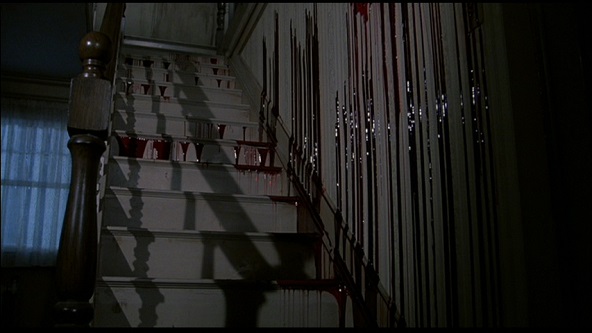
Over at Alex on Film I’ve been revisiting the Amityville Horror franchise, a series of terrible movies whose success is made all the more depressing by the fact that they were based on a tragic true story — by which I mean the DeFeo family murders, not the subsequent “haunting.”

The Amityville Horror (1979) is crap, but has some camp value today thanks mainly to James Brolin’s performance. Amityville II: The Possession (1982) is better made but is still crap, though it’s enlivened by a bizarre incest subplot. Amityville 3-D (1983) is in 3-D. The Amityville Horror (2005) is a fairly typical twenty-first century franchise reset. Casting Ryan Reynolds as George might have given things a boost, but it’s a gamble that doesn’t work. He just seems out of place.

The Russian Revolution on film

Will you join in their parade?

Will you join in their parade?

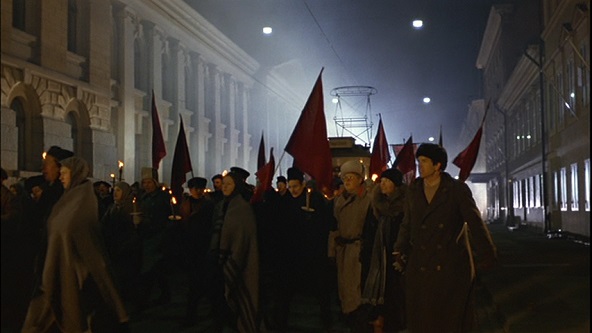
2017 marks the  hundredth anniversary of the Russian Revolution. For many, this remains a divisive historical event. Following some of the commentary about it online one can, surprisingly, still find those who defend it. Most of these take the position that (1) it overthrew a despotic political system, (2) it gave birth to a communist state that was able to beat Hitler, and (3) it provided an alternative to global capitalism. True enough, but the tsarist system was dying anyway and wasn’t nearly as despotic as what came after, Hitler’s Russian campaign was probably doomed from the start, if we’re playing historical counterfactuals, and as for being an alternative to capitalism, look at Russia today. Or China.

In any event, over at Alex on Film I’ve been watching some movies on the subject. First up is La révolution en Russie (1906), a short Pathé Frères docudrama that deals with the same events as Eisentstein’s Battleship Potemkin (1925). It makes for an interesting comparison, though more for what it says about the evolution in film during this period than for its status as a historical document. Next up is October: Ten Days That Shook the World (1928), Eisenstein’s film loosely based on John Reed’s account of the October Revolution and the events leading up to it. And finally we have Reds (1981), Warren Beatty’s biopic of Reed, covering a lot of the same ground. All of these films, even the 1906 short, are sympathetic, if not propagandistic, about the Revolution. Would we make the same movies today, after the collapse of the Soviet Union? How much, politically and ideologically, has our world changed?


Paranormal Activities

It's hard to go wrong with such a classic look.

It’s hard to go wrong with such a classic look.

Over at Alex on Film I’ve been watching the first three Paranormal Activity movies — unimaginatively titled Paranormal Activity (2007), Paranormal Activity 2 (2010), and Paranormal Activity 3 (2011). They went on to make more, but I just wanted to look at the original trilogy because I think they work well as a self-contained series. And overall, I have to say they’re pretty good movies.

Bad-ass lawmen

On the whole, I think I've had a fortunate life, yes. Happy? Not so much.

On the whole, I think I’ve had a fortunate life, yes. Happy? Not so much.

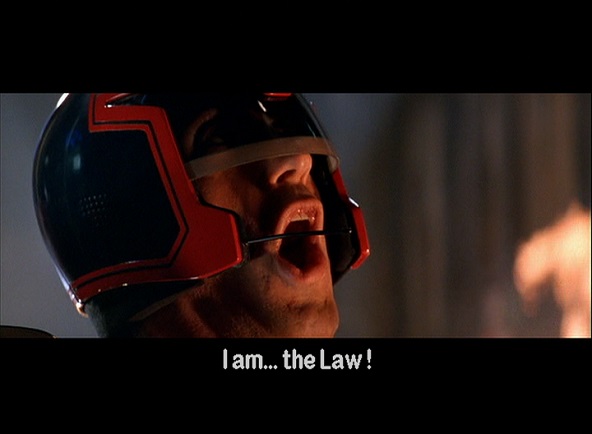
Over at Alex on Film I’ve been watching a bunch of movies about tough cops who break the rules but get results. It’s rough justice, Hollywood style. The popularity of such films taps into myths of the frontier and even deeper yearnings for some kind of divine sanction from superhuman embodiments of the law. That’s at least one way of explaining the phenomenon. I don’t think the box office and longevity of the various franchises reviewed can be attributed to the quality of the movies themselves. For the most part, they’re pretty bad.

Bullitt (1968)
Dirty Harry (1971)
Walking Tall (1973)
Magnum Force (1973)
The Enforcer (1976)
Sudden Impact (1983)
Lethal Weapon (1987)
RoboCop (1987)
The Dead Pool (1988)
Lethal Weapon 2 (1989)
RoboCop 2 (1990)
Lethal Weapon 3 (1992)
RoboCop 3 (1993)
Timecop (1994)
Judge Dredd (1995)
Lethal Weapon 4 (1998)
Dredd (2012)
RoboCop (2014)

judgedredd1

More rape, more revenge

ispitonyourgrave13

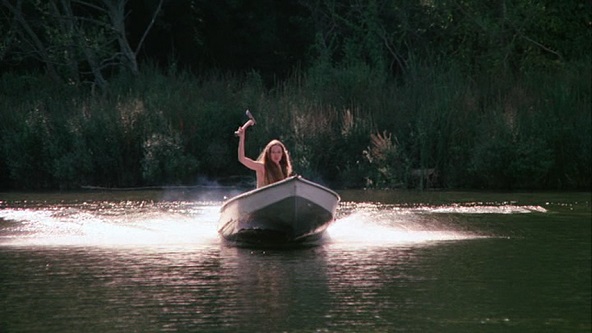
As a follow-up to my earlier post on rape-revenge movies, I’ve spent the last week over at Alex on Film watching some more. Included are I Spit on Your Grave (1978), Ms. 45 (1981), Baise-moi (2000) and I Spit on Your Grave (2010). I guess the original I Spit on Your Grave has some claim to our attention, being one of the most controversial films ever made. And Ms. 45 is actually pretty interesting in a number of ways. The other two should be avoided.

Update, July 31 2001:

Might as well post links here to a couple of more recent reviews I’ve done: Revenge (2017) and Promising Young Woman (2020).

Poltergeists

Over at Alex on Film I’ve posted my notes on Poltergeist (1982) and its 2015 remake.

In general, these twenty-first century remakes of horror classics from the ’70s and ’80s have been terrible. The 2015 version of Poltergeist is pretty bad too, but . . . it’s better than the original. I’m honestly shocked at how many people still think the Tobe Hooper/Steven Speilberg version was any good. I didn’t like it much when it first came out, and re-watching it (for what I think was the first time in thirty-plus years) I thought it was even worse. It’s downright laughably bad.

Is it just that people remember it as being good and are holding on to some vision of it that imprinted on them when they were children? That happens a lot, not just with movies we’ve seen but books that we’ve read decades ago and never returned to. In the case of Poltergeist, I’d advise anyone with fond memories of the original not to go back.

Burgess on page and screen

Over at  Alex on Film I’ve posted my notes on the 2014 film Hellmouth, which was written by the lyric-surrealist horror maestro Tony Burgess. I thought Hellmouth looked great, but it wasn’t a strong story (and had nothing to do with The Hellmouths of Bewdley, Burgess’s first story collection).

Over the years I’ve reviewed a bunch of Burgess’s stuff, most of which I like a lot. I think he’s one of a handful of writers whose reputation  will last, mainly on the basis of books like Pontypool Changes Everything (loosely adapted into the film Pontypool), People Live Still at Cashtown Corners, and Ravenna Gets. Also under review is the bizarre YA meta-novel Idaho Winter, a Burgessian vision of the apocalypse in The n-Body Problem, and the Civil War zombie flick Exit Humanity (included because Burgess has a cameo).

Bava-rama

But which do you enjoy more, Christopher?

But which do you enjoy more, Christopher?

Over at Alex on Film I’ve been watching a bunch of movies directed by Mario Bava. Bava made a great deal of trash, but some classic trash as well, which is a status I don’t disparage.

Black Sunday (1961)
Hercules in the Haunted World (1961)
The Whip and the Body (1963)
Blood and Black Lace (1964)
Planet of the Vampires (1965)
Kill, Baby . . . Kill! (1966)
Hatchet for the Honeymoon (1970)
Five Dolls for an August Moon (1970)
A Bay of Blood (1971)

Se7enty Times Se7en, and the First of the Se7enty-First

There has to be a clue here somewhere . . . but what is it?

There has to be a clue here somewhere . . .

Over at Alex on Film I’ve added my notes on Se7en (1995). I’m not as big a fan of this movie as most people seem to be, and in my write-up I try to explain why. Chances are you’ll disagree.

I’m a little concerned at how extensive these film commentaries are getting. My original plan was to just write a few quick thoughts for each, but I find they’re often ending up running over 1,000 words (and my notes on Se7en are twice that). I have to start cutting back.