Over at Alex on Film I just finished watching the trilogy of Robert Langdon films based on the novels of Dan Brown: The Da Vinci Code (2006), Angels & Demons (2009), and Inferno (2016). Since I can’t tell you what made the books so popular I sure can’t help with the movies. The weird thing is that they don’t even seem like good popcorn entertainment to me. They’re all very dull and talky, and despite throwing in so many highbrow references they’re unbelievably stupid. Is this the sort of nonsense people want to believe in? Yikes.
Author: Alex Good
You talkin’ to me?
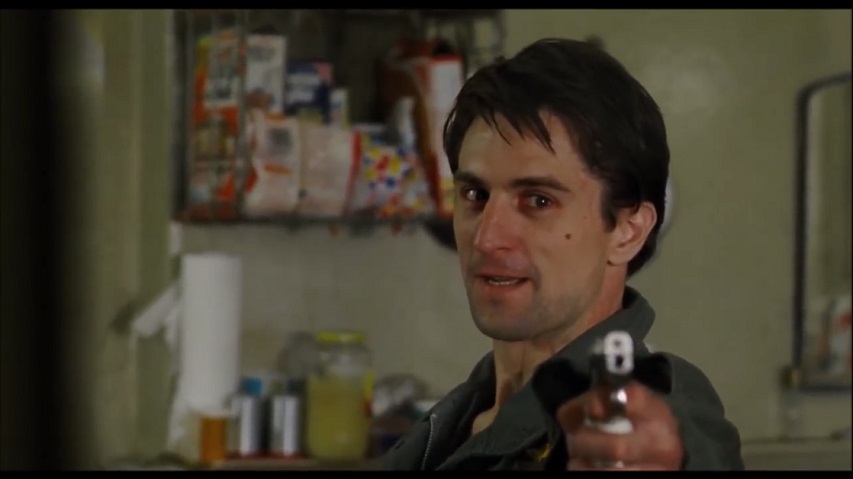
Over at Alex on Film I’ve posted my 100th movie quiz, which is also going to be my last for a while. It’s time to take a break. But I tried to celebrate the centenary in style by giving you a hundred films to identify. Plus you can always check out the quiz archive if you want to test yourself with some of the previous postings. They range in difficulty from the pretty easy to the nearly impossible.
Blockbusters then and now
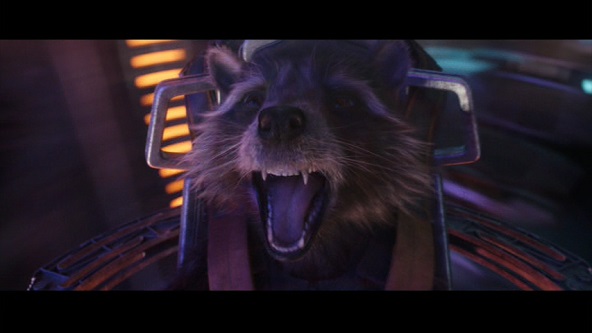
Number one with a bullet.
Ranking the highest-grossing films of all time is a tricky business because a lot depends on what you include with the gross. Theatrical revenue only? Domestic and foreign? DVD sales? Television rights? Merchandising deals? Not to mention how you want to adjust the numbers for inflation.
By most rankings, however, Avengers: Endgame is near or at the top of the list. I just finished watching Endgame and Avengers: Infinity War over at Alex on Film, and in my notes I did a bit of musing about what the success of the Marvel Cinematic Universe says about us.
But something else I found interesting when considering the different lists of box office hits was my own drift away from such fare. Gone With the Wind is a movie I’ve seen a number of times, and while I can’t say I really love it, it is a movie I find I can come back to. Same with Star Wars and Jaws. Titanic I can defend, but it’s not a movie I’d want to ever see again. Avatar I couldn’t sit through once. The rest of the comic book nonsense from the past decade that so dominates the “highest-grossing movies of all time” club bounces off me completely.
I’d just say this is because I’ve gotten old, but the thing is, these movies apparently appeal to older audiences as well. And while Star Wars and Jaws were certainly movies that had a big appeal among young people, I don’t find them as downright childish as the formula we get in Avatar or Endgame.
Childish and stupid. Let’s face it, these are dumb movies. They are effects extravaganzas, where you’re supposed to just turn your brain off and have a good time. There was always at least a little more going on in the blockbusters of thirty or forty years ago.
Two questions then. Will history judge us kindly, assuming movies as we know them have a future? And where do we go from here?
Highs and lows
Every year I go to the annual Friends of the Guelph Public Library Giant Used Book Sale. Three years ago I posted some thoughts on the experience where I referred to the sale as “both fun and a bit depressing.” That was my feeling again this year.
The fun part was the same. It really is heartening to see so many people, especially so many young people, lining up to buy books. I know that in the grand scheme of things these crowds don’t add up to much, but they still give one hope.
The depressing bit was something new. For a while now I’d been hearing of cellphone apps that allow you to scan the bar code on a book and pull up prices, either from some online bookseller or price aggregator. This year’s book sale, however, was the first time I’d seen these in action. At the table where I was spending most of my time there were three individuals simply going through everything: pulling a book out, scanning the bar code with their phones, looking quickly at the screen, and then either putting the book in one of their boxes or tossing it back on the table. They worked very quickly, able to do all the scanning and scrolling functions on their phones with one hand while pulling the books with the other.
I get that the used book trade is a business and that this is what apps are for: making things quicker and more convenient. Still, the way these guys worked a table, like the filleters working on the line at a fish processing plant, was depressing. Here was the digital economy moving in, jackal-like, to further cannibalize the remains of our culture. Its foot soldiers were robotic. Quite obviously they didn’t have any interest in the books they were methodically scanning. I’m not sure they could have told you what section of the sale they were working at the time. They were just doing data entry.
But while whatever program they were using to get a quick price check might serve as a rough guide, the fact that they didn’t really know the merchandise meant they were probably missing out on a lot. A couple of years ago I found a book at this same sale that I picked up for a dollar. I later saw it advertised online for over $800. And it wasn’t a copy in as good shape as the one I got! (By the way, it really was just curiosity that led me to check out what it was going for online. I didn’t resell it. I still have it sitting in my “to-read” pile.) The thing is, I found that book on the third day of the sale, after the book scouts and used-book buyers had already been through.
The same thing was happening this year. I thoght the book scanners were missing a lot, whatever their app might have been telling them. This made me think of something David Mason, a veteran used-book seller, had to say in the most recent issue of Canadian Notes & Queries:
Supposedly the great equalizer, the internet is in fact the worst offender against informed judgment . . . An experienced dealer looking at internet entries nowadays often finds five to ten copies of a book offered by dealers they’ve never heard of before they see names they know and credible prices. It takes just one ignorant fool putting a ludicrous price on a book to give other ignorant fools something to copy. They usually price their own copy ten percent or so less, assuming they’re being clever, when what they’re really doing is adding to the general ignorance. The blind lead the blind into the bog of imbecility, all of which makes the internet a dangerous cesspool.
Sadly, I don’t think anyone cares about the internet being a cesspool as long as it’s a profitable cesspool. The question is how well, in a business like this, such an approach really works.
Federal election 2019: After
Back again to comment on the 2019 federal election. A week ago I offered up my thoughts on how things were developing, concluding with the following prediction:
What I think will happen is that the Liberals will hold on with a minority government, perhaps due mainly to an anti-Ford vote in Ontario and stronger support in Quebec. The NDP will be nearly wiped out. The Greens will see a significant increase in their vote, though I doubt it will result in many (if any) seats.
I got some of this right. The Liberals did get back in, this time with a minority. And this was mainly due to their strength in Quebec and Ontario (and more specifically the GTA). Much of Quebec, however, went for the BQ. The NDP weren’t wiped out, but lost a lot of seats. They still tried to put a positive spin on things though by claiming that, while diminished, they will hold a balance of power in the new parliament.
One observation I’d make is that we are becoming a more regionally divided nation, which I see as being a sort of work-around of the archaic first-past-the-post electoral system. The Liberals were crushed in the West, all but disappearing from the map, but it made little difference. The Conservatives actually won the popular vote, but still lost handily. The Greens received 6.5% of the popular vote and ended up with 3 seats. The Bloc Québécois got 7.7% of the vote and 32 seats. This is the FPTP system at work.
As I said in my previous post, I didn’t think the party leaders were an inspiring group. Despite this, it looks as though Elizabeth May will be the only leader stepping aside. Inertia is taking over, as it so often does in Canadian politics. Our leaders have a habit of overstaying their welcome.
Perhaps I’m just old and jaded, but I didn’t see a big difference among the various parties. I studied a primer on their various platforms before voting and was surprised at how ill-defined they were. And what was defined struck me as being largely without meaning. Conservatives complained that a carbon tax would be ineffective, which I’m sure it will be. But at least it’s something. The Conservative position on the environment was a joke, saying they would meet greenhouse gas reduction targets but giving no idea how. But then I’m sure the Liberals will fail at meeting these targets as well.
On most other issues it was the same. A national pharmacare program sounds like a good idea, but the Liberals only said they want to work toward it while the Conservatives dismissed it entirely. The Liberals and NDP were OK with letting deficits grow while the Conservatives promised to reduce them. This is something I’m sure they would not be able to do, but I suspect they would have made at least some of the cuts they promised to government programs.
Immigration was supposed to be a hot-button issue but only the People’s Party tried to run with it. And the People’s Party went nowhere. The other parties were all vague on the matter.
I take it election reform is totally dead. Elizabeth May waited until the day before the election to declare that if the Green party were elected then hers would be the last federal government in Canada chosen by the first-past-the-post system. And where had I heard that before?
Like I say, perhaps this is all just me being jaded. Or something. When I filled in a questionnaire that sought to identify my political preference based on my feelings toward a catalogue of issues I wound up in a quarter of the political spectrum that none of the parties identified with (that is, socially conservative and economically left-wing). But then this position, which I would identify with an “old left,” is one that has increasingly come to feel abandoned.
A final note: For what I believe is the fourth election (federal and provincial) in a row the Green Party were the only party in my riding to do any door-to-door canvassing for votes. And they came by my place twice. So basically the other parties have just given up on this. Are they putting all their resources into social media? I wonder how that’s working out for them.
Looking ahead I don’t see anything to feel good about. Essentially we’re in for more of the same. I don’t see anyone being in a rush to trigger another election and I don’t think the Liberals ran on much of a platform to actually do anything. We didn’t vote for change and we’re not going to get any.
Like hell

France, 1916.
One of the most common comparisons you’ll hear made by reporters and commentators on news programs is that some natural or human disaster is “like something out of Dante’s Inferno.” I don’t think the people invoking Dante like this have actually read the Inferno, or are familiar with the illustrations by Gustave Doré that have done so much to shape the way we visualize the poem. Instead, what is usually meant is something hellish. Meaning lots of flame, and possibly dead bodies. This despite the fact that the lowest levels of hell in Dante are actually frozen over.
It was not always thus. In World War One, during the battle of Verdun, an American aviator could be more precise:
During heavy bombardments and attacks I have seen shells falling like rain. Countless towers of smoke remind one of Gustave Doré’s picture of the fiery tombs of the arch-heretics in Dante’s “Hell.”
Now this is the way a classical analogy is supposed to work. Dante’s Inferno actually varies quite a bit between its different levels, in terms of the landscape and the punishments meted out. Here, however, the comparison being made is exact: to the sixth circle and the flaming tombs of the heretics. If one knows Doré’s illustrations one can understand, can see, what the airman is talking about.
Today hell is just hell, whether Dante’s or Doré’s or whoever’s. It’s become more generic. This is both a cultural leveling and a leveling of the imagination. We’re poorer for it.
Evil in residence

One of many Alices. This time with two guns.
Over at Alex on Film I’ve been grinding my way through the chaotic labyrinth that is the Resident Evil film franchise. As I point out in my notes, at some point writer-director Paul W. S. Anderson seems to have just started making things up as he went along. The results are disorienting, if not totally incoherent. Yes, it’s all a big video game, but even so these movies are crazy. Here’s the line-up:
Resident Evil (2002)
Resident Evil: Apocalypse (2004)
Resident Evil: Extinction (2007)
Resident Evil: Afterlife (2010)
Resident Evil: Retribution (2012)
Resident Evil: The Final Chapter (2016)
Federal election 2019: Before
Four years ago I did a post a week in advance of the 2015 federal election in which I predicted the Conservatives would stay in power with a minority government. Well, I had my reasons. And I’ll be the first to admit that my predictions are almost always wrong.
That confession out of the way, I thought I’d try again with some thoughts on the 2019 contest, a week before the vote.
In that earlier post I took as my theme the question of what had happened to the conservative movement. I think the last four years have answered that question pretty decisively. I thought that in terms of its ideology the right was a spent force, but it certainly came roaring back with Donald Trump in the U.S., the Brexit fiasco in Britain, and Doug Ford in Ontario. Was all this just the twitch of a death nerve, or does it signal something with more staying power? Stay tuned.
As far as my thoughts post-election in 2015 are concerned, I had this to say:
Moving forward, I’m not confident that the Liberals will provide much in the way of new ideas or leadership. One hopes for competence at best. Still, I’m interested in how a couple of issues that came up during the campaign will be handled. First, the Liberals declared that they were against the first-past-the-post election system. Now that they have a majority, will they backtrack on that? Second, the Liberals have also said that they want to “reform” the Senate (I’m all on board). This will be harder to effect, but I think would be a popular move. That said, I don’t expect any meaningful changes to be made to the current system.
Well, an end to the FPTP system and meaningful reform of the Senate didn’t happen. And I think I’m safe in saying that they never will. We’re locked into a nineteenth-century political system, components of which were archaic in the nineteenth century. I don’t like it, but the system is never going to change itself, and indeed will do everything it can to resist any change happening.
A week out from this year’s vote my main takeaway is the dismal quality of the party leaders. This too is part of a problem that is afflicting democracy globally. In the U.S. the best and the brightest the Republican Party had to offer were deemed so worthless they were blown away by a pathetic real-estate con-man who had been refashioned as a tawdry television personality. Currently the Democratic Party is trying to decide which of their candidates is the least unattractive, and it’s quite a contest. Ontario’s premier is Doug Ford. You get the picture.
To go quickly through the list, I think Justin Trudeau has lived up to all the dismissive labels flung at him by his worst critics. He is an airhead with beautiful hair. Not only does he strike me as downright dumb, he’s a lousy politician as well, with none of the instincts, vision, or rhetoric you’d expect in a national leader.
Andrew Scheer has zero charisma, negligible political skills, and is leading a party that seems stuck in reverse. Would it kill the Conservatives to adopt, or at least pay lip service to, some progressive policies? Or show that they’re comfortable living in the twenty-first century? Jagmeet Singh seems like the brightest guy in the race, but is also deficient in political awareness and appears to be an odd fit for the NDP. Indeed, large segments of the party, both on the ground and among the leadership, have rejected him entirely. While good on TV I suspect he is less charming in person.
I think the Green Party should have got rid of Elizabeth May after the last election. Her leadership has never felt sure in its footing and she has difficulty communicating what should be a pretty direct message. On the party’s key issue she was easily upstaged during the campaign by a kid visiting from Sweden.
Maxime Bernier just strikes me as dim, but maybe he comes across better in French.
I don’t like the thought of any of these people becoming prime minister. To be even more blunt, I don’t think any of them are leadership material. I wonder if there’s some connection between the lousy political system I mentioned and having so many lousy politicians. Probably.
As far as predictions go, the polls show a tight race and how it splits up in key ridings will be the deciding factor. None of the parties a week out have any wind in their sails. Nobody I’ve spoken to on either the left or the right seems much interested. What I think will happen is that the Liberals will hold on with a minority government, perhaps due mainly to an anti-Ford vote in Ontario and stronger support in Quebec. The NDP will be nearly wiped out. The Greens will see a significant increase in their vote, though I doubt it will result in many (if any) seats.
Next week I’ll be back and give some post-election thoughts. Until then, don’t forget to vote!
What is womanhood?
As this year’s federal election draws nearer I’ve been receiving campaign literature in the mail. This week I got something from the Christian Heritage Party candidate that was all about protecting women from various forms of “insidious abuse.” It includes an essay written by the candidate himself where I found this: “I will work to strengthen the dignity of females of all ages and womanhood through offering courses to empower women.” I have to say I pulled a total blank on what he means by womanhood here. It’s hard not to think he has something specific in mind, but what? What are the degrees of womanhood?
Hellboy goes to the movies
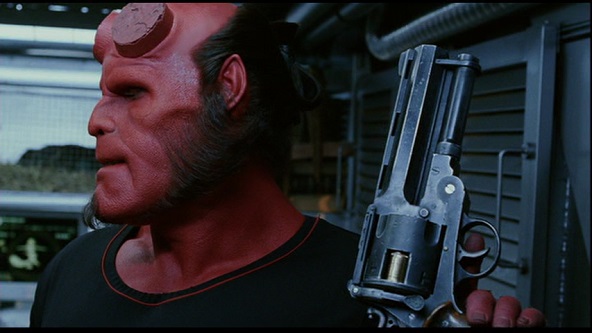
Over at Alex on Film I’ve been watching the movies made out of Mike Mignola’s Hellboy comic books (which I really like, though they get repetitive). The first two, by Guillermo del Toro, were both OK, aided by del Toro’s fandom and Ron Perlman’s rugged portrayal of the eponymous demon spawn. The 2019 reboot was not good, hamstrung by a chaotic plot and poor CGI. My sense is that Mignola’s Hellboy universe is just too large and sprawling for a movie (or even a series of movies) to try to encompass. The movies needed to be a little less ambitious, and, at least with regard to the reboot, less Marvelesque.
 Alex Good