Criss-cross

From Chronicles of a Liquid Society (2016) by Umberto Eco:

A significant transformation came about in the opposition between the religious and secular worlds. For thousands of years, the spirit of religion was associated with a distrust of progress, rejection of the world, doctrinal intransigence. The secular world, on the other hand, looked optimistically upon the transformation of nature, the flexibility of ethical principles, the fond rediscovery of “other” forms of religion and primitive thought.

There were, of course, those believers, such as Teilhard de Chardin, who appealed to “worldly realities,” to history as a march toward redemption, while there were plenty of secular doom merchants, with the negative utopias of Orwell and Huxley, or the kind of science fiction that offered us the horrors of a future dominated by hideous scientific rationality. But it was the task of religion to call us at the final moment, and the task of secularism to sing hymns in praise of locomotives.

The recent gathering of enthusiastic young papal groupies show us the transformation that has taken place under the reign of Pope John Paul II. A mass of youngsters who accept the Catholic faith but, judging from the answers they recently gave in interviews, are far distant from neurotic fundamentalism, are willing to make compromises over premarital relationships, contraceptives, even drugs, and certainly when it comes to clubbing; meanwhile, the secular world moans about noise pollution and a New Age spirit that seems to unite neo-revolutionaries, followers of Monsignor Milingo, and sybarites devoted to Oriental massage.

From On Decline: Stagnation, Nostalgia, and Why Every Year is the Worst One Ever (2021) by Andrew Potter:

For well over half a century, it’s been an article of faith, agreed to by all sides, that the right was the side of rules, order, tradition, and circumspection, while the left was the part of rebellion, individualism, freedom, and transgression. Now the political valences have reversed themselves, with the right setting itself up as the true countercultural opposition to the left’s restrictiveness and enforced conformity.

Coping

From After the Fact?: The Truth About Fake News (2020) by Marcus Gilroy-Ware:

Intolerable boredom, loneliness, precariousness and the disappearance of the future that is endemic to postmodernism, combined with a heavy emphasis on aspiration reduced to increasingly economistic terms, all produced widespread malaise that is hard to describe in specific terms for those that suffer it but is often demotivating or debilitating. The result is that we try to compensate, through the trappings of consumerism that have arisen to sell compensatory pleasure itself – the most obvious being the soaring popularity of delivery food, the seeming addictiveness of social media or gaming, or the quiet success of the sugar industry.

Maigret: Maigret and the Ghost

Inspector Luckless (that would be Lognon) gets shot in the gut while on a stakeout he’d been conducting so discreetly none of his fellow officers even knew what he was up to. So as the Paris police department’s resident sad sack fights for life in hospital it’s up to Maigret to find out what went down on the Avenue Junot.

One way that you can expect a series like this to go after so long a run is for it to become sillier. There are a lot of familiar elements in this one – Janvier had been shot in Maigret Takes a Room, a nosy neighbour played a key role in The Judge’s House, the dirty deeds done behind the façade of a great house is a staple – but they get rolled together here into a whimsical plot involving forged artwork, gangsters, and another ill-matched couple.

“You’ll find it hard to believe me because you’re not a collector,” the collector says as he tried to explain himself to Maigret. To which the detective chief inspector replies “I collect people . . .” His readers may be tempted to add, “I collect books . . .” This is what it’s sort of come to by this point.

Maigret index

Binstagrammed

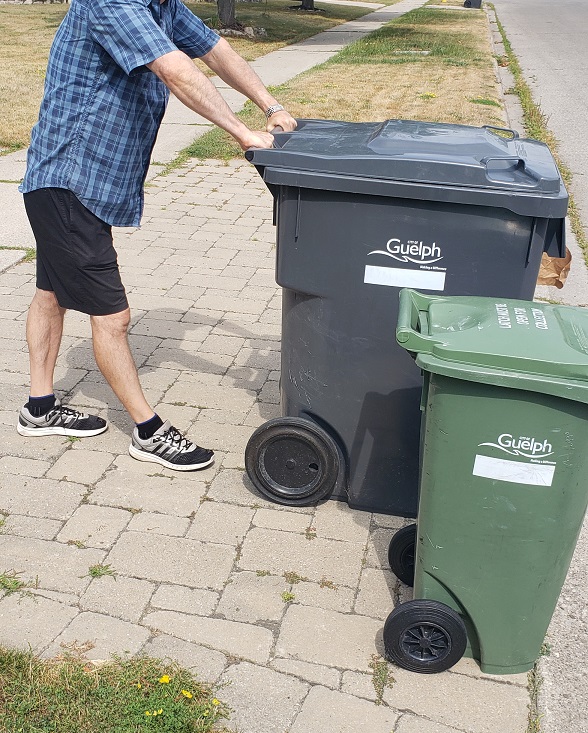
Doing my part.

It’s been brought home to me by the online community that taking bins to the curb is a civic ritual in places ranging from Gateshead to New Hampshire. Even small villages in Scotland have blue recycling bins for cardboard, cans, bottles, and old film reviews that are occasionally reposted as “new” content.

Just remember that “reduce” comes before “reuse” and “recycle.” It’s a hierarchy, and your goal should always be to make do with less.

Squeezing the tube

A year or so ago I picked up a half-dozen tubes of my favourite toothpaste when it was on sale. I tend to buy in bulk like this when I find something I want at a good price that I know I’m not likely to ever get any cheaper and that doesn’t have an expiry date. Like certain articles of clothing, or water-softener salt. I just stock up.

I’m down to my last couple of these bargain toothpaste buys though and realizing that they do indeed have an expiry date stamped on them. This surprised me. Can toothpaste go bad?

I did some research and the answer is “Sort of.” It doesn’t go off to the point where it’s bad for you, but fluoride does break down over time. So it’s not harmful, just not as beneficial.

The shelf-life for toothpaste is about two years. But what I couldn’t determine was whether this holds true if the tube has never been opened. All the stuff I read had to do with finding an old tube of toothpaste that had been left in a suitcase or something after having been taken on vacation a year earlier. If I haven’t opened the toothpaste, does it still break down at the same rate?

I’m going to finish up using the toothpaste I have anyway, but I’m curious. I guess if my teeth fall out I’ll have an answer.

Maigret: Maigret’s Anger

Hard to believe, but Maigret’s good friend Dr. Pardon has finally sounded the alarm about the detective chief inspector’s drinking problem. In order to spare Maigret’s liver, he’s recommended cutting down to just quaffing the odd aperitif instead of hitting the bar at all hours of the day while on a case.

Perhaps it’s the lack of lubricant that has made Maigret even grouchier than usual (as if getting old wasn’t bad enough). Whatever the cause, he does, as the title indicates, get angry at the end of this one. I had a hard time figuring out where things were going, but as it turns out the villain was running a kind of fake protection scheme, which is something Maigret takes personally as the protection being offered was from the police. To be honest, I thought it was a pretty good scam, and the guy running it was sympathetic, so maybe Maigret really did just need a drink.

A minor effort, but not bad, at least by the standards of the later books in the series. One point that caught my attention was that when Maigret, who doesn’t know how to drive, wants one of his lieutenants to take the suspect’s car he has to first check if he has “ever driven an American car.” In what way would driving an American car in 1963 be different from driving a French car? I’m guessing most cars at the time would have been standard transmission, so he’s not talking about that. I don’t think any mention is made of what make of car it is, only that it’s American and “big” (naturally). Which is, something that might have set him off too, come to think of it.

Maigret index

The green economy

Canada legalized the recreational use of pot in October 2018, and there was an initial rush to enter the market. Early reports were that a lot of start-ups, and even the Ontario government, lost money on the business, and that the sheer number of stores opening was going to lead to “closures and market rightsizing” (according to the CEO of the province’s pot distributor in 2020).

I don’t know what the state of the green economy currently is, but I haven’t noticed any closures in my community. In fact, dispensaries continue to be built. There are at least nine now within walking distance of my house, and 26 are listed in the city of Guelph.

That’s a lot of pot stores! This leads me to wonder just how much money there is in the recreational cannabis business. Are most of these places going to go bust? What are the profit margins? And how many pot smokers are there out there in the first place? Has pot use gone up since legalization? I don’t even know anyone who still smokes cigarettes anymore. I’m sure there is a market, but is it big enough to keep all these places in business? And who is the average recreational cannabis user? Blue collar, white collar, student? The presence of so many stores gets me thinking about these kinds of questions.

Maigret: Maigret and the Tramp

A minor entry in the series, but perhaps better for not being as ambitious. It’s pretty easy to figure things out along the same lines that Maigret does.

And what we’re left with is another ending where justice is not so much denied as evaded, at least for a time. The killer walking free is pretty transgressive for a genre work, but despite avoiding a pat ending it’s not a very credible story and we never have any sense what’s making the tramp tick. I think he just wanted out of his marriage and found the most drastic solution imaginable.

Taking another step back, I read it as a parable, with the tramp being a holy man sent to point the moral, which is that final judgment belongs to God. “What’s impossible is to judge,” is all he’ll say. This fits with Simenon’s motto “Understand and judge not.” Not that I think Simenon always held to this, or that it’s the kind of attitude a detective chief inspector should adopt. Justice, at least of the human variety, requires judgment on someone’s part.

Maigret index

The golden age(s)

From The Decline and Fall of the Roman Empire, Volume One (1776) by Edward Gibbon:

If a man were called to fix the period in the history of the world, during which the condition of the human race was most happy and prosperous, he would, without hesitation, name that which elapsed from the death of Domitian to the accession of Commodus. The vast extent of the Roman empire was governed by absolute power, under the guidance of virtue and wisdom.

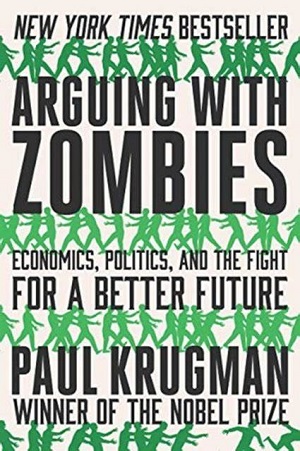
From Arguing with Zombies (2020) by Paul Krugman:

If you had to identify a place and time where the humanitarian dream – the vision of a society offering decent lives to all its members – came closest to realization, that place and time would surely be Western Europe in the six decades after World War II. It was one of history’s miracles: a continent ravaged by dictatorship, genocide, and war transformed itself into a model of democracy and broadly shared prosperity.

Chekhov on film

Been there.

Over at Alex on Film I’ve been watching some film adaptations of the work of Anton Chekhov. He’s not a writer who gets the big-screen treatment very often, at least in English-language productions. And the films that have been made tend to be very stagey. Still, they each have their strengths.

Uncle Vanya (1957)
The Cherry Orchard (1962)
Three Sisters (1970)
Three Sisters (1970 BBC)
Uncle Vanya (1970 BBC)
Uncle Vanya (1970 Mosfilm)
The Seagull (1978)
The Cherry Orchard (1981)
Uncle Vanya (1991)
Days and Nights (2013)
The Seagull (2018)
Drive My Car (2021)