Intimations of the Internet

From Walden (1854) by Henry David Thoreau:

Our inventions are wont to be pretty toys, which distract our attention from serious things. They are but improved means to an unimproved end, an end which it was already but too easy to arrive at; as railroads lead to Boston or New York. We are in great haste to construct a magnetic telegraph from Maine to Texas; but Maine and Texas, it may be, have nothing important to communicate. Either is in such a predicament as the man who was earnest to be introduced to a distinguished deaf woman, but when he was presented, and one end of her ear trumpet was put into his hand, had nothing to say. As if the main object were to talk fast and not to talk sensibly. We are eager to tunnel under the Atlantic and bring the Old World some weeks nearer to the New; but perchance the first news that will leak through into the broad, flapping American ear will be that the Princess Adelaide has the whooping cough. After all, the man whose horse trots a mile in a minute does not carry the most important messages; he is not an evangelist, nor does he come round eating locusts and wild honey. I doubt if Flying Childers ever carried a peck of corn to mill.

From Myth and Meaning (1978) By Claude Lévi-Strauss:

What threatens us right now is probably what we may call over-communication –that is, the tendency to know exactly in one point of the world what is going on in all other parts of the world. In order for a culture to be really itself and to produce something, the culture and its members must be convinced of their originality and even, to some extent, of their superiority  over the others; it is only under conditions of under-communication that it can produce anything. We are now threatened with the prospect of our being only consumers, able to consume anything from any point in the world and from every culture, but of losing all originality.

Charters and Caldicott on the case

ladyvanishes5

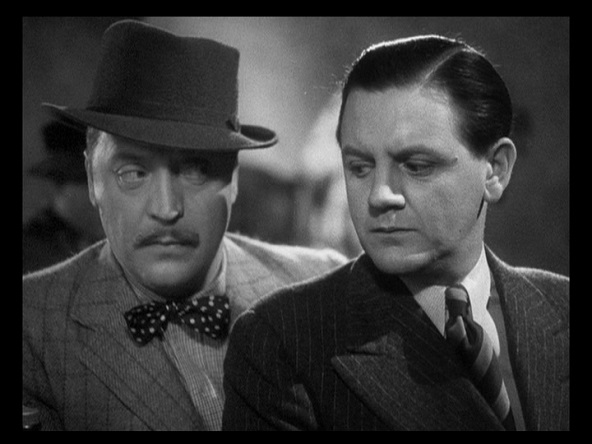
Over at Alex on Film I’ve added my notes on the first three movies featuring the not-quite-dynamic duo of Charters and Caldicott (played by Naunton Wayne and Basil Radford): their debut in The Lady Vanishes (1938), the follow-up Night Train to Munich (1940), and finally as the stars in Crook’s Tour (1941). They were very popular at the time, but quickly disappeared. In the 1980s they had their own BBC series but it only ran for one season and I had never heard of it before I started doing some research. Perhaps they were just a wartime phenomenon, or perhaps they just never grew up enough. They remained a charming couple, but representatives of a limited type. In a supporting role, however, they had a certain magic presence.

Federal election 2015: After

Well, in my post a week earlier I said my predictions almost always turn out wrong, so I wasn’t surprised, or terribly disappointed, by the election results. For the record, I predicted a Conservative minority. In the final week the polls indicated a strong Liberal swing to the vote and this turned out to be an accurate reading. Overall, I thought the Conservatives ran a dreadful campaign, while the other parties just waited for the tide to come in. In the event, I didn’t vote Liberal myself, but I’m glad to see the end of Stephen Harper.

I’m sure more will be added to the already large literature about Harper in the years to come. I’m still not sure why someone who was by most accounts aware of his deep personal unpopularity insisted on re-branding the federal Conservative party as the “Harper government” (and the “Harper party” in the words of the Globe and Mail this morning). In the words of John Ibbotson, “No prime minister in history and no political party have been loathed as intensely as Stephen Harper and the Conservative party.” But the two didn’t have to go together.

It’s one thing to want to rule as an autocrat, as a “party of one” in the phrase of Michael Harris, but to be so in-your-face about it is another. Perhaps it was all part of Harper’s divisive game plan, to pander to his base while repelling everyone else. If so, it was a strategy that backfired. As I said in my earlier post, Harper’s base politics can only work given certain conditions, like a divided opposition in a first-past-the-post system. He enjoyed that for his entire tenure, but the Anybody But Harper vote undid him this time (as well as undoing the fortunes of the NDP). This leaves the federal Conservative party vulnerable. As Jeffrey Simpson commented just a few days before the election:

Conservatives have their voters – their core – and that’s it. Their core isn’t large enough to win again. . . . When Rob Ford and his brother Doug are organizing a late rally for the party in Toronto, and the federal party thinks this is just fine, the message is clear: The party is down to its hard core.

It didn’t have to be this way. Canada is, in many ways, a conservative (small “c”) country. But the party’s leadership has been hijacked in the twenty-first century by angry freaks. Stephen Harper like Tim Hudak in Ontario, or even Rob Ford in Toronto could have been a more successful, effective political leader if he’d just been moderately reasonable. But being reasonable isn’t what any of these guys signed on for. They preferred to play ideologues and idiots (or actually were ideologues and idiots). Not one of them could be considered, and this is an important quality for a politician, normal. As I also indicated in my earlier post, the same thing can be said of the current Republican field in the United States. The right has spent years pandering to its base. That base now holds it hostage.

As far as the election around here went, the Liberal candidate won handily. One thing that surprises me, looking back on the last two elections, is the end of canvassing. In the last provincial election the only party that sent people door-to-door was the Green party (and that wasn’t the candidate himself but a volunteer from out of town). This year none of the candidates, or representatives from their party, came through my neighbourhood to knock on doors. None! And I only received two telephone calls in the lead up to the election. Do candidates no longer have the resources to do this kind of thing? What else are they doing with their time?

Moving forward, I’m not confident that the Liberals will provide much in the way of new ideas or leadership. One hopes for competence at best. Still, I’m interested in how a couple of issues that came up during the campaign will be handled. First, the Liberals declared that they were against the first-past-the-post election system. Now that they have a majority, will they backtrack on that? Second, the Liberals have also said that they want to “reform” the Senate (I’m all on board). This will be harder to effect, but I think would be a popular move. That said, I don’t expect any meaningful changes to be made to the current system.

I guess another way of saying this is that while Justin Trudeau’s governing style will likely be much different from Harper’s, I question how far apart he will be on substance. This isn’t being cynical, but is more just a reflection on modern politics, where it is very hard to effect real change. This is a problem, because in at least some ways this country should be looking to change direction. In ways that count, I don’t think it will.

Political punditry potpourri

News coverage

You're telling them something they already know.

You’re telling them something they already know.

Over at Alex on Film I’ve finished a miniseries of updates on  movies about the news industry. Hollywood doesn’t like television, and has always been cynical about the news (being expert on the construction of reality in the media). Starting things off is Ace in the Hole (1951), Billy Wilder’s satire on the extremes a fallen newsman will take to get back in the game. Next up is Network (1976), which still holds up pretty well thirty years later as a vision of where things were heading. Then there’s To Die For (1995), which has a great lead performance from Nicole Kidman and a slick documentary-style presentation that covers up for a fairly conventional story of aspirations gone too far. I didn’t think Anchorman: The Legend of Ron Burgundy (2005) was funny at all, and have trouble seeing why it was such a hit. But that’s often the way it is with comedy. Finally, Nightcrawler (2014) is an effective portrayal of psychopathy, and I think the first movie I’ve really liked Jake Gyllenhaal in.

Federal election 2015: Before

We are now a week away from a federal election.

What I’ve been wondering about over the course of the campaign is what has happened to conservatism.

This summer the Republican primaries in the United States have been dominated by Donald Trump, a candidate that almost no one takes seriously. His success thus far has been attributed to causes such as the anger felt by most Americans at the political system (as a non-politician Trump can market himself as an outsider) and the public’s fascination with celebrity, which keeps everything Trump says and does at the top of the news cycle.

Another reason for his success may be the weakness of the rest of the very large Republican field. At one point there were seventeen declared candidates, and taken as a group they are an unattractive, uninspiring lot. Perhaps what’s most surprising is that only a few of them seem capable of speaking convincingly on any subject (a talent that eludes Trump as well). I thought giving speeches was the one thing politicians had to know how to do. Someone forgot to tell Jeb Bush.

But the bigger problem with the Republicans may be that a particular historical strand of American conservatism has played itself out. In terms of cultural conservatism it seems as though the “culture wars” are, if not over, at least moving into a new, yet-to-be-determined phase. The right to an abortion is now settled, and the fight over gay marriage mostly is too. Human-driven climate change is a fact accepted by everyone who is not a complete idiot. The idea that the U.S. can build a wall separating itself from Mexico (or Canada), and somehow round up all its illegal immigrants and send them back to their countries of origin is laughable. And yet all of this can be found in the platforms of leading Republican candidates.

When it comes to economic or fiscal conservatism the picture is just as bleak for right-wing politicians. In a nutshell: what advantage do they offer over the center or center-left? Economic inequality has continued to grow unabated under Democratic presidents, and it seems very unlikely that Hillary Clinton will do anything to stop these trends. If you’re a member of the 1%, or 0.1%, or the 0.01%, you have nothing to worry about: the Dems have your back. If you want to say that neoliberalism won the battle for ideas I don’t think that would be far from the mark (leaving aside the question of what such a victory means). And that being so, what is there to mobilize right-wing voters who are fiscal conservatives?

In short, the conservative movement has found itself left behind on almost every issue. This doesn’t mean they’re doomed to irrelevancy, far from it, but it does mean that either they or the world will need to change course in some dramatic way for them to regain power. And I am inclined to think it’s the world that is more likely to change first.

Where does this leave conservatives? Primarily as an anti-government party. This is a ridiculous position for any national political party to take, but in at least one sense it may have some traction. I sense a growing divide between public (unionized) and private sector workers both in Canada and the U.S. that could make for a coming split between a party of the state and a party of everyone else. If there is a future for the right it may be here.

In Canada the Conservative Party, or as it insists upon branding itself, the Harper government, is similarly bankrupt of ideas. The most depressing aspect (thus far) of the campaign has been the attention given over to the “issue” of the niqab. This is pure dog-whistle politics, a waving of the bloody shirt (or veil) that apparently came from Lynton Crosby, a political guru who specializes in this kind of thing. It’s not even a minor issue. It’s a non-issue. It literally affects no one. And yet voters, particularly in Quebec, have seemed to respond.

Nevertheless, it seems to me that Harper still has two big advantages going in to the election.

In the first place there is the first-past-the-post election system. This archaic and undemocratic form of politics explains the Conservative campaign philosophy, which goes by different names but is usually referred to as Roveism (after Karl Rove) or “base politics.” Given the way the vote on the nominal left is split among several different parties the Conservatives can, in theory, not only win but win a majority with less than 30% of the popular vote. All they have to do is appeal to a hard core of support, which they can do by waving the bloody shirt and complaining that anything they’ve done wrong (the F-35s, the Senate scandals, the Robocalls) is all just a smokescreen of lies being sent up by the liberal media.

Such a strategy would be disastrous in a system of proportional representation, turning that hard core of support into a fringe movement. But we’re not playing by those rules.

The second advantage the Conservatives have is the fact that they are the party out of power in most of the provinces. In particular, their traditional stronghold in Alberta recently elected a premier from the NDP and the key province of Ontario is led by the deeply unpopular government of liberal Kathleen Wynne, who won the last provincial election, and a majority government, due only to the sheer incompetence of the Conservative candidate, Tim Hudak. I think voters like for there to be some conflict between their provincial and federal governments as a way of providing checks and balances, so this is something that I think works in Harper’s favour.

I voted in an advance poll. There were seven candidates in my riding: the four major parties, plus a Communist, a Libertarian, and one of the few candidates nation-wide for the Radical Marijuana Party. Waiting in line to vote (reports of long waiting times at the polls turned out to be accurate, as I was standing and sitting in line for nearly an hour), I spoke to the people standing directly in front of and behind me. One was a tech worker and the other a retired military man. Both had been Conservatives in the past but despised Harper and had specifically come out to vote against him, mainly on the grounds of his managerial incompetence. The riding has a long history of being Liberal, though the sitting MP is not running again in this election. I would say the Liberal is a shoo-in to win, but a popular liberal mayor was recently defeated by a hard-right candidate in our last municipal election so I wouldn’t be too sure.

So here’s my prediction on the federal election, offered up with that caveat that I’ve nearly always been wrong in the past and will probably be wrong this time as well:

Despite polls showing the Liberals clearly in the lead and gaining momentum, and much talk about “strategic voting,” I think the Anybody But Harper vote is so fragmented the Conservatives will be able to get re-elected with a minority, but won’t be able to govern, that task falling to a coalition of the Liberals and NDP.

In another week I’ll be back with some thoughts on what happened.

Political punditry potpourri
Her mother’s son

Here we go again.

It’s been a week now since the Umpqua Community College shootings, when 26-year-old Christopher Harper-Mercer, a student at the college, fatally shot nine people and injured nine others on the campus before killing himself when the police arrived.

His mother, Laurel Harper, was a proud gun afficionado and bragged of keeping loaded handguns and assault rifles in the house (guns that Christopher would take with him to school on the fateful day).

Here’s an excerpt from a Los Angeles Times story describing their relationship:

Reina Webb, 19, recalls how closely his mother would keep an eye on him, which to her, “was kind of weird, because he seemed like a grown man.”

She remembers how his mom had to calm him the day he found that someone had slashed the tires on his bike. “He had a fit almost,” Webb said. “Almost like a tantrum, like a kid. . . . He was upset, crying and doing all that stuff because of the tires on his bike.”

Other times, neighbors could hear him in the family’s apartment yelling at his mother as she tried to calm him down. “He would get mad if things weren’t his way,” Webb said. “But she always had him in control.”

Although she never interacted with Harper-Mercer, Webb remembers his mother as a “really nice lady.” “She’d always talk to everybody, say hello and be super nice and always try and watch her son,” Webb said. “She always tried to take care of him.”

Does this scenario sound familiar? It should. Yes, Harper-Mercer was yet another bitter loser, unable to get a girlfriend and with a hate-on for the entire world. But he’s also an example of the boy in the basement, a type I have already written about.

Laurel Harper, in turn, fits the stereotype of the enabling mom perfectly. You can check the items off the list: a single mom (widow or divorced), focusing all of her life on her (adult) baby boy; someone with a background as a professional caregiver (Laurel Harper is employed as a nurse); someone who gave in completely to the idea that her son was suffering from some kind of vague mental/psychological/social/emotional disability (here apparently Asperger’s Syndrome, though I don’t know what evidence there was for that).

Just as the report into the Sandy Hook killings concluded, it all led to a pattern of appeasement, enablement, and accommodation. As it did with Nancy Lanza. As it did with Wenche Behring (another divorced nurse looking after her adult son). Here’s how I concluded my review of One of Us: Anders Behring Breivik and the Massacre in Norway:

Living such an isolated life, Breivik needed very little assistance. He received it, again as so often is the case, from his unhappy, damaged mother. And this is probably the only takeaway. If we’re to recognize the warning signs and draw lines around such people, that’s a process that has to start at home.

It doesn’t take an advanced degree in psychology to see where these situations are heading. As I said at the end of my earlier post: know the signs and keep your distance.

The Taking of Pelham: Once, Twice, Thrice

I’m sure David Godey (Morton Freedgood) knew his pulpy novel was likely to end up on the big screen, but three times? The latest coming out thirty-five years after the first?

Luckily, subways don’t date as much as other forms of transportation and technology, so they could keep going back to the same well. Lining them up, the original 1974 version is still clearly the pick of the crop. How can you beat Walter Matthau playing off against Robert Shaw? You can’t. The 1998 TV-movie isn’t bad, but is pretty limited. And the 2009 Denzel Washingon-John Travolta pairing is a real disappointment.

Rape-revenge

Max von Sydow. Like a boss.

Max von Sydow. Like a boss.

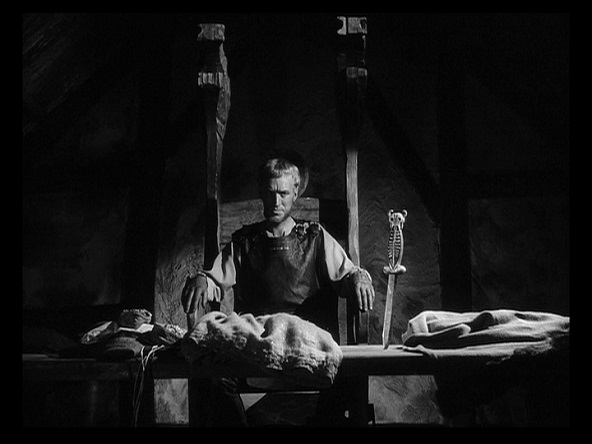
Added my notes on Ingmar Bergman’s The Virgin Spring (1960) over at Alex on Film. Was this the original rape-revenge film? Probably not, although it may be the most prominent and best known. It was the direct inspiration for Wes Craven’s The Last House on the Left (1972), which is essentially a contemporary remake. For some reason the 1970s were thick with such films, with titles like Straw Dogs (1971), Thriller: A Cruel Picture (1973), Death Wish (1974), Death Weekend (1976), and I Spit On Your Grave (1978). For those who like to mix art with evolutionary psychology, I guess the power of these stories is obvious enough, though I’m still not sure what it was about the ’70s that unleashed such anger.

For more of this kind of stuff, here’s a follow-up.

Off to see the Wizard

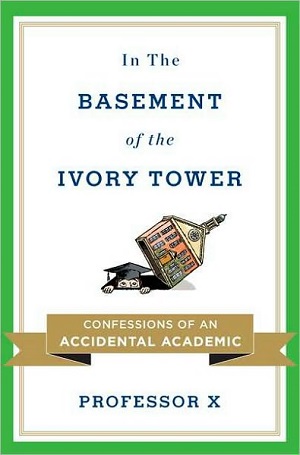
in-the-basement-of-the-ivory-towerJust posted some of my thoughts on In the Basement of the Ivory Tower over at Good Reports. Throughout most of recorded history, individual cultures have had special, if not always sacred, texts. The Greeks had Homer. Chinese civilization had the Five Classics. Christianity had the Bible. English literature had Shakespeare. What unites us today? Professor X was curious to find out:

One of the things I try to do in English 102 is relate the literary techniques we will study to novels the students have already read. I try to find books familiar to everyone. This has thus far proven impossible to do. Many of my students don’t read much, and though I tend to think of them monolithically, they don’t really share a culture. To Kill a Mockingbird? Nope. (And I thought everyone had read that!) Animal Farm? No. If they have read it, they don’t remember it. The Outsiders? The Chocolate War? No and no. Charlotte’s Web? You’d think so, but no. So then I expand the exercise to general works of narrative art, meaning movies, but that doesn’t work much better. That really surprised me — that there are no movies they have all seen, except one: they’ve all seen The Wizard of Oz. Some have seen it multiple times. So, when the time comes to talk about quest narratives, we’re in business. The farmhands’ early conversation illustrates foreshadowing. The witch melts at the climax. Theme? Hands fly up. (The students can rattle off that one without thinking. Dorothy learns that she can do anything she puts her mind to and that all the tools she needs to succeed are already within her.) Protagonist and antagonist? Whose point of view is the movie told from? Can anyone tell me the cowardly lion’s epiphany? Are the ruby slippers a mere deus ex machina? What would you say is the symbolic purpose of the winged monkeys?

The movie comes in handy. Discussions are pretty lively.

In the long run, we’re all dead

elnarcoFrom El Narco (2012) by Ioan Grillo:

“When I did my first hit, I got a little too close and shot too many bullets into the body. Then the blood and guts exploded out all over me and I had to throw away my clothes and wash hard to get it off. That night I had bad dreams. I kept remembering shooting the person and the blood spurting out.”

Gustavo did more hits and the bad dreams stopped. Every few  weeks he would be given a new target. Mostly he killed in Medellín but he was also sent to take out victims in other cities across Colombia such as Bogotá and Cali. Soon he had killed ten, then fifteen, then twenty people. Then he lost count.

I ask him if he thinks about the victims. He shakes his head.

“I keep focused and do my work. Before I go out, I pray to Jesus and clear my mind. I never take drugs or drink before a job as I need my five senses. When I come back I will relax and smoke a spliff and listen to music.”

Does he feel remorse about the people he has murdered? I ask. How can he square what he does with his Catholicism? “I know it is bad,” he says. “But I do it out of need. I do it to support my family.

He also knows that his work may well lead to his own murder. But he tries to keep any fear tucked deep inside.

“I need to keep strong and focused. I can’t spend all my time worrying if they are going to kill me or not. Everyone dies in the end.”