Persuasion

Sunflowers and soup. (Juststopoil.org)

Recent demonstrations, or protests, or acts of vandalism, have been getting lots of media attention, particularly in the U.K. Activists have been throwing soup on famous paintings (which are behind glass and so remain undamaged) and gluing themselves to highways, shutting down traffic.

There have been various groups doing this in recent year, with names like Extinction Rebellion and Last Generation. The latest round has come courtesy of Just Stop Oil. As you’d guess, the broader cause has to do with saving the environment and fighting climate change.

I agree with the point being made. The environment is an important issue for me, and I try to live in such a way that reflects my concern for what’s happening. But I wonder about the value of these stunts.

I’m not questioning the point that’s most often made: that acting out like this only alienates the people one is hoping to persuade. Instead, I question whether the basic premise behind such activism is valid.

That premise is that what’s needed is more attention and publicity given to environmental issues. This is the whole point behind throwing soup at a painting or blocking traffic: getting the media to notice. We live in an attention economy, and it’s felt that the environment is being ignored. If people only knew the nature of the crisis we face they’d act differently.

I don’t think any of that is true. In the first place, there’s a certain segment of the population — not a majority, but a significant number — who have made up their minds and will never believe the lying fake media or the consensus of a scientific elite no matter how loud the warning. Demonstrations will have no effect on them whatsoever.

A much larger cohort are already aware of the problem but don’t think there’s much they can do about it, or care enough to bother trying. George Monbiot starts off his column defending the protestors like this: “What does it take? How far must we go to alert other people to the scale of the crisis we face?” Again: I don’t see being alert to the scale of the crisis as the problem. We know there’s a problem. The media does report on it. It’s not an issue of attention and publicity, attracting eyeballs and getting clicks, but of persuading people to make changes to the way they live.

As I said twelve years ago in a review of Annie Leonard’s The Story of Stuff:

To say that Leonard is right in pointing out the dangers of not doing anything, of just continuing to live the way we live now, is almost beside the point. We know smoking is bad for you – a major cause of cancer and heart disease – but people still smoke. We know fast food will kill you, but that hasn’t stopped billions of people from eating it.

And these are examples where the ill effects of our behaviour are personally and (relatively speaking) immediately felt! The fact of the matter is that we are not a rational species, and we’re even worse when it comes to planning for the future.

Look: Unless they’re hiding their heads in the sand, everyone knows about climate change and global warming. They know the basics of how it works and they have a general idea of the steps that have to be taken to stop it. They just don’t want to take those steps and make the sacrifices that will be necessary.

Apathy in the U.K.

Meet the new boss.

The two signal political events of 2016, at least in the English-speaking world, were the often-paired British vote for Brexit and the election of Donald Trump in the U.S. With six years’ worth of hindsight, I think it’s pretty clear that both votes were disasters. Ever since, much ink has been spilled trying to understand why and how they happened.

I’ve read more books on Trump than I can count, and I think I can say I have a general understanding of the Trump phenomenon. A bunch of different factors, including some long-term and others more immediate, played into his election, and continue to keep his name in the news. America is in a bad place, with political polarization leading to a dangerous level of extremism, including violence and the more-or-less open disavowal of democracy and the rule of law by one of the country’s two main parties.

I haven’t read as much about what’s been going on in the U.K., which is probably why I’m having trouble understanding what’s happening over there. In many if not most ways Britain is in even worse shape than the U.S. Economically I think this is certainly the case, and it may be politically as well. In a recent piece in The Atlantic, “Britain’s Guilty Men and Women,” Tom McTague points a finger at the country’s leadership and its ruling party: “For the past 12 years, Britain has been led by a succession of Conservative prime ministers — each, like Russian dolls, somehow smaller than the last — who have contrived to leave the country in a worse state than it was when they took over.”

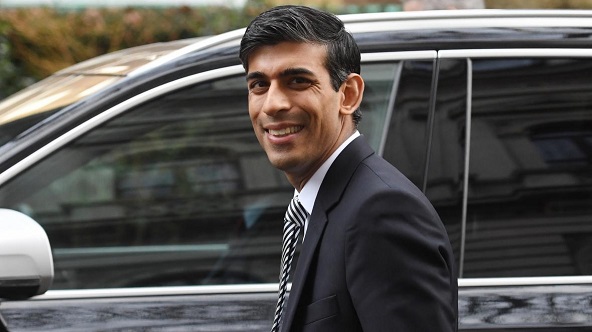
To this list has now been added one Rishi Sunak, a very rich guy who used to work for Goldman Sachs and who voters apparently trust to be able to manage the economy. Because that’s something rich people just understand.

Given how bad things have gone in the U.K. over the course of the last six years, what I can’t figure out is why the Tories haven’t sunk to basement-level polling numbers. On some level I “get” the Trump voter, but the Tory voter is a beast I know nothing about. In my review of The Lost Decade 2010-2020 by Polly Toynbee and David Walker (one of the few books I’ve read on the subject) what stood out for me was the level of voter apathy and the effect of a generational split. And I suppose the forces that are driving anger in America — social inequality and the rage machine of social media — are also at play. I’ve heard the British news ecosystem is bad, but as bad as it is in the U.S.? This I don’t know.

I just find it remarkable that after over a decade of misgovernance, incompetence, and outright failure the Conservative Party has any defenders left at all. The shock of 2016 was one thing, but at least in 2020 the U.S. tried to correct course (for how long we still don’t know). Why are the Brits still digging?

Prize culture

Earlier this month it was announced that the Griffin Poetry Prize, which for its twenty-year history has been a double-barreled affair with a $65,000 award for the best Canadian book of poetry and another award for the same amount in an international (English-language) category, would be rolling the two prizes together into one open category worth $130,000 for the winner.

This was big news in Canadian poetry circles, but I can say with some confidence that nobody outside of those small circles cared. Indeed, I’m sure nobody outside of those same small circles has ever heard of the Griffin Prize. And that’s the problem, or at least a big part of it.

Put simply: people don’t care very much about any awards in the arts. It used to be presumed that a prestigious award would lead to some sort of bounce in sales, but I don’t think that’s true anymore. From what I’ve heard, even winning top literary prizes won’t move many, or in some cases any, more units. And this isn’t just the case for books. How many people saw CODA, last year’s Best Picture winner at the Academy Awards? How many people could see it? Will Smith slapping Chris Rock received more coverage.

The reason this is important is because arts awards are meant to be advertising. That’s really all they’re meant to be. But how do arts awards advertise themselves? Throwing a huge party with lots of celebrities is one way, but basically unless you’re the Oscars all that can be done to grab eyeballs is to bump up the prize money. So the Griffin Poetry Prize is now (the press releases tell us) the richest for a single book of poetry written in or translated into English in the world. Headlines!

Unfortunately for the Griffin, the headlines weren’t all good. The prize’s founder, Scott Griffin, justified the move by explaining why Canadian poets no longer needed a prize of their own. In short, it’s because the prize’s work is done: “now that a lot of Canadians have been recognized in the poetry world, we felt it was time they had to compete on the international stage with everybody else.”

Now? Why only now has the time come? From what I’ve read, which admittedly isn’t as much as I’d like, I think Canadian poetry has been very good for at least the last couple of decades, but I don’t see it as being any stronger today, or more visible internationally, than it was at the beginning of that period. So what has changed?

Nothing Griffin had to say about the move made sense to me. “Wouldn’t it be fantastic if somebody like Anne Carson wins that top prize?” he said. Such a comment was revealing, to say the least, about what its founder sees the purpose of the award as being. Carson has won the Canadian prize twice already and is one of the most celebrated and recognized poets in the world. The list of rich and prestigious international prizes she’s won is as long as my arm. Why does Griffin feel it’s such an imperative that she (now!) “get a lot of coverage worldwide”? How many poets get more coverage worldwide? It must be a short list.

This all smacks of the Matthew effect. As I said of the Nobel Prize a year ago:  “Such awards are in no way, and never have been, meant to provide any kind of objective or even rational assessment of achievement. They continue only as a way of credentialing celebrity or the professionally well-connected and as an exercise in branding.” You can call this a cynical take, but is it any wonder nobody pays attention to prizes anymore?

I don’t like the change to the Griffin’s prize structure. The rationale makes no sense to me even on the face of it. It leads one to question why there should be national arts prizes at all. I’m no cultural nationalist myself, but I can see the point of having awards for Canadian writing. I don’t have any problem with the Women’s Prize for Fiction (formerly the Orange Prize) either, even though you could make at least as strong an argument about women writers being able to compete with everybody else. What the Griffin looks like now is just a big pot of money without any identity. I guess what they were trying to do is spark some interest in a prize that had fallen off the media radar but I’m not sure they’ll get more than a blip. Eventually another prize will offer more money, turning the whole thing into a game of paying for clicks in the attention economy.

Observers of the literary scene have often suggested better uses for the cash doled out on literary awards. In the 1990s Philip Marchand asked “Are Literary Prizes Necessary?” and thought the prize money might be more profitably be directed at literacy programs. In response to the Griffin Prize announcement, poet and critic Jason Guriel tweeted: “Prizes are nice, but if I had $ to burn, I wouldn’t bankroll a book prize, I’d bankroll a book review section in a major newspaper.” Another good idea.

It’s great when arts awards sometimes direct attention to work that’s otherwise likely to be overlooked, or feed a bit of money to filmmakers, novelists, and poets who might be sleeping in their cars. There’s also a dinner for guests. Unfortunately, in their bid to appear relevant in some way awards increasingly feel bound to play to a global media market that’s not very interested in the product that they’re selling. Put another way, if you’re talking about money, you’re losing. And money is all we’re talking about.

Party leaders

Right place, right time? (CP – Sean Kilpatrick)

After a couple of elections tacking (somewhat) to the left, the Conservative Party of Canada has chosen Pierre Poilievre, in a landslide, to be their new leader. Poilievre is widely seen as a pugnacious type who likes to hit on various, not always consistent, right-wing/neo-populist talking points, like the presumed influence of the World Economic Forum on Canadian politics. I think Poilievre’s policies, at least the ones I’m aware of, are mostly bad — making Canada the crypto capital of the world, doing more to promote the fossil fuel industry, appointing “free speech guardians” to oversee campus free-speech issues — but he does seem to be a politician in the modern mold, meaning that he does Twitter well. He is also likely to benefit from a growing sense of anger at the inevitability of Justin Trudeau, a prime minister who has lost the last two elections to the Conservatives in terms of the popular vote. There’s a wave of backlash coming, and Poilievre wants to be the guy to ride it. With the NDP under Jagmeet Singh having thrown in with the Liberals after the last election, for which I think there will also be a reckoning, Poilievre has to like his chances.

This same weekend, Lorraine Rekmans, the president of the Green Party, resigned in the midst of the process of selecting a new federal Green leader after Annamie Paul stepped down following the disastrous 2021 election (Paul placed fourth in her own riding).  The Greens in 2021 blew up in part due to in-fighting around Paul: a lot of squabbling which is too complicated and in some cases too petty to bother with sorting out, but revolved around a raft of identity issues. Paul (a Black, Jewish woman) found herself at the center of charges and counter-charges of racism, sexism, and anti-Semitism.

Well, in 2022 racism, sexism, and anti-Semitism have become old hat, and the latest controversy, the one that led to Rekmans’ resignation, had to do with a letter signed by several party big-wigs complaining of the misgendering of interim Green leader Amita Kuttner, who is transgender and nonbinary, in a Zoom event. This is a bit confusing since: (1) the misgendering seems to have been an accident; and (2) Kuttner had previously responded to an interview question as to what her preferred pronouns were as follows: “They/them. But when I write my pronouns, I sometimes write all of them: they/them, she/her, he/him, because I don’t care. There will be days where I’m not always even aware of what my gender is.” Apparently this was not one of those days, as Kuttner later described the misgendering as revealing a “system of oppression” that led to feelings of hurt and isolation.

In her letter of resignation Rekmans wrote that “there is no vision [in the party] for a better future, but only an effort to look back and settle old scores, while the planet burns.” I share her concern. As I said in my thoughts on the 2021 election, “The environment as an issue simply isn’t a priority for any appreciable part of the electorate.” I get that. What’s depressing is that what is a priority is this gender labeling.

In her resignation letter Rekamans writes that her “optimism has died.” Right-wingers are gleeful at the woke revolution eating its own children, and for good reason. For the left this is a disaster. In fact, I think it’s a disaster for all of us.

There’s an expression you often here among “Never Trump” Republicans that they didn’t leave the party, the party left them. It’s a line that actually predates Trump, with another version of the same phenomenon being “I didn’t change, the party changed.” But this is something you hear just as often on the left as on the right.

I’ve always voted for leftist parties, but I grew up at a time when the NDP still had its roots in the Co-operate Commonwealth Federation (a Western, agrarian party) and the Canadian Labour Federation. Whatever the NDP is today, its base isn’t farmers and blue-collar workers. I’ve also voted Green (at least on the provincial level), but what is the Green Party today? Is it honestly more worried about pronouns than about pollution and climate change? My priorities haven’t changed, but it seems that in both cases the party’s priorities have.

I can understand having to change with the times. There aren’t as many farmers or union workers today. But these gender issues aren’t big vote getters, and indeed are probably counterproductive in that they turn people away. Given the current status of the Green Party, its latest round of virtue signaling may be  just another twitch of the death nerve, as I’ve suggested has been happening in universities. If so, that’s depressing. Meanwhile, I know many old-school Tories who are disgusted by Poilievre and almost everything he stands for. Unfortunately for them, “firing up the base” is seen as the party’s only way forward. So far, the Liberals have been winning by just standing in place without actually standing for much of anything, but that’s not going to last.

I’ve never felt so personally alienated from politics. I know that I’m not alone, but, like Rekmans, my optimism has died.

Making it

An attempt at redirection. (Reuters)

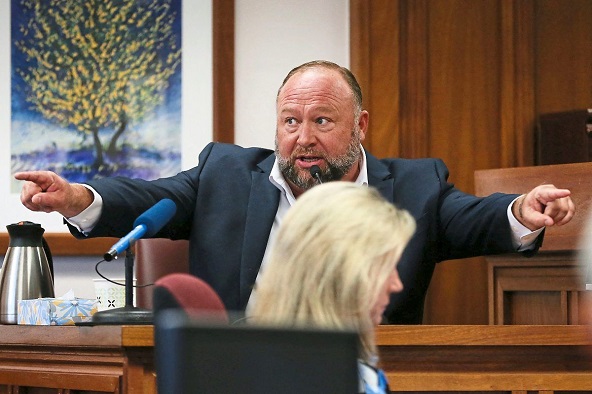
In what may be only the first of many legal shoes to drop, the controversial conspiracy peddler Alex Jones, who operates the fake-news website Infowars, has been ordered to pay more than $4 million in damages to the parents of a child killed in the Sandy Hook school shooting, which Jones claimed to have been a hoax.

The trial served up a lot of highlights and fodder for legal commentators to tear into, including the revelation that Jones’s lawyer had sent a copy of his client’s phone records to the plaintiffs in the suit. But what stood out for me was what one of the plaintiffs had to say when she addressed Jones directly:

“It seems so incredible to me that we have to do this — that we have to implore you, to punish you — to get you to stop lying,” Scarlett Lewis, whose son was killed at Sandy Hook, told Jones.

On the face of it, this does seem incredible. Jones was lying and knew he was lying, yet continued broadcasting his shtick about how the massacre had been a “false flag” operation with “crisis actors” performing in front of a green screen despite being told to stop. Why? The bottom line was that his lying was profitable. Jones apparently made tens of millions of dollars off of such nonsense, mainly through selling supplements and survivalist gear from his Infowars store.

I’m reminded of how Donald Trump, when told about the danger of his joining the marchers on the Capitol on January 6, as he publicly declared he would, excused himself by saying he “didn’t mean it literally.” Jones has since stated that the Sandy Hook massacre was “100% real,” essentially cloaking himself in the same defence. He said things because they were what his audience wanted to hear, not because he thought they were true. He wasn’t a reporter any more than Trump was a president; both were just entertainers, making a buck. To suggest that what they were doing was right or wrong, good or bad, was to be met with a blank stare of incomprehension, as though one were speaking a foreign language.

This link to the world of entertainment also made me think of something I’ve railed about for going on twenty years now. In terms of arts criticism (mainly book and film reviewing) negative voices have been drowned out by what’s been dubbed poptimism: the argument that any book that’s a bestseller, or movie that’s a blockbuster, or TV show with high ratings, is effectively beyond criticism because it has been successful at the only thing that counts, which is making money. Criticism isn’t just superfluous (this has always been the case when dealing with mass entertainment) but wrongheaded. A reviewer literally doesn’t have any right to be critical, the media having given in to what I described in Revolutions as “a sort of celebrity worship wedded to market fundamentalism, one that makes popular/commercial success the only criterion of aesthetic value.”

For “aesthetic value” we can substitute truth or morality. Faced with Lewis’s incredulity, I imagine Jones feeling only bafflement. Any messaging or conduct so profitable, “bought” by so many people, can’t be wrong, can it? There is no other legitimate standard of value. If it makes you money, it can’t be that bad. In becoming rich and famous Alex Jones put himself beyond good and evil, and very nearly above the law.

Getting it wrong

With the handing down of the decision in Dobbs v. Jackson Women’s Health Organization last week the U.S. Supreme Court effectively overruled their long-standing decision in Roe v. Wade (1973) making abortion a Constitutional right.

I don’t know what the fallout from Dobbs is likely to be, aside from making Margaret Atwood a prohibitive favourite to win this year’s Nobel Prize for Literature. Nor am I up to making any kind of legal critique of the majority opinion in Dobbs. What the decision does force me to do, however, is consider how I got things so wrong.

I’m referring to an earlier post, from 2015, where I had this to say:

[The] problem with the Republicans may be that a particular historical strand of American conservatism has played itself out. In terms of cultural conservatism it seems as though the “culture wars” are, if not over, at least moving into a new, yet-to-be-determined phase. The right to an abortion is now settled, and the fight over gay marriage mostly is too. Human-driven climate change is a fact accepted by everyone who is not a complete idiot. The idea that the U.S. can build a wall separating itself from Mexico (or Canada), and somehow round up all its illegal immigrants and send them back to their countries of origin is laughable. And yet all of this can be found in the platforms of leading Republican candidates.

I returned to this point in a lengthier post a year later, where I talked a lot about “the end of the conservative road.” I didn’t think the Republican Party was dead in the U.S., or that Right-wing politics had passed its expiration date, but it did seem to me that a particular style of politics had had its day. I was wrong. The “new, yet-to-be-determined phase” of the culture wars was going to lead into a time warp.

Obviously I misjudged badly. What did I not anticipate? The victory of Donald Trump in the 2016 election and his stacking of the Supreme Court with radical ideologues, just for starters. But the Trump years were symptomatic of a deeper malaise that I seem to have missed. In particular, there are two points that I didn’t pick up on at the time.

The first is the importance of anger as a political driver, and the way parties of the Right so successfully branded themselves as the standard bearers for so much resentment and hate. I’ve already written about this here, and won’t add anything more aside from asking if there are any angrier or more bitter people in the U.S. than the likes of Samuel Alito, Clarence Thomas, and Brett Kavanaugh. The rage just seems to radiate off these guys, which puts the lie to the idea that anger is solely the province of men without a college education, or of the powerless “left behind.”

The second point has to do with how successful the Right, and in particular the Republicans in the U.S., have been at their demonization of their political opponents. This has become so extreme that I don’t think I would have credited it in 2015. But what has happened, and this may be the biggest transformation in American politics in its history, is that one of the main political parties now sees the other as being entirely illegitimate.

This is no longer the province of looney outliers and people who believe in conspiracy memes like Frazzledrip. On the basis of no evidence whatsoever a majority of Republicans continue to believe that the 2020 election was stolen. They simply do not believe it is any longer possible for another party to be fairly elected.

But it’s even worse than that. Demonization is now taken literally.

In the world view adopted by Republicans, Democrats/progressives/liberals are not just seen as the lesser of two evils but as evil incarnate. They are terrorists, or lizard-headed aliens, out to destroy the country, enslave the population, and looking to kill and eat everyone’s babies (after they have sex with them and tear their faces off). And again, this is not a fringe belief. At the highest level, a second Trump presidency is endorsed not because of any love for Trump but because the alternative is seen as Satanic. Trump’s attorney-general, Bill Barr, was one such Christian apocalypticist, and his chief of staff Mark Meadows another. Meadows even tweeted to Ginni Thomas (wife of a Supreme Court justice) during the January 6 coup attempt that “This is a fight of good versus evil. Evil always looks like the victor until the King of Kings triumphs.”

One may ask how much of this is sincere and how much is just trying to justify or rationalize the GOP’s own slide into darkness. As Peter Wehner put it, writing in The Atlantic:

The sheer scale of Donald Trump’s depravity is unmatched in the history of the American presidency, and the Republican Party—the self-described party of law and order and “constitutional conservatives,” of morality and traditional values, of patriotism and Lee Greenwood songs—made it possible. It gave Trump cover when he needed it. It attacked his critics when he demanded it. It embraced his nihilistic ethic. It amplified his lies.

The only way to make this somehow come out right is to paint the Democrats in ever darker shades of black. What has resulted goes beyond polarization, and helps explain not just the radicalization of the Supreme Court but also why even the revelations of the January 6 commission aren’t doing much to move the needle. In 2015 I had no idea this level of extremism could have become so entrenched. I’m sad to say I was wrong.

Worse than I thought

In my previous post on the 2022 Ontario provincial election I mentioned that preliminary reports had it that voter turnout had dropped below 50%, after a high of 58% in 2018. Well, more information has come in and it was actually worse than that. At a shocking 43.03% (according to early data) 2022 marked the lowest voter turnout in provincial history, going back to Confederation. It was almost a full 5% lower than the previous record low, which was set in 2011.

2022: Election round-up

Ford more years. (CBC – Evan Mitsui)

Thoughts on the 2022 Ontario provincial election.

Ontario’s 2018 provincial election had a great turnout. Or at least relatively great. It was a 20-year-high but still only 58 percent of eligible voters cast a ballot. As I’ve remarked before, roughly 40% of people living in a democracies today are never going to vote no matter who is running or what the issues are. They’ve checked out.

People expected a big dip in voter turnout this time around and they got it. Preliminary reports I’ve seen say that it dropped below 50% (update: it was worse than that). This was the first time I’ve ever voted where there was literally not a single person either voting or in line to vote at the polling station I attended. Yes it was an advance poll, but it’s still something I’ve never seen before and I usually vote at advance polls.

One of the factors playing into the low turnout was the fact that the election was over almost as soon as it was called. Pollsters were practically guaranteeing another Ford majority weeks out from election day, and the only story that pundits were left to discuss was who was going to form the official opposition. It’s pretty rare for election results to feel so predetermined. If nothing else the media love a horserace and are often accused of trying to whip one up when none exists. This time they didn’t even try. I can’t remember the last election I’ve voted in that played out so predictably.

It was also an invisible election. Again this year the only party that had canvassers going door-to-door in my riding were for the Greens. The Greens were also the only party I got a phone call from. Perhaps everyone else had just given up (Mike Schreiner, the provincial Green leader, won my riding in a landslide).

But I was called nearly every other day for the last two weeks to take part in a poll. Somebody was working hard.

While the result was anything but a surprise, the fact that it played out so predictably does seem to call for a bit of comment. I don’t think Doug Ford was all that popular with Ontarians and his record in office was nothing to get excited about. The deficit in 2022 (for those who still care about such things) ballooned even beyond what had been run in the COVID years, all while Ford pulled silly stunts like cancelling vehicle registration fees. He’d cut back on services, boosted some shady development deals (the boondoggle of highway 413), bungled the response to COVID (though arguably no worse than anyone else), and still won smashingly, facing no real opposition. Why?

I’ll take a shot at explaining, but before I do I want to just add something on the highway 413 fuss. I totally understand people who think the whole thing is rotten, but what I don’t think a lot of critics appreciate is just how dirty a business real estate development is. It’s all like this. Development and infrastructure is one of the areas where public and private actors work together very closely, and at every level — municipal, provincial, and federal — there’s a lot of pay-to-play going on. I don’t know how much of that was happening here, but it’s the nature of the business. No one should be surprised at it.

But back to Ford’s success. Some of this can be attributed to what are global trends. For example the way the right is killing it on the culture war front, and the continuing divide of political parties into those of the private sector and those of the state. With regard to the latter point, it was striking that a number of unions come out in support of Ford, but these were all private sector unions, specifically in the building trade. No public sector unions backed him. I think that tells you something about where the new line is being drawn. And given how much support I think there is for the Tories among a lot of public sector union members I think things are looking even worse for the left on this front.

Another factor putting the wind in Ford’s sails was the hangover from the Dalton McGuinty-Kathleen Wynne years. It’s hard to overstate how deeply those two were disliked, and the metaphor of the Liberals still being in the penalty box held true. Voters can hold long grudges. Federally, the Liberals are still running against Stephen Harper, and even Brian Mulroney, while in the U.S. I imagine Donald Trump is going to occupy a similar place for many years to come. Meanwhile, the presence of Justin Trudeau (and his partnership with Jagmeet Singh) on the national stage only added fuel to the Tory fire. Again I don’t think you can overstate how sick many people are of Trudeau.

Then there is the first-past-the-post electoral system. The Tories took roughly 2/3 of the seats with just over 40% of the vote. The Liberals, NDP, and to a lesser extent the Greens split the anti-Tory vote, while Ford had nothing to fear on his right. I had to go online just to find out who the New Blue, Ontario, and Ontario First Party even were.

Veteran NDP leader Andrea Horwath and Liberal newbie Steven Del Duca, who both resigned as party leaders after the election (Del Duca even failing to win his own seat), were criticized for not being more inspiring, not to mention better prepared, but I don’t think they were going anywhere regardless. My big question going into the election was whether, given this state of affairs, there was any chance the Greens could make a breakthrough. They did not, only holding on to their single seat. At this point, and after their disastrous showing in the 2021 federal election, you really have to ask whether they have any role to play in Canadian politics at all. It’s not just that people aren’t voting for environmental issues, they are actively voting against them (see the union support for the highway-building project). I don’t see where there are any hopeful takeaways from that.

Draft notes

First overall pick Travon Walker. 6′ 5″ and 272 pounds. Boom or bust?

We’ve just finished the first two days of the 2022 NFL draft, which was held this year in Las Vegas. It’s hard to overstate how big an event this has become. Taking place over three days, the amount of media coverage and fan interest rivals that for the Super Bowl.

Why? Because unlike the Super Bowl every team’s fan base is involved, each hoping for a transformative pick or picks. Because you can lay an infinite number of bets on the various outcomes. Because with trades allowed the whole show becomes a giant poker game. And I think mainly because anyone can pose as an expert.

Teams invest an incredible amount of resources in preparing for the draft, preparing their big boards with armies of talent scouts and crunching numbers with various sorts of analytics. All of which counts for something, but given the randomness of the results, where even in the first round of the draft your hit rate on picks runs around 50%, just how much it counts for is open to debate.

This year was a more open and unpredictable draft than ever, in large part because there were few blue chip prospects and no top quarterbacks in the mix. As it turned out, only one QB was taken in the first round (Kenny Pickett, who went 20th overall to the Pittsburgh Steelers).

The low evaluation of the QBs in this draft underlines another change that’s become more pronounced around the league. Of course it’s long been recognized that the QB is the most important player on the team. No other position is even close. What’s changed is the mindset that says that you have to have an elite or franchise QB (read: top 10 or so) to even be relevant. One or two of the best QBs in this draft might turn into decent starters, but teams want a lot more from their QB prospects now. You have to have the potential to be one of the very best. In draft terms, this means the position has become totally front-loaded.

That’s a philosophy that was underwritten this off-season as well. Not only did Deshaun Watson, despite having to deal with a bunch of sexual assault allegations, receive a fully guaranteed, five-year, $230 million contract with the Cleveland Browns (which also cost the Browns three first-round picks), but otherwise serviceable-to-good QBs like Jimmy Garappolo and Baker Mayfield became toxic assets. It’s not the high price of talent that kills you, as one owner put it, but the high price of mediocrity. You can pay an elite player anything, but you can’t afford to have players who are JAGs (Just-A-Guy) on your roster.

It’s hard not to see this as yet another example of our winner-take-all economy in action, which in turn makes the draft seem like even more of a lottery. Is that another reason that it’s become so popular? It’s a sporting event for our time.

Why does anyone still care about Tiger Woods?

Still going strong, at least in terms of ratings. (AP – Phelan M. Ebenhack)

Years ago I was assigned to review a little book about Tiger Woods. At the time Woods was the best golfer in the world and in the running for being considered the greatest of all time. His father spoke of him, without irony, as having been sent by God and as potentially being the most important human ever. Not, as the author of the book noted, “the most important golfer or the most important athlete, but the most important human.” As in, bigger than Jesus.

Woods was young and good-looking and multi-racial and seemed on his way to overturning a lot of the old stereotypes of professional golfers as wealthy white retirees while he was re-writing the record books. But that was all a long time ago. Since then Woods survived a messy divorce, the disintegration of his body (he just recently had his fifth back surgery), and a car crash that fractured his leg. His game, as you might expect, has suffered. But for his surprise victory in the 2019 Masters he hasn’t been great for nearly a decade.

None of this is very surprising. Top athletes usually only stay at the top of their sport for about a decade. Golf is a little more forgiving than professional football, but no one beats Father Time. This makes it all the more surprising to me that whenever Tiger Woods picks up a golf club he is still treated as front-page news.

This weekend was the 86th Masters Tournament and Woods got off to a good start. Which meant that he was the top story not only for sports channels but even for news programming. A writer for USA Today called the story of Woods’s “transcendent game” “much more than a sports headline.” On CNN the Breaking News followed up events in Ukraine with Tiger’s miraculous comeback.

As it turned out, Woods crashed at the Masters, quickly falling out of contention with some disastrous rounds that ranked as his worst ever at the Masters. But that seems not to have diminished him as a draw, with commentators insisting that his performance was must-see viewing.

I can understand some of this, since everyone likes a comeback story and Woods overcoming his long list of injuries is inspiring. But lots of older athletes have had to do the same. The continuing attention given to everything Woods does, so long after his becoming just another golfer, doesn’t make sense to me. Why, on broadcasts of these events, are they even still following him?

The reason this disturbs me is that professional athletics is one of the few public spectacles where you can still count on achievement and ability trumping mere celebrity. It doesn’t matter how famous you are or how much money you make from endorsements if you can’t run faster or jump higher or hit harder than the competition. For years now, however, Tiger Woods has put a lie to that. He is without question the world’s most famous golfer, but is far removed from being the best. And yet the media continue to build him up, with their coverage making him the main focus of interest.

I don’t follow golf, but I am a sports fan. And as a sports fan I feel the same sense of despair at this as when MMA fighter Conor McGregor fought Floyd Mayweather, a publicity stunt that had the second-highest pay-per-view buy rate in boxing history. If this is the future of sport — and Mayweather’s next fight was against YouTuber Logan Paul, which also did over a million buys — where achievement means nothing and we’re just paying to watch famous people perform (and not always perform well) then what’s the point? We might as well be watching Dancing with the Stars.