The real green

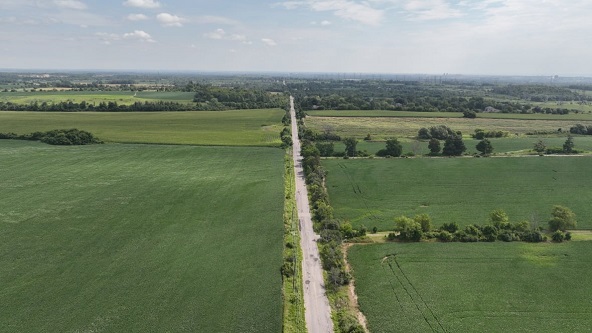
Still looking green, for now. (CBC News – Patrick Morrell)

Ontario’s ruling conservative party has recently found itself in hot water after taking nearly 3,000 hectares of mostly agricultural land out of the protected Greenbelt around Toronto and opening it up for development. Technically this was part of a “swap,” with 3,800 hectares being newly included in the Greenbelt elsewhere. The government says that the land was needed to build more affordable housing in the province, but few people are buying that argument.

Premier Doug Ford now says there will be a re-evaluation of the land swap deal after two government watchdogs raised serious questions about how it happened, including a report from Ontario’s auditor general that found the process was heavily influenced by a small group of politically connected developers. Housing Minister Stephen Clark has stepped down amid all the controversy.

Opposition parties, and many public voices, are calling for the lands to be returned to the Greenbelt. Indeed, one of the auditor general’s 15 recommendations made in their report was for the land swaps to be reconsidered.

In response, that was the one report recommendation that Ford’s government refused to even consider. In Ford’s statement that he will re-evaluate the process he even suggests that the result may be that he takes more land out of the Greenbelt.

I could be wrong, but I feel safe in saying that that the decision to take the land out of the Greenbelt is not going to be reversed. According to the auditor general’s report the owners of the land (not farmers, but the developers who bought it up) stand to see the value of it rise by $8.3 billion.

$8.3 billion.

It doesn’t matter what environmental groups and government watchdogs say. It doesn’t matter if ministers resign in disgrace. It doesn’t matter if governments are voted out of office. It doesn’t even matter if people go to jail. With so much money at stake literally nothing else matters. That land isn’t going back into the Greenbelt.

Update, September 21 2023:

I called it wrong.

Disaster tourism

Destination hotspot.

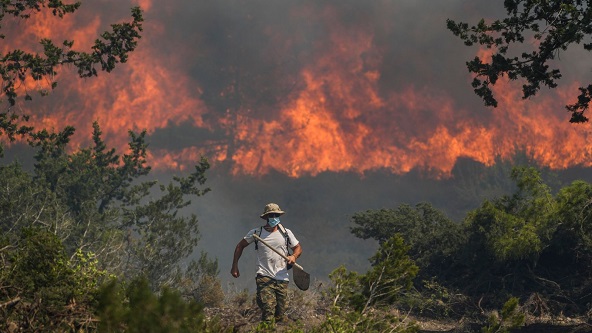
Recent weeks have seen record-setting heat waves in the United States and southern Europe. In Greece wildfires have been raging and thousands of tourists had to be evacuated from the island of Rhodes. Overall, July is set to be the planet’s hottest month ever recorded, leading the United Nations Secretary General to declare “The era of global warming has ended. The era of global boiling has arrived.”

Scientists have pointed to “absolutely overwhelming” evidence of human-induced climate change in the latest wave of high temperatures. One contributing factor to climate change is air travel, though people argue as to how significant a factor it is. From what I’ve read, air travel causes about 3% of the warming all human activities cause. But make not mistake: that’s a lot. One stat I saw says that if the aviation sector were a nation, it would be among the top 10 global emitters, and that it is responsible for 12 per cent of transportation emissions. So it makes a real difference. And it’s almost entirely unnecessary.

Now personally I don’t travel much, and I think the last time I was on a plane was twenty years ago. But I get that a lot of people like to travel. Indeed, that’s the problem. It’s a sector that’s expected to grow significantly in the next couple of decades. Tourism is projected to generate up to 40% of total global CO2 emissions by 2050. The effect of such growth won’t help the planet, especially as any new energy efficiencies in air travel will be more than offset by more frequent flying.

But I’m not flight shaming here (flight shaming being the name of the anti-flying social movement). Like I say, I get that people want to travel. During the COVID lockdown I had to stand witness to two acquaintances, both retirees, literally break down in tears at the fact that they were somehow being cheated of going on more vacations before they died. It was embarrassing, but it revealed just how important travel is to a certain segment of the population. Because I guess there’s nothing else for them to do. So even if it’s not a feeling I share, I can at least say I get it.

Anyway, these recent headlines were brought home to me yesterday as I was talking to a friend whose sister and brother-in-law are currently vacationing in Greece. I gather they’ve been complaining about it. The heat. The fires. And it made me think of the cognitive dissonance this must involve.

The vacationing couple are wealthy retirees (she was a government lawyer, he was an academic) with no kids. And they travel a lot. They have three international vacations planned this year alone, and they travel deluxe all the way. But hearing about how they were grousing over the impact of climate change on their trip triggered me a bit.

As I see it there are several different responses one can have to living this kind of apex-consumer lifestyle in the present day.

(1) The travel Neros: this was a name given to a movement a while back where global warming was taken for granted, with frequent flying being a major contributing factor. But the travel Neros took the position that the world was going to burn to a crisp anyway so they were going to party while it fried. Maybe not socially responsible behaviour, but it’s a position that has its own integrity.

(2) The deniers: climate change is all a hoax foisted on us by the Chinese or global elites or killjoy environmentalists. Don’t listen to them! Keep consuming! After all, if you damage the economy in any way trying to save the planet, the cure will be worse than the disease! Not a position I agree with, but again at least it holds together as a belief system.

(3) Those who acknowledge climate change is real and air travel is only making things worse, but feel that their own personal contribution doesn’t make a difference: here is where I think the cognitive dissonance comes into play. “It would be better if people didn’t fly as much, but since they do it would be stupid for me to give up one of life’s great pleasures just for some benefit to the planet that I likely won’t benefit from anyway.” To my eye, this is just casuistry. How, I wonder, do the tourists in Europe this summer feel the heat and see the clouds of smoke on the horizon and say to themselves “This has nothing to do with me. I hope they get it all fixed up when I come back next year.”

As I say, the whole conversation I had with my friend ended up really triggering me and I said something about how what the the vacationers were experiencing in Greece was due in part to their being there in the first place. This was met with the response that that couldn’t be true because Canada has been wracked with forest fires this summer and those forests weren’t being overrun by tourists. Honestly. This was one of the stupidest things I’ve heard in a long time.

After I explained (in my typical, hard-to-follow and sputtering way) how climate was a global system and was affected by human activity everywhere, with its effects experienced differently in different places, I got a more realistic, though even more depressing response. The vacationers were retired, you see. And, well, what else was there for them to do? How were they going to stay occupied in their remaining years except by traveling? (And they had both taken early retirement and were only in their early 60s, so they potentially still have a lot of time ahead of them to, you know, burn.) And then there was the matter of their being rich. What else were they going to spend all their money on? What could they spend it on?

It may well be that our entire civilization is going to die of affluence and boredom.
Crowned

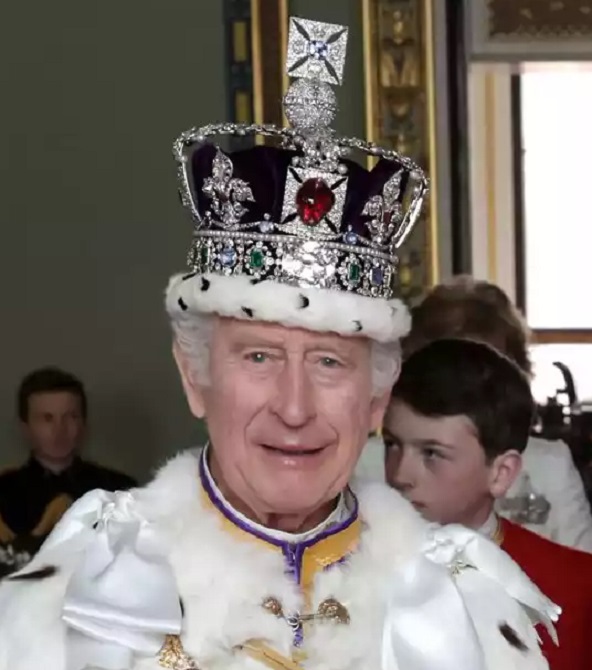
Today marks the coronation of Charles III as king of the United Kingdom and Commonwealth.

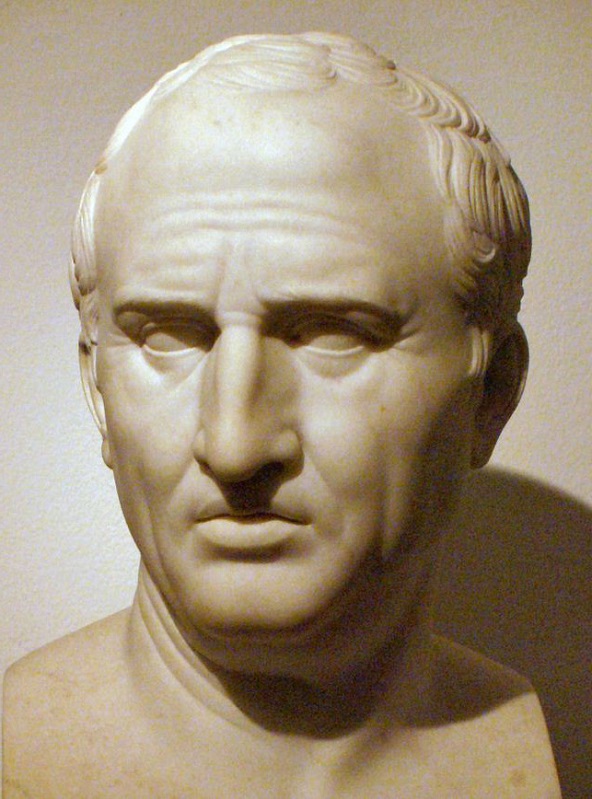
As a political institution the British monarchy ceased having any purpose back in the 18th century. Because of its near total irrelevance, and the expense of its maintenance, there have been frequent calls for getting rid of it. These have become more pointed recently, as Charles is not well liked and is 74 years old, which seems very old to finally be elevated to the position of even nominal head of state. At least until you realize that both Joe Biden and Donald Trump are older. When will we be rid of this cursed generation?

How much longer will the monarchy go on for? Will cancel culture ever come for it? I doubt it, but if it does I imagine it will be for the reason any long-running show finally gets the (metaphorical) axe: a fall in ratings.

The thing is, few people care at all about the monarchy anymore. According to one recent poll, a whopping 78% of young people in Britain fell into this camp. The Crown is more popular than the Crown.

Things were different just forty years ago. The marriage of Charles and Diana was a big deal, and a popular show. But then the funeral of Diana was perhaps the last TV special that drew an audience. The media put a huge amount of effort into selling Harry and Meghan, and the funeral of Elizabeth II, but these weren’t even blips on my radar. The coronation will receive enormous coverage, even in markets like the U.S. that severed their ties to the monarchy a couple of hundred years ago, but I wonder if anyone will pay attention despite all the play on CNN. I know I won’t be watching. And this really is the key point in our attention economy. If royalty aren’t celebrities then they’re nothing at all.

Man and Trump and God

Holding a book he’d never read, standing before a building he’d never been in.

Over at Good Reports I’ve added an omnibus review of a bunch of a books on evangelical support for Donald Trump. Much of the Trump phenomenon is meant to generate outrage, but the support of the religious Right or Christian nationalist movement is probably the most outrageous thing about it of all.

It’s hard to imagine Trump coming back, but as of this writing he’s still the frontrunner to be the Republican standard bearer in 2024. The rot in the American body politic goes deep. What’s worse is that it’s hard to see how the conditions that gave rise to Trump are going to improve anytime soon. I may be reviewing more books like this again in another couple of years.

Grocery bills

Inflation has been a big story in the news recently, with its impact on the public being most directly felt and reported on in regard to grocery bills. I didn’t notice this as much just coming out of pandemic (I was more exercised by the fact that gym memberships doubled), but more recently it has been showing up on my radar.

The pizza place across the way, for example, always used to sell individual slices for 99 cents. The same now cost $1.67 (and they’re cut smaller). Quite a jump, percentage-wise! On average, grocery prices went up 10% last year, which was considered huge. That’s a number to keep in mind as we proceed.

Most of my grocery shopping is done at a No Frills store which usually has the lowest prices around. Indeed, they used to match any lower price advertised by a competitor, though they stopped doing that just before COVID. Today I think they’re still probably the best place to get groceries in town, but even so there have been some price hikes that have caught my attention.

A large bag of Doritos, for example, now regularly goes for $4.50. Before the pandemic it would be $3 tops and sometimes $2 or less when on sale. Now I realize there was a major conflict between Loblaws and the major chip suppliers a year or two back that was eventually settled, and that the store probably doesn’t have a lot of leeway to set these prices, but it still led me to dig in my heels. I haven’t bought Doritos in over a year, and I do like them.

A bag of water softener salt now goes for $7. Before the pandemic they would be $5 tops and usually $4. $2.50 when on sale. Ouch! That’s a big increase for something you have to buy. Literally money going down the drain.

A box of breakfast cereal used to go for something under $3 but now goes anywhere from $4 to $6 depending on the brand.

I often buy specialty ciabattas (sun-dried tomato, black olive, cheese and onion) either to eat with stew or make a sandwich out of. These used to go for $2.50 but now are priced at $3.50. So I only pick them up when they’re on the 50%-off “enjoy tonight!” shelf. Because I don’t believe in expiry dates.

One of the biggest jumps I’ve noticed is for cucumbers. $2.79 for a single cuke? These used to be $1.50, or 98 cents on sale. I like to slice up cucumbers to put them in a salad or make them part of a sandwich, but there’s no way I’m paying $2.79 for one of them. I don’t know what’s going on there. I know cucumbers aren’t in season, but neither are peppers and they don’t cost twice as much as they did a couple of years ago.

So yes, prices have increased — in some cases quite considerably — just in the last couple of years. And I think some of this inflation is more than the producers can attribute to higher costs. It is also the result of “greedflation,” which has been defined as taking advantage of high inflation to earn excessive profits at the expense of consumers.

In any event, one thing seems a safe bet: we’re not going back to 2020 prices again. It’s dieting time!

O.J. then and now

Over the past month I’ve been rewatching Ezra Edelman’s outstanding 2016 ESPN documentary series O.J.: Made in America. If you’ve never seen it, take this as a recommendation. It’s 7.5 hours but never flags for a minute.

For anyone old enough to remember it, the O.J. Simpson trial (which ran for nearly a year, ending in October 1995) really was the trial of the century. You can’t overstate how big it was. In 1996 I was actually in Los Angeles during the subsequent civil trial and even that was a media circus, though nowhere near as big a deal. I went to the courthouse one day and drew a ticket to get in to watch it, but wasn’t selected.

Revisiting all of this today, I was surprised at how the racial divide foreshadowed what was coming own the pipe in terms of American politics. What I’m referring to is the polarization and rejection of a shared reality. As Jeffrey Toobin puts it in the documentary when describing Johnnie Cochran’s address to the jury, “the heart of the summation was ‘whose side are you on?'” The point being that the jurors, who were mostly Black, were angry at the police and wanted payback not just for Rodney King but a whole history of racial injustice.

This felt very similar to the “jury nullification” of the Trump impeachments. The question wasn’t Trump’s guilt or innocence. The reporting I’ve heard is that there were no Republicans in the Senate who didn’t believe Trump had done everything he’d been accused of. The question was “whose side are you on?” Once you’d chosen your side, the verdict could be taken for granted. There was no need to build a case or present any evidence. The votes were already locked in.

There are other connections too. Like the celebrity angle and the way the media transformed the trial into spectacle and entertainment. It’s become fashionable among political historians to cite Newt Gingrich and the Republican takeover of Congress in 1994, the same year Nicole Brown Simpson and Ron Goldman were murdered, as signaling the beginning of a slide into increased anger and polarization in American politics. Looking back, I think the Simpson trial was representative of the fracturing to come.

WWAIJD?

The gang’s all here.

There’s been a lot of interest lately in the rise of open online AI programs like ChatGPT that can create art in any style, compose music from any period, and write in imitation of the voice of any celebrity or famous author you can think of. Broadening out, advice columnists have been imitated as well, with people being given relationship and other sorts of personal pro tips by an algorithm.

In each of these cases the question became how to tell the difference between something created by a real person (not just a generic real human, but an actual living, breathing personality) and what a computer was coming up with. Even in the case of the advice columns it was difficult if not impossible to figure out what was real and what the product of artificial intelligence. Or, even more damningly, which was better.

The next step is pretty clear. Now in fact there have been AI Jesus programs for years now. One of these, developed by an engineer named George Davila Durendal and designed to speak in the language of the King James Bible, got a lot of headlines back in 2020 for spouting some ersatz prophecies. But those were early days and the results weren’t all that impressive.

More recently, there was an interesting image posted on Twitter responding to the prompt “Jesus takes a selfie during the last supper.” Again, this was just a widely-shared novelty, good for some headlines and a few chuckles. But given how rapidly things have been developing I had to wonder if an AI Jesus couldn’t soon write sermons on pretty much any occasion, directed at any audience. And if AI advice columnists can give perfectly workable if not downright helpful solutions to daily problems, and AI doctors give medical advice, why not have an AI religious leader ministering to spiritual needs? From a virtual Jesus, how big a step is it to an AI God? Would it be indistinguishable from the real thing? If you’re an atheist, wouldn’t it be the real thing? Or even better? The Singularity or Rapture of the Nerds is getting closer.

Laying down the law

It’s OK when he says it.

I was just following a news report about some of the more ridiculous messages that went out on Twitter at the time of the January 6 riots when I saw one by a Republican congressman from South Carolina named Ralph Norman hysterically calling for Donald Trump to invoke “Marshall Law.”

I don’t want to play gotcha! with someone’s spelling on Twitter, but I was a little surprised that the commentator I was listening to admitted that they had to check to make sure “Marshall Law” was, in fact, wrong. Though I suppose it is an easy enough mistake to make. Just last month I reviewed Caroline Moorehead’s Mussolini’s Daughter, where the Badoglio government that came in after ousting Mussolini is said to have proclaimed “marshal law.” Even I had to wonder if this was a slip or intentional. Technically, Badoglio had held the rank of marshal in the Italian army before becoming prime minister. So did Moorehead make a mistake, or was saying marshal law a joke? I’m still not sure, but I think it was a slip that the editors didn’t catch.

There was also a comic book character named Marshal Law, created in the 1980s by Pat Mills and Kevin O’Neill. I don’t know if it’s still going. And in 1996 there was a TV movie called Marshal Law about a tough U.S. Marshal played by Jimmy Smits. This kind of thing probably confuses people.

Just to be clear though: it’s martial law.

Stupid rich people

Would you buy crypto from this guy?

A few years ago I did a post that asked the question Why do we think rich people must be smart? It was in response to a couple of embarrassing scandals then in the news involving billionaires: Robert Kraft getting caught in a massage parlour and Jeff Bezos sending dick pics to a girlfriend. Sure these guys were rich (Bezos was the richest person in the world at the time), but they obviously had more money than common sense. Still, I think most people tend to excuse bad behaviour of this sort, seeing it as just boys being boys and basically unrelated to the more serious business of acquiring ever more wealth.

But what then should we think of more recent headlines?

Item One: Elon Musk, who supplanted Bezos as the richest man in the world (at least for a time), bought Twitter. It’s not clear if he really wanted to buy Twitter, or if he sort of stumbled, in a very stupid way, into having to buy it. In any event, most expert opinion I’ve read says that he paid at least twice what the company was worth, and maybe as much as four times as much. That’s not smart. But what’s an extra $20 billion to Elon? And, as he said, he was just doing it for the LOLZ anyway.

The immense wealth of Musk, as has been widely reported, was built out of a lot of hot air and government money, which should have given Twitter boosters pause. And to be fair, a lot of business and tech types were pretty sure Musk didn’t know what he was getting into by buying Twitter. I don’t think any of them were forecasting the disaster that’s been unfolding thus far though. Musk doesn’t know what he’s doing, a fact that even he might slowly be becoming aware of. Meanwhile, was there nobody in his court to tell him just how stupid he was being? Evidence suggests not. Indeed, his courtiers were egging him on. As Charlie Warzel observed in The Atlantic: “the seed of Musk’s Twitter purchase was planted by sycophants deferential to the billionaire who will never give him hard, truthful advice, because they wish to stay close to him.” Yes, it’s our old friend the bubble of privilege again.

Item Two:

Samuel Bankman-Fried, the CEO of the cryptocurrency exchange platform FTX experienced a rapid fall from grace when the company went bust. Indeed, the collapse of his personal fortune is thought to have set some kind of record. Reading his Wikipedia entry is good for a laugh:

Bankman-Fried’s net worth peaked at $26 billion. In October 2022, he had an estimated net worth of $10.5 billion. However, on November 8, 2022, amid FTX’s solvency crisis, his net worth was estimated to have dropped 94% in a day to $991.5 million, according to the Bloomberg Billionaires Index, the largest one-day drop in the index’s history. By November 11, 2022, the Bloomberg Billionaires Index considered Bankman-Fried to have no material wealth.

In fact, some reports say that his personal assets may now be below zero. Like I say, funny stuff. Unless, of course, you invested in FTX (which I’d previously warned against). But sticking with the point of this post, doesn’t this reveal that SBF was a Crypto Emperor (as the New York Times dubbed him) with no clothes? That he wasn’t some rebel financial genius, but in fact a moron?

John J. Ray III, the person appointed as CEO of FTX to guide it through bankruptcy, had some choice words for describing the corporate culture he found when he opened the books: “Never in my career have I seen such a complete failure of corporate controls and such a complete absence of trustworthy financial information as occurred here.” This from the guy who wound up Enron.

In both these cases we have billionaires not behaving badly in their downtime but demonstrating that they’re practically clueless when it comes to running a company (that is, doing their job). But both Musk and Bankman-Fried were beneficiaries of the deep-set myth of meritocracy in America. For more on this you can read my reviews of Twilight of the Elites by Christopher Hayes and The Tyranny of Merit by Michael Sandel. Suffice it to say here that great wealth has to justify itself somehow, and most often this is by using wealth as a proxy for intelligence, talent, a hard work ethic, etc. Because if you’re so smart, why ain’t you rich?

More often, however, great wealth is the result of luck, primarily through the accident of birth but also through happening to be in the right place doing the right thing at the right time.

The poster boy, idol even, of the collapse of such notions as money = brains is Donald Trump. But by now other examples are ubiquitous. Jeffrey Epstein was another supposed billionaire (actually he fell quite a bit short, but he was still very rich) whose wealth no one could explain. One longtime friend even dismissed Epstein’s intelligence by simply saying “He never knew nothing about anything.”

Now one thing that does stand out about a lot of these people is that they tend to be good at math. And being good at math, or being the product of a STEM education, is often seen as being a proxy for intelligence these days. But, again just looking at examples like Musk, Bankman-Fried, and Epstein, one has to wonder. Intelligence takes many different forms, and being good with numbers, while it may be a lucrative skill, is no sure sign of super-intelligence. If just means you’re good with numbers.

As Stephen Jay Gould once remarked, “I am, somehow, less interested in the weight and convolutions of Einstein’s brain than in the near certainty that people of equal talent have lived and died in cotton fields and sweatshops.” I think everyone understands this on some level, so why do we keep equating vast wealth with genius-level intelligence, especially given the weight of evidence to the contrary? I’m sure Elon Musk and Samuel Bankman-Fried are both reasonably bright guys, but that’s about it. They are also idiots. And, weirdly, I think that it’s by being idiots that they got so rich.