John Wick: Table of contents

Check with the prop department, John.

Just posted my notes on John Wick: Chapter 4 over at Alex on Film. That winds up (for now) a very expensive action series that did crazy box office. I was only really impressed by the second entry. The first movie got a shrug out of me (looking back on my notes, I guess I even thought it was crap), and the third and fourth were just banging harder on the same drum as the second. But Keanu Reeves really was the man of the moment (who saw that coming?) and comic-book action Hollywood’s sweet spot, so the films became cultural touchstones, at least for a while. I have to wonder though how long they’ll last.

John Wick (2014)
John Wick: Chapter 2 (2017)
John Wick: Chapter 3 — Parabellum (2019)
John Wick: Chapter 4 (2023)
Ballerina (2025)

TCF: Tombstone

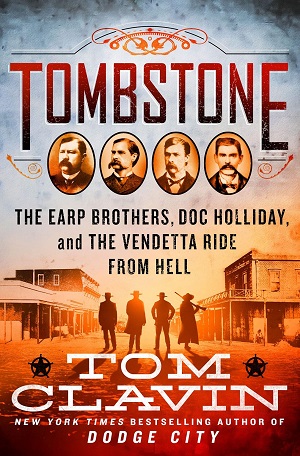
Tombstone: The Earp Brothers, Doc Holliday, and the Vendetta Ride from Hell
By Tom Clavin

The crime:

A period of swiftly escalating animosity between different factions in and around the town of Tombstone, Arizona culminated in a gunfight at the O.K. Corral that left three dead. That wasn’t the end of things, however, as the fighting and killing continued, with both sides looking to settle scores.
The book:

The story has of course passed into legend. Hollywood has had its way with it for nearly a hundred years, from movies like My Darling Clementine to Tombstone and Wyatt Earp. It even showed up as an episode on the original Star Trek called “Spectre of the Gun” that I remember well. The crew of the Enterprise were cast as the doomed Clantons facing off against the Earps and Doc Holliday, but Spock performs a mind-meld that convinces them that none of this is real so the bullets just pass through them.

In becoming a legend (or being Hollywoodized, which comes to the same thing) the story was simplified, to the point where it became an archetypal tale of good guys vs. bad guys. The real story, which has been covered in a number of recent books of which this is the latest, is more complicated. As Tom Clavin sums it up, “the ‘bad guys’ – Ike and Billy Clanton and Frank and Tom McLaury – weren’t all bad, and the ‘good guys’ – Virgil, Wyatt, and Morgan Earp and Doc Holliday – weren’t all good.”

I described the two sides as factions, which seems as good a term as any. On one level these factions were familial, with the Earps vs. the Clantons and McLaurys. But they were also political, supporting different candidates for local government (Democratic and Republican), and divided by location, with the Earps being city people living in Tombstone while the Clantons and their associates were ranchers. Finally, and this is a point more relevant to the story, the two factions had different side hustles. The Clantons were cattle rustlers and robbed stagecoaches. The Earps were gamblers and known by their detractors as the “fighting pimps.” Tombstone’s upper classes respected and needed the Earps, in the words of Wyatt’s biographer Casey Tefertiller, but they didn’t want to associate with them socially.

That the Earps were also at various times lawmen doesn’t seem to have meant much. Being a marshal was just another job, and didn’t even keep them out of jail. At the time, the question of what was legal boiled down to what you could get away with. Doc Holliday’s girlfriend even referred to “Wyatt Earp and others of his gang of legalized outlaws.” And if the Clantons stole cattle, well, they did it discreetly. And anyway

There was the view – which extended to the McLaury brothers, too – that because ranching in general was a tough living, if no one got hurt cutting a few corners, so be it. In southeast Arizona, a man did what he had to do to stay in business and feed his family. Allowances were made.

Unfortunately, this wasn’t quite live-and-let-live. In the resulting anarchy, with “the lower third of the territory . . . a boiling cauldron of competitors for cattle and power and money,” violence often broke out. This was the Wild West, and one contemporary descried Tombstone as “Six thousand population. Five thousand are bad. One thousand of these are known outlaws.” It’s actually surprising more people weren’t shot. But as Clavin points out, shootings were actually a fairly rare occurrence. What I found interesting was the way pistols were so often used in a fight as cudgels, with Wyatt Earp in particular being fond of striking men down with the butts. This is referred to in the book as buffaloing, which is the term they used for it at the time, but it’s more commonly called pistol-whipping today.

Overall this is a fun read that’s quite informative and one that explains a rather complicated situation in a way that makes it easier (if not always easy) to follow. And of course it’s a great story that throws John Ford’s dictum into reverse at nearly every turn, with the legend becoming fact.

Noted in passing:

A good example of the way history and myth can get intertwined to the point where there’s no sorting them out is in the famous line that Doc Holliday reportedly said to the gunman Johnny Ringo when Ringo challenged him to a duel: “I’m your huckleberry. That’s just my game.” Clavin calls this a “perplexing response,” but doesn’t question that Holliday actually said it.

Whether Holliday said it is still an open question. The origin of the quote is a book that came out in 1929, Tombstone: An Iliad of the Southwest by Walter Noble Burns. Burns doesn’t have the best reputation for reliability as a historian but he had interviewed Earp, who had told him stories about Holliday, so maybe it’s true. But some question if Holliday ever used the phrase.

Even murkier is the question of where the expression came from. Its meaning is pretty well agreed upon: “I’m the man for the job,” or “I’ll do it.” But how did it acquire this meaning? I’ve read different explanations. One has it that knights in medieval lore received huckleberry garlands from rescued ladies, identifying them as their defender or champion. Another source suggests that because huckleberries are small the expression originally meant that you were willing to take on any chore, no matter how menial. And yet another meaning that’s often referenced has it that the original term was “hucklebearer,” which referred to people who carried caskets at a funeral because the handles on caskets were called “huckles.” This makes “I’m your huckleberry” into a threat: I’m going to carry your casket. Apparently Val Kilmer (who played Doc Holliday in Tombstone) was frequently asked if he had actually said “I’m your hucklebearer” in the movie, which is something he denies in his memoir (of the same name): “I do not say ‘I’m your huckle bearer.’ I say, ‘I’m your huckleberry,’ connotating ‘I’m your man. You’ve met your match.’”

In any event, the expression as I’ve heard it used today leans heavily on the movie version. Which isn’t surprising given that it’s probably the only place many people have encountered it. It’s an invitation to a fight.

Another thing I took note of had to do with tarantulas. Apparently they

had a bad reputation because in the Italian seaport town of Taranto in the sixteenth century, residents suffered repeated bouts of a disease that produced a frenzy. What was named “tarantism” was believed to be from the bite of a particularly ugly spider. The inaccurate perception persisted into twentieth-century Arizona. Worse, it was viewed as a deadly enemy of humans, even though the fact is a tarantula rarely bites, and if it does, the bite is no more fatal than a bee sting.

I think I’d heard that about tarantula bites before, though looking into the matter online I guess there’s a fair bit of variety among different types of tarantula. But for the most part they aren’t killer spiders. I didn’t know about the name coming from Taranto though.

Takeaways:

You always have to ask whose law and order is being served by law-and-order governments, and who gets to label the good guys and bad guys.

True Crime Files
Bartman: The Best of the Best

Bartman: The Best of the Best

The Simpsons comics are like the TV show in that they keep things remarkably fresh despite the uniform nature of the product. This mini-anthology collects three Bartman stories. I can’t vouch for their being the best of the best, but all three are pretty good, with some funny jokes in the familiar Simpsons manner, a few smiles, and decent storylines. In the first, Bartman discovers that the delinquent crew (Jimbo, Dolph, and Kearny) have a summer-work scam of selling deliberately misprinted comic books. In the second, our hero takes on a vigilante rule-enforcer calling himself the Penalizer (one guess who that is). And in the best, longest, and last story the aliens Kodos and Kang release Itchy and Scratchy from televised reality and into the real world, which has various knock-on effects, including a nuclear explosion that turns the citizens of Springfield into superheroes/villains (Homer becomes the Indigestible Bulk, Krusty the Jokester, Moe = Barfly, and Groundskeeper Willie turns into the Plaid Piper). Bartman has to then release Radioactive Man himself to get everyone back in the box.

But while the writing is solid in the whimsical Simpsons house style, I thought the art (which is also very much in the house style of the show) the weakest of any of the Simpsons comics I’ve read. There were some really lazy panels, like one in particular of Mr. Burns jumping into the arms of Smithers, and Springfield occasionally looks as barren as Tintin-land without the ligne claire. You can almost see that as being an in-joke, as Bartman is a character that sends up comic culture and its industrial, franchise nature even more than usual for a Simpsons title. Almost, but not quite. I think they were probably just in a rush.

Graphicalex

Dangerous Dining with Alex #11

Campbell’s Chunky Spicy Chicken Noodle Soup

Overview: The Andy Warhol classic, updated for a twenty-first century palate. But would it be hot enough for me?

Label: I’ve always hated the Campbell’s Chunky Soup labels. Why? Because each can contains 515 mL (an amount that went down from 540 mL recently due to “shrinkflation”), but the labels give you the nutritional facts per 1 cup, or 250 mL. So you basically have to take all the information on the label and double it, because who ever eats half a tin of soup?

As for what’s in the tin, you probably know the score. Nothing that’s any good for you, and nearly 75% of your daily sodium in one bowl. It’s not good to get so much of your daily recommended dosages from one source, but when it comes to fast food and ready-to-eat meals you can always bank on the sodium being out of the park. As for the ingredients, “seasoned chili pepper” is given pride of place, with a tempting little pic of said peppers, but there’s a dagger after this (†) that notifies you that what they mean is seasoned chili pepper extract. And yes, it took me a while to find where it said “extract.” You’ll be hard pressed to read where it says that.

Review: I think it was Eric Schlosser’s classic Fast Food Nation: The Dark Side of the All-American Meal that first made me suspicious of soup in cans. Apparently there are chemical labs in New Jersey that design the taste and colour of all the different types. Because without colour being added this stuff is apparently just a grey sludge across the board. Hot dogs are the same way. They have to be dyed red to look like meat. If you see them being made they’re a sort of creamy beige paste. Not very appetizing, but as the saying goes, nobody wants to see the sausage being made.

I thought I’d give this particular flavour a try because it was “New!” I guess they needed to give the old stand-by some extra kick, because when do you eat regular chicken noodle soup anyway? Only when you’re sick. So perhaps the plan was to try to grow the market for it by spicing it up.

Unfortunately there’s not enough kick. It’s not very hot or spicy. In fact, I wouldn’t describe the taste as spicy at all. Instead, eating it only gave me a really unpleasant burning in the throat that I can’t explain. It doesn’t feel hot hot in your mouth, or even tasty in a spicy way. It’s just more like an acidic burn going down. I didn’t enjoy it at all, and it’s not very hearty either. So the chemists in New Jersey (or wherever) can colour me disappointed.

Price: $1.50 on sale.

Score: 4 / 10

Dangerous Dining

Dangerous Dining with Alex

This is an index of some of the analyses I’ve done of the not very good, bad, and very bad food I’ve eaten over the years. Reviews of “real” food for non-foodies!

#1: McCain Thin Crust Canadian Pizza
#2: Healthy Choice Gourmet Steamers
#3: Subway Foot-long Cold Cut Sub
#4: Dr. Oetker Ristorante Pizza Vegetale
#5: Snickers Bar
#6: Farmer’s Market Morning Glory Muffins
#7: Bar Burrito Large Grilled Chicken Burrito
#8: Pizza Hut All-You-Can Eat Lunch Buffet
#9: Bellaberry Cherry Cheesecake
#10: Harvey’s Meal Deal
#11: Campbell’s Chunky Spicy Chicken Noodle Soup
#12: Tim Hortons Apple Fritter Cereal

TCF: Down the Hill

Down the Hill: My Descent into the Double Murder in Delphi
By Susan Hendricks

The crime:

13-year-old Abigail “Abby” Williams and 14-year-old Liberty “Libby” German were killed by a stranger while hiking a woodland trail in 2017. In October 2022 a suspect named Richard Allen was taken into custody and charged with the murders.

The book:

Not my thing. As the subtitle indicates, it’s part of the sub-genre of true-crime memoir, where the author/reporter becomes the star of the show. Susan Hendricks is a television journalist who has done a lot of crime reporting at CNN and HLN. She covered the Delphi double murders at the time and interviewed the victims’ families, establishing a close personal relationship that has lasted over the years (Libby German’s older sister Kelsi has written a foreword to this book). Down the Hill is very much the story then of Hendricks’ involvement with the case rather than an account of the crime itself.

Do you want to know more about the actual murders and the police investigation? You’re not going to get it here. In large part that’s because the police haven’t been talking and there hasn’t been a trial yet. This leaves Hendricks spending a lot of time talking about her reporting and other things going on in her life, even to the point of describing a couple of her dreams about the murdered girls and how she had to work to overcome her fear of public speaking when attending CrimeCons (yes, there are such things). There are 16 pages of colour pictures, which is lavish, but only a few of them have a direct bearing on the case. For example there are a bunch of blurry screen grabs of Hendricks appearing on TV, as well as a full-page snap (also blurry) of an old newspaper story about the murder of Hendricks’s cousin over thirty years earlier. Also included is an old picture of that cousin, standing alongside her sisters and brothers. This despite the fact that her murder is only briefly mentioned in the book and doesn’t have much to do with anything.

I don’t know why the memoir angle has become such a big part of true crime publishing. Is it an outgrowth of “me journalism”? I guess it must be popular, but as I’ve said, I’m not a fan of memoir so it’s an approach that doesn’t appeal to me. As for the writing, I found it just passable. It’s easy to read in the modern style. Though I’ll register just in passing how much I dislike the tendency now to break sentences down into individual words to give them emphasis. I think this got started on Twitter (as it then was) years ago. So Abby’s grandfather here is said to miss her. “Every. Single. Day.” I think writing like this is just being lazy, and it’s something I don’t even do online.

Leaving all that aside, what I really wonder about is why this book even exists. And more specifically, why now? The case still hadn’t gone to trial at the time of publication. Indeed, as of the time of my writing this review it still hasn’t. I’m not sure if a trial date has even been set. So isn’t Hendricks jumping the gun? Almost no information has been released to the public about the murders or the investigation. We know next to nothing about the accused aside from the fact that he was married and had a daughter and that he worked at a drug store. We don’t know anything about how the two girls were killed. We don’t know if the killer (whoever he was) worked alone or with somebody.

But the biggest blank spot has to do with why it took so long for the police to arrest a suspect, and what evidence finally led to that arrest. There were two different police sketches made of someone who might have been a suspect, but neither of them looked much like Richard Allen. Meanwhile, there was a short video clip of someone walking on the bridge the girls had last been seen on, and a recording of this same individual saying a few words. It baffled me how such evidence didn’t result in someone being charged immediately. The town the girls lived in (Delphi, Indiana) only had a population of 3,000. Given the location of the crime it was felt early on that the killer was a local. And they had video of the prime suspect! Of course his face couldn’t be made out, but you could tell how big the guy was and exactly what he was wearing: a fairly distinctive cap and a blue jacket of a particular make. And Allen, if he was the guy in the video, wasn’t a recluse but someone who dealt with the public every day. Even if it wasn’t Allen, I would have thought that in a small town like Delphi there would have been a couple of dozen people able to recognize the man in the video immediately.

There are rumours that the police somehow dropped the ball on Allen at some point (a “clerical error”), but there’s nothing in Hendricks’s reporting to substantiate this. There’s a lot here that needs explaining, and I’m sure that in time more will come out. But it hasn’t yet.

Instead, the book ends with two long interviews Hendricks does with a couple of experts who weren’t directly involved with the case: retired cold case investigator Paul Holes and criminal profiler Ann Burgess. These read like transcripts of the sort of talking-head interviews you get on TV. Unfortunately, the experts can only speculate in the most general way on what might have happened. The second interview, the one with Burgess, ends with her saying “Obviously something happened . . . We’ll have to wait and see . . . I hope they get the right person. When the trial finally starts . . . I’ll be watching.”

So stay tuned! What a way to wrap things up.

Noted in passing:

It’s not often I flag something so early in a book, but here’s the first paragraph of Down the Hill:

When Kelsi woke up on the morning of Monday, February 13, 2017, it seemed to be a day just like any other – well, almost. The unusually warm winter in Delphi, Indiana, had brought in fewer snowstorms than administrators had predicted earlier in the academic year, leaving unclaimed snow days in its wake, to the joy of teachers and students alike. On this snow-free “snow day” Monday, the morning rippled with glimmering promise and endless possibilities – a free day with no classes, volleyball practice, or softball.

Now as a kid growing up on a rural school bus route I can testify to having enjoyed many snow days. But never have I heard of snow-free snow days. The school board planned in advance for how many snow days they thought there were going to be, and then when it didn’t snow they took them off as holidays anyway? That’s soft!

Takeaways:

This one is for authors: True crime writers often feel the need to be timely, to get a book into print while the crime is still fresh in the public’s mind. But you can be in too big a rush.

True Crime Files

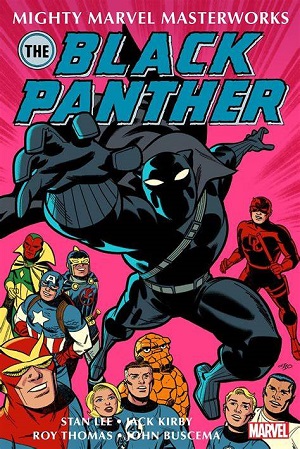
Mighty Marvel Masterworks: The Black Panther Volume 1

Mighty  Marvel Masterworks: The Black Panther Volume 1

That bubblegum pink cover might strike you as a little off, but this is a collection of Marvel titles from the late 1960s and they were doing bright colours in a big way. In Fantastic Four #53, which provides an origin story for Black Panther, we get a half-page spread of a bright red elephant tearing out a tree against a canary-yellow background. Then flip the page and the sky has turned to that same shade of pink as on the cover. All of which makes up for the sickly grey skin tone of the Wakandas, making them seem like the mall-walking zombies from Romero’s Dawn of the Dead.

The early comics here were Stan Lee and Jack Kirby collaborations. No need to go over their controversial relationship. Suffice it to say they were both good at what they did. The storylines are strong and the art explosive. But things don’t drop off in the back half of this collection, which introduces new writers and artists (principally Roy Thomas and John Buscema). The Sons of the Serpent storyline (from Avengers #73-74) is a terrific example of how good Marvel could be at the time, with a racial angle and twist ending that still plays fresh today. And Avengers #62, which has the Panther facing off against M’Baku the Man-Ape is my favourite. In fact, I had a copy of this when I was a kid. It’s one of the classic Panther stories that I’ve never forgotten.

Fans looking for a good collection of the Panther’s early days (what the Marvel Masterworks series is aimed at) should really like this, as the Penguin Classics Black Panther volume skips most of this early material. And to be sure the Panther started off mainly as a supporting character. In Fantastic Four #57, which is only included to round off the Klaw storyline, he barely puts in an appearance. It took him a while to come into his own. And also to get his costume up to speed (seeing his pupils behind his mask was a bit disconcerting). But this is still an essential volume, full of classic material that I call classic not just because it’s old but because it stands up as great reading more than fifty years later.

Graphicalex

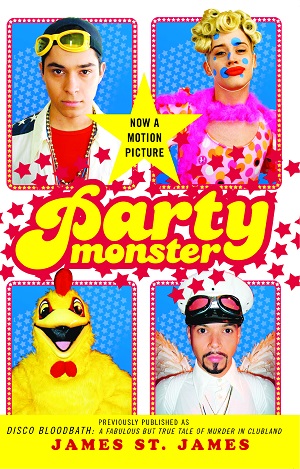
TCF: Party Monster

Party Monster
By James St. James

The crime:

The Club Kids were a flamboyant bunch of mainly 20-something, mainly gay men who made a big splash as the media darlings of New York City’s club scene in the late 1980s and early 1990s. As their moment in the spotlight drew to a close and their drug habits got harder to maintain one of the more prominent of the Kids, Michael Alig, along with a friend named Freeze (Robert Riggs), killed fellow Club Kid Andre “Angel” Melendez during an argument over a drug debt. Melendez’s body was then dismembered and thrown in the Hudson River. This was in March 1996. Alig and Riggs would both go to jail, with Alig being released in 2014 and dying in 2020 from a drug overdose.

The book:

A real change-up from the last book I covered! In my notes on Kate Summerscale’s The Wicked Boy I talked about how impressed I was by Robert Coombes, and how he’d managed to rebuild his life after killing his mother and being incarcerated in a psychiatric hospital for 17 years. From very humble beginnings (finished school and working in the East End dockyards by the age of 13) he’d gone on to become a decorated soldier in the First World War, an accomplished musician, and a successful farmer, among other things.

Compare and contrast the lives of the Club Kids, many of whom came from reasonably well-off if not privileged backgrounds and equipped with decent educations. They then came to New York and . . . partied. Played dress up. Took a lot of drugs (ketamine, heroin, cocaine). Were terrified of getting old, which for St. James meant turning 30. No, these weren’t Victorian kids who had to grow up fast but artificial “kids” who never wanted to grow up at all.

One has to wonder what any of them were actually good at. Certainly not killing people. The messy work Freeze and Alig made of offing Melendez was cruel in its sheer incompetence. Making a scene? I guess Alig’s semi-official job title was party promoter, and that could be seen as work, of a sort. Meaning it had economic value, at least until it didn’t. But if you’re like me you’ll probably read Party Monster (originally titled Disco Bloodbath and re-released as Party Monster when a movie came out) wondering what any of the Club Kids did to make money. Based on my own limited acquaintance with similar people in Toronto around the same time, I think that prostitution was a big part of it, but James St. James (himself one of the Club Kids) doesn’t mention this, and he’s generally pretty open about the dark side of the Club Kid lifestyle.

I don’t want to play the old man shaking his head at kids today, or make this comparison to Coombes in order to put forward some argument about the decline of Western civilization. But I did find the shift from Coombes to Alig not only jarring, but one that says something – not so much about moral decadence as about the loss of what might be described as general competence. It’s not that if you dropped the Club Kids naked into the jungle they wouldn’t be able to survive. They weren’t even getting by in NYC without the support of people like “the Patron Saint of Downtown Superstars, Peter Gatien,” who took care of “all those little things like bills and rent and food and outfits.”

There are two further points this raises.

First, not having to worry about “all those little things” leads to the terrible condition that Alig fell into where reality “could simply be dismissed.” He began to feel that “the OUTSIDE WORLD NEED NEVER TOUCH HIM,” from whence arose “a perfectly understandable onslaught of delusions of grandeur.” This actually made me think of Kurtz kicking aside all restraints in Heart of Darkness. And we know what happened to him.

The second point this moral squalor and coked-up narcissism leads to is the question of just how much we can care about any of the Club Kids and their dismal fates. Personally, I didn’t like them at all. Their behaviour was vicious and self-destructive and I didn’t find anything about them to be endearing or cute. Alig in particular seems to have been a thoroughly nasty piece of work, and at one point St. James himself writes off the scene as populated by “nasty sons-of-bitches, the whole lot of them.” But leaving my personal feelings aside, this lack of empathy or sympathy is not something I’m bringing to the book but a point St. James frequently addresses himself.

He makes it clear, for example, that he absolutely hated (his emphasis) Melendez, and that he didn’t think his murder was any great loss. He didn’t care. Indeed “nobody cared about him” among the clubbers, except insofar as he was their dealer. The police didn’t care about him: “Not one lick.” His (real) family cared, but St. James doesn’t have any time for them. And so he poses us a question (the use of block caps, bold, and italics are all in the original; it’s just the way St. James writes):

If one day, Mother Teresa was out weed whacking and accidentally chopped off Hitler’s head – WOULD THAT NECESSARILY BE A BAD THING?

I mean . . . if a person commits a crime, and no one cares – can we all just adjust our lip liner?

Look, I’m just being honest here. I think that the whole point of my story is that nobody ever implicated Dorothy in the double witch homicides of Oz because, well . . . you know . . . She’s Judy Garland, for God’s sakes, and Louis B. Mayer forced her into a life of drugs at such a young age, poor thing . . .

This is protesting, or pleading, a bit too much. Angel was Hitler? Alig was . . . Judy Garland, “forced . . . into a life of drugs”? Later, St. James will present this key question to us as “the old Dostoyevskian Conundrum: if you kill an unlovable cretin, is the crime still as heinous?”

To give St. James his due, this is the kind of question that I think a lot of true crime forces us to consider. There are victims who we don’t extend a lot of sympathy towards, either because they are seen as having contributed to their own destruction or because they’re just horrible people. That said, it’s a point that, when you step a little further back to look at the whole Club Kids phenomenon, takes in everyone. As a reader it’s easy to look on with horrid fascination at these circus/freak show proceedings, in part because grabbing your attention was what being a Club Kid was all about, and in part because this is such a compulsively readable book. I enjoyed every page of it, without caring much about any of the people in it at all.

Noted in passing:

I was reading a movie tie-in edition that had the obligatory “Now a Motion Picture” bubble on it. But not a major motion picture, as is usual (for previous thoughts on this, see my post on The House of Gucci). I don’t think anyone had any illusions on the score of this being a “major” film. Though calling it a motion picture is itself a form of high praise. Who says “motion picture” anyway? Who even writes it? I think this is one of the only places you can still see it being used.

Takeaways:

Every party has an end, so you should make arrangements ahead of time for your ride home.

True Crime Files

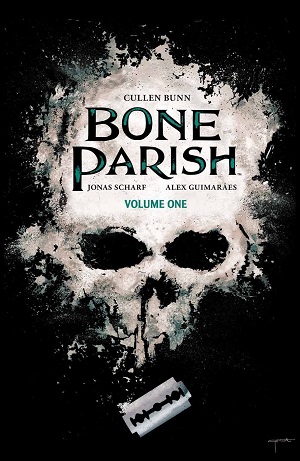
Bone Parish: Volume One

Bone Parish: Volume One

Breaking Bad meets American Horror Story. I’m sure I’m not the first person to describe it that way, but it was so obvious I managed to come up with it by myself.

The premise is nifty. A family in New Orleans is producing and selling a drug called Ash that’s made out of the remains of dead people. The high that it gives allows the user to be possessed by the spirit of whoever’s corpse they’re snorting. Or sometimes they just inhabit the dead person’s reality on an one-way trip. It’s not clear. But in any event, these altered states are evoked quite effectively in swirls of psychedelic pinks and purple haze. They can lead to epiphanic visions or go very bad.

Despite the risks in using it, Ash turns into a very popular drug and the family is soon faced with organized crime elements looking to muscle in on some of the action. Fighting back, the drug becomes weaponized, which leads to a satisfyingly gruesome conclusion.

A good story then, and one that kept me interested all the way through. I especially liked the blurring of the line between the living and the dead, and the way the family members have personal demons that are lovers. On the negative side, I thought Cullenn Bunn was a little too fond of hooking text over from one page to the next, and Jonas Scharf’s faces looked too much like masks. In fact, there was one page where I was sure Leon was wearing a mask and it took me a long time to decide that he wasn’t. Also, the big ‘gator scene seemed out of scale, which was distracting for a full-page spread. But I still enjoyed it and was definitely interested in seeing where things were going next.

Graphicalex

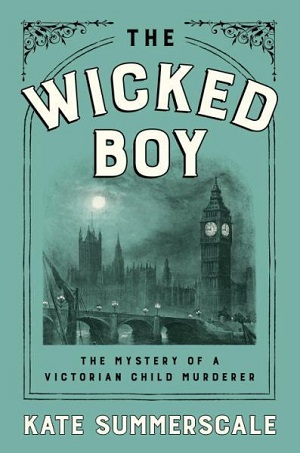
TCF: The Wicked Boy

The Wicked Boy: An Infamous Murder in Victorian London
By Kate Summerscale

The crime:

IN 1895 13-year-old Robert Coombes killed his mother. His father was away at the time, and after the murder Robert spent the next week and a half living with his younger brother Nattie and entertaining a simple-minded friend of the family while his mother’s corpse rotted in an upstairs bedroom. Eventually, concerned neighbours and family members came to investigate and the smell gave everything away. Robert would stand trial and be found not guilty by reason of insanity. After 17 years in Broadmoor Hospital for the Criminally Insane he was released and immigrated to Australia. He would subsequently serve with distinction in the Australian army in the First World War and, after the war, settled down as a small farmer.

The book:

I’m on record as having been underwhelmed by Kate Summerscale’s much-lauded second book The Suspicions of Mr. Whicher. She seemed to me to be a dry writer a little too given to information dumps, and I didn’t have much, or really any interest in the back half of that story, which tried to reconstruct Constance Kent’s subsequent life in Australia after the Road Hill House murder trial. Nevertheless, it was a surprise bestseller and Summerscale has gone on to become a big name in the genre of historical true crime.

I’m not knocking her success. She puts the work in and picks interesting subjects to explore. With The Wicked Boy she follows a very similar case to that earlier book. Once again we have the sensational case of a killer child in Victorian days, and once again the killer immigrates to Australia after the dust settles. That said, I thought The Wicked Boy a better book.

I think this is primarily because Coombes himself is such a fascinating figure. Fascinating and downright impressive in many ways. It’s a cliché that kids had to grow up faster in days of yore, and that life among the working poor in Victorian England was no picnic, but it’s still worth keeping in mind the fact that Coombes grew up in a working class family at a time and in a place when working class meant something really horrible. Already at 13 Robert had finished with his schooling and was employed in an East End dockyard as a “plater.” I’m not sure all of what this entailed, but it sounds like it would involve a lot of pretty strenuous physical labour, especially for a 13-year-old. Primarily, Summerscale tells us, they would “run errands and mind machines” but also help out in “cutting and shaping sheets of iron on a lathe, placing them on moulds and bending them into shape.”

Kids were just more capable, not to mention independent, in that day. A year earlier, when he was 12, Robert had left the house and journeyed 40 miles down the Thames on his own just to see the court appearance of a notorious murder suspect. Three years earlier, when he’d been only 10, he’d robbed money from his parents’ cashbox and run away with Nattie all the way to Liverpool. It’s hard to imagine many 10-year-olds managing for themselves that well today, even with better rail service.

This competence and independence was something characteristic of those times. I don’t want to make it sound like a golden age, because it certainly wasn’t, but you simply can’t fail to be impressed at Coombes’s many achievements. As noted, his schooling was done by 13, by which age he was already a smoker. He did not come from a background of any wealth or privilege. After killing his mother he was sent to a criminal asylum and then a Salvation Army halfway-house program before leaving to Australia. And yet through all this he learned to be an efficient tailor, was a better-than-average musician (playing various instruments from violin to cornet and leading his unit’s band while in service), won several medals in the military as a stretcher-bearer while participating in some of the First World War’s worst campaigns (Gallipoli and Passchendaele), played chess at a very high level, and then after the war, without having any kind of a background in agriculture or animal husbandry, ran a dairy farm and was a highly-regarded raiser of vegetables that he sold locally. When his house burned down he was able on his own to build a cabin, however rudimentary, to replace it.

These are accomplishments that today I couldn’t match. I grew up on a dairy farm and did a fair bit of gardening so I might be able to shuffle by with that part out of muscle memory. But I can’t play any musical instrument, couldn’t sew on a button, and my chess is barely at a beginner’s level despite playing a lot online. I’m not a handyman and so probably couldn’t put up much in the way of a shack even with an unlimited account to draw on for supplies from a home hardware store. Would an online tutorial help? I was briefly in the reserves, but imagine that if I’d ever been at Gallipoli or the Western Front I would have been blown up pretty quickly (though admittedly, survival in this regard would mostly come down to luck).

I’m reluctant to invoke labels like the “greatest generation,” but when I think back to my father’s and grandfather’s generations (my father was born in 1923) and look at their accomplishments I can’t help but notice a pretty steep drop off. It’s not just that adversity builds character, since they were reasonably well off, but rather that more was expected of them. Then with the dread Boomers and John Kenneth Galbraith’s affluent society everything went to hell. But just thinking about this gets me down.

Getting back to the book, it follows Summerscale’s interest in the major social and cultural questions of the day, from what was seen as the malign influence of the penny dreadfuls that Coombes was fond of reading (the violent videogames of their day) to the slapdash state of criminal psychology. But then, even by today’s standards it’s hard to tell what led Coombes to kill his mom. I guess a “psychotic episode” (the modern diagnosis that’s offered) is a bit more convincing than “homicidal mania” (a contemporary one), but that may only be because I’m more used to the newer terms.

What makes this a special book though is the revelation at the end of the character of Robert’s life in Australia and the big difference he made in the life of a neighbouring boy. It’s not just that he came out the other side of all he experienced intact. More than that, his is a dramatic tale of redemption. Which leads to another troubling reflection about then vs. now. Did the justice system, at least in some cases, actually do a better job of rehabilitation in those dark ages than it does now? Would a Robert Coombes today turn out as well?

Noted in passing:

When dad was away, 13-year-old Robert slept in bed with his mother.

Summerscale doesn’t get into a discussion of how typical this was of family sleeping arrangements at the time, but it certainly struck me as weird. It’s not like there wasn’t another bed he could sleep in (presumably with his brother). It was at this same time that Freud came up with his theory of an Oedipal complex.

Takeaways:

Your neighbour might be a killer or a hero. Or both. And you’d never know.

True Crime Files