Joseph Conrad’s Heart of Darkness

Joseph Conrad’s Heart of Darkness

I don’t envy Peter Kuper taking on the challenge of adapting Heart of Darkness. It’s one of those classic works that every well-read person knows forward and back. Not only are there a half-dozen famous scenes and dramatic lines that readers will already have their own imaginative reconstruction of, but there’s also Coppola’s Apocalypse Now playing somewhere in the background. Even if Marlon Brando’s plus-sized Colonel Kurtz doesn’t correspond to the emaciated figure in Conrad, I think it likely that most people see Brando when Marlow finally gets to the Inner Station, the end of the line.

Put another way, everyone has their own Heart of Darkness and all you can really ask is that an illustrator not colour outside the lines too much. For example, Kuper takes a couple of what I think are minor items from the text and leans on them pretty heavily. First there’s Marlow’s pipe, which he’s seen handling throughout. There is I think only one reference to Marlow smoking a pipe in the Conrad’s book, and that comes in one of the moments that takes us back outside of the main narrative. At the beginning of the story he doesn’t have a pipe because both his hands are described as placed palms outward like an idol. The other image is that of crocodiles in the jungle. I believe Conrad mentions alligators (which must be wrong) only once. In any event, I didn’t think of them as having as big a presence as they do here.

There was only one point though that I strongly disagreed with. This is Kuper’s rendering of the ship shelling the coast. I think Conrad makes it clear that the shelling, like the fusillade of gunfire that the pilgrims launch into the riverside jungle later, is totally useless. The jungle is like a giant green sponge that absorbs cannon- and gunfire without being affected in any visible way. But Kuper includes a panel from the native point of view that has Africans in the jungle running away from the cannon shells. This made no sense at all to me.

The visual motif that stood out the most was that of the spiral. This is the way the sun is presented throughout, and it’s also used for people’s eyes to show madness (as with the doctor who examines Marlow before his setting out, and for Kurtz at the end). It’s also the spiral snake that is the Congo River, and so gives the impression of a vortex that’s swallowing Marlow just as it’s already consumed Kurtz. My favourite motif though was the way the jungle is presented as a tapestry of foliage of faces and figures. This wallpaper effect works especially well because there’s no sharp distinction between blacks and whites but only shades of grey, giving the forest an urban-camouflage effect.

But overall I have to say I felt a lack of punch to the proceedings. Giving “The horror! The horror!” two double-page spreads seemed like Kuper was trying too hard to make up for something he really wasn’t feeling. But then, as Marlow insists, Kurtz is a voice, and how can any narrator, or artist, render that?

So it’s a responsible adaptation, but I came away thinking Kuper wasn’t a great fit for this material, as he was for his Kafka adaptations. It seems to me that Heart of Darkness needs something like that fantastic, psychedelic note of expressionism that Coppola and cinematographer Vittorio Storaro brought to it. Conrad’s prose can be maddeningly vague and ambiguous, but (and at the same time) it can also be precise, emotionally fraught, lurid, and bombastic. I wouldn’t call Kuper’s approach conservative here, but there’s something in Conrad he wasn’t reaching.

Graphicalex

Catholic tastes

At one point in his biography of William Shakespeare, Anthony Burgess goes on a bit of a digression on the subject of bear-baiting:

In its classic form, a bear was put in a ring, sometimes tethered to a stake, and set upon by mastiffs; but bears were expensive investments, so other animals (such as bulls and horses) were commonly substituted. One variation was to put a chimpanzee on the back of a horse and let the dogs go for both together. The sight of a screeching ape clinging for dear life to a bucking horse while dogs lept at it from below was considered about as rich an amusement as public life could offer. That an audience that could be moved to tears one day by a performance of Doctor Faustus could return the next to the same space and be just as entertained by the frantic deaths of helpless animals may say as much about the age as any single statement could.

I don’t know why anyone should find this surprising. Sensational, exploitative, and cruel forms of entertainment have always been popular, and not just among the unwashed masses. Why should people who enjoy Renaissance drama not be as fond of sex and violence as anyone else? And how pure was Renaissance drama anyway? Titus Andronicus is pretty rough.

And it’s not just audiences that are like this. Lots of great artists have been individuals of low morals and lower taste. Personally I don’t think I would have ever gone to see gladiators, bear-baitings, witch burnings, or public executions back in the day, but I do like to watch stuff that a lot of people (and I wouldn’t always disagree) would consider to be crap that’s both offensive and immoral. I think Burgess probably did too. I also, like Burgess, enjoy reading Shakespeare. I don’t think that tells us anything about our current age so much as it’s a comment on human nature.

TCF: Pizza Bomber

Pizza Bomber: The Untold Story of America’s Most Shocking Bank Robbery
By Jerry Clark and Ed Palattella

The crime:

On August 28, 2003 a pizza delivery man named Brian Wells robbed a bank in Erie, Pennsylvania with a bomb locked to a collar around his neck. He was almost immediately apprehended by the police and the bomb detonated while he was in custody, killing him instantly. After years of investigation a rough outline of the robbery plot was pieced together, principally involving a mentally ill woman named Marjorie Diehl-Armstrong, a superficially genial but disturbed handyman named Bill Rothstein, and a couple of junky lowlifes named Barnes and Stockton. Diehl-Armstrong was the only one who would go to trial for the crime, as Rothstein died of cancer before he could be charged with anything, Barnes pled guilty for a reduced sentence, and Stockton was granted immunity for testifying against Diehl-Armstrong. Barnes and Diehl-Armstrong both died in prison.

The book:

I’d forgotten all about the Pizza Bomber case. At the time it was headline news, receiving national (and some international) coverage and having seven episodes devoted to it on America’s Most Wanted. But the churn of new and shocking crimes is endless and it took reading this book, which was published in 2012, to bring the story back to me. I then went and watched the four-part Netflix documentary Evil Genius that came out in 2018, which brought the story up to date. But more on that in just a bit.

Both authors were involved in the case – Jerry Clark being the lead FBI agent in charge of the investigation and Ed Palattella covering the story for the Erie Times-News – and there’s a bit of a joke near the end of the book where the lawyer for one of the conspirators tells Clark that his client is looking for a book or movie deal. “Get in line,” Clark tells him. “Everyone who’s touched this wants that.”

Indeed, and it was a “line” that Clark himself was near the front of.

The reason there was such a line is that the story is true crime gold. All of the essential elements are here: a cast of eccentric characters, a strange and sensational crime, and a mystery remaining at the end as to what exactly was going on. As the judge at Diehl-Armstrong’s trial put it, “This case represents the unfortunate combination of the incredibly bizarre and the sadly tragic.”

The biggest question has to do with how much Brian Wells knew about the plot in advance. Was he a total innocent, grabbed nearly at random, or was he a semi-willing co-conspirator in the bank robbery? Did he know the bomb around his neck was real? Law enforcement at the time felt that he was involved in the plot to some degree, and they had grounds for thinking so. One witness put him together with Rothstein the day before the robbery, and his behaviour leading up to his death was very strange. On the other hand, in the Evil Genius documentary a prostitute Wells associated with confesses that she basically set him up as the stooge (this is, by the way, perhaps the bit of information that Clark thought she was holding back at the end of the book). Is she a credible witness? No. Is she more credible than the other participants in the scheme? Yes.

It seems unlikely we’ll ever know what was going on now. But the question of Wells’ involvement underlines a bigger mystery relating to the case: Just how smart were these guys?

Clark and Palattella go out of their way to make the argument that Diehl-Armstrong, Rothstein, and even Wells were smarter than average. Perhaps. Wells, however, was a middle-aged man delivering pizzas and using prostitutes. Diehl-Armstrong and Rothstein both came from privileged backgrounds and were recognized as intelligent, but they had both bottomed out: living in hovels, with no jobs and not only associating with criminals but being engaged in various criminal activities themselves. That they considered themselves to be intellectuals and the smartest people in whatever room they happened to be in is pretty strong evidence of the contrary. Being smart is not something that really smart people brag about.

They might have been “fractured intellectuals,” to use the term Rothstein adopted for one of his clubs. Diehl-Armstrong in particular was mentally ill. But it’s probably as accurate, and more to the point, to just describe them as bitter losers, experiencing the full measure of downward mobility with the next stop being homelessness and a potter’s field. As Clark and Palattella observe, “their avarice fit with their obsession to hang on to the past, to the prosperity their families once enjoyed.” The robbery they planned made no sense whatsoever except as a way of lashing out at forces they felt had conspired against them.

So, intelligent? I guess it depends on how you define intelligence. Clark and Palattella mention IQs on occasion, but I don’t think that means much. Criminal masterminds? Hardly. In my notes on Julie K. Brown’s Perversion of Justice I brought up the subject of criminal intelligence, but I don’t think even by those loose standards anyone here qualifies. “For people who were supposed to be brilliant,” the authors write, “Diehl-Armstrong and Rothstein did a lot of stupid things.” Perhaps the best assessment came from Diehl-Armstrong herself, describing Rothstein: “as very stupid but very, very intelligent and dangerous.” A good example is the collar bomb itself, considered by one of the agents as “the most sophisticated improvised explosive device (IED) he had ever seen.” Despite all its cleverness though, it was also a Rube Goldberg doohickey that only half worked as it was supposed to. Or was it supposed to work at all?

I do have to credit the gang with one very notable accomplishment though. The hardest part in any conspiracy is getting everyone involved to keep a secret. This never works out. So how did this gang of broken and burned-out cases manage to maintain so much solidarity in silence? Even Brian Wells, wearing the collar, played his part until the end, making up some story about being shanghaied by a bunch of Black guys.

I guess fear was the main motivator. In the documentary, Diehl-Armstrong says all the co-conspirators were afraid of the death penalty and so watched each other’s backs. They may also have been afraid of each other, and Diehl-Armstrong in particular. She’d already killed a couple of partners. In Evil Geniuses it’s suggested that Rothstein was still carrying a torch for Diehl-Armstrong, but since he’d already dropped the dime on her for Roden’s murder I have trouble squaring that.

Still, it’s impressive that there was so much solidarity. Even after copping pleas, Barnes and Stockton clearly didn’t want to rat their partners-in-crime out.

So there you have it: violence, weirdos, and mystery. True crime in its purest form.

Noted in passing:

There are often moments when you’re reading the description of some action in a book that you have to stop and wonder just what’s happening because it’s so hard to visualize. For example, in the authors’ brief recounting of the stormy relationship between Diehl-Armstrong and then-boyfriend Jim Roden (she ended up killing him and stuffing his body in Rothstein’s freezer) this little nugget is served up: “Violence plagued their relationship for a decade. He cut her thigh by pushing her into a broken glass panel of a stove door in July 1994.”

Now just how did this work? Stove doors are usually pretty low to the ground and Diehl-Armstrong was a very tall woman. How would he push her thigh into a stove door? Or was the glass panel completely detached from the stove door and located somewhere else?

Takeaways:

Dead men tell no tales. But dying men can be liars even on their death bed. Clark and Palattella talk about the admissibility of “dying declarations” as evidence (they are considered an exception to the rule against hearsay) because the circumstances under which they are made support their credibility. But Bill Rothstein repeatedly lied that he’d had no involvement in Wells’ killing, even just hours before his death. Does it make sense to believe that someone’s character is going to change in their final days, or even minutes? Thinking like that seems to belong in a time when there was widespread belief in deathbed conversions and sneaking into heaven by a whisker. I don’t think it applies very much today.

True Crime Files

Swamp Thing: The Bronze Age Volume One

Swamp Thing: The Bronze Age Volume One

The roots of Swamp Thing, to make use of an appropriate metaphor, are in horror comics. This first Bronze Age collection actually gives us two origin stories though, with the creature’s first slightly hang-dog appearance in the DC horror/dark fantasy/mystery comic House of Secrets and then the reworked version when he was given his own series a little over a year later.

But even after rebranding as a superhero, the world he inhabited would continue to be that of genre horror. After the first issue of the regular series he’s immediately whisked away to a castle with “Caligarian corridors” that’s located in Transylvania (or Universal’s backlot, or somewhere thereabouts) where he meets the mad scientist Arcane, his Plasticine creations the Un-Men, and a Frankenstein’s monster called the Patchwork Man. Then it’s off to the Scottish moors and a date with a werewolf. Still to come are a killer robot, an alien, and even a Lovecraftian Ancient One called M’Nagalah. Somehow they skipped vampires.

That probably sounds terribly derivative, and it is, but I thought the stories were all pretty interesting, and Len Wein isn’t averse to lathering up some of that purple comic-book prose to paint a scene with. Get a load of this scene setting: “The darkness cries – a long mournful wail that writhes through the gnarled cypress branches like a breath of Hades’ wing, skipping over the placid surface of the stagnant mire below . . .” And Bernie Wrightson’s art also has a feel for the grotesque that sets the right note.

The Swamp Thing himself makes a great hero. At least he’s always been a favourite of mine. Blown up in a lab experiment, the Nobel Prize-winning scientist Alec Holland runs into the swamp, where his bio-restorative formula brings him back to life as an anthropomorphic moss-man, 89 inches tall and 547 pounds – “apparently all muscle!” Bullets don’t have any effect on him and if a limb gets sliced off it grows back in no time. I liked the idea of him not being able to communicate and so being mistaken as the monster that killed Alec Holland who then gets hunted by the series Ahab, Matt Cable, even though this later gets tossed away.

As for the wild, globe-hopping adventures, I don’t think sales were very strong and they may have just been trying to find something that would stick. There’s even a Batman cameo thrown in with one of the less fanciful episodes. You’ve always gotta work the crossovers.

In sum it’s a crazy and colourful mix of the surreal with a whack of different genre tropes, from horror to SF to dark fantasy to your standard superhero fare. You can see why so many different creators have been drawn to such a protean figure over the years, without ever being able to pin him down.

Graphicalex

Graphicalex

Graphicalex: Adventures in the Illustrated Zone

Here’s an index of my brief reviews of comic books and graphic novels that I’ve been reading.

A

Afterlife with Archie: Escape from Riverdale
Alien: Black, White & Blood
Alien: Bloodlines
Alien: Descendant
Alien: Icarus
Alien: The Illustrated Story
Alien: Revival
Alien: Thaw
Aliens: Dead Orbit
Aliens: Dust to Dust
Aliens: The Original Years
Aliens: The Original Years Volume 2
All-New X-Men: Here to Stay
All-New X-Men: Out of Their Depth
All-New X-Men: Yesterday’s X-Men
Amazing Fantasy Omnibus
Ant-Man/Giant-Man: The Man in the Ant Hill
Apocalypse Nerd
The Approach
Archie Horror Presents Chilling Adventures
Archie vs. Predator
Asterix the Gaul
Asterix and the Golden Sickle
Asterix and the Goths
The Avengers: Earth’s Mightiest Heroes
The Avengers: Four
Avengers: Revelations

B

Bartman: The Best of the Best
Batman Arkham: Hugo Strange
Batman Beyond: 10,000 Clowns
Batman: Cacophony
Batman: Damned
Batman: The Detective
Batman: His Greatest Adventures
Batman: Justice Buster Vol. 1
Batman: Justice Buster Vol. 2
Batman: Justice Buster Vol. 3
Batman: Reptilian
Batman R.I.P.
Batman/The Shadow: The Murder Geniuses
Batman: Year 100
Batwoman: Volume 1 Hydrology
Beowulf
Big Trouble in Little China (Legacy Edition Book One)
Big Trouble in Little China (Legacy Edition Book Two)
Birches
Bleedout
Bone: Out from Boneville
Bone Parish: Volume One
Bone Parish: Volume Two
Bone Parish: Volume Three
Brave New World
BRZRKR: Volume One
BRZRKR: Volume Two
BRZRKR: Volume Three

C

Captain America/Black Panther: Flags of Our Fathers
Cemetery Beach
Chew Volume One: Taster’s Choice
Chew Volume Two: International Flavor
Chew Volume Three: Just Desserts
Chew Volume Four: Flambé
Chew Volume Five: Major League Chew
Chilling Adventures of Sabrina: The Crucible
Classics Illustrated: The Murders in the Rue Morgue and Other Tales by Edgar Allan Poe
Cla$$war
Clive Barker’s Hellraiser: Pursuit of the Flesh
Contagion
Crime and Punishment

D

Daredevil: Chinatown
Daredevil: Dark Art
Daredevil: Identity
Daredevil: Know Fear
Daredevil: Supersonic
DCeased
Demon Slayer Volume 1: Cruelty
Demon Slayer Volume 2: It Was You
Do Androids Dream of Electric Sheep? Volume 1
Doctor Strange Omnibus Volume 1
Doctor Strange: A Separate Reality
Doctor Strange: Strange Origin
Druuna: Carnivora
Druuna: Creatura
Druuna: Morbus Gravis I
Druuna: Morbus Gravis II

E

1872
The Emperor’s New Clothes
The Empty Man
The Empty Man: Manifestation
The Empty Man: Recurrence

F

Fighting MAD
5 Days to Die
Foul Play!

G

Garbage Man
Gideon Falls Volume 1: The Black Barn
Gideon Falls Volume 2: Original Sins
Gideon Falls Volume 3: Stations of the Cross
Gideon Falls Volume 4: The Pentoculus
Gideon Falls Volume 5: Wicked Worlds
Gideon Falls Volume 6: The End
Gotham City Monsters
Grass Kings: Volume One
Grass Kings: Volume Two
Grass Kings: Volume Three
Green Lantern Corps Volume 1: Fearsome
Green Lantern Corps Volume 2: Alpha War
Green Lanterns Volume 1: Rage Planet

H

Hailstone
The Haunt of Fear Volume 1
The Highwayman
The Hound of the Baskervilles

I

The Immortal Hulk Volume 1: Or is He Both?
The Immortal Hulk Volume 2: The Green Door
The Immortal Hulk Volume 3: Hulk in Hell
The Immortal Hulk Volume 4: Abomination
The Immortal Hulk Volume 5: Breaker of Worlds
The Immortal Hulk Volume 6: We Believe in Bruce Banner
The Immortal Hulk Volume 7: Hulk is Hulk
Indestructible Hulk: Agent of S.H.I.E.L.D.

J

Joseph Conrad’s Heart of Darkness
Jughead: The Hunger Volume One

K

Kill or Be Killed: Volume One
Kill or Be Killed: Volume Two
Kill or Be Killed: Volume Three
Kill or Be Killed: Volume Four
Kill Shakespeare: A Sea of Troubles
The King in Yellow

L

Lady Killer Volume 1
Lady Killer Volume 2
The Lady of Shalott
The Last Days of American Crime

M

MAD’s Al Jaffee Spews out More Snappy Answers to Stupid Questions
MAD Book of Almost Superheroes
The MAD Book of Mysteries
Malignant Man
The Mammoth Book of Best Crime Comics
Man-Bat
Marvel Comics: Timeless Tales
Marvel Zombies Volume 1
Marvel Zombies 2
Marvel Zombies 3
The Metamorphosis
Mighty Marvel Masterworks: The Avengers Volume 4
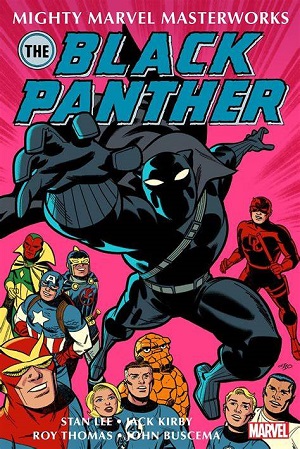
Mighty Marvel Masterworks: The Black Panther Volume 1
Mighty Marvel Masterworks: Daredevil Volume 1
Mighty Marvel Masterworks: Daredevil Volume 2
Mighty Marvel Masterworks: Daredevil Volume 3
Mighty Marvel Masterworks: The X-Men Volume 1
Monster & Madman

N

1984

O

The Object-Lesson
Old Man Logan
Old Man Logan: Warzones
Old Man Logan 1: Berserker
Old Man Logan 2: Bordertown
Old Man Logan 3: The Last Ronin
Old Man Logan 4: Old Monsters
Old Man Logan: Past Lives
The Owl and the Pussycat

P

Phoenix
The Pitiful Human-Lizard: Far from Legendary
Plants vs. Zombies: Zomnibus Volume 1
Plunge

Q

R

The Raven
The Raven (pop-up book)
Ravencroft
The Return of a MAD Look at Old Movies
Road of the Dead: Highway to Hell
Ruins of Ravencroft

S

Saga of the Swamp Thing Book One
Saga of the Swamp Thing Book Two
Saga of the Swamp Thing Book Three
Saga of the Swamp Thing Book Four
Saga of the Swamp Thing Book Five
Saga of the Swamp Thing Book Six
Scooby Apocalypse Volume 1
Scooby Apocalypse Volume 2
Shaft: Imitation of Life
Sherlock Holmes: The Final Problem
Simpsons Comics Colossal Compendium: Volume One
Simpsons Comics Colossal Compendium: Volume Two
Simpsons Comics Colossal Compendium: Volume Three
Simpsons Comics Unchained
The Simpsons Treehouse of Horror: Hoodoo Voodoo Brouhaha
Solo: The Deluxe Edition
The Superior Spider-Man: Goblin Nation
Superior Spider-Man Team-Up: Superior Six
Superior Spider-Man Team-Up: Versus
Swamp Thing: The Bronze Age Volume One
Swamp Thing: The Bronze Age Volume 2
Swamp Thing: The Bronze Age Volume 3
Swamp Thing: Protector of the Green
Swamp Thing: Volume One
Swinging MAD

T

Tag
Talent
Tales from the Crypt Volume 1
Thor: First Thunder
300
Titans: The Lazarus Contract
Titans Vol. 1: The Return of Wally West
Titans Vol. 2: Made in Manhattan
Titans Vol. 3: A Judas Among Us
Token MAD
Torso
Trashed

U

The Uncanny X-Men: Red Wave
Underworld Unleashed: The 25th Anniversary Edition
Utterly MAD

V

The Vault
The Vault of Horror Volume 1
Velvet Volume 1: Before the Living End
Velvet Volume 2: The Secret Lives of Dead Men

W

X

Xerxes: The Fall of the House of Darius and the Rise of Alexander

Y

Z

The Zombie Night Before Christmas
Zomnibus

The real green

Still looking green, for now. (CBC News – Patrick Morrell)

Ontario’s ruling conservative party has recently found itself in hot water after taking nearly 3,000 hectares of mostly agricultural land out of the protected Greenbelt around Toronto and opening it up for development. Technically this was part of a “swap,” with 3,800 hectares being newly included in the Greenbelt elsewhere. The government says that the land was needed to build more affordable housing in the province, but few people are buying that argument.

Premier Doug Ford now says there will be a re-evaluation of the land swap deal after two government watchdogs raised serious questions about how it happened, including a report from Ontario’s auditor general that found the process was heavily influenced by a small group of politically connected developers. Housing Minister Stephen Clark has stepped down amid all the controversy.

Opposition parties, and many public voices, are calling for the lands to be returned to the Greenbelt. Indeed, one of the auditor general’s 15 recommendations made in their report was for the land swaps to be reconsidered.

In response, that was the one report recommendation that Ford’s government refused to even consider. In Ford’s statement that he will re-evaluate the process he even suggests that the result may be that he takes more land out of the Greenbelt.

I could be wrong, but I feel safe in saying that that the decision to take the land out of the Greenbelt is not going to be reversed. According to the auditor general’s report the owners of the land (not farmers, but the developers who bought it up) stand to see the value of it rise by $8.3 billion.

$8.3 billion.

It doesn’t matter what environmental groups and government watchdogs say. It doesn’t matter if ministers resign in disgrace. It doesn’t matter if governments are voted out of office. It doesn’t even matter if people go to jail. With so much money at stake literally nothing else matters. That land isn’t going back into the Greenbelt.

Update, September 21 2023:

I called it wrong.

Killing time

From Self-Help (1859) by Samuel Smiles:

It is possible that at this day we may even exaggerate the importance of literary culture. We are apt to imagine that because we possess many libraries, institutes, and museums, we are making great progress. But such facilities may as often be a hindrance as a help to individual self-culture of the highest kind. The possession of a library, or the free use of it, no more constitutes learning, than the possession of wealth constitutes generosity. Though we undoubtedly possess great facilities it is nevertheless true, as of old, that wisdom and understanding can only become the possession of individual men by travelling the old road of observation, attention, perseverance, and industry. The possession of the mere materials of knowledge is something very different from wisdom and understanding, which are reached through a higher kind of discipline than that of reading, — which is often but a mere passive reception of other men’s thoughts; there being little or no active effort of mind in the transaction. Then how much of our reading is but the indulgence of a sort of intellectual dram-drinking, imparting a grateful excitement for the moment, without the slightest effect in improving and enriching the mind or building up the character. Thus many indulge themselves in the conceit that they are cultivating their minds, when they are only employed in the humbler occupation of killing time, of which perhaps the best that can be said is that it keeps them from doing worse things.

It is also to be borne in mind that the experience gathered from books, though often valuable, is but of the nature of learning; whereas the experience gained from actual life is of the nature of wisdom; and a small store of the latter is worth vastly more than any stock of the former. Lord Bolingbroke truly said that “Whatever study tends neither directly nor indirectly to make us better men and citizens, is at best but a specious and ingenious sort of idleness, and the knowledge we acquire by it, only a creditable kind of ignorance — nothing more.”


TCF: Murder, Madness and Mayhem

Murder, Madness and Mayhem: Twenty-Five Tales of True Crime and Dark History
By Mike Browne

The crimes:

“Girl Gone”: a man kills the parents of a 13-year-old girl and kidnaps her, but he is later apprehended and she is rescued.

“Spell Murder for Me”: a pair of lesbian lovers working at a nursing home decide to kill some of their patients.

“The Boozing Barber”: an alcoholic barber poisons a series of women with overdoses of ethanol.

“The Elementary School Murderer”: the Mary Bell case. Bell strangled a couple of pre-schoolers when she was only 10 years old herself.

“Bad Apples”: the murder of Sylvia Likens.

“Sing a Song of Murder”: an American serviceman stationed in Australia in the Second World War strangles three women.

“Antifreeze and a Cold Heart”: a woman poisons her husband with antifreeze and it’s discovered that she killed her previous husband the same way.

“The Oak Island Mystery”: people keep digging for gold or other buried pirate treasure they think is hidden on Nova Scotia’s Oak Island.

“Who Was the Persian Princess?”: a mummy turns out to be a deceased woman of more recent vintage.

“The Love Me Tender Murders”: a pair of young Elvis fans are killed in Chicago.

“Dark Water”: the body of Elisa Lam is found in the rooftop water tank of a hotel in L.A.

“The Unknown Man”: an unidentified man is found dead on a beach and nobody can figure out who he is.

“The Dyatlov Pass Incident”: a group of explorers are killed while hiking in the Ural Mountains.

“Northern Rampage”: a pair of teens kill some people they met on the road and then drive part way across Canada before killing themselves in the bush.

“The UFO Cult”: the Heaven’s Gate mass suicide story.

“Colonia Dignidad”: a bunch of Nazis set up their own little torture village in Chile after the Second World War and the government finds them useful.

“The Ripper Crew”: a foursome of Satanists butcher women.

“Lost Narcosatánicos”: a Mexican drug gang gets into voodoo and human sacrifice.

“Children of Thunder”: a man styling himself a prophet attempts to set up his own church, using murder to get a bit of seed money.

“The Great Influenza Pandemic of 1918”: millions die worldwide from the flu.

“The Eruption of Mount St. Helens”: a volcano in Washington State goes off, killing more than fifty people.

“The Space Shuttle Challenger Explosion”: a space shuttle blows up soon after launch.

“The Grenfell Tower Fire”: a high-rise apartment building in London burns up because of cheap siding.

“The Boxing Day Tsunami”: a massive earthquake (the third largest ever recorded) beneath the Indian Ocean spawns giant waves that destroy many coastal areas, especially in Indonesia.

“The Chilean Mining Accident”: a group of miners are rescued after spending more than two months underground.

The book:

Not what I was expecting.

Mike Browne, a native of Nova Scotia, is host of a podcast called Dark Poutine, which is primarily about Canadian true crime stories and “dark history” (a rather vague term I hadn’t encountered before). Given this, and the picture on the cover of a loon floating in a northern lake and the bibliographic information categorizing the book as “Canadiana,” I figured the line-up was going to consist mainly if not exclusively of Canadian crime stories.

That’s not what this is. Instead, many of the stories fall outside the category of what I’d call true crime, and only a few have a Canadian setting.

The twenty-five tales are divided into four categories: murders, unsolved mysteries, partners in crime, and “notable disasters.” Unfortunately, the labels aren’t very helpful. Category one is called “murder with a twist,” but the murders didn’t strike me as exceptional or linked to each other in any way. Category three is called “the madness of crowds,” but some of the cases are just a couple of people killing together while others deal with cults, criminal gangs, and even political movements. “Notable disasters” range from natural to man-made catastrophes, and I couldn’t figure out what the 1918 influenza pandemic, the space shuttle Challenger explosion, the Grenfell Tower fire, the Boxing Day tsunami in 2004, and the rescue of 33 Chilean miners in 2010 had in common.

Even some of the titles left me scratching my head. Why was the horrific Sylvia Likens case called “Bad Apples”? I feel like I was missing something. I assume “Dark Water” was a reference to the movie of the same name, but that’s a link that’s never explained so there could be something I wasn’t getting there too.

The overall effect was a bit like flipping through a Reader’s Digest in a doctor’s office. Browne is a fluid writer, but the sections are all pretty brief, around ten pages each, and there’s little if anything that’s new in terms of information or interpretation. And in the final section especially some of the disasters are just too broad and technical, not to mention already well known, to deal with in so short a space. Throw in the fact that there aren’t any pictures or maps and I came away a bit disappointed. The only case that was new to me was that of the Brownout Strangler, a figure who I then looked up on Wikipedia to find out more about. Isn’t that moving in the wrong direction?

Noted in passing:

At the Grenfell Tower fire: “Firefighters told bystanders to back away for their safety, but many stood their ground, shooting photos and videos on their cellphones to share on social media.”

During the Boxing Day tsunami: “Thai tour guides and resort employees began yelling for people to leave the beach and get to higher ground. As locals ran past them, some tourists, not realizing the danger they faced, walked toward the incoming wave, taking photos and shooting video.”

It’s easy to see behaviour like this as being a sign of the times, but if they’d had phones that took pictures and shot video in the nineteenth century people would have probably done the same thing.

Takeaways:

There is no gold, or treasure of any kind, on Oak Island.

True Crime Files

Mapping the north

Map not drawn to scale. Or reality.

I’ve recently been watching Kolchak: The Night Stalker, a fun precursor to The X-Files that only ran for a single season in 1974-75. In the episode “Primal Scream” a team of scientists in the Arctic who are working for an oil company bring a cell sample back to Chicago that then thaws out in their lab and turns into a murderous pre-human. At one point Kolchak goes to the office of the vice-president of the oil company, who explains some of their drilling operations by pointing to a giant wall map showing the Arctic region.

Or at least one person in the art department’s rather fanciful notion of what the Arctic region looks like. I don’t know where to begin, so maybe I’ll just let the map speak for itself.

TCF: Blood & Ink

Blood & Ink: The Scandalous Jazz Age Double Murder that Hooked America on True Crime
By Joe Pompeo

The crime:

Edward Wheeler Hall, a priest, and Eleanor Mills, a choir singer, were found dead on the morning of September 16, 1922, their bodies arranged together under a crabapple tree. Both Hall and Mills were married, but not to each other. The prime suspects were Hall’s wife Frances and her siblings, but after  years of investigation and the circus of a huge trial they were found not guilty and the case remains unsolved.

The book:

The title tips you off that Joe Pompeo is going to come at the story from the angle of its media coverage, which I think is justified given how big a deal the Hall-Mills case was at the time. I don’t think it’s as well known today, though among true-crime connoisseurs it remains a favourite: a fun case to dig into, both for being unsolved and for the colorful cast of characters.

It’s a bit misleading though to say the case hooked America on true crime, and in his conclusion Pompeo admits that the press coverage only “arguably laid the groundwork for the genre as we know it.” I don’t think he’s as interested in the genre of true crime anyway as he is in the rise of tabloid journalism. The two were connected, though not the same thing. Joe Patterson, one of the first tabloid impresarios, had it down to a formula: the subjects that most interested readers were “(1) Love or Sex, (2) Money, (3) Murder.” He also believed that readers were “especially interested in any situation which involved all three.” The Hall-Mills case hit the trifecta. As one reporter covering the trial put it, “It has a combination of every element that makes a murder case great.”

So the story of the case and how it was covered go together, especially when the tabloids themselves, mainly in the person of New York Daily Mirror editor Phil Payne, became the driving force in the investigation. And like the best cultural history it reflects a critical light back on our own media ecosystem. When the Daily Mirror launched it promised readers “90 percent entertainment, 10 percent information.” Clearly the days of infotainment were upon us. As William Randolph Hearst (publisher of the Mirror) understood, “People will buy any paper which seems to express their feelings in addition to printing the facts.” So the foundations for today’s media silos were being poured as well.

Other points of reference are even more intriguing. The Evening Graphic made use of an innovation called the “composograph” that apparently worked by superimposing the faces of story subjects on body doubles, thus creating deep fakes a century ahead of schedule. And the publisher of the Evening Graphic was also a health and fitness nut who wanted to use the paper to “crusade for health! For physical fitness! And against medical ignorance!” What this meant, among other things, was a competition to find ideal human specimens (“Apollos and Dianas”) who would be “perfect mates for a new human race, free of inhibitions, and free of the contamination of the smallpox vaccine!” A eugenicist and anti-vaxxer then.

This is all interesting stuff, but in the drive to get to the totemic 280 pages there’s still a fair bit of filler. I was uninterested in the details of Payne’s life and death, or the story of cub woman reporter Julia Harpman, as inspiring a figure as she may have been. Payne in particular seems to have been more than a bit of a jerk, and it’s hard to tell if he really believed any of the trash news he was trying so hard to manufacture out of nothing, or if he cared about any of the people he might have been hurting along the way.

As for the crime itself, it’s continued to cast its spell over armchair sleuths for generations. There’s the sex not only at the heart of the story but also creeping around the edges. The bodies were discovered just off the local lover’s lane by Ray Schneider and Pearl Bahmer, a pair who authorities discovered were up to no good. This grand jury confrontation between the lead detective on the case and the young man involved must have been shocking stuff:

“Did you go up there,” Mott demanded, “knowing that [Pearl] was having her period, for the express purpose of lying down on your back, as you did, and [having] her do the vile thing she did to you? Wasn’t that why you were there?”

“No, sir,” Ray lied. “It was not.”

In addition to the sex (I’m still going off Patterson’s trinity here) there was the money. Or class. Hall represented money, even if only by marrying into it. Mills came from a less privileged background. But the split was also there in the arrest of a young man named Clifford Hayes, who was soon cleared of any involvement. Harpman drew the storyline in clear terms:

The law says certain things about equality of rich and poor. But the law speaks with its tongue in its cheek. The law says the rich Mrs. Frances Stevens Hall . . . deserves no more consideration than Clifford Hayes, the young man who was thrown into prison on the unsupported accusation of an irresponsible character. But the eyes of reality see an impassable gulf – a chasm cleft by the sinews of wealth – between the preacher’s widow and the swarthy young sandwich cook, who worked, when he did work, in a side-street lunch cart.

Later, when Frances herself was arrested, the conflict was drawn between “the masses and the classes.” Which was a divide that everyone in 1920s American could relate to. It’s interesting that in our own time, where the level of inequality has managed to regress to the level of those years, the language of class has mostly been retired. As cited by Paul Fussell in his excellent book on the subject, class is America’s “forbidden subject.” We’re still drawn to stories of rich people behaving badly, but there’s no sense of an “us against them” anymore.

Finally there’s the murder, and “the million dollar question” that remains of Whodunnit?

My own take is close to that of Bill James, as laid out in his book Popular Crime (in which there was also a lot I did not agree with). Given the nature of the crime – basically the execution of an adulterous pair who were not robbed – I think it very likely that the killer(s) knew the victims very well. Indeed, that they knew where and when they were meeting the night they were killed. That basically leaves two groups of suspects: Frances and her brothers, or James Mills (Eleanor’s husband). Pompeo sees Frances as “the most obvious” solution to the mystery, reasoning that “there was too much smoke around Frances and her brothers for there not to have been any fire.” Unfortunately, a lot of the smoke was proven to be just that. Meanwhile, I agree with James in seeing the disproportionate violence directed at Eleanor as significant. Edward Hall was shot once while Eleanor was shot three times in the head and had her throat slit. This suggest a special order of anger. It’s possible that Frances or one of her brothers might have felt this same level of rage, but it seems to me that James Mills was more likely to have gone over the edge.

Noted in passing:

There’s a wonderful moment in the trial for all lovers of language and anyone interested in how the meaning and usage of words changes. The prosecutor Simpson is questioning Frances:

“When you got up,” Simpson said, referring to the morning after Edward’s disappearance, “you telephoned police headquarters?”

“I did.”

“You were looking for information about your husband?”

“Yes.”

“You thought you would get it from the police?”

“I thought I would hear of any accidents.”

“Accident was in your mind?”

“Yes.”

“But you said to the police, ‘Have there been any casualties?’”

“Doesn’t that mean accident?”

“Weren’t you looking to see if the dead bodies had been found?” Simpson pressed. “If you used the word ‘casualties,’ and you had accidents in your mind, why did you use the word ‘casualties’?”

“It means accidents,” Frances replied. “It is the same thing.”

“It also means death, doesn’t it?”

“I do not know that it does.”

“So, with your understanding of the meaning of the word, you telephoned police headquarters, you did not give your name, and you asked for casualties? You thought, you say, maybe there had been an accident, maybe your husband had been hurt in an automobile accident?”

“Yes.”

Today I think most of us take “casualties” as referring to lives lost either in battle or in natural disasters (though non-fatal injuries in both cases are still considered casualties). But Frances is correct, in an upper-class sort of way, that it could refer to any loss through accident or misfortune, to life or property and possessions. In the insurance industry it still has this broader meaning, though it too has evolved and mainly refers today to liability insurance. I love how Frances and the prosecutor can’t understand the words they’re using, even when they are the same words.

Takeaways:

Pompeo uses the term “trial of the century” as a chapter heading, and it may be that in 1926 Hall-Mills deserved that appellation. However, I don’t recall any of the journalists covering it using those words. In any event, in 1935 the Lindbergh kidnapping trial effectively supplanted it and would go on to hold that title at least for another seventy years. The only challenger I can think of would be the O. J. Simpson trial in 1995. But as F. Lee Bailey said in the aftermath of the Simpson circus, “trial of the century” is just “a kind of hype. . . . It’s a way of saying, ‘This is really fabulous. It’s really sensational.’ But it doesn’t really mean anything.”

True Crime Files