Added my notes on King Kong (2005) over at Alex on Film. This winds up my look at Kong for now. I still think the original 1933 version was the best, and not just because I’m a film snob. I honestly find it more entertaining. Peter Jackson’s movie is a hugely expensive cartoon. It’s not a bad movie, but it goes on too long and the effects just wear you down in the end.
The Eighth Wonder of the World!
Added my notes on King Kong (1933) over at Alex on Film. I can’t imagine how audiences in the 1930s reacted to such spectacular effects. I mean, more than eighty years later this is still a really impressive movie.
Some strings attached
One of the most interesting sidelines to the outbreak of rape allegations that have been brought against Bill Cosby has been the spotlight thrown on Mark Whitaker, the author of a hefty (544-page) biography of “the Cos” that was published just a couple of months ago. In his attempt at a definitive biography, for which he was given “by far the most access [Cosby] has given any prospective biographer,” Whitaker makes no reference to any of the allegations of sexual abuse and rape that had been made against Cosby, or the civil suit that was settled out of court.
In an essay appearing on the Salon website Erin Keane calls the bio a “false narrative”:
Certainly, journalists should be commended for confirming what they are told in interviews, especially in a myth-making enterprise like biography, as the author prepares work that could become a major historical record of a public figure’s life. That assumed rigor is one thing that distinguishes a comprehensive biography from the whims of memoir. But at some point, it becomes irresponsible not to mention multiple accusations of violence and sexual abuse, especially when they contrast so starkly with the image the bulk of the biography presents.
Whitaker’s immediate reaction was to say that he would probably need to amend or update his book, perhaps sooner rather than later. After being called out on Twitter he announced he was wrong not to deal with the sexual charges and pursue them more aggressively.
So was his book a lie? Not quite. As V. S. Naipaul once remarked of imperial powers, “they don’t lie, they elide.” Leaving information out can be quite as effective as telling a deliberate untruth. In 2005, for example, Cosby testified under oath that he made a deal with the National Enquirer giving them an exclusive interview in exchange for their spiking a story of another woman coming forward with an accusation of sexual assault. Access = Silence.
There is nothing conspiratorial about any of this. It’s how the system works, how it’s supposed to work. Mary Elizabeth Williams, also writing in Salon, spoke to this point:
Man, it’s a great week for bullying journalists. But as many writers who have ever been granted an audience with a prominent person can attest, it’s always a pretty great week for bullying journalists. That AP reporter’s placating assertion to Cosby that “We haven’t written about this at all in the past two months” is not an unfamiliar exchange for celebrity journalists. You want access? In return, you have to play by the subject’s rules. That’s the way the dance generally goes.
Just two weeks ago, when that AP interview was conducted, Bill Cosby could still command a degree of deference. Now, as more women are coming forward with accusations, that is rapidly changing. The AP release of the footage clearly indicates an editorial decision that Cosby no longer has the power in this scenario — that even its staff’s own kid gloves-wielding behavior in the clip is trumped by Cosby’s arrogance. . . . God knows plenty of journalists are more than capable of throwing ethics out the door. But take a look at what their subjects, when feeling cornered and confronted with questions and criticism, are capable of. It can involve threats and intimidation and flat out playing dirty, on the part of very powerful people. This is the sausage-making process in action, folks. It’s not pretty, is it? And that’s exactly why you need to see it.
It’s an important lesson. Access always comes with strings attached (playing “by the subject’s rules”). It’s something the U.S. military learned in Vietnam, when reporters were allowed to run around talking to anyone and taking pictures of everything. The lesson was: Never again. By the time of the Gulf Wars reporters would be officially “embedded” with the military, their news broadcasts and sound bites all provided for them.
One can’t emphasize enough that this is something everybody does. Any “official” biography or history is compromised. It doesn’t have to involve any explicit quid pro quo, just a recognition and acceptance between the parties that these are the rules of the game. Then, when it’s done, you thank your subject for his or her generous assistance and have done.
Several years ago a Canadian academic wrote an essay on Alice Munro while working toward a book on the author. Her conclusions were far from controversial, and certainly not scandalous or personal, but Munro apparently disagreed with them. Munro and a pair of her editors then revoked the permission they had extended to the academic to quote from any of their correspondence.
Alice Munro! We’re not talking about the military-industrial complex here, or a celebrity powerhouse who has been accused, fairly or not, of being a serial rapist. But it doesn’t matter. Whatever or whoever the subject, the same rules of the dance apply and the “sausage-making process” does its job. There’s nothing sinister or even wrong with that, but you have to always keep it in mind any time you’re getting access to a source that has a clear interest in spinning a story a particular way. Which is to say, any source. The story you’re hearing is the one they want you to hear. It may be true, but that’s beside the point.
Update, December 20 2014:
As the Jian Ghomeshi saga continues, the Toronto Star has reported on a story with some similarities to Cosby’s. From a piece by Kevin Donovan headlined “How Ghomeshi’s publicist worked to shut down Toronto Life story.”
Former Q star Jian Ghomeshi was “incredibly disappointed” with attempts by a Toronto magazine to contact former girlfriends of his in the summer of 2013 for a future article. So disappointed that his publicity team asked the magazine to stop its attempts and offered the publication access to Ghomeshi for a full profile.
“We feel this is a really unfair and absurd piece,” said Ghomeshi’s then-publicist Debra Goldblatt-Sadowski in an August 2013 email to a Toronto Life writer.
Behind the scenes, according to one of now 15 women who have made allegations against Ghomeshi, the radio host was very “nervous” that someone would be digging into his personal life.
In the publicist’s email, she writes:
“Surely we could work with Toronto Life on a more interesting story in the future (with our co-operation) vs. going behind an incredibly established and well-respected public broadcaster’s back looking for anonymous sources for women he has taken out.”
…
According to emails to both Kohls [assigned author of the original piece] and Toronto Life editor Sarah Fulford, Ghomeshi and his publicity team were not pleased.
In an interview by email (she would not talk to the Star on the telephone or in person because the case is a “criminal matter” and she wants a record of her communications), Goldblatt-Sadowski told the Star she was just doing “my job” as a public relations specialist.
She first complained to Toronto Life on Aug. 22, 2013, in an email to [Toronto Life editor] Fulford: “It has come to my attention that Toronto Life is planning a piece focusing on Jian Ghomeshi and his personal life, highlighting women he has dated over the past few years.”
The publicist said “Jian is upset by the idea of this type of a story. Not only would it not be an (sic) inappropriate representation of his personal life, but would also be unfair to those included in the story.” She asked Fulford to provide more information.
Four days later, on Aug. 26, the publicist again wrote Fulford and Kohls, the reporter: “A few people have already alerted me regarding this piece and I spoke to Sarah about it last week,” Goldblatt-Sadowski began. “I’d like to see these emails stopped.”
In the body of her email, the publicist said Ghomeshi is “extremely disappointed” in how the story is being approached. She suggested that Ghomeshi and his publicity team would co-operate with Toronto Life on a “more interesting story in the future.”
…
The Star asked Goldblatt-Sadowski if her intention was to get the piece about ex-girlfriends killed in exchange for offering access for a profile piece. Goldblatt-Sadowski replied by email:
“Yes — and what’s your point? I did my job. As I’ve now said numerous times, I worked with them on a much larger piece.
“My former client didn’t like them doing a piece by going to women they thought he may have dated — the women didn’t appreciate it — that’s why I asked them to stop. But we were more than happy to co-operate with them.”
Update, March 25 2021:
The publication of Blake Bailey’s monumental, and authorized, biography of Philip Roth has raised some of these same issues again. A review of Bailey’s book by Laura Marsh in the The New Republic talks about how Roth spent years trying to find a suitably pliant biographer who would settle some scores, albeit posthumously. Control of one’s legacy being something such people take seriously, however quixotic an enterprise it may be. (Who can control their legacy? Such efforts strike me as on the level with wealthy medieval merchants leaving bequests to have chapels built in their honour and masses said for their souls.) One candidate for the job, Ross Miller, was canned when Roth “didn’t like the way Miller was conducting interviews, and found his interpretations intrusive.” For his part, Miller thought that Roth was “surrounded by sycophants.” The falling-out gives us another glimpse at the sausage-making process:
The parts of Bailey’s book that trace the unraveling of Ross Miller’s Roth biography are among its most revealing. Not long after signing the book deal, Miller came to suspect Roth of interference: Roth was actively involved in setting up interviews with friends, family, and collaborators, and was even drafting the questions that Miller was to ask them. In one case, he was directing Miller to ask a dying friend to yield up old gossip. Miller was also editing the Library of America edition of Roth’s works, and Roth had inserted himself there, too. As the editor, Miller was meant to provide a 10,000-word chronology of Roth’s life, but Roth wrote it himself and signed Miller’s name to it; he also wrote all the jacket copy himself, claiming he could do a better job.
And Miller was not the only would-be chronicler who got on Roth’s bad side. In 2011, Roth took exception to an essay by Ira Nadel in The Critical Companion to Philip Roth that drew on Claire Bloom’s book [Bloom had been Roth’s wife]. He spent over $60,000 in legal fees to get the offending passage changed. When Roth found out that the same writer was contracted to write a biography of him with Oxford University Press, he had his agent tell Nadel that he would not have permission to quote from his works in the book.
It’s been a while since I’ve updated this post, so I skipped over the downfall of Harvey Weinstein. The relevant issue there was why Peter Biskind, who had written a book on Weinstein and his company Miramax, had failed to address any of the rumours about Weinstein’s predatory behaviour. While admitting he knew about these rumours Biskind never raised them with Weinstein, saying “I never asked him about it because . . . I didn’t feel it was relevant to what I was doing.” Despite this, Weinstein had caught wind that Biskind might be digging up some dirt and apparently tried to buy him off with a more lucrative book deal. This Biskind turned down, but he didn’t look any deeper into the reports. Nevertheless, Weinstein was still upset at his portrayal in the book and used surrogates to attack Biskind for writing a hatchet job. Zero tolerance for bad press works for some people, until it doesn’t.
As I said in my initial post, access always comes with strings attached. And it has always been thus. So why would anyone read an authorized biography of a celebrity who had given the author special access and think that they were getting anything close to the truth? I know people find me cynical for asking questions like this, but . . . come on.

Where life is cheap
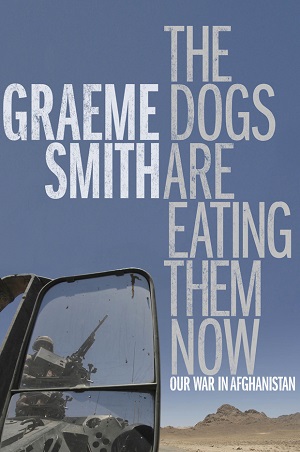
Added my review of Graeme Smith’s The Dogs Are Eating Them Now over at Good Reports.
The reality check is that Afghanistan has become a violent place where politics is intensely local and government thoroughly corrupt. The seemingly endless fighting (which has gone on for decades now) has had the effect of creating a moral callousness and “life is cheap” attitude.
There are many examples provided of this casual morbidity. The book’s title comes from an incident Smith witnessed where Canadian forces used Taliban corpses as bait to draw out insurgents, but instead had to watch the bodies eaten by wild dogs. Elsewhere we visit a morgue overflowing with so many corpses the staff can no longer document them, see anonymous body parts stuck to the side of armoured vehicles after a bomb blast, and meet an Afghan governor staring “with mild disappointment” at gruesome carnage left after a Taliban attack (he had expected more bodies).
“Death does not inspire the kind of seriousness in Kandahar that it does in rich countries,” Smith concludes. And what a world of tragedy is in those words.
Girls on the side
Added my notes on Hostel: Part II (2007) over at Alex on Film. I think this series is a bit unfairly tarred with the “torture porn” brush. They aren’t as bad as all that, and they have a contemporary political angle that works pretty well (the 1% as corporate-killer elite). I don’t think this one does as much as it could with the gender switch, perhaps because they just didn’t want to go there. By the strictures of American puritanism, torture is OK but porn is bad. Murder can be seen as a rite of passage for teen audiences, but sex is morally corrupting.
The boys in the basement
There is an understandable tendency to view murderers, and psychopaths in general, as coming from broken homes or dysfunctional and underprivileged families. Nature and nurture combine to create killers, but in so far as the “nurture” or environmental side of the equation goes, the assumption is that these individuals entered adult society as damaged goods. They were victims of bullying at home or at school, products of a childhood marked by abuse.
The opposite may be just as true. The murderer next door could have been spoiled his entire life, or “enabled” in the language of codependency. I recently reviewed Girl in the Cellar by Allan Hall and Michael Leidig, a quickie true crime book about the Natascha Kampusch story. Kampusch was the Austrian girl who was kidnapped and kept locked in a basement for eight years by Wolfgang Priklopil. This is what I had to say:
Academia may not have a record of a criminal with Priklopil’s profile (as the authors here assert), but we know him well. He was a spoiled only son who couldn’t wait for his father to die so that he could inherit all his money, and his wife in the bargain. Upon that blessed day Mommy duly proceeded to dote on her adult baby and new life partner, cooking his meals, doing his laundry, cleaning his house. “Wolfgang is my everything,” is something she apparently “always said.” Naturally enough, Wolfi grew up thinking that all girls were sluts. His own choice of a helpmeet would be cut from more traditional cloth. In his own words: “I want a partner who will underestand when I want to be alone, who can cook well, is happy to be only a housewife, who looks good but does not consider looks important. I want a woman who will simply support me in everything I do.” Natascha could never measure up. Though she had cleaning duties, after every visit by Mrs. Priklopil she was released from her dungeon to find the house “spotless.” When Priklopil let Natascha wash his car (he was lazy as well as a miser) she decided it was time to run away. Abandoned, and realizing that even after eight years of captivity he hadn’t managed to train Natascha to the level of submission freely volunteered by his mom (who was old now, and depreciating as an asset), Wolfi decided to sulk away from life and throw himself in front of a train. Goodbye, cruel world! And good riddance to another psychopathic man baby, the boomer bane of the bourgeoisie.
The girl in the cellar is the revenge of the boy in the basement, made possible in Priklopil’s case by family money and his mother’s enabling. It was a subject I returned to when I wrote a brief comment on Newtown: An American Tragedy by Matthew Lysiak:
Heaven knows the subtitle is perhaps the most overused in the entire history of publishing, but the heartbreaking mass killings at Sandy Hook Elementary were tragic indeed. It was an event so extreme it even seemed for a moment as if it might effect some change in America’s gun laws. That didn’t happen, and blame was instead spread around, a lot of it attaching to Nancy Lanza. And I think she’s what makes the story one of continued relevance and public fascination. Was she culpable in some way, or just another victim? I tilt toward the former position, seeing a classic case of codependency that resulted in a criminal act of enablement. The warning signals were there, and if someone like Nancy Lanza didn’t have the resources to cope with the situation then nobody has. I don’t know who else can throw on the brakes.
Yesterday my hunch received some support from the official state report on the Sandy Hook killings. Parents and educators were criticized for “accommodating – and not confronting” Adam Lanza’s manifest difficulties. I’ll quote here from the AP story filed by Pat Eaton-Robb and Michael Melia:
In exploring what could have been done differently, the new report honed in on his mother, Nancy Lanza, who backed her son’s resistance to medication and from the 10th grade on kept him at home, where he was surrounded by an arsenal of firearms and spent long hours playing violent video games.
“Mrs. Lanza’s approach to try and help him was to actually shelter him and protect him and pull him further away from the world, and that in turn turned out to be a very tragic mistake,” said Julian Ford, one of the report’s authors, at a news conference.
…
“Records indicate that the school system cared about AL’s [Adam Lanza’s] success but also unwittingly enabled Mrs. Lanza’s preference to accommodate and appease AL through the educational plan’s lack of attention to social-emotional support, failure to provide related services, and agreement to AL’s plan of independent study and early graduation at age 17,” wrote the report’s authors.
…
The report also provocatively asks whether a family that was not white or as affluent as the Lanzas would have been given the same leeway to manage treatment for their troubled child.
“Is the community more reluctant to intervene and more likely to provide deference to the parental judgment and decision-making of white, affluent parents than those caregivers who are poor or minority?” the report said.
Appeasement. Enablement. Accommodation. No doubt Adam Lanza was a sick person, but he was also that same familiar type I mentioned when discussing Priklopil: the spoiled man baby, withdrawn from the world and being cared for by his mother (Lanza was twenty years old when he snapped, not a child). As the report indicates, his becoming a monster wasn’t the result of abuse or deprivation. The aggravating circumstance was special privilege.
The boys in the basement are everywhere. Rip the roofs off of any suburban development and you’ll find them down there, running from the light. A couple of months ago an old woman on my street was found murdered. It was a big news story given the low crime rate in the area. Later the same day the woman’s adult son was picked up as a person of probable interest. He had been living at home with his mother and was said to have been suffering from mental illness. Nothing further has been reported.
This form of codependency is a widespread phenomenon now, and has various causes. Some of it is due to economic distress, the “lost generation” of un- and underemployed young people who can’t afford to live on their own. Some of it is the result of mental illness, though here there is a lot of wiggle room for excuse-making by maternal enablers. There are at least four basement boys that I know of living within a few minutes walk of my house, only one of whom is actually ill. The rest are perfectly healthy and financially well off. But they are angry.
To be sure, there are many individuals with mental disorders who find it next to impossible to function in the real world. But the majority of basement boys are simply antisocial jerks who don’t like other people. There’s a difference.
In any event, none of them should be living at home. They are not getting better. Fueled by a mother’s “unconditional love” (which is to say, a love that extends even to accommodating an evil that poses a clear and present threat to the enabler’s personal safety), their rage knows no bounds.
Know the signs and keep your distance.
Update, October 8 2015:
My notes on the Umpqua Community College shooting are a follow up to this.
Diary of a madman
Added my notes on The Cabinet of Dr. Caligari (1920) over at Alex on Film. This is a personal favourite of mine. It never gets old because it’s such an oddity and outlier.
Digital deconstruction
From Who Owns the Future? (2013) by Jaron Lanier:
Consider too the act of scanning a book into digital form. The historian George Dyson has written that a Google engineer once said to him: “We are not scanning all those books to be read by people. We are scanning them to be read by an AI.” While we have yet to see how Google’s book scanning will play out, a machine-centric vision of the project might encourage software that treats book as grist for the mill, decontextualized snippets in one big database, rather than separate expressions from individual writers. In this approach, the contents of books would be atomized into bits of information to be aggregated, and the authors themselves, the feeling of their voices, their differing perspectives, would be lost.
Lightning doesn’t strike twice
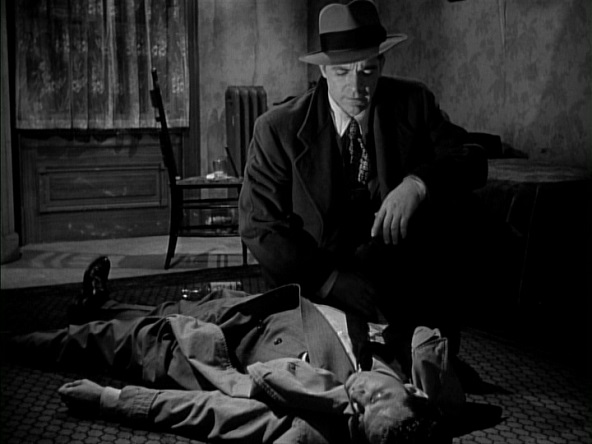
Added my notes on Where the Sidewalk Ends (1950) over at Alex on Film. You might come to this movie with high expectations seeing as it reunites a lot of the same talent as the classic noir Laura (director Preminger, stars Andrews and Tierney, screenwriter Hecht). But it’s not in the same league. I mainly blame Hecht, as it’s a really clumsy script.
You know you’re out of touch when . . .
Oxford Dictionaries has declared “vape,” a verb meaning “to inhale and exhale the vapour produced by an electronic cigarette or similar device,” to be the 2014 word of the year.
The Oxford word of the year is usually some neologism that has become so widespread it can’t be ignored. Last year it was “selfie,” which I was familiar with even though I’ve never taken one and indeed don’t even own a cellphone or any other device that would enable me to take one.
This year, however, I pulled a complete blank. I can honestly say I’ve never heard or seen the word “vape” used before, and had no idea what it meant. What’s worse, I don’t even know what an electronic cigarette or e-cigarette is.
And it gets even worse! I’d never heard of any of the words on this year’s shortlist! Here they are:
bae n. used as a term of endearment for one’s romantic partner. [I pulled a complete blank on this one.]
budtender n. a person whose job is to serve customers in a cannabis dispensary or shop. [I would have guessed this was something like a male friend who also worked a bartender. Sort of like a brotender? I would have been wrong.]
contactless adj. relating to or involving technologies that allow a smart card, mobile phone, etc. to contact wirelessly to an electronic reader, typically in order to make a payment. [This doesn’t seem like a wholly new word to me. I’m not familiar with the technology anyway.]
indyref, n. an abbreviation of ‘independence referendum’, in reference to the referendum on Scottish independence, held in Scotland on 18 September 2014, in which voters were asked to answer yes or no to the question ‘Should Scotland be an independent country?’ [I wouldn’t have thought of this. I would have guessed it had something to do with liking independent music on social media. Or something.]
normcore n. a trend in which ordinary, unfashionable clothing is worn as a deliberate fashion statement. [Vanilla, hetero pornography?]
slacktivism, n., informal actions performed via the Internet in support of a political or social cause but regarded as requiring little time or involvement, e.g. signing an online petition or joining a campaign group on a social media website; a blend of slacker and activism. [I would have come closest to getting this one right, because it’s pretty much what the name suggests. I don’t think it counts as a word though. It’s too cute.]
Obviously I’m way out of touch.