Marginalia

My review of Jeff Bursey’s collection of essays and reviews, Centring the Margins, is up now at the Canadian Notes & Queries website. My own tastes in literature are rather different than Bursey’s but I think voices like his are essential. We need more such critics if any culture of value is going to survive this profoundly anti-critical age. For various reasons, I’m afraid we’re not going to get them.

Re-reading Shakespeare: Julius Caesar

(1) I’m not a big stickler for reading Shakespeare the right way, but I acknowledge (as I think you have to) that there is a right way. Or at least that there are wrong ways. It was a performance of Julius Caesar that first brought this home to me, during the opening harangue by Marullus when he launches into the mob celebrating Caesar’s homecoming: “O you hard hearts, you cruel men of Rome.”

As I read it, the only way to deliver these lines is to emphasize “hard hearts” close to equally, giving both words the same weight so as to draw out the near rhyme and emphasize the admonitory tone. I can see Marullus shaking his head at the crowd. “O you hard hearts.”

I may be wrong in this, but I know they’re not meant to be rushed together, as they were in the production that I saw, where they were almost elided as in “hard-hats.” Perhaps that was the intention (the rude mechanicals of Rome are proto hard-hats), but I doubt it. And it sounded awful!

(2) The tag “et cetera” (“and other things”) is designed to make your eye and mind wander, sort of like “yadda, yadda, yadda.” That’s my excuse for never really being aware of the fact, until this most recent re-reading, that when Brutus is considering the letters that have been thrown in his window “et cetera” isn’t his own gloss on what Cassius has written but actually part of the letter itself. I know this should have always been clear to me from the punctuation and the rest of the line — “‘Shall Rome, et cetera.’ Thus must I piece it out . . .” — but it never really twigged. I always read it as Brutus just skimming over the rest of the letter’s contents.

I think part of the reason why I read it like this is that it’s hard to figure out why Cassius would have written the letter in such a way. Just saying “Shall Rome, et cetera . . .” doesn’t make a very persuasive case. I guess the point is that Cassius wants Brutus to do all the work of persuasion, making him imagine the worst that could happen. This isn’t a bad approach, but just writing “Shall Rome, et cetera” seems a remarkable way of going about it.

(3) So true:

There is a tide in the affairs of men
Which, taken at the flood, leads on to fortune;
Omitted, all the voyage of their life
Is bound in shallows and in miseries.

The last two lines aren’t always included by people quoting this, but they strike me as the most meaningful, the ones that really seal the deal. That said, how ironic is it that Brutus’s advice in this instance is wrong? He should have skipped this particular tide and avoided Philippi. Or maybe his reasoning was correct and the larger point is that even if you do catch the right tide, it’s not always enough. Such an irony underlines something I’ve often observed during meetings when canvassing for opinions on the best way to move forward. Invariably the argument that wins the day is the one that is best expressed, not the one that is the most reasonable or most likely to succeed. Good rhetoric is meant to be seductive — that’s its whole purpose, really — which is something to keep in mind whenever you can feel it working.

Pointing the finger of blame

Donald Trump has become the 45th president of the United States.

I am in a state of shock as I write those words. Even given my poor record as a predictor of elections, I would have thought this was impossible.

In the months leading up to the vote Trump had established himself as the worst candidate for president put forward by a major party in American political history, running by far the worst campaign. The election itself should have been declared a no contest.

Unfortunately, he was running against Hillary Clinton, herself a historically unpopular candidate. Despite her many failings, however, I still thought Clinton would win, with Trump registering only as the last twitch in the death spasms of a certain strand of American conservatism (a point I’ve addressed elsewhere). Clinton had overwhelming systemic advantages in money, the electoral college (yes, this was thought to be to her advantage), and the favour of the media, while he was . . . well, he was Trump.

Her strengths, however, were part of Clinton’s undoing. Her election came to be seen as a near-coronation, the campaign a one-horse race. This suggests something very damaged in American democracy, and voters rebelled against her inevitability, their sense that they had been denied a choice.

Defenders of Clinton made much during the campaign, and no doubt will continue to do so, of how her enemies were ignorant bigots. They were the “deplorables” who hated women and non-white immigrants (specifically Mexicans and Muslims). Trumpism was only the politics of the white working class, a.k.a. losers. No doubt there was some truth to this, but I think the problem with Hillary Clinton was something simpler.

For starters, every election is about change. This has led to the cult of the “outsider” and the non-politician politician. It’s hard to overstate how essential this branding is. Hence Bill Clinton calling his wife “the best darn change-maker I’ve ever met in my whole life” at the Democratic convention. He had to say that because it was so obvious that Hillary Clinton was a status quo figure. Her own professed desire was for “incremental” change, which may be realistic but is not inspiring rhetoric.

But who could expect anything more from her? She had been in the highest offices of American politics for decades, as much a figure of the establishment as any single person could be. No one could mistake her as representing change, and indeed in her campaign’s final days she appealed repeatedly to the need to continue the legacy of Barack Obama.

The first problem, then, with Hillary Clinton was not that she was a woman but that people were sick of her. They were sick of her twenty years ago, when “Clinton fatigue” was a thing encompassing both her and her husband, and she hadn’t been out of the public eye since!

The second problem with Clinton as a candidate was that she was a political operator. I hesitate to say “politician” because politics, at least of the retail variety, was not really her calling. She would admit on the trail that she wasn’t a natural like her husband at campaigning. That was to put it mildly. Though courtiers built her up as someone likeable in intimate settings, she had difficulty projecting charm or charisma. One felt a weariness, discomfort, and not least paranoia on her part whenever she had to appear in the public eye. It was enough to make even the rank vulgarity of Trump seem human in comparison. The overriding question I had watching Clinton over the course of the past year is why she was even doing this. By all accounts she experienced her husband’s presidency as something of a nightmare. Was her run for the presidency an attempt at some belated validation? Or, worse, revenge?

In any event, her awkwardness as a candidate does a lot to explain her curious political career. She went from being the wife of the president, which in her case was a position of some power, to being air-lifted into a super-safe seat in the senate (Patrick Moynihan retired to make way for her in New York, a state she had little personal connection to). She would go on to an appointment as secretary of state under Obama and then win a Democratic primary against an eccentric figure who wasn’t even a member of the party (and who the party itself plotted against). She then ran for president against an even more impossible figure, with all of the above-mentioned institutional advantages providing a strong wind at her back.

Some critics referred to this career trajectory as “falling upwards,” but it was really just a combination of good luck and skilful operation of the system. She has always carried with her an air of inevitability and entitlement. None of this made her popular. If people want change, and look to outsiders rather than politicians to effect it, what can one make of the ultimate career politician preparing to take the highest office in the land virtually unopposed? And with Clinton there was always a certain odour attached to the label of politician even beyond the usual dislike. “How did Hillary Clinton end up filthy rich?” ran the main television ad for the Trump campaign (titled “Corruption”). It was a question that stuck, to be answered (in the ad) by charges of the “politics of personal enrichment” and “pay for play.” Her defence was simply that there was no “smoking gun” or hard proof of a quid quo pro or criminality. This was weak. No matter how legitimate the sources of “Clinton cash” there is still, I think, a lot of native feeling that people in public office should not be getting rich off of it. As for why people were paying the Clintons up to half a million dollars to listen to them make a speech . . . it just smelled bad.

In sum, the problem with Hillary was not that she was a woman but that she was hard to like, harder to trust, and someone people were tired of. The charge that people who opposed her did so only because they were bigots or ignorant was, however, the first (and often last) line of defence of most liberals – and I say this as a liberal myself (or someone a little to the left of that). It was a defence Clinton herself would adopt in her concession speech, taking on the persona of a feminist martyr cruelly crushed against the patriarchy’s glass ceiling while heroically lighting the way for those who would follow in her giant footsteps. The liberal media — that is, the same media that had enabled her at the expense of all common sense and cast her campaign in the language of a battle against misogyny and for human rights — echoed these sentiments. If Democrats make this their preferred narrative for what happened then they will have learned nothing.

The truth is, Bill Clinton would not have fared any better. Clinton, Inc. had, in the years since his leaving office, become the face of liberal oligarchy. This is an over-class – financial, political, business (most prominently tech), and media – that believes very much in individual freedom and human rights, but also in rule by a managerial elite whose attitude toward democracy is paternalistic at best. It’s no coincidence that many of its leading lights are prominent spokespersons for what’s been called “the new philanthropy.” This is a world not of corporations but of benevolent private foundations.

Such philanthropy meant nothing to the American middle class, who neither wanted nor were in line for a hand-out. What use was the Clinton Global Initiative to Americans? Globalization, they had been told, had lifted billions out of poverty all over the world. But so what? What good had it done for homegrown “losers” aside from giving them cheap shit to buy at Wal-Mart? And was that supposed to be enough?

Well, there are scarier things than rule by a liberal oligarchy, as we may find out. I think Hillary Clinton was a much safer choice than Donald Trump. But I think we would be wrong to write off critics of the elite as rednecks or white nativists only expressing the time-honoured anti-intellectualism of American politics. Clinton was unfairly accused during the campaign of being ambitious, which I think was a clear example of a sexist double standard. Anyone running for president has to be ambitious. Ambition can be a good thing. But no elite or oligarchy can be expected to look after anyone’s interest as well as their own. I have never been one to accuse any government of taking a “nanny state” attitude, and I’m no enemy to government regulation, but I look at the liberal oligarchy and I fear its benevolence.

If you’re looking to lay blame this morning, lay it on both parties. The Republican establishment didn’t want any part of Trump, but all the same he is on them. They created the matrix that spawned him and then couldn’t control the forces they thought to cynically exploit. Even more at fault, however, is the Democratic party, which was so out of touch, so enamoured of its own good intentions, it thought it could ride a deeply flawed candidate who many Americans despised into the most powerful office in the land by wrapping her in a feminist mantle. Trump v. Clinton should never have happened. Never. That it did is an indictment of the system.

There has been much hand-wringing recently over the rise of populism in Western democracies. Populism, in these arguments, is equated with xenophobia, racism, authoritarianism, and nationalism. I don’t think it has to be that way. I think there’s a way for a healthy politics to be more populist. Moving forward, both parties are going to have to find it.

Paranormal Activities

It's hard to go wrong with such a classic look.

It’s hard to go wrong with such a classic look.

Over at Alex on Film I’ve been watching the first three Paranormal Activity movies — unimaginatively titled Paranormal Activity (2007), Paranormal Activity 2 (2010), and Paranormal Activity 3 (2011). They went on to make more, but I just wanted to look at the original trilogy because I think they work well as a self-contained series. And overall, I have to say they’re pretty good movies.

Bad-ass lawmen

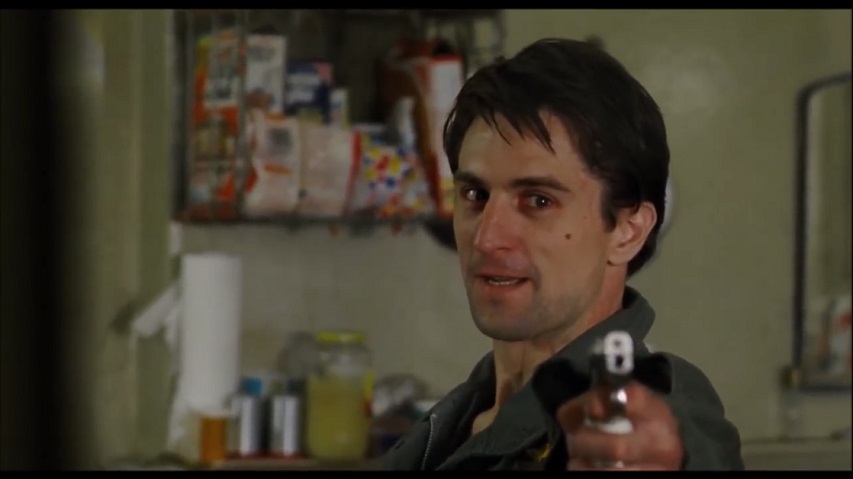
On the whole, I think I've had a fortunate life, yes. Happy? Not so much.

On the whole, I think I’ve had a fortunate life, yes. Happy? Not so much.

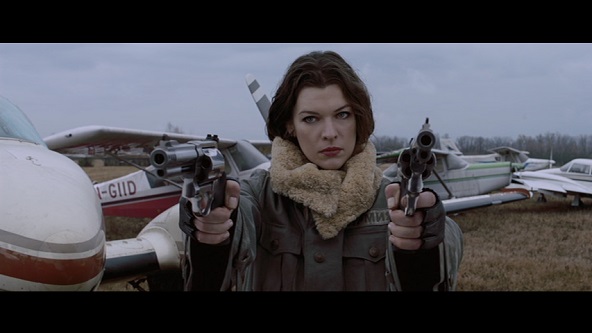
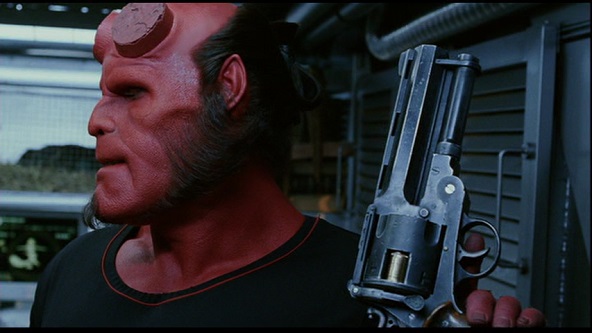
Over at Alex on Film I’ve been watching a bunch of movies about tough cops who break the rules but get results. It’s rough justice, Hollywood style. The popularity of such films taps into myths of the frontier and even deeper yearnings for some kind of divine sanction from superhuman embodiments of the law. That’s at least one way of explaining the phenomenon. I don’t think the box office and longevity of the various franchises reviewed can be attributed to the quality of the movies themselves. For the most part, they’re pretty bad.

Bullitt (1968)
Dirty Harry (1971)
Walking Tall (1973)
Magnum Force (1973)
The Enforcer (1976)
Sudden Impact (1983)
Lethal Weapon (1987)
RoboCop (1987)
The Dead Pool (1988)
Lethal Weapon 2 (1989)
RoboCop 2 (1990)
Lethal Weapon 3 (1992)
RoboCop 3 (1993)
Timecop (1994)
Judge Dredd (1995)
Lethal Weapon 4 (1998)
Dredd (2012)
RoboCop (2014)

judgedredd1

The stuff book sales are made of

Today I went to the Tenth Annual Friends of the Guelph Public Library Giant Used Book Sale.

These sales are both fun and a bit depressing. The size of the crowds was impressive, and surprising. The weather was bad and I went first thing in the morning the second day of the sale and the place was still packed with hundreds of people of all ages. This cheered me up a bit, as it was nice to see so much interest in these endless tables of paper bricks.

The depressing part is when you realize that the majority of these books aren’t going to be sold, and that many of them come from the estates of book lovers who have come and gone before us. Finding something to do with the books left behind by a deceased bibliophile is always a problem. Basically, nobody wants them. At one point they were the physical presence of someone’s intellectual biography, but with the passing of that intellect they are largely rubbish. I couldn’t help thinking that I should just have a proviso in my will to have my books burned along with me. I’d have them all buried with me, but that would take a pretty large mausoleum. I guess the best thing to do is to find some way to give them away before you go, but it’s hard to time these things perfectly and you’re still left with the problem of no one wanting them.

There were several tables set up for movies and music as well, including vinyl records and VHS tapes. To my amazement people were buying VHS tapes. I still have a VHS player in my basement, but I thought I was among the very few left. I mean, why would you still be using one? Is there that much out there on VHS that isn’t available in any other format?

There were a lot of DVDs but people weren’t buying them even for $1. DVDs never really become collectible, do they?

Top authors? Robert Ludlum. Lots of Robert Ludlum. Jean M. Auel. Pierre Berton. I don’t have any Ludlum or Auel on my bookshelves (though I used to have some Ludlum). I have almost all of Berton’s books. I grew up reading Pierre Berton and still love those volumes dearly. Every Christmas it seemed there was a new one out (he knew marketing), and the “latest Berton” was always a must-have gift. He may still be my favourite Canadian author. And this is where all that love will end up.

Adding to the word bank

If you skim through some of the reader reviews on sites like Amazon and GoodReads you might notice a recurring complaint. It’s not a majority opinion (I don’t think), but it is significant. People don’t like finding words that they don’t understand.

I can see where some of this might be coming from. Perhaps the readers are objecting to an author putting on airs or four-flushing it. Or, in some cases, they may be upset at academic obscurantism, the layering of simple ideas in neologisms and opaque pseudo-technical prose. And such complaints, in individual cases, may have merit.

In general, however, I think authors are just drawing from their own vocabulary. And, speaking for myself, I enjoy turning up words that I’m unfamiliar with and adding to my own word bank. I suspect a lot of readers secretly enjoy this too, but they don’t like to admit to any ignorance in the fear that they will expose themselves as unlettered.

I have no such shame, so I’ll give a couple of examples I recently drew from Alan Schom’s Napoleon Bonaparte.

The first toe stub came during a description of the “seemingly infinite catena of errors” that led up to the destruction of the French fleet at Trafalgar. I didn’t recognize the word “catena.” It’s meaning was pretty obvious given the context, and so it would have been easy to skim over without missing anything, but I felt the need to look it up. It comes from medieval Latin (“chain”) and refers to a connected series of related things (Merriam-Webster). Apparently it had the original meaning of a series of scriptural commentaries by early Christian theologians, and has more recently taken on subsidiary meanings in the fields of linguistics and soil science.

My research continued. On the very next page I read of a British admiral’s “pulvinated ego.” “Pulvinate” sounded familiar, but I had no idea what it meant, even in context. Apparently it means shaped like a cushion (again from the Latin), but this didn’t help me much as I wasn’t quite sure what that meant either. What sort of a cushion? The dictionaries say it refers to being “moderately convex” and is usually used in a botanical or architectural context. The Oxford English Dictionary defines “pulvinated” as “swelling, bulging.” So I guess Schom was just saying that the admiral was full of himself. Did it bother me that he used a word I didn’t know to make such a simple point? Not at all. Live and learn!

Words, words, words

More rape, more revenge

ispitonyourgrave13

As a follow-up to my earlier post on rape-revenge movies, I’ve spent the last week over at Alex on Film watching some more. Included are I Spit on Your Grave (1978), Ms. 45 (1981), Baise-moi (2000) and I Spit on Your Grave (2010). I guess the original I Spit on Your Grave has some claim to our attention, being one of the most controversial films ever made. And Ms. 45 is actually pretty interesting in a number of ways. The other two should be avoided.

Update, July 31 2001:

Might as well post links here to a couple of more recent reviews I’ve done: Revenge (2017) and Promising Young Woman (2020).

Reading event: Madeleine Thien and Alexandre Trudeau

Madeleine Thien, Do Not Say We Have Nothing and Alexandre Trudeau, Barbarian Lost: Travels in the New China

War Memorial Hall, University of Guelph, September 17 2016:

Technically, this was only a reading by Alexandre Trudeau, followed by a conversation with Madeleine Thien. I hadn’t read Trudeau’s book, but I went because I have an interest in the “new China” (and the old China too).

Trudeau certainly has the family charm, and read well, but he seemed to have trouble expressing himself clearly during the Q&A. I wasn’t sure how in-depth his analysis was, because what he said seemed to involve a lot of very broad generalizations. Was this because he comes from a background of making documentary films? Films have far less information density than books, and this is his first book. He might have been sticking to the equivalent of sound bites. I couldn’t even be sure how much ground he covered in his travels.

Still, there were several points I had to take away and mull over. Trudeau seemed to think that while there’s a growing environmental consciousness in China it’s still not very prevalent. Thien thought environmental politics there focuses mainly on specific issues like air quality and food safety. I thought this was a significant distinction. I also thought what Trudeau had to say about generational attitudes towards China’s calamitous history in the twentieth century (in brief, those who lived through it want to forget it) was interesting.

The president of the university introduced the speakers and then the dean of arts closed the proceedings. I didn’t see any point in them being there at all, and I wonder if they showed up just because, you know, Trudeau. And finally, there were too many applause breaks. You don’t have to clap every time someone stops speaking, people!