
The end of anger

Angry, and not alone.

I’ve read and reviewed a lot of books on (mostly American) politics over the past few years, and one point that keeps coming up is anger. To be sure, anger has long been a key component in politics. It was in 1976 that Howard Beale (in the movie Network) gave his live rant about how people should scream from the windows that they were mad as hell and not going to take it anymore. This famous line would be adopted by Dominic Sandbrook for the title of his political history Mad as Hell: The Crisis of the 1970s and the Rise of the Populist Right. So the 1970s seem like as good a place as any to locate when temperatures started to rise.

Gerald F. Seib picks up the story a little later on, tracking the genealogy of anger “from Reagan to Trump” in We Should Have Seen It Coming. He sources the main fount of anger, however, to the Tea Party movement, which launched in 2009 (kicking off with another live rant on television, this time not fictional). The Tea Party, in Seib’s account, “was the first political movement born on social media, and the first to show that anger was the special rocket fuel that could propel such a movement. It would not be the last.”

Before the Tea Party, however, Gavin Esler had described the 1990s as the seedbed of today’s angry politics in his survey of The United State of Anger. A very prescient take on what was coming down the pipe, and one with a precise and correct diagnosis of what was driving it. Remember the Angry White Males? They were much talked about at the time, and never went away.

In books about the Trump phenomenon there has been a lot of talk about anger. Obviously Trump himself is a very angry person, which made him the perfect vehicle for what a large segment of the population was feeling. Alexander Zaitchik’s The Gilded Rage being a good on-the-ground account of what Trump was tapping into.

I find the historical analysis fascinating because it reflects what I’ve been witnessing happening first-hand. There is a lot of anger out there. I can’t recall a time when there’s been so much of it. I sit across from it at restaurants, see it when I go out shopping, and even encounter it when walking in the park. I have sat and been a sounding board far too many times in the past few years for someone venting about their family, their job, or just the world in general. We are living, as Pankaj Mishra puts it, in The Age of Anger (a must-read for these times).

A couple of observations that I’ve made before but that I’ll repeat here.

(1) The anger is not exclusive to white males without a college education, or those “left behind” by the new economy. Far from it. Many of the angriest people I know are wealthy, successful professionals or businesspeople. Not all of them are young. Many are older, and enjoying comfortable retirements. Many are women. Anger also possesses both the political left and right. It is, in short, not limited to any one demographic. In Twilight of Democracy Anne Applebaum makes the same point when describing former friends who have embraced populist politics. They are not losers but an elite. This has not, however, made them immune to anger. Is anger then part of, or connected in some way to the so-called “narcissism epidemic,” a condition where the whole world is not enough to feed our egos? The example of Trump suggests there may be something to this.

(2) The main factors that are pushing our individual and collective needles into the red are, in my opinion, growing economic inequality and social media. With regard to the former, I’ve written before about how the COVID-19 pandemic is only going to make things worse (and people angrier). With regard to the latter, Seib ends his book by interviewing Eric Cantor, a former House Majority Leader who lost his seat to a populist uprising. When Seib asks Cantor what has fed and spread the anger that eventually took him down he answers by pulling out his smartphone. Enough said.

Broader factors contributing to a politics of anger would include the fact that people find politicians and parties increasingly unrepresentative and unresponsive, as well as a more general sense of the world being outside their control and indifferent to their feelings. In any event, if I’m right about the role being played by inequality and technology it’s hard to come up with an optimistic prognosis. Economic inequality is going to get worse, perhaps much worse. Social media is not going to bring us together because it makes money out of triggering rage. Anger will grow, tempting more politicians to ride the tiger. Who can believe this will end well?

Update, July 5 2021:

Tom Nichols, writing on Twitter, is another commentator who sees anger as the drug of choice not of the down-and-out but of those who are better off: “If you wonder why super-privileged kids or retirees in nice condos are so angry, it’s because it feels *great* to be angry. Otherwise, life becomes about getting a job (if you’re young) or just accepting the twilight of age. Easy heroism is crack to Americans raised on cable.”
Hillbillies

You don’t know the half of it.

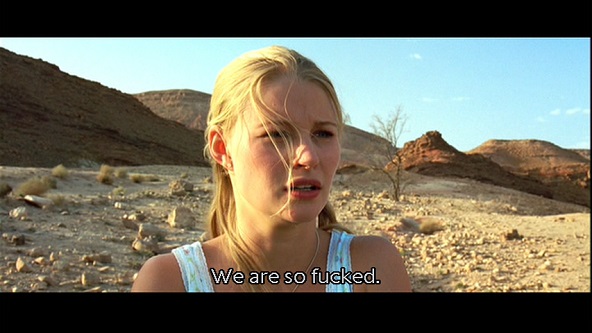
Over at Alex on Film I’ve been watching the Hills Have Eyes movies. This is a weird franchise. The original 1977 film written and directed by Wes Craven has gone on to become a cult favourite, though I don’t think it’s anything special, or very good. It was followed up eight years later by The Hills Have Eyes Part II, a movie that I don’t think Craven wanted anything to do with and which appears to have been cobbled together out of whatever he’d shot after the success of A Nightmare on Elm Street. It’s terrible.

Then, nearly thirty years after the original, Alexandre Aja was picked to direct a remake which I think is the best of the horror-franchise remakes that were thick on the ground in the early 2000s. I love what Aja did, and the mutant hill people are a great twist.

There was a sequel to Aja’s movie the next year with The Hills Have Eyes 2. Though not as good, it’s still a decent attempt at doing something different, this time having a squad of National Guardsmen being hunted by the cannibal clan of hillbillies. Anyway, the upshot is that the remakes are actually more entertaining than the first two movies, which is rarely the case. Obviously, though, they aren’t for everyone.

Screen time: Forebodings

From Childhood’s End (1953) by Arthur C. Clarke:

Do you realize that every day something like five hundred hours of radio and TV pour out over the various channels? If you went to sleep and did nothing else, you could follow less than a twentieth of the entertainment that’s available at the turn of a switch! No wonder that people are becoming passive sponges — absorbing but never creating. Did you know that the average viewing time per person is now three hours a day? Soon people won’t be living their own lives any more. It will be a full-time job keeping up with the various family serials on TV!

For some previous thoughts, see my earlier post Screen time.

Maigret: The Madman of Bergerac

I’ve been reading all these books in the new translations put out by Penguin. In French, this one was Les trois morts de Bergerac. This does not translate as The Madman of Bergerac. I’m not sure if the translation is an improvement, but I guess it’s a catchier title.

We begin with Maigret in a train carriage, not being able to get to sleep. It’s a fitting opening, as he’s soon shot and then goes into a state of delirium. This sets a dream-like tone for what follows in the town of Bergerac, and indeed in a later chapter we’ll be treated to a weird dream sequence where Maigret imagines himself a beached seal or whale. It’s odd how dreams in novels are always so interesting, when there are few things as off-putting in real life as having to listen to someone tell us about one of their dreams.

An interesting little book, where the crime that gets the ball rolling doesn’t have much to do with what Simenon is really interested in, which is once again peeling the lid off of respectable bourgeois life and looking at the nastiness underneath. Our killer, in addition to being yet another fellow living a double life, is that worst of all people: the career man. And he’s willing to erase any obstacles in his way. But how much of this can we hold against him? What most of us would consider normal aspirations, not criminal or even excessive, often lead to someone’s ruin in Maigret’s world.

Maigret index

Canadian dirt

According to BookNet’s annual market overview of Canadian book sales the bestselling work of fiction in Canada in 2020 was Jeanine Cummins’s American Dirt: A Novel. American Dirt, and I’m cutting and pasting here because I haven’t read it, is “about the ordeal of a Mexican woman who had to leave behind her life and escape as an undocumented immigrant to the United States with her son.”

American Dirt was Cummins’s fourth book and third novel. Her previous books seem to have been well received, but I don’t think they were that well known. I’d never heard of her. With American Dirt that would change. Or really, and this is worth taking note of, before American Dirt was published that would change. Cummins was paid a seven-figure advance after a bidding war. Blurbs were then acquired from a line-up of all-stars, including Stephen King and John Grisham. There was a massive publicity campaign. Oprah announced its selection for the re-launch of her book club, again before it was published. From Wikipedia: “American Dirt debuted on the New York Times best sellers list as #1 on the list for the week of February 9, 2020. In an unusual decision, the New York Times ran separate reviews of the book both in the daily paper and in the weekly book review section, as well as publishing an excerpt.”

In short, American Dirt was a certified hit before it was even published. And the system wasn’t done yet. One of the earliest negative reviews was spiked . . . for being negative. The whole rollout was typical of the sort of manufactured blockbusterdom that makes one feel more than a little cynical about how the publishing world works. In Revolutions I commented in passing that “the ‘propaganda model’ of the media and intellectual life generally can, and I think should, be extended to cultural matters. Critical consensus and submission to conventional wisdom is manufactured in much the same way: that is, with the carrot and stick of capital.” The manufacture of consent applies just as much to the book review section of the New York Times as it does to their op-ed pages on American foreign policy. For some reason I’ve encountered a lot of passive and not-so-passive resistance to this idea. Because people, even literary types, don’t think that novels matter? Because, as good lefties, they don’t think they’re so easily manipulated?  I’m not sure.

Then came a backlash. Cummins was accused of appropriating an ethnic voice not her own. That’s the kind of year 2020 was. A petition was passed around asking Oprah to reconsider her endorsement. Ms. Winfrey declined.

So what lessons can we learn from the BookNet numbers?

(1) Make no mistake: American Dirt won the lottery before the draw was held. Pre-publication hype (bought and paid for) is still real, as is the Oprah effect.

(2) There is such a thing as bad publicity, I’m sure, but for Cummins it was all good. The controversy that blew up over American Dirt was in February, and seems not to have hurt sales.

(3) The bestselling novel in Canada in 2020 is based very much on a story torn from U.S. headlines. Meanwhile, the bestselling work of non-fiction in 2020, and the overall bestselling book in Canada, was Barack Obama’s memoir A Promised Land. For all the cries we hear about the need for Canadians to tell our own stories, just remember where the audience is for that.

Maigret: The Flemish House

In which the killer gets away with it. Or sort of. They suffer, but not from guilt. One symptom: premature aging. “She must have been twenty-seven, but she looked more like thirty, because her complexion no longer had the same freshness, and her features had faded.” Ouch. I guess turning thirty does that to you. So much worse than being twenty-seven. Especially in France.

One of Simenon’s more biting psychological studies. The family in thrall to a sickly loser, who is, perforce, the man of the house. “A case of collective suggestion” or what we might call morbid codependency. A domestic tragedy, but one that curiously loses sight of the victim. Maigret is sympathetic, but also put out by people he views almost as foreigners and a town he finds inclement and ugly. What time is the next train for Paris?

Maigret index

No prisoners!

By coincidence (and it really was an accident) I’ve recently updated a couple of my sites with notes on two books that have particularly uncompromising political perspectives: Ayn Rand’s Anthem (at Alex on SF) and Theodore Kacynski’s Technological Slavery (at Goodreports). I don’t think Rand and Kacynski have too much in common, but they do seem to share a basic libertarian point of view that they push to different extremes.

Maigret: The Saint-Fiacre Affair

In his magisterial history of the twentieth century, Age of Extremes, Eric Hobsbawm writes that “the most dramatic change of the second half of this century, and the one which cuts us off forever from the world of the past, is the death of the peasantry,” a group “which had formed the majority of the human race throughout recorded history.”

So we shouldn’t be too surprised to see that the peasants are still here in semi-rural France in 1932, as Maigret goes back to his hometown in order to investigate a death foretold. “The old peasant suspicion” appears on a boy’s face, while another character’s “marked features, robust bones” indicate his “peasant origins.” It’s odd to hear these racial stereotypes attributed to a socioeconomic class, where the town is a feudal holdover with the local aristocracy is in sad decline, threatened by a rising middle class. Back when Maigret was a kid the ancien régime, even if only in the imagination, still held sway.

The most Agatha Christie-like of these books I’ve read thus far, with a far-fetched plot and even further-fetched reveal at the end. I’m not sure what the invocation of Walter Scott was referring to. Simply the world of romance and chivalry that has been displaced? I can’t think of any literary connection.

Maigret index

Flies

He’s not alone in there.

Over at Alex on Film I’ve been watching the various Fly movies, which had their genesis in a story by George Langelaan first appearing in Playboy. Two minor classics are in the mix (the original and Cronenberg’s version), as well as some interesting follow-ups.

One thought: there was never a female Fly. The closest they came was the character of Judith in Curse of the Fly, but she wasn’t an insect hybrid. I don’t know if there’s any significance to this, but it did strike me as interesting. We’ve had female vampires, mummies, and werewolves, brides for Frankenstein and invisible women, but no female Fly. Somebody should get on that.

The Fly (1958)
Return of the Fly (1959)
Curse of the Fly (1965)
The Fly (1986)
The Fly II (1989)

CanCrime

For a couple of decades now I’ve been saying that one of the things Canadian writers really do a good job on is true crime. Some early examples that stand out for me are Kirk Makin’s Redrum the Innocent (1992) on the Guy Paul Morin fiasco and (less well known, but a damn good read) Bill Schiller’s A Hand in the Water (1998) on the Albert Johnson Walker case. Both are still worth reading today.

Another crime writer I’ve enjoyed over the last few years has been Peter Vronsky, author of several books now on serial killers. He has a new one out on American Serial Killers: The Epidemic Years 1950-2000 that I’ve just posted some thoughts on at Goodreports. Also, available at the Canadian Notes & Queries website, is my joint review of two other new offerings: Justin Ling’s Missing from the Village (about the Bruce McArthur killings and their investigation) and Silver Donald Cameron’s Blood in the Water (about the murder of a small-town bad boy by some angry lobster fishermen). Both are instructive takes on crime and community, and Cameron’s book in particular really transcends the genre into a deeper meditation on justice.