Over at Alex on Film I’ve added notes on a few of the Star Trek films. I grew up on the TV show and, for better or worse, it’s always going to be a big part of my mental make-up. That said, the movie franchise has been disappointing, starting with Star Trek: The Motion Picture (1979). This was followed up by Star Trek II: The Wrath of Khan (1982), which is the only one of these movies I can re-watch with any enjoyment. More recently the franchise has “re-set” with a couple of movies by J. J. Abrams: Star Trek (2009) and Star Trek: Into Darkness (2013). Despite being well cast, these are just generic twenty-first century effects movies, and didn’t interest me at all.
watching movies
On the road, again and again
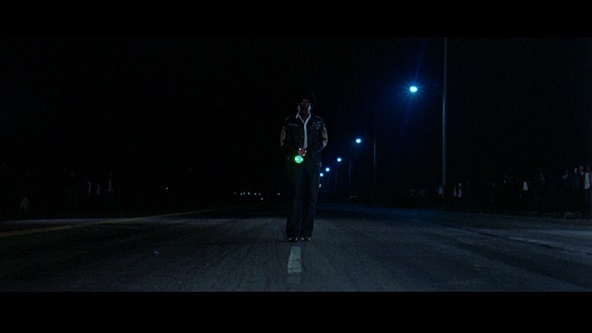
Gentlemen, start your engines.
Over at Alex on Film I’ve added my notes on three classic counterculture road movies: Easy Rider (1969), Vanishing Point (1971), and Two-Lane Blacktop (1971). Easy Rider is the best known today, but mostly for its historical significance. It’s really not a very good movie, though still watchable. Vanishing Point I find the most interesting. Two-Lane Blacktop has Warren Oates as GTO, and not much else going for it. But that’s enough.
Charters and Caldicott on the case
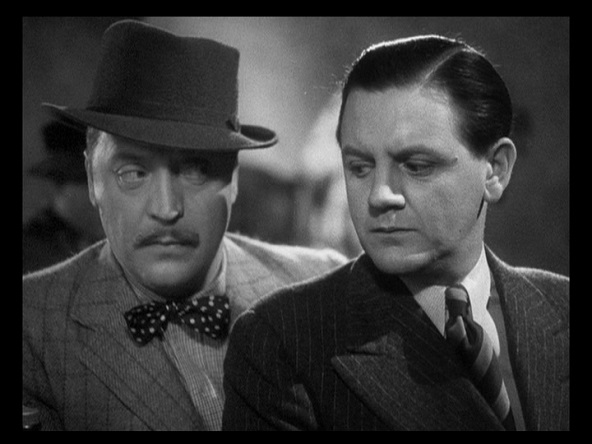
Over at Alex on Film I’ve added my notes on the first three movies featuring the not-quite-dynamic duo of Charters and Caldicott (played by Naunton Wayne and Basil Radford): their debut in The Lady Vanishes (1938), the follow-up Night Train to Munich (1940), and finally as the stars in Crook’s Tour (1941). They were very popular at the time, but quickly disappeared. In the 1980s they had their own BBC series but it only ran for one season and I had never heard of it before I started doing some research. Perhaps they were just a wartime phenomenon, or perhaps they just never grew up enough. They remained a charming couple, but representatives of a limited type. In a supporting role, however, they had a certain magic presence.
News coverage
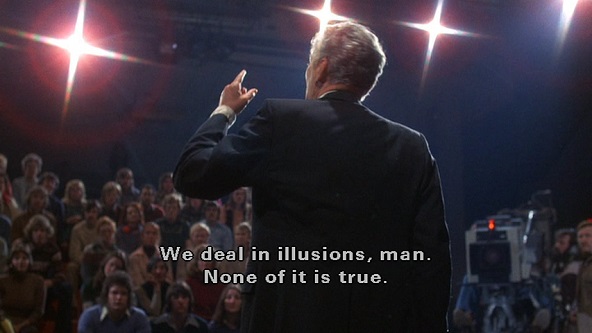
You’re telling them something they already know.
Over at Alex on Film I’ve finished a miniseries of updates on movies about the news industry. Hollywood doesn’t like television, and has always been cynical about the news (being expert on the construction of reality in the media). Starting things off is Ace in the Hole (1951), Billy Wilder’s satire on the extremes a fallen newsman will take to get back in the game. Next up is Network (1976), which still holds up pretty well thirty years later as a vision of where things were heading. Then there’s To Die For (1995), which has a great lead performance from Nicole Kidman and a slick documentary-style presentation that covers up for a fairly conventional story of aspirations gone too far. I didn’t think Anchorman: The Legend of Ron Burgundy (2005) was funny at all, and have trouble seeing why it was such a hit. But that’s often the way it is with comedy. Finally, Nightcrawler (2014) is an effective portrayal of psychopathy, and I think the first movie I’ve really liked Jake Gyllenhaal in.
The Taking of Pelham: Once, Twice, Thrice
I’m sure David Godey (Morton Freedgood) knew his pulpy novel was likely to end up on the big screen, but three times? The latest coming out thirty-five years after the first?
Luckily, subways don’t date as much as other forms of transportation and technology, so they could keep going back to the same well. Lining them up, the original 1974 version is still clearly the pick of the crop. How can you beat Walter Matthau playing off against Robert Shaw? You can’t. The 1998 TV-movie isn’t bad, but is pretty limited. And the 2009 Denzel Washingon-John Travolta pairing is a real disappointment.
Rape-revenge
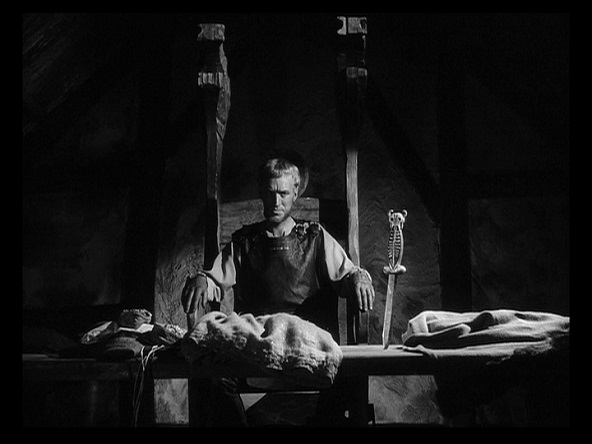
Max von Sydow. Like a boss.
Added my notes on Ingmar Bergman’s The Virgin Spring (1960) over at Alex on Film. Was this the original rape-revenge film? Probably not, although it may be the most prominent and best known. It was the direct inspiration for Wes Craven’s The Last House on the Left (1972), which is essentially a contemporary remake. For some reason the 1970s were thick with such films, with titles like Straw Dogs (1971), Thriller: A Cruel Picture (1973), Death Wish (1974), Death Weekend (1976), and I Spit On Your Grave (1978). For those who like to mix art with evolutionary psychology, I guess the power of these stories is obvious enough, though I’m still not sure what it was about the ’70s that unleashed such anger.
For more of this kind of stuff, here’s a follow-up.
Cold cases

Yes, it’s going to be a cold one.
Added my notes on Fargo (1996) and A Simple Plan (1998) over at Alex on Film. They’re both good movies, but I can’t shake the feeling that the Coen brothers and Raimi see their characters as rubes.
The gift that keeps on giving
Added my notes on Ringu (1998) and The Ring (2002) over at Alex on Film. It’s interesting, maybe even a bit ironic, that a novel about an unpleasantly viral technology — a haunted videotape that has to be reproduced for its curse to be lifted — has gone on to spawn a franchise. The ring ever widens. As for which version I recommend, it depends on what you like (or don’t like). The original is a better film, but if you can’t stand subtitles or want to see Hollywood production values then Verbinski’s isn’t a bad alternative.
The fall and fall and fall of the House of Usher
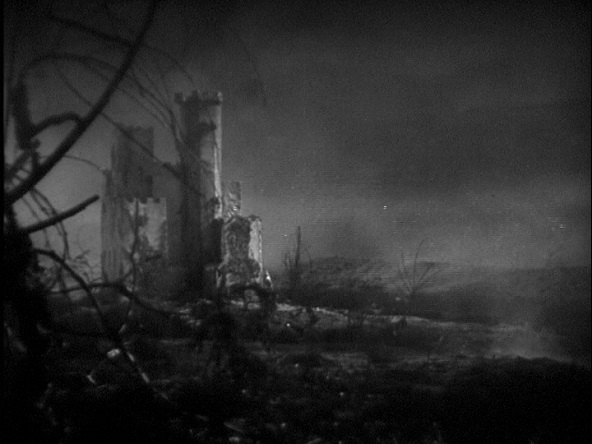
“with the first glimpse of the building, a sense of insufferable gloom pervaded my spirit”
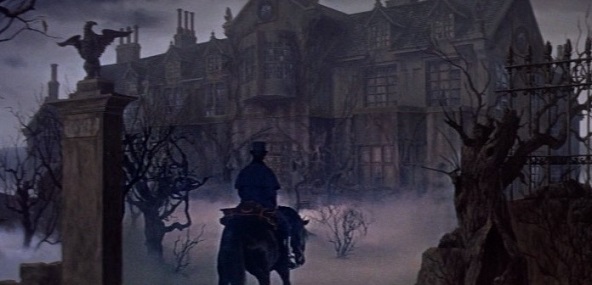
Added my notes on several film adaptations of Poe’s “The Fall of the House of Usher” over at Alex on Film. First up are two versions from 1928: the poetic adaptation by Jean Epstein, which grows a little more on me with every viewing, and the more self-consciously experimental interpretation by James Sibley Watson and Melville Webber. Then I jump ahead to 1960 and Roger Corman’s House of Usher, the first of his Poe adaptations starring Vincent Price, who seems to have been born for the material. I think Epstein’s film is the best, but all three are of interest.
Tricks and treats
Over at Alex on Film I’ve been dipping my toe into the Halloween franchise. John Carpenter’s 1978 original was one of the most successful, and influential, movies of all time. It was followed up by a raft of sequels, and then a franchise reset in 2007 directed by Rob Zombie, followed by a sequel in 2009. I think Carpenter’s film holds up pretty well, though the violence seems tame by today’s standards. Heaven knows restraint wasn’t an aesthetic decision, it’s just that Carpenter didn’t have any budget. Zombie’s reset starts off as a somewhat interesting new direction, and has some curious casting, but then settles into what is just a rehash. Halloween II is an incoherent mess.
 Alex Good