Electioneering

Last night was the first, and only, English-language leaders’ debate for the 2021 federal election. It was a complete waste of time. At least the first hour was, which is all I could watch.

The medium of television led to the replacement of debate with the sound bite, a snippet of a few seconds of speech taken out of context. From the evidence on display last night this is getting worse. Brevity was strictly enforced by the moderator, as the leaders had only thirty seconds at the most to answer questions, and that not without interruptions. All of this just meant that they were trying to repeat slogans and catchy phrases as quickly and clearly as possible, without saying anything of substance that might get them in trouble.

Questions weren’t answered. People talked past each other. There was the usual empty virtue signaling. Impossible, to my eye, to pick any clear winners or losers. I watched a breakdown of the “highlights” again this morning and found they were moments that hadn’t registered with me at all.

Green Party leader Annamie Paul came across as strong, but also fatalistic. She talked about having to come together across party lines to work on addressing environmental issues, which seemed to be conceding to reality. Maxime Bernier of the People’s Party of Canada wasn’t allowed to join the debate because the PPC didn’t meet the threshold for voter support, even though they are apparently polling ahead of the Greens now. I’m afraid it’s not looking good for the Greens this election, or for the environment as an issue moving forward.

Bloc Québécois leader Yves-François Blanchet wasn’t worried about being likeable, so he didn’t even try. Which was actually kind of fun to watch.

NDP leader Jagmeet Singh was the most assured and articulate and it didn’t matter much. In the first hour anyway he was the only one I recall making a clear policy statement, about ending subsidies to the fossil fuel industry. That’s something I would have liked to hear some debate over, but things had to keep whipping along.

Conservative leader Erin O’Toole hit his talking points. He’s not a charismatic or inspiring personality, but at least doesn’t come off as an arrogant jerk, which is something the Tories have struggled with recently. This isn’t a party with any new ideas though, and it’s not as if their old ideas were any good.

Liberal leader Justin Trudeau hasn’t changed in six years, which isn’t to his credit. He still has a lot of trouble speaking off script and can’t explain why this election is happening.

It’s come to this

At a time when only just over half of all Americans have been vaccinated against COVID-19 there has been a sudden interest in use of the drug ivermectin, a horse dewormer, as an antidote. This madness hasn’t stopped at the border, with a run on supplies of the livestock drug in Alberta and Amazon Canada including warnings on search results for the drug on its site (even though Amazon doesn’t sell it).

In the U.S. the Federal Drugs Administration posted the following on their Twitter account: “You are not a horse. You are not a cow. Seriously, y’all. Stop it.” Nevertheless, celebrity podcaster Joe Rogan recently admitted that he was taking the drug after having come down with COVID.

This is stupid on the level of the Tide Pod Challenge, where people would eat packages of laundry detergent. The Tide Pod thing was performative jackassery that I assumed was being done just to get clicks and views on social media and it didn’t involve more than a couple of dozen cases, at least as far as I can tell. Is the use of ivermectin any different? Are people just doing this to get attention? Or as a way of publicly declaring their pathological distrust of all authority and expertise? It can’t be just because they’re stupid, because I don’t think they all are. At least I don’t think they’re all this stupid.

And they’re off!

Somebody take his picture.

Justin Trudeau has called a snap Canadian federal election for September 20.

It is a tactical move, as the current Liberal minority government still has a couple of years to run before an election is required. Party political strategists, however, have presumably looked at the numbers and feel that now is the best time to upgrade to a majority government.

Why is this such an opportune moment? I think there are two main reasons.

In the first place, the competition is reeling. The new Conservative Party leader, Erin O’Toole, has not, thus far, been playing well with the public, Jasmeet Singh of the NDP still hasn’t caught on (and likely never will), and the Green Party is in total disarray.

Secondly, Canada is recovering (hopefully) from the COVID-19 pandemic and the Liberals want to take credit for the general sense of relief that Canadians feel.

In the next month I’ll probably post my usual, wildly inaccurate election predictions, and then offer some thoughts on the results. But for now, here are some preliminaries.

I think calling an election this early is cynical gamesmanship. Will the Liberals be punished for it? People don’t like being taken for granted, especially by politicians.

We live in a time of crisis and great challenges. And our political leadership continues to decline in quality. Is this the fault of the media? Of democracy? Looking at the field of candidates it’s hard not to feel despair.

As always, the Liberals will gain a lot from comparison shopping. The Big Prize in Canadian federal elections is Ontario, where there is already a Conservative government in power, and not a very popular one at that. This plays well for the Liberals. Also helping them out is what’s been happening south of the border, where it seems like the American right is imploding into a molten ball of ignorance and madness. Canada’s political right can now easily (and not always unfairly) be painted with the same brush as an anti-vaxxer, gun-toting, climate change-denying mob. Not in Canada! will be the cry. We’re better than that!

There has been an interesting development in national politics, both here and in the U.S., that has seen personality/celebrity and cultural issues jump into the driver’s seat. This is regrettable, but I can understand why it’s happening. The media, for one thing, tend to focus on these things because they push people’s buttons and they don’t take a lot of explaining. Try digging into the details of budgets and fiscal policy and see how many clicks you get. In the next month I expect we’re going to be hearing a lot of stuff about the personality of the leaders and the signaling of identity politics. Which national leader do you like the best? Are you woke? Are you for/against cancel culture?

I feel like I have to fight against this political tide myself. The fact is, Justin Trudeau has gone from being a slick, shallow, and dim figure I never cared much about to someone I despise. I don’t want to call him a bad person, but he is a sanctimonious hypocrite (the accusations of groping, the blackface) and, like so many establishment Liberals, he’s someone long steeped in the traditions of Natural Governing Party corruption (SNC-Lavalin, the We Charity). But how much of this should I be taking account of when casting a vote? Shouldn’t I just be concentrating on policy and platforms? Not that these mean all that much. But even though I knew Trudeau was never going to get rid of the FPTP electoral system, I still felt let down by that broken promise.

In any event, now they’re off to the races and we’ll have to see how things shake out. Here’s hoping we go for the least bad option, whatever it is.

Burning, burning

The latest assessment (the sixth) from the Intergovernmental Panel on Climate Change is a massive (4,000 page) and exhaustively-sourced document laying out that climate changing is happening, is “unequivocally” being driven by human activity (specifically the burning of fossil fuels), is getting worse, and is already to some extent irreversible.

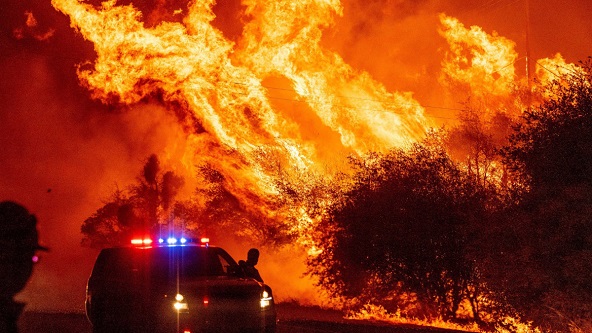
None of this is new, but it helps to have these reports dropped on us with some regularity because it keeps what’s going on in the news, along with stories about extreme weather events like raging forest fires and devastating floods.

Some reflections:

(1) We’ve known about this for fifty years now. Powerful interests, particularly the fossil fuel industry, have effectively waged a disinformation campaign against the science through their funding of the “merchants of doubt.” That said, I think most people get it and understand what’s really going on. But what can be done?

(2) The root problem is overpopulation. At present the global population is 7.9 billion. I was actually surprised it was already that high, but it’s going up by 200,000 a day. Some environmentalists get upset when you bring up the matter of population, seeing it as a diversion. I think it’s fundamental. As David Attenborough put it, “There is no environmental problem that is not made easier by less people.” Sure if we all lived with the carbon footprint of the average Bangladeshi then we might get by, but that’s not going to happen. And yes, global population will likely peak sometime around mid-century and then go into a sharp decline, but by then we’ll be cooked.

(3) In addition to overpopulation there is the fact that we live in an industrial economy based on mass production and mass consumption of goods. Some people blame capitalism, but I don’t see how a socialist government would be doing any less damage running the same industrial system. The old communist Soviet Union and China under Mao were two of the worst environmental offenders in history. As I’ve said before, the only environmentally sustainable human economy is life in a medieval village. We can’t go back to that even if we wanted to, and we certainly don’t want to.

(4) As for climate change, things are, as David Wallace-Wells put it, even worse than you imagine. And as bad as they are now they are likely to get much worse, and on an even faster schedule, than we expect. The feedback loops are already in place and operating.

(5) The only non-catastrophic way out would involve a global movement based on an egalitarian spirit of shared sacrifice. This would avoid total social and environmental collapse, but life would still get a lot harder. That said, I see no chance of people coming together to make the kind of changes that would be necessary to avert disaster. There’s no putting a happy face on this one. Our situation is worse than we think, and will soon end up being worse than we can imagine.

Postscript: As a final point, I want to address something that I’ve seen being said online in various forums: that our response to the COVID-19 pandemic is grounds for hope that we can successfully respond to climate change.

This is deluded. I already wrote up my own report card for COVID, but just to highlight: The only really successful part of the global response to the pandemic was the creation of a vaccine. We may liken that to the work done by the IPCC scientists. They did their job. But the job done by the medical establishment, even in the wealthiest countries, was spotty, the political handling of the epidemic was generally poor, the economic fallout, I believe, will be disastrous, and the social response was depressing in the extreme. Anyone looking at how we coped with COVID for signs of hope on the environmental front is wearing rose-tinted glasses indeed.

The getaway

Getting bored with Earth.

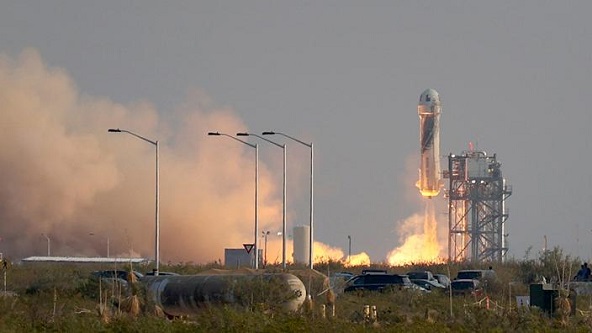
I’m trying hard to think of a news story that I cared less about that received as much coverage as the recent billionaire space race. A royal wedding? That’s the only thing I can think of that’s comparable.

Here’s a snippet from the wire story on Jeff Bezos’ 10-minute jaunt:

University of Chicago space historian Jordan Bimm said the passenger makeup is truly remarkable. Imagine if the head of NASA decided he wanted to launch in 1961 instead of Alan Shepard on the first U.S. spaceflight, he said in an email.

“That would have been unthinkable!” Bimm said. “It shows just how much the idea of who and what space is for has changed in the last 60 years.”

I wonder if Bimm was being ironic. This is what 60 years of space exploration has come to? An amusement park ride? This is what it was all for?


COVID-19: Final thoughts?

On June 30 2021 I received my second dose of a COVID-19 vaccine, thus marking what I hope is, for me at least, a beginning of the end of the pandemic. Maybe I’ll post some more follow-ups, but for now I thought I’d go over some of my earlier posts and offer an initial attempt at a personal retrospective on a remarkable global event.

At no time did I feel any anxiety over COVID-19. This was mainly for two reasons. In the first place, the fatality rate for COVID-19, at least in its initial iterations, was under 1% for those under the age of 65. The majority of deaths in the early days were the result of outbreaks in retirement/nursing homes. At one point the average age of people dying from COVID in B.C. was reported as being 88, which is older than the normal life expectancy in this country by quite a bit. Now obviously I don’t want to diminish any unnecessary deaths but this suggested to me that there was no need for anyone in a low-risk group to panic.

The second reason I didn’t feel anxious was the lack of any personal impact. Within the first year of the pandemic the media were reporting how “everyone” now knew someone who had died of COVID. I didn’t. Even today I don’t know anyone who died of it. I don’t know anyone who even had it. In fact, I only know one person who knows someone who had it. Maybe I was just lucky, but given the number of people I talked to about this I don’t think I was that much of an outlier. So for me, and almost everyone I know, COVID remained something that I read or heard about on the news but that I had absolutely no experience of.

What about the response to COVID? I’ve said before that we were lucky this was such a mild pandemic, as we could learn a lot that might help us deal with the next one. What lessons might we take from what we’ve been going through?

Scientists did their job in coming up with a vaccine on schedule. In the first days of the pandemic all of the experts I heard gave a timeline for how long it would take for a vaccine to be developed and when it would be available that turned out to be accurate. If anything the vaccine might have even arrived slightly ahead of time.

The medical establishment gets mixed marks, mainly for sending so many mixed signals. In Canada there was endless waffling over the status of the AstraZeneca vaccine. Then there was debate over how soon one should get a second dose. Follow the manufacturers’ recommendations? Or would a longer wait actually be better? I still don’t know what the answer is. And what about mixing vaccines? Good, bad, or of no real consequence? It seems to me we might have expected clearer guidance on these matters. Meanwhile, why did it take so long — over a year! — for it to finally be acknowledged that the chances of getting COVID outdoors, aside from attending crowded gatherings like sports events or political rallies, was nearly impossible? Even in the first months of the pandemic I never wore a mask outside, thinking just on the grounds of common sense that it was useless. I wasn’t going to get COVID just by walking past someone. And yet wearing a mask outdoors still seems to be a sort of virtuous fashion statement for many, even in the wee hours of the morning when there’s no one about, as does the annoying habit of running to the other side of a street to avoid passing someone on the sidewalk. This is taking hygiene theater to an extreme, and in a way that sends a confusing message. Are such people saying that they’re infected and that we should avoid them? I don’t think that’s what they mean, but it’s the most logical interpretation for their behaviour.

I wonder how much of this acting out will change in the months to come. In an earlier post I referred to the split between double-maskers and anti-maskers. Apparently there is another group known as ultra-maskers, who are defined as individuals who are going to continue to wear masks, everywhere, for the rest of their lives. This suggests a real mental illness.

I’m not a fan of the government’s handling of things. The poorly timed openings and re-openings were only part of it. The rollout of the vaccine also struck me as chaotic and divisive. Six months ago I even described it as a disaster. Who was an “essential” worker? Somebody delivering for Amazon? I knew home care workers who weren’t considered as being on the front line. A neighbour in his mid-80s couldn’t get a shot while in hospital because he was “only” in for surgery and not in long-term care (he ended up having to stay in the hospital for two months, unvaccinated). “Racialized” groups were at the front of the line for vaccines, but what is a “racialized” group anyway? It sounds like a political or sociological label. How arbitrary were the various age cut-offs? Was there much evidence that you were more at risk at 65 than at 60?

A lot of this made no sense to me. If COVID had been a more deadly pandemic I don’t think people would have responded well to it at all. Then throw in the jumble of pharmacies and vaccine pop-ups whose sporadic supply issues and “first come, first served” model made the whole business of vaccination into a lottery. It’s great that it all worked out well in the end, but when I found out from a friend that most people living in Buffalo, New York had their second shot before I’d even been able to make an appointment for my first, I’ll admit I felt more than a bit of frustration at how we were doing in this country.

The public response was disappointing. A significant percentage of people, though by no means a majority, rejected vaccines entirely. There was initial panic, leading to lots of irrational behaviour. Remember the run on toilet paper? Or how much a box of medical masks cost in March 2020? Meanwhile, I saw little, really no, evidence of people “coming together.” Instead there was ignorance, confusion, anger, and paranoia. I consider myself lucky to have only been yelled at twice in the last eighteen months for getting too close to someone (both times while walking past them in a grocery store aisle, while masked).

The fallout will be enormous. Much greater, I believe, than the political and economic wreckage from the 2008 financial crisis (and that was bad enough). I wrote about all this a year ago and I haven’t seen anything to make me change my mind about what I said then. Basically the pandemic was another case of the rich getting richer and the poor being wiped out. There are two economies. As Warren Buffett recently observed, “many hundreds of thousands or millions of small businesses have been hurt in a terrible way, but most of the big companies have overwhelmingly done fine.” For the past year the stock market boomed and house prices continued to soar while small businesses closed. More inequality and resentment coming up! What could go wrong with that?

Shifting focus a bit, there are two negatively-affected groups in particular that I don’t think have been getting enough attention.

In the first place, the closing down of hospitals for all but emergency procedures has created a scary backlog in things like cancer treatment and any surgery that could (but really, really shouldn’t) be delayed. This is having a huge impact on people’s lives that I’ve been witness to, resulting in a lot of extra suffering that will continue to be felt for years to come. As I said, I was never worried about catching COVID. But I count it a blessing that I didn’t get sick with something else in the last year and a half. I would have been screwed.

As a corollary to this I want to flag a related and equally worrying pandemic development. Doctors stopped seeing people for regular check-ups over the past year, instead getting by with “virtual” consultations (phone calls) that basically only addressed the most urgent situations. I have heard that this may be a new model moving forward, and even one preferred by many people. If so, it will be a disaster, and I say that with no hesitation. Hands-on, physical exams are absolutely necessary to catch a lot of medical problems before they get any worse. To take one example, a PSA test is no substitute at all for a digital rectal exam when it comes to catching prostate cancer early. I can’t count the number of people I’ve known who have had cancers, of all sorts, discovered on routine check-ups. People wanting to switch over to remote doctoring because it’s quick and convenient shouldn’t be under any illusions as to what they’re going to be losing and what the consequences are going to be.

The second affected group are schoolkids and what UNESCO has dubbed the “shadow pandemic” of “education disruption” (you can read more about this in an excellent article in the July 2021 issue of Maclean’s by Sarmishta Subramanian). I didn’t think the educational system was ready to switch to online learning, and it wasn’t. From what I’ve seen just over the course of the last couple of months, it never really got up to speed. Top students, those most, privileged, disciplined and motivated, have managed. They usually do, and there’s no need to worry about them. But for everyone else (which is to say, the overwhelming majority of students) it’s been nearly two years down the drain. I don’t blame the teachers. I met some new teachers who had just graduated before COVID struck and I can’t imagine how at sea they felt being thrust into such a situation. But based on the online classes I saw, and the students I spoke to, “school” this past year was a total waste.

In sum, if we can look at the COVID-19 pandemic as a test I don’t think we did very well. What’s worse, I have little faith that we’ll do any better when the next pandemic strikes. And it will.

Vanishing act

Did a double take when I saw this map of vaccination rates in the European Union and the United States. Great Britain not doing so well these days, cartographically speaking.

Allegories of collapse

The whole world is our condominium. (Chandan Khannan)

On Thursday June 24 a condominium tower collapsed in Surfside, Florida, with much loss of life. The building was forty years old and seems to have been a desirable address, with a four-bedroom penthouse selling for nearly $3 million in 2020. It was, however, in poor condition due to some major structural defects, especially the pouring of a flat pool deck. The condo’s management board had found out about this and suggested repairs but apparently couldn’t get their members to sign off on having the work done. And, as time went on, the work only became more necessary, and more expensive.

It’s hard not to see in this, and many have, something of an allegory for the state of the nation. Crumbling infrastructure needs to be repaired, but ownership doesn’t want to spend any money on a common good and would rather see the whole thing fall to pieces than have to pay for fixing it (perhaps another instance of Galbraith’s Law).

I don’t want to use this tragedy as an excuse to beat up on the Boomers again. What’s most disturbing about the story is that, given the situation they found themselves in, the condo owners (that is, the people living in the tower and most directly at risk) made the right call.

The community of Surfside already has an expiry date, as its local government knows that the whole place is going to be underwater soon so they’ve even started up a relocation fund in their budget to pay for citizens who will have to leave. What would be the point of making major renovations, assuming they were even possible, at this point? If one were to do a cost-benefit analysis the smart thing to do was probably to cross one’s fingers and hope to keep things going as long as possible, allowing elderly owners to cash out around the same time they might be expected to die. This makes sense if you’re old, your home constitutes your major financial asset, and the system is too broken or just too expensive to fix.

Now look around and think of all the things that are falling apart, from the environment to democracy, and think of how little real effort is being made to protect and possibly save them. Has a calculation been made that the investment isn’t worth it? I can’t help but feel that, on a moral level, this is what the end times look like.

Top dog

The winner of Best in Show at this year’s Westminster Kennel Club’s Dog Show is a Pekingese named Wasabi. Here it is.

I love most dogs. I used to love all dogs, but as I’ve gotten older my lukewarm feelings toward small dogs has turned into a more active dislike. I don’t like toy dogs that people carry in their handbags. I don’t like the ones with pushed-in faces either, which apparently became such a problem with the Pekingese that breeders had to address it. Not having a nose leads to breathing problems (who knew?) which makes them suffer in both cold and hot weather. Apparently it’s not advisable to leave these dogs outside for any period of time. So is this even a dog?

Oh well, I really only wanted to post something about this because it gives me a chance to show a picture of a true doggy champion, Westminster’s 2004 Best in Show winner. Way to go, Josh! You’re still the best in my book.

Narrative control

Master of her domain? (Roberto Dell’Olivo)

Tennis player Naomi Osaka has withdrawn from the French Open after saying that she would not participate in mandatory press conferences. Osaka considers the conferences to be bad for her mental health and focus, causing her “huge waves of anxiety.”

I don’t think many athletes like doing media, but in most cases, like this one, they are contractually bound. It is then part of their job if not part of any competition. In most ways this seems to me to be a pissing match between a star athlete and the tournament about who needs the other most and I don’t care who wins. What I find more interesting is what’s being said about the contretemps in the press.

In general the media response has been quite supportive of Osaka, though she has certainly had her critics. I found a few articles written in Osaka’s defence noteworthy though for how they characterize what is going on.

Cate Young concludes by finding the whole thing a little old fashioned in 2021. “In a landscape where most public figures have a direct line of access to their fans and supporters, the traditional media conference is nothing more than an outdated formality. If sports media wants to prove its necessity, it needs to demonstrate that it can do something an athlete with an Instagram account can’t.” For his part, Chris Jones congratulates Osaka on being part of “a huge transfer of power from fusty, historically patriarchal institutions, be they Broadway Leagues, awards committees, movie studios or governing bodies of sports, to individuals, especially those who have allied themselves with the struggles of their fans.”

Jemele Hill, continuing the theme of how progressive all this is, puts Osaka in the company of other Black athletes, particularly NBA players. She mentions Kyrie Irving as one such, as he had been fined for not speaking to the media, saying that he wanted “to perform in a secure and protected space.”

The nagging suspicion that leagues and reporters alike fundamentally misunderstand athletes of color makes these athletes still more determined to cultivate their own image with fans. That’s why so many prominent athletes — including the NBA stars Russell Westbrook, LeBron James, Stephen Curry, and Kevin Durant — have opted to launch their own media companies. With their massive social-media followings, they can take their message directly to the public. Many of them don’t need press conferences to promote or build their brands, and the establishment is having trouble adjusting to the new normal, in which it can’t make players do what it wants simply because that’s the way things have always been done.

The issues that Osaka has raised aren’t going away. These days athletes would much rather tell their own stories than let reporters do it for them. Not long ago, players couldn’t win any power struggles against the media, much less their own league. Now they can.

Does this sound familiar? A celebrity with a (real or imagined) grievance at how they are being treated by the mainstream or established media leverages their fame to take their message and brand directly “to the people” by way of “their massive social-media followings.” In doing so they hope to establish “a secure and protected space” and control the narrative around their brand.

Yes, it’s the Trump playbook. Remember that Trump just wanted to be treated fairly. He just wanted to protect himself. He would still appear on Fox News, just as Osaka clarified that she was OK “with all the cool journalists.” If one is forced to deal with the press, it’s best if they’re the tame variety.

Three points stand out from these interpretations of the Osaka affair.

In the first place, both Young and Hill make this into a pissing match not between an athlete and her sport’s governing bodies but between a celebrity and the media. Why? What did the media do wrong in attending these admittedly silly dog-and-pony shows? Are they responsible for Osaka’s anxiety? Aren’t they just doing their job? A job, I might add, that few of them enjoy any more than the athletes.

The second thing I find remarkable is that Young, Jones, and Hill represent the mainstream media. Jones is a columnist for the Chicago Tribune and Hill was writing in The Atlantic, which is about as traditional or establishment as you can get. That is, they are going out of their way to slam their own side while championing Twitter. At what point does this denigration of the media stop?

Finally I want to express my concern at the way a widespread anger at and distrust of the media has become cover for those in positions of wealth and power who want to take control of the way they’re presented. To ask the obvious question: Who wouldn’t “much rather tell their own stories than let reporters do it for them”? How brave is Osaka in ditching press conferences for social media platforms where, as Jones puts it, “she can control the conversation without risk to herself”?

Everyone wants that kind of control. But who has that privilege? Only the most powerful. Billionaires. Those with “massive social-media followings.” Celebrities who own their own media companies.

I recently updated an earlier post I’d made about the way celebrities seek to control their public image, in particular through their dealings with biographers — which may be said to be the ultimate example of controlling one’s narrative. I’ve made it clear what I think of this. I’m left to wonder if Young sees a difference between a press conference and an Instagram post, or if Hill considers it a good thing that athletes (or powerful people more generally) can now crush the media and control their image and narrative. Does she feel the same about Bill Cosby or Donald Trump doing this as she does about Kyrie Irving and Naomi Osaka?

I have as many misgivings about the media as the next person, but I’ll take the side of professional journalists asking questions, even the same ones, however many times, over that of celebrities looking to cultivate their brand on social media. The wealthiest and most privileged among us are in no need of a safe space. Journalism, as the old saw has it, is writing stuff that someone doesn’t want you to write. Everything else is advertising. I’m afraid that if this sort of thinking is allowed to continue then advertising is all we’re going to have left.

Update, May 16 2023:

The quest for total media control by sports celebrities of their image and narrative continues apace.

In 2021 the movie King Richard, about the upbringing of the tennis-star Williams sisters by their father Richard, was only gently criticized by some reviewers for, as Jesse Hassenger put it, keeping “enough of Richard’s messy past off screen to feel like a hagiography with a few concessions, rather than a true warts-and-all portrait.” Hassenger did suspect though that “the family’s approval [Venus and Serena Williams are credited as executive producers] may have inhibited a truly complicated portrait.” Really? You think?

Man in the Arena: Tom Brady was a ten-part ESPN docuseries produced in part by Tom Brady’s own production company. It first aired in 2021-2022. Many noted at the time that it resembled the 2020 ESPN docuseries The Last Dance, on the career of Michael Jordan. That series was co-produced by Jordan’s company, and the filmmaker Ken Burns was one who found this a point worth criticizing: “if you are there influencing the very fact of it getting made, it means that certain aspects that you don’t necessarily want in aren’t going to be in . . . and that’s not the way you do good journalism.”

But did anyone think either of these series were primarily intended as “good journalism”? I thought of this when the movie Air was released in 2023, which tells the story of Nike’s wooing of Jordan to be a pitchman for the company. Though Jordan doesn’t appear in the movie, he did apparently have some . . . input. According to Wikipedia: “Although not directly involved with the film, Jordan met with [director Ben] Affleck prior to the beginning of production and gave the project his blessing, asking for four changes to the script. . . . Affleck and [co-writer Matt] Damon did an uncredited script revision to accommodate Jordan’s asks.”

I’m surprised this sort of thing isn’t called out more often. I do my bit — blowing the whistle on Space Jam: A New Legacy, for example, as nothing but an egregious exercise in celebrity brand placement — but why aren’t more people upset about this? I get that it’s mostly taken for granted, but even the way we pussyfoot around what’s going on, and the language used to describe how it works (Jordan’s “asks” had to be “accomodated” to receive his “blessing”) signal that we’re being way too easy on what’s going on. Unless there’s some serious pushback against what’s being done, it’s only going to get worse.