Thoughts on Empire (the TV series)

Oi! Thas ma hoom!

I watched this BBC series in tandem with reading the book, which I talked about in a previous post. The series received pretty good reviews, though tackling such a subject at such a time inevitably led to it being criticized for not taking a hard enough line against empire. I can see that (the book felt a bit tougher), but overall I found it an interesting enough show to finish all five episodes.

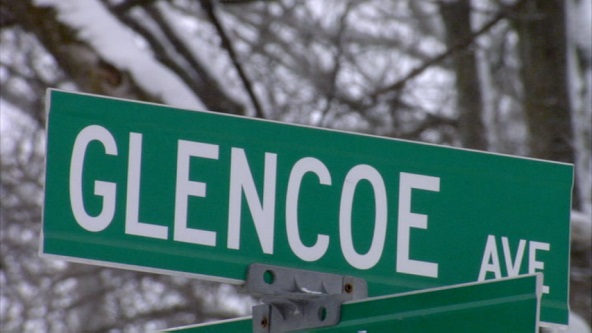
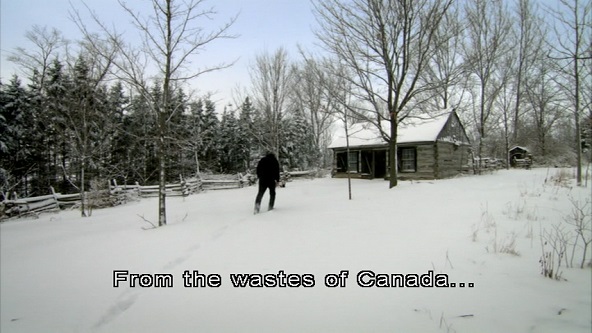
The second episode begins with host Jeremy Paxman explaining how, “Everywhere they went, the men and women who built the empire created a home away from home. From the wastes of Canada, to the fertile highlands of Africa, and the hill stations of India.” This seemed to me to be a bit tough on my home and native land. Overall, I think Canada offered a more congenial climate for British settlers than Africa or India. Nevertheless, Paxman later returns to the Great White North, calling it one of the most “thinly populated if inhospitable places” to build empire. He says this with an opening shot of him trudging alongside a snowy river. I was expecting to see “Canada” come up on the screen, but it more specifically locates the river as in “Ontario” (a.k.a. “the wild and snowy lands of British Canada”). Drilling down deeper, the place we visit is Fergus, Ontario, which is a ten-minute drive from where I live. I guess the producers thought it irresistibly picturesque, as it’s not mentioned in Paxman’s book.

Anyway, Fergus has a “harsh climate” that particularly challenged Scottish immigrants when the winters turned so cold the wheat froze, “which made the scones pretty chewy.” I didn’t know Scots were so soft, or so particular about their scones. It’s bad on me though that while I knew Fergus’s world-famous Highland Games, and even attended them one year, I didn’t know anything about the town’s founder, the pride of Perthshire Adam Ferguson. He named the place after himself.

Thoughts on Empire (the book)

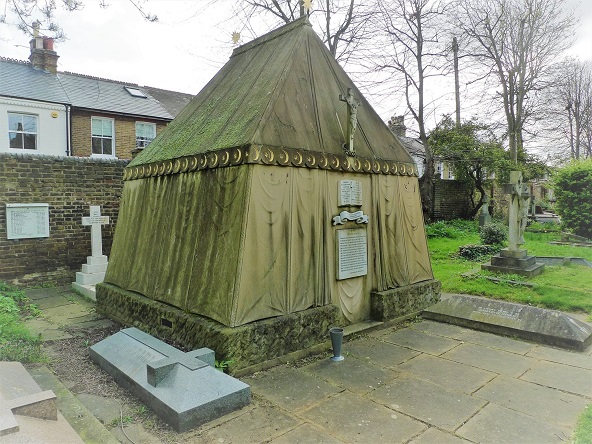
Backyard tent.

Empire by Jeremy Paxman is a sweeping historical and cultural survey of the history of British imperialism that was published as a companion to a BBC series of the same name (hosted by Paxman). When reading it I came across the following passage about the discovery of the source of the Nile by the Victorian explorers Richard Burton and John Hanning Speke that had some personal resonance for me:

Does any of this matter now, other than as a ripping yarn? The waterfalls which tumbled out of Lake Victoria, through which Speke intended to offer the Marquess of Ripon immortality by naming them Ripon Falls, largely disappeared when a dam was built in the 1950s. If the name of Speke is known at all, it is more likely to be as a deprived area of Liverpool, once home to the Bryant and May match factory  and the Triumph sports-car plant, both long-gone British brands. Richard Burton has his splendid tomb in a Mortlake cemetery in the shape of an Arab tent, but mention the name and you are likely to have to explain that you’re not talking about the Welsh actor twice married to the actress Elizabeth Taylor.

This made me sit up for a couple of reasons. First of all, as a schoolboy forty years or more ago now I remember writing a report on Burton and Speke and their discovery of the source of the Nile. It’s a story I’ve never forgotten, and since then I have always known about Burton and Speke. Now I’ll admit I may be an outlier, but what Paxman says is an interesting reflection on the sort of thing that falls out of public awareness and “doesn’t matter now.” And it makes sense. I mean, is there any way to quantify what parts of history matter now?

I guess knowing who these two guys were isn’t going to impact the life of anyone today, so I agree with Paxman’s wry take on matters. But isn’t he being a bit provincial, or at least limited to his own experience, in thinking that anyone outside of England would know that Speke is a neighbourhood in Liverpool? I’ve never heard of the place, or of Bryant and May matches. Even Triumph sports cars are only a name that rings a distant bell. I can’t remember ever actually seeing one, or knowing where they were made. The way we understand history is such a personal thing.

Worse than I thought

In my previous post on the 2022 Ontario provincial election I mentioned that preliminary reports had it that voter turnout had dropped below 50%, after a high of 58% in 2018. Well, more information has come in and it was actually worse than that. At a shocking 43.03% (according to early data) 2022 marked the lowest voter turnout in provincial history, going back to Confederation. It was almost a full 5% lower than the previous record low, which was set in 2011.

2022: Election round-up

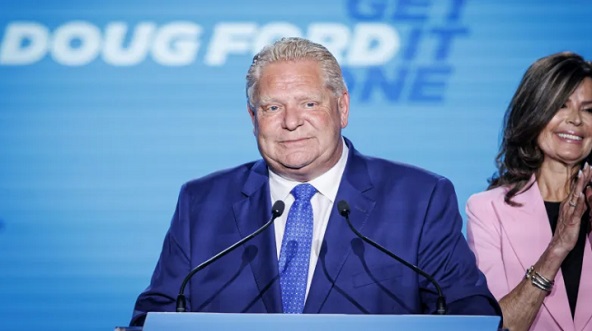
Ford more years. (CBC – Evan Mitsui)

Thoughts on the 2022 Ontario provincial election.

Ontario’s 2018 provincial election had a great turnout. Or at least relatively great. It was a 20-year-high but still only 58 percent of eligible voters cast a ballot. As I’ve remarked before, roughly 40% of people living in a democracies today are never going to vote no matter who is running or what the issues are. They’ve checked out.

People expected a big dip in voter turnout this time around and they got it. Preliminary reports I’ve seen say that it dropped below 50% (update: it was worse than that). This was the first time I’ve ever voted where there was literally not a single person either voting or in line to vote at the polling station I attended. Yes it was an advance poll, but it’s still something I’ve never seen before and I usually vote at advance polls.

One of the factors playing into the low turnout was the fact that the election was over almost as soon as it was called. Pollsters were practically guaranteeing another Ford majority weeks out from election day, and the only story that pundits were left to discuss was who was going to form the official opposition. It’s pretty rare for election results to feel so predetermined. If nothing else the media love a horserace and are often accused of trying to whip one up when none exists. This time they didn’t even try. I can’t remember the last election I’ve voted in that played out so predictably.

It was also an invisible election. Again this year the only party that had canvassers going door-to-door in my riding were for the Greens. The Greens were also the only party I got a phone call from. Perhaps everyone else had just given up (Mike Schreiner, the provincial Green leader, won my riding in a landslide).

But I was called nearly every other day for the last two weeks to take part in a poll. Somebody was working hard.

While the result was anything but a surprise, the fact that it played out so predictably does seem to call for a bit of comment. I don’t think Doug Ford was all that popular with Ontarians and his record in office was nothing to get excited about. The deficit in 2022 (for those who still care about such things) ballooned even beyond what had been run in the COVID years, all while Ford pulled silly stunts like cancelling vehicle registration fees. He’d cut back on services, boosted some shady development deals (the boondoggle of highway 413), bungled the response to COVID (though arguably no worse than anyone else), and still won smashingly, facing no real opposition. Why?

I’ll take a shot at explaining, but before I do I want to just add something on the highway 413 fuss. I totally understand people who think the whole thing is rotten, but what I don’t think a lot of critics appreciate is just how dirty a business real estate development is. It’s all like this. Development and infrastructure is one of the areas where public and private actors work together very closely, and at every level — municipal, provincial, and federal — there’s a lot of pay-to-play going on. I don’t know how much of that was happening here, but it’s the nature of the business. No one should be surprised at it.

But back to Ford’s success. Some of this can be attributed to what are global trends. For example the way the right is killing it on the culture war front, and the continuing divide of political parties into those of the private sector and those of the state. With regard to the latter point, it was striking that a number of unions come out in support of Ford, but these were all private sector unions, specifically in the building trade. No public sector unions backed him. I think that tells you something about where the new line is being drawn. And given how much support I think there is for the Tories among a lot of public sector union members I think things are looking even worse for the left on this front.

Another factor putting the wind in Ford’s sails was the hangover from the Dalton McGuinty-Kathleen Wynne years. It’s hard to overstate how deeply those two were disliked, and the metaphor of the Liberals still being in the penalty box held true. Voters can hold long grudges. Federally, the Liberals are still running against Stephen Harper, and even Brian Mulroney, while in the U.S. I imagine Donald Trump is going to occupy a similar place for many years to come. Meanwhile, the presence of Justin Trudeau (and his partnership with Jagmeet Singh) on the national stage only added fuel to the Tory fire. Again I don’t think you can overstate how sick many people are of Trudeau.

Then there is the first-past-the-post electoral system. The Tories took roughly 2/3 of the seats with just over 40% of the vote. The Liberals, NDP, and to a lesser extent the Greens split the anti-Tory vote, while Ford had nothing to fear on his right. I had to go online just to find out who the New Blue, Ontario, and Ontario First Party even were.

Veteran NDP leader Andrea Horwath and Liberal newbie Steven Del Duca, who both resigned as party leaders after the election (Del Duca even failing to win his own seat), were criticized for not being more inspiring, not to mention better prepared, but I don’t think they were going anywhere regardless. My big question going into the election was whether, given this state of affairs, there was any chance the Greens could make a breakthrough. They did not, only holding on to their single seat. At this point, and after their disastrous showing in the 2021 federal election, you really have to ask whether they have any role to play in Canadian politics at all. It’s not just that people aren’t voting for environmental issues, they are actively voting against them (see the union support for the highway-building project). I don’t see where there are any hopeful takeaways from that.
Draft notes

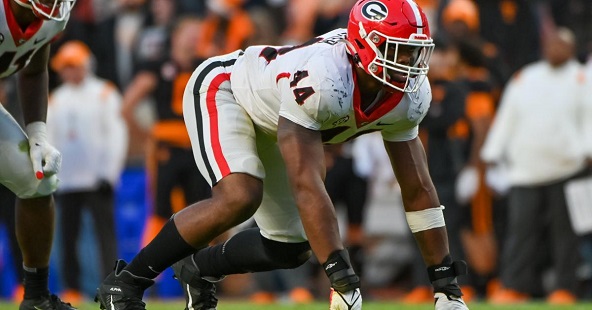
First overall pick Travon Walker. 6′ 5″ and 272 pounds. Boom or bust?

We’ve just finished the first two days of the 2022 NFL draft, which was held this year in Las Vegas. It’s hard to overstate how big an event this has become. Taking place over three days, the amount of media coverage and fan interest rivals that for the Super Bowl.

Why? Because unlike the Super Bowl every team’s fan base is involved, each hoping for a transformative pick or picks. Because you can lay an infinite number of bets on the various outcomes. Because with trades allowed the whole show becomes a giant poker game. And I think mainly because anyone can pose as an expert.

Teams invest an incredible amount of resources in preparing for the draft, preparing their big boards with armies of talent scouts and crunching numbers with various sorts of analytics. All of which counts for something, but given the randomness of the results, where even in the first round of the draft your hit rate on picks runs around 50%, just how much it counts for is open to debate.

This year was a more open and unpredictable draft than ever, in large part because there were few blue chip prospects and no top quarterbacks in the mix. As it turned out, only one QB was taken in the first round (Kenny Pickett, who went 20th overall to the Pittsburgh Steelers).

The low evaluation of the QBs in this draft underlines another change that’s become more pronounced around the league. Of course it’s long been recognized that the QB is the most important player on the team. No other position is even close. What’s changed is the mindset that says that you have to have an elite or franchise QB (read: top 10 or so) to even be relevant. One or two of the best QBs in this draft might turn into decent starters, but teams want a lot more from their QB prospects now. You have to have the potential to be one of the very best. In draft terms, this means the position has become totally front-loaded.

That’s a philosophy that was underwritten this off-season as well. Not only did Deshaun Watson, despite having to deal with a bunch of sexual assault allegations, receive a fully guaranteed, five-year, $230 million contract with the Cleveland Browns (which also cost the Browns three first-round picks), but otherwise serviceable-to-good QBs like Jimmy Garappolo and Baker Mayfield became toxic assets. It’s not the high price of talent that kills you, as one owner put it, but the high price of mediocrity. You can pay an elite player anything, but you can’t afford to have players who are JAGs (Just-A-Guy) on your roster.

It’s hard not to see this as yet another example of our winner-take-all economy in action, which in turn makes the draft seem like even more of a lottery. Is that another reason that it’s become so popular? It’s a sporting event for our time.

Maigret: Maigret in Court

Simenon was a machine cranking out these Maigret titles, and I have to think that all the time the chief inspector spends thinking about his retirement – two years away in this book, as he’s fifty-three – reflects an authorial burn-out as well. But then Maigret was ready to retire as early as Lock No. 1, which was still early going in the series, so there’s that.

Another incompatible couple. An older man who is a bit of a loser marries a younger woman who is “petite and very curvaceous, with a come-hither look in her eye, a suggestive pout and seductive manner.” In short, she’s trouble. In these mysteries the women either love too much or not at all, and bubble-headed Ginette falls into the latter category.

This is a weaker effort, as the crime is brutal and uninteresting, the characters dull and undistinguished, and the solution just a matter of following people around.

Maigret index

Maigret: Maigret’s Secret

My hat goes off to Georges Simenon. Following Maigret and the Reluctant Witnesses, a book I thought had him just going through the motions, he came up with something quite fresh and surprising in Maigret’s Secret.

At a dinner party with the Pardons, Maigret gets to reminiscing about a case that has always bothered him. A woman was stabbed to death in her home and her husband was convicted of her murder. He ended up being executed. But was he guilty?

Maigret had his doubts at the time of the investigation, but things were taken out of his hands by his old nemesis, the magistrate Coméliau, and Adrien Josset is sent off to what I assume was a date with Madame Guillotine (the official method of execution in France until the abolishment of the death penalty in 1981). Years later, Maigret’s doubts persist. Actually, Maigret’s Doubts would have been a better title here, but it had already been used. I don’t know what his “secret” is.

So this is a mystery without a solution. Or, for that matter, any way of arriving at a solution. Maigret’s method (or anti-method) of staying open-minded and allowing the case to resolve itself, takes time. But here time is the one thing he doesn’t have, as the public is impatient for Josset’s head. All we have are hints that things might have turned out differently. At one point Maigret meets a concierge who is just one of several extremely rude and antagonistic supporting players. She “looked nothing like the person he had imagined.” This is a point worth flagging, as it’s part of a theme in the book about the reliability of snap judgments. When the concierge lets him in and he goes to the apartment of Josset’s lover he is again put off.

It was all a bit of a let-down. The geraniums were there all right, but they were the only detail that corresponded to the mental image Maigret had formed of the place.

Just as with the concierge, Maigret’s mental picture is blown up. So how much else might he have been wrong, or right, about?

Once again there is something made of the fact that the married couple no longer sleep together — a point that had some weight in Maigret Sets a Trap and Maigret and the Reluctant Witnesses. Is it a bad sign here too? Or immaterial? We’ll never know.

A coda suggests a possible alternative solution, but it comes by way of an unreliable narrator and is unverifiable anyway. This is deeply subversive. Closure, however ironic, is one of the essential elements of the mystery genre. But here we’re left to entertain different Jossets, a man who is either very wicked and clever or very hapless and naïve. Some lives, like that of Josset or the parallel case of Pardon’s patient, just come to a frustrating and messy end. They have their own narrative logic, and we have to take them or leave them as they are.

Maigret index

Dune on (and not on) film

Over at Alex on Film I’ve been looking at the adaptations made (and not made) of Frank Herbert’s novel Dune: David Lynch’s 1984 version, a documentary on the Dune movie Alejandro Jodorowsky didn’t make, and Denis Villeneuve’s 2021 blockbuster.

To be honest, I’m not a huge fan of the book(s), but that may be because I’m not much into that blend of SF and Fantasy. Denis Villeneuve’s movie was widely praised though, and if you loved the novel then I think you’d be happy. This Timothée Chalamet fellow, however, is not winning me over.

Double trouble

Reading an account of the adventures of Rodrigo Diaz de Vivar, popularly known as El Cid, I came across a delightful bit of history.

In the eleventh century the Iberian peninsula was a crazy free-for-all and among the players were the counts of Barcelona. At one point there were two counts who were joint rulers and also twins: Ramon Berenguer and Berenguer Ramon. These brothers were the son of Ramon Berenguer I (“the Old”). Anyway, Ramon Berenguer II (known as “the Towhead”) died in a hunting accident (oddly enough, William II of England died around the same time in similarly mysterious circumstances). Brother Berenguer Ramon II (known as “the Fratricide”) then took over. His nickname tells you something about the suspicions there were at the time over his involvement in his brother’s death.

That all this was going on between twins with reversed names just seemed like too much fun for me. As things worked out, the Fratricide Berenguer Ramon was later succeeded by his brother the Towhead’s son, who became Ramon Berenguer III (and who was also Ramon Berenguer I, Count of Provence). With these unimaginative names you can tell why they needed additional descriptive monikers. Ramon Berenguer III is known as the Great on account of his success in battle. On his death he left his Catalan possessions to his eldest son Ramon Berenguer IV and Provence to his younger son, Berenguer Ramon.

Maigret: Maigret and the Reluctant Witnesses

Another formerly rich family fallen on hard times, residing in a grand old house that is falling apart. I get the sense that Simenon didn’t care much for old money.

The decrepit house is a fit setting though, as Maigret himself is close to retirement and feeling out of step with modern life. The drink that will see him through the investigation is a hot toddy. He begins his day by thinking that Paris in the rain resembles a black-and-white silent film, and then the crime scene strikes him as being like one of the engravings that used to appear in the Sunday newspapers before photography.

The inhabitants of the house are just as archaic. There’s a housekeeper who has been serving the family for fifty years. There’s a pair of elderly parents who have entered a non-communicative twilight phase. And there is the next generation, one of whom has just been found dead. His brother and sister-in-law are the other reluctant witnesses, their characters infected by the moribund spirit of the place.

Everything was decrepit, the house’s contents as well as its occupants. The family and the house had turned in on themselves, taking on a hostile appearance.

Putting this musty air of decline into further relief is an examining magistrate just out of college. He’s one of a “new school” of magistrate and Maigret finds him “insolently youthful” but that just seems to come from the deputy chief inspector being out of sorts. I didn’t read him as being anything but respectful.

In any event, Maigret is in a sour mood and the murder itself turns out to be something a little less than it appears. This may be the first time in the series I had the sense that Maigret was only going through the motions, not utilizing any method (he has none!) but simply withdrawing into himself, physically and mentally, until some thought comes to him or some observation becomes significant and unlocks the case. This “formed part of a technique he had unconsciously built up over the years.” It works again here, but he isn’t feeling it and I wasn’t either.

Maigret index