Feel the burn

Last week we had a bit of a pre-heat wave in these parts, giving us an early taste of summer. Winter jackets came off and people were walking around in tank tops and shorts. Or less. This leads me to offer the following public service announcement.

People: the sun is not your friend. First off, it leads to skin cancer. Tan a luscious dark brown every summer and you’ll be spending your senior years suffering the death by a thousand cuts of having bits and pieces of yourself sliced off by a skin specialist. And some of those pieces won’t be small!

Even if you avoid cancer, the effect of the sun is to age your skin considerably, causing greater wrinkling and sagging and the growth of thick (non-cancerous) warts and lesions on the skin.

And even if you don’t notice those effects right away, you will feel the burn of having fried your and having it peel for the rest of the week.

Meanwhile, what is the upside? You think you look a little better? I think even here the tide is finally starting to turn against tanning. I anticipate a return to the beauty standards of the 18th century (or earlier), where women cultivated a “moon look” of ivory skin. A tan was the mark of a peasant, someone who spent a lot of time working outdoors. I don’t approve of the class distinctions, but I’m on board for the aesthetic.

Nor is there any need today for outdoor laborers to burn all summer. Wear a shirt! You won’t die! Every summer I see roofers working shirtless all day. When I was having my own roof done five or six years ago I was talking to one of the crew and mentioned my concern, telling him he’d be better off with a shirt on. He said he was aware of the danger but put on sunscreen. I had to shake my head. What is a safe sunscreen these days? SPF 50? 70? And it doesn’t last all day. If you’re doing a job like working on a road crew or roofing you’d have to be slathering it on every couple of hours. Something I very much doubt many workers are doing. So just wear a shirt.

Personally, I always wear a shirt with a collar whenever I go out in the summer now. The collar to keep the rays off my neck. That sun is just too strong. And yet last week I passed yard workers working outside in tank tops with arms so red you could practically hear their flesh sizzling. I winced seeing them. I also passed by a house being rented by a bunch of university kids who were sunbathing on the roof in shorts and bikinis. And as hard as it is for me to say this, I was wishing the girls in bikinis would have covered up.

In the future, and this is something I’ve admittedly been saying since the early ’90s, tanning is going to be looked on as the equivalent of smoking today. Meaning not just stupid and unhealthy but downright dirty. Now I know there are plenty of people out there who will object because they love tanning, or they own a tanning salon, or whatever. But leaving matters like that aside, it seems to me that the health considerations are irrefutable. Exposing your skin to a lot of sun is just plain bad for you. Don’t do it!

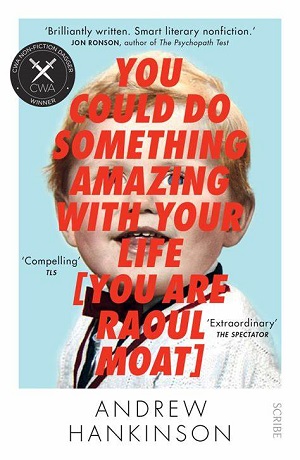
TCF: You Could Do Something Amazing with Your Life [You are Raoul Moat]

You Could Do Something Amazing with Your Life [You are Raoul Moat]
By Andrew Hankinson

The crime:

A couple of days after being released from prison (on July 1, 2010) Raoul Moat shot his estranged girlfriend and shot and killed her new boyfriend. The next day he shot a police constable in the face, blinding him (the constable would later take his own life). A massive manhunt for Moat ensued, ending with his killing himself.

The book:

You Could Do Something Amazing with Your Life [You are Raoul Moat] announces itself as literary non-fiction by being written in the highly unconventional second person. Despite all the rave reviews, I was on edge, thinking this a bit of a stunt.

It isn’t, and it works.

There’s a boldness to proceeding in this way. The stated “aim was to stay in Raoul Moat’s mind,” which presupposes an ability to inhabit that mind, to directly state what Moat was thinking at any given time. What allows Hankinson to go this route is the documentary evidence available. Moat left a record that speaks to us directly in his own voice:

The main source for this book was Raoul Moat, who left behind spoken and written material including audio recordings he made on the run, a 49-page confession he wrote on the run, recordings of this 999 calls before and after shooting PC David Rathband, recordings of phone calls he made while in prison, audio recordings he made during the final years of his life, training diaries, a psychological questionnaire, his correspondence, and six suicide notes he left in his house.

For all its literary qualities then, it’s also a very simple book, being a sort of Raoul Moat Reader or even oral history, with slight editorial asides inserted in square brackets instead of footnotes. But it makes for a great read and effectively delivers on the promise of taking us into Moat’s head by serving him up in his own words, even down to his employment of obscure local slang (“micey” being a word the exact meaning of which I’m still not sure of). The comparison most often made by reviewers was to the work of Gordon Burn, who did something similar in his immersive account of the Yorkshire Ripper, Somebody’s Husband, Somebody’s Son. That both authors are natives of Newcastle upon Tyne is only a coincidence, but one that probably carries some meaning. On some level our language, even if it’s just a dialect or regional voice, reflects a type of consciousness, and for an author wanting to get inside his subject’s head in particular, I think being steeped in that language and being a native of that place makes a difference. (As an aside, I’d mention Michael Winter’s attempt to do something similar in his “non-fiction novel” The Death of Donna Whalen, though the results there weren’t as successful.)

We shouldn’t be surprised, however, that nothing remarkable is revealed. Moat wasn’t so much a monster as just a dull brute. He was a big guy – 6’3” and around 240 pounds – and took various supplements as a bodybuilder to turn himself into a hulk. This came in handy when he worked for a while as a doorman or bouncer at local clubs, but the thing about big guys like this – or any athlete, or young beauty – is that you have to be able to manage the decline. Your physique is a diminishing asset. Moat was deeply depressed at no longer being as big or strong or tough as he was as a younger man – “I’m well aware that I’m past my prime” – and saw the best years of his life as over. At 37 he was “too old to start again.” “I’m not 21 and I can’t rebuild my life,” he remarked after coming out of jail. “I’ve got no life left,” he told the police operator after shooting PC Rathband. The suicide note or recording was his obsessive genre. He was paranoid too, to the point of delusion, and could be downright whiny when it came to how he was being “bullied” and “stitched up” (framed) by the police, but taking his own life was always where this was heading.

Hats off then to Hankinson’s largely editorial skill in making such a depressing and limited figure so interesting. I guess I could call it “revealing” too, but it’s a case where little is revealed that you probably wouldn’t have figured out after reading a quick news report on the case. Instead it’s exactly what it sets out to be, which is a trip into Raoul Moat’s mind. Not a place you may want to go, but one that it’s worth knowing about.

Noted in passing:

The level of self-pity even among the worst members of society has few limits. This was brought home to me years ago when reviewing Stevie Cameron’s On the Farm: Robert William Pickton and the Tragic Story of Vancouver’s Missing Women. Pickton was the B.C. pig farmer who confessed to killing 49 women. After being arrested he referred to himself as being “crucified” by the police (apparently he also found God behind bars). I can’t recall now if Moat ever referred to himself as being crucified, though I think he does at some point. He uses a more unconventional image in saying “I feel like King Kong when he’s at the top of that flaming building, you know.” Jesus, King Kong: both persecuted martyrs hounded to death by the authorities. It’s a weird way killers have of justifying themselves, while also plugging into the contemporary cultural imperative (that’s not too strong of word) of always casting yourself as a victim.

Takeaways:

Suicide can be a wrecking ball – just think of the prevalence of “murder-suicides” – and once someone’s course is set on self-destruction you should leave them to the professionals to deal with. Especially if guns and a history of violence are in the mix.

True Crime Files

Re-reading Shakespeare: Measure for Measure

(1) If, as has been said, Hamlet is the Shakespearean play for the nineteenth century and King Lear for the twentieth, is Measure for Measure a good pick for the twenty-first? It certainly chimes with the kinds of moral obsessions that dominate social media. Angelo as sexual predator, and telling Isabella that nobody will believe her if she publicly accuses him, would have put him near the top of the Renaissance version of a “Shitty Media Men” list. And his ghosting of Mariana after destroying her reputation also seems very contemporary. But more than that I’d focus on the matter of virtue signaling.

What we mean by virtue signaling isn’t the public display of virtue, which I don’t think anyone would object to. People acting in a noticeably brave or idealistic manner is fine. What makes it fair game for calling out is when such behaviour is meant to draw attention and applause, and more specifically when it is directed at the judgment and policing of the rest of us. It’s the public grandstanding of moral principles that the virtue signaler wants to see applied to other people. Or at least other people first. It calls on other people, usually those most directly affected, to make sacrifices for our own moral principles. Claudio sees straight to the heart of the matter upon his arrest. It’s “for a name” that Angelo is now coming after him, “’Tis surely for a name.” I can’t think of a more succinct definition of virtue signaling.

Angelo is again the main culprit here, but the importance of appearing to be virtuous is just as important to the Duke. He affects not to care about the adulation of the masses, and indeed says he doesn’t trust the kind of man who does affect it, but his whole justification for giving Angelo the job of whipping Vienna into line is because he doesn’t want to risk having the public turn against him. Everybody wants to seem virtuous without putting in the work. Which I think suggests that they don’t really believe in virtue in the first place.

This gets at something that always gets my back up about this play: the idea that Angelo somehow changes, falls, or breaks bad. Given the way he treated Mariana, he was clearly a total shit from the start. He doesn’t become a hypocrite after being tempted into sin by Isabella, but has always been a hypocrite. As most hypocrites are. Then he proves himself not just to be vicious but a coward, reneging on his deal with Isabella and signing off on Claudio’s execution because he’s afraid Claudio might come after him. That’s not his lust talking. Finally, I don’t think he’s in any way redeemed at the end. He’s just willing to take his lumps after being caught.

(2) Who is this Lucio fellow anyway? Tony Tanner calls him “something of a Mercutio, something of a Parolles, and something all himself.” The list of Dramatis Personae gives him the title of “a Fantastic,” which one edition glosses as an “extravagant, showy dresser/person with fanciful ideas.” No help at all. Are his clothes ever mentioned in the play? And what are his ideas?

I’ve seen him described as one of Shakespeare’s “border-crossing” characters, but that’s not quite right since unlike Viola or Hal he doesn’t need to disguise himself or even change his character to travel between worlds as different as the court and the stews of Vienna. He belongs in both places, and in a play full of “seeming” and disguises he is what he is.

He’s also often referred to as being a demonic figure, with his name meant to recall Lucifer, but role in the play doesn’t seem at all the same. He’s only like Lucifer in having so many good lines.

Samuel Johnson found Lucio’s punishment (“Marrying a punk, my lord, is pressing to death, whipping, and hanging”) a bit heavy, but thought it reflected how “men easily forgive wrongs which are not committed against themselves.” Yes (and this has always been the case), but it also reflects how serious a crime slander was considered in the Renaissance, something we have a hard time relating to today.

Personally, I sort of like Lucio. He’s a witty and flexible character with his heart seeming to be in the right place most of the time. He really does put some effort into helping Claudio, proving himself a friend in need. Furthermore, what he says about the Duke isn’t much worse than what Falstaff says about Hal, is it? And can we really say his estimation of the Duke is that far off the mark? Perhaps the Duke has been a scapegrace. That’s certainly the way he’s presented in the 2006 film version anyway. And as Northrop Frye observes, “while the bulk of what he [Lucio] says is nonsense, one phrase, ‘the old fantastical Duke of dark corners’ is the most accurate description of him that the play affords.” Note: there’s that word “fantastic” again.

(3) You often see Measure for Measure described as a tragicomedy, dark comedy, or problem play. It was lumped in with the comedies in the First Folio, but it always sat uneasily with that label. Everyone gets married at the end, for example, but you could argue nobody is happy about it. Marriage is more like penance than a joyous sacrament.

Personally, I read it as a very dark play. There’s no “green world” to retreat to, but only the prison-house (“circummured”) world of Vienna. But, and I think this is the important point being made, the stews and the dungeon are as natural as the Forest of Arden. Isabella, for example, wants repression, “wishing a more strict restraint” than the already strict convent she’s joining. “Blood, thou art blood.” That’s a law of nature, and it’s not a good thing. Or really it’s beyond good and evil. Rats pursue their nature as we do ours: they “ravin down their proper bane, / A thirsty evil.” Evil here meaning nothing immoral but only self-destructive.

If you think that freedom or liberty (the latter a more loaded term for Shakespeare than for us) are natural human desires, and good, that’s fine, but so are their opposites: cruelty and oppression. And not only natural, but desirable. And not only desirable, but fair and just. This is not a lower order of nature, since it’s primarily identified with the city, commerce, and law. Read the ending here however you want, but the point is, happy or sad, comic or tragic, it’s meant to represent an equitable resolution. Equity not as grace, but as just desserts. Like the rats, everyone has to drink their poison. It’s in our nature.

TCF: Obsessed

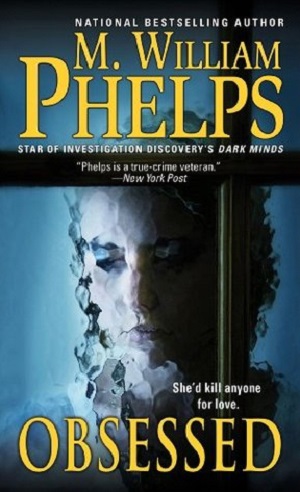
Obsessed
By M. William Phelps

The crime:

Sheila Davalloo had a crush on her co-worker Nelson Sessler so she killed Sessler’s girlfriend Anna Lisa Raymundo. This meant she now had Nelson all to herself, but she hadn’t told him that she was already married. So Davalloo then tried to kill her husband, Paul Christos, but he managed to survive her attack, which led to Davalloo finally being connected to the Raymundo murder, for which she was convicted a decade later.
The book:

A great read, and very well paced given how long it is and the fact that not much actually happens. But Phelps’s description of Davalloo’s attempt at killing Christos offers up a master class on how to use point of view to slow down the subjective experience of time. It’s a scene that goes on for nearly fifty pages, and feels like it could have been written by Stephen King.

Another pacing problem that a lot of true crime books fall into and that Phelps avoids is expanding the trial to the point where it become tedious. I think this is just because trials throw up so much material it’s too easy to just transcribe the transcripts. But here the fact that Davalloo represented herself (rarely a good idea) made it more entertaining, and let Phelps give free play to a lot of judgmental asides. Phelps walks a fine line with getting too chatty on occasion (“Oh, how the guy should have listened to his inner voice!” “That, my friends, is the description of a desperate woman . . .”), and during the trial this is something he really indulges, sometimes overdoing the sarcastic play-by-play. But overall I think the tone he adopts works.

The pitfall that Phelps doesn’t avoid is that of larding praise on the police. Again, the reason this happens so often is pretty obvious: the police are the good guys and in most cases have been generous in providing access and interviews to the author. But this sort of guff too often turns into hero-cop boilerplate. For example:

Richard Conklin . . . is a top-notch cop. There’s nothing Hollywood about Conklin. He’s sharp and does things by the book. If Anna Lisa could have chosen the cop she wanted to manage the investigation of her murder, she could have never chosen a better investigator than Conklin to lead the task . . .

. . . there was no mistaking the tenacity and drive or compassion that motivated [Greg Holt] to solve crimes perpetrated against the people of the town he worked in. Hold was a doer. He believed in working cases the old-fashioned way: Hit the bricks. Track down sources. Bang on doors. Ask questions repeatedly. Allow his gut to guide him. And when he thought he’d exhausted every possible lead, every palpable clue a case had to give up, he would dig even deeper, go over it all again, and find that missing link –that one needle sending him running toward an entirely new haystack. For Holt, a cop didn’t stop because the answers were hidden. He persevered and made them emerge.

Alison Carpentier is one of those no-nonsense cops. She hardly took any crap from anyone. . . . Carpentier is one of those officers never satisfied with a case until it is looked at closely and all the questions answered. She doesn’t accept what is generally the norm: Most cases are what they seem, and are nothing else. Carpentier is one of those hungry cops, motivated by her instincts. During her ten years on patrol, Carpentier had done two years of undercover drug work, where she learned how to rely on her gut.

How could any perp hope to beat this team of all-stars? Holt is even presented as a human lie-detector: “Hold had interviewed countless suspects and witnesses. When a professional does that for years and years, he develops a sixth sense about people in general. He’s able to read human beings fairly accurately.” You’d think this would be true, but apparently it’s only a common misconception. Even experienced police interrogators apparently do no better than anyone else in being able to tell when someone is being truthful or not.

Well, I can certainly tell you who wasn’t going to beat these supercops, and that’s the blockheads in this case. I’ve read true crime books with stupider villains, but rarely one with so many outright dummies. You have to just shake your head at how dense Paul was in not picking up all the red flags and air-raid warning sirens that Sheila was sending out. What Nelson thought he was doing in playing games with the police is anybody’s guess. And Sheila herself was just a trainwreck, though she did almost get away with Anna’s murder. It was her attempted murder of Paul that undid her, leading the detectives to conclude that “as much education as she’d had, she was not at all intelligent.”

I don’t think this final point is fair though. I think it just goes to show that nobody is smart, or dumb, all of the time. We all have our areas of expertise, and other areas where we can’t function at all.

Noted in passing:

At one point Phelps refers to Davalloo as Sessler’s “mistress.” This is not how I use that word. I would have said “girlfriend” or “lover.” Isn’t mistress reserved for a lover outside of marriage? Yes, Davalloo was married, but Sessler’s relationship with Raymundo at the time was on the backburner so I don’t think his girlfriend would count as a mistress.

Something that never ceases to surprise me, no matter how many fresh instances of it I’m exposed to, is the inability of people younger than me to write (or even read) cursive. I realize it hasn’t been taught in school for a while, but I guess I’ve always figured that kids were still picking it up somewhere, somehow.

They aren’t.

Sheila Davalloo was a highly-educated woman – private school, university, post-graduate work at a medical centre – and was “a manager of medical coding and thesaurus administration, a select group within Biostatics and Clinical Data Management” at Purdue Pharmaceuticals. (I should say here that “thesaurus” in this case doesn’t refer to the helpful reference book I have on my desk, but rather “a form of controlled vocabulary that seeks to dictate semantic manifestations of metadata in the indexing of content objects.” I looked it up.) So when Phelps describes her handwriting as he does I was expecting something pretty special:

Sheila’s handwriting is something to take note of. It is nothing short of perfect. Not good, but flawless. It’s like staring at a specific font a computer has generated. She could write letters after letters, without any margins or lines on the page, straight and methodical, in this highly stylized penmanship of hers, which is so clear and precise that any recipient is inclined to think she had used a computer. Beyond the perfection of the letters, what emerges is how calm the hand is writing out the words. One would have to have a perfectly steady hand, along with an abundance of composure within, to achieve the precision Sheila does in these letters.

Whew! I was thinking to myself this must be some pretty fancy handwriting! Like expert-level calligraphy with its “highly stylized penmanship.” At the end of the book Phelps will get a letter directly from Davalloo and remind us of how he’s “incredibly fascinated by her penmanship. I have never seen anything like it.” Wanting us to feel as impressed as he was, Phelps even includes a sample of it in the photos section.

It is very neat and meticulous.

It is also all block caps. Back in the day (my day) that wasn’t even considered to be “writing.” We called it “printing.”

On top of that, of the nine words shown in the sample, one of them has a howler of a spelling error, with Davalloo writing “solider” for “soldier.” Which is the sort of mistake you make all the time when typing but rarely when you’re holding a pen.

Takeaways:

Sessler was one very lucky young man. Even given strong exculpatory evidence, like the fact that he was known to be at work at the time of the murder, being Raymundo’s boyfriend made him a prime suspect (or “person of interest”). The availability heuristic is powerful in criminal investigations, and he was all the police initially had. And if you only have one suspect then you get tunnel vision.

Then you can add to this the fact that he rubbed everybody the wrong way. And if you don’t trust someone you start looking for evidence that implicates them. The lead detective thought he was hiding something right from the start and took an instant dislike to him. And one of the jurors at Davalloo’s trial said that all of the jury members “hated him” and “thought he was a scumbag and a dirty liar.”

If the police only have one suspect then they get tunnel vision. If they don’t like him, and don’t trust him, they start looking for evidence that implicates him. Yes, things could have gone south for Mr. Sessler very quickly.

True Crime Files

Jesus pics

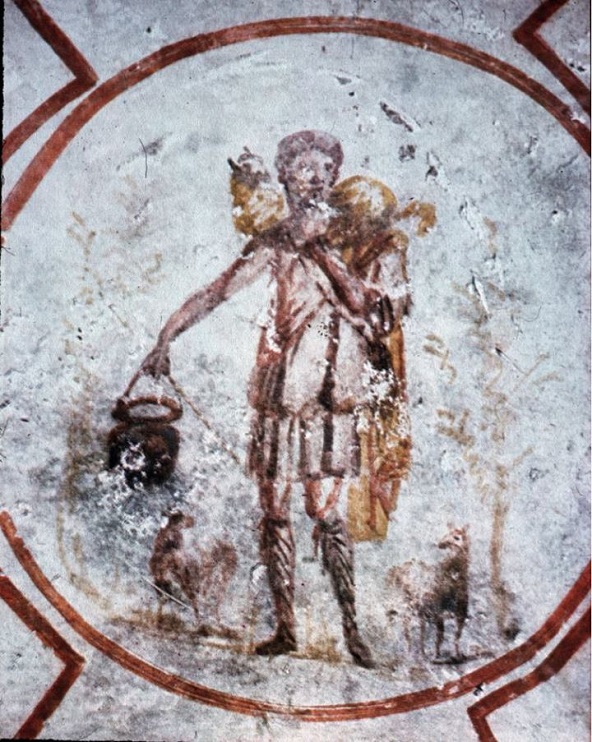
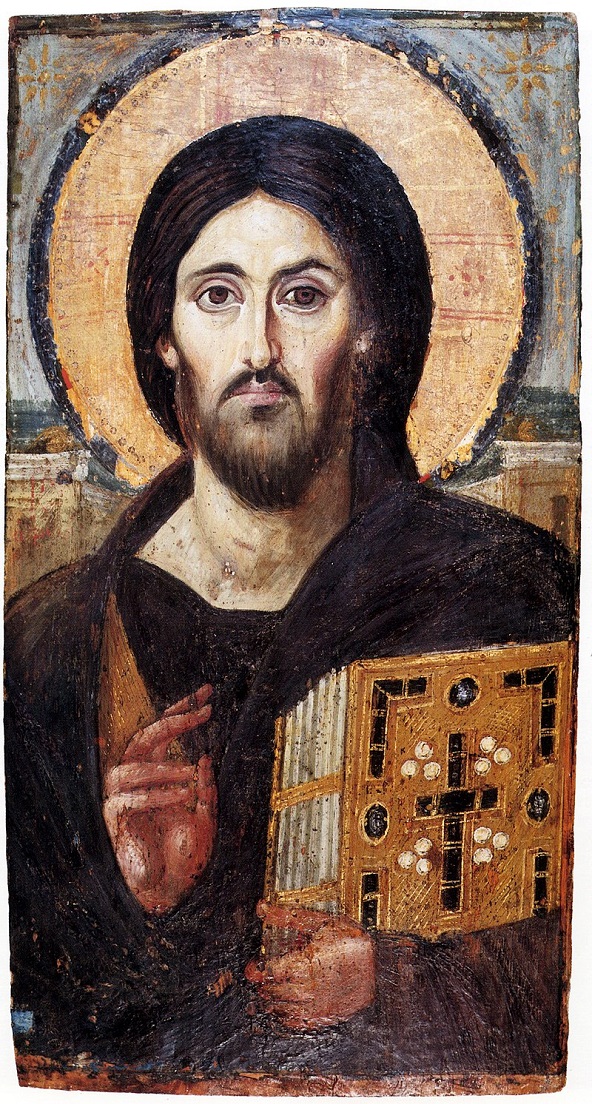
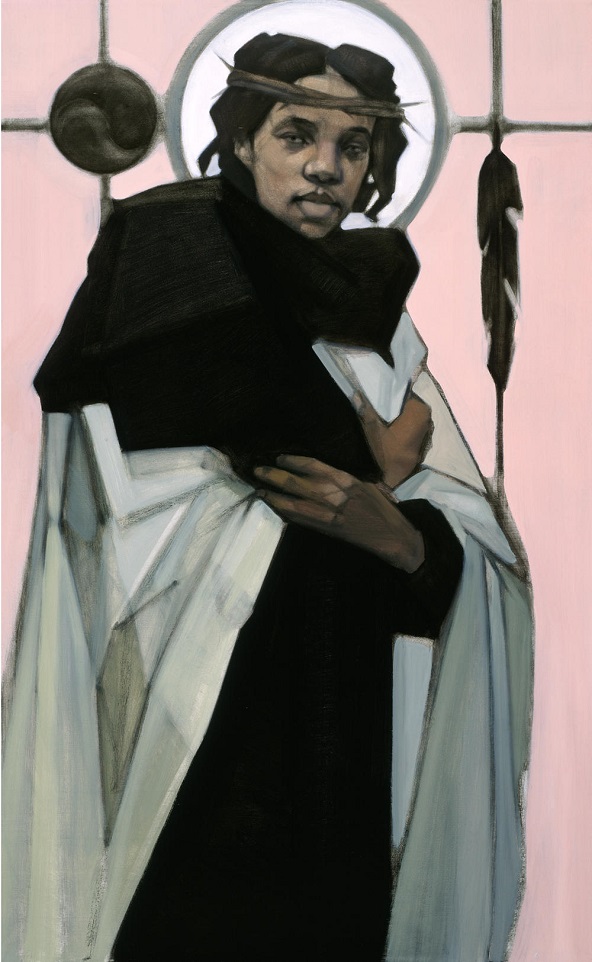
Over at Good Reports I’ve posted a quick review of Stephen Prothero’s American Jesus. It’s a fascinating exploration of the way representations of Jesus have changed over time, evolving to meet the demands of a changing audience. The only bad thing about the book was that the reproductions of the artwork in the paperback were pretty crude and hard to make out. So I went online to find some of them, and expanded my search outside of Prothero’s range, both forward and back.

Fresco from the Catacomb of Callixtus, 3rd century. The first depictions of Jesus were as the good shepherd, a beardless youth. Jesus wouldn’t be depicted with a beard until the late 3rd or early 4th century.

Christ Pantocrator, 6th century panel icon.

El Greco, “Christ Carrying the Cross” (1580).

Heinrich Hoffman, “Christ’s Image” (1894). Prothero: “During the first decades of the twentieth century, reproductions of Hoffman’s works appeared in hundreds of books and churches across the United States. They also provided Americans with their most vivid and enduring images of Jesus.”

Warner Sallman, “Head of Christ” (1940). Prothero: “As of the turn of the twenty-first century, over 500 million copies had been produced, making ‘Head of Christ’ the most common religious image in the world.”

Willis Wheatley, “Christ, Liberator,” better known as “Laughing Jesus” (1973).

Janet McKenzie, “Jesus of the People” (2000). McKenzie won the National Catholic Reporter’s worldwide art competition “Jesus 2000″ with this painting.

Bas Uterwijk, “Jesus” (2020). The Irish Catholic: “Speaking about the techniques Mr Uterwijk used in the development of the image, Dr Caffrey said it ‘builds on the traditional iconography of Jesus Christ. He has specialised in making portraits of historical figures using Artbreeder which uses GAN (generative confrontation network) to create a new image that looks realistic and gives life and personality to representations of famous people which are derived from paintings or sculpture.'”

DNF files: A Fatal Thing Happened on the Way to the Forum

A Fatal Thing Happened on the Way to the Forum: Murder in Ancient Rome

By Emma Southon

Page I bailed on: 140

Verdict: I felt somewhat the same way to this one as I did to Murder Book. Just not my thing. I love reading ancient history, and this seemed like a good fit with my true-crime site, but it’s written in the same jokey, irreverent style that I can only take so much of.

On Southon’s website no less an authority than the Wall Street Journal declares that “At a moment when the study of classics struggles to escape its starchy, imperialist legacy, Southon’s cheeky enthusiasm feels like the path of salvation.” So that’s the pitch: making classical literature and history more accessible to people who wouldn’t normally read a book on this subject. However, I would normally read a book on this subject, so the path of salvation just felt to me like dumbing things down. There are a lot of books on ancient Rome written for a non-academic audience that don’t sound at all like this, and I think they’re not only more enjoyable but more accurate as well. Being a slave in the Roman Empire was no picnic, for example, but I don’t think it’s true that all slaves were “subject to the most extraordinary violence every day.”

I’m not saying Southon doesn’t know her stuff. I’m sure she does. But the writing here is all “yeah,” “yada yada yada,” “wow,” “really really,” and “sorry not sorry.” We’re even told that killing Caesar was “a pretty big fucking deal.” Which it was. Sure. And then there all of the pop culture references that made me feel like I was doing an Internet quiz. I know who Marty McFly and Patrick Bateman are, but mistakenly thought Shaggy was a reference to the character from Scooby-Doo and pulled a blank on Grand Designs. Is this a home reno program? I wasn’t interested enough to find out.

According to the Booklist review, writing like this “provides not only humor but a sense of relevance to today’s world.” I don’t know what “relevance” means when it’s used this way. Southon is apparently involved in some kind of history podcast, and the prose here has that sort of random, conversational style. Maybe it works better as an audiobook. But then Mike Duncan’s book on ancient Rome, The Storm Before the Storm, which was very popular with a mass audience, also grew out of a podcast and it wasn’t written like this so I’m still wondering who this book was directed at.

It’s likely you’ll learn something, but Southon just tends to go from story to story,  a number of which she confesses are totally irrelevant, without much of a larger point to make. I stopped where I did because it was the middle of a chapter on slavery and murder and even though I’d been dimly aware of the politically correct movement to replace the word “slave” with “enslaved person” I hadn’t actually confronted it before. I’m sure it’s well meant and can be justified, but to call it awkward isn’t the half of it. I just couldn’t take it anymore.

The DNF files

TCF: The House of Gucci

The House of Gucci: A Sensational Story of Murder, Madness, Glamour, and Greed
By Sara Gay Forden

The crime:

Maurizio Gucci, former head of the luxury fashion and accessories company that his grandfather founded, was killed on the morning of March 27, 1995. His ex-wife, Patrizia Reggiani, had put the hit out on him, a crime for which she spent 18 years in prison.

The book:

This was a widely celebrated book even before Ridley Scott’s (overrated) 2021 movie, which had Lady Gaga playing Patrizia and Adam Driver as Maurizio. But while I thought it was readable, mainly due to its inherently interesting subject matter, I didn’t much care for it.

More than a true crime book, it’s mainly a history of the Gucci company, though that’s a history that involved a fair bit of shady dealings, mostly involving tax evasion schemes. (In a charming aside, Forden talks about how some of the financial maneuverings that were illegal at the time would be permissible today because of the “liberalization” of Italy’s laws. I’m not sure, but I think she registers this as some kind of progress.) I admit I have little interest in the world of fashion, but as a business story it works. Plus the family in-fighting is fabulously Italian, in a tradition running from the Borgias to the Corleones.

I had a couple of difficulties with Forden’s writing though.

In the first place, she has an annoying habit of skipping around instead of sticking to a strict through chronology. I got confused at figures like Paolo Gucci dying and then coming back to life, or Silvio Berlusconi being described as a “former Italian prime minister” in what I think is 1993 (Berlusconi first came to power in 1994, and would serve as prime minister off-and-on up until 2011). I assume this was a typo, of the same sort that has Paolo referred to as Aldo Gucci’s “youngest son,” but that were a lot of moments like this that had me mentally scrambling trying to get dates in order. Yes there are different threads being followed, but anyone who writes narrative history has to try to keep them straight. For example, it’s painful to read an account of the landmark YSL fashion show in March 2001 and then be jerked back with what had been happening a week earlier on the legal front. As a reader you start to get whiplash.

The other problem I had was with Forden’s attempt to make the events seem more dramatic by presenting them novelistically. Again, this is something every historian has to deal with in some way: how do you describe a particular historical actor’s thoughts and feelings at a certain time? In her section of Bibliographical Notes Forden explains her approach:

References to what a person was thinking are based on extensive research into the situation and the person’s frame of mind at the time according to people close to him or her or other reliable accounts. In dramatizing contemporary conversations, I have based dialogue on conversations with one or more of the participants.

That sounds fair, but vague, with a lot of wiggle room. What it results in though is passages like this, describing Maurizio at his uncle Aldo’s funeral service:

As Maurizio stood by himself in the chilly church, he looked down at his clasped hands in front of him and let the rise and fall of the priest’s voice float through his mind. He pictured Aldo scaling the stairs of his Via Condotti office two at a time, barking orders to his salesclerks right and left, or holding court in the New York store, signing Christmas packages. His mind’s ear heard Aldo’s voice repeating his old adage about the dynamics of the family – “My family is the train, I am the engine. Without the train, the engine is nothing. Without the engine, well, the train doesn’t move.” Maurizio smiled. As the mourners around him shifted their feet and dabbed their eyes with soggy tissues, Maurizio unclasped his hands, then clenched and unclenched his fists as though for warmth.

Reading stuff like this in a work of non-fiction gets my back up. How do we know what was floating through Maurizio’s mind at this exact moment, or what he was hearing in his “mind’s ear”? Perhaps there’s a source, but I doubt it’s this specific. And there’s quite a bit of this sort of thing here. At one point we even follow Maurizio into the confessional. I remember commenting on an even more egregious moment like this in Erik Larson’s The Devil in the White City years ago. If you don’t know how something happened, or even if it happened, then you shouldn’t pretend as though you do.

Noted in passing:

In explaining his reasons for giving Patrizia a twenty-nine year sentence instead of life (which is what the trigger man got), the judge at her trial gave her diagnosis of having narcissistic personality disorder (NPD) as a mitigating factor. This really turned my head around. While not a legal defence, the fact that one is a pathologically entitled asshole can actually reduce one’s sentence? This would mean that narcissists are actually victims of their “condition.” What sense does that make?

The edition I read was published as a tie-in to the movie, with the familiar banner on the cover about how it was “soon to be a major motion picture.” This made me wonder when a “motion picture” has ever not been “major.” I don’t think I’ve ever seen a book with a blurb like this on a cover say it’s soon to be or now is just “a movie.” It’s always a motion picture. And a major motion picture at that. It’s almost like those exact words are some kind of legal requirement.

Takeaways:

Family businesses rarely work out in the long run because money is more important than blood. That may seem unnatural, but we live in an unnatural world. Meanwhile, not being a publicly-traded company means that a family business is, at least to some extent, free to operate above or beyond the law. Hence the timelessness of these bloody dynastic struggles.

True Crime Files

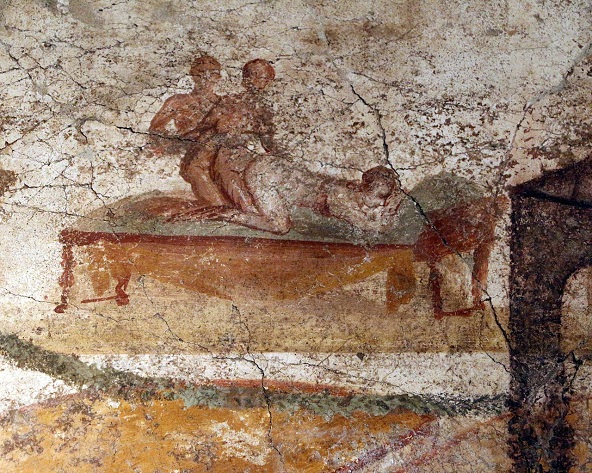
NSFW: Archeology edition

Sex doll. The early days.

When I was in first year of university I took a course that I don’t remember very much from except something about “cultural universals.” This refers to things that people do in every human society, at all stages in their development. Apparently there aren’t many of these. I think one was the avoidance of human waste (feces).

Pulling a train in old Pompeii.

I’ve always thought pornography might be another. Porn gets a lot of attention in the media because it’s a (politically) sexy topic that people can’t seem to get enough of reading about. Does it corrupt youth? Does it program men and women with unrealistic fantasies about what people should look like and behave? Is it addictive? Does it lead to sexual violence, or does it sedate a population of incels who might otherwise act out violent fantasies? Is it inherently misogynist, or empowering for women? Should we even call it porn or, if we feel it’s distinguished enough, do we have to refer to it as “erotic art”?

Laying pipe.

These points have all been argued endlessly, and the debate will likely continue. What strikes me though is the point that porn in some form has always been with us. The Venus of Willendorf, for example, may be a fertility idol, but it’s also porn. What’s more, while it hasn’t always indulged the variety of today’s smorgasbord of fetish, even in ancient times porn was plenty explicit and stepped well outside the boundaries of sexual activity solely directed toward procreation. Our distant ancestors might not have had alien tentacle sex, but they did have Pan copulating with a goat. What’s more, this historical ubiquity held true from the suburbs of Pompeii (buried in 79 CE) to the valleys of the Moche (a South American civilization that flourished ca. 100-800 CE). It’s even popped into religious sites, from the mithuna figures in ancient Hindu temples to the sheela na gigs in twelfth-century Britain. Porn is a cultural universal.

The gang’s all here.

You’re welcome.

More than a cuppa.

I’m not saying this makes porn, or any particular variety of porn, good or bad. I’m just saying it’s always been, and something like it will always be, with us.

Dirty old goat.

DNF files: The Cult of Trump

The Cult of Trump: A Leading Cult Expert Explains How the President Uses Mind Control

By Steven Hassan

Page I bailed on: 129

Verdict: It’s not bad for what it is. The author is a former Moonie who was deprogrammed and he draws on that experience as well as his subsequent work in the field to look at Trump as a cult phenomenon. He makes a number of valid points, though I think there are limits to how useful such a lens is. Basic propaganda paradigms probably work better. In any event, I had to quit because it was getting repetitive. Plus, this is the sort of book I pick up to learn something from and I didn’t feel that was happening.

The DNF files