DNF files: Manhunters

Manhunters: How We Took Down Pablo Escobar

By Steven Murphy and Javier F. Peña

Page I bailed on: 104

Verdict: The title was a bad sign. This is a book about a couple of Drug Enforcement Administration agents who were part of the international effort to “take down” the Colombian cocaine kingpin Pablo Escobar in the early 1990s. By the time I quit, a hundred pages in, I don’t think they’d even mentioned Escobar yet. It was all about the two agents telling their life stories and how they got into law enforcement.

I’m not a fan, to put it mildly, of the true-crime/memoir hybrid so this really wasn’t my sort of book. I didn’t care for El Jefe: The Stalking of Chapo Guzmán by Alan Feuerbook for much the same reason: the focus on the work of the agents rather than their target. Now for some readers that’s what they want, and to be fair neither book advertises itself as being anything else. But it wasn’t for me.

The DNF files

Bookmarked! #117: Remembrance Day

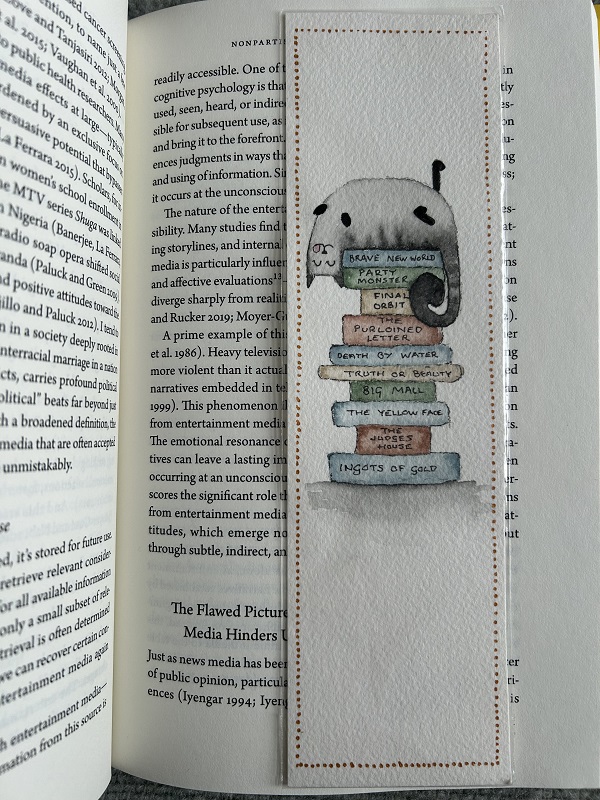
I have a lot of Remembrance Day bookmarks but couldn’t get them all in one picture. So here are a few from 2021, put out by Veterans Affairs Canada, marking the anniversaries of battles that Canadians played a major role in: Beaumont-Hamel (on the opening day of the Somme offensive), Vimy, and Kapyong in Korea.

I’ve looked in bookstores this past couple of weeks and haven’t seen any new ones. I don’t think anyone does bookmarks anymore.

Book: Marching As to War: Canada’s Turbulent Years 1899-1953 by Pierre Berton

Bookmarked Bookmarks

DCeased

Dceased

The first thing to note about this series is that it was late to the party. When Marvel Zombies started in 2005-2006 they were hitting the market at what I’ve called the moment of peak zombie. I was actually a bit surprised to see that DCeased (or DC Zombies) didn’t come out until 2019, long after the point when zombies had gone out of fashion. Though that didn’t stop the series from becoming a huge bestseller and spawning several sequels.

OK, technically these aren’t zombies. They’ve been infected with the Anti-Life Equation, which arrives on Earth as a sort of computer virus and starts turning people into undead creatures who go around biting chunks out of the living and so infecting them and turning them into . . . zombies. Apparently the equation spreads just as well by digital imagery as it does by infected blood. “I always suspected we’d have to destroy the Internet to save the world,” Green Arrow says. “I just didn’t know it would be like this.”

Batman figures all this out, and just to clear up any confusion gives us this quick fact check: “They’re not zombies. They’re not consumed by hunger. They’re not feeding. They’re spreading death. They’re stealing life. These are the anti-living.”

Oh, just stop already. This is DC Zombies. The zombie pathogen is a hybrid, both being a blood infection and spread through our phones like in the Pulse films or Stephen King’s Cell. We might almost say the virus is undergoing a cultural mutation, evolving from gene to meme.

Batman himself only figures all this out after he’s been infected, and later he’ll turn into one of the (ahem) “anti-living.” As will most of the rest of the DC pantheon. Yep, Batman, Green Lantern, Superman, the Flash, Wonder Woman. It’s up to the B-listers and a bunch of successors and superkids to save the day, which they do by loading the Earth’s uninfected onto space arks and heading out to Earth 2. Where the adventure will continue . . .

While I’ve called this DC Zombies, it’s actually hard to compare to Marvel Zombies. They’re both quite dark, obviously, but they feel different. Tom Taylor’s writing has less of Kirkman’s black humour, but I thought the storyline was more coherent. Which means that taken as whole I enjoyed the series a bit more. Though that isn’t a full endorsement, as I thought Marvel Zombies disappointing. I should also say that I read this in a “compact comic” edition. These are smaller format reprints (like the Marvel Masterworks volumes) so the art doesn’t have the same pop or impact and I sometimes had to strain to read the text. Even so, I liked the dark palette and Trevor Hairsine’s penciling.

Graphicalex

Holmes: The Army of Dr. Moreau

This is a follow-up to Guy Adams’s first Holmes pastiche The Breath of God. It takes a very similar approach, drawing in a grab-bag of fictional characters from the pulp fiction of the time while telling a slam-bang, highly cinematic (sometimes even cartoonish) action story that climaxes in subterranean London (in The Breath of God the subway system, here the sewers).

As the title indicates, the jumping-off point is H. G. Wells’s The Island of Doctor Moreau. It seems the not-so-good doctor might still be alive and practicing his dark arts somewhere in London, as a string of grisly deaths have been occurring, with the victims appearing to have been mauled by animals. Things are complicated somewhat because it turns out that the British government had been funding Moreau, and his experiments had progressed to the point where he was no longer just putting together his creatures through vivisection but had invented a serum that triggered rapid evolution from the human form to various other species. “Darwinism haunts our steps in these matters,” Holmes opines.

One can’t call this new process much of an improvement, or less cruel, or even more plausible, but it is something different anyway. It also leads Watson to a humorous reflection: “What manner of creature would Holmes become if exposed to such a concoction – a swollen brain hovering over a pair of massive, tobacco-hardened lungs? The thought of such a beast, despite the serious context, could not help but make me smile.” I got a chuckle out of it too.

Among the team assembled to fight the new Moreau and his mongrel army are Professor Challenger from Conan Doyle’s The Lost World, Professor Lindenbrook from Jules Verne’s A Journey to the Centre of the Earth, Abner Perry from Edgar Rice Burroughs’s At the Earth’s Core, and Professor Cavor from Wells’s The First Men in the Moon. When you throw in all the nods to the plot of The Island of Doctor Moreau and a lot of fan service commentary on the Holmes canon (Watson even kicks things off by answering some readers’ FAQs), you have a book that should feel a lot more meta. That it plays so well as what Adams describes as “a bit of pulp fun” is testament to his sure hand with the material. It’s thrilling and comical by turns, and while never taking itself too seriously also never makes fun of our heroes. For a while Holmes takes over narrative duties and he speaks with just the sort of arrogant, superior voice you’d expect, though without slipping into parody.

So it’s wilder and woollier than anything in the canon, but I thought it a successful blend of a contemporary storytelling style with an affection for the nineteenth-century sources. Adams likes to do his own thing with these characters and I’m happy to let him.

Holmes index

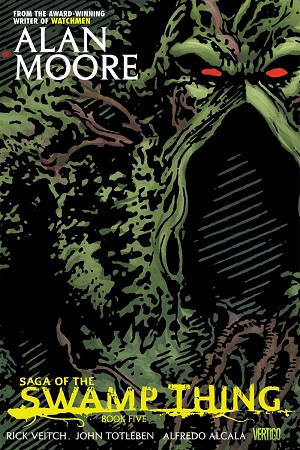
Indestructible Hulk: Agent of S.H.I.E.L.D.

Indestructible Hulk: Agent of S.H.I.E.L.D.

The Hulk is perhaps the most basic, meat-and-potatoes superhero you can imagine, and the Indestructible Hulk series is, in terms of its narrative structure, as basic and meat-and-potatoes a contemporary comic as you’re likely to see.

The frame story has it that Bruce Banner is tired of working in the shadow of such genius benefactors of humanity as Reed Richards and Tony Stark. As he complains to Maria Hill, Director of S.H.I.E.L.D.:

Tony Stark and Reed Richards use their genius to save the world every other week. That’s how they’ll be remembered in history. Meanwhile, I . . . I who, forgive me, have just as much to contribute – will be lucky if my tombstone doesn’t simply say “Hulk smash!”

So here’s his pitch to Hill: if S.H.I.E.L.D. will fund him and set him up in a lab with a team of scientists to work under Bruce Banner, then they can have the use of the Hulk whenever they need him. And it’s a deal.

What follows is a series of comics where Hulk is let loose on baddies like the Mad Thinker, the Quintronic Man (both of these guys are basically evil geniuses operating battlebot suits), and Attuma the Lemurian. There’s nothing subtle about how the Hulk goes about these missions. The bad guys just blast him with everything they’ve got, which they reckon should be more than enough to destroy him, but guess what? He’s the Indestructible Hulk. So he ends up smashing them.

Like I say, meat and potatoes. But what made this a winner for me was the art by Leinil Francis Yu. This guy can really draw, delivering the goods whether it’s two people talking in a diner or a bunch of sea monsters taking out a fleet. And with great art you can never go wrong.

Graphicalex

Gamestopped

Over at Goodreports I’ve added a review of Ben Mezrich’s take on the Gamestop short squeeze, The Antisocial Network. This is the book that the movie Dumb Money was based on. I didn’t care for the movie (in fact, I hated it), and I didn’t like the book for a lot of the same reasons, but I think Mezrich at least gives you enough of the story to draw your own conclusions about what was going on.

Given the terrifying explosion in sports betting that’s happening, the crypto phenomenon, and the broader “gamification” of the stock market it’s a lesson that really needs to be driven home at every opportunity: If you’re gambling, you’re losing. The house always wins.

Suicide solution?

Last week I read a news story about an apparent murder-suicide that had happened in the U.S. Except it wasn’t reported as being a murder-suicide. Instead, the police chief was quoted as referring to it as possibly being “a murder-[expletive].”

I have to admit that when I first read this I did a double take. I couldn’t figure out what the police chief had said. It took a couple of moments for the penny to drop.

Was this an example of the “language police” riding again? Apparently it’s been considered wrong for a while now to say “committed suicide” because “commit” implies or suggests that suicide is a sin or a crime, as this is how it’s been looked on in the past, albeit not recently. And by “not recently” I mean probably not in many people’s memory.

There’s still some stigma attached to suicide, but this has more to do with the act itself than the language. But let’s stick with the word. As the medical director for The American Foundation for Suicide Prevention puts it: “We wouldn’t say commit cancer or a heart attack. It implies something that’s willful and morally reprehensible.”

This sounds fair, though I still don’t think I’d want to ban the use of the expression outright. And thinking about it more deeply, I’m not sure the analogy holds. Cancer and a heart attack aren’t acts. People don’t do a heart attack or cancer. Saying that suicide isn’t a “willful” act is also problematic. Surely in some cases, like medically-assisted suicide in this country, it is profoundly willful. To say otherwise would be to deny personal agency in what is an agonizing decision over how to end one’s life.

But the news story went further, choosing to see the word suicide as an “expletive.” This is where things got interesting for me. Let’s take a couple of dictionary definitions of “expletive”:

Merriam-Webster:

a syllable, word, or phrase inserted to fill a vacancy (as in a sentence or a metrical line) without adding to the sense

an exclamatory word or phrase, especially one that is obscene or profane

Wikipedia:

An expletive is a word or phrase inserted into a sentence that is not needed to express the basic meaning of the sentence. It is regarded as semantically null or a placeholder. Expletives are not insignificant or meaningless in all senses; they may be used to give emphasis or tone, to contribute to the meter in verse, or to indicate tense.

The primary definition comes from the Latin expletivus, meaning to fill out or take up space. The secondary meaning defines it as a word considered to be offensive, a profanity or curse.

Now I’ll be honest and say I didn’t even know the primary meaning of expletive as a placeholder. For people my age I think the word expletive first came into public consciousness with the release of the expurgated transcripts of the Oval Office tapes of Richard Nixon, which made famous the phrase “expletive deleted.” My father had a political cartoon of Nixon swearing his oath of office with one hand on the Bible and the oath itself peppered with “expletive deleteds.” I’ll never forget it.

So what has happened is that the word “suicide” has been redefined as an expletive, something offensive to be deleted from reported speech. Not just “committing suicide,” but the suicide itself. Unfortunately, what this has resulted in, at least online, is an awkward grasping for euphemisms or circumlocutions to fill the gap. Most of these have been, frankly, ridiculous. Self-deletion? Or, even worse, “unalive”?

In 2024 Seattle’s Museum of Pop Culture actually got in trouble for rewriting a Nirvana exhibit to say that Kurt Cobain had “un-alived himself” rather than “died by suicide.” There was a public backlash to that and it had to be corrected, but the fuss underlined what has become a digital-age phenomenon. The thing is, digital media platforms, most prominently YouTube, can and do demonetize content that runs afoul of speech codes. Which is why, watching some videos or listening to podcasts, you’ll hear certain words blanked out or else substituted for something less likely to trigger the algorithm.

This has become so prevalent that the resulting language even has its own name: algospeak. This refers to the code words that are used to evade automated or human moderation. “Unalive” is one such example.

Algospeak has its critics. Some people in the suicide prevention community, for example, see it as potentially confusing individuals who may be looking for help and who can’t decode the new slang. But it’s interesting to see the forces at work that push language to evolve.

Are we better off today than when I was a kid? In public and high school kids in my generation listened to songs like Ozzy Osbourne’s “Suicide Solution” and Queen’s “Don’t Try Suicide.” I can still remember in grade 7 or 8 hearing the latter come on at a dance:

Don’t try suicide, nobody’s worth it
Don’t try suicide, nobody cares
Don’t try suicide, you’re just gonna hate it
Don’t try suicide, nobody gives a damn

A teacher who was standing nearby turned to one of his fellow teachers and laughingly remarked: “Nobody gives a damn? That’s not being very positive.” And that’s as far as things went back in the day. Were we made stronger by listening to such lyrics? Or damaged by them? Osbourne was actually sued after someone listening to “Suicide Solution” killed himself but the claim failed at trial. On the broader question of the role language plays in such cases, the jury’s still out.