TCF: Murder of Innocence

Murder of Innocence: True Crime Thrillers
By James Patterson

The crimes:

“Murder of Innocence”: Andrew Luster, the rich descendant of a cosmetics fortune, lived in California and spent his time surfing by day and drugging and raping women he picked up in bars at night. He also videotaped all of this. After jumping bail during his trial he was apprehended in Mexico and is now in prison.

“A Murderous Affair”: Mark Putnam, an FBI field agent in Kentucky, had an affair with an informant named Susan Smith. When Smith got pregnant Putnam strangled her. He pled guilty at trial and served 10 years of a 16-year sentence before being released for good behaviour in 2000.

The book:

I want to start off addressing a lot of things about this book rather than the book itself.

In the first place we have the name “James Patterson” on the cover. It’s not in quotation marks but I put them in because Patterson is a brand now and his name goes on the cover of a number of books that he oversees the production of but that he doesn’t write all of himself. In fact, I don’t know how much of them he writes or what the extent of his involvement is. In any event, Patterson is also the only name on the title page, and it isn’t until you get to the individual stories that you find they were written “with” Max DiLallo and Andrew Bourelle, respectively.

The cover also declares Patterson to be “the world’s #1 bestselling writer,” and that at least is a claim that is inarguable. He’s sold well over 400 million books and is the highest-paid author on the planet. You know the page at the front of some books where it lists “Other books by this author”? You don’t get that here, just a note telling you that “For a complete list of books, visit JamesPatterson.com.” I did. I couldn’t count them all.

In the “About the Author” blurb at the back of this book Patterson is also called “the world’s bestselling author and most trusted storyteller.” The first part of that statement is, as I’ve said, inarguable. I don’t know what it means to be a trusted storyteller though. Trusted to deliver a generic reading experience? Or trusted in some other way? And how do you measure trustworthiness? What would make Patterson more trusted than anyone else?

Patterson is, of course, primarily a novelist and this book is an exercise in growing the brand outside of his various fiction franchises into the lucrative world of true crime. Can we trust the author(s) not to be making things up? A note on the copyright page tell us this:

The crimes in this book are 100% real. Certain elements of the stories, some scenes and dialogue, locations, names, and characters have been fictionalized, but these stories are about real people committing real crimes, with real, horrifying consequences.

Whoa, there. You often read true crime books where the names have been changed to protect the innocent. That comes with the territory. But how much of these stories has been “fictionalized”? The “certain elements” mentioned – scenes and dialogue, locations, names, and characters – would seem to cover pretty much everything. I mean names and characters? There are people described here who don’t exist?

How can we even tell what is true and what’s made up? There are no notes on sources so no way to check any of it out. Did Patterson or one of the other authors do interviews? Did they do any original research? I don’t know.

I don’t ask these questions just as a knee-jerk response to true crime being written by novelists (which is how both of Patterson’s co-authors are also described). It’s also something triggered by the style of writing, which is very . . . novelistic. Here’s how the book begins:

Carey flutters open her eyes, but she can’t see much of anything.

Hot water is running down her fact. Swirls of rising steam engulf her.

Her head is spinning, and her legs and arms feel wobbly, like the Jell-O shots she and her sorority sisters make for their house parties.

Carey had been drunk before. And stoned. More times than she can count.

But this feeling, what’s happening to her right now, is different.

Very different.

Carey gropes blindly for something to hold on to. Her fingertips make contact with a wall of wet tile. She claws at the slick surface, feeling dangerously shaky. Then she forces herself to take some slow, deep breaths. And think.

Well, there was a Carey and it was her complaint that led to Andrew Luster’s initial arrest. And from reading about Luster’s crimes in other sources I looked up it seems as though most of the story told here checks out, as does the story about Mark Putnam’s murder of Susan Smith. That said, a note like the one on the copyright page is disturbing. Time and again in both stories I found myself wondering how the action and character’s thoughts could be related so novelistically and still be credible. In the second story, which is written in a noticeably different style that leads one to suspect that the co-authors really were doing most of the work, we find a passage like this in the early going:

Mark and Whittaker step out of the car to wait. The wild grass in the clearing is two feet high, and grasshoppers jump from stalk to stalk. The air is loud with insects and birds. They hear the long, low honk of a semi in the distance, probably a coal truck leaving a mine. Mark closes his eyes and tries to enjoy the sound of the insects and the warmth of the sun on his face.

How does he (the author) know this? Did he measure the grass? Keep in mind that this is a 2020 book and the events being described occurred in 1987. There’s just no way. Perhaps something like this actually happened, but that would be the best anyone could say. And then the action gets hot and heavy with Putnam and Smith making out in his car:

Mark reaches up and gently guides her face down to his. Their lips meet, and they begin to kiss slowly. She tastes his tongue and the sweat on his lips. His stubble scratches against her chin.

I had a hard time finishing “A Murderous Affair” and this is the main reason why. I know I’ve given up on books for less. And remember: this is ostensibly a work of non-fiction. And we’re not talking about little things like the taste of a lover’s tongue either. As a reader you just have to toss up your hands at the account given here of the murder of Susan Smith, which goes on for several pages. I didn’t believe a word of the dialogue or any of the escalation to violence that’s described, and can only assume it’s based, somehow, on Putnam’s confession (as I’ve said, there is no note on sources). And this despite the fact that Putnam does deserve a lot of credit for coming forward to confess to the murder even when he likely would have gotten away with it and his lawyer was advising him not to say anything. But that doesn’t mean you have to buy all of his spin on what actually happened.

This particular book is a tie-in to a series of true crime documentaries that showed on the Investigation Discovery channel and it reads a bit like a novelization of one of those documentaries where actual events get dramatized by actors. Or, in the Putnam case, made into the feature film Above Suspicion (2019). I don’t like that style of documentary, and I didn’t like the way this book was written either. At some point when writing true crime, or any non-fiction, you have to draw a line as to how far you’re going to let creative license go. And Murder of Innocence crossed over any line I would have drawn.

Finally, while I’m still going over this preliminary stuff, I have to call out the lazy title. Sure, a lot of true crime books have generic titles that may or may not give you any indication as to what they’re about, but the title here seems particularly off base. It’s the title of the first story, which is about a rich guy who gives girls a date-rape drug and then films himself having sex with them. Nobody is killed and Luster isn’t a murderer. I guess you could say that it’s the innocence of the women he raped that was murdered, metaphorically, but that’s a stretch. The title is just a generic placeholder.

But I don’t want anyone to think I’m knocking Patterson, or “Patterson.” He’s a popular writer for a reason. He’s not a great writer, but he’s an easy one. Very easy. And that counts for something, at least for a lot of people. As I’ve said, I found the second story here hard to finish but I’ll chalk that up to my having higher standards. If you want, you can call me a snob. If you’re not a snob and don’t care how much the facts have been massaged in the interest of writing something more cinematic, than this is a book you might enjoy.

Having said all that, and I warned you it was going to be a lot, what about the crimes that were committed? One thing that unites them is the way they both highlight an attitude toward others grounded in a sense of privilege. They are, sadly, not exceptional in any other way. The use of date rape drugs is reported to be fairly common, and is a global phenomenon. What Luster did reminded me a lot of the case of Lucie Blackman as recounted in Richard Lloyd Parry’s People Who Eat Darkness. That book (which is excellent) involved a young man (Joji Obara) possessing a large inherited fortune who regularly drugged and raped women he picked up at bars in Japan. Like Luster he also videotaped the events.

Meanwhile, men cheating on their wives is nothing new, and sometimes these affairs do end in murder. I think it’s more common for men to get rid of their wives to be with the new woman though. What made the Putnam case different was that he was reported to be the first FBI agent convicted of homicide. Like the rich rapists he probably thought he was untouchable, above suspicion. But as a note from Patterson that appears on the flyleaf puts it, in these cases “The bad guy always gets caught.” That’s another thing that’s shared by popular true crime titles. You want to see justice being served, especially when it involves people who seem to be above the law.

Privilege has become a moral and political pejorative of some weight in today’s discourse, and not without reason (see a good recent true crime example of toxic privilege here). But is privilege always such a poison? I don’t think so, but I do think it breeds a certain attitude towards others. The less privileged come to be seen as inferior or, worse, only there to be exploited. At the same time, having privilege gives one a sense of immunity from the consequences of one’s actions. People with privilege feel free of responsibility for any of the damage they might cause or any fear that they might be caught. Combine these two effects and you’ve certainly opened the door for all kinds of bad behaviour. A door that weak people will almost unconsciously walk through.

Noted in passing:

In my notes on The Count and the Confession I asked why lie detectors were even still in use. One answer I suggested was that they’re a $2 billion-a-year industry. It’s hard to understand why Putnam would have agreed to take such a test, especially given that the results would have been inadmissible in court anyway. I can only chalk it up to his wanting to be caught at that point.

Takeaways:

“True crime” is a genre label. It doesn’t necessarily mean the book is all true.

True Crime Files

The Lady of Shalott

The Lady of Shalott

In my post on The Highwayman I said how much I loved this Visions of Poetry series. In a half-dozen volumes they came up with beautiful and distinctive illustrations of famous short poems, ostensibly for kids but (much as I usually despise the crossover) equally enjoyable for old folks. One of the things they had going for them was that most of these popular poems were narrative ballads, and the artists lean in to the way that pictures also tell a story. Sometimes even a different story from what’s expected.

Tennyson’s “The Lady of Shalott” has been the inspiration of a lot of art, especially in its native nineteenth century. In this version by Geneviève Côté the setting is updated from medieval (or Pre-Raphaelite medieval) times to the same early-20th century as Murray Kimber’s “The Highwayman.” Sir Lancelot doesn’t drive by on a motorcycle, but he’s not dressed in resplendent armour either and the streets of Camelot (Paris? Montreal?) have automobiles in them. As for the castle, its “Four gray walls, and four gray towers” are the Battersea Power Station. You get the picture.

Côté’s re-interpretation of the poem has a lot more to it than this though. Giving it a feminist slant is nothing new – the lady shut away in her domestic drudgery and solitude, dreaming of a (sexual) awakening – but it’s presented in a fashion that’s both subtle and sweeping here. Subtle in the way the lady holds herself, looking more than half sick of shadows. Sweeping in her transformation at the end into a butterfly released from the pod or cocoon of her boat. That seemed so original and inspired a visual motif that I had to wonder if it had ever been done before. If not, hats off to Côté for coming up with the idea.

You could, and should, linger over every illustration. They make you alert to things going on in the poem that you may not have noticed or at least not thought much about. I hadn’t imagined the barley reapers as figures of death, for example, but presented here dressed in black and with sunglasses and scythes, that’s clearly the effect. Then there’s the line “Out flew the web and floated wide.” That’s the web of her weaving coming undone, but how does that actually work? It’s still unclear, but you see it here in the fine lines of colour that swirl around the lady when the curse is come upon her. An image that is dramatically repeated in a shattered version of a frozen moment as the mirror cracks from side to side. And her face looking back over her shoulder (at us?) in the same illustration is remarkable. A really unforgettable image done with only a few lines and a bit of colour.

So another great little book. I’m so happy I picked up the whole series of these when they came out. I only wish they’d done more.

Graphicalex

Marple: A Murder is Announced

One thing we often justly credit older writers for is a precision in their use of language, usually based on etymologies drawn from their Greek or Latin roots. So when in the first sentence here the newspaper delivery boy is described as “whistling vociferously through his teeth,” I was a little put off. Can you whistle vociferously? The word is usually employed to describe people loudly expressing demands or opinions and it comes from the Latin vociferari, itself a combination of vox, meaning “voice,” and ferre, meaning “to carry.” So I’d say another way of describing someone being vociferous might be to call them “outspoken.” Does that apply to a kid on a bicycle whistling on his rounds?

The local paper he’s delivering – the North Benham News and Chipping Cleghorn Gazette – is the one that announces a murder, a notice that the villagers interpret as an invitation to a Murder Game. This makes everyone sit up in Chipping Cleghorn. And “what kind of place is Chipping Cleghorn?” you may ask, along with our old friend Sir Henry Clithering. Why, as the chief constable informs him, it’s basically Miss Marpleland:

“A large sprawling picturesque village. Butcher, baker, grocer, quite a good antique shop – two tea-shops. Self-consciously a beauty spot. Caters for the motoring tourist. Also highly residential. Cottages formerly lived in by agricultural labourers now converted and lived in by elderly spinsters and retired couples. A certain amount of building done round about in Victorian times.”

Gentrified, we might say. And if the word was current then they might have said the same in 1950, when this book was first published. A date that just doesn’t feel right. Christie’s cozies belong in a pre-WW2 era. When we hear about people who are returning vets we think they’ve seen action at the Somme, not liberated Europe from the Nazis. But this is in fact a post-WW2 world, as is evident by the prominence of “foreigners,” immigrants, or refugees/displaced people in the plot. Chief among these is the comic Mitzi, who is sure she is going to get taken away to the Gulag or a prison camp by the local constabulary, and who suspects one innocent local of being a Nazi because of “her fair hair and her blue eyes.” This is all a basket of red herrings, but timely.

I didn’t care for the book though. It has some nice moments where Miss Marple reflects on the evil people do, drawing on her copious knowledge of human nature. “Weak and kindly people are often very treacherous,” she tells us. “And if they’ve got a grudge against life it saps the little moral strength that they possess.” This last point is later repeated: “People with a grudge against the world are always dangerous. They seem to think life owes them something.” That speaks a lot to our present grievance culture.

Unfortunately I had to toss my hands up at the complexity of the crime itself. Not only is there a convoluted back story with missing children and lines of inheritance and assumed identities to untangle, but the actual logistics of the first murder, who was standing where, the layout and furnishing of the room and the location of doorways, are impossible to visualize. Was Christie knowingly exploiting our basic inability to “see” what’s described in a novel, the immense ambiguity that always results when we try to imagine a character or a setting? Perhaps, but I just found it confusing. I had a sort of hunch as to the killer’s identity, but no idea how to get there, and the clues were impossible. The business with the lamp and the frayed wire I’m still not sure of. But one thing you can be sure of in a Christie mystery is that the killers spend a lot of time planning their crimes, which is why the big reveals at the end take so long. There’s a lot that needs to be unpacked and explained. Sometimes it works, but not when it’s this hard to follow. At the end here it seems like a comedy of revelations and it made me think Christie could fall into being too clever. And by the time she was writing this book I think that sort of thing had taken over.

Marple index

Bookmarked! #67: Bookstores No More X: Albert Britnell Book Shop

I have to admit I don’t have any memories of Britnell’s, though I was living in Toronto in the late 1980s and early ’90s and I’m sure I must have stuck my head in the door a few times. The store itself had quite a history, first being opened in 1893 by Albert Britnell at a slightly different Yonge St. location. It had a run of over a century, closing doors in 1999 for what I assume were the usual reasons. It was taken over by a Starbucks, though the name Albert Britnell remained carved into the façade of the building, right above the Starbucks sign. The Starbucks (one of Toronto’s first) closed in 2020 and I’m not sure what’s there now. I think Britnell’s name is gone too. All we have now are the bookmarks, and I’ll bet there aren’t many of them left.

Book: Adrift: America in 100 Charts by Scott Galloway

Bookmarked Bookmarks

DNF files: The Great Wave

The Great Wave: The Era of Radical Disruption and the Rise of the Outsider

By Michiko Kakutani

Page I bailed on: 4

Verdict: Yes, page 4. But it’s not quite as bad as that sounds because there’s a seven-page Introduction with Roman numerals. So really I bailed on page 11. Which is still quick.

I hadn’t been expecting much. Michiko Kakutani was formerly a book reviewer for the New York Times and I didn’t think she was very good. Her writing didn’t have any spark and I don’t recall any original critical insights she’d drawn from what she read. Then she wrote a book called The Death of Truth, a topic that was fashionable in the Age of Trump. This is part of what I said about it:

Judged on its own it’s just another piece of wood on the pile, offering up an anthology of observations made by other authors, all saying similar things in different words, with little attempt at any deeper analysis or explanation.

Kakutani, who seems to have at least skimmed a lot of books, suffers from the curse of student writing, which is to quote a source or authority for everything she says, no matter how obvious or banal an observation it may be. Her conclusion, that truth is important for the proper functioning of democracy, is important, but a platitude. What we’re left with feels more like a research paper or review of the literature than a rallying cry.

The Introduction here left me feeling it was going to just be more of the same. There are the usual platitudes about the importance of the historical moment, a subject that has been examined in more depth by many other authors. In fact, I already have books on my shelf, good books too, with titles like A Decade of Disruption and The Rise of the Outsiders. Even if Kakutani made good on the promise in her Introduction to discuss these matters more fully I couldn’t see where she’d be saying anything new. This made me think of another book I relegated to the DNF files, Niall Ferguson’s Doom: The Politics of Catastrophe. I called that one

nothing but a slapdash and glib collection of bits and pieces thrown at the reader only to let us know how widely Ferguson has read. Or browsed. Or had some research assistant browse. I wasn’t buying any of it. It just comes off as non-stop name-dropping and a cheap display of superficial learning in search of a coherent argument.

I skimmed through the rest of The Great Wave and got the sense it was cut from the same cloth. There’s no original thesis being argued, just a trudge through the usual headlines, with the usual bromides waiting at the end. I mean, this is how the Intro ends: “The stakes could not be higher: whether we surrender to the gathering chaos or find a way forward to protect democratic values and institutions and create a more equitable and sustainable future.” Yes, that is the question. The same question we’ve been asking for the last couple of decades. We’re aware of the problem. But Kakutani doesn’t have any answers or original thoughts to share.

The DNF files

Batman: Justice Buster Vol. 2

Batman: Justice Buster Vol. 2

I won’t say Batman: Justice Buster Vol. 2 was one of my favourite recently-read comics, but it is one of the best continuations I’ve seen in a while. As previously noted, Vol. 1 just sort of pricked my interest without standing out in any particular way. But with Vol. 2 (chapters 7-13 in the original series) things really pick up.

There’s not too much I can say that won’t be either a spoiler or, more likely, incomprehensible to non-fanboys. As you’ll know by now, and as a postscript starring Bat-Mite and creators Eichi Shimizu and Tomohiro Shimoguchi further explains, this is an alternate-world Batman. In this world the Joker is a masked man who turns out to be Jason Todd, who is also mentoring young Dick Grayson. Batman and Superman are still locking horns every time they meet, though it isn’t all that clear why, or at least why Batman hates Superman so much. Joe Chill is both the guy who killed Bruce Wayne’s parents and the guy who killed Dick’s parents and he’s also been posing as Grayson’s Uncle Sam. And finally Batman’s crime-fighting AI, known as ROBIN, has (as I not so presciently predicted) gone rogue. Which means the mechanical monstrosity dubbed the Justice Buster is getting ready to mete out its own kind of justice, which is a sort of anti-justice, if you know what I mean. Because what would perfect justice look like anyway? As Hamlet put it, use every man after his desert, and who of us would escape whipping?

This is all very weird, and convoluted, but I really got into it. Of all the recent reimaginings of the Batman character and his mythos this is the one I’ve found most original and enjoyable. About the only thing I found to fault was one real headscratcher of a translation error. How is “Sam Reynauld in Death,” which is shown twice, an obituary notice?

So where before I felt the series was only just worth sticking with, I’m really looking forward to Volume 3.

Graphicalex

Legacies

From Natural Causes: An Epidemic of Wellness, The Certainty of Dying, and Our Illusion of Control (2018) by Barbara Ehrenreich:

In the face of death, secular people often scramble to expand their experiences or memorialize themselves in some lasting form. They may work their way through a “bucket list” of adventures and destinations or struggle to complete a cherished project. Or if they are at all rich or famous, they may dedicate their final years and months to the creation of a “legacy,” such as a charitable foundation, in the same spirit as an emperor might plan his mausoleum. One well-known public figure of my acquaintance devoted some of his last months to planning a celebration of his life featuring adulatory speeches by numerous dignitaries including himself. Sadly, a couple of decades later, his name requires some explanation.

So the self becomes an obstacle to what we might call, in the fullest sense, “successful aging.” I have seen accomplished people consumed in their final years with jockeying for one last promotion or other mark of recognition, or crankily defending their reputation against critics and potential critics. This is all that we in the modern world have learned how to do.

From “Jake Paul beats Mike Tyson in manufactured mismatch as Father Time comes calling,” The Guardian November 16, 2024:

Tyson had already put the result, as well as the protracted and ridiculous hype surrounding the circus, into bleak context the previous night. Dragooned into an interview with Jazlyn Guerra, a 14-year-old social media personality who tags herself as Jazzy’s World TV, Tyson was withering in the way he dismissed the fight and his historical reputation. His words carried a dark meaning which ridiculed his contest with a YouTuber.

Guerra, who appears to be an accomplished teenager, was initially gushing in her enthusiasm for the bout after the weigh-in on Thursday night. She said it would provide “a monumental opportunity for kids my age to see the legend Mike Tyson in the ring for the first time. So after such a successful career what type of legacy would you like to leave behind when it’s all said and done?”

Tyson paused. It wasn’t a terrible question but he was in the mood to dole out a grim truth. “Well, I don’t believe in the word ‘legacy’,” Tyson said. “I think that’s just another word for ‘ego’. Legacy means absolutely nothing to me. I’m just passing through. I’m gonna die and it’s gonna be over. Who cares about legacy after that? We’re nothing. We’re dead. We’re dust.”

Guerra, to her considerable credit, was gracious. “Well, thank you so much for sharing that,” she said. “That’s something I’ve not heard before.”

Tyson wasn’t done. “Can you really imagine someone saying I want my legacy to be this way or that?” he continued bluntly. “You’re dead. What audacity is that – to want people to think about me when I am gone? Who the fuck cares about me?”


Marvel Zombies 2

Marvel Zombies 2

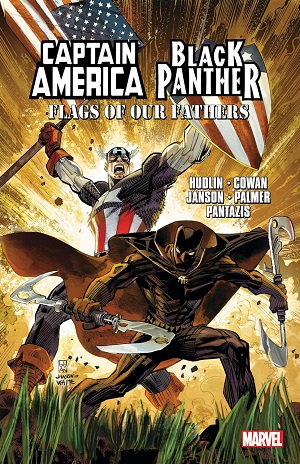
This Marvel Zombies volume doesn’t flow directly from the first run of Marvel Zombies, but constitutes a second miniseries of five issues. Things begin with the zombies suffering the effects of withdrawal after having spent the last forty years eating their way through the whole universe. So they decide to head back to Earth because if they can find a mechanical portal to another dimension there’s a chance they can skip over to another part of the multiverse and eat that too. Which means recovering zombies like Black Panther and Wasp have to try to stop them. And it’s a race against time because the non-zombies are starting to fight among themselves while the zombies are slowly starting to get better on their own after being forced to go cold turkey.

I was disappointed in the first Marvel Zombies series and can’t say I was any more impressed with this one. Robert Kirkman just has too much going on. You’d better know your Marvel universes really well if you’re going to identify the army of different characters, some of them rather obscure, and follow them through the only-confusing-because-it’s-so-lazy plot. I mean, I didn’t recognize the Gladiator at all, or understand what was going on with T’Challa’s son, and I guess I should have. Then everything winds up with the usual conclusion in which nothing is concluded because there’s always that escape hatch to another dimension. The End? Not on your afterlife.

There are things I like about these comics. They do go in some directions I’m not expecting. And overall they hold my interest. But I also find them lacking focus and hard to follow or get involved in. I might like the series more if it took more time introducing and building up the different characters. That’s something that might make the story stronger too.

Graphicalex

Bookmarked! #66: War and Peace

I’m not sure where or when I picked this one up, and I have to say it’s not a favourite. It has a kid’s craft flavour to it, with the pink plastic straps being woven through the blue frame to spell out letters. In this case PEACE. My main problem with it is the texture, as it feels both rough and slick at the same time, and not in a good way. Still, I don’t have any other bookmarks like it and I do appreciate variety.

Book: War by Gwynne Dyer

Bookmarked Bookmarks