Sometimes when you get up in the middle of the night and there’s a nearly full moon beaming in your bedroom window, you get a nice effect. Of course by the time you’ve got your phone out and taken a picture you know you’ll never get back to sleep. But that’s the way it goes. Happy Easter!
Aliens: The Original Years Volume 2
About the only bad thing I can say about this collection is that I didn’t think it was quite as good as Aliens: The Original Years Volume 1. Given how highly I rate what’s been done with the Alien franchise in comics, that can’t be taken as a criticism though. These are all great comics.
Specifically, what you get here are a bunch of stories that ran in Dark Horse publications in the early 1990s (the rights to the Alien comics line were sold to Marvel in 2020, so that’s why these Epic Collection anthologies are published under the Marvel logo). There are three main stories on tap, introduced by a few shorts. Here’s the line-up:
Countdown: a team of space marines tries to escape a planet with a Xenomorph infestation problem. One of the survivors has a little secret. I knew where this was going but it was still great.
Reapers: I did not know where this was going! A funny Aliens story from the great Simon Bisley. This is a quickie with a surprise gag ending that actually made me laugh. Not a twist I was expecting!
The Alien: the president has to go negotiate with one of the Xenomorph-hating Pilots, who is terraforming Earth for its species to colonize. The Pilot isn’t someone to be negotiated with, but the president has a nuclear-option bargaining chip.
Genocide: a pharmaceutical company that makes a super-steroid named Xeno-Zip needs to harvest a special chemical ingredient contained only in the “royal jelly” of a Xenomorph queen. A joint corporate-military mission is sent to the Xenomorph’s home planet, now riven by civil war, to grab some of the stuff. You may have sensed by now that all of these stories tend to play on basic plots and characters introduced in the first two films (the military-industrial complex seeking to mine or exploit other worlds, the kick-ass but ultimately out-of-their-depth marines, the slimy, soulless corporate hack, the question of who’s human and who’s an android, etc.). What’s odd is that the stories are all so fresh regardless. They add just enough stuff that’s new that every story has its own character.
Hive: a different team are looking for that royal jelly, now described as “the most sought-after consciousness-altering substance in existence.” Giving it a further gloss: “It gives some an intense feeling of well-being and competence. Others experience levels of their own being not normally perceived. Still others have an orgasm that seems to go on forever.” Sounds great! One of the scientists on this mission is addicted to the junk. The great new element here is that they’ve invented a robot Xenomorph to help them. Why hadn’t they thought of that before? I mean, if they can make human androids that nobody can tell aren’t real it wouldn’t seem too hard.
Tribes: this isn’t a comic but a novella with lots of art work. The art is great; the novella isn’t. I couldn’t finish it. Maybe it just wasn’t my thing.
Aliens: Newt’s Tale: this is basically a graphic version of the 1986 film Aliens, except told from Newt’s point of view. There’s some new material at the beginning giving Newt’s backstory but otherwise it’s a quick run through the highlights of the movie, including most of the main moments and memorable lines. Although Hudson’s “Game over, man. Game over!” is oddly missing. I guess it hadn’t become a meme yet.
So aside from “Tribes” this is a line-up of great, (mostly) original stories, each illustrated by a different artist in a distinctive style. I particularly liked the work of Kelley Jones in “Hive.” Another can’t-miss title then in the terrific Alien comic franchise. This is a series that, for decades now, has never seemed to miss.
Bookmarked! #87: Throwing Darts
Basically these “book darts” are a variation on the paperclip bookmark, but gentler on the pages. You can use these without causing any damage to the book at all.
Book: Chaucer’s People: Everyday Lives in Medieval England by Liza Picard
Holmes: The Adventure of the Speckled Band
This was Doyle’s favourite Holmes story, and has been voted in some readers’ polls as his best. And I think I can see some of the reasons why. It’s quite colorful, with gypsies, a baboon, and a cheetah all prowling the grounds of Stoke Moran for no reason essential to the plot at all. And it has one delightful scene where a brutish man tries to intimidate Holmes by bending a poker. That’s enough for twenty or so pages of fun.
Watson even introduces the story by saying that he can’t recall any case he observed Holmes work on “which presented more singular features.” Which is saying something, because he also tells us that Holmes always worked “for the love of his art” more than “for the acquirement of wealth,” so much so that “he refused to associate himself with an investigation which did not tend towards the unusual, and even the fantastic.”
But wait. Hadn’t Holmes also observed, on several occasions, that it’s ordinary crimes that are the hardest to solve, while ones that were exceptional in some way were more obvious? In choosing cases tending toward the unusual and the fantastic wouldn’t he just be picking the low-hanging fruit?
I’ll grant that “The Adventure of the Speckled Band” is unusual and fantastic. It has the air of a gothic thriller, albeit mixed with some elements familiar to the canon, like evil coming to England from abroad. The features are indeed singular, and the crime downright weird, though oddly enough it also felt in keeping with some of the elaborate-to-the-point-of-strained-eccentricity plots of Agatha Christie. The reveal of the “speckled band” at the end even reminded me of a similar sort of experience I had with a snake in the basement of my old house, though with less fatal consequences.
“When a doctor does go wrong he is the first of criminals. He has nerve and he has knowledge.” I found myself nodding along to this. Holmes references the (then notorious, now forgotten) killers Palmer and Pritchard, who both poisoned their victims. But I thought of more contemporary figures like Harold Shipman (Britain’s most prolific serial killer), Michael Swango (subject of James B. Stewart’s book Blind Eye), and in Canada the cases of Mohammed Samji and Paul Shuen (both recounted in Michael Lista’s true crime collection The Human Scale). I say this not because I dislike doctors, but only to shoot down the notion that somehow doctors are less likely to be homicidal psychopaths because they’re well educated and work in a “caring” profession. Doctors are no better or worse than any of the rest of us. To think otherwise is making a big mistake.
To return to the baboon and cheetah, they are both described by the young lady in the story, the damsel in distress, as “Indian animals” that the lord of the manor wanted to have around because they reminded him of his time stationed there. But baboons are not native to India and it seems unlikely Doyle meant the Asiatic cheetah. That species had not yet vanished from India but was very rare (it was declared locally extinct in 1952, with only a critically endangered population still existing in Iran).
As per usual, I think Doyle was just being casual with the facts, and would get a laugh out of people trying to trip him up. But then I think those fact-checkers are just having fun with the idea that somehow everything in the canon has to make sense anyway. Like nailing down the exact dates when the events in every story took place.
It’s not my favourite Holmes story, or the one I think the best. I’m not sure I’d even call it his most memorable case, as I’d completely forgotten it. But then few mysteries do stay in your head. It’s what allows you to re-read them every five or ten years, as though for the first time.
The book of me
I’ve been doing a lot of housecleaning and found this little gem tucked away in a box somewhere. Our Baby. That would be me!
How do you weigh babies anyway? I guess you just sit them on a scale and hope they stay put. I’m told my weight was pretty average.
As you can see it was around this time that entries started petering out. So much for From Birth to Seven. I don’t remember any religious education anyway, so that part may be right. The milestones seem kind of silly to me anyway. Lifted head? Is that an accomplishment for babies? And I wonder what I had to smile about a month in. Is that considered fast or slow? However it ranks, I’m pretty sure that was my last smile too.
Daredevil: Chinatown
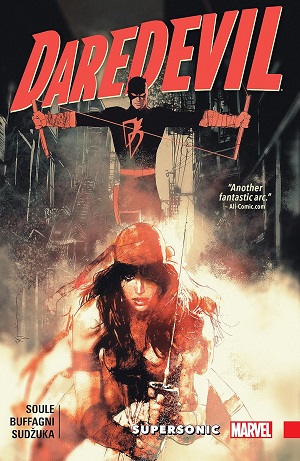
This comic constitutes the launch of the Back in Black series, a semi-reboot of the Daredevil character that was part of the “All-New, All-Different” Marvel branding exercise that kicked off in 2015. What I mean by a semi-reboot is that it isn’t an origin story but it does involve a universe jump as we’re now in a timeline where nobody knows that Matt Murdock is Daredevil except for his former law partner Foggy Nelson. Or I guess it’s the same timeline but one that’s been adjusted by the powers-that-be so that Matt has regained his virginity. How all this happened is explained later in the series. And yes, it’s lame.
That introduction aside, this is a decent story by Charles Soule that mixes the traditional Daredevil plot that has DD fighting gangs in New York (though it’s Chinatown this time, not Hell’s Kitchen), with the supernatural elements of the Hand joining the fun. Instead of a defence attorney Matt is now a prosecutor, and he has a suspicious Chinese cult in his sights that’s run by a guy named Tenfingers. So called because he has ten fingers (or nine fingers and a thumb) on each hand. To be honest, I thought this was really silly, and all the extra digits seemed more like a disability than a superpower, but it does make him stand out.
Anyway, Tenfingers stole some bad mojo from the Hand and now they want it back. This leaves Daredevil, along with his protégé Blindspot (don’t call him a sidekick, though “apprentice” may be OK), caught in the middle of a high-level gang war, with lots of innocent civilian lives in danger. Much fighting ensues.
Blindspot (apparently the fourth Marvel hero to go by that name) seemed like a character with some potential. He’s a young undocumented Chinese immigrant who’s invented a battery-operated invisibility suit. He knows some martial arts as well and is a handy guy to have around. Unfortunately, his mother works for Tenfingers so family dysfunction bites him in the ass. But you do get the sense that DD genuinely cares about him and is doing his best to be a mentor. That side of the comic works quite well.
The art by Ron Garney is more stylized and rougher around the edges than the generic Marvel house manner, and it fits here. I thought it really worked for the action scenes, of which there are a lot. I’m not a fan of Daredevil’s black costume though, or the flaming DD’s. Not an improvement on the all-red outfit, at least in my eyes. But maybe since they decided they were doing a reboot they figured they might as well spring for some fresh duds and see what people thought. Well, thumbs down from me.
TCF: Someone You Know
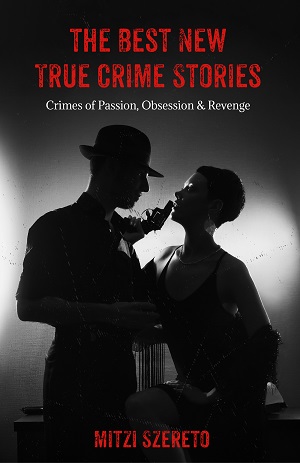
Someone You Know: An Unforgettable Collection of Canadian True Crime Stories
By Catherine Fogarty
The crimes:
“Murder in the Morgue: The Two Faces of Steven Toussaint”: the supervisor of the morgue at the University of Toronto Medical School kills his co-worker, burns down some churches, and then disappears. His body is found a year and a half later.
“Deadly Secrets: The Murder of Gladys Wakabayashi”: a jealous wife kills a woman she suspects her husband is romantically involved with. Years later, she is tricked into confessing as part of an elaborate police sting.
“Lost Boy: The Murder of Nancy Eaton”: a descendant of the wealthy Eaton family befriends a troubled teen who ends up killing her.
“Sins of the Son: The Disappearance of Minnie Ford”: a woman is killed by her brutish son and her body thrown in a lake.
“A Mother’s Love: The Ma Duncan Case”: a mentally disturbed mother gets upset at her son’s marriage and arranges for the pregnant bride to be murdered.
“Enemy Within: The Murder of Glen Davis”: a wealthy philanthropist is murdered by a grasping heir. It turns out the killer was left nothing in his victim’s will.
“Behind the Laughter: The Phil Hartman Story”: a popular comedian is shot in bed by his wife. She later kills herself.
“Back to Reality: The Murder of Jasmine Fiore”: a contestant on a crass dating show kills his wife and throws her body in a dumpster.
“Hollywood Horror Story: The Murder of Iana Kasian”: a rich fellow trying to make it in the entertainment business kills his fiancée in a horrific manner.
“Murder in the Suburbs: The Case of Lucille Miller”: classic case from the 1960s about a woman killing her husband by drugging him and putting him in a car that she torches.
“Black Widow: The Many Lies of Evelyn Dick”: notorious Canadian case of a woman who killed her infant son and then seemed to have some role in the killing of her husband. She was found not guilty of the latter murder at trial and subsequently disappeared.
“No Way Out: The Jane Stafford Story”: a woman kills her abusive spouse, and her trial sets a major legal precedent for “battered wife” cases.
I wonder what makes a crime story “Canadian.” If it takes place in Canada? If it involves Canadian criminals, or Canadian victims?
I raise the question of labeling just to introduce what you get in this book. The subtitle refers to “Canadian True Crime Stories” but we could be more precise and say that it’s a collection of murder cases. And specifically they are cases that illustrate the point that most homicides are indeed committed by someone the victim knew. “Interpersonal and intimate partner violence accounts for most murders in our country. While we are all taught about ‘stranger danger’ as young kids, the reality is that we are more likely to be sleeping with, socializing with, related to or married to our killer. And that is deeply disturbing.”
The twelve cases are divided into four sections relating to killers who are the friends, kids, lovers, and spouses of their victims. But again the classification scheme doesn’t seem totally on point. You could argue that each of the three murders in the third section were cases where someone killed their spouse, so they could just as easily have been included in the fourth section. Instead, what distinguishes the stories in the third section is the strange coincidence that they all deal with murders involving ex-pat Canadians living in California. All that sunshine does things to us.
(I should expand on a point here. When I say that the cases in the third section were arguably spousal killings I mean that Jasmin Fiore apparently had just had her marriage to Ryan Jenkins annulled (though there are no records of this) and that Iana Kasian was only Blake Leibel’s fiancée. What I also want to add here is that both these women were killed after their relationships had fallen apart but when they agreed to meet with their exes in a gesture of conciliation. As I’ve said before, this is not advisable. If you’re splitting up, you should make a clean break and never get together with your (violent and abusive) ex again. And you definitely should avoid meeting with them alone.)
As far as the writing and research goes I thought Catherine Fogarty did a good job relating the facts and not dragging things out unnecessarily. There were places though where I wished she’d done a bit more digging, especially with regard to cases that are now decades old. The first case here, for example, left me with a lot of questions. Starting with whether the killer’s name was Steven or Stephen Toussaint. Both spellings are used. Meanwhile, all of the sources are news reports from 1998-99 and they don’t offer any resolution on a number of points. Did Toussaint kill himself? How? We’re only told that his body was badly decomposed, but it still seems odd to me that they couldn’t determine any cause of death. And why did it take so long to find his body? Fogarty wonders about this herself, as the body was discovered (18 months later) only 500 meters from where Toussaint’s car had been abandoned and there’d been a supposedly extensive search of the area. We’re only told the body was in an overgrown, wooded area. Were the search parties just too lazy to get into the weeds?
With increased hindsight you might expect some of these questions to be more fully explored. Another point that came up in the next case, also from the 1990s, bothered me. Just how did Jean Ann James dispose of so much physical evidence when she killed Gladys Wakabayashi? There must have been a lot, and James had been the “number one suspect” of the police. She said she’d burned her bloody clothes in the incinerator at her son’s school, but this was an explanation that was later proved false because there was no incinerator at the school and anyway the amount of blood there must have been would have gotten everywhere. To have cleaned up so well is remarkable. Fogarty assumes James threw her clothes in a dumpster, but there must have been more to it than that. I guess we’ll never know.
Aside from being Canadian true crime stories dealing with cases of murder committed by people close to the victim, another theme I found popping up was that of the double life. This made me wonder how much the notion of a double life is something real and how much of it is a myth. To be sure, we all have public and private selves. Or personalities that are different at work and at home. Dickens noticed that a couple of hundred years ago. So do we all lead double lives?
Not in the sense that I think most people use the term, and certainly not as you find it employed in true crime writing. In that latter context what it usually means is the good neighbour/family man who is a serial killer or homicidal psychopath on the side. But it could also mean something more innocuous. Was there anything exceptional in the marriage of Phil and Brynn Hartman? “Behind their perfect-looking family façade, there was trouble – tension, jealousy and addiction.” Indeed their marriage was on the rocks. But this is common if not more the rule than the exception in any marriage. Or take this description of Stephen Toussaint:
He was a hard-working family man with an effervescent personality and a great sense of humour. But beyond Sunday school and bowling nights, there was another side to Stephen Toussaint that neither his family nor church were aware of. He was a man of dark secrets.
What were these dark secrets? All we seem to know is that he was an alcoholic, which had in turn affected his work at the morgue. Which in turn led to his murdering a co-worker. Toussaint had a drinking problem, but a double life? Was he two different people, at work, at home, or at the bar?
To some extent everything about us is always a façade. The point a collection like this drives home is that we all have secrets and that nobody, not even those closest to us – children, spouses – knows us fully. And even if such perfect knowledge existed, there’d always be a random element impossible to predict.
Noted in passing:
Glen Davis was shot in the stairwell of an underground parking garage. Yes, it was around 1:45 in the afternoon, but does this count as being “gunned down in broad daylight in a busy area of the city”?
Ryan Jenkins mutilated Jasmin Fiore’s body, specifically removing her teeth and finger joints post-mortem, to prevent recognition. He did not reckon on the fact that breast implants have serial numbers printed on them that could be used to confirm her identity.
Takeaways:
Given that you can never really know someone, you should observe their behaviour and assume that this will remain consistent over time. In the most notorious case here Jane Hurshman fell for Billy Stafford because she was impressed that he was “kind, gentle and listened to Jane talk about her marital troubles.” In fact he was notorious for being a violent and abusive drunk. Jane knew about his “less than stellar reputation” but . . . “love is blind.” It cannot afford to be.
Gideon Falls Volume 4: The Pentoculus
Ah, things were really clicking in this series now. There’s a lot of jumping around, from the different dimensions accessed by the Pentoculus (that’s the multiverse machine Norton Sinclair built in his barn) to the different bodies that the Laughing Man (or as I call him, the Bug God) inhabits, but I found it all reasonably easy to follow. In part because the threads were starting to be drawn together, as the main characters (it is written that there must be five, constituting a kind of Fellowship of the Bug) all finally find themselves on the same page. Dr. Xu even gets to see herself as Old Dr. Xu in the village dimension, which is somehow at the center of everything.
In addition to the Fellowship of the Bug there are also other networks in play, including the uninspiring Ploughmen and the Bishop’s gathering of bug-fighting priests. Meanwhile, the Laughing Man is vomiting his bugs into his victims in the sort of mouth-to-mouth process that has long been popular in horror movies (see my note on this in my review of The Invasion). Once possessed, these people go on bloody rampages, all (I think) just to get attention since the Laughing Man only needs to possess Danny in order to open all the doors. I wasn’t sure why. Maybe it’s just because Danny, as a character, seems like such an empty vessel thus far.
Lots of slam-bang action, and Andrea Sorrentino was really pulling out all the stops when it comes to fragmenting the page into hallucinogenic collages. This is always been his style, and with this series he gets to indulge it fully. So overall it’s a series that’s finishing strong, making me hopeful for the conclusion.
Bookmarked! #86: The Luck of the Irish
When I was a kid I used to look for four-leaf clovers. Not sure if I ever found one. If I did, I might have stuck it between the pages of a book. That’s what you did with things like that, in times long ago.
Book: A Nation and Not a Rabble: The Irish Revolution 1913–23 by Diarmaid Ferriter
Marple: 4.50 from Paddington
The year is 1957, though it’s never mentioned and I’m only saying that because of the publication date. What does this mean? Well, when the conversation turns to “foreigners” one can no longer safely assume that the French are meant, because “nowadays we have so many nationalities over here, Italians, Germans, Austrians, all the Scandinavian countries –.” Meanwhile, family members aren’t sent off to India because “that is all done with now.”
As for England’s green and pleasant land, even in St. Mary Mead there’s a nearby airfield so that the jets flying over break the panes in Miss Marple’s greenhouse. And, drafty and cold, a confessed “anachronism,” Rutherford Hall is now caught in a web of railway lines. None of the Crackenthorpe heirs has any attention of living there. They just want to sell it to developers, for whom it will be worth a fortune.
But at least the kids are alright. They’re reading something called “space fiction.” Because who knows? Someday manned space flight might be a thing.
I thought this was a really enjoyable book, but not a great mystery. You can tell why it was the first Miss Marple story to be adapted into a movie, as Murder She Said (1961) starring Margaret Rutherford. There’s a Hitchcockian hook at the beginning and then a manor house mystery that plays at times like a bedroom farce as all the Crackenthorpe men get handsy with Lucy Eyelesbarrow. Including Old Man Crackenthorpe himself, who has one foot in the grave!
And who could blame them? Good help is so hard to find, especially in 1957, and Lucy is a certified keeper. She not only cooks all her meals from scratch, she even peels the mushrooms. I’ve never heard of anyone doing that, but I guess it’s a sign of class. Or was.
But as much fun as it all is, it’s not, as I’ve said, a good mystery. As critic Robert Barnard put it, “Miss Marple apparently solves the crime by divine guidance, for there is very little in the way of clues or logical deduction.” Things are wrapped up quickly, through a ludicrous stratagem, and the great detective’s explanation left me as baffled as Barnard was as to how she managed to identify the killer. This isn’t playing fair with the reader, and I expected more from Dame Agatha.
I can’t leave off without mentioning another of Christie’s old-fashioned Britishisms. It comes when Miss Marple is talking about finances: “Women have a lot of sense, you know, when it comes to money matters. Not high finance, of course. No woman can hope to understand that, my dear father said. But everyday LSD – that sort of thing.”
I pulled a blank on LSD. I was sure the old pussy (that’s how you referred to old ladies back in the day, to the point where Inspector Craddock doesn’t know what else to call them) didn’t mean Lysergic Acid Diethlamide. It’s 1957 remember, not the ‘60s. But what did she mean? After some Internet sleuthing I discovered it’s an abbreviation for pounds, shillings, and pence that’s derived from the Latin currency denominations librae, solidi, and denarii. I don’t know if it’s an expression much in use anymore even in England.