
It’s getting a little late to be sending your letters to Santa, kids! He’s a busy man this time of year.
Book: Marple: Twelve New Mysteries
It’s getting a little late to be sending your letters to Santa, kids! He’s a busy man this time of year.
Book: Marple: Twelve New Mysteries
“And what put you on to the Dashwoods?” Sir Henry Clithering asks Miss Marple, “mystified” at how she solved the mystery of the missing pearls. The answer is pretty simple: they were the only non-recurring characters at the “real old-fashioned Christmas” party hosted by the Bantrys. We know Arthur and Dolly didn’t take the pearls. Or Jane Marple. Or her nephew Raymond and his wife Joan. Which leaves the Dashwoods. I mean, a suspicious eye is rolled in the direction of the new under-gardener but we never so much as see him. So it will have to be the Dashwoods.
Knowing the literary background is also a help. A big clue is provided by the fact that Ronald Dashwood is reading Dorothy Sayers’s Hangman’s Holiday. Or just the name Dashwood itself, which is borrowed from Austen’s Sense and Sensibility. And of course the fact that Dolly just doesn’t like them very much. Once you factor all of this in, the stuff having to do with pins and mistletoe is almost beside the point. I wasn’t even sure what was going on there, but at the end I didn’t need to be.
What Ruth Ware assumes you’re not to be alerted by is the age difference between Major Dashwood, retired, and his wife, said to be in her “early thirties.” That’s just the way it was, back in the day. I did sort of scratch my head a bit though at Mrs. Bantry excusing Ronald, who appears to be a student, for his feeling bored at being “cooped up in the country with a lot of middle-aged people.” Who is middle-aged? I think Raymond and Joan are a young couple (she is revealed to be pregnant at the end). As noted, Mrs. Dashwood is in her early thirties. Major Dashwood and Colonel Bantry are both retired. Miss Marple is simply ancient. I suppose Mrs. Bantry is middle-aged, and maybe she’s just projecting onto the others.
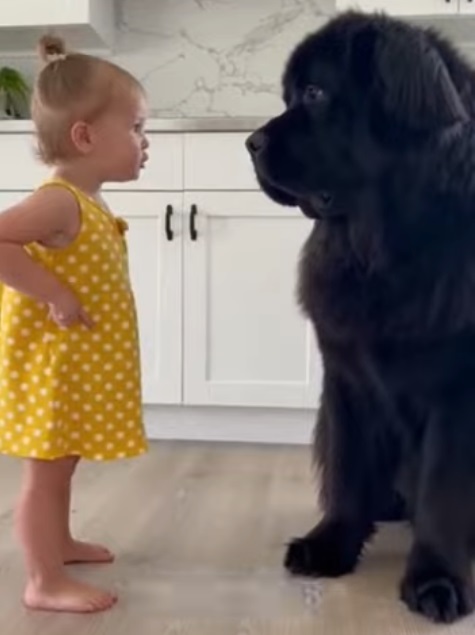
This never happened.
For decades now (has it been that long? it has) it’s been remarked that funny/cute pet videos are what drive the Internet. Cats behaving badly. Dogs being lovable. Such moments were what short-form videos seemed made for even before TikTok and Instagram.
Because people were spending so much time filming their pets there was no end to this content: pets interacting with toddlers, pets being shamed for destroying apartments, pets defending their owners from real and imagined threats, pets giving their owners the side eye, pets upset at going to the vet, or pets just soaking up the love and making goofy faces when people say their favourite word. And to this list we could add animal videos in general, because animals are great and there seems to be a nearly inexhaustible supply of such content.
But today an inexhaustible supply is no longer enough. The algorithm demands even more cute pet videos, and that they be even cuter. What to do?
Well, never fear because AI has come to the rescue. And yes I mean that ironically. About a week ago I noticed that a number of short pet/animal videos were showing up in my feeds that didn’t seem quite right. And a few that were not right at all. A pair of dogs stopping a grizzly bear from mauling a woman on her front porch? A gorilla defending a zookeeper from a jaguar? How was that even possible?
It isn’t, and it never happened. Just after I started noticing this as a trend a friend of mine who knows how fond I am of Newfoundland dogs sent me a cute YouTube short that had a little girl scolding a Newf for eating her cookies. It was even tagged as a “Heartwarming & Cute Moment!” But while it looked pretty realistic I figured it wasn’t real from a couple of tells. And that was before seeing that the “creator” was something called “Infinity Viral 7.”
The floodgates have truly opened for such AI slop, which isn’t surprising. Our content is being scraped and fed into the AI harvester in order to train it, but what’s even more disturbing is the way the algorithms are training us. It knows what we want to see and so it gives it to us, only in an exaggerated, more sugary form that will give us an even bigger dopamine hit and leave us clicking for more.
As for authentic cute-pet videos, I’m sorry but they’re not going to be able to compete.
To which you might say: so what? The Internet is a firehose of misinformation and we’re all just swimming in it now. But even acknowledging that I still find these animal and pet videos upsetting. Moments that are truly magical and unique, that meant something to people, are just being turned into chum that deadens us to what is natural and real. What these slop videos are doing is taking what is a healthy human response and using it to jerk us around. I find it sad, and more than sad, to read the comments on obviously fake “Heartwarming & Cute!” videos from people saying how moved they were by them. How damaging is it to them to realize that they haven’t been moved but been used?
But then, how many of those comments were written by bots? Just as AI now writes college papers and marks them too, AI makes YouTube videos and writes its own comment threads.
Of course AI has an even worse social impact when it takes the form of political slop and porn slop, but the psychological effect of the end of authentic cute cat videos might actually be something worse. And please don’t be one of those people who think you can’t be manipulated by this trash. I assure you, you can. You can and you are. We all are. Even when the videos are marked as being generated by AI we’re still clicking on them. They’re still pushing our buttons. They’re still training us, and leading us into a deeper epistemological crisis. What will happen when what’s authentic is no longer “real” enough to warm our hearts?
 In my notes on Saga of the Swamp Thing Book Three I talked about how I preferred the back-to-basics Swamp Thing stories that played like X-Files “monster of the week” episodes to the epic storylines involving some grand cosmic battle between good and evil. I felt that way again here, as I really enjoyed the introductory stories about the druggies eating some sweet potato that has fallen off Swampy’s back and going on hallucinatory trips, and “Ghost Dance,” about the legacy of a gun manufacturer playing out in a haunted house (a story that was a personal favourite of Alan Moore’s). But once we get back into the preparation for a final battle between a newly awakened power of evil and the forces of light, I thought things weakened. Sticking with the comparison to the X-Files, you spend all this time building up the main storyline or “mytharc” about Fox’s missing sister and alien abductions and black oil, but when you finally go on board the mothership you know you’re going to be disappointed. I mean, where do you go from a build-up like what we get here: “This is ultimate dark, ultimate light. The forces and the stakes here are fundamental and absolute . . . and whichever side meets its final destruction this day, everything will be changed.”
That said, I thought the final battle was well choreographed. A host of characters are assembled. John Constantine is holding a completely useless séance with a group Neil Gaiman describes as “the detritus, the flotsam and jetsam of the DC occult universe.” Swampy is in hell (or thereabouts) and is joined by Deadman, Phantom Stranger, the rhyming demon Etrigan, and the Spectre. They’re trying to stop the aforementioned evil. Or maybe it isn’t evil. Maybe it’s just misunderstood. In any event, the glowing hand of God descends from heaven and the world just continues on its merry way. “Nothing has happened. Everything has happened.” Good and evil are necessarily linked, you see. Can’t have one without the other. According to Gaiman’s introduction, Moore thought this had something to do with the Manichaeism of American culture, and what happens is an answer to Swamp Thing’s questioning if there is “some truth . . . that may be divined . . . from the entrails of America.”
Well, colour me unimpressed with these flabby conclusions. Getting to them was a lot of fun though, even if Swampy himself remains a remarkably passive as well as ponderous figure throughout. I think maybe Moore came up with the character of John Constantine just to liven things up. I do like what Moore did with this series, but at the same time I don’t think he was ever as interested in Swamp Thing as he was in doing his own thing.
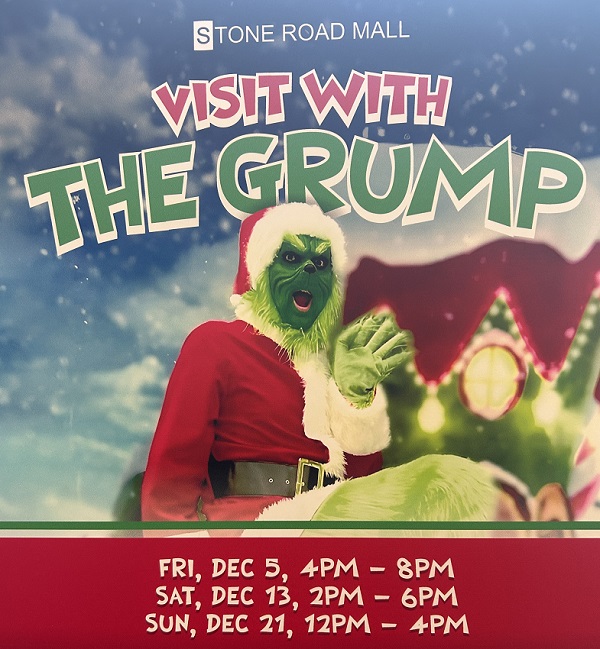
This green fellow reminds me of someone whose name I can’t think of now. Not “the Grump” but something else. Pretty sure it begins with a G.
 I’ve said before how much I love this Visions in Poetry series, and in particular how the illustrations really offer up new interpretations of classic poems. Stéphane Jorisch’s take on Edward Lear’s “The Owl and the Pussycat” is another great example, presenting the poem in a way that I’d never thought of before.
My own sense has always been that the Owl and Pussycat were an odd but natural fit. After all, opposites attract. Jorisch, however, emphasizes their difference, making them into a sort of Romeo and Juliet coupling. The beautiful pea-green boat takes them away from an apartheid society where dogs and cats and owls never mix. The other species look on at the Owl and the Pussycat and whisper. The couples that cruise by on the Chez Noah stare (no interspecies sex there!). Even the fish in the sea stick their heads out of the water to watch them sailing by. And so our happy couple, who only have eyes for each other, have to go to the land where the Bong-Tree grows to be married by a singular turkey, after buying a ring from a singular pig. Mythical beasts like unicorns and mermaids approve.
As I say, this is never the way I’ve read “The Owl and the Pussycat,” and I don’t think it’s a reading I’d adopt as my own. Jorisch does, however, very much make it his own and I thought the book another splendid entry in a series that never disappointed. I only wish they’d published more!

A blend of Merino wool and silk that a friend picked up for me in Newfoundland. It has a really light, spongy feel to it. Can’t say I have any other bookmarks quite like it.
Book: The Story of Nature: A Human History by Jeremy Mynott
One of America’s best-loved comic short story writers does a Holmes pastiche. And there’s nothing funny about it at all. I wonder if this may have been the worst story O. Henry ever wrote. Even the detective’s name, Shamrock Jolnes, is a miss. Hemlock Jones in Bret Harte’s terrific “The Stolen Cigar-Case” was funnier.
As for the story, it’s about a man looking for his missing sister in the Big Apple. After being fleeced by a police detective, and Jolnes’s inductive method being exposed as a sham, the sister’s location is whimsically discovered by a third sleuth. First published in 1904, the jokes here haven’t aged well, to the point where for most readers they might need to be explained. Which means they aren’t jokes anymore.

Just a pic from my front porch today to show those of you who don’t have snow yet what’s coming! (You can click on the pic to make it bigger.)

I often walk past these deer when I go downtown but I’ve never taken a picture because they’ve had paint on them or stickers. I guess they got cleaned up at some point so I took their picture yesterday. No, I don’t understand the meaning of the geometric forms. And yes that’s my shadow on the deer closest to you. I didn’t realize I’d put myself in the picture until I got home. (You can click on the pic to make it bigger.)
 Alex Good