Over at Alex on Film I’ve just finished watching The Thing from Another World (1951), The Thing (1982), and The Thing (2011). The first two are both classics. The third was a bad idea, but inevitable. There’s something depressing about an inevitable bad idea, isn’t there?
Universal decline
Universities are odd institutions. They come in many different shapes and sizes, from local community colleges to huge multinational corporations. They can be state-run or private, highly specialized or more general in scope. They can even exist wholly online. They began in the middle ages, but today bear almost no relation to their earliest incarnations. And if signs are any indication, their evolution will continue to take them in strange new directions.
The last several years have seen a great deal of soul-searching within the halls of academe. One of the sparks was the claim made by a hedge fund manager and venture capitalist that universities were an economic “bubble,” selling a product at an unreasonable and unsustainable price through the assistance of government loans. Such a charge led to a flood of books attempting to explain what had gone wrong. In Canada the sociologists James E. Côté and Anton L. Allahar (authors of Ivory Tower Blues and Lowering Higher Education) are two of the more popular commentators.
Various villains have been identified. Some, like Camille Paglia, continue to blame trends like post-structuralism and cultural relativism for having hollowed out the core mission of higher education. Others blame the “massification” of higher ed, the explosive post-World War 2 growth of universities to the point where they now admit far too many unqualified and uninterested students. Some accuse the government of cutting funding. Still others point the finger at the swelling ranks and salaries of a non-teaching administrative class within the universities. And then there are those who blame the adoption of a neo-liberal, market-oriented philosophy by institutions that (they feel) must stand outside such a framework.
I’ve followed much of the debate, and it saddens me. The humanities are, frankly, losing, and they aren’t even putting up a good fight. I tried to address some of the points being made in my joint review of Marjorie Garber’s The Use and Abuse of Literature and John Carey’s What Good Are the Arts? The depressing takeaway from Carey’s book is that the arts aren’t good for much at all. The usual platitudes are trotted out: how the humanities encourage independent, critical thinking and make us more empathic and active citizens, but this just isn’t true. I can’t help thinking that if humanities professors, trained in disciplines like history, philosophy and rhetoric, can’t put forward better arguments for what we might call higher education’s traditional mission, then perhaps it’s time to give up. In a recent piece appearing in the Guardian, one pro-humanities spokesperson, Sarah Churchwell, had this to say:
“What has changed radically in the last 10 years is that they’re trying to turn everything into a for-profit business,” said Churchwell. “And that’s bullshit. Universities are not for profit. We are charitable institutions. What they’re now doing is saying to academics: ‘You have to be the fundraisers, the managers, the producers, you have to generate the incomes that will keep your institutions afloat.’ Is that really what society wants – for everything to become a marketplace, for everything to become a commodity? Maybe I’m just out of step with the world, but what some of us are fighting for is the principle that not everything that is valuable can or should be monetised. That universities are one of the custodians of centuries of knowledge, curiosity, inspiration. That education is not a commodity, it’s a qualitative transformation. You can’t sell it. You can’t simply transfer it.”
Churchwell went on to talk about what would be lost if we didn’t stand in the way of this systematic destruction of the traditional liberal education. “Virtually every cabinet minister has a humanities degree,” she said. “And I think there’s something quite sinister about it: they get their leadership positions after studying the humanities and then they tell us that what we need is a nation of technocrats. If you look at the vast majority of world leaders, you’ll find that they’ve got humanities degrees. Angela Merkel is the only one who’s a scientist. The ruling elite have humanities degrees because they can do critical thinking, they can test premises, they can think outside the box, they can problem-solve, they can communicate, they don’t have linear, one-solution models with which to approach the world. You won’t solve the problems of religious fundamentalism with a science experiment.”
This is entirely unconvincing. Critical thinking certainly isn’t the preserve of the humanities. Indeed, I sometimes wonder if today’s arts departments even encourage it. And while I’m as dejected as Churchwell at the thought of people wanting “everything to become a marketplace, for everything to become a commodity,” I don’t think it’s realistic to see such giant corporations (which is what universities are) as standing outside the larger economy. As recent strikes at York University and the University of Toronto have highlighted, universities can be seen as a microcosm of that dysfunctional larger economy, with its widening split between a privileged elite at the top (enjoying high pay, job security, benefits and pension) and a growing underclass whose sub-minimum wage labour supports the whole enterprise.
It’s very common now to decry the “corporatization” of universities and emphasize their “charity” status (at least for state-funded schools), but how honest are such claims? This past week saw the release of Ontario’s “Sunshine List” of public sector workers making over $100,000 a year. Perhaps the most common defense of such high salaries — after the remarkable claim, made by many, that because of inflation a $100,000 annual salary, which doesn’t include benefits, “isn’t very much” — is that they have to be “competitive” with the private sector. I suppose this makes sense in some fields (though surely not for professors in the humanities), but one has to ask to what extent a public sector in competition with the private sector is still truly public. At the very least it smacks of having one’s cake and eating it too.
Meanwhile, the real crisis facing higher education, as I see it, is the constriction of the middle class: their falling (real) wages and stagnant standards of living. A university education used to be a step on the ladder of upward mobility, but while that’s still true in some cases, more and more it’s a step on a ladder to nowhere, and it comes at a staggering cost. When I was at university nearly thirty years ago it was not hard to find an easy summer job that would pay tuition, school supplies, rent, and groceries. That’s no longer the case for young people today, who are graduating with incredible amounts of debt. And the old certainty that even if you didn’t walk into your dream job you at least were sure of finding some kind of meaningful work when you graduated has gone as well, most dramatically in the case of humanities graduates because the cultural economy has been gutted by the Internet.
But the problem isn’t one faced by humanities graduates alone. The advice to study the so-called STEM disciplines (science, technology, engineering, and math) is no guarantee of finding a good career. Even “learning a trade” is little help. I know a lot of un- and underemployed contractors. The problem is one affecting young people generally, and faced with such a challenge there’s little wonder they’re becoming wary of higher education. Enrollments are indeed kept inflated thanks to the willingness of this generational cohort to take on high levels of debt, and because there is nowhere else for young people to go and nothing for them to do. That’s a terrible defense of higher education, but it’s the bottom line.
The Zombie Chronicles: Part One
Don’t worry. They’re still out there.
Over at Alex on Film I’ve just completed the first round of a survey of zombie movies, from the beginnings up through the 1980s. And by “zombie movies” I mean movies that don’t necessarily involve the living dead but which in some ways fit what has become, at least since Romero, a certain mythic structure. Here’s the list of reviews (and if you’re interested in related book reviews, see my notes on Glenn Kay’s Zombie Movies: The Ultimate Guide and Corey Redekop’s Husk). You can see Part Two of the Zombie Chronicles here.
White Zombie (1932)
Revolt of the Zombies (1936)
King of the Zombies (1941)
I Walked with a Zombie (1943)
The Body Snatcher (1945)
The Last Man on Earth (1964)
Night of the Living Dead (1968)
Children Shouldn’t Play with Dead Things (1972)
Tombs of the Blind Dead (1972)
The Living Dead at Manchester Morgue (1974)
Rabid (1976)
Dawn of the Dead (1978)
Zombie (1979)
City of the Living Dead (1980)
Day of the Dead (1985)
The Return of the Living Dead (1985)
Return of the Living Dead Part II (1988)
The Serpent and the Rainbow (1988)
Yann Martel and the Alpha Male
Added my brief review of Lisa Pulitzer and Cole Thompson’s Portrait of a Monster over at Good Reports. It’s the story of Joran van der Sloot, widely regarded as the murderer of Natalee Holloway and now serving a 28-year prison sentence in Peru for the murder of Stephany Flores. Van der Sloot liked to think of himself as an “alpha male” and I go off a bit on the mis-use and misunderstanding of this label.
There’s also an interesting CanLit connection to the story. According to interviews done at the time, Van der Sloot was working on an essay on Yann Martel’s Life of Pi the night of Natalee Holloway’s disappearance. In his own words, “Pi is a boy lost at sea on a boat with a lion, monkey, and a zebra.”
I don’t know if investigators ever followed up on this. Anyone who has read the book will recall that Pi is lost at sea on a boat with a Bengal tiger, an orangutan, a zebra, and a hyena. Given that a picture of a tiger appears on the cover of most editions of the book that I’ve seen, I wonder if Van der Sloot had even bothered to look at it, much less read it. But then alpha males don’t have a reputation for reading a lot, do they?
Dangerous Dining with Alex #5
Snickers Bar
Overview: Small . . . but deadly?
Label: Short, and sweet. 250 calories. 12 g of total fat, including 4.5 g of saturated fat and 0.2 g of trans fat. 120 mg of sodium. Merciful heavens.
Review: I’m not allergic to peanuts. Very few people are. In the U.S. 0.6 % of the population has a peanut allergy. Nevertheless, peanutphobia is a big deal, and has probably had some impact on the sale of candy bars like Snickers. Even a Mars bar now has a “no peanuts” logo on the wrapper, despite the fact that I don’t think anyone thinks Mars bars have peanuts in them. Some people have seen in all this evidence of “mass psychogenic illness,” or a hysterical reaction out of all proportion to the actual danger. On the other side of such a debate, I remember the mother of a friend of mine once saying that people who really do have such allergies should “just be allowed to die,” as their bodies were obviously too weak to survive in a natural environment. She was a hard case.
The numbers here shocked me. This isn’t a big chocolate bar. Only the length of my index finger (and I have small hands). And yet what a punch it has! That’s 1/4 of your daily recommended saturated fat in three or four bites. Or put another way, it’s 1/3 of the fat contained in an entire Dr. Oetker’s frozen pizza. And 250 calories! When I go to the gym, on some of the machines there’s a computer display that tells you how many calories you’re burning while you’re working out. 250 calories is half an hour of hard exercise — easily the hardest work I’ll do all day. And it’s all made up in one snack.
I love chocolate bars, and I like Snickers. These little guys are delicious. How could they not be? All they are is sugar and fat. Or, technically, they are 52 g in total, 12 of which are fat and 27 of which are sugar. They’re so tasty, I often have two. But as I get older I’m really wondering if this is a habit I can maintain. I also worry about my teeth. Snickers bars are quite sticky, and I often have to spend some time after finishing one scraping the residue from around my gums. That can’t be good.
Price: $0.89 on sale.
Score: 6 / 10
Dangerous Dining with Alex #4
Dr. Oetker Ristorante Pizza Vegetale
Overview: A vegetarian pizza with a doctor’s name on it? How good/bad can it be?
Label: “Experience passion on your palate with Ristorante.” It’s hard to take that seriously. Anyway, the nutrition facts here aren’t as grim as you’d expect from a frozen pizza. Again, I’ve calculated a total for eating the entire pizza, which is only reasonable since they’re not that big. 800 calories, 36 g of fat (12 g of saturated fat; 0.8 g of trans fat). 1,600 mg of sodium (68% of my daily dose).
Healthy? Everything’s relative. Those numbers are literally half what you’d expect from a generic frozen pizza. So if you’re going to go frozen, this isn’t a bad bet.
Review: It’s pretty good, if bland. They do the thin crust right: it’s light and crispy, albeit totally tasteless. It also leaves a feel of grit in your mouth afterwards which is unfortunate. The chili peppers give it some zip, and the bell peppers maintain their texture well. It looks colourful, even appetizing, out of the oven. I don’t know if it’s the lack of meat, but there’s less slimy grease pooling on top and smeared on your plate for later clean up. It gets a bit runny, but that may be from the tomato slices. When you factor in the below-average toxicity, this is a pretty decent meal.
By the way, there really was a Dr. Oetker. He was a food scientist in late nineteenth-century Germany who developed a kind of baking powder. Apparently his descendants still run the company.
Price: $2.99 on sale.
Score: 6.5 / 10
Dangerous Dining with Alex #3
Subway Foot-long Cold Cut Sub
Overview: A few years back Subway was touting itself as fast food’s answer to healthy eating, with “Subway Guy” Jared Fogle being their poster boy for how you could lose weight eating their sandwiches. And they were indeed ahead of the curve on this point, being very proactive about listing the nutritional value of their meals before this was all that common. The branding worked. Even today my neighbour thinks of their subs as a “salad on a bun” for all the garden goodies they stuff in them.
Label: You can get quite a detailed nutrition guide at your local Subway, though it does take a bit of reckoning with a pen and calculator to figure out just what your meal finally adds up to. Basic sandwich values are for a six-inch sub on 9-grain wheat bread and limited garnishings. I only get foot-long subs on an Italian herbs & cheese bun, with the works and mayo. (As an aside, Jared lost weight by not including mayo on any of his subs.) So that’s 860 calories for the sub, plus an extra 220 for the mayo (damn, that stuff is killer!), plus an extra 80 for the bread, plus an extra 80 for the cheese. For a grand total of 1,240 calories. Which isn’t too bad. Sodium worked out to 2,720 mg though, which is well over the upper limit recommended by Health Canada. Finally, there was 71 g of fat, a number that took me by surprise. All of a sudden this doesn’t seem that healthy a dinner.
Review: As I said, I always get it on Italian herbs & cheese. Because it sounds more expensive? Because it sounds like you’re getting more “stuff” (herbs and cheese!) at no extra cost? Because the herbs make it sound sorta, kinda, healthy? I don’t know. I do know that I can’t stand whole wheat bread, so that’s off the table.
I eat at Subway a lot. Maybe not as much as Jared did, but a lot. It’s close and convenient. I like how quick the clean up is, the way you just stuff everything back into the sandwich bag and toss it. And I really like the taste too. I wouldn’t keep going back if I didn’t.
But I don’t think this is healthy eating. I could cut the mayo but I wouldn’t like it half as much. I could go with the six-inch sub but I wouldn’t feel full. This is the no-win logic of fast food. Or at least no win for me.
Price: $6.80.
Score: 6.5 / 10
Dangerous Dining with Alex #2
Healthy Choice Gourmet Steamers — Sweet Sesame Chicken
Overview: I like it when people ask what I had for dinner and I can tell them “sweet sesame chicken with rice, vegetables, and sweet and spicy sesame sauce.” Of course, if they know me they immediately say “that sounds like a prepared meal.”
Label: A healthy choice indeed! And for once the label gives you the all the nutritional facts up front with no need to do complicated calculations. Because really: it’s all in the bowl. You aren’t eating half of one of these. So here goes: 330 calories, 5 g of fat (no trans fat), and 330 g of sodium (only 14% of my daily recommended intake!). I could eat five or six of these things and still be coming in at numbers lower than a frozen pizza. Cancel my doctor’s appointment!
Review: Actually, it’s not hard for one of these individual meal packages to come in at a less-than-deadly nutritional rating. That’s because there’s really not very much to them.
The Gourmet Steamers give you slightly larger servings than the usual run of TV dinner, but just one of them isn’t going to fill you up. Even so, I very rarely eat more than one at a time so I get to feel healthy for a whole day.
This particular edition of the GS line is tasty and, as long as you’re not too hungry, satisfying. Though there’s no denying the unfortunate effect microwaving has on the texture of your food, and especially ingedients that are supposed to be a bit crispy, like the snow peas and carrots here. Once you mix it all together it’s just mush. The chicken pieces have the exact same mouth feel as everything else. But the spicy sesame sauce is nice and the different ingredients go well together.
Price: $2.99 on sale. A very good deal.
Score: 7.5 / 10
Dangerous Dining with Alex #1
McCain Thin Crust Canadian Pizza
Overview: What makes a “Canadian” pizza Canadian? The bacon? It’s an industry-wide label so it must have an origin story somewhere. The box here says “Canadian cheddar” so maybe that’s it.
Label: “Made with simple and wholesome ingredients, our pizzas are so delicious they come back with a money-back taste guarantee.” I went online and checked this out. Seems legit, but you have to have kept your original receipt.
The nutrition label gives information for 1/5 of a pizza. What use is that? Who cuts a pizza into five slices? Is it possible to cut a pizza into five slices? Anyway, when I eat a frozen pizza I eat the whole thing. What this added up to then is 1,250 calories. I got 120% of my daily fat (55 g), including 22.5 g of saturated fat and 1.5 g of trans fat. Trans fat is not illegal in Canada. Perhaps this is what makes it a Canadian pizza. I also got 135% of my daily sodium (3,200 mg). They don’t call frozen pizza a heart attack in a box for nothing.
Review: I only eat thin crust pizza, whether it’s home or delivery. Otherwise I just end up throwing away half the crust. And don’t get me started on that “stuffed-crust” business. That looks disgusting, and I have a pretty high threshold when it comes to eating disgusting food.
But a thin crust is supposed to be light and crispy. The crust here is heavy, dry and hard. It isn’t crispy at all but has the texture of baked cardboard. And despite all the sodium and other badness I found the whole thing to be almost tasteless. In particular there’s no zip to the “Canadian” cheddar. Maybe it’s the blandness that makes it Canadian!
The Italian sausage pellets don’t even look appetizing in the picture they have on the front of the box. What they look like is shiny rabbit turds. In my mouth they felt like little pencil erasers.
Price: $3.99. I picked it up on sale. That’s a cheap meal.
Score: 4.5 / 10
Doing it to ourselves
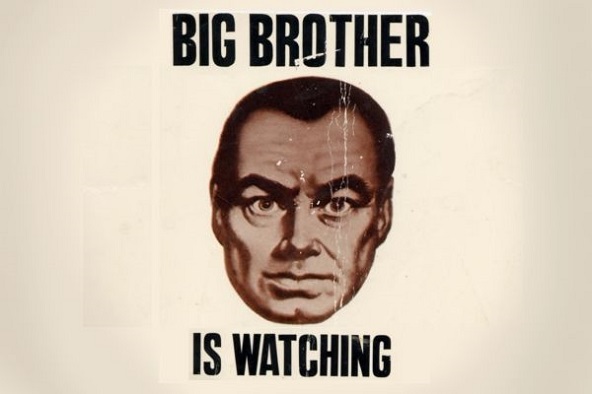
He seems like a nice enough guy.
The problem isn’t a new one. It’s been sixteen years since Scott McNealy, co-founder of Sun Microsystems, famously opined “You have zero privacy anyway. Get over it.”
It’s also not an obscure bit of news. The revelations by Edward Snowden about the extent of government surveillance made headlines, at least once they finally broke through the political barriers (there was some initial reluctance to run with the story, especially in the American media).
So the war on privacy is no secret. Nor is the identity of who is behind it: an alliance of big business and big government. Their goal is also openly acknowledged: profit and control. In the digital age information is an asset, identity a commodity.
The more troubling question is why this has been happening, given all of the warnings, and all of the reports of the immense personal costs involved. We may forget, for example, that in the United States a woman’s right to an abortion was located by the Supreme Court in the right to privacy in the landmark Roe v. Wade decision. And the disastrous results of exposing ourselves on Twitter and social media have been recently documented by many commentators, including Jon Ronson, who recently looked at cases where jobs have been lost and lives destroyed by momentary lapses of judgment leading to mass social shaming. At the same time, employers have taken workplace electronic surveillance to new extremes, giving rise to an entire industry described by Esther Kaplan in the most recent Harper’s, in an essay titled “The Spy Who Fired Me.” And it seems there’s no end to the invasiveness, as a report from CBC News (I at first thought it must have been satire from The Onion) indicates:
Workers at a new high-technology office building in central Stockholm are doing away with their old ID cards on lanyards, and can now open doors with the swipe of a hand — thanks to a microchip implanted in the body.
The radio-frequency identification? (RFID) chips are about 12 mm long and injected with a syringe.
“It’s an identification tool that can communicate with objects around you,” said Patrick Mesterton, CEO of the building, Epicenter Office.
“You can open doors using your chip. You can do secure printing from our printers with the chip, but you can also communicate with your mobile phone, by sending your business card to individuals that you meet,” he said.
Mesterton thinks some of the future uses for implanted chips will be any application that currently requires a pin code, a key or a card, such as payments.
“I think also for health-care reasons … you can sort of communicate with your doctor and you get can data on what you eat and what your physical status is,” Mesterton said.
“You have your own identification code and you’re sending that to something else which you have to grant access to. So there’s no one else that can sort of follow you on your ID, so to say. It’s you who decides who gets access to that ID,” he said.
The implant program is voluntary for the workers in the office complex.
“It felt pretty scary, but at the same time it felt very modern, very 2015,” said Lin Kowalska shortly after she had a microchip implanted in her hand.
Yes, it’s voluntary. Any resistance to Big Brother is made all the harder by the most sinister aspect of this erosion of the private sphere: we’ve done this to ourselves. A piece by Andrew Couts in Digital Trends explains the real problem:
Nearly 1 billion people around the world have signed up to divulge endless details about their lives on Facebook, which has in turn used our willingness and need to share ourselves into a multi-billion dollar business. The same goes for Google, Amazon, Twitter, Pinterest, Foursqure, and countless other companies that trade the ability to connect for our personal data.
Yet, despite the growth of these services, an opposing undercurrent still flows through a segment of the population. Anytime Congress or corporations make a grab for our data, “privacy advocates,” that dying breed, cry out “Injustice!” for the rest of us. They warn us of the dangers of allowing such information sharing. “Do you really want the corporations and the government reading your emails and text messages?” they ask in a grave, incredulous tone. Based on the relative quietness of our public outrage, the collective answer seems to be, “Sure, why not?”
McNealy said privacy was dead 12 years ago, and things have only gotten worse. This isn’t just troubling, it’s downright weird. Why do we freely handed over the details of our lives? Is privacy really that invaluable?
…
Regardless of which came first — Facebook’s desire for greater openness, or ours — it is clear that we have given the social network, and all other companies and governments that benefit from voluntary personal information sharing, exactly what they want without putting up a fight. The death of privacy as a common value is our own fault. We allowed it to die, and continue to expedite the smothering by making it appear as though anyone who wants to maintain pre-Facebook levels of privacy has something to hide. Privacy is no longer an ideal, it’s a dirty word.
In other words, we have come to love Big Brother. But why? In an essay I wrote for Canadian Notes & Queries several years ago I found myself asking the same question with regard to why we were so eager to toss so much of our cultural infrastructure onto a digital bonfire. The resulting “culture crash” was widely predicted (indeed its effect were already being felt), but the warnings were just as widely ignored.
The answer I came up with then was that it was part of the larger culture of narcissism. As we have become less politically active and involved we have retreated into a smaller circle of self, a process predicted by Alexis de Tocqueville and analysed by Robert Putnam (in Bowling Alone). As Colin Robinson, writing in the London Review of Books, put it a few years back: “In an increasingly self-centered society a premium is placed on being heard rather than listening, being seen rather than watching, and being read rather than reading.” When posting status updates on Facebook trumps looking at porn, and studies have shown this is now the case, then you know some kind of threshold has been passed.
It’s a downward spiral. As we’ve become less connected to others we’ve begun to fear them more. We crave security, though not from any of the people collecting all this information. Ten or perhaps twenty years ago anyone suggesting a national DNA registry would have been met with incredulity or even outrage. Now I know a lot of people who support the idea. In the face of such an abject and willing surrender of one’s personal identity to the powers-that-be (both corporate and governmental), what hope is there of mounting popular opposition to such invasive data collection? Humanity is being reduced, and it seems we’re good with that.
Just don’t kid yourself into thinking there’s any way back to the garden.
 Alex Good