No books for old men

From “Closing the Books” by Arthur Krystal, Harper’s Magazine (March 1996):

At fifteen or twenty, the books we read — or rather the minds behind them — are far more interesting than our own. But as we experience for ourselves the rites of passage that were previously only read about, and as we mature and reflect on what those experiences mean, novelists and poets begin to lose an important advantage — at some point we’ve all been down that road. And what may happen is this: we begin to find that most writers are less interesting than we think ourselves to be.

From Bookslut interview with David Markson (July 2005):

Where did I read that you no longer pay attention to more recent fiction?

It’s true. Any fiction, really. I hate to admit it, and I don’t really understand it, but it’s some years now — it just seems to have gone dead for me. Not just recent stuff, but even novels that I’ve deeply cared about — I try to reread and there’s none of the reaction I used to get, none of the aesthetic excitement or whatever one wants to call it, all a blank. With one exception of course — I can always reread Ulysses. In fact I went through it twice, consecutively, just a few years ago. But hell, that’s not like reading a novel, it’s more like reading the King James Bible. Or Shakespeare. You’re at it for the language. But even The Recognitions, which I think is categorically the best American novel of the twentieth century, just doesn’t do anything similar for me. It did, the first four times I read it — and four is not an exaggeration, by the way, in spite of its length — but the last time out it just went flat. It’s not the books, I’m sure, it’s me — I’m just not bringing the same receptiveness to them that I used to.

No other exceptions?

Oh, well, there are books by friends, that you do give yourself to. You approach them with a different psychological stance, somehow, wanting to enjoy. And doing so. As with the most recent Gil Sorrentino, for instance. Or Ann Beattie’s new collection of stories. But there’s simply no impulse toward anything else, and certainly not toward the latest generation. They all seem like they shouldn’t have driver’s licenses, even. You do become aware of the names, of course. Who are they, Lethem, Foer, Eggers? Are they mostly named Jonathan?

You know of them, but you’re not interested in reading them?

Seriously — to paraphrase Ezra Pound, there’s no record of a critic ever saying anything significant about a writer who came later than he did. You grow up getting interested in books, and the writers of your own generation or the generation or two before your own are the ones you pay most attention to. But listen, I’m scarcely as bad as some of the people I know. But good lord, some of the people I went to college or even graduate school with pretty much quit about nine days after they got their diplomas. And haven’t read a poet since Auden, or a novelist since Hemingway. There was one fat novel I did read. In 1996, in fact. I remember the date because my novel Reader’s Block had also just been published: Infinite Jest. Before I’d heard of David Foster Wallace, way back in 1990, he’d written a very perceptive long essay on Wittgenstein’s Mistress for a periodical. Even though I was never able to solve the structure of his novel, to understand why it ended where it did, I admired the hell out of it. Eight or nine years ago even, I wasn’t reading with the equipment I possessed when I was younger. But pat me on the head, I did manage to get through one novel that long in the past decade.

Cold cases

It's cold out there.

Yes, it’s going to be a cold one.

Added my notes on Fargo (1996) and A Simple Plan (1998) over at Alex on Film. They’re both good movies, but I can’t shake the feeling that the Coen brothers and Raimi see their characters as rubes.

The gift that keeps on giving

Added my notes on Ringu (1998) and The Ring (2002) over at Alex on Film. It’s interesting, maybe even a bit ironic, that a novel about an unpleasantly viral technology — a haunted videotape that has to be reproduced for its curse to be lifted — has gone on to spawn a franchise. The ring ever widens. As for which version I recommend, it depends on what you like (or don’t like). The original is a better film, but if you can’t stand subtitles or want to see Hollywood production values then Verbinski’s isn’t a bad alternative.

The fall and fall and fall of the House of Usher

"with the first glimpse of the building, a sense of insufferable gloom pervaded my spirit"

“with the first glimpse of the building, a sense of insufferable gloom pervaded my spirit”

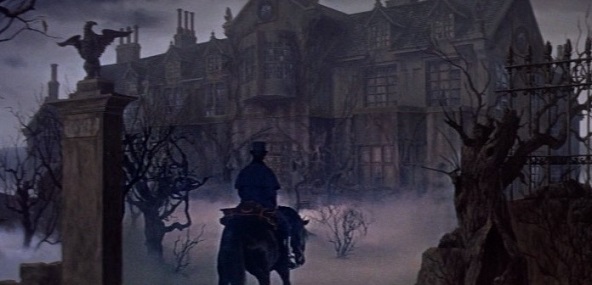
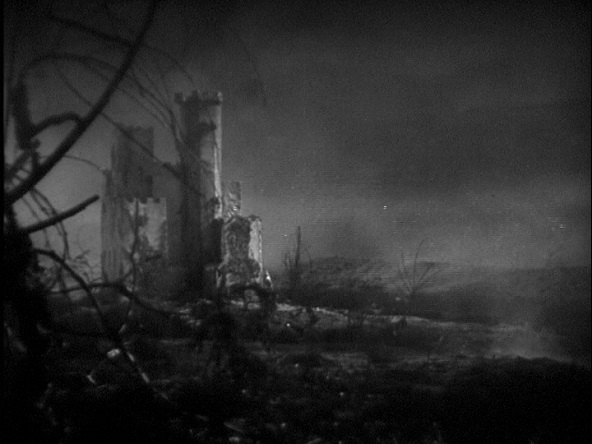
Added my notes on several film adaptations of Poe’s “The Fall of the House of Usher” over at Alex on Film. First up are two versions from 1928: the poetic adaptation by Jean Epstein, which grows a little more on me with every viewing, and the more self-consciously experimental interpretation by James Sibley Watson and Melville Webber. Then I jump ahead to 1960 and Roger Corman’s House of Usher, the first of his Poe adaptations starring Vincent Price, who seems to have been born for the material. I think Epstein’s film is the best, but all three are of interest.

chouseofusher2

Tricks and treats

Over at Alex on Film I’ve been dipping my toe into the Halloween franchise. John Carpenter’s 1978 original was one of the most successful, and influential, movies of all time. It was followed up by a raft of sequels, and then a franchise reset in 2007 directed by Rob Zombie, followed by a sequel in 2009. I think Carpenter’s film holds up pretty well, though the violence seems tame by today’s standards. Heaven knows restraint wasn’t an aesthetic decision, it’s just that Carpenter didn’t have any budget. Zombie’s reset starts off as a somewhat interesting new direction, and has some curious casting, but then settles into what is just a rehash. Halloween II is an incoherent mess.

Re-reading Shakespeare: A Midsummer Night’s Dream

(1) Why does Helena rat Hermia out? Her competition for Demetrius is leaving Athens to get married! Let her go! But no:

I will go tell him of fair Hermia’s flight:
Then to the wood will he, tomorrow night,
Pursue her; and for this intelligence
If I have thanks, it is a dear expense.
But herein mean I to enrich my pain,
To have his sight thither and back again.

The “dear expense” is an ironic compensation. She’s betraying her friend to him for nothing but the bit of grudging attention she will receive. But it puts her in an even worse position than before.

I guess she’s one of those women, happy to be Demetrius’s dog.

I am your spaniel; and, Demetrius,
The more you beat me, I will fawn on you.
Use me but as your spaniel, spurn me, strike me,
Neglect me, lose me; only give me leave,
Unworthy as I am, to follow you.
What worser place can I beg in your love —
And yet a place of high respect with me —
Than to be used as you use your dog?

Argh! They’ve always been with us.

(2) It’s often been remarked how the diminishment of one sense enhances another. Hermia expands on this when she follows the sound of Lysander’s voice in the dark:

Dark night, that from the eye his function takes,
The more quick of apprehension makes;
Wherein it doth impair the seeing sense,
It pays the hearing double recompense.

But is this true? Do we hear better at night? I think the science is still shaky, but it’s interesting that as folk wisdom the idea has such a long history.

(3) Near the end of Theseus’s “The lunatic, the lover, and the poet” speech he offers this up:

Such tricks hath strong imagination,
That if it would but apprehend some joy,
It comprehends some bringer of that joy

This strikes me as one of those profound human truths Shakespeare is always tossing out, but I wonder why it’s expressed in such clunky lines. They’re hard enough to read much less speak aloud. Was that intentional?

The men who knew too much

manwhoknewtoomuch5

Over at Alex on Film I’ve added my notes on Hitchcock’s The Man Who Knew Too Much, both the 1934 and 1956 versions. Critics have fun debating the relative merits of these two films. Personally, I don’t see any comparison. The original holds up well. The remake is a bad movie by any set of standards I can think of.

manwhoknewtoomuch22

All my childhood favourites

Along the way to a reading recently I wanted to stop in somewhere and pick up some Life Savers. I’ve been having cravings for Life Savers lately. In particular, “Wint-O-Green” Life Savers. Apparently this kind of Life Saver will spark in your mouth if you do something really stupid like bite down hard on them. I just like the taste.

I thought this would be easy. This only goes to show how old and out of touch I am. I first went to a Little Short Stop I passed on my way downtown. They had no Life Savers, only Certs and Menthos.

Then I tried a seedy variety store downtown. I mean, this place looked so run down I couldn’t believe it was open. They had a candy rack that had one — one! — roll of Life Savers. God knows how long it had been sitting there. Plus it was the multi-fruit flavours package. No deal.

I then went into the drug store in the mall. They had a big candy rack but no Life Savers were on display. The checkout lady then showed me the aisle where they had bags of Life Savers. Ridiculous! Apparently Life Savers don’t come in rolls any more. You buy them in these big bags, wherein each Life Saver is individually wrapped, like in those jars you see on the counter in front of the teller in your bank. If you still go to a bank. How environmental is that? There’s more packaging in one of those bags then there is candy.

By the way, did you know that a mere four Life Savers total 60 calories? That’s incredible! So a whole roll — and that’s not a lot of candy — has more calories than a Snickers bar! How is that possible? I mean, they’re really, really small.

Anyway, I didn’t want a bag of Life Savers, I wanted a roll. I did, however, get a bag of wine gums because they were half price and I was getting hungry for a sugar fix. Plus I really like wine gums.

My final stop was another variety store on the main drag. No Life Savers. I got into a conversation with the guy at the checkout. He told me that Life Savers aren’t popular any more. He said that people like something called Jolly Rogers candy better. At least I thought he said Jolly Rogers. Maybe he said Jolly Ranchers, or meant to say Jolly Ranchers. I’ve never heard of Jolly-anything candy before.

How depressing! Life Savers were a part of my childhood. Now they seem to be disappearing.

Then yesterday . . .

I was going to the bank just after lunch and stopped in to Dairy Queen for some dessert. Specifically, what I wanted was a dipped cone. A dipped caramel cone. This was another childhood favourite.

Did you know you can’t get a dipped caramel cone in Canada any more? The only flavour is chocolate! The cashier told me that lots of people ask for caramel but they only have that flavour in the U.S. now.

Whatever happened to the world I grew up in? The past doesn’t even want to sell me its stuff!

Hollywood recall

totalrecall1

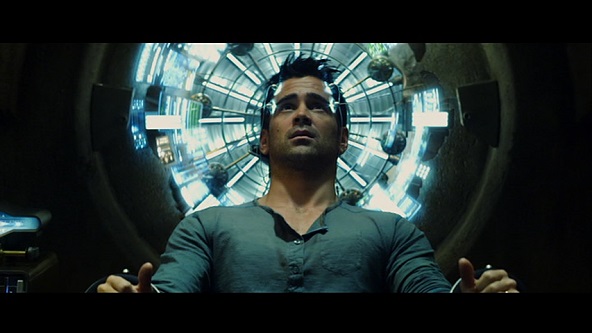
Hollywood is on a real remake binge. I think mainly because they’re out of original ideas, but also because big budgets demand projects with immediate brand recognition and because there’s a general sense out there that CGI makes everything better. Hence the remake of Total Recall (1990) in 2012 with Colin Farrell (notes just posted on Alex on Film). They shouldn’t have bothered, but I guess there was money in it. What really surprised me was finding out that the remake was partially filmed in my hometown of Guelph, Ontario. I didn’t even recognize it! Which made me wonder why they even went there . . .

totalrecall22

The Zombie Chronicles: Part Two

The eternal question.

They’ll figure it out.

Over at Alex on Film I’ve just completed the second round of my notes on zombie cinema, taking the genre from 1990 to the present day (with the ’90s being a rather thin decade, just before the twenty-first century take off). Purists can complain all they want about what constitutes a proper zombie film, but I allow for any virus with zombie-like symptoms, and so include films like 28 Days Later and The Crazies. I also include my notes on The Purge, because even though that isn’t a zombie or zombie-virus movie it shares the same structure.

For the most part, these movies aren’t very good. Indeed, going over the list I can only see a handful of films that I would recommend seeing: Rec, Pontypool, The Horde, and Shaun of the Dead. None of these are American productions. I’m not sure if that means anything.

I suggest that 2007 may have been the year of “peak zombie,” as what we’re getting now tend to be domesticated, overblown, or parodic zombie films. The genre feels played out to me, but will likely keep going for a while based on how well it seems to suit the zeitgeist. You can see Part One of the Zombie Chronicles here.

Night of the Living Dead (1990)
Return of the Living Dead III (1993)
28 Days Later (2002)
Dawn of the Dead (2004)
Shaun of the Dead (2004)
Land of the Dead (2005)
Return of the Living Dead: Necropolis (2005)
Return of the Living Dead: Rave to the Grave (2005)
Fido (2006)
Night of the Living Dead 3D (2006)
Diary of the Dead (2007)
I Am Legend (2007)
Rec (2007)
28 Weeks Later (2007)
I Sell the Dead (2008)
Quarantine (2008)
The Horde (2009)
Pontypool (2009)
Rec 2 (2009)
Survival of the Dead (2009)
Zombieland (2009)
The Crazies (2010)
Exit Humanity (2011)
Juan of the Dead (2011)
Cockneys vs Zombies (2012)
Rec 3 (2012)
The Purge (2013)
Warm Bodies (2013)
World War Z (2013)
Zombies (2014)
Scouts Guide to the Zombie Apocalypse (2015)
Dawn of the Deaf (2016)
The Girl with All the Gifts (2016)
Pride and Prejudice and Zombies (2016)
The Night Eats the World (2018)
The Dead Don’t Die (2019)
Little Monsters (2019)
Zombieland: Double Tap (2019)
28 Years Later (2025)