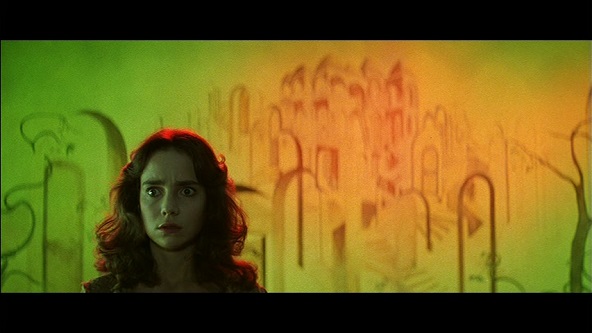
Over at Alex on Film I’ve been watching Suspiria then (1977) and now (2018). Dario Argento’s original is a classic and a movie I still enjoy. Luca Guadagnino’s version is terrible. I can appreciate that Guadagnino wanted to do something different, but I don’t think anything he did worked. What a shame. I had been really looking forward to it.
Reading event: Eden Mills Writers’ Festival
Eden Mills Writers’ Festival
Eden Mills, September 8 2019:
The Eden Mills Writers’ Festival is an annual event featuring dozens of readings taking place at several different venues located around the picturesque village of Eden Mills. I’ve been several times before but hadn’t gone in the last couple of years and was interested in seeing how it was doing.
The weather was beautiful, as it always seems to be. I hate to imagine all the booksellers on Publishers’ Way having to run for cover if the skies ever opened up.
Everything was very well run. All the readings were starting on time and the shuttle bus service was excellent. I don’t know why so many people drive to Eden Mills. The buses are more convenient.
I noticed a couple of somewhat minor changes. In the first place, they’re trying to mix the readings up a bit by adding a brief discussion period among the panel of authors at each venue. I think this is a good idea. None of the readers I saw this year was bad, with Anakana Schofield probably being the best, but I think most people would like it more if they just got to listen to the authors in conversation.
The other big change, which is something that has been ongoing, is that there are now no major publishers attending. Publishers’ Way just consists of individual authors and various other organizations. Some of these latter groups I could understand, like the public library. I’m not sure what others, like the Council of Canadians or Amnesty International, were doing. I also noticed that Amnesty International was handing out the same literature they were three years ago.
I’m disappointed by what’s happened to Publishers’ Way. I like seeing the independents and individual authors handselling their books, but this is a book fair and it would be nice to see more publishers working the big crowd, most of whom would love to buy their books. My advice? Offer some discounts for cash-only deals. None of this full list price stuff, with tax. Just call it $10 a book, or two books for $15. Don’t make this difficult!
This was, however, my only complaint. Eden Mills is a great event, even though a full afternoon of it tires me out. At one point I ended up sitting in one of the handicapped chairs because I didn’t see the wheelchair sticker on the back. Oh well. Sorry if that inconvenienced anyone, but I’m getting old!
Our new literary overlords
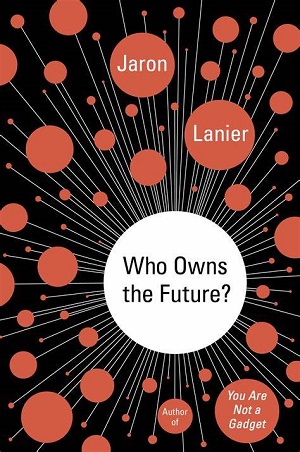
From Who Owns the Future? (2013) by Jaron Lanier:
What will books be like once Silicon Valley has had its way with them?
…
A lot of people will pretend to be commercially successful authors, and will put money into enhancing the illusion. Most of these will rely on family support or inheritance. Gradually an intellectual plutocracy will emerge.
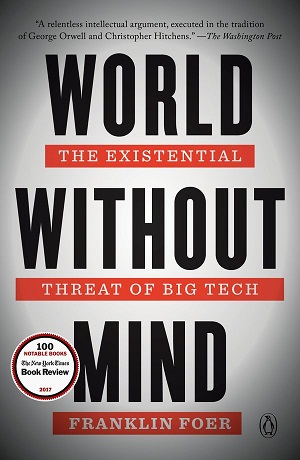
From World Without Mind (2017) by Franklin Foer:
Our great writers cared about money because they needed it. They needed it to feed their families, and so that they could devote themselves to fulfilling their creative selves. Without pay, they would have been consigned to day jobs, unable to fully apply themselves to their prose. Apologists for Amazon like to sneer at the writerly caste, a hermetic club that dismisses outsiders who aren’t part of the gang. Yet history shows the alternative to professionalized writing. A few geniuses from the lower rungs of the class structure would manage to produce lasting art, despite the distant odds. But writing would largely survive as a luxury for those who could afford it, a hobby for the wealthy – for the trust fund babies, the men of leisure, those with resources to follow their economically irrational passions.
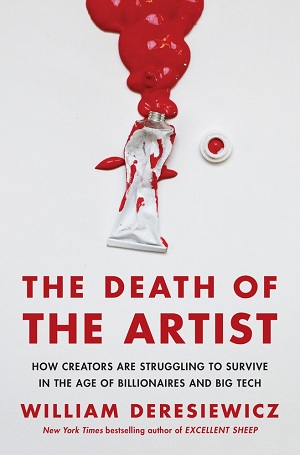
From The Death of the Artist (2020) by William Deresiewicz:
Being an artist has always been hard, but there is hard and hard. How hard matters. How hard affects how much you get to do your art, as opposed to grinding at your day job, and therefore how good you become, as well as how much you are able to make. How hard affects who gets to do it in the first place. The less you can earn from your art, the more you must rely on other sources of support, like Mommy and Daddy. The less money there is in the arts overall, the more they become a rich kid’s game. And wealth correlates with race and gender. If you care about diversity, you need to care about economics. The idea that “people will do it anyway” — that if you’re a real artist you’ll make art no matter what — can be the product only of naïveté or ignorance or privilege.
Insidiousness
Over at Alex on Film I’ve been watching the Insidious film franchise. How did this turn into a franchise? Because it was so profitable. Aside from their return on investment none of these movies is very special. Here’s the list:
Insidious (2010)
Insidious: Chapter 2 (2013)
Insidious: Chapter 3 (2015)
Insidious: The Last Key (2018)
Insidious: The Red Door (2023)
In quotation
My review of Elise Levine’s This Wicked Tongue is up at the Literary Review of Canada site. I spend a lot of time talking about her choice not to use quotation marks. That’s something you see writers doing more these days. Sometimes it works. I think Levine’s approach is effective in that it fits with what she’s doing more generally.
Why can’t we have both?
From The End of the Twentieth Century and the End of the Modern Age (1993) by John Lukacs:
Near the end of the twentieth century — indeed, near the end of the so-called Modern Age — two dangerous circumstances threaten the world. One is the institutionalized pressure for material and economic “growth” — contrary to stability and threatening nature itself. The other is the existence of the populist inclinations of nationalism — contrary to a greater and better understanding among peoples, often debouching into barbarism. One is the thrust for increasing wealth, the other, for tribal power. One issues from the presumption that the principal human motive is greed; the other, that it is power. To think that the former is morally superior to the latter is at least questionable; but to think that the progress of history amounts to the triumph of money over force is stupid beyond belief.
Gamer grouch
The first Fortnite World Cup has been held, with the winner, a 16-year-old from Pottsgrove, Pennsylvania, taking home the $3 million top prize.
The response to this story has been predicably polarized. Some think it’s great that such a popular form of entertainment is finally getting the recognition it deserves. There were 40 million contestants vying to get into the Fortnite World Cup, a field that must have been strenuously winnowed down to the 100 who made the final cut. Video games are a bigger business than Hollywood, and have been for years. The people who play them can make millions of dollars through their own streaming channels and endorsement deals. Resistance to these developments is clearly futile. And anyway, as Steven Johnson argued in Everything Bad Is Good for You, video games are actually a healthy past-time, involving complex problem-solving skills, among other things.
Critics, and I include myself in this category, have their doubts. I get that video games are popular, and big business. And I have nothing against their professionalization. Elite gamers may as well make money out of this. I also understand the draw for people who just like to watch. Maybe they’re picking up tips to improve their own play, and maybe they just find the players entertaining.
But I don’t think video games are good for you. They are extremely addictive, and very consciously designed to be so. Encouraging any sort of addictive behaviour is bad. I also don’t think people learn anything from video games or pick up any worthwhile skills by playing them. In addition, I think they’re harmful to one’s health. If “sitting is the new smoking” I don’t think the example of teenagers who are spending 8-12 hours a day in front of a screen, as some of the contestants to the Fortnite World Cup said they had to while “in training,” is a good one. Wouldn’t young people be better off swimming or playing soccer? That’s good for the body, and team sports can build social skills as well. It seems to me that sports are also less directly commercial than esports. Sure there are professional sports like hockey and basketball, and kids dream of making it into the big leagues, but these video game tournaments strike me as just being advertisements for a product. Soccer is a sport first and only at a higher level big business. Video games are a business, period.
Is the Fortnite World Cup the end of civilization? No, but I don’t see it as a step in any good direction. That said, I’m comfortable now being on the wrong side of history.
Liam Neeson, action star
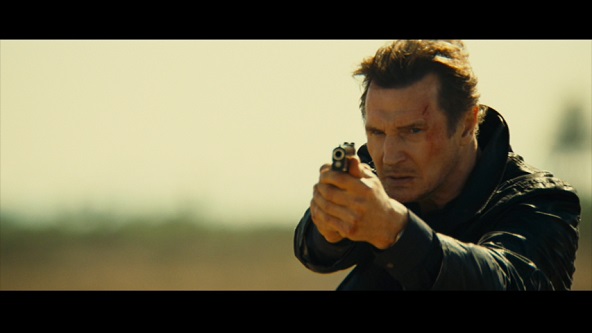
Over at Alex on Film I’ve been watching some Liam Neeson movies. I think he surprised everyone in rebranding himself as an action star with Taken, soon to be followed up by a bunch of other genre flicks. And then he surprised everyone again by blowing himself up in a press interview last year. I’ve heard he doesn’t want to do any more action movies, so maybe that was his way of signing off. It’s too bad, because even though few of these movies were any good, I think he did well in them.
Taken (2008)
The Grey (2011)
Taken 2 (2012)
Taken 3 (2014)
Non-Stop (2014)
The Commuter (2018)
Cold Pursuit (2019)
Risin’ up
Over at Alex on Film I’ve added my notes on High-Rise (2015). This was a movie I really enjoyed. It has a unique feel to it that captures the weirdness of J. G. Ballard’s novel. Much more successful in this regard than Cronenberg’s Crash (1996).
Haters gonna hate
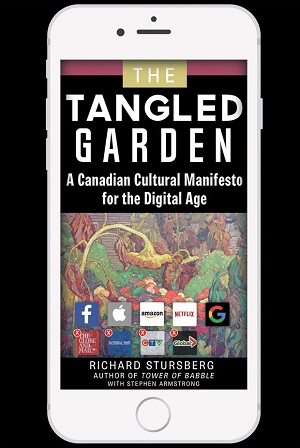
From The Tangled Garden: A Canadian Cultural Manifesto for the Digital Age (2019) by Richard Stursberg with Stephen Armstrong:
One day during all this unpleasantness, I sat down to have lunch with Flora MacDonald and seek her counsel.
“Why do your people hate the CBC so much?” I asked.
“My people?” she replied.
“Yes. Your people, your party, the Conservative Party.”
“They are not my people. They are a different party from the one I was in.”
“But you must have some insight into why they hate the CBC so much.”
“Oh, Richard,” she laughed. “Don’t think that you’re special. They hate everything.”
“Everything?”
“Yes, everything. That’s what they do. They are haters.”