Don’t know much geography

Whose flag?

It was an oft-repeated criticism of American involvement in Vietnam that the U.S. was waging a war in a country that few of its citizens would be able to find on a map. That was a zinger, then and now, though, in the American public’s defence, at the time Vietnam was only twenty years old (it had most recently been French Indochina).

I was thinking of this recently when preparing my notes on the movie They’re Watching, which was set in Moldova. This threw me. Before finding out this little tidbit of information, if you’d asked me if there was a country of Moldova I would have said there wasn’t. I associated the name with a province in the former Austro-Hungarian Empire and thought that the filmmakers were invoking it as an imaginary place like Ruritania or the Duchy of Grand Fenwick. But actually Moldova is a sovereign state, having been one of the Soviet Socialist Republics and gaining independence when the Soviet Union collapsed.

This was humbling. I thought I knew enough of the basics of world geography that the existence of a European country I didn’t know of came as quite a surprise. But as I went flipping through a pocket atlas recently I found other examples of my ignorance of how the world is divided up. Just as surprising to me as the existence of Moldova was the discovery that there’s a part of Russia that isn’t connected to any other part of Russia (what’s called an exclave). This is the Kaliningrad Oblast, the old Prussian Königsberg. Who knew? Well, probably a lot of people. But I didn’t.

Political boundaries are often in flux, which justifies the printing of new atlases. I found several such boundary issues in my browsing. Suriname, for example, claims big chunks of both Guyana and French Guiana (the countries to its west and east respectively). I have no idea how valid these claims are, but on a map they look significant. Meanwhile, Western Sahara has been administered since 1979 by Morocco, but is still considered a (huge) disputed territory. I knew nothing of this.

The upshot is that I don’t have the right to make fun of anyone else’s ignorance of geography. There are plenty of places I not only couldn’t find on a map but that I’ve never even heard of. I guess I’m not a man of the world.
Mistakes? I’ve made a few

It’s a testament to something that every time I happen to re-read a previous post I’ve made at one of my sites I find something that needs to be corrected. Usually this is just a typo or some infelicity. But in the last couple of weeks I came across a pair of glaring factual errors that were absolute howlers. One was in a review of a book and the other of a movie.

The nice thing about running a blog is that you can immediately correct your mistakes. And once they’re fixed you can pretend as though they were never made. You can’t do that with print. Still, I’m depressed to find so many goofs. I actually do try to make sure that a post is clear of errors before I publish it online. But still the fact is I don’t think I’ve ever posted anything, in over twenty years, that didn’t have at least one mistake in it. As I’ve said, I find them all the time. They turn up like stones in a field.

Perhaps it has something to do with writing for the Internet. Or perhaps it’s just my own carelessness. As for the nature of my mistakes, my opinions, I find, change less and less. But my expression of those opinions is always in flux. This makes a blog a perpetual work in progress. Thanks for bearing with me!

Raptor rapture

Last night’s broadcast of the National, the CBC’s flagship national newsprogram, was devoted entirely to the Toronto Raptors winning the NBA basketball program.

The whole damn program.

There are so many things wrong with this. Why devote so much time to a sports story? It’s “news” only in the sense of being an attention-grabbing headline. And the thing is, the CBC’s sports coverage isn’t that good in the first place (and it wasn’t at all good in this instance), so who would be coming to the National to watch it?

I wish I could support the CBC more. I get the sense that they’re trying. I like the hosts of the National, and think they held on to Peter Mansbridge far too long. But they just seem to be flailing now. And they really have to do something about the number of local human interest stories that they’re regularly running on this program. These don’t belong on a national news broadcast.

I know these are tough times in the news business, but I don’t see how any of this is helping. Five minutes on the Raptors would have been plenty, even on a slow news day. It looks like we’re into a death spiral now.

Raising hell

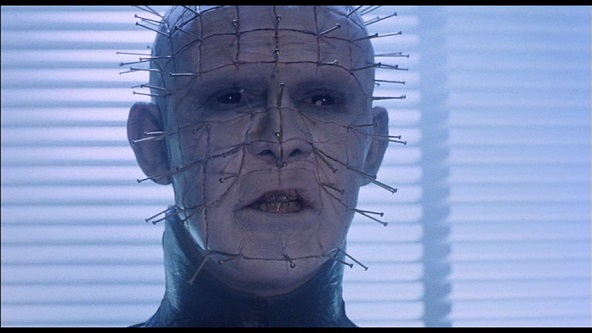
You know what he’s going to do, right? Tear your soul apart!

Over at Alex on Film I’ve been watching the Hellraiser movies, minus the last couple. You can say I wanted to cut my losses.

It’s disappointing how the series never went anywhere. I loved the first Hellraiser, and was actually at the world premiere of the second. But later entries were just cash grabs for the limited cash to be grabbed from direct-to-video release, often injecting Pinhead into scripts pulled off the shelf that had no connection to the Hellraiser mythos. Here’s the line-up:

Hellraiser (1987)
Hellbound: Hellraiser II (1988)
Hellraiser III: Hell on Earth (1992)
Hellraiser: Bloodline (1996)
Hellraiser: Inferno (2000)
Hellraiser: Hellseeker (2002)
Hellraiser: Deader (2005)
Hellraiser: Hellworld (2005)

Comic trilogy

Over at Alex on Film I’ve posted my thoughts on Glass, which completes the M. Night Shyamalan comic-book trilogy begun with Unbreakable and Split. These movies make a welcome antidote to the usual run of Marvel movies, but I don’t think Shyamalan had enough to say to cover three films. Glass in particular seems to just be putting in time, before coming to no very great conclusion.

Revisitings

Call it the Trump Effect. Or another Trump Effect. Over at Goodreports I’ve added a review of Gavin Esler’s The United States of Anger, which came out in 1997. In fact, I remember Esler’s book as being one of the very first to cross my desk when I started reviewing on a regular basis. I didn’t review it at the time, but some of its arguments stuck in my head. When I came across it again recently, cleaning up some books in the basement, I started flipping through it and, given all that’s happened in the two decades since, I thought it was worth re-examining.

As I point out in my review, this is not the way it usually works with timely political books. They’re almost always forgotten a few months after publication. But with the Trump phenomenon I think it’s interesting to go back and looks at these studies of the world BT (Before Trump) and see what, in retrospect, they might tell us about what was coming. Much the same thinking was behind my revisiting of my review of John Filion’s book on Doug Ford, The Only Average Guy. At least in terms of politics and the media, Trump really changed the game. But should we have seen him coming? Did we?

Reading event: Seth

Seth, Clyde Fans

BookShelf Cafe eBar May 15, 2019:

Technically speaking this wasn’t a “reading” since Seth writes graphic novels and I’ve never heard of, nor can I quite imagine, what a public reading of a comic would be.

It was, however, a great session. It began with Seth giving some of his personal thoughts about how he imagines the afterlife and how those thoughts have found expression in various recurring motifs in his art. This was followed by a short film, a conversation with Eric Allen Montogomery, and some Q&A.

There was a good crowd, filling the eBar. I was wondering if it could be described as hipsterish, but then figured it skewed a bit too old for that. Later, however, Seth would describe himself as being like an old hipster, so I figured I may have been right. Not that there’s anything wrong with that.

Even if you weren’t a student of such things (and I’m not), or a big fan of Seth (and I am) this was the kind of talk you could easily have taken a couple of pages of notes on. In addition to offering revealing insights specific to his own life and work Seth talked, among other things, about the growing critical and public acceptance of graphic novels in the twenty-first century and the place of his own generation of artists in that development, how comics mean (that is, how they’re created and read), and the making or presentation of an identify in or through fictional characters.

These are all subjects I’m sure Seth has been over many times, but the evening didn’t seem scripted at all. It was informative throughout, but informal and relaxed. As well as being enjoyable I also felt like I learned a lot and it made me look forward to Clyde Fans all the more.

Death wishes

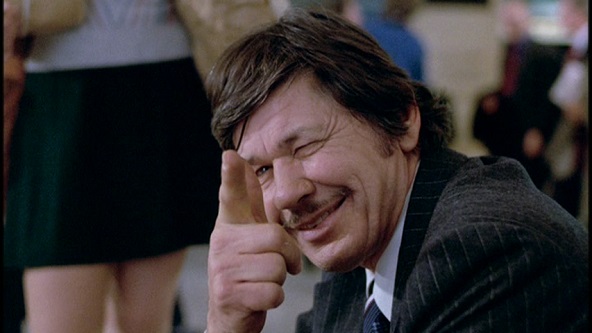
Back at ya, Chuck.

Over at Alex on Film I’ve been watching some of the Death Wish movies. It’s almost a complete list. I guess the first film is of some historical/sociological interest, and if you’re interested in the whole raperevenge genre they might even be considered essential viewing, but I didn’t find much of value in any of them.

Death Wish (1974)
Death Wish II (1982)
Death Wish 3 (1985)
Death Wish 4: The Crackdown (1987)
Death Wish (2018)

Yorgos Lanthimos

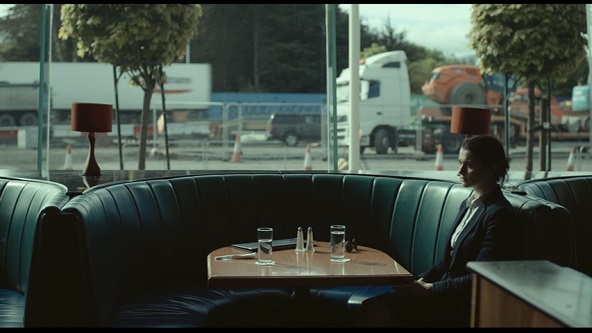
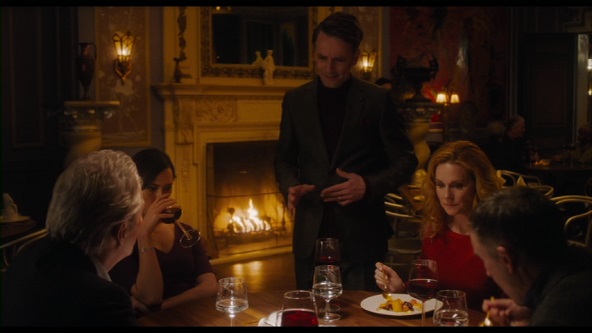
Over at Alex on Film I’ve been watching the films of Yorgos Lanthimos. Even though they don’t share many similarities, I was reminded of Denis Villeneuve in at least one respect. Both directors have, in my estimation, made one really good film (Villeneuve’s Enemy and Lanthimos’s The Lobster). Their other films fall more into the “interesting” category. Anyway, here’s the Lanthimos line-up:

Dogtooth (2009)
Alps (2011)
The Lobster (2015)
The Killing of a Sacred Deer (2017)
The Favourite (2018)
Kinds of Kindness (2024)