TCF: Guilty Admissions

Guilty Admissions: The Bribes, Favors, and Phonies behind the College Cheating Scandal
By Nicole LaPorte

The crime:

Throughout the 2010s a college application counsellor named Rick Singer got some of his wealthiest clients to pay him to arrange their children’s acceptance into prestigious American universities. He did this primarily through two different “side-door” processes: (1) the creation of fake athletic profiles that were sent to coaches who were in on the fix, or (2) having a professional test-taker complete the standardized entrance exams, boosting the applicant’s score into the highest percentiles. The FBI investigation into the conspiracy, codenamed Operation Varsity Blues, resulted in over 50 charges being laid, with the mastermind Singer sentenced to three-and-a-half years in prison plus forfeiture of over $10 million.
The book:

This was actually the second major book about the Varsity Blues scandal, the first being Unacceptable: Privilege, Deceit and the Making of the College Admissions Scandal by Melissa Korn and Jennifer Levitz, which Nicole LaPorte cites several times as a source. Both books were “timely” though, being published quickly to take advantage of public interest in the case. As it is, things break off here with the March 12 2019 announcement by the FBI of the results of the investigation and then, in an “Author’s Note,” dashing through some of the highlights from the pleas and sentencings.

When the story first broke I remember being underwhelmed by it. Nothing about it struck me as surprising, or particularly heinous. Just a bunch of very rich people who thought – not unreasonably – that they could buy anything. When I went to university there were various incidents of cheating that I could never get that exercised about. I was there to learn something; what other people were up to, what shortcuts they might have been taking just so they could get their piece of paper, didn’t interest me. It didn’t bother me at all if they weren’t doing the work. If they were there paying tuition then it was all good as far as I was concerned.

The admissions scandal was something a bit different in that less qualified students were getting into elite institutions and in doing so taking spots away from stronger applicants who were playing by the rules. But even so, it’s understood that there’s no level playing field when it comes to going to the top colleges and universities. There are legacy admissions, or the “front-door” expedient of just making a huge donation. There are the “special accommodations” made for testing students with “anxiety,” something which overwhelmingly afflicts the wealthy. And then there is the vast gray area full of ways of playing the system that aren’t illegal or even frowned upon that tilt the odds in your favour. Who can afford independent counselling that can cost tens of thousands of dollars in the first place? And what do such counselors do? I laughed out loud, for example, at this little gem: “Independent counselors don’t write a student’s college essay, but rounds of edits and proofreading are provided, giving the student a distinct edge over those who are left to their own devices.” I’ve worked as an editor and I can assure you that “rounds of edits,” especially on a short piece written by someone who can’t write, amounts to, you know, a total rewrite. And given how much they’re being paid, and what’s at stake (including their own reputations), I’d imagine most of these counselors are doing more than that.

I could only wonder at how obsessed the wealthy families LaPorte describes are with status. Despite the fact that going to a top university isn’t going to affect any of these children’s lives, their parents were “just as desperate about college admissions as families without their wealth and connections.” Why?

Because of their high-profile names and the company they kept – the jobs they held, the philanthropy circles they ran in, the country clubs they were members of – having their child anointed by a top-tier school wasn’t a preferable option; it was considered essential in order to keep the family name intact, and the aura of success and perfection. It was status maintenance of the highest order. In many cases, parents simply felt it was their right, something  they were entitled to, regardless of what means were required to reach that end.

Ah, “entitlement.” Along with its close companion “privilege” it shares a special place in today’s language of opprobrium. But behind all of its perversities and delusions there’s a reality that LaPorte is alert to. That reality is fear.

The anxiety isn’t limited to wealthy parents living in Bel-Air or Beverly Hills. It’s an endemic that’s become a universal among almost all the parents who plan to send their child off to a four-year institution in the hopes of launching them successfully into the world. Indeed, for middle-class families, who don’t have a cushion of wealth and resources to fall back on, one of the most significant rites of passage for an American teen has become fraught with fear. The fear stems from the extreme wealth divide in our country, and the belief that simply getting a college degree – any college degree – no longer implies upward mobility the way it once did. Given the current state of affairs in the United States – the endless headlines about burdensome student debt, the high cost of living, and the growing unemployment rate for college graduates – the desire for an impressive college degree is not just a lofty wish; it’s a do-or-die imperative.

This is fine as far as it goes, but that fear grounded in an awareness of “the current state of affairs in the United States” and its “extreme wealth divide” has a deeper resonance. It’s not just the fear of not getting in or being left behind but also the fear of falling. White people, a former Stanford dean opines, are “terrified, because they’re losing a privilege that they never realized was a privilege” (a pretty good definition of entitlement). And those lucky enough to have found themselves living in Bel-Air and Beverly Hills are only sure of one thing: they never want to lose any part of the lifestyle to which they’ve become accustomed. To be thus is nothing, but to be safely thus . . .

Status maintenance is then a priority for those suffering from status anxiety, and the parents profiled here had the worst possible case of that. After all, by their actions they as much as admit that they don’t believe in the notion of America as a meritocracy. Indeed, they see such notions as being for suckers. How then to stay on top? By rigging the game.

Guilty Admissions is an eye-opening tour of the epicenter of the affluenza pandemic. And it’s an insider’s account too, as LaPorte is resident in the same neighbourhood, with her two kids attending one of the exclusive schools she describes. Being a part of this world, she is able to provide a lot of insight into a world that I didn’t even know existed. Take, for example, the “budding industry of kindergarten-prep tutors and companies,” with one the most popular services offering “one-on-one tutoring, for $350 an hour, to help children master the skills they will need for kindergarten.” This is a thing.

LaPorte has sympathy for the parents (as noted, she is one herself), and her account of the environment of “competitive parenting” that Singer exploited is valuable. But at one point in the story this fellow-feeling does lead to an unintentionally hilarious, and revealing, use of language:

At times, the parents’ spiritual wrestling was painfully palpable, as when Caplan said on a call to Singer. “It’s just, to be honest, I’m not worried about the moral issue here. I’m worried about the, if [his daughter’s] caught doing that, you know, she’s finished.”

Did you get that? The parent isn’t worried about moral issues but only at how his daughter might lose status if she’s caught. This is what counts as “painfully palpable” “spiritual wrestling” in this world!

If status anxiety among the uber-wealthy is one part, the demand part, of the criminal equation, the supply side was provided by Rick Singer. It’s become easy to track everything in the Age of Trump back to the example of the president during the time when Singer’s enterprise was in its fullest swing, but given that the shoe fits so well I have no problem with putting it on again. Singer was an inveterate and indefatigable hustler and con man who took personal-branding and “truthful hyperbole” (Trump’s preferred euphemism for lying) to new levels. And if he was lying all the time then he just assumed that’s what everyone else was doing, or would want to be doing, too. Anything that would help grow not the individual but the brand. “If you’re not cheating, you’re not winning,” was the age’s mantra. And if you weren’t winning you were a loser. The rich would get richer and everyone else would go extinct, which is an observation not limited to individuals. Many colleges and universities would find themselves going under at this time, while the “elite” schools with brand recognition and huge endowments would keep getting richer.

But even the richest most well-endowed universities were grubbing for cash. Like everyone else, they could never get enough. “The culture [at USC] was one of enrichment at all costs, and multiple scandals would come to light down the road as a result.” But wasn’t all the scandal just the price of winning? Everything about the Varsity Blues case comes back to this point: was what Singer was doing really that out of the ordinary? Was it even that bad? The great thing about Guilty Admissions is that it demands we answer these questions for ourselves, forcing us to think hard about how the modern class structure affects all of us today.

Noted in passing:

Those twin demons of entitlement and privilege can reveal themselves in truly shocking ways. All the more shocking for being expressed so matter-of-factly. I already mentioned the demented sense of grievance and of being somehow cheated that pervades all levels of society today, and that the wealthy families who sought to rig the game by Singer’s side-door methods were representative of this. What’s amazing is the way they justified what they were doing by seeing the game as being rigged against them. Why, they were just fighting back against an unjust system! When Singer explained how he proposed to raise the SAT score of one client’s daughter he referred to it as a way to “level the playing field.” Later, that same client would write a letter to the judge sentencing her that she had only wanted to give her daughter “a fair shot.” It tells you something when even the most fortunate among us, and we’re talking about the 0.01% here, feel so hard done by.

Takeaways:

It’s not being cynical to feel that life isn’t fair and that we don’t live in a meritocracy. The game really is rigged. There was a time, however, when the winners weren’t quite so arrogant, deluded, and willfully destructive of the social fabric. That was a long time ago though, and I don’t see how there’s any way we’re getting back to health.

True Crime Files

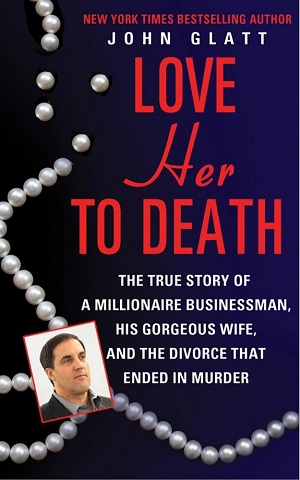
TCF: Love Her to Death

Love Her to Death
By John Glatt

The crime:

Darren Mack was the wealthy owner of a Reno, Nevada pawn shop who stabbed his second wife, Charla, to death. They had been going through an acrimonious divorce, the terms of which were just being finalized. Angry at the settlement, Mack also shot the judge, Chuck Weller, who had presided over it. Weller was injured but recovered. Mack then fled to Mexico, but soon gave himself up. At trial, after much legal dancing around, he pled guilty and was sentenced to life.

The book:

This is a St. Martin’s Crime title, and I don’t want to knock them because I find them to be in general both highly readable and trustworthy, but they can also be pulpy and scattershot. We could start with the title here, which is just a catchy headline that doesn’t capture anything of the nature of the relationship between Darren and Charla. Darren was a full-blown narcissist who only loved himself, and he killed Charla out of rage at having to pay her a million-dollar divorce settlement. And even cornier is the broken string of pearls on the cover. What does that have to do with anything? Chandra wasn’t wearing pearls when she was killed; it was 9 in the morning and she was dropping her daughter off. And of course there’s a bubble promising “8 pages of chilling photos.” None of the photos are chilling, and they are mostly just tiny screen grabs from television coverage of the trial, poorly reproduced.

There are also quite a few typos, some of which led to real confusion. Like saying “employers” where “employees” is clearly meant, or an incidental victim describing herself as being “in the wrong place at the right time.” I suppose that might have been what she really said, but if so then she was confused.

That said, the writing is lively and the chapters short, which helps when dealing with what was a pretty standard, however tragic, case of domestic violence that only came to national attention because of Mack’s attempt at killing the judge and his subsequent run into Mexico. But it was never much of an “international manhunt,” and the media attention at Mack’s trial (Dateline NBC, 48 Hours, etc.) was wasted on what was an open-and-shut case that ended up with a plea deal. Nevertheless, the trial takes over the latter part of Love Her to Death, filling over 100 pages at the end of a 400-page book. There’s too much detail and quoting of transcripts here, especially with regard to arcane procedural matters that were of no consequence. But this is a trap many true crime authors have trouble avoiding.

A final point I’ll mention, and one that is of more substance, has to do with the difficulty I had in figuring out the actual timeline of the murder, and how it fit with the evidence. Breaking the fatal events down: Mack killed Charla in his garage, then shut the garage door, went into his house, and showered and changed his clothes, as it had been a very bloody business. He also dressed a wound he’d received on his hand. He then went back out and drove Charla’s car into the garage (she’d left it parked on the street in front of the house), while somehow leaving the inside of her car splattered in blood, both Charla’s and his own. Where did this blood come from? Also, there was a man in the house taking care of Mack’s daughter who left in a hurry when he saw Mack first come back inside after he’d killed Charla. But this same man says that when he left the house Charla’s car was already in the garage and the garage door closed. I’m sure somehow this all makes sense but I couldn’t get it straight.

I’ve said this was in many ways an unexceptional crime story but for Mack’s sniping at the judge. But if you wanted to find some deeper meaning in it I’d focus on his adopting the banner of the men’s rights movement. There are some legitimate concerns that this addresses, but Mack made a very poor poster boy for the cause, being the sort of whiny victim that fit into the predominant grievance culture of the time. Just listen to him inveighing against the injustice of the court system on a Web TV show (what we’d call a podcast now) just before killing Charla:

“For me, this is probably what people felt in Nazi Germany, where things started to slide very subtly, and then all of a sudden you find yourself being whisked away to concentration camps. That is the family court system, [and] my experience of it under Judge Weller reminds me much more about what I studied in school about Nazi Germany.”

In the years to come we’d hear a lot more of such nonsense, as every time things didn’t go our way we would blame fascists or Nazis, with every exercise of the rule of law bringing us one step closer to the gulag. The shamelessness of this posturing would be underlined by Mack in the three-hour (!) personal statement he made at his sentencing hearing. “The thing a lot of people don’t recognize,” he would tell the court, is that “I lost a wife too.”

The lack of self-awareness here is next level. His original defence was going to be something along the lines of temporary insanity, which was such a longshot even his attorneys had little confidence in it. The only diagnosis I came away with was that he was a narcissistic sex addict, but that doesn’t let you beat a murder charge. The only thing it leads you to is more of the same sort of behaviour that got Mack into all his troubles in the first place: blaming everyone else for mistakes that he made. We see this thinking everywhere today, and even the legal system can’t always effect a cure.

Noted in passing:

Mack was a narcissist of truly impressive proportions. I mean, he had both a personal assistant and a life coach, though I can’t see where any of them had much to do. He was also an amateur bodybuilder and at one point came in fifth place in a Mr. Reno competition. I wouldn’t have thought this too impressive a finish, but I guess it was Mack’s Mr. Olympia because he celebrated by commissioning “a life-size photo portrait of himself flexing his muscles, which he placed on the wall directly above the urinal of his master bedroom.”

I know what you’re thinking. It’s weird. I mean, a life-size photo? Mack was 5’11”. The photo must have taken up the whole wall. When the police came to search his house they found it notable.

“It was right above his toilet,” Detective Chalmers said, “so literally as he’s peeing in the morning he can look at himself in his Speedos, flexing. That was one of the first indications to me that this person is obviously very egotistical.”

What took me aback almost as much though was that he had a urinal in his master bedroom. I’ve only seen urinals, which are a fixture for standing urination only, in public restrooms. I’ve never seen or heard of one in a private home. But then the detective later calls it a toilet so maybe this was just another case of sloppy editing and Glatt meant to say toilet the first time. The Mr. Reno competition is also later referred to as Mr. Nevada so it’s hard to tell which is right.

In any event, it’s very strange but fits with my own observation that the homes of rich people are almost always decorated in tacky and tasteless ways. And on the subject of the homes of rich people, the McMansion Darren and Charla lived in together was valued at around $1.5 million and had monthly mortgage payments of $8,300! Whew!

Takeaways:

Mack did do some rudimentary planning, even making up a rather damning “to do” list before killing Charla that euphemised her murder as “END PROBLEM.” In a moment of curious detachment he even initialed a change made to the list, as though altering a legal document. He also staked out the judge’s office and pre-selected the best place to set up his sniper station, while buying a plane ticket to Mexico in advance (he’d end up driving) and filling a suitcase with $40,000 in cash to effect his escape.

But after that his planning hit a wall. A pro would have known how to disappear. Mack just ran to one of his favourite swinger resorts and tried to get laid. And how long was that $40,000 going to last anyway? He didn’t even know how to speak Spanish. At least the gormless teens in Let’s Kill Mom tried to escape to Canada.

You often hear it said of such people that they “wanted to get caught.” I don’t think that’s the case. It’s just that not everyone capable of planning a murder can really imagine being a killer, and all the work that it involves.

True Crime Files

TCF: Exposed

Exposed: The Secret Life of Jodi Arias
By Jane Velez-Mitchell

The crime:

After a brief and torrid relationship, Travis Alexander broke up with his crazy girlfriend Jodi Arias. On June 4, 2008 she killed him, stabbing him 27 times and then shooting him in the head. After a highly publicized trial she was convicted of first-degree murder and sentenced to life in prison without the possibility of parole.

The book:

I’ve talked before about how hard it is to predict what true-crime stories are going to grab hold of the public imagination and become media sensations. Though I think it’s largely forgotten now, the Jodi Arias case was huge at the time. Not a crime of the century, not by a long shot, but a crime of the month, roughly on the same level as the trials of Scott Peterson and Casey Anthony. But what was special about Jodi Arias? A spurned lover goes full Fatal Attraction and kills the guy who dumped her. Jane Velez-Mitchell, who covered the Arias trial for HLN, addresses this question midway through Exposed:

The public was intrigued with the murder, and the coverage in the media began to balloon. It had all the makings of a media sensation. According to the “National Data on Intimate Partner Violence” for the complete year 2007, there were more than two thousand “intimate homicides,” or homicides involving people who were either in or had been in an intimate relationship. In 25 percent of intimate murders in 2007 – more than five hundred in all – the victim was the male partner or ex-partner. What propelled the Jodi and Travis doomed relationship into such a disproportionate headline grabber, beyond the “ex-girlfriend murders ex-boyfriend” scenario? Travis and Jodie were a couple that appeared to be ideal – good-looking, smart, savvy, personable, sensible, religious – appealing in every way. Added to that was a relationship undercurrent that most of us can relate to on some level – insecurity, jealousy, flirting, and desire. Then add the forbidden love, the raunchy sex, the stalking, and the web of lies, with a twist of Mormonism, and the press could not resist. The fact that the murder was brutal, bloody, and partially documented in accidental photos added to the fascination of the red-hot story, and crime junkies could not get enough.

This all checks out but my guess is that it was the sexual angle (with a “twist of Mormonism”?) that drove most of the hype. Though I had to wonder just how “kinky” Travis and Jodi’s relationship really was. Velez-Mitchell plays up how “shocking” and “explicit” the details revealed at trial were, “while the audience blushed and the jurors squirmed,” but what was the reality? To me it all seemed pretty vanilla. Travis was an ass man, but while anal sex isn’t everyone’s thing, it’s pretty common. In the phone-sex recording he talks about tossing Jodi’s salad – an euphemism for anilingus popularized by the comedian Chris Rock, which Velez-Mitchell somehow tortures into “a slang reference that denotes anal sex delivered orally” – but I wasn’t sure if this was something he actually did. Nor is it clear if they ever engaged in even very light forms of bondage. There’s no limit to the public’s prurience, but is the average American so prudish that the mention of things like this makes them blush?

But the kinkiness, if that is what it was, was given a boost by Arias herself, who had an undeniable star power, at least as far as murderers go. Young and good-looking, she also liked playing to the spotlight, a desire for attention flagged by the prosecutor in his summation and which ended up doing her more harm than good. Given the case against her, she probably should not have taken the stand, and I wasn’t sure from the reporting presented here if this was something her lawyers tried to talk her out of. Was she a little bit proud of being declared, in Alexander’s words, a “prototype of sluttiness,” “the ultimate slut in bed,” and a “three-hole wonder”?

(I can’t resist an aside here on the history of the word “slut.” Today this has the meaning of a sexually voracious or promiscuous woman, but a hundred years ago it was commonly used to mean something quite different. In one of Agatha Christie’s novels a woman is referred to as being a total slut and it has no sexual connotations at all. It just means she doesn’t keep a clean house.)

But perhaps her decision to testify in her own defence was just another case of her not being very bright. This was an open-and-shut case, mainly due to Arias’s stupidity. Her (third) account of what happened was preposterous, and there were other times when she seems to have almost wanted to get caught. How did she even manage to take a picture of herself moving Alexander’s body? Velez-Mitchell says it was “probably by accident.” But even if it wasn’t by accident, how did she do it? Why was she still holding on to the camera as she was trying to lug Alexander’s body around? And why didn’t she just take the camera with her and dispose of it the same way she (successfully) did with the murder weapons? Why throw it in the laundry? Indeed, why even do a laundry?

Even her few attempts at thinking ahead backfired. The idea of filling up gas cans before she set out to drive from her place to Alexander’s so as not to leave a paper-trail of stations she’d filled up at along the way was a good one in principle. But the evidence of her taking the gas cans with her only went to proving premeditation, thus nailing her with murder in the first.

This was a timely book, so Arias hadn’t even been sentenced at the time of publication. All the same, I didn’t want it to be any longer. I think I’d had my fill of Arias by the end. But I thought Velez-Mitchell handled the material well. Author of a couple of previous books on addiction, I thought she was particularly insightful in accounting for Alexander’s fatal appetite for Arias.

Jodi elicited Travis’s reckless forbidden passion, which was what he craved about her. Unfortunately for her it was also what he loathed, as it came with more and more guilt each time. She was the vehicle of his moral corruption, and over time, the sexual fire sale that she offered him didn’t increase her value in his eyes – if anything, it brought her worth to an all-time low.

I don’t know if this is what was going on, but as psychological analysis I think it’s better than what we get in the epilogue, which offers a selection of hot takes from observers on what Arias’s problem was. I thought this only underlined how limited in usefulness such exercises are, as various labels like Borderline Personality Disorder (a really vague sort of catch-all), narcissism, psychopathy, or sociopathy, all get tried on. I thought the addiction model was probably a better fit. I mean, after breaking up Alexander apparently offered to hire Arias to clean his house, paying her $12.50 an hour for sixteen hours a week of work. That struck me as really strange, not to mention a bit cold. But maybe, as others indicated, she offered to clean the house for free, just as a way of staying close to Travis. Either way, it’s weird. When couples split up, they don’t stay together in this kind of relationship, and for good reason. It’s always best to make as clean a break as possible.

Noted in passing:

I wouldn’t call Dungeons & Dragons, at least in its classic form, a board game, but a tabletop role-playing game. There’s a difference.

It can be hard keeping slang straight. At one point Velez-Mitchell talks about how

Travis grew determined to get healthy and into great physical shape. He began an exercise regimen that consisted of long workout sessions and strenuous hikes and bicycle rides, while also eating more fruits and vegetables. He was even juicing and – after viewing a documentary on the horrors of factory farming – had cut back on meat.

What confused me here was the word “juicing.” I think it means that Alexander was using a juicing machine to whip up protein smoothies or some other supplement. However, “juicing” is also a term used to describe someone who is taking steroids for bodybuilding. They are said to be “on the juice.” This isn’t just something professional bodybuilders do, as I’ve known people as long ago as when I was in high school who were juicing in this sense. So a bit more information was needed here.

Takeaways:

Crazy in bed, crazy in the head.

True Crime Files

TCF: Tombstone

Tombstone: The Earp Brothers, Doc Holliday, and the Vendetta Ride from Hell
By Tom Clavin

The crime:

A period of swiftly escalating animosity between different factions in and around the town of Tombstone, Arizona culminated in a gunfight at the O.K. Corral that left three dead. That wasn’t the end of things, however, as the fighting and killing continued, with both sides looking to settle scores.

The book:

The story has of course passed into legend. Hollywood has had its way with it for nearly a hundred years, from movies like My Darling Clementine to Tombstone and Wyatt Earp. It even showed up as an episode on the original Star Trek called “Spectre of the Gun” that I remember well. The crew of the Enterprise were cast as the doomed Clantons facing off against the Earps and Doc Holliday, but Spock performs a mind-meld that convinces them that none of this is real so the bullets just pass through them.

In becoming a legend (or being Hollywoodized, which comes to the same thing) the story was simplified, to the point where it became an archetypal tale of good guys vs. bad guys. The real story, which has been covered in a number of recent books of which this is the latest, is more complicated. As Tom Clavin sums it up, “the ‘bad guys’ – Ike and Billy Clanton and Frank and Tom McLaury – weren’t all bad, and the ‘good guys’ – Virgil, Wyatt, and Morgan Earp and Doc Holliday – weren’t all good.”

I described the two sides as factions, which seems as good a term as any. On one level these factions were familial, with the Earps vs. the Clantons and McLaurys. But they were also political, supporting different candidates for local government (Democratic and Republican), and divided by location, with the Earps being city people living in Tombstone while the Clantons and their associates were ranchers. Finally, and this is a point more relevant to the story, the two factions had different side hustles. The Clantons were cattle rustlers and robbed stagecoaches. The Earps were gamblers and known by their detractors as the “fighting pimps.” Tombstone’s upper classes respected and needed the Earps, in the words of Wyatt’s biographer Casey Tefertiller, but they didn’t want to associate with them socially.

That the Earps were also at various times lawmen doesn’t seem to have meant much. Being a marshal was just another job, and didn’t even keep them out of jail. At the time, the question of what was legal boiled down to what you could get away with. Doc Holliday’s girlfriend even referred to “Wyatt Earp and others of his gang of legalized outlaws.” And if the Clantons stole cattle, well, they did it discreetly. And anyway

There was the view – which extended to the McLaury brothers, too – that because ranching in general was a tough living, if no one got hurt cutting a few corners, so be it. In southeast Arizona, a man did what he had to do to stay in business and feed his family. Allowances were made.

Unfortunately, this wasn’t quite live-and-let-live. In the resulting anarchy, with “the lower third of the territory . . . a boiling cauldron of competitors for cattle and power and money,” violence often broke out. This was the Wild West, and one contemporary descried Tombstone as “Six thousand population. Five thousand are bad. One thousand of these are known outlaws.” It’s actually surprising more people weren’t shot. But as Clavin points out, shootings were actually a fairly rare occurrence. What I found interesting was the way pistols were so often used in a fight as cudgels, with Wyatt Earp in particular being fond of striking men down with the butts. This is referred to in the book as buffaloing, which is the term they used for it at the time, but it’s more commonly called pistol-whipping today.

Overall this is a fun read that’s quite informative and one that explains a rather complicated situation in a way that makes it easier (if not always easy) to follow. And of course it’s a great story that throws John Ford’s dictum into reverse at nearly every turn, with the legend becoming fact.

Noted in passing:

A good example of the way history and myth can get intertwined to the point where there’s no sorting them out is in the famous line that Doc Holliday reportedly said to the gunman Johnny Ringo when Ringo challenged him to a duel: “I’m your huckleberry. That’s just my game.” Clavin calls this a “perplexing response,” but doesn’t question that Holliday actually said it.

Whether Holliday said it is still an open question. The origin of the quote is a book that came out in 1929, Tombstone: An Iliad of the Southwest by Walter Noble Burns. Burns doesn’t have the best reputation for reliability as a historian but he had interviewed Earp, who had told him stories about Holliday, so maybe it’s true. But some question if Holliday ever used the phrase.

Even murkier is the question of where the expression came from. Its meaning is pretty well agreed upon: “I’m the man for the job,” or “I’ll do it.” But how did it acquire this meaning? I’ve read different explanations. One has it that knights in medieval lore received huckleberry garlands from rescued ladies, identifying them as their defender or champion. Another source suggests that because huckleberries are small the expression originally meant that you were willing to take on any chore, no matter how menial. And yet another meaning that’s often referenced has it that the original term was “hucklebearer,” which referred to people who carried caskets at a funeral because the handles on caskets were called “huckles.” This makes “I’m your huckleberry” into a threat: I’m going to carry your casket. Apparently Val Kilmer (who played Doc Holliday in Tombstone) was frequently asked if he had actually said “I’m your hucklebearer” in the movie, which is something he denies in his memoir (of the same name): “I do not say ‘I’m your huckle bearer.’ I say, ‘I’m your huckleberry,’ connotating ‘I’m your man. You’ve met your match.’”

In any event, the expression as I’ve heard it used today leans heavily on the movie version. Which isn’t surprising given that it’s probably the only place many people have encountered it. It’s an invitation to a fight.

Another thing I took note of had to do with tarantulas. Apparently they

had a bad reputation because in the Italian seaport town of Taranto in the sixteenth century, residents suffered repeated bouts of a disease that produced a frenzy. What was named “tarantism” was believed to be from the bite of a particularly ugly spider. The inaccurate perception persisted into twentieth-century Arizona. Worse, it was viewed as a deadly enemy of humans, even though the fact is a tarantula rarely bites, and if it does, the bite is no more fatal than a bee sting.

I think I’d heard that about tarantula bites before, though looking into the matter online I guess there’s a fair bit of variety among different types of tarantula. But for the most part they aren’t killer spiders. I didn’t know about the name coming from Taranto though.

Takeaways:

You always have to ask whose law and order is being served by law-and-order governments, and who gets to label the good guys and bad guys.

True Crime Files

TCF: Down the Hill

Down the Hill: My Descent into the Double Murder in Delphi
By Susan Hendricks

The crime:

13-year-old Abigail “Abby” Williams and 14-year-old Liberty “Libby” German were killed by a stranger while hiking a woodland trail in 2017. In October 2022 a suspect named Richard Allen was taken into custody and charged with the murders.

The book:

Not my thing. As the subtitle indicates, it’s part of the sub-genre of true-crime memoir, where the author/reporter becomes the star of the show. Susan Hendricks is a television journalist who has done a lot of crime reporting at CNN and HLN. She covered the Delphi double murders at the time and interviewed the victims’ families, establishing a close personal relationship that has lasted over the years (Libby German’s older sister Kelsi has written a foreword to this book). Down the Hill is very much the story then of Hendricks’ involvement with the case rather than an account of the crime itself.

Do you want to know more about the actual murders and the police investigation? You’re not going to get it here. In large part that’s because the police haven’t been talking and there hasn’t been a trial yet. This leaves Hendricks spending a lot of time talking about her reporting and other things going on in her life, even to the point of describing a couple of her dreams about the murdered girls and how she had to work to overcome her fear of public speaking when attending CrimeCons (yes, there are such things). There are 16 pages of colour pictures, which is lavish, but only a few of them have a direct bearing on the case. For example there are a bunch of blurry screen grabs of Hendricks appearing on TV, as well as a full-page snap (also blurry) of an old newspaper story about the murder of Hendricks’s cousin over thirty years earlier. Also included is an old picture of that cousin, standing alongside her sisters and brothers. This despite the fact that her murder is only briefly mentioned in the book and doesn’t have much to do with anything.

I don’t know why the memoir angle has become such a big part of true crime publishing. Is it an outgrowth of “me journalism”? I guess it must be popular, but as I’ve said, I’m not a fan of memoir so it’s an approach that doesn’t appeal to me. As for the writing, I found it just passable. It’s easy to read in the modern style. Though I’ll register just in passing how much I dislike the tendency now to break sentences down into individual words to give them emphasis. I think this got started on Twitter (as it then was) years ago. So Abby’s grandfather here is said to miss her. “Every. Single. Day.” I think writing like this is just being lazy, and it’s something I don’t even do online.

Leaving all that aside, what I really wonder about is why this book even exists. And more specifically, why now? The case still hadn’t gone to trial at the time of publication. Indeed, as of the time of my writing this review it still hasn’t. I’m not sure if a trial date has even been set. So isn’t Hendricks jumping the gun? Almost no information has been released to the public about the murders or the investigation. We know next to nothing about the accused aside from the fact that he was married and had a daughter and that he worked at a drug store. We don’t know anything about how the two girls were killed. We don’t know if the killer (whoever he was) worked alone or with somebody.

But the biggest blank spot has to do with why it took so long for the police to arrest a suspect, and what evidence finally led to that arrest. There were two different police sketches made of someone who might have been a suspect, but neither of them looked much like Richard Allen. Meanwhile, there was a short video clip of someone walking on the bridge the girls had last been seen on, and a recording of this same individual saying a few words. It baffled me how such evidence didn’t result in someone being charged immediately. The town the girls lived in (Delphi, Indiana) only had a population of 3,000. Given the location of the crime it was felt early on that the killer was a local. And they had video of the prime suspect! Of course his face couldn’t be made out, but you could tell how big the guy was and exactly what he was wearing: a fairly distinctive cap and a blue jacket of a particular make. And Allen, if he was the guy in the video, wasn’t a recluse but someone who dealt with the public every day. Even if it wasn’t Allen, I would have thought that in a small town like Delphi there would have been a couple of dozen people able to recognize the man in the video immediately.

There are rumours that the police somehow dropped the ball on Allen at some point (a “clerical error”), but there’s nothing in Hendricks’s reporting to substantiate this. There’s a lot here that needs explaining, and I’m sure that in time more will come out. But it hasn’t yet.

Instead, the book ends with two long interviews Hendricks does with a couple of experts who weren’t directly involved with the case: retired cold case investigator Paul Holes and criminal profiler Ann Burgess. These read like transcripts of the sort of talking-head interviews you get on TV. Unfortunately, the experts can only speculate in the most general way on what might have happened. The second interview, the one with Burgess, ends with her saying “Obviously something happened . . . We’ll have to wait and see . . . I hope they get the right person. When the trial finally starts . . . I’ll be watching.”

So stay tuned! What a way to wrap things up.

Noted in passing:

It’s not often I flag something so early in a book, but here’s the first paragraph of Down the Hill:

When Kelsi woke up on the morning of Monday, February 13, 2017, it seemed to be a day just like any other – well, almost. The unusually warm winter in Delphi, Indiana, had brought in fewer snowstorms than administrators had predicted earlier in the academic year, leaving unclaimed snow days in its wake, to the joy of teachers and students alike. On this snow-free “snow day” Monday, the morning rippled with glimmering promise and endless possibilities – a free day with no classes, volleyball practice, or softball.

Now as a kid growing up on a rural school bus route I can testify to having enjoyed many snow days. But never have I heard of snow-free snow days. The school board planned in advance for how many snow days they thought there were going to be, and then when it didn’t snow they took them off as holidays anyway? That’s soft!

Takeaways:

This one is for authors: True crime writers often feel the need to be timely, to get a book into print while the crime is still fresh in the public’s mind. But you can be in too big a rush.

True Crime Files

TCF: Party Monster

Party Monster
By James St. James

The crime:

The Club Kids were a flamboyant bunch of mainly 20-something, mainly gay men who made a big splash as the media darlings of New York City’s club scene in the late 1980s and early 1990s. As their moment in the spotlight drew to a close and their drug habits got harder to maintain one of the more prominent of the Kids, Michael Alig, along with a friend named Freeze (Robert Riggs), killed fellow Club Kid Andre “Angel” Melendez during an argument over a drug debt. Melendez’s body was then dismembered and thrown in the Hudson River. This was in March 1996. Alig and Riggs would both go to jail, with Alig being released in 2014 and dying in 2020 from a drug overdose.

The book:

A real change-up from the last book I covered! In my notes on Kate Summerscale’s The Wicked Boy I talked about how impressed I was by Robert Coombes, and how he’d managed to rebuild his life after killing his mother and being incarcerated in a psychiatric hospital for 17 years. From very humble beginnings (finished school and working in the East End dockyards by the age of 13) he’d gone on to become a decorated soldier in the First World War, an accomplished musician, and a successful farmer, among other things.

Compare and contrast the lives of the Club Kids, many of whom came from reasonably well-off if not privileged backgrounds and equipped with decent educations. They then came to New York and . . . partied. Played dress up. Took a lot of drugs (ketamine, heroin, cocaine). Were terrified of getting old, which for St. James meant turning 30. No, these weren’t Victorian kids who had to grow up fast but artificial “kids” who never wanted to grow up at all.

One has to wonder what any of them were actually good at. Certainly not killing people. The messy work Freeze and Alig made of offing Melendez was cruel in its sheer incompetence. Making a scene? I guess Alig’s semi-official job title was party promoter, and that could be seen as work, of a sort. Meaning it had economic value, at least until it didn’t. But if you’re like me you’ll probably read Party Monster (originally titled Disco Bloodbath and re-released as Party Monster when a movie came out) wondering what any of the Club Kids did to make money. Based on my own limited acquaintance with similar people in Toronto around the same time, I think that prostitution was a big part of it, but James St. James (himself one of the Club Kids) doesn’t mention this, and he’s generally pretty open about the dark side of the Club Kid lifestyle.

I don’t want to play the old man shaking his head at kids today, or make this comparison to Coombes in order to put forward some argument about the decline of Western civilization. But I did find the shift from Coombes to Alig not only jarring, but one that says something – not so much about moral decadence as about the loss of what might be described as general competence. It’s not that if you dropped the Club Kids naked into the jungle they wouldn’t be able to survive. They weren’t even getting by in NYC without the support of people like “the Patron Saint of Downtown Superstars, Peter Gatien,” who took care of “all those little things like bills and rent and food and outfits.”

There are two further points this raises.

First, not having to worry about “all those little things” leads to the terrible condition that Alig fell into where reality “could simply be dismissed.” He began to feel that “the OUTSIDE WORLD NEED NEVER TOUCH HIM,” from whence arose “a perfectly understandable onslaught of delusions of grandeur.” This actually made me think of Kurtz kicking aside all restraints in Heart of Darkness. And we know what happened to him.

The second point this moral squalor and coked-up narcissism leads to is the question of just how much we can care about any of the Club Kids and their dismal fates. Personally, I didn’t like them at all. Their behaviour was vicious and self-destructive and I didn’t find anything about them to be endearing or cute. Alig in particular seems to have been a thoroughly nasty piece of work, and at one point St. James himself writes off the scene as populated by “nasty sons-of-bitches, the whole lot of them.” But leaving my personal feelings aside, this lack of empathy or sympathy is not something I’m bringing to the book but a point St. James frequently addresses himself.

He makes it clear, for example, that he absolutely hated (his emphasis) Melendez, and that he didn’t think his murder was any great loss. He didn’t care. Indeed “nobody cared about him” among the clubbers, except insofar as he was their dealer. The police didn’t care about him: “Not one lick.” His (real) family cared, but St. James doesn’t have any time for them. And so he poses us a question (the use of block caps, bold, and italics are all in the original; it’s just the way St. James writes):

If one day, Mother Teresa was out weed whacking and accidentally chopped off Hitler’s head – WOULD THAT NECESSARILY BE A BAD THING?

I mean . . . if a person commits a crime, and no one cares – can we all just adjust our lip liner?

Look, I’m just being honest here. I think that the whole point of my story is that nobody ever implicated Dorothy in the double witch homicides of Oz because, well . . . you know . . . She’s Judy Garland, for God’s sakes, and Louis B. Mayer forced her into a life of drugs at such a young age, poor thing . . .

This is protesting, or pleading, a bit too much. Angel was Hitler? Alig was . . . Judy Garland, “forced . . . into a life of drugs”? Later, St. James will present this key question to us as “the old Dostoyevskian Conundrum: if you kill an unlovable cretin, is the crime still as heinous?”

To give St. James his due, this is the kind of question that I think a lot of true crime forces us to consider. There are victims who we don’t extend a lot of sympathy towards, either because they are seen as having contributed to their own destruction or because they’re just horrible people. That said, it’s a point that, when you step a little further back to look at the whole Club Kids phenomenon, takes in everyone. As a reader it’s easy to look on with horrid fascination at these circus/freak show proceedings, in part because grabbing your attention was what being a Club Kid was all about, and in part because this is such a compulsively readable book. I enjoyed every page of it, without caring much about any of the people in it at all.

Noted in passing:

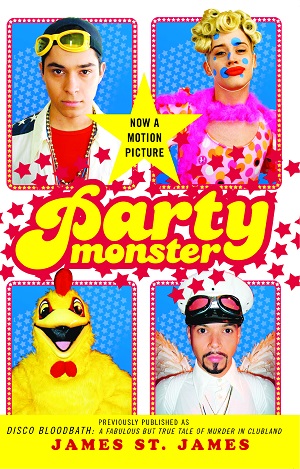
I was reading a movie tie-in edition that had the obligatory “Now a Motion Picture” bubble on it. But not a major motion picture, as is usual (for previous thoughts on this, see my post on The House of Gucci). I don’t think anyone had any illusions on the score of this being a “major” film. Though calling it a motion picture is itself a form of high praise. Who says “motion picture” anyway? Who even writes it? I think this is one of the only places you can still see it being used.

Takeaways:

Every party has an end, so you should make arrangements ahead of time for your ride home.

True Crime Files

TCF: The Wicked Boy

The Wicked Boy: An Infamous Murder in Victorian London
By Kate Summerscale

The crime:

IN 1895 13-year-old Robert Coombes killed his mother. His father was away at the time, and after the murder Robert spent the next week and a half living with his younger brother Nattie and entertaining a simple-minded friend of the family while his mother’s corpse rotted in an upstairs bedroom. Eventually, concerned neighbours and family members came to investigate and the smell gave everything away. Robert would stand trial and be found not guilty by reason of insanity. After 17 years in Broadmoor Hospital for the Criminally Insane he was released and immigrated to Australia. He would subsequently serve with distinction in the Australian army in the First World War and, after the war, settled down as a small farmer.

The book:

I’m on record as having been underwhelmed by Kate Summerscale’s much-lauded second book The Suspicions of Mr. Whicher. She seemed to me to be a dry writer a little too given to information dumps, and I didn’t have much, or really any interest in the back half of that story, which tried to reconstruct Constance Kent’s subsequent life in Australia after the Road Hill House murder trial. Nevertheless, it was a surprise bestseller and Summerscale has gone on to become a big name in the genre of historical true crime.

I’m not knocking her success. She puts the work in and picks interesting subjects to explore. With The Wicked Boy she follows a very similar case to that earlier book. Once again we have the sensational case of a killer child in Victorian days, and once again the killer immigrates to Australia after the dust settles. That said, I thought The Wicked Boy a better book.

I think this is primarily because Coombes himself is such a fascinating figure. Fascinating and downright impressive in many ways. It’s a cliché that kids had to grow up faster in days of yore, and that life among the working poor in Victorian England was no picnic, but it’s still worth keeping in mind the fact that Coombes grew up in a working class family at a time and in a place when working class meant something really horrible. Already at 13 Robert had finished with his schooling and was employed in an East End dockyard as a “plater.” I’m not sure all of what this entailed, but it sounds like it would involve a lot of pretty strenuous physical labour, especially for a 13-year-old. Primarily, Summerscale tells us, they would “run errands and mind machines” but also help out in “cutting and shaping sheets of iron on a lathe, placing them on moulds and bending them into shape.”

Kids were just more capable, not to mention independent, in that day. A year earlier, when he was 12, Robert had left the house and journeyed 40 miles down the Thames on his own just to see the court appearance of a notorious murder suspect. Three years earlier, when he’d been only 10, he’d robbed money from his parents’ cashbox and run away with Nattie all the way to Liverpool. It’s hard to imagine many 10-year-olds managing for themselves that well today, even with better rail service.

This competence and independence was something characteristic of those times. I don’t want to make it sound like a golden age, because it certainly wasn’t, but you simply can’t fail to be impressed at Coombes’s many achievements. As noted, his schooling was done by 13, by which age he was already a smoker. He did not come from a background of any wealth or privilege. After killing his mother he was sent to a criminal asylum and then a Salvation Army halfway-house program before leaving to Australia. And yet through all this he learned to be an efficient tailor, was a better-than-average musician (playing various instruments from violin to cornet and leading his unit’s band while in service), won several medals in the military as a stretcher-bearer while participating in some of the First World War’s worst campaigns (Gallipoli and Passchendaele), played chess at a very high level, and then after the war, without having any kind of a background in agriculture or animal husbandry, ran a dairy farm and was a highly-regarded raiser of vegetables that he sold locally. When his house burned down he was able on his own to build a cabin, however rudimentary, to replace it.

These are accomplishments that today I couldn’t match. I grew up on a dairy farm and did a fair bit of gardening so I might be able to shuffle by with that part out of muscle memory. But I can’t play any musical instrument, couldn’t sew on a button, and my chess is barely at a beginner’s level despite playing a lot online. I’m not a handyman and so probably couldn’t put up much in the way of a shack even with an unlimited account to draw on for supplies from a home hardware store. Would an online tutorial help? I was briefly in the reserves, but imagine that if I’d ever been at Gallipoli or the Western Front I would have been blown up pretty quickly (though admittedly, survival in this regard would mostly come down to luck).

I’m reluctant to invoke labels like the “greatest generation,” but when I think back to my father’s and grandfather’s generations (my father was born in 1923) and look at their accomplishments I can’t help but notice a pretty steep drop off. It’s not just that adversity builds character, since they were reasonably well off, but rather that more was expected of them. Then with the dread Boomers and John Kenneth Galbraith’s affluent society everything went to hell. But just thinking about this gets me down.

Getting back to the book, it follows Summerscale’s interest in the major social and cultural questions of the day, from what was seen as the malign influence of the penny dreadfuls that Coombes was fond of reading (the violent videogames of their day) to the slapdash state of criminal psychology. But then, even by today’s standards it’s hard to tell what led Coombes to kill his mom. I guess a “psychotic episode” (the modern diagnosis that’s offered) is a bit more convincing than “homicidal mania” (a contemporary one), but that may only be because I’m more used to the newer terms.

What makes this a special book though is the revelation at the end of the character of Robert’s life in Australia and the big difference he made in the life of a neighbouring boy. It’s not just that he came out the other side of all he experienced intact. More than that, his is a dramatic tale of redemption. Which leads to another troubling reflection about then vs. now. Did the justice system, at least in some cases, actually do a better job of rehabilitation in those dark ages than it does now? Would a Robert Coombes today turn out as well?

Noted in passing:

When dad was away, 13-year-old Robert slept in bed with his mother.

Summerscale doesn’t get into a discussion of how typical this was of family sleeping arrangements at the time, but it certainly struck me as weird. It’s not like there wasn’t another bed he could sleep in (presumably with his brother). It was at this same time that Freud came up with his theory of an Oedipal complex.

Takeaways:

Your neighbour might be a killer or a hero. Or both. And you’d never know.

True Crime Files

TCF: A Spy Among Friends

A Spy Among Friends: Kim Philby and the Great Betrayal
By Ben Macintyre

The crime:

Throughout the Second World War and much of the Cold War Harold Adrian Russell (Kim) Philby was a member of Britain’s Secret Intelligence Service or MI6. He was, however, during the same period a double agent working for the Soviets as part of what has become known as the Cambridge Spy Ring. When finally exposed in 1963 he defected and lived in Russia until his death in 1988.

The book:

If lives hadn’t been at stake it might have all been very funny. This late in the day the British class system had become a ridiculous anachronism, and the account of these public-school toffs playing at being spies is full of wonderful Wodehouse moments. (Philby himself had a whole shelf of Wodehouse novels in his Moscow apartment when he died, while John Le Carré thought Nicholas Elliott, Philby’s friend/nemesis, “looked like a P. G. Wodehouse man-about-town, and spoke like one.”) What are we to make of the tale of the waitress who set fire to a diner’s hair while attempting to flambé an omelet, requiring Elliott to douse her head with three glasses of white wine? Do I think that actually happened? No, but it’s a great story.

But it’s a great story that’s of a piece with a certain kind of broad humour. I mentioned Wodehouse but it’s actually something lower than that. Almost Benny Hill at times. Philby was part of what was dubbed the Cambridge Spy Ring or Cambridge Five because that’s where they all went to school, which doesn’t say anything good about Cambridge. It’s truly remarkable how, even into middle age (which, given their lifestyles, was old age for them) they were still trading in the same leering, juvenile schoolboy jokes and pranks that nobody else around them thought were funny.

What strikes one the most, however, is the sheer amateurism of British intelligence at the time. To take just a few examples: (1) While getting the teams of special operatives ready for insertion into Albania it turned out that none of the trainers spoke Albanian and none of the “Pixies” knew English. So training was done by sign language. (2) Donald Maclean (one of the Cambridge Five) was able to escape because surveillance teams didn’t work on evenings or over the weekends, and wouldn’t travel outside of London. (3) In the book’s climactic interview with Philby, Elliott, at the time one of MI6’s highest ranking and most experienced field agents, couldn’t even set up a tape recording system that worked (a window was left open so that street noises made the conversation mostly inaudible).

As I began by saying, this is great comic material. The names, of course, are also part of the fun. “Kim” was a nickname taken from Kipling, while it would be hard to best James Jesus Angleton for the Anglophile CIA counterintelligence chief. Among the supporting case we get the likes of Sarah Algeria Marjorie Maxse, Valentine Vivian, Sir Hughe Montgomery Knatchbull-Hugessen, and someone named (“unimprovably” in Macintyre’s estimation) Engelbertus Fukken. How could you take such people seriously?

I don’t even know how seriously they took themselves. Many of the old-boys’ club of spies that did so much to enable Philby thought all of this was fun. Maybe not just fun, but fun nevertheless. But in the twenty-first century I think we can look back on the English public-school educated gentleman and be more critical. These well-educated twits weren’t just eccentric but privileged to a point where they were a danger to themselves and others. By the time of the Cold War the aristocracy were already an anachronism, and the Philby case could be seen as the Altamont to their Summer of Love. It’s not just that they couldn’t be indulged anymore, but that they were a threat to national security and even social order.

Macintyre does make an effort, and this is an excellent book in almost every regard, but at the end I still couldn’t figure Philby out. On the one hand, like his friend/enemy Elliott he seems to have thought of spying as a game. But what were his motivations? There is much talk of loyalty to one’s friends and one’s country, and the potential for conflict between the two, but the fact is that Philby seems not to have felt any great loyalty to either (that is, if he even had any friends). He initially had some excuse for getting involved with the Russians, but why he doubled down after the end of the war is anyone’s guess. He never talked politics with others, leading Macintyre to describe him not as an ideologue or loyalist but as “a dogmatist, valuing only one opinion, his own.” But what dogma did he adhere to? He doesn’t seem to have been interested in anything much, and mainly wanted to lead a life of luxury with lots of drinking.

Macintyre suggests various explanations for his treachery. Maybe it had something to do with Philby’s relationship with his father. And maybe it had something to do with Eton. Maybe it connected to what C. S. Lewis describes as the British obsession with belonging to an “inner ring.” Perhaps he liked putting things over on people he felt superior to. And perhaps it did become, as Macintyre finally suggests, a kind of addiction. However you slice it, Philby comes off as both a terrible person and representative of his class.

Noted in passing:

One marker of his class was the fact that Philby, and a lot of the men (and women) around him, drank like fish. I suppose a bit of this comes with the territory of being a spy and having to attend a lot of social gatherings and liquid lunches, but even so this lot took it to excess. In Beirut, Philby was essentially a drunken wreck, but still functioning as a spy. What’s most impressive is that even when dead drunk he never had loose lips. As Elliott remarked to Le Carré, “He never said anything when he was pissed.” I thought that strange, as his level of drunkenness was often at a point where his mental functioning must have been severely impaired. But maybe this illustrates a deeper point: that underneath his mental armour and his layers of dissimulation and disguise there really wasn’t anything there. It’s often said that when people are drunk they don’t turn into someone different but only show you who they really are, only more so. When Philby got drunk there was nothing to reveal.

Takeaways:

You can’t trust a spy.

True Crime Files

TCF: Maniac

Maniac: The Bath School Disaster and the Birth of the Modern Mass Killer
By Harold Schechter

The crime:

In 1927 Andrew P. Kehoe blew up a primary school in Bath, Michigan. He also blew up his house and burned his wife’s body in ritualistic fashion after killing her with a blow to the head. Later, while rescuers were working at the school to try to find any survivors, he arrived at the scene and blew himself up in his truck, killing several more people. In total 45 people died, including 38 children.

The book:

A first-rate account of one of the less well-known atrocities in the annals of true crime. Indeed, the fact that it is so little known today is a point that Harold Schechter (a fellow I once referred to as “the dean of American true crime writing”) spends some time unpacking in his Introduction.

Why is it that some crimes grab and maintain a fierce hold on the public imagination when others, equally bloody or sensational, are almost immediately forgotten? “Horrific violence,” even approaching “the sublime of horror,” “isn’t enough to ensure that a crime will become an ongoing media sensation, let alone a permanent part of our cultural mythology.” There has to be more. It seems that “for a murder to really take hold of the communal imagination and exercise an enduring grip, something else is necessary.” But what?

It’s a point Schechter returns to at the end of the book when considering why the Bath bombing was only a “seven-day horror” pushed off the front page by Lindbergh’s trans-Atlantic flight and then “relegated to obscurity,” Shechter puts forward an intriguing thesis. In order to become a cultural touchstone a crime has to resonate with contemporary public fears. It has to be “a story with a particular meaning, speaking to an issue that was a source of growing social concern at the time.” So around the turn of the twentieth century poisoners were big news because in

a pre-FDA age, when people could never be certain of what they were putting into their mouths – when medicines were made of strychnine and arsenic, bakers preserved their dough with sulfur of copper, babies consumed “swill milk” from cows fed on distiller waste, and soldiers received rations of “embalmed beef” – the poisoner was the nightmarish symbol, the personified projection, of a pervasive cultural anxiety.

Just so, Leopold and Loeb became embodiments of a fear of immoral youth (and affluent decadence) in the 1920s, while the “family” of Charles Manson “became the living realization of Middle America’s worst nightmares about sex-and-drug-crazed hippies” in the 1960s. If anyone remembers the Snyder-Gray case today it’s probably for the famous shot of Ruth Snyder being electrocuted in 1928, but at the time it was big news for other reasons.

In an era of radical social change, [feminist scholars] argue, when young women were kicking over the traces of Victorian morality and breaking free of their traditional domestic roles, Ruth came to embody everything that a sizable portion of the population most hated and feared: the sexually emancipated, self-indulgent flapper, symbol of a modern society run amok. In short, for Jazz Age America, the Snyder-Gray case resonated with powerful social and psychological meanings, becoming, in the words of culture critic Ann Jones, the decade’s “most important morality play.”

Schechter doesn’t bring the point up here, but the same has been argued about horror films. In the 1950s we got giant ants, spiders, and people mutated by nuclear explosions. Post-Watergate we got conspiracy thrillers. In the 1980s during the AIDS crisis we got “venereal horror” and slasher films where promiscuous teenagers were slaughtered. Each generation summons its own demons.

Interest in the Bath school bombing tracks this same movement. Following the long ascendancy of serial killers as the kings of true crime, we’ve gradually lost interest in them. As Shechter points out, the revelation in 2018 of the crimes of Samuel Little, who may have killed more than 90 people over five decades, “barely made a dent in public awareness.” The era we’ve entered into, however, has brought the Bath bomber back into the collective consciousness. Andrew Kehoe was a mass (not serial) murderer, a suicide bomber, an anti-government terrorist, a school killer. References to the Bath school bombing would increasingly appear in the media, “cited as a grim harbinger of the wholesale slaughters besetting the nation” in the twenty-first century.

And Kehoe wanted to kill a lot more. Over 500 sticks of dynamite and pyrotol that he had planted remained unexploded, enough to destroy the entire school and everyone in it. Which leads me to a quick digression. We’re lucky that making bombs isn’t easy. It’s not widely known, but Eric Harris and Dylan Klebold made a pair of propane bombs that they stuck in duffel bags and set to go off in the Columbine cafeteria on the day they went on their shooting rampage. Their attack was planned primarily as a school bombing, after which they would shoot any survivors. But the bombs failed to detonate. That’s not too surprising, as they were both 17 years old with no experience in such matters, but even a skilled handyman like Bill Rothstein’s elaborate (probably too elaborate) collar bomb only detonated one of the two pipe bombs it contained. Kehoe was known as a highly skilled mechanic and trained electrician, but most of the explosives he’d planted in the Bath Consolidated school building failed to go off.

Overall then I’d rate this as not just a great read – punchy and lean, with little of the novelistic or autobiographical flourishes that have become so prevalent in the genre – but a book that has something important to say about our two-way relation to true crime reporting. Another reminder that when we look into the abyss, the abyss is looking back at us.

Noted in passing:

Kehoe married into an established and prosperous family that he soon found himself in conflict with. Just for starters, they held the mortgage on the farm where he lived. For me this recalled All That is Wicked by Kate Winkler Dawson and what happened when Edward Rulloff married into the Schutt family, a blessed event that led to disastrous results. Considering the matter a little more, I also thought of Blood & Ink and Edward Hall marrying an heiress.

There is a lesson here that fits with some of what I’ve observed over the course of my own life. “Hypergamy” is a word that gets tossed around a lot these days when discussing female relationship choices. Basically it just means mating up, and among some online communities it’s considered to be an iron law, driven by evolutionary psychology (women seeking a mate with resources adequate to provide for them and their children). While some may call it gold-digging, casting it in these terms just makes it seem natural. And in the real world you don’t see women being criticized for it except in the most egregious situations.

Male hypergamy, however, is traditionally seen as quite unnatural, and men who marry for money are almost always looked upon with distaste if not outright disgust. I think of the killer Chigurh’s startled reaction to the Texaco gas station owner telling him that the station and the home out back is his “wife’s father’s place” in the coin-toss scene from the movie No Country for Old Men. “You married into it?” Chigurh chokes in disbelief. The owner’s immediate loss of status is palpable, and his attempt to save face doesn’t fly with Chigurh for a second (“I don’t have a way to put it. That’s the way it is.”).

The fact that this is how society looks upon men who marry up no doubt gives a turn of the screw to the domestic situation here and in the other cases I mentioned. And I imagine this was especially so in the 1920s. I don’t think the fact that all these men had wives with money from “good” families drove them to murder, but at the same time it probably didn’t help them stay on an even keel.

Another connection to the Hall-Mills murder case that struck me was the public fetishizing of souvenirs. In that earlier case the poor crab apple tree the bodies had been discovered under was stripped bare by trophy hunters. In this case a local reporter complained of how disaster tourists came to the ruins of the schoolhouse and “whittled it away and carried away bricks until there’s nothing left to tear down.” But even more remarkable was “one particularly ghoulish sightseer” who, in the immediate aftermath of Kehoe blowing himself up in his car, “deftly snipped a section of intestine from the steering column, placing it carefully in a jar of apparent alcohol.”

Why? The existence of “murderabilia” has always mystified me. What do people even do with these trophies? Put them on display in their homes? I guess it’s just a fact that collectors will collect anything, and celebrity/fame/notoriety has the effect of touching any part of our mundane, material reality with some aura of arcane value. Even so, you’d think people would have some sense of shame.

Takeaways:

Kehoe left a “note” (a sign wired to a gate at his farm) saying “CRIMINALS ARE MADE, NOT BORN.” He apparently targeted the school because he didn’t like being taxed to support it. Americans really do hate anything to do with taxes. Always have, and probably always will.

True Crime Files

TCF: All That Is Wicked

All That Is Wicked: A Gilded-Age Story of Murder and the Race to Decode the Criminal Mind
By Kate Winkler Dawson

The crime:

A drifter named Edward Rulloff landed in Upstate New York in the early 1840s, where he married into the prominent Schutt family. He didn’t get along with his wife or her family, and may have been responsible for killing his sister-in-law and her child. He then killed his own wife and child, though their bodies were never found. He was convicted only of kidnapping his wife and sent to prison, from which he escaped. In 1870 he shot and killed a guard when he robbed a dry goods store with a couple of other men (both of whom drowned while trying to escape). In 1871 he was hanged.

The book:

A nice bit of work, making a case for why Edward Rulloff, whose crimes were as ordinary as they were callous and cruel, is worth attending to. In short, Winkler Dawson sees him as “the first high-profile killer to inspire neuroscientists to dig deeper into the criminal mind.”

Rulloff’s brain is currently part of the Widler Brain Collection at Cornell University, not for being a prime example of a criminal type (since there doesn’t seem to be such a type) but for its immense size, which apparently puts it in the largest 1% on record, and possibly one of the largest ever. This in turn leads not only to a discussion of early debates on the physiology of a criminal mind, but also into the matter of criminal, or evil, “genius.” As the book kicks off we’re told that many of his contemporaries considered Rulloff to be “perhaps, the most intelligent killer in American history.” As we keep reading, however, that’s a judgment that gets qualified.

Was Rulloff a criminal genius? Not because of the size of his brain. I don’t think Einstein’s brain was found to be particularly large. As Winkler Dawson concludes, “we now know that brain size is no indication of intellect or morality, or of belonging to a privileged group with claims of superior intelligence – it’s the quality of the brain, not the quantity.”

Was Rulloff a genius only by reputation? He was at least in some ways an impressive autodidact with a thing for languages. I’m not sure that being able to understand a lot of different languages is any great sign of intelligence though, any more than being good at math is (as I’ve argued elsewhere). Furthermore, his claim to have discovered a key to understanding the origin of all human language was investigated by authorities at the time and found to be nonsense. Horace Greeley would call him “too curious an intellectual problem to be wasted on the gallows” and “one of the most industrious and devoted scholars our busy generation has given birth to.” But that doesn’t mean he was smart. The same goes for Mark Twain calling him (with tongue in cheek) “one of the most marvellous intellects that any age has produced.” Being a curious and marvellous intellect, as well as an industrious and devoted scholar, carefully avoids comment on his actual intelligence.

A criminal genius? Hardly. Our best guess is that he killed his wife in a fit of rage. He would be sent to the hangman for killing a night watchman during a miserably planned and badly bungled break-in. I don’t see any evidence for thinking him a mastermind. Winkler Dawson argues for his being a psychopath, but even here I think he’d have to be considered a low-functioning one. He certainly tried to charm people, for example, but few people seem to have been fooled. In fact, most anyone who got to know him seems to have been repelled by him. He did fool some people, some of the time, but mainly those who were weak and vulnerable.

We want so badly to believe there’s some link between intelligence, however eccentric, and crime – what’s apparently known in the academic literature as the Hannibal Lecter myth (I’ve included a cover image where the alternative title points to this). Rulloff was an early example of this sort of thinking, but he’s also someone who should have made experts question the connection. Rulloff certainly considered himself to be a genius, but in this he was only a typical narcissist (or, less professionally, an asshole). Ramp up one’s delusions of grandeur and sense of entitlement far enough and you get someone whose brakes are off.

This is a good read, with Winkler Dawson structuring the story around Rulloff sitting in his cell awaiting execution and being visited by various people (journalists, academics, medical men) while his story is teased out through flashbacks much like you’d imagine being done in a docudrama. The parallel to Stevenson’s The Strange Case of Dr Jekyll and Mr Hyde, however, with chapter headings taken from that work, left me scratching my head. I really didn’t see Rulloff as being anything like that kind of a divided personality.

In other ways too I found Rulloff himself to be a lot less compelling a figure than he was made out to be, but as an origin story for today’s “mindhunters” his case does have a lot of historical interest. In 1871 investigators didn’t have the same tools we do today – our big data, for example, and ability to look inside the brain – but they still made a lot of very perceptive observations of criminal behaviour, like the district attorney here who noted how “It is a well understood fact that there is a kind of indescribable fascination to a criminal about the place where he has committed a crime, and however far he may go away still he wants to come back.” They were doing the best they could just working from the general, observable facts of the cases they were working on, and for the most part they seem to have done pretty well.

Noted in passing:

Was this the Gilded Age? I think the Gilded Age is usually seen as starting sometime in the late 1870s with the end of Reconstruction, or in 1880 to take a convenient round date. I tend to be inclined towards giving it a later starting-off point, but some historians place its beginnings as early as the end of the Civil War in 1865. For what it may be worth, the label is taken from a novel written by Mark Twain and Charles Dudley Warner titled The Gilded Age: A Tale of Today, which was published in 1873. Given that Rulloff killed his wife and child in 1844 and was executed in 1871, I don’t think this really counts as a “Gilded-Age Story.” But it’s interesting that publishers seem to think that adding “Gilded Age” to a title is a real selling point. This is not the first time I’ve seen it invoked when I didn’t think it was appropriate.

At Rulloff’s final trial it was observed that among the many people attending “a great portion of them [were] women.” This leads Winkler Dawson to make the following observation:

For generations, women have been the dominant consumers of true crime; in current times, most readers, listeners, or viewers of these crime stories are female. Experts say many women hope to learn from the mistakes of victims, to absorb themselves in a world they never hope to enter. In some cases, they change their behavior based on that knowledge – they’re more skeptical of male suitors and more cautious about venturing out alone. This was certainly the case of mostly proper ladies in Binghamton in 1871.

A footnote expands on this further, linking it to the pathology of hybristophilia, where women develop a sexual interest in serial killers and other “bad boys.” Leaving that aside, what Winkler Dawson says about today’s audience for true crime, whether in the form of books or podcasts, is certainly true and I’m not aware of any full explanation for it.

Takeaways:

If your whole family is against you marrying someone, best give the matter further consideration. If they become even more insistent that you leave your spouse when the marriage goes south, you should admit you made a mistake and get out before things get any worse. Because they will.

True Crime Files