The golden age(s)

From The Decline and Fall of the Roman Empire, Volume One (1776) by Edward Gibbon:

If a man were called to fix the period in the history of the world, during which the condition of the human race was most happy and prosperous, he would, without hesitation, name that which elapsed from the death of Domitian to the accession of Commodus. The vast extent of the Roman empire was governed by absolute power, under the guidance of virtue and wisdom.

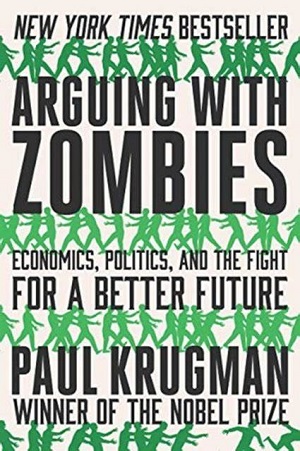
From Arguing with Zombies (2020) by Paul Krugman:

If you had to identify a place and time where the humanitarian dream – the vision of a society offering decent lives to all its members – came closest to realization, that place and time would surely be Western Europe in the six decades after World War II. It was one of history’s miracles: a continent ravaged by dictatorship, genocide, and war transformed itself into a model of democracy and broadly shared prosperity.

Chekhov on film

Been there.

Over at Alex on Film I’ve been watching some film adaptations of the work of Anton Chekhov. He’s not a writer who gets the big-screen treatment very often, at least in English-language productions. And the films that have been made tend to be very stagey. Still, they each have their strengths.

Uncle Vanya (1957)
The Cherry Orchard (1962)
Three Sisters (1970)
Three Sisters (1970 BBC)
Uncle Vanya (1970 BBC)
Uncle Vanya (1970 Mosfilm)
The Seagull (1978)
The Cherry Orchard (1981)
Uncle Vanya (1991)
Days and Nights (2013)
The Seagull (2018)
Drive My Car (2021)

Maigret: Maigret and the Saturday Caller

The titular caller is a pathetic creature with a hare-lip named Léonard Planchon. He has been showing up at the Quai des Orfèvres on Saturdays hoping to screw up enough courage to talk to the detective chief inspector about something, but has always chickened out. So instead he decides to go to Boulevard Richard-Lenoir, where Maigret lives, and catch the big guy at home.

This didn’t make much sense to me, but then nothing about Planchon rang true. He’s neither sympathetic nor believable. In today’s Internet manosphere language he’s an exaggerated type of the beta simp: a total loser who marries a hot girl who in turn shacks up with one of his employees, a guy who first supplants him in the bedroom (forcing him to sleep in the kitchen on a camp bed) and then takes over his house-painting business. Planchon wants to warn Maigret in advance that he’s thinking of taking . . . drastic measures. I thought for a while that we might be entering Before the Fact territory, which had the potential to get interesting. But then Planchon disappears.

No prizes for guessing what has happened. And given that the perps are a pair of wild animals, possessed of low cunning but low intelligence, it doesn’t take Maigret long to catch them out. Another weak effort, and a bit silly too.

Maigret index

The big dig rig

Taking a really big bite out of Mother Earth.

Over at Alex on Film I’ve posted my thoughts on the Edward Burtynsky film Anthropocene: The Human Epoch. Well worth seeing, with stunning visuals carrying an important message. One of the many showstoppers was seeing a ginormous bucket-wheel excavator (BWE) operating in an open-pit mine in Germany. If this is the Bagger 493, which is used at this mine, then it’s the largest BWE ever made, and the heaviest terrestrial vehicle according to Guinness.

Impressive, but depressing too when you think of its job.

Piquant pecans at the pyknic’s picnic

Reading a book about Søren Kierkegaard yesterday, I came across a description of the Danish philosopher as “of the pycnic type,” something that “would lend a piquant touch to his psychological profile.” The word pycnic (more commonly spelled pyknic) completely stymied me. I don’t think I’d ever seen it before, and thinking it was a typo for picnic simply didn’t make sense given the context.

Pyknic is a word that’s very rarely used today. Derived from the Greek pyknos (for dense or thick) it refers to a body characterized as short and stocky, powerful but given to fat. It’s of recent vintage, with its first recorded use being in 1925. Since then I’ve heard that it’s been replaced by endomorph (a coinage from the 1940s), but it seems to me that endomorph — round and fat — isn’t quite the same thing.

As I say, it’s a term that’s fallen out of use, along with much of the science of classifying body types. I doubt I’ll have much occasion to use it, but it’s an interesting one to file away.

Getting it wrong

With the handing down of the decision in Dobbs v. Jackson Women’s Health Organization last week the U.S. Supreme Court effectively overruled their long-standing decision in Roe v. Wade (1973) making abortion a Constitutional right.

I don’t know what the fallout from Dobbs is likely to be, aside from making Margaret Atwood a prohibitive favourite to win this year’s Nobel Prize for Literature. Nor am I up to making any kind of legal critique of the majority opinion in Dobbs. What the decision does force me to do, however, is consider how I got things so wrong.

I’m referring to an earlier post, from 2015, where I had this to say:

[The] problem with the Republicans may be that a particular historical strand of American conservatism has played itself out. In terms of cultural conservatism it seems as though the “culture wars” are, if not over, at least moving into a new, yet-to-be-determined phase. The right to an abortion is now settled, and the fight over gay marriage mostly is too. Human-driven climate change is a fact accepted by everyone who is not a complete idiot. The idea that the U.S. can build a wall separating itself from Mexico (or Canada), and somehow round up all its illegal immigrants and send them back to their countries of origin is laughable. And yet all of this can be found in the platforms of leading Republican candidates.

I returned to this point in a lengthier post a year later, where I talked a lot about “the end of the conservative road.” I didn’t think the Republican Party was dead in the U.S., or that Right-wing politics had passed its expiration date, but it did seem to me that a particular style of politics had had its day. I was wrong. The “new, yet-to-be-determined phase” of the culture wars was going to lead into a time warp.

Obviously I misjudged badly. What did I not anticipate? The victory of Donald Trump in the 2016 election and his stacking of the Supreme Court with radical ideologues, just for starters. But the Trump years were symptomatic of a deeper malaise that I seem to have missed. In particular, there are two points that I didn’t pick up on at the time.

The first is the importance of anger as a political driver, and the way parties of the Right so successfully branded themselves as the standard bearers for so much resentment and hate. I’ve already written about this here, and won’t add anything more aside from asking if there are any angrier or more bitter people in the U.S. than the likes of Samuel Alito, Clarence Thomas, and Brett Kavanaugh. The rage just seems to radiate off these guys, which puts the lie to the idea that anger is solely the province of men without a college education, or of the powerless “left behind.”

The second point has to do with how successful the Right, and in particular the Republicans in the U.S., have been at their demonization of their political opponents. This has become so extreme that I don’t think I would have credited it in 2015. But what has happened, and this may be the biggest transformation in American politics in its history, is that one of the main political parties now sees the other as being entirely illegitimate.

This is no longer the province of looney outliers and people who believe in conspiracy memes like Frazzledrip. On the basis of no evidence whatsoever a majority of Republicans continue to believe that the 2020 election was stolen. They simply do not believe it is any longer possible for another party to be fairly elected.

But it’s even worse than that. Demonization is now taken literally.

In the world view adopted by Republicans, Democrats/progressives/liberals are not just seen as the lesser of two evils but as evil incarnate. They are terrorists, or lizard-headed aliens, out to destroy the country, enslave the population, and looking to kill and eat everyone’s babies (after they have sex with them and tear their faces off). And again, this is not a fringe belief. At the highest level, a second Trump presidency is endorsed not because of any love for Trump but because the alternative is seen as Satanic. Trump’s attorney-general, Bill Barr, was one such Christian apocalypticist, and his chief of staff Mark Meadows another. Meadows even tweeted to Ginni Thomas (wife of a Supreme Court justice) during the January 6 coup attempt that “This is a fight of good versus evil. Evil always looks like the victor until the King of Kings triumphs.”

One may ask how much of this is sincere and how much is just trying to justify or rationalize the GOP’s own slide into darkness. As Peter Wehner put it, writing in The Atlantic:

The sheer scale of Donald Trump’s depravity is unmatched in the history of the American presidency, and the Republican Party—the self-described party of law and order and “constitutional conservatives,” of morality and traditional values, of patriotism and Lee Greenwood songs—made it possible. It gave Trump cover when he needed it. It attacked his critics when he demanded it. It embraced his nihilistic ethic. It amplified his lies.

The only way to make this somehow come out right is to paint the Democrats in ever darker shades of black. What has resulted goes beyond polarization, and helps explain not just the radicalization of the Supreme Court but also why even the revelations of the January 6 commission aren’t doing much to move the needle. In 2015 I had no idea this level of extremism could have become so entrenched. I’m sad to say I was wrong.
Maigret: Maigret and the Good People of Montparnasse

It’s sad evidence of how played out the Maigret series was getting that this one begins exactly the same way as the previous installment (Maigret and the Lazy Burglar): with the detective chief inspector being woken out of a dream to answer the phone, and a call which draws him in to deal with an especially tricky case. Plus there’s the fact that he’s starting to seem even more of a grumpy old man:

He was keen for the summer and the holiday season to be over, for everyone to be back in their place. He’d frown each time his eye lighted on a young woman in the street still sporting the tight trousers worn on the beach, feet bare and tanned, nonchalantly treading the Paris cobblestones in sandals.

If you’re so old you can’t appreciate nice things like a pretty girl in beach clothes than you really have turned a corner in life.

The title refers to a family of very good people. Things kick off with the father being found dead in his study. By most accounts he didn’t have an enemy in the world. But, as Maigret grumbles, “it’s the good people who give us the most trouble.” After a while the repetition of “good man” wears on him.

A crime had definitely taken place, because a man had been killed. Only it wasn’t a crime like any other, because the victim wasn’t a victim like any other.

“A good man!” echoed Maigret with a sort of anger.

Who would have had a reason to kill that good man?

It wouldn’t take much for him to start loathing good people.

You see what I mean about turning into a grouch?

The twist here is that there is no twist. You’ll be expecting some dark revelation about how the good people aren’t so good after all, but as it turns out they mostly are. Then the explanation for what happened only gets dropped in at the end in a tired manner, and it barely makes any sense. It also isn’t arrived at by any special power of deduction or observation, but just comes about when Maigret stops into the right bar to ask for a drink. I’m still hoping the series has a few more gems, but by this point Georges was mailing them in.

Maigret index

Got you covered

A popular type of post on personal blogs are the ones with music links. I’ve never done one of these because I figure everybody already knows what they like. But just for a break I thought I’d link to a few of my favourite covers here.

“Subdivisions” Allegaeon

A metal version of Rush’s classic “Subdivisions”? I was highly sceptical at first but boy did these guys nail it. The guitar work is great and the vocals on point too. As they say about the best covers, they really made this song their own. I love it!

“Sympathy for the Devil” Motörhead

Motörhead’s covers vary a lot in quality, but I thought this really worked. The opening drums get things off to a great start and Lemmy’s voice is a perfect fit for a weary and scarred Satan.

“The Waiting” with Eddie Vedder

This isn’t really a cover since Tom Petty’s here playing and singing back-up. Basically it’s just Vedder coming on stage and doing lead vocals. But does he ever kill it. I like this version even better than the original.

Maigret: Maigret and the Lazy Burglar

But why is the burglar lazy (le voleur parreseux)? I only recall his mother as being described as carrying with her “a touch of laziness.” Honoré Cuendet is a hard-working professional, providing not only for his mom but for his lover too. He’s not lazy, just unlucky.

Maigret, meanwhile, is feeling more and more like yesterday’s man and griping about the new order, where beat policemen like himself have become subordinate to well-educated, bureaucratic paper-pushers.

The world was changing. Paris was changing, everything was changing, men and methods. Retirement might seem frightening, but if he didn’t retire, wouldn’t he end up adrift in a world he no longer understood?

At least in this case he’s on familiar ground, looking to find out who murdered a not-so-lazy burglar he’d known for years. Except that’s not the case he’s supposed to be working on, at least according to his so-called superiors. Instead, he should be trying to catch a gang of bank robbers.

I spent most of the book figuring the two plot lines would end up being connected in some way, but they’re not, which leaves both stories feeling rushed at the end. This was too bad, as the the burglar’s murder had some potential, relating to another rich family with some dirty secrets hidden behind the façade of their Paris mansion. By this point, however, I think Simenon was getting a bit tired of the series and was looking forward to retiring as much as Maigret.

Maigret index