Maigret: The Little Restaurant near Place des Ternes

This story is the last, and much the shortest, of the three seasonal pieces collected in A Maigret Christmas (the others being the title novella and Seven Small Crosses in a Notebook). Maigret himself doesn’t appear (he stays at home all day solving the mystery of the secret Santa across the street from his apartment), but we are briefly entertained by Inspector Hard-Done-By, that sad Eeyore of the Paris police, Lognon. At least he doesn’t have the sniffles and isn’t being shot at this time, though he is stuck working on Christmas Eve, and it looks like it’s going to be a late night when a man kills himself in a bar.

That suicide doesn’t turn out to have anything much to do with the rest of the story, which instead leaves the bar behind as a prostitute named Long Tall Jeanne spends her evening keeping a younger woman out of trouble by starting some of her own. So not a mystery at all but “A Christmas Story for Grown-Ups.” Jeanne does have a bit of Maigret about her though in the way she tries to steer a young person away from danger. That’s what good people do in this world.

Maigret index

Maigret: Seven Small Crosses in a Notebook

There’s no “Maigret” in the title of this story/novella, because Maigret doesn’t appear in it. But it’s part of the A Maigret Christmas volume and takes place in the same universe since Janvier puts in an appearance, so I figured I should cover it.

In fact, the absence of Maigret is one of the less surprising aspects of the story. It’s entirely set in the police switchboard control room on Christmas day, with the staff on duty responding to calls coming in from all around Paris. Then a murdered body is found and one of the operators recognizes the name of the victim. It seems his brother may be involved.

It’s a clever idea to limit the action to the one room, with witnesses and reports being fed into that room bit by bit. You could imagine the thing being done on stage, or Hitchcock taking up the challenge of making something out of it on film. I’m not sure it works quite as well on the page, and the first chapter is a bit confusing, but it’s certainly a change-up for the series and I think it’s nicely done.

It’s a neat story too, with a sort of double-manhunt plot that has the brother’s son intent on catching a serial killer while Janvier and the rest of the police try to find them. Also interesting is the man who’s been laid off trying to keep up appearances by still going out to work every night with his lunch pail. He’s someone we’d meet again in the Michael Douglas movie Falling Down and the John Lanchester novel Mr. Phillips. Was this the first appearance of such a character? It may well have been, as Un Noël de Maigret was first published in 1951 and I don’t think we really understood the condition yet.

Maigret index

Mauled by a kitten

Crushed.

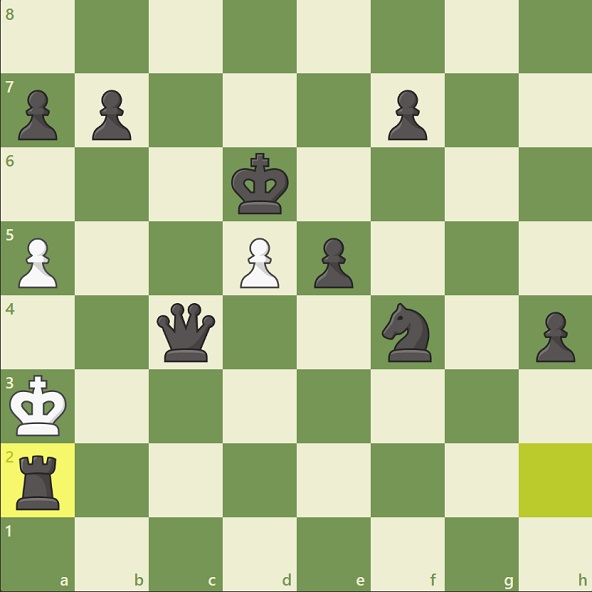
The online chess community is having a meltdown over the new chessbot that has as its avatar a cute, saucer-eyed kitten named Mittens. Mittens is rated with an ELO of 1 but that’s a joke because apparently it’s one of the strongest bots ever and chess masters have been posting videos where the frisky feline wipes the floor with them while giggling “hehehehehe” (which I’m pretty sure is a sound that cats don’t make).

I usually don’t even bother playing bots with a higher ranking than 1200, but just because everyone else was doing it I decided to take Mittens on. And I actually survived until move 26 (with two mistakes and one blunder), which I considered a moral victory.

Tempting fate, I tried a second game where I played even worse (three blunders!) but lasted 41 moves. Mittens even gave me a pat on the head: “You have triumphed in existing for longer than many before you. Hehehe. Meow.”

Somehow, this felt even worse.

Another new year

On a personal note, 2022 was a hard year. 2023 is going to be worse.

What this means, for readers of this or any of my other sites, is that things will be slower going forward. I expect I’ll only be updating Alex on Film once or twice a week from now on. I wrapped up with my 200th quiz and I’ve found I haven’t been watching as many movies lately. Those I have been watching I’ve been having less and less to say about. I think any reviewer feels after a while that they’ve said most of what they have to say and that they’re starting to repeat themselves after being at it for ten or twenty years. I’m feeling that way now.

I hope to keep adding a new capsule review at Alex on SF every week, and doing more at Goodreports. But I’ve said that before. I have been reading more in the past year than I think I ever have, but not as much new stuff. Maybe that will change.

This site will continue to be a sort of catch-all for anything else that interests me. Like reading the Maigret novels, a project I should be wrapping up soon. The fact is though that I really don’t spend much time online, aside from posting my own stuff, and I think I want to spend even less going forward.

Sticking with reading, I also have plans for adding a couple of new book-related ventures, at least one of which will probably launch in 2023. I’ve been doing some prep work and having a bit of fun with it, so we’ll see how it goes.

In any event, I’ve been writing like this as a hobby now for nearly 25 years — I started Goodreports in 1998 — and since I still find it rewarding I imagine I’ll keep at it for a while yet. Let us not repine!

Maigret: A Maigret Christmas

A Maigret Christmas is a seasonal novella published in 1951, during a period when Simenon was toodling about the U.S. The action all takes place on Christmas Day, with Maigret only leaving his apartment once, and that just to go across the street. So it’s a tidy little drama as well as “a family affair” since Madame Maigret is always about, knitting or cooking and just generally helping out in any way she can.

The mystery starts out promising. A little girl in an apartment across the way is disturbed to find Santa Claus in her bedroom, tearing at the floorboards. Santa gives her a doll as a present, but apparently doesn’t find what he was looking for. Will he be back?

I was expecting, from such a set-up, that A Maigret Christmas would be something cute. A confection. But it’s actually a run-of-the-mill Maigret story with a melancholy overlay. The detective chief inspector even wakes up Christmas morning feeling depressed.

The Maigrets have no children of their own and their disappointment in this regard is sometimes lightly registered in the other novels. But here it is front and center. The little girl across the street has been basically adopted by her uncle and aunt because her father is a drunken wreck. But her aunt doesn’t want her. So you have a child who needs parents and the Maigrets needing a child. At the end they’ll take the girl in “on loan,” which is no consolation to Madame Maigret, who at the end breaks down in tears, not of joy. Making it a very Maigret Christmas indeed.

Maigret index

Books of the Year 2022

Another year where I have to preface this list with the observation that I didn’t read much literary fiction this year. To be sure, the last year has been rough, but even so I’ve more and more had the adage that “old men don’t read new fiction” brought to my attention. I do still spend a lot of time with the classics, and even more time with non-fiction. But outside of science fiction, a regular beat, I haven’t kept up with new novels and short story collections. And at this point I’m not sure I see that changing. Oh well.

Best fiction: As noted, I don’t have a lot of titles in this category to pick among. Cormac McCarthy’s The Passenger (and emphatically not its companion volume Stella Maris) was pretty good though. It’s written in his signature late style, which I find overdone, but that said, he’s one of the few really distinctive literary voices out there working at this level.


Best non-fiction: I was really impressed with Richard Overy’s Blood and Ruins: The Great Imperial War, 1931–1945 (which came out in 2021 in the U.K. but in 2022 over here). You wouldn’t think a single-volume history of the Second World War would be so thorough and include so much fresh thinking. Some subjects are just so large I’m sure we’ll never hear the last word on them.


Best SF: There was a lot of strong competition in this category again this year. I liked Dave Eggers’s The Every as a dark sequel to the already dark-enough The Circle, but for my pick of the year I’ll take Ned Beauman’s Venomous Lumpsucker for the way it handled a number of complicated ideas in a deft, intelligent, and playful way.

Laying down the law

It’s OK when he says it.

I was just following a news report about some of the more ridiculous messages that went out on Twitter at the time of the January 6 riots when I saw one by a Republican congressman from South Carolina named Ralph Norman hysterically calling for Donald Trump to invoke “Marshall Law.”

I don’t want to play gotcha! with someone’s spelling on Twitter, but I was a little surprised that the commentator I was listening to admitted that they had to check to make sure “Marshall Law” was, in fact, wrong. Though I suppose it is an easy enough mistake to make. Just last month I reviewed Caroline Moorehead’s Mussolini’s Daughter, where the Badoglio government that came in after ousting Mussolini is said to have proclaimed “marshal law.” Even I had to wonder if this was a slip or intentional. Technically, Badoglio had held the rank of marshal in the Italian army before becoming prime minister. So did Moorehead make a mistake, or was saying marshal law a joke? I’m still not sure, but I think it was a slip that the editors didn’t catch.

There was also a comic book character named Marshal Law, created in the 1980s by Pat Mills and Kevin O’Neill. I don’t know if it’s still going. And in 1996 there was a TV movie called Marshal Law about a tough U.S. Marshal played by Jimmy Smits. This kind of thing probably confuses people.

Just to be clear though: it’s martial law.

Maigret: Maigret and the Wine Merchant

These English translations of the Maigret corpus are very much English translations, meaning that they take certain British terms and usages for granted. Like the first floor being what Americans call the second floor. Or having meals like skate and black butter being served with beverages like grog. Or calling the island between the lanes of a roadway a “reservation.” I’d never heard of this meaning of “reservation” before, but found it defined in the O.E.D. as “A strip of land between the carriageways of a dual carriageway.” This made me wonder if people in the U.K. still call roads carriageways.

One particular Britishism that gets a workout in this book is “rise.” What this refers to is what on this side of the Atlantic we call a “raise.” That is, a bump in pay at work. I think I first heard “rise” on Pink Floyd’s Dark Side of the Moon album in the song “Money.”

Money, so they say,
Is the root of all evil today.
But if you ask for a rise it’s no surprise that they’re giving none away.

Just putting those lyrics in this post, “rise” came up as a grammar error. Whenever I listened to that song as a kid I always thought Roger Waters was just pronouncing “raise” in a funny British accent. But it’s actually spelled “rise” over there.

Well, the translator of Maigret and the Wine Merchant is Ros Schwartz, who has done more than a dozen of these Maigret books for Penguin, and she’s a Brit so it’s all fair. I sometimes wonder about translations of certain expressions though. Maigret often tells his inspectors to search a crime scene “with a fine-tooth comb.” Is that expression the same in French? I don’t know. (It is called a “fine toothcomb” in the next book, Maigret’s Madwoman, but I’m sure that must be a typo.)

I spent my time making notes on things like this because there’s no mystery at all to be solved in this book. The titular wine merchant is shot dead outside a Paris bordello, and it turns out that he’s a guy who everybody hated. The killer eventually gives himself up. That’s it. Maigret is under the weather throughout, grumpy and woolly-headed, but Madame Maigret is there to fetch his pipe, turn down his bed, and cook and serve his meals, like the aforementioned skate and black butter (which sounds disgusting) and braised calf’s liver à la bourgeoise (one of Maigret’s favourites).

Once again, our hero is looking into the lives of the morally degenerate upper class, which makes him uncomfortable. Meanwhile, the killer is a downwardly mobile (rapidly downwardly mobile) loser who might be a sort of class avenger but for the fact that he’s so pathetic. Even the wise and understanding Maigret can’t wait to see the last of him.

Is the killer a bit like a squirrel Maigret encountered once while on holiday? That’s the analogy that’s made. But it’s a strange one.

One day, in Meung-sur-Loire, when Maigret had been lounging in a deckchair, a squirrel had come down from the plane tree at the bottom of the garden.

At first, it had kept perfectly still and he could see its heart pounding beneath the silky fur on its chest. Then it crept a few centimetres closer and froze again.

While Maigret hardly dared breathe, the little red animal stared at him fixedly, seemingly fascinated by him, but its entire body remained taut, ready to flee.

It all unfolded as if in slow motion, step by step. The squirrel grew bolder, reducing the distance between them by a good metre. This cautious approach had gone on for more than ten minutes, and the squirrel had ended up barely fifty metres from Maigret’s dangling hand.

Did it want to be stroked?

Now this really did make me think that there’d been some mistake in the translation. I had to go back and re-read it several times to make sure I was getting it right. Barely fifty metres? I’d have trouble even identifying a squirrel at fifty metres, much less see its heart beating beneath the silky fur on its chest. In my daily walks squirrels often come up to within a couple of feet of me (that is, a single metre or less). I thought England was on the metric system, so there shouldn’t have been a problem there. Or is it just that squirrels, and French squirrels in particular, were more standoffish fifty years ago?

Maigret index