Maigret: Maigret’s Mistake

While the Maigret novels have lots of recurring themes and character types, Simenon kept them fresh with a good mix of complex psychological case studies. A good example is the monstrous Dr. Gouin in Maigret’s Mistake. In general terms he’s another of Simenon’s spoiled man-babies, waited upon by codependent women. But in being a world-famous surgeon he magnifies this, becoming a kind of cult leader to a harem whose members compete with one another to serve and protect him. He’s also sexually insatiable in a passionless way, which is the very quality that gets him into trouble.

The contest between Maigret and Gouin is a similarly bloodless affair. Like Maigret, Gouin is a God-the-Father figure, but his arrogance sets him apart. Maigret sees himself, at least in this book, as more like the Son, descending to the human level so that he can empathize with the people he’s investigating. Gouin wants to remain above humanity and is only interested in using others, in particular homing in on people who want to be used.

Not a particularly gripping entry in the series, and I thought it jumped the rails a bit in the final pages. I don’t believe in Madame Gouin turning against her husband like that. But then jealousy might have won out over her martyr complex.

Maigret’s mistake? I think it was drinking a glass of marc in the early going. Marc is pomace brandy, or so I’m told, and once Maigret starts a case drinking one particular type of alcohol – calvados, beer, red wine, or whisky – he feels he has to keep drinking the same until the case is wrapped up. A curious but endearing superstition. But he doesn’t even like marc! Poor Maigret.

Maigret index

Stats 2021

One of the interesting things about blogging is the availability of stats detailing how many people are visiting your site, on what days and what time of the day, how long they’re staying, what they’re reading, where they’re located, and lots of other stuff. So since we’re kicking off a new year I thought I’d look back and share a bit of this here.

At Alex on Film in 2021 these were the ten most visited posts:

Little Children (2006)
The Gore Gore Girls (1972)
I Spit On Your Grave (1978)
Deep Throat (1972)
The Human Centipede (First Sequence) (2009)
Candyman (1992)
Behind the Green Door (1972)
Visitor Q (2001)
Showgirls (1995)
Her Last Fling (1976)

I think this is mostly self-explanatory. Cult films and porn rule. Except for the continuing dominance of my review of Little Children. I can’t figure that out. It isn’t linked to anywhere.

And here are the ten most read reviews at Goodreports:

The Road
A Perfect Night to Go to China
1491
An Impalpable Certain Rest
How to Become a Monster
Madame Bovary’s Ovaries
The Blind Assassin
Why Nations Fail
Who Killed Jackie Bates?
The Age of Movies and The Good, the Bad and the Multiplex

Nothing too surprising here. Nice to see a number of Canadian titles making the list too. I’ll take that as an inspiration to try to do more in that department in the coming year.

‘Tis the season

It’s the most wonderful time of the year.

Over at Alex on Film I seem to have made it a bit of a holiday tradition to look at some less conventional, and usually very bad, Christmas movies. I kept at it this year with the Bad Santa movies and Fatman. Going back a few years, here are some of the other lumps of coal Hollywood has been leaving in our stockings:

Black Christmas (1974)
Silent Night, Deadly Night (1984)
Silent Night, Deadly Night Part 2 (1987)
Bad Santa (2003)
Krampus (2016)
Better Watch Out (2016)
Bad Santa 2 (2016)
Black Christmas (2019)
Fatman (2020)
Violent Night (2022)

Lost in transit, or: Why can’t I buy a coat online?

It’s hard to miss the way that COVID-19 has transformed the economy. The delivery sector in particular has become a huge employer. No matter what time of day, or what neighbourhood I’m walking through, I see at least a couple of vans (often rentals) buzzing about or parked in the street, with delivery drivers running up to porches and leaving packages.

Of course, with so much demand, and with this many new delivery drivers entering the workforce, I’m sure there’s been some sub-optimum hiring going on. This has led to a few problems.

About three months ago I bought a winter coat online from a large retailer. It was a good price and came with free home delivery. After several weeks it still hadn’t arrived and I got in touch with customer service. According to their records the coat had been delivered. I assured them that it had not. Nor was this a case of the infamous porch pirates. I live in a sort of cul-de-sac, and no one has ever seen a porch pirate in these parts. Plus I’m home most of the time during the day, and receive parcels nearly every day. I’ve never had a parcel go missing before and I’m pretty sure I would have known if one had been delivered.

Most of my parcels though are books. People don’t steal books. That’s because nobody wants them. But who doesn’t want a new coat? When I called both the retailer and the third-party seller who had sold the coat they expressed a sort of weariness. Again? “This happens a lot,” one representative told me. I received a full refund.

As an aside, I was interested that many of the people I told this story to said that delivery drivers were taking photos of the parcels sitting on the customer’s porch as proof of delivery. This made no sense to me. What’s to stop a driver from putting the parcel on the porch, taking a picture, then picking the parcel back up and taking it with them? Only a porch camera I guess. Which would make the driver’s “proof” of delivery redundant.

A couple of weeks later I thought I’d try again. I ordered another coat (slightly different, but still a good deal) and instead of opting for home delivery said that I would pick it up in-store. After a week of tracking the shipment online it disappeared somewhere between the local shipping station and the store. I went to the store. A helpful sales rep told me that this is happening “a lot.” The coat was gone and they told me there was little hope it would ever be found. I would have thought they would have had better tracking, but after three weeks of searching and updates being emailed to me the retailer finally admitted defeat and again gave me a full refund. Officially the coat had gone from being “stuck in transit” to “lost in transit.”

This made me wonder just how much product is being “redistributed” through the delivery chain these days. Buying two coats in three months and having them both go missing may not be a large sample size to go on, but how representative is it? Both times I spoke to multiple customer service representatives who seemed weary of what was clearly a large and ongoing problem. I think the numbers may be huge.

In any event, a couple of people are getting nice new winter coats for Christmas. I probably shouldn’t try ordering another, but now I’m curious to see how it might turn out. Could a third time be the charm? I’ll let you know.


Books of the Year 2021

You know you’re in a bit of a rut when you can cut and paste the header from the previous year’s Books of the Year round-up. But here it is:

I have to begin with a disclaimer. I read a lot of books in 2020, but not very many new books. And in particular not a lot of fiction (outside of SF). This is something that I’ve noticed is only getting worse. I’d like to read more new fiction, but much of it seems to be getting lost in the shuffle of pages.

In 2021 this trend continued. I shouldn’t be surprised. At some point I think every committed reader starts to think about the number of books they have left in them, which then leads to a deeper consideration of where one’s time is best spent. And that time is usually not best spent reading new books. Still, I would like to do better in 2022. There’s always hope!

Best fiction: Looking back on 2021, I guess one way of picking a winner here is thinking of the book I remember the best. I know that’s only one criteria, but I think it’s an important one. And if I had to pick the work of fiction that’s stuck in my head the most it would be Pasha Malla’s Kill the Mall, which is another working of the recently very hot field of Weird fiction in Canadian writing.


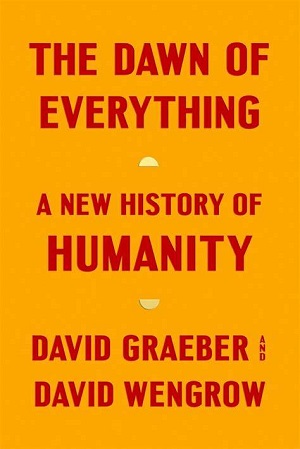
Best non-fiction: I will go with The Dawn of Everything: A New History of Humanity by David Graeber and David Wengrow just for its sweep, provocative point of view, and readability. I will then rush to add that it’s a book that I had a lot of disagreements with. Much of it I think is just wrong. But it’s a book of the year.


Best SF: Quite a few titles suggest themselves here but I’ll go with Izumi Suzuki’s Terminal Boredom. This is maybe stretching the idea of a new book a bit since it’s a collection of stories written in the 1980s (Suzuki committed suicide in 1986), but I think they’re mostly new translations and the book itself is new. In any event, I really liked it and even found it a bit surprising that what I thought one of the freshest and most groundbreaking SF titles of the year was actually written forty years ago.

Maigret: Maigret is Afraid

Though a boy from the provinces (his father was a rural estate manager), Maigret is as closely identified with Paris as you can imagine, even if he also gets around quite a bit: traveling to the U.S. in Maigret in New York and Maigret at the Coroner’s and England in Maigret’s Revolver. That said, the books I like the best are the more village-cozy ones where he finds himself in some small provincial town having to investigate a crime involving the corrupt or degenerate local big-wigs. Which is where Maigret is Afraid lands us.

Maigret isn’t really afraid. At least he isn’t afraid for himself. His fear is more like concern for the welfare of some particularly vulnerable individuals. He arrives in Fontenay to visit an old friend and immediately finds himself investigating a series of murders. The town, which is understandably on edge, is also deeply polarized along class lines (“Maigret had rarely experienced such cliqueyness”) and the proles have turned against the family living in the grand old manor house that dominates the high street.

That family is, in turn, an extreme example of decadence, their gentility now submerged in shabbiness and possibly insanity. Even the hired help have turned against them, which is less of a surprise given that they (the help) aren’t getting paid.

Speaking of the help, I always like the little nods in books like these to the social protocols of the time. It’s like when you see servants tucking in their upper class masters at bedtime in the novels of Agatha Christie and P. G. Wodehouse. Of course most of this is gone now, and for good reason. For example, why would you even want someone else to run your bath for you, as the hotel chambermaid does here for Maigret? How would they know what temperature you wanted it?

Though it’s a classic set-up, the plot here is a bit nutty, and stays off-focus as Maigret is more concerned with his friend the town magistrate than he is with what’s going on with the slayings. The magistrate’s problem? Madame Maigret thinks it’s the fact that he never married. Is her judgment apt, or is the magistrate just another illustration of men not being able to live with women or without them? The book seems to suggest that you’re damned either way.

Maigret index

One night in Dubai

Not going anywhere for a while.

Magnus Carlsen has defeated Ian Nepomniachtchi at the World Chess Championship, held this year in Dubai. This is Carlsen’s fifth championship and gives him some claim to be the greatest chess player of all time.

I followed the match intermittently, mostly through recaps. I didn’t have the patience, or the understanding, to watch any of the games live. The sixth game, which was the turning point in this contest, was the longest in the history of the WCC, clocking in at nearly 8 hours (136 moves). A great game, but hard to follow for the casual fan.

To my inexpert eye the early games were kind of interesting. They were all draws, and indeed Game 3 was rated the most accurate game ever played, as judged by the computer engines. Of course it was a draw. At the highest levels chess is sort of like a staring match. At one of the early press conferences Nepomniachtchi remarked that the only way to have decisions was if someone made a mistake. In the later games he would prove himself correct by making a number of bad ones. After Game 6 he really didn’t seem that interested any more. So not a great event, and one that just seemed kind of sad at the end.

Chess played online has enjoyed an explosion of popularity in the last couple of years, with many of the top players and Internet personalities becoming stars. But there’s also a trend toward faster formats like Rapid and Blitz that will likely continue, while classical chess will remain more of a prestige event. What I do like about all of this is the fact that even though computers are better at chess than humans now, we still want to watch humans compete.

Maigret: Maigret and the Man on the Bench

I wonder how relieved Maigret feels that he didn’t have kids. He does mention here that he had a daughter who didn’t survive, which I’m sure is a source of regret, but in so many of the cases he investigates kids are what get people into trouble.

The reference to his daughter, by the way, comes during a courtroom scene where Maigret is being interrogated by a defence lawyer about having struck the accused after taking him into custody. “At one point I boxed his ears, as I might have done my own son,” he admits. There’s a bit that hasn’t worn well.

I like the story though. Louis Thouret is found dead, stabbed in the back in an alley. How did he get there? As Maigret pieces together the last few years of Thouret’s life he discovers that he had led a dual life, along the lines of the Michael Douglas character in the movie Falling Down or John Lanchester’s novel Mr. Phillips. It all comes from having to keep up appearances, which is something Louis’ wife nagged him about. These are the sort of people Maigret is most drawn to in the Parisian crowd:

In former days what had struck, you might even say romantically inspired, him about this crowd in perpetual movement were those people who, discouraged, defeated and resigned, had given up on life and been swept along by the flow.

Since then he had come to know them, and they were no longer the ones who made the biggest impression on him; rather, those who did were on the rung above, the decent, honest, inconspicuous types who struggled day in, day out to stay afloat, or to foster the illusion, the belief, that they really existed and that life was worth living.

Maigret and the Man on the Bench is also one of those books where the action is driven by predatory and cruel women, and the men who try to appease them. In our own time the bathrobe has come to seem like the uniform of the man on the make; in Maigret novels it’s more often a woman in a dressing gown with a breast falling out. I should have kept count at the start of this series of how many times this happens. It’s usually just a depressing attempt at seduction by some vamp who doesn’t realize that Maigret can’t be tempted in that sort of way (they’d do better by offering him a drink). In fact, he is usually repelled by boobs, as here when visiting a woman of a certain age and noticing how “one of her breasts – always the same one, soft and wobbly like bread dough – had a tendency to slip free of her dressing gown.”

I wonder how critical a comment that is meant to be. I think a breast like bread dough would be pretty firm for a woman over 50.

This was a good one, though the ending is presented as a sort of afterthought. I think the lesson learned is not to flash your cash around, especially in certain neighbourhoods. Also don’t have kids unless you’re prepared to slap them about to keep them in line.

Maigret index

Maigret: Maigret’s Revolver

When you’re as famous a detective as J.-J. Maigret (that’s Jules-Joseph) you don’t have to go looking for trouble; it comes to your door. In this case it takes the form of a disturbed young man who drops in at his apartment and is entertained by Madame Maigret for a while but who leaves before the Detective Chief Inspector arrives, taking with him Maigret’s revolver.

I have to say, Maigret doesn’t come away from this initial bit of business that’s used to get the plot rolling looking very good. Why doesn’t he rush home when his wife calls him? Why does he stop on his way at a brasserie to have a few pastis with a colleague? Later he will apologize – to the young man! – for not getting back more quickly. Meanwhile, it is Madame Maigret who wants to apologize for not keeping the young man at the apartment, while she’s having to cook Maigret’s lunch at the same time.

I guess it’s a minor point, but like I say, it doesn’t show our hero in a good light. Or later when the couple are walking to a friend’s place for dinner and she has to tell him “Don’t walk so fast,” because “He always walked too quickly for her.” Always? How long have they been married? Wouldn’t he know this by now and slow his pace when out with his wife?

All of this is by the way, but it is something I tripped over in the opening pages. Once the story gets going here it has Maigret pursuing the young man, and his revolver, to London, where Maigret meets up with cross-Channel colleague Inspector Pyke of Scotland Yard, who we remember from My Friend Maigret. But as usual any attempt at establishing a Maigret chronology is frustrated by the offhand remark that “they had not seen each other for some time.” How long a time? Don’t know.

In my notes on Maigret and the Old Lady I speculated on whether or not Maigret could be considered an alcoholic. That’s a thought I had again here, especially when he’s stuck staking out the lobby of the Savoy Hotel, with the bar closed. Then when the bar opens he can’t get to it! This, this is torture:

His throat was swollen with thirst and from where he stood he could see the bar full of customers, the pale martinis, which from a distance looked so cool in their clouded glasses, and the whiskies that the men standing at the bar were holding in their hands.

You can bet this is a thirst that water isn’t going to relieve. And in fact when he later has dinner with the young man he’s been hunting and the young man only orders water Maigret looks down on him as a child. Grown-ups order a bottle with their meals, and if the young man doesn’t want any then that just means more for Maigret.

A quick read with a silly plot that wraps up without much of a conclusion. Alas, as Maigret has to concede, he is not God the Father but only head of the Crime Squad. A mere mortal who needs to stop off on his way home for a few drinks and who gets parched standing in a hotel lobby.

Maigret index