Bookmarked! #3: The Church of Presidents


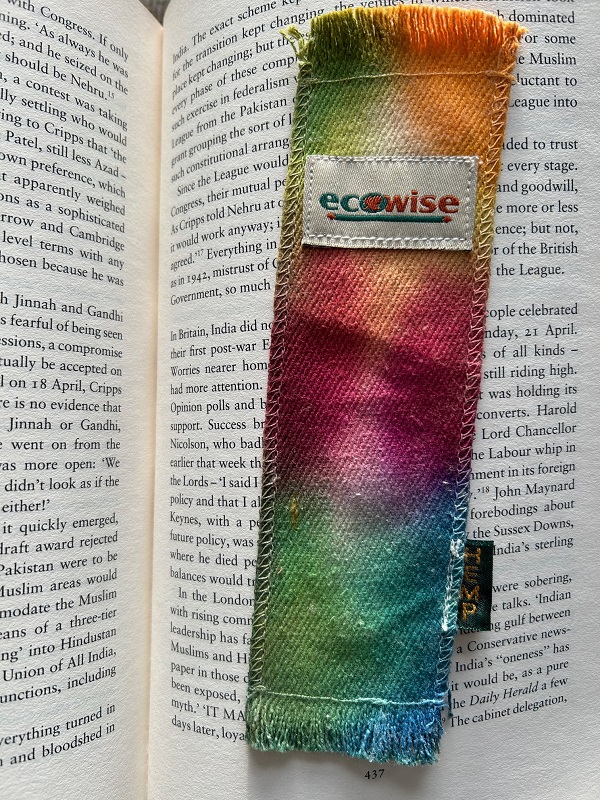
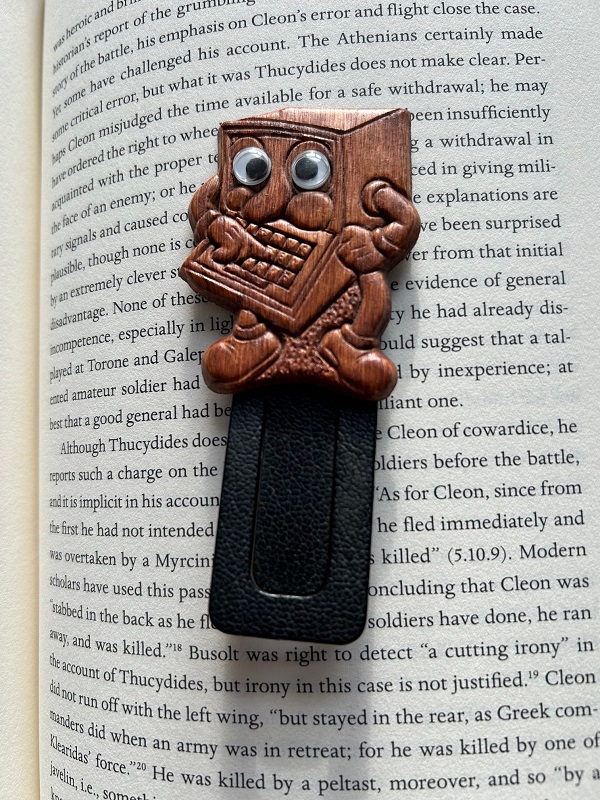
One of the great things about collecting bookmarks is that wherever you go as a tourist you can usually pick up a  bookmark to commemorate your visit. Sometimes they can just be a simple paper one that doesn’t cost anything. This is one I got on a visit to Boston and environs back in 1996 or thereabouts.

Book: True Believer: The Rise and Fall of Stan Lee by Abraham Riesman

Bookmarked Bookmarks

Total recall

A week ago I had a Dangerous Dining post talking about breakfast cereals, in the course of which I mentioned how Quaker’s Harvest Crunch granola cereal was one of my go-to favourites. Just a day or two later a recall was announced by Quaker that had that same cereal listed as possibly contaminated with salmonella.

Ouch!

Usually I don’t pay any attention to grocery recalls because they seem to always involve brussels sprouts or instant ramen. This one took me a bit by surprise, and not just for coming from such a major brand as Quaker. I mean, I’m sure it’s not impossible to get salmonella from granola, but isn’t it strange?

Salmonella is a bacteria most often found in poultry, eggs, raw and undercooked meat, and dairy products. At the end of several lists of foods most likely to be contaminated with salmonella I also found things like nut butters, some processed foods, and infant formula.

Not granola.

Even stranger was the wire story on the recall:

The U.S. Food and Drug Administration has received at least 24 reports of adverse events related to the products initially recalled, but no illnesses have been confirmed to be linked to the foods, an agency spokesperson said Friday. Adverse events can include medical problems, but also complaints about off taste or color of a product, defective packaging or other non-medical issues, the official said. FDA will continue to investigate the reports.

So no illnesses confirmed to have been linked to the foods? And “adverse events”? That sounds really vague. It even includes “complaints about off taste or color of a product, defective packaging or other non-medical issues.” Defective packaging?

I don’t know how much of this recall is due to an excess of caution, and how big the actual risk might be. In any event, seeing as I had several boxes of the suspect cereal this has become the first product recall that I’ve actually taken part in. I filled out a form online, attached a picture of the unopened boxes I had in my cupboard, and was told my request would take up to 8 weeks to process.

I’m curious to see what happens. Do manufacturers actually pay out when they have a recall? You’re on the clock, Quaker! I’m not expecting anything, but let’s see how you do.

Update, May 27 2024:

All’s well that ends well!

TCF: Under the Bridge

Under the Bridge: The True Story of the Murder of Reena Virk
By Rebecca Godfrey

The crime:

On the night of November 14, 1996 14-year-old Reena Virk was attacked by a group of six teenage girls and one boy under the Craigflower Bridge in the town of View Royal on Victoria Island. Virk managed to walk away from the initial beating but was followed across the bridge by two of the gang – 15-year-old Kelly Ellard and 16-year-old Warren Glowatski – who then proceeded to further assault and then drown her.

The book:

Rebecca Godfrey came to this book with solid credentials for the job, being raised in Victoria and having previously published a novel called The Torn Skirt about teenage girls in Vancouver who are involved in drugs, gangs, and prostitution. Under the Bridge isn’t what I’d call “novelistic” though, and its main literary flourishes are relatively subtle ones like the use of repetition for rhythmic effect. It’s a good read, and as a work of true crime it also indulges a more subjective point of view than you’d expect from say a journalist. But at the end of the day I wasn’t sure if this was a plus, or even if Godfrey really understood these kids all that well.

Moral judgment comes with the territory when writing true crime. One expects condemnation of the wicked and sympathy for their victims. And in what I have to say here I don’t want to be mistaken as saying that the wicked here weren’t truly wicked, and Virk not a tragic victim. But I felt that Godfrey was telling the story slant or leaving things out. Virk herself, for example, was a very troubled kid, but Godfrey doesn’t go into any of her history at all.

Obviously Godfrey despises the two main “bad girls”: Ellard and Nicole Cook (whose name is changed to “Josephine Bell” for legal reasons here). But Cook’s explanation of her initial motive for attacking Virk wasn’t “embarrassing and petty.” Apparently Virk had stolen an address book that belong to Cook and was phoning up Cook’s friends and spreading rumours about her, including that she had AIDS. “Her anger at Reena’s transgression,” Godfrey writes, “seemed to Josephine a perfectly normal response.” I think it was. Obviously things went much too far, but I can’t find fault with Cook being very angry at Virk. These things don’t just matter to high-school girls.

Then, much later, a big deal is made out of the low-cut red top Ellard wore to court the day she was granted a new trial. Most of the shock and outrage over this comes from the report of a journalist who attended the court that day, but Godfrey quotes it approvingly. And I wasn’t sure why. I see girls wearing more revealing outfits at the mall or walking around downtown all the time. Isn’t this just slut-shaming?

Godfrey’s loathing of Ellard and Cook is justifiable, though in examples like these I found her oddly out of touch with the lives of the people she was writing about. But what makes her telling of the story even more slant is that her attitude toward the girls is in marked contrast with the way she treats Warren Glowatski. She seems charmed by Glowatski, which is in keeping with the effect he is said to have had on many women, both girls his own age as well as teachers and parents. Was Godfrey another of his conquests? I can’t see why he gets off so easy here otherwise, as he seems to have been just as culpable as Ellard in Virk’s death. The main difference is that he appeared to be remorseful after the fact, but one can question how big a difference that should make or how sincere it was. Certainly Ellard didn’t do herself any favours with her long denial of any responsibility, but what are we to make of this description of Glowatski leaving the courtroom after the announcement of the verdict against him: “When he looked at the little boy [Virk’s brother], it was then that Warren knew, as if for the first time, what it was that he had really done.” How does Godfrey know this? Is it something Glowatski told her? It seems a sneaky way to enlist our sympathy and I wasn’t buying it.

That said, Godfrey does an exemplary job getting us through the many trials of Ellard quickly and efficiently, though the various police interviews come across as just pages of transcripts and the description of the high-school milieu and the personalities involved in the case struck me as missing something. Or a couple of things in particular . . .

Noted in passing:

Among the things Godfrey doesn’t talk about, I found it very odd that she didn’t explore the issues of race and sex more. Indeed, they’re both avoided entirely. I didn’t have any prurient interest, and wasn’t looking for salacious details, but I was wondering how sexually active these kids were. The suggestion is certainly made that boyfriends and girlfriends were having sex, but it’s just left at that.

Then the race of the various actors is also left largely unmentioned. The police would later declare that Virk’s murder wasn’t racially motivated (she was of Indian ethnicity), but this was later called into question. Meanwhile, the various high school gangs modeled a lot of their behaviour after American “gangsta” or rap culture, with one group even calling themselves the Crips. This all seems ridiculous now but probably really did mean something at the time to the kids in question. But what? Were these mostly white high schools? Was the girl (Godfrey names her “Dusty”) who wrote “Niggers rule” on the group-home wall in strawberry jam even Black? Or was this just the kind of thing white suburban kids said in the 1990s?

I don’t think Godfrey needed to go into these matters very deeply, but leaving race and sex totally out of the book seemed like quite an omission. I’m sure they both played a part in what happened.

A more minor point I flagged came when the school guidance counselor asked Glowatski if he’d come in with his girlfriend and talk to some of her other students about “being a couple. A nonviolent couple.” She wanted them to present as role models that “worked out their problems non-violently.”

Really? They were 15 years old. It reminded me of Anissa Weier, one of the girls involved in the Slenderman assault, being part of a program in her high school “helping younger students . . . make good decisions and stay out of trouble.” Would Glowatski be a better role model than her? But I guess the guidance counselor adored Warren, so thought it would be a good idea.

In any event, I understand kids listen to their peers more than they listen to adults, but this still struck me as weird. Were there that many “violent couples” among these adolescents that this was an issue needing to be addressed? Again I have to think that Godfrey might have gone into more detail about the nature of these relationships in order to provide some context.

Takeaways:

It’s easy for adults to forget, or just not appreciate, how truly hellish an experience high school is for many kids.

True Crime Files

The Empty Man

The Empty Man

This one left me with mixed feelings.

The main problem I had with it is that it’s murky. What I mean by that is two things. In the first place, Cullen Bunn’s story is so vague (not to mention unresolved at the end) that I honestly had no idea what was going on. There’s an outbreak of suicidal dementia that gets dubbed the Empty Man virus because that’s something the victims are heard to mention. There’s a preacher who thinks this might be a sign from or manifestation of God. Or it might be aliens. Or it might be some actual psychic virus, one that began with a possessed patient zero who the Empty Man cult is keeping alive. I don’t know. I’m not sure anyone in the comic understands either. A pair of FBI agents are investigating, and so is the CDC. They have visions and receive messages, but are these just hallucinations? Again, I don’t know. And we’re never told.

(I should add as an aside here that they made a movie “based on” this comic that was released in 2020. From what I’ve heard, it only has the loosest connection to the comic.)

Then there’s the art by Vanesa R. Del Rey. It’s very sketchy and rough. Which you could say makes it a perfect complement to Bunn’s story: you can’t understand what’s going on and you can’t see what’s going on either. What the hell is happening to the woman’s husband in the first issue? Explosive diarrhea? There’s no amount of looking at that picture that makes it clear to me. In other places the drawing is so crude and the colouring so dark I literally couldn’t locate faces, much less read them. No question Del Rey has her own style, but it wasn’t my thing even if it did give the book a really distinctive feel.

These caveats entered, I still found myself enjoying it, or at least committed to reading along. Bunn and Del Rey do, somehow, conjure up an effectively grimy vision of madness, and if it’s all a mess, well, that could just be the way things fall apart in the end times. But don’t ask me to explain any of it.

Graphicalex

Dangerous Dining with Alex #12

Tim Hortons Apple Fritter Cereal

Overview: An iconic Canadian brand enters the breakfast cereal market with a Post crossover of one of their best-loved donuts. At least I’m calling their apple fritters a donut because they’re baked. But some people would argue the point.

Label: Well, this really is the story isn’t it? The day before posting this review there was a story on the CBC website headlined “Bowled over: Why some Canadians are feeling duped by their breakfast cereal.” The big sticking point with labels on breakfast cereal is, and always has been, whether they include the milk you put on it with the total. Now some companies do you the courtesy of stating if the nutritional values are including milk, and in the case of this box of Apple Fritter cereal they have two columns, with and without a half cup of skim milk (yeah, as if I have any skim milk in my house). However, a lot of cereal packaging does not, which might confuse some people, especially if they’re expecting a big whack of protein. The other bit of misleading information that’s often included has to do with the presence of real fruit in fruit cereals. That can be trickier. I mean, this box says there are “no artificial flavours,” which didn’t make any sense to me. According to the ingredients listed there aren’t any apples in it so . . .

I guess it depends how you define artificial and natural. I take it these words have a technical or legal meaning, but I’m not sure what it is.

Since I always add fruit to my breakfast cereal and I sure wasn’t expecting anything healthy out of the box for a cereal based on apple fritters, this didn’t bother me. But what did was that comparing labels for different cereals is so hard. This is because they are all based on the nutritional values per one cup of cereal. But one cup is 32 grams of Apple Crisp, 43 grams of Honey Bunches of Oats, 55 grams of Shreddies, and a whopping 102 grams of Honey Nut Harvest Crunch (these are all drawn from what I have in my cereal cupboard currently). So if you want to compare them you have to get out a calculator.

I did my best with the math and was actually a bit surprised to see that Apple Fritter Cereal didn’t come off badly at all. Basically most of these cereals are pretty close in terms of sugar. Shreddies does better with fibre, which Apple Fritter Cereal has almost none of. But the bottom line is that this wasn’t as bad as I was expecting. A lot better for you than an actual Tim Hortons Apple Fritter. Donuts are deadly. With (skim) milk, a bowl of this cereal is 170 calories, with 2-3 grams of fat. An apple fritter donut at Tims is 330 calories with 11 grams of fat. Look, nobody thinks breakfast cereal is good for you. But compared to donuts or a muffin, it’s a lifesaving choice.

Review:

The flipside of this being not as devastating as I was expecting nutritionally is that the taste was quite disappointing. I thought I was going to be blown away by apple cinnamon flavour, but in this regard it doesn’t hold a candle to Apple Cinnamon Cheerios. In fact, I didn’t think there was much taste here at all. In shape and texture, the individual “fritters” closely resemble pieces of Cap’n Crunch, but that’s where the resemblance ends. Say what you want about Cap’n Crunch, but that cereal has zip. This was bland, and not in the least filling. I’m not hating on it or saying it’s inedible, but given that I have a list now of a half-dozen or so go-to breakfast cereals I can’t imagine I’ll try it again.

Price: $2.88 on sale.

Score: 4 / 10

Dangerous Dining

TCF: Rogues

Rogues: True Stories of Grifters, Killers, Rebels and Crooks
By Patrick Radden Keefe

The crimes:

“The Jefferson Bottles”: a billionaire oenophile makes it his mission to take down a fraudster selling new wine in old bottles.

“Crime Family”: a Dutch woman turns informer on her crime boss brother.

“The Avenger”: a documentary filmmaker goes after one of the key figures behind the Lockerbie bombing.

“The Empire of Edge”: insider information fuels a high-profile hedge fund.

“A Loaded Gun”: a university neurobiologist goes postal at a faculty meeting.

“The Hunt for El Chapo”: the Mexican, and ultimately U.S. authorities, finally get their man.

“Winning”: television producer Mark Burnett and the making of Donald Trump.

“Swiss Bank Heist”: a tech guy blows the whistle on a Swiss bank.

“The Prince of Marbella”: the pursuit of a high-rolling arms merchant.

“The Worst of the Worst”: a top death-row defence lawyer represents one of the Boston Marathon bombers.

“Buried Secrets”: an Israeli billionaire gets involved in the dirty business of resource development in Guinea.

“Journeyman”: a look at the life of chef/author/TV personality Anthony Bourdain.

The book:

All of these stories first appeared in The New Yorker. But even having such a prestigious publication behind you doesn’t always land you access. Keefe begins his prefatory remarks by talking about how many of these pieces were “writearounds”: “an article about a subject who declines to grant an interview.” But, he goes on to say, this does not diminish them. “Some journalists hate writearounds,” he tells us, “but I’ve always enjoyed the challenge they pose. It takes a lot of creative reporting to produce a vivid portrait of someone without ever getting to speak to them, but these pieces are often more revealing than the scripted encounters you end up with when the politician or CEO actually cooperates.”

What Keefe says here rhymed with something Michael Lista talks about in his true-crime collection The Human Scale, a book I was reviewing at the same time as I was reading Rogues. Lista describes “end-runs” (it means the same thing as writearound) and says that writing his own fair share of them “proved something profound to me: the interview isn’t necessarily the best way to know the subject of a story.”

I agree wholeheartedly, and indeed I would go even further and say chances are that a writearound or end-run is more likely to reveal something significant about the subject of a piece than one where there is a formal sit-down interview “for the record.” Because what are most interviewees going to say? Only what you would expect them to say. They have no interest in telling the truth while (ostensibly) setting the record straight or explaining themselves. They only want to shape the narrative in what are obviously self-serving ways. The reporter or biographer is better off just ignoring them and doing their own research. But writing about celebrities or people in a position of power, and the compromises that are necessarily made, is something I’ve considered at length elsewhere.

Turning to the people Keefe is writing about here, what would talking to Mark Burnett or Donald Trump have told him? I would expect Burnett to be smarter and more careful in how he expressed himself, but I’m pretty sure neither individual would say anything but what I’d expect them to say. In other words, nothing much. The futility of interviewing people like this is underscored when Keefe does, somewhat surprisingly, get to talk to Beny Steinmetz (“by some estimates, the richest man in Israel”) about his buying up mountains of iron ore in Guinea. It goes down in a totally predictable way. The point isn’t that Steinmetz just blows a lot of smoke, it’s that all he ends up saying is exactly what Keefe must have known he was going to say. He did nothing wrong. Other people are out to get him. They’re the bad guys. We all know how this story goes. So why even bother?

And why would the subjects bother, assuming they knew Keefe wasn’t just going to be a tool? At least for wealthy rogues it makes more sense to operate in the darkness. This ties into another connected theme: privacy.

In my notes on The Missing Crypto Queen I talked about how, whatever their other functions, the main reason for having cryptocurrencies is that they do an end run around the law (taxes and other financial regulations) and are used mainly for the purpose of money laundering and to keep shading dealings away from the prying eyes of law enforcement. I was thinking of that again when I came to a part in the story about sketchy Swiss banking practices and how fanatical they were to maintain their clients’ privacy. And not just their clients. Called before a committee of the British House of Commons, one bank CEO named Stuart Gulliver talked about how, at his institution, he had implemented “root and branch” reform:

But it was hard to see him as an agent of change. When committee members inquired how he chose to receive his personal compensation from the bank, Gulliver acknowledged that for many years he was paid through an anonymous shell company that he had set up in Panama – through Mossack Fonseca [the Panamanian law firm that was shut down after being exposed in the so-called Panama Papers as being involved in various tax evasion and money laundering schemes]. Gulliver insisted that he had always paid his taxes and that he employed the Panamanian shell simply for “privacy.” But he admitted his “inability to convince anyone that these arrangements were not put in place for reasons of tax evasion.”

I can see why that might be a hard sell.

It’s easy to feel ambivalent about privacy. It’s not well known, but the U.S. Supreme Court’s decision in Roe v. Wade was based on finding a Constitutional right to privacy. And fifty years later, privacy is seen as an important right in an age of non-stop monitoring and surveillance. But at the same time, privacy is also used as a shield by bad actors, particularly those with deep pockets, who can afford to buy the sort of cover that allows them to work in secret. Like people being paid in crypto, or setting up shell companies in offshore tax havens. When Keefe starts looking into Beny Steinmetz he begins by noting how “Despite his great wealth, Steinmetz has maintained an exceptionally low profile.” Despite? I think most billionaires avoid appearing on Lifestyles of the Rich and Famous or as one of the Rich Kids of Instagram. “He’s a very private guy,” one of Steinmetz’s friends tells Keefe. This is said, by the friend, to be mainly because Steinmetz is a family guy, but it has other obvious benefits. When being investigated on charges of corruption, it comes in particularly useful.

But how do you prove corruption? By its nature, corruption is covert; payoffs are designed to be difficult to detect. The international financial system has evolved to accommodate a wide array of illicit activities, and shell companies and banking havens make it easy to camouflage transfers, payment orders, and copies of checks. . . . The result . . . is “a web of corporate opacity” that is spun largely by wealthy professionals in financial capitals like London and New York. A recent study found that the easiest country in which to establish an untraceable shell company is not some tropical banking haven but the United States.

So what do you want? Protection for the little guy, a right to be left alone and to not have your data harvested with every click and text? Or more transparency for billionaires and corporate bad actors? It’s hard not to think that the rich and powerful are always going to find some way to weaponize every nice thing that comes along, so I guess we’re stuck with taking the bad with the good. All you can do, and probably should do, is be suspicious of any rich person with secrets.

This is a solid collection of reporting that reads long in a good way. The last story on Anthony Bourdain seemed the most of out of place, though I guess his drug use made him into a bit of a “rogue.” In any event, I can understand Bourdain’s popularity though his beat – food and travel – are subjects that don’t interest me much and I never watched his show. I also managed to avoid ever seeing more than maybe a couple of episodes of The Apprentice, and it’s interesting how I guess it’s taken for granted that Trump (and maybe Burnett) were both rogues without being involved in anything illegal. That we know of. But of course, we’d likely never know.

Noted in passing:

It’s often remarked how stupid even highly educated and indeed highly intelligent people can be. I was thinking of this when reading about Amy Bishop’s meltdown at a meeting of the faculty that had recently denied her tenure, which ended with her killing three of them. One of the profs in attendance who had voted against Bishop receiving tenure considered herself to be close to Bishop, and before things went to hell had “made a mental note to ask Bishop how her search for a new job was going.”

I have a hard time imagining how she thought Bishop, who she must have known was someone who did not enjoy robust mental health, was likely to take such a friendly inquiry. As it is, she ended up on her knees begging Bishop to spare her and her life was only saved because Bishop’s gun jammed. Bishop did actually try to shoot her twice.

I may have already known that the bulletproof glass in the president’s armoured car (nicknamed “The Beast”) was 5 inches thick, but it still surprised me. How do you see anything out of glass 5 inches thick?

Even more impressive though was the front door to one of El Chapo’s safe houses. Breaking this down turned out to be no easy matter.

The marines readied their weapons and produced a battering ram, but when they moved to breach the front door, it didn’t budge. A wooden door would have splintered off its hinges, but this door was a marvel of reinforced steel – some of the marines later likened it to an air lock on a submarine. For all the noise that their efforts made, the door seemed indestructible. Normally, the friction of a battering ram would heat the steel, rendering it more pliable. But the door was custom-made: inside the steel skin, it was filled with water so that if anyone tried to break it down, the heat from the impact would not spread. The marines hammered the door again and again, until the ram buckled and had to be replaced. It took ten minutes to gain entry to the house.

That’s some door! Provides quite a bit of privacy, I would think.

I’m always amazed at how cheap really rich people can be. Beny Steinmetz made a killing flipping part of his company’s interest in the iron ore range, turning a profit of over $2 billion. However, his company apparently only offered one of the parties to the deal $1 million to destroy some documents they were supposed to have. The payoff would have gone up to $5 million, but only if the company was able to win at trial and hold on to the assets. If I’d been offered such a cheap bribe I would have rejected it just on general principle.

Takeaways:

It’s hard to go through life trusting no one, but at the very least you shouldn’t extend trust to anyone who doesn’t trust you.

True Crime Files

Mighty Marvel Masterworks: The X-Men Volume 1

Mighty Marvel Masterworks: The X-Men Volume 1

The Mighty Marvel Masterworks volumes present the early days of familiar heroes and in the case of the X-Men we’re talking about a clean start because they aren’t heroes who made guest appearances in other comics before getting their own. They debuted with The X-Men #1 in September 1963 as something totally new. They also didn’t have any kind of origin story because Stan Lee was apparently tired of those so he just made up the idea of them being mutants (the original name of the comic was going to be The Mutants).

But I just exaggerated when I called them something totally new. We hadn’t heard these names or seen these faces before, but as the covers of the first two issues made clear, this was a superhero team that was very much “in the sensational Fantastic Four style!” So there’s a brainy leader (Reed Richards, Mr. X/Cyclops), a pretty girl with psychokinetic powers (Invisible Woman, Marvel Girl), some muscle (the Thing, the Beast), and a Mr. Cold (Iceman) instead of a Mr. Hot (the Human Torch). I guess the main difference here is that the whole team are supposed to be teens. Or, as the cover again heralds, “the most unusual teen-agers of all time . . .” I never thought of the X-Men as teens because they weren’t in the comics I read as a kid. But again they were just starting out here (the volume collects X-Men #1-10) and Marvel was appealing directly to a teen audience. Even Namor and Professor X have faces that make them look all of about 15 years old. Iceman is the youngest, for which he is mocked and even addressed as a “teen-age brat of a mutant” by Unus the Untouchable, but I don’t see how he can be much younger than the others if they are all teens. We’re told at one point that he’s 16, so he might still be in high school whereas the others are the equivalent of college freshmen, if any of them actually go to a real school.

So the “gang” (as they refer to themselves) were still finding their way. That’s clearest in the character of the Beast, who begins not as the blue gorilla he later transformed into but a wisecracker more like Ben Grimm. But then starting in X-Men #3 he’s shown reading an Advanced Calculus textbook and his vocabulary takes a big jump up. As a character he’s found his voice, and it won’t be long before he’ll be calling Namor a “piscatorial pirate.” That’s the Beast we all know.

Given how much I like (1) early Marvel comics, and (2) the X-Men franchise, I thought I would enjoy this a lot more. The thing is, I didn’t know the early X-Men well, aside from the odd costumes. But I think you would have been hard pressed in the mid-1960s to see anything in this series. They just aren’t very good comics. A lot of the super powers on display – like the psychokinesis of Marvel Girl and Magneto, the thought projections of Professor X, and the repulsion force of Unus – are invisible energy fields that can only be represented by squiggly lines. I think every issue has a page or two or three set in the training area of the Danger Room, and these are dull and repetitive filler. The budding love between Scott (Cyclops) and Jean (Marvel Girl) is schmaltzy true romance stuff. He thinks: “If only I could tell her the words I really want to say! How gorgeous her lips are . . . how silken her hair is . . . how I love her! But, I dare not . . .” She thinks: “I can’t listen to my own heart! I must be detached . . . unemotional!” When he is injured she indulges further: “Oh, Scott! My heart just breaks when I see you so pale, so shaken! If only I could comfort you with my arms . . . my lips . . . But I know I mustn’t! As our acting leader, you’ve no time for thoughts of romance! If only we were ordinary humans . . . free to follow the urgings of our hearts! But, I mustn’t allow myself such hopeless dreams.” And he thinks: “When she stands this close to me, I forget everything but my desire to reach out . . . to embrace her!”

They definitely don’t write comics like that anymore. And that’s progress. I mean, in one startling aside we even find out that Professor X is pining after Jean but dares not express his love for her. And that’s creepy.

So here’s the first ten issues of The X-Men and they’re really not very good. There are a surprising number of typos in the text. There’s more interesting drama going on in Magneto’s League of Evil Mutants than there is among the gifted teens. And when your best villain is a truculent, unmoveable force like the Blob and supplemental figures like the Tarzan rip-off Ka-Zar are your guest headliners, then it just feels like a lot of B-listers are duking it out. I mean, get a load of the Vanisher’s costume! Is he supposed to be dressed as a flower? Even the source of the team’s name is kind of dumb: “I call my students . . . X-Men, for Ex-tra power!” Sheesh. They really needed Wolverine.

I did get a smile though out of the Vanisher demanding ten million dollars “tax-free” from the government. Because what supervillain wants to pay taxes on his blackmail money?

Graphicalex