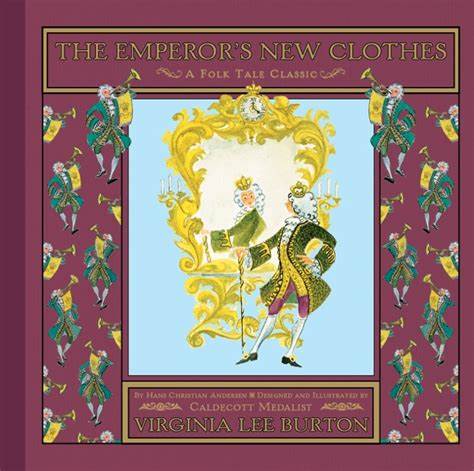
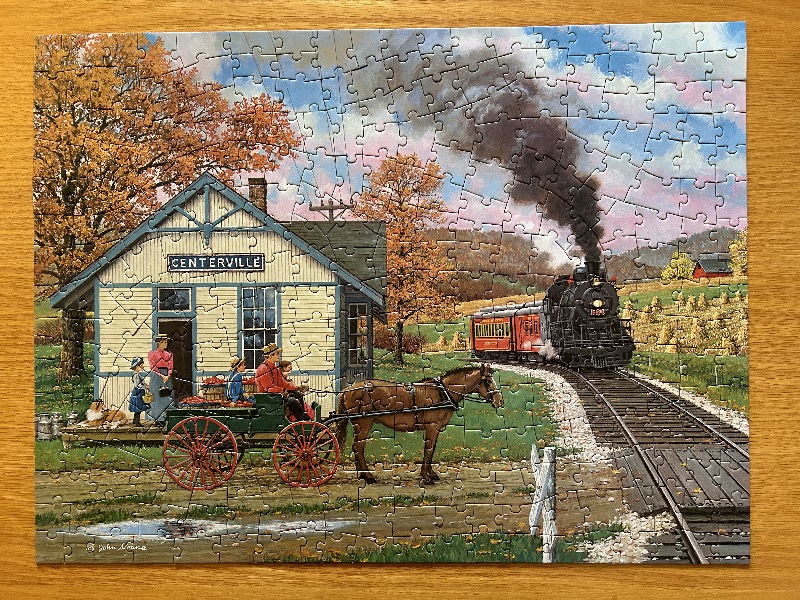
The googly eyes make this one.
Book: Thucydides: The Reinvention of History by Donald Kagan
The googly eyes make this one.
Book: Thucydides: The Reinvention of History by Donald Kagan
This is a pic I took on Valentine’s Day, looking up a hill that’s again barely noticeable. It’s going the other way and on the other side of the road from my previous bin post. But what’s worth noting here isn’t the line-up of bins but something else entirely that’s not bin-related. Where’s the snow? It’s the middle of February and this is Canada! What’s going on?

The crime:
In 1987 a pair of young Canadians, Jay Cook and Tanya Van Cuylenborg, were killed on a trip to Seattle to pick up a furnace part. Over thirty years later William Earl Talbott II was convicted for their murder, having been caught by the new science of genetic genealogy.
This is a great book, both for how well Edward Humes tells the story – offering different perspectives into the killing and subsequent investigation – and for the importance of what it tells us about modern forensics.
The basic elements of the crime weren’t exceptional. Jay and Tanya were a normal couple whose only mistake was being in the wrong place at the wrong time. That place being the state of Washington, a.k.a. Ann Rule country. “In the 1970s and 1980s (and continuing through the 1990s), Seattle and the Pacific Northwest had become home to an extraordinary number of serial killers, rapists, and killers.” Among the lowlights we find names like Ted Bundy, Gary Addison Taylor, Gary Ridgway, and Robert Lee Yates. I’m not sure why this should be. Humes says that “from a practical standpoint, the region served as a predator’s ideal habitat” because Seattle “was a big city . . . surrounded by . . . extensive woodlands and wild areas.” But I don’t think the urban or natural environment has much if any influence on the creation of a serial killer. And Talbott was, somewhat surprisingly, not a conventional killer. A moody child who tortured animals and then escalated to extreme and methodically planned violence, you would have thought he’d go on to a bloody criminal career. But apparently Jay and Tanya were a singular outburst.
In any event, Seattle wasn’t the place to be visiting in 1987. But Jay and Tanya’s fate, like most such tragedies, was the product of contingency:
so many other factors contributed to what happened, so many seemingly inconsequential events and decisions. They all had to occur just so and in precise sequence, like a once-in-a-lifetime alignment of the planets, without which Tanya and Jay’s trip wold have concluded uneventfully and there would have been no BOLO [a “be on the lookout” advisory], no manhunt, no case at all. First there had to be a broken furnace on Vancouver Island. Then a usually reliable Canadian heating supply company had to fall through, and a Seattle supplier had to have just the right vintage furnace and parts. There had to be a customer who needed that installation before the weekend and a business partner who could not make that happen. Jay had to have just lost a job so he had time to go to Seattle, and Tanya’s best friend had to be sick so she could not come and provide strength in numbers. The travelers had to reject a simple, foolproof route in favor of a complicated scenic course where a wrong turn was practically inevitable. Jay and Tanya had to arrive in Bremerton hours late, yet in time for the last ferry to Seattle. Omit or change any one of these links in the chain of events, and the couple from Vancouver Island would never have reached the same spot at the same time as a stranger determined to do evil.
Perhaps because Talbott was such an oddity and the murders a one-off, and perhaps because of the unfortunate series of accidents leading up the killings, the case remained cold for a very long time. But then came what Humes refers to as the third revolution in DNA profiling: snapshot DNA phenotyping (generating an image of a suspect based on their DNA) and even more significantly genetic genealogy.
Humes provides a good backgrounder on the history of the science behind genetic genealogy. Basically it means identifying a source of DNA by using vast online genealogy databases. Previously, using DNA “fingerprinting,” you could only match DNA found at a crime scene with the individual who shared the exact DNA – that is to say, the very person the police were looking for. If that individual’s DNA wasn’t already on file somewhere as a previous offender, you were out of luck. With genetic genealogy investigators could drill down to virtually any individual by way of their family DNA. It wasn’t even that hard. What was originally thought impossible turned out to be simple. It took CeCe Moore, the DNA detective on this case, only a couple of hours sitting on her couch at home with her laptop to identify Talbott, an individual with no prior record.
It all sounds like science-fiction. When combined with the snapshot image generator it’s even a bit like Minority Report. But there’s no denying it’s effectiveness. What concerned people was the potential for misuse in such a technology. Who had the right to such information? What could they do with it?
I’ve always had two responses to these concerns. In the first place, the toothpaste is out of the tube. Now that we have the technology available, we’re going to use it. Or at least somebody’s going to use it. And how and why did things get to this point? Not because of governmental overreach but because we voluntarily gave up all this information. I’ve never understood why people complain about the government invading our privacy when we’ve been more than willing to let private companies invade it even more. I’ve gone on about this before, and had made notes to say more on the subject here, but at the end of the book Humes himself says it better and he’s worth quoting at length because this is important:
Focusing on law-enforcement use of DNA databases as a major threat to privacy is like regulating matches in order to address the problem of rampant wildfires. Attention is being misplaced – or diverted from – much larger potential threats to privacy and democracy.
While we obsess on what the police are up to when ferreting out a few names and emails from public genetic databases, millions of Americans are blithely uploading their complete genomic information to largely unregulated private profit-making companies who monetize customers’ precious, extremely valuable DNA in a multitude of ways, including highly lucrative biomedical research. And, rather incredibly, the DNA donors are paying these companies to do it.
More than forty million people had taken a consumer DNA test by the end of 2021. That’s nearly double the number reached in 2018. What the police can access in their searches is nothing compared to the vast information these millions of customers are giving to the private companies. It may go out the door as just a tube of spit in the mail, but to these companies, your spit is liquid gold from which your most sensitive, private self and secrets can be extracted: Are you prone to heart disease? Cancer? Alzheimer’s? Mental illness? Depression? Do you have children with more than one spouse? Are you adopted? Are you related to a criminal?
People are giving away the keys to stuff even they may not know about themselves to profit-making companies who answer only to their shareholders. And the information you turn over to these corporations also informs them about your children and your parents and your other close relations – everyone who shares your DNA. You might as well send them your diary, your checkbook ledger, and your tax returns. But all the critics want to talk about is what the police are going to do with those names and emails they extract while hunting for serial killers.
It would only take one Enron of DNA, in an otherwise respectable industry – or one well-lace database hack of companies whose vulnerability has already been demonstrated – to cause more damage than anything imagined by those who worry about cops using genetic genealogy. What would the data be worth to an insurance company looking to deny coverage? To companies looking to screen their potential hires? To lenders and underwriters who make millions for every fraction of 1 percent of risk they can avoid? What would sensitive private information be worth to political operatives, domestic and foreign spies, to those who would blackmail leaders or manipulate and game an election? And the DNA doesn’t have to be from the person being coerced. Malefactors can get to them through a cousin. Or an aunt. Or a child.
It’s painful when your credit card is hacked. But you can cancel it and get a new one. Once your genome is hacked, there’s no undoing it. It’s the only one you’ve got.
There is much here that needs to be flagged. What the police can access in their searches is nothing compared to the vast information these millions of customers are giving to the private companies. People are giving away the keys to stuff even they may not know about themselves to profit-making companies who answer only to their shareholders. You might as well send them your diary, your checkbook ledger, and your tax returns. Once your genome is hacked, there’s no undoing it.
The possibilities for using these new tools to catch bad guys are endless. But the downside is also unimaginable.
Noted in passing:
Humes mentions at one point that the series finale of Roots was watched by 71 percent of households in the country. This struck me as being very high. I found a list of the most watched television broadcasts in history and the numbers quoted were all for the number of viewers. Apparently the Apollo 11 Moon landing was the most watched broadcast ever (around 125-150 million viewers), which I can believe. The next eight shows on the list were all Super Bowls, then Richard Nixon’s resignation speech. The top primetime program was the series finale of M*A*S*H. The series finale of Roots came in tied for sixteenth with The Day After.
But, as I said, these rankings are all for number of viewers, not percentage of households. If you’re talking about that latter figure, 71 percent is incredible. Given the splintering of the audience today and the fact that streaming viewing has largely taken over from television it’s a number we’re not likely to see again.
Takeaways:
In the twenty-first century, we’re all just part of the database.
A banner across the top of the cover says KEVIN SMITH. This is in even bigger lettering than the title which is immediately beneath it. So you can call it a Kevin Smith production. Indeed, it demands you call it that.
There’s nothing wrong with a comic trying to cash in on a celebrity name (think of Keanu Reeves and BRZRKR), and since Smith is a sometimes able screenwriter and die-hard comic fanboy, I didn’t go into this one with any misgivings or, for that matter, particularly high expectations.
Smith himself is self-deprecating about his efforts in his Introduction. “By series’ end, I realized it wasn’t the best Batman story I could write; nor was it Walt’s finest hour.” Walt being Smith’s buddy and series artist Walt Flanagan. The most he’ll say for Cacophony is that it provided useful experience for his later efforts. So that’s setting a pretty low bar.
I thought it was just OK. Only three issues, so there wasn’t much there. The storyline has Onomatopoeia (a Kevin Smith supervillain creation) breaking the Joker out of Arkham Asylum so that together they can hunt down Batman. Or at least I think that was the plan. Ono doesn’t say much and needless to say things don’t work out.
If the story is a weak sauce at least the writing has some of Smith’s distinct personality and brand of humour. Which is either a good or a bad thing, depending on how big a fan you are. And so the Joker is a mouthpiece for various semi-obscure cultural references, and even a couple of Maxie Zeus’s security guards get into an argument over the original Clash of the Titans. For the most part I thought this stuff fell flat. When the Joker says at the end that “I’m Glover, Circle Jerk’s Mel, Broodin’-Ruben’s Busey, and this is the end of Lethal Weapon,” I just couldn’t figure the comparison out. Nor could I understand the Joker’s big line at the end about how “I don’t hate you [Batman] ‘cause I’m crazy . . . I’m crazy ‘cause I hate you.” These are just words. Then there’s also some politics thrown into the mix, mainly in the opening pages where a lack of funding has made Arkham Asylum even easier to break into and out of. I did love Maxie Zeus saying that he’s done a lot of good with “some of the profits” from his drug operation (a philanthropist very much in the modern mode), but the Joker’s fascination with Ayn Rand’s The Fountainhead was another joke that went over my head. And I wasn’t sure what to make about the television broadcast being presented out of its original order the second time it’s played. Was that a mistake or was I missing something?
The art too was just OK. It looks quite generic. Action is handled pretty well, but Flanagan has a lot of trouble with Bruce Wayne’s face the few times we see it. The Joker’s sad excuse for a beard though is memorable.
Not a write-off or a disaster then, but nothing very special about it either. I got the feeling Smith wanted to go a little deeper into the Batman-Joker connection, but that’s been done so many times now that he really doesn’t have much to add. As comics go it’s the sort of thing that might leave you curious to see more, but not necessarily eager. Nevertheless, Smith does promise that he was getting better and learning on the job so I’ll probably check in later to see how that turned out.
Just another novelty bookmark, this one illustrating the adage about raining cats and dogs. It’s hard to tell from the picture, but it has a 3-D effect.
Book: Empire of Blue Water by Stephan Talty
I don’t think I’m really keen on beaded bookmarks, at least ones where the beads go between the pages. But this is nice.
Book: The Third Reich: A History of Nazi Germany by Thomas Childers
This is an index to my posts showcasing items from my bookmark collection. Bookmark it!
#1: Kiki the Cat
#2: A is for Acorn
#3: The Church of the Presidents
#4: Forest Vision
#5: Blessings
#6: Bookworm
#7: Ivory and Gold
#8: Leonine
#9: Opera Masks
#10: Pancake Bay
#11: Beaded
#12: Raining Cats and Dogs
#13: Computer Man
#14: The Fabric of Our Lives
#15: Dragon Time
#16: Piper and Stone
#17: The GG’s
#18: Fearsome
#19: FKA Easter Island
#20: Scotland Forever
#21: Tapestry Castle
#22: Miró, Miró
#23: Good Wood
#24: Ribbons ‘n’ Beads
#25: Magic Carpet Ride
#26: All Aboard the Ark!
#27: Library Card Art
#28: The Citadel
#29: Butterfly Bookmark
#30: Another Butterfly!
#31: Happy Bookday!
#32: Wisdom for the Ages
#33: The Cat is Back
#34: By Way of an Obit
#35: Dragonfly
#36: Licensed to Read
#37: Bookstores No More I: Classic Bookshops
#38: Bookstores No More II: The Bob Miller Book Room
#39: Bookstores No More III: World’s Biggest Bookstore
#40: Flower Power
#41: In the Beginning
#42: Going Big
#43: Bookstores No More IV: The Book Room
#44: Bookstores No More V: Lichtman’s News and Books
#45: Summer Palace
#46: Another Bookworm
#47: Dare to Dream
#48: Bon Voyage!
#49: Kitty Corner
#50: Bookstores No More VI: Book Depository
#51: Bookstores No More VII: Book City (Annex Location)
#52: From the Glassworks
#53: Animal Crackers
#54: Woody
#55: Hitting the Slopes
#56: Bookstores No More VIII: Macondo Books
#57: Bookstores No More IX: Booksmith
#58: A Wild Goose Chase
#59: Book Sale Bookmarks
#60: Canoodling
#61: A Strange Bird
#62: Sweet Liberty
#63: Bookmark Like an Egyptian
#64: Scary Stuff
#65: Coin and Elephant
#66: War and Peace
#67: Bookstores No More X: Albert Britnell Book Shop
#68: National Book Festival
#69: Bow-wow Bling
#70: Book Hoard
#71: This Is Not a Pipe
#72: Pandamonium
#73: Chinese Names
#74: A New Leaf
#75: Writers’ Trust
#76: Bookstores No More XI: The Book Cellar
#77: Bookstores No More XII: Longhouse Bookshop
#78: Awarded for Distinguished Bookmark Collecting
#79: Medieval Times
#80: Napoleon in the Library
#81: Stone Mask
#82: Bookstores No More XIII: Co-Op Bookstores (Stone Road Mall Location)
#83: The Pot of Basil
#84: The Rich Coast
#85: Portrait of the Artist as a Grumpy Old Man
#86: The Luck of the Irish
#87: Throwing Darts
#88: Reporting on the Afterlife
#89: Hungry Like the Wolf
#90: New Zealand Wood
#91: Memories of Suzhou
#92: Memories of Suzhou 2
#93: Montreal Moose
#94: Mush!
#95: Bookmark Like an Egyptian 2
#96: The Man in the Iron Mask
#97: The Girls with the Jugs
#98: Return to the Rich Coast
#99: Alnwick Castle
#100: Kylie Too!
#101: Hello, Frank Lloyd Wright
#102: Shiny Eyes
#103: Osprey
#104: The Canadian Encyclopedia
#105: Shark Week
#106: Bookstores No More XIV: Nicholas Hoare
#107: Bookstores No More XV: Highway Book Shop
#108: May the Bookmark Be with You
#109: Tassel Time
#110: Souvenirs of Scotland
#111: Oh, Garfield
#112: Turkey Day
#113: Kafka Offshore
#114: Tablet
#115: More Scary Stuff
#116: Happy November!
#117: Remembrance Day
#118: Panda Poo!
#119: Tom Likes Books
#120: Snowflake
#121: Stained Glass
#122: Felt
#123: That Most Wonderful Time of the Year
#124: Christmas 2025
#125: Eek! A Mouse!
#126: English Country Estates
#127: Do Not Disturb
#128: Celeb Sex Shenanigans
#129: Book Pile
#130: A Trip to the Taj
#131: Bookstores No More XVI: The Children’s Book Store
#132: Bookstores No More XVII: Bryan Prince Bookseller
#133: Prince Edward Island
#134: Book Shelves

The crimes:
“The Loved Ones” by Tom Junod: were the operators of a New Orleans nursing home that didn’t evacuate before Hurricane Katrina struck guilty of negligence? Or did they care too much?
“The Inside Job” by Neil Swidey: the owner of a construction and landscaping business hires an accountant from a temp agency who proceeds to embezzle millions from him, largely without him even being aware of it.
“The Talented Dr. Krist” by Steve Fennessy: the perpetrator of a ghastly kidnapping does his time and even becomes a doctor, but can’t help getting into trouble.
“The Case of the Killer Priest” by Sean Flynn: a priest in Toledo is charged with having killed a nun a quarter-century earlier.
“Double Blind” by Matthew Teague: British efforts to infiltrate the IRA are so successful the double agents don’t even know whose side everyone is on.
“The School” by C. J. Chivers: an account of the Beslan school massacre in North Ossetia, as experienced by various survivors.
“A Kiss Before Dying” by Pamela Colloff: a high school football player in Texas kills his ex-girlfriend by shooting her in the head with a shotgun and throwing her body in a stock pond, apparently all in accordance with her wishes. He is acquitted at trial.
“The Devil in David Berkowitz” by Steve Fishman: the Son of Sam killer finds God in prison, or so he says.
“The Man Who Loves Books Too Much” by Allison Hoover Bartlett: a swindler steals rare books from second-hand bookshops across the U.S. He’s caught, but remains largely unrepentant.
“Dirty Old Women” by Ariel Levy: female teachers have affairs with underage male students.
“Who Killed Ellen Andross?” by Dan P. Lee: a pair of high-profile medical examiners face off in the murder trial of a husband accused of killing his wife.
“Fatal Connection” by David Bernstein: a Chicago escort is murdered not by one of her clients but by her financial adviser.
“Last Seen on September 10” by Mark Fass: a woman living in Lower Manhattan goes missing the day before the attack on the World Trade Center. Her family think she died in the bombing but others have their doubts.
“My Roommate, the Diamond Thief” by Brian Boucher: a man rents out the bedroom in his one-bedroom apartment to a mysterious fellow who turns out to be a jewel thief on the run.
“The Monster of Florence” by Douglas Preston: an American writer living for a while in Florence befriends an Italian journalist and they start looking into the case of a serial killer who terrorized the area years earlier. This gets them both into trouble with the authorities.
Like all the entries I’ve read in this (now sadly defunct) series, it’s great. I didn’t think there was a bad story. Levy didn’t do much with her quick look at teachers-in-heat, and Boucher’s piece is also a bit light, but they’re also the two shortest stories and still manage to be interesting and fun.
On the other end of the scale, C. J. Chivers on the Beslan school massacre is the longest piece and still feels as though it needed more room. It really should have been a book, complete with photos and maps, as it’s basically a collage of first-person accounts (or “a museum of words,” as Chivers puts it) and isn’t always easy to follow. Meanwhile, the fact that at least two of the stories included here – the ones by Bartlett and Preston – were later turned into successful books gives you some idea of the quality of the material.
I don’t go into such an anthology expecting much in the way of continuity in terms of the subject matter, so I was surprised to find a strong recurring theme. Perhaps guest editor Linda Fairstein had a predilection for a particular kind of crime story. However it came about, a lot of the stories deal with a betrayal by individuals in a position of trust.
We begin with the operators of a nursing home who put their residents at risk as a hurricane bears down on New Orleans. Next up an accountant embezzles funds from her employer. Then we have a bad doctor and a killer priest. Also we’ll have teachers having sex with their students and a financial advisor who steals money from his client before killing her. And finally the Italian police in “The Monster of Florence” demonstrate not so much ignorance and corruption (though there was probably some of that) as provide evidence that they’re not the kind of people you’d want to put in a position of authority.
A lot of this is a sort of sub-set of a message that a lot of true crime writing carries: that you can’t trust anyone. Put another way, “if delusion is our enemy, it equally may be said that trust is no friend of clear-thinking” (this is from the Introduction by the series editors). Or, as Duncan says of the treacherous thane of Cawdor:
There’s no art
To find the mind’s construction in the face.
He was a gentleman on whom I built
An absolute trust.
Indeed there is no art, as Duncan is about to find out by putting his trust in Macbeth. He’s learned nothing. That said, we learn from books as much as example and experience, which is one of the things that I think gives true crime real value. If not an art, there’s a skill to reading people that we can always get better at. It begins with realizing that there’s no one deserving of “an absolute trust.”
Noted in passing:
In my notes on Kathryn Casey’s She Wanted It All I talked about some of the stupid ways that not-very-bright criminals find to blow their ill-gotten money. I thought of that again reading about Angela Platt bilking her boss for millions and then spending it on not just a new house, a big-screem TV, and time-shares in Florida and the Bahamas but also “the kind of bizarre crap you’d expect to find if you could journey through Christopher Walken’s brain”:
A hot rod fashioned into a green monster with teeth the size of fence pickets. A 1931 Plymouth with the faces of Bonnie and Clyde and lots of bullet holes painted on it, bearing the Rhode Island license plate UMISED. Collections of rare guns and wretched movies. Talking trees inspired by The Wizard of Oz.
OK, I’m not sure what this has to do with Christopher Walken, and I have a small collection of wretched movies myself, but this sounds pretty bad. And there was more! Platt also had a life-sized statue of Al Capone wearing a white suit and chomping on a cigar. For her brother’s wedding she hired the entire Riverdance touring troupe (at a cost of over a quarter million dollars) and Burt Bacharach (nearly $400,000) to perform. Given that her boss hardly even noticed the money she was siphoning off to pay for all this, I really had to laugh.
I’d forgotten how David Berkowitz had been caught. A woman had seen his car being ticketed on the night of one of the killings and reported it. When police investigated they turned up a lot of suspicious information relating to Berkowitz, and when they tracked down the car (Berkowitz hadn’t changed his plates) they found he’d left a gun lying unconcealed in the back seat.
It’s interesting how these routine traffic violations have played a role in catching famous bad guys. Peter Sutcliffe, the Yorkshire Ripper, was caught because an officer noticed that his car had false plates. Timothy McVeigh was only stopped while leaving Oklahoma City because he hadn’t attached plates to the vehicle he was driving. It’s the little things that trip you up.
Takeaways:
While not everyone is a potential killer, it’s a safe bet that nobody is exactly what they seem to be. In any event, you should always question people in positions of trust and authority unless you know they’ve earned it. They rarely have.
This is the title that launched the Archie Horror imprint due to its boffo success both critically and with a wide audience. And I don’t find that success surprising as I loved it in almost every way.
The idea grew out of a parody Life with Archie cover by Francesco Francavilla that had Archie being confronted with zombie versions of Jughead, Betty, and Veronica. This seemed like such a good idea, they decided to make a whole comic out of it. Because this was the time of peak zombie and zombies were going well with everything. Pride and Prejudice and Zombies (the novel) had come out a few years earlier and been a smash success, quickly followed up by a major motion picture. Such mash-ups thrive on the incongruity of high-culture being mixed with low, or in this case a wholesome American town turned into an abattoir. After a while, and really it didn’t take long, the joke got stale. But some really good work came out of it too.
Afterlife with Archie is really good. Things kick off naturally enough at Riverdale High’s Halloween dance, and just before the zombie outbreak begins we get a lot of insider jokes keyed to horror movies, which is very much in the manner of these things. Pet Sematary, for example, is referenced because the apocalypse is triggered by Sabrina the Teenage Witch raising Jughead’s beloved Hotdog from the dead, with predictably disastrous results. The seminal text Night of the Living Dead gets a nod in a flashback with Mr. Weatherbee horning after Miss Grundy. Dilton Doiley is the nerdy character from the Scream franchise who knows how horror movies are supposed to play out. And so it goes.
From here we’re taken through the familiar run of zombie incidents. The infected person who tries to brush it off as no big deal. The siege, this time in stately Lodge Manor no less, and subsequent breakout. The confrontation with transformed loved ones. Now you’d think, or at least I would have thought, that none of this was all that interesting or new, and on one level I guess it isn’t, but I still enjoyed it immensely. Writer Roberto Aguirre-Sacasa, who was the main force behind the TV series Riverdale, adeptly brings the Archie brand into a sort-of real world, fleshing out the main characters just before they start eating flesh. In terms of their appearance they’ve changed a lot from their traditional look – Archie in particular is unrecognizable but for his red hair, and Jughead but for his cap and “S” sweater – but you can actually buy into them as real teenagers. Some liberties are taken with the fringe Riverdalers – Ginger Lopez and Nancy Woods are romantically involved, and Cheryl and Jason Blossom have some kind of incestuous attachment hinted at – but I didn’t know these people anyway.
Poor Jughead: Patient Zero or “Jugdead” here and made into a werewolf in the Jughead: The Hunger series. It’s hard being the odd man out in any gang, and I guess he always was. Were these transformations his revenge? I think that’s something in the mix.
So yes, I loved it. Enjoyed nearly every page of it. And a special shout out for some great lettering by Jack Morelli. The only misstep that registered was the business with Archie’s dog Vegas (I don’t remember him from the comics). I thought they should have skipped that part. But even that might have had a purpose, making me wonder if there was maybe a connection being drawn between his doggy devotion to his master and the Lodge butler Smithers (an ancestor of Waylon Smithers in The Simpsons?) with his sense of duty toward his Mistress Veronica. I liked being drawn into these kinds of conjectures, and they weren’t what I was expecting from an Archie zombie comic. Well done!