The Battle of Cape Matapan remembered

HMS Valiant, in her glory days.

The Battle of Cape Matapan was a naval engagement fought between ships of the British and Australian navies and the Royal Italian Navy from 27 to 29 March 1941 in the Mediterranean Sea. It was a clear victory for the allies, as they sank five Italian ships without losing any of their own, but it didn’t have great strategic importance, mainly serving to limit Italy’s operations in the Eastern Mediterranean for a while. For military historians, however, it is distinguished as “the first big naval battle of World War II” and “the only large fleet action in the war which took place outside the Pacific theater.”

Such, anyway, is the judgment of William Koenig in his chapter on the battle included in a coffee-table book called Two Centuries of Warfare. That book was published in 1978 and it was hanging around the house when I was a kid. At some point, I believe around 1980, in fell into the hands of a family acquaintance who had actually been involved in the battle as a member of the Royal Canadian Naval Volunteer Reserve, serving I believe as a radar operator on the battleship Valiant (the use of radar played an important role in the British victory). He wrote up a note on his own observations in response, and it was kept stuck in the pages of the book. I recently rediscovered it when the book was getting ready to be tossed out in a house-cleaning exercise. I thought I’d post a transcript of it here just because it’s worth holding on to these eyewitness/participant accounts of history before they’re lost entirely. Unfortunately I no longer remember the name of the fellow who wrote the note and I can’t make it out from his signature. But for anyone interested in the battle, here’s what he had to say (I’ve given a literal transcript, with no editing for spelling or grammar).

This is not quite as it happened. The Italian ships Pola, Zara and Fiume were first picked up by Valiant’s radar at about 15 mile range which permitted the British ships Warspite, Valiant and Barham to close the Italian ships. At about 3000 yards range the ships were [?] to starboard in line a head and passed the Italian ships at about 2900 yd. range. Using radar range bearings the search lights were turned on and the battle ships opened fire with the results as indicated in the book. Of interest is the fact that Prince Philip now Duke of Edinburgh a midshipman at the time manned one of the search lights. I was passing range and bearings to him over the ships intercom system.

Xerxes: The Fall of the House of Darius and the Rise of Alexander

Xerxes: The Fall of the House of Darius and the Rise of Alexander

I guess you could call this a sequel to 300, but it came out in 2018, which was 20 years later, and doesn’t have much to do with the events of Thermopylae, which it skips in its race through over 150 years of Persian history. There’s also no real connection to the movie 300: Rise of an Empire, which actually had come out four years earlier.

The treatment of history is weaker than in 300 too. The “House of Darius” would be the Achaeminids, wouldn’t it? Or that’s what Darius I would have claimed. But I would have thought that would be the House of Cyrus, if anyone. The jeweled bodysuits of Xerxes and other Persian emperors was, and remains, mystifying to me. I was rolling my eyes a lot at some of the architecture and statuary, like the colossi on the Athenian acropolis. Aeskylos (Aeschylus) is reimagined as a cross between Darth Maul and a ninja. And Alexander the Great, when he shows up, is basically the reincarnation not of Hercules but Leonidas (because beards are manly). It all seemed a lot sillier than the earlier book. And the art felt lazier too. More full-page splashes (a good word for the splatter effect being used so often), with a few great sequences (the imagined deaths of Xerxes) and some very uninspired and pointless ones (the Ethiopian archers). Given the minimal and disjunctive text, it felt like a bunch of posters with big titles: Marathon! Xerxes Assassinated! Gaugamela! I’ve added the exclamation marks but they feel like they should be there.

300 managed to be an original and quite effective retelling of a particular historical incident. This book covers vastly more ground (both in time and space) and ends up just being a bunch of odd pictures. As I’ve said, some of them are great but most are just more of the same and I came away feeling that none of it added up to much.

Graphicalex

Bookmarked! #41: In the Beginning

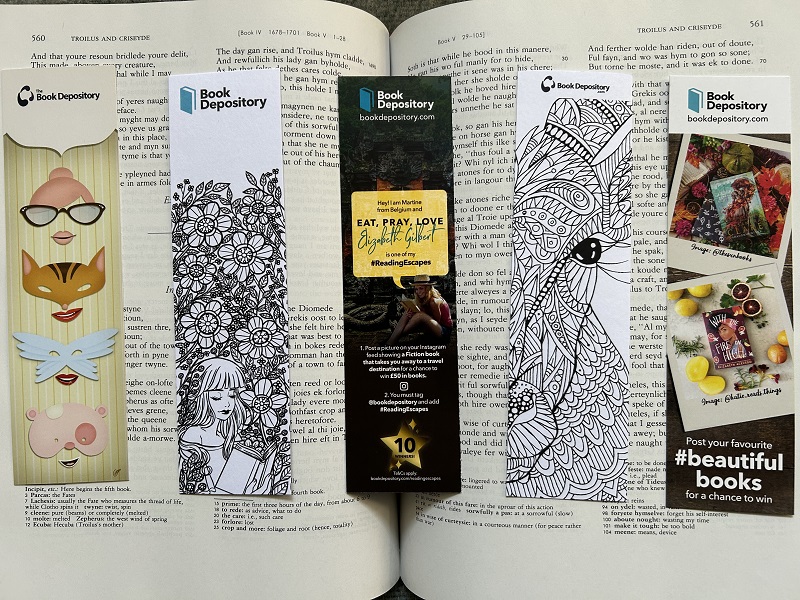
A very, very special bookmark post today! Yes, this is the one that started it all. My first bookmark. I think I got it back when I six or seven years old. And it received heavy use in those early days, as you can tell from the fading. I certainly have more expensive and exotic bookmarks in my collection, but none that mean as much to me as this one.

Book: Complete Poems and Major Prose by John Milton (ed. Merritt Y. Hughes)

Bookmarked Bookmarks

Marple: The Murder at the Vicarage

A characteristic of a lot of detective fiction is that it’s quickly consumed and just as quickly forgotten. We remember the classics – The Hound of the Baskervilles, Murder on the Orient Express – but the others disappear from our minds so quickly that we can read the same book just a year or even months later and be unable to remember the first thing about them. At least this is true for me, as it was for my mother, who always had a mystery novel (or several) by her bedside. When I commented on the fact that she’d read some of them before she’d reply that it didn’t matter because she could no longer remember whodunit.

One reason I think this happens is because a lot of what goes on in a mystery novel is supposed to be quickly forgotten. Important clues are skimmed over in such a way that you’re meant to miss them. Is it any wonder they vanish from our minds when the book is done?

That’s just a theory of mine. But it helps explain how, when I came to write up these notes on The Murder at the Vicarage only a couple of weeks after finishing reading it, I could no longer recall who it was that had been killed at the vicarage, who had done the killing, and why. And this wasn’t a momentary lapse of recall. I tried for hours to think of what had happened in the book and couldn’t come up with anything.

At any rate, the story has it that Colonel Protheroe is shot in the vicar’s study, and there are no end of suspicious characters floating around. The vicar himself is the narrator, and he finds the discovery of a body in his study quite upsetting not just for personal reasons but because “nothing exciting ever happens” in town. “There are had been no murder in St. Mary Mead for at least fifteen years,” and as a result they “are not used to mysteries.” Seeing as this was the first Miss Marple novel, these might be taken as famous last words. But once Jane is on the case he knows things are in good hands. “There is no detective in England equal to a spinster lady of uncertain age with plenty of time on her hands.” Especially when that spinster is “not the type of elderly lady who makes mistakes. She has got the uncanny knack of always being right.”

Miss Marple operates, as usual, in the background. I’ve mentioned how the vicar tells the story and the truth is we don’t get to see the detective spinster doing much. Which isn’t too much of a problem as it also seems natural for the police to invite any respectable citizens to join them in the investigation by sitting in on interviews of suspects and inspecting evidence and the like. Those were the days!

It’s also nice that Miss Marple isn’t as direct a presence because she is a pain in the ass. As Robert Barnard remarked of this novel, “the strong dose of vinegar in this first sketch of Miss Marple is more to modern taste than the touch of syrup in later presentations.” I don’t know. I don’t like the vinegar or the syrup, to be honest. She’s either bitchy or a quietly superior know-it-all with the uncanny knack of always being right? Those aren’t great options.

The plot is pure Christie, and features most of her staple elements. The theatricality of the crime, with its ridiculously complicated staging (the business of faking the gunshot had me rolling my eyes in a loop). The importance of a strict time scheme, which can also be cleverly manipulated. Two or more killers working together to give each other alibis. The simplicity of motive, which always comes down to lust or greed. A third category, of mental disturbance or “queerness,” is never in play. The doctor may have his medical theories to explain crime, but Miss Marple knows better, being a student of that great generality “Human Nature.”

There are also those dated references that a twenty-first century reader may take some time figuring out. One of the girls here is described as having “Lots of S.A.” It took me a while to decide that this must mean sex appeal. (In the story “The Herb of Death” Miss Marple herself had to have it explained.) And here’s another siren who the vicar observes with disapproval: “Her legs, which were encased in particularly shiny pink stockings, were crossed, and I had every opportunity of observing that she wore pink striped silk knickers.” This struck me as shocking until I realized that “knickers” in this context must have been referring to something like a slip.

But in the end I didn’t care for this one very much. It’s a weak mystery, and the explanation confusing, far-fetched, and uninteresting. For a book only too aware of its status as a mystery (there are repeated references to the events being just like a mystery novel), it doesn’t play as very clever or arch. And as I say, as soon as it’s finished it’s forgotten.

Marple index

Bleedout

Bleedout

From the publisher: “Bleedout was created to provide back story for CrimeCraft, a free-to-play online video game in which players create characters, form gangs, and engage in fast-paced shootouts for cash and bragging rights.” The book came out in 2011, and when I checked CrimeCraft is no longer going. So what we have here is the back story for a game that doesn’t exist anymore. At the end of ten short chapters we’re told this is the “End of Book One,” but I don’t think there was ever a Book Two. And I think it’s unlikely there are any plans for one now.

I could leave it at that. Really, this is a nicely produced, hardcover (!) graphic novel that reminded me of the booklets that used to come with video games you bought in a box, giving players some fictional context for the world they were entering. Two things stand out about it. First: Mike Kennedy is the author of all the stories, but each chapter has a different artist. This was kind of neat, and while a few of the artists seemed similar, I thought the art was pretty good overall and there were some different styles on tap (albeit not radically different). Second: There is no dialogue. The story is told entirely through narrative exposition. And there is a lot of back story to get through, and quite a few major characters to be introduced: basically our hero and the various leaders of the different Sun City gangs.

Yes, Sun City. There’s a video game location if ever there was one.

There’s not much more to say. We’re in an urban environment after the collapse of civilization as we know it, due to a bacteria that ate up all the world’s oil reserves (which were quickly diminishing anyway). A bunch of criminal gangs have taken over. A mysterious guy called Pilot, who may be a genetically engineered super-soldier, is out for vengeance against one or all of the gang leaders, for something they did, sometime in the past. I guess all of this was going to be explained in Book Two, but now we may never know. Or maybe you figured out what was going on if you played the game . . . but if so then we may still never know.

It is a nice looking comic and I actually thought the world it created was kind of neat, but as things turned out it’s an orphaned world that nothing was ever done with.

Graphicalex

Froggy

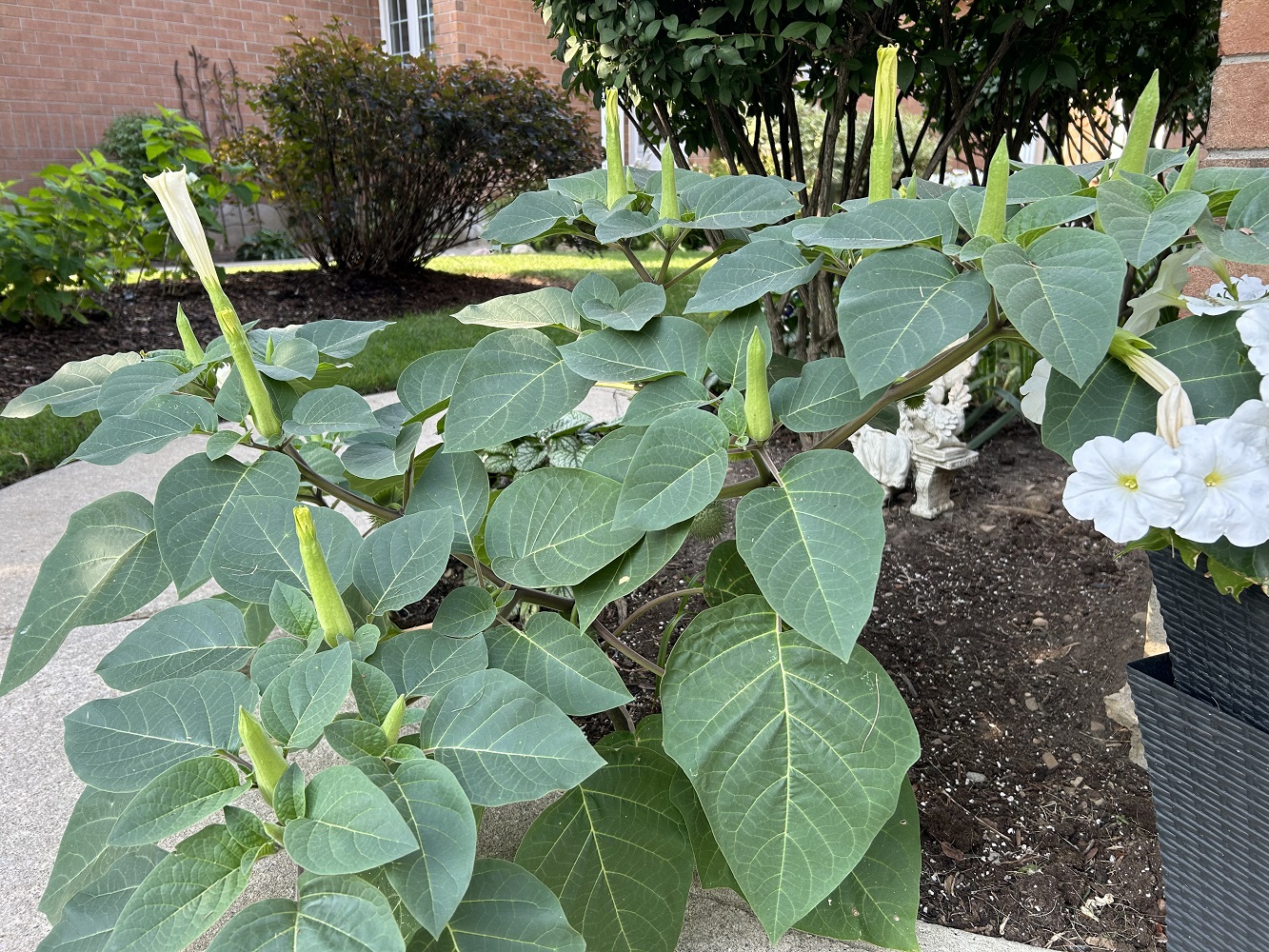
I’m normally against lawn and garden ornaments, but (1) this was a gift from a neighbour who has since moved on, (2) later in the summer the “green wall” effect in my front garden covers him up completely, and (3) I think he’s a good looking fellow.

TCF: Vanished

Vanished: Cold-Blooded Murder in Steeltown
By Jon Wells

The crime:

Acting on a tip that came in on Easter weekend 1999, police found a garbage bag stuffed with body parts on steelworker Sam Pirrera’s front porch. The remains were later identified as belonging to Maggie Karer, a Hamilton sex worker. As police investigated the case it became clear that Pirrera might also have had something to do with the disappearance of his first wife, Beverly Davidson, eight years earlier. Charged with the murder of both women, Pirrera died of a drug overdose, almost certainly suicide, just before his court date.

The book:

While grisly, the crimes here were nothing out of the ordinary for tales of domestic abuse escalating to murder. Pirrera was a violent cocaine addict who spiraled out of control. In fact, the presumed murder of Beverly took place in a manner that I have alerted people to before on several occasions and I can only repeat my earlier takeaways: If the relationship is over, it’s over. You don’t arrange to meet up with your ex for a talk about whatever outstanding issues you may have, especially if there’s not going to be anyone else around. This is part of the value of reading true crime; you can learn something from it.

I suppose killers could learn some lessons as well. One of the chief among these is the disposal problem. Especially given the advances made in forensics, a killer has to be able to make all of the evidence disappear. And I don’t mean just tossing body parts in the garbage, or trying to flush them down the toilet (the latter method being how both Dennis Nilsen and Joachim Kroll were caught when the remains backed up the plumbing). Not even the wood chipper from Fargo is going to do the trick, since that will leave blood splattered all over the inside of the machine. It’s hard to make the evidence of a body disappear entirely. When Dellen Millard used a portable livestock incinerator (known as “The Eliminator”) to get rid of the remains of Tim Bosma there were still some of his bone fragments found in it.

No, if you’re going down this road you have to be able to make a victim literally disappear. When looking for evidence of Pirrera’s having killed his first wife, Beverly, police scoured the house they had lived in together eight years previously, and which had long been occupied by another family, scanning the basement and bathrooms for microscopic traces of blood. They didn’t find anything, but the very idea that they would undertake such a search gives you some idea of what is possible.

Unfortunately for the police, Pirrera is presumed to have disposed of the body of his first wife in a way that was practically foolproof. As noted, he was a steelworker, employed (fitfully, as his issues with cocaine addiction ramped up) at the local Stelco works. (To explain the title to those not familiar with the place: Hamilton, where the crimes took place, is known as “Steeltown” because of its history with that industry) The theory the police had was that he cut the body up and then threw the pieces into a vat of molten steel. That’s making a body disappear. It reminded me of how Robert “Willie” Pickton, the serial killer/pig farmer in British Columbia who killed nearly 50 women, may have got rid of the bodies of his victims by taking them to a rendering plant, feeding them to the pigs, or grinding them up and mixing them with pork he sold to the public. I think the rendering plant theory in particular almost as effective as the vat of molten steel. In any event, what caught Pickton out in terms of physical evidence was the fact that he held on to some personal items belonging to his victims. I think the only body parts they located were a few skulls.

This was a brutal case, with the brutality mostly being the consequence of Pirrera’s drug abuse. That sort of thing rarely ends well, though it doesn’t often blow up as badly as it did here. It’s a tribute to Wells’s ability to tell a story though that he turns these events into such an effective work of true crime reporting. I think two things helped. First, it isn’t a timely book. Karer’s murder took place nearly ten years before Wells wrote about it, which allows for a bit more perspective from all the people involved. Second, the specially commissioned photos by Gary Yokoyama add a lot. I like to complain about true crime books where the photo sections consist of poorly reproduced pictures that sometimes have only a tenuous connection to the story, so it’s nice to be able to give credit to a book that made an extra effort in this regard.

Noted in passing:

The house where Pirrera killed Karer turned into a local site of interest, so that people would even come and knock on the door asking the new owners if they could look at the basement (which had subsequently been refurbished). It got so bad that the owners “asked, and received, city permission to change the number 12 on the façade to a different number for a $130 fee.” Which is nice, but I didn’t understand how that would work. Legally the address would have to be the same for emergency services, so I guess this just meant they put a different number on the door or over the garage. But who would this fool? Anyone motivated enough could just count the numbers of the houses on the street and would notice a jump from 10 to 14, while everyone else would just get confused. How would deliveries work? This seems really strange to me.

Another point I wanted to flag has to do with the book’s preliminary material, being a couple of pages of blurbs of “Praise for Jon Wells.” One of these blurbs comes courtesy of Alex Good in a review of the book Poison that I did for The Record back in 2009. Two things struck me about this. One good: all too often these blurbs are just quoted and then the name of the publication given. It’s nice that I got credited by name. Thank you! Reviews don’t write themselves, you know. One bad: I looked and couldn’t find my review of Poison. I remember reading and reviewing it but I guess I never posted the review at Good Reports and it wasn’t anywhere else I checked. If I want to retrieve it now I’m probably going to have to fire up an old computer and see if it’s somewhere on the hard drive. I sure don’t have a print copy. Nothing lasts forever, people!

Takeaways:

Cocaine is a hell of a drug. Stay away from the stuff.

True Crime Files

Scooby Apocalypse Volume 1

Scooby Apocalypse Volume 1

I’m happy to say this was something I wasn’t expecting. Of course, by this point in history every bit of pop culture has been zombified, and our obsession with end times seems in no danger of letting up (for good reason, I might add), so why not give the Scooby-Doo gang their own apocalyptic saga? I was on board for it. I mean, I wasn’t counting on it being anything special but I was on board.

Well, as things turned out it was kind of special. First off, there aren’t any zombies. Instead, the apocalypse is brought about by those darn scientists with their lab coats and their desire to remake the world, and specifically humanity, into something better. Yeah, we know how that usually works out. We learn about this from Velma, who is the goggle-eyed brainiac in a lumpy orange sweater that we all know and love but who now has a much more complicated backstory. Rounding out the rest of the crew are Daphne and Fred as a pair of crusading “new media” citizen journalists (hey, they have a late-night show on the Knitting Channel) and Shaggy as a dog trainer who is helping out with a new program meant to create special dog soldiers at the same top-secret underground compound where Velma is working on her nanite plague. And the dog program has one washout of a recruit named Scooby-Doo. Rat’s right!

The characters are all easily recognizable, down to their signature lines. A refresher: Daphne says “Jeepers!”, Velma says “Jinkies!”, Scooby says “Zoinks!”, and Scooby says “Ruh-roh!” And they also have the same basic personalities you’ll remember from the classic TV show. Fred is the well-meaning but dense muscleman,  and he’s in love with Daphne. Daphne, in turn, is the professional woman warrior. Velma is the brains. Shaggy is a hipster. And they even get around in a revamped Mystery Machine, which is now a tricked-out war wagon. I’ll mention Scrappy-Doo too, but won’t give any spoilers for how he turns out.

The art is great and the colourful monsters a lot of fun. As I said, they’re not zombies. Velma’s corrupted nanites have turned the world’s human population into a motley assemblage of demons, vampires, and other freaks. How much of this was part of a deliberate plot is left undetermined, as is the extent of Velma’s involvement, but we still feel she’s on the side of the angels. Because who doesn’t have a bit of a nerd fetish for Velma?

If I had one complaint it’s that there’s too much going on. It’s a good story, and the characters are reimagined in a way that’s original but not degrading or overly political (this isn’t Mindy Kaling’s Velma). There’s no agenda to any of it. But there’s a lot of talk here. A lot. This is a comic that takes a long time to read, and I felt a good part of it was unnecessary. We’ve lived with the apocalypse long enough now for us to hit the ground running. We know the drill and it doesn’t take that long for us to be brought up to speed. I also had a hunch that whatever the mysterious Four were up to wasn’t actually that interesting. But that’s a question for the next volume to answer.

Graphicalex

Marple: The Thumb Mark of St. Peter

Miss Marple finishes up the six stories of the Tuesday Night Club with a tale of murder that she relates without even losing track of her knitting. I mean, she does have to work at it a bit (“One, two, three, four, five, and then three purl; that is right. Now, what was I saying?”), but she’s more than up to the task.

The answer to the question of who killed Geoffrey Denman is so obscure that Miss Marple doesn’t even give the other members of the Club an opportunity to suggest their own solutions. Because there’s just no way any of them would have come up with it even if she gave them a lifetime of guesses. Which in a way is too bad because the killer is one of the more delightfully wicked ones in the Marple oeuvre, and the insight that leads to her solution of the matter is an interesting one. An insight that comes through an act of divination, which I had to grin at because at the end of the day where does inspiration and insight really come from and how does it happen? You might as well posit a supernatural force.

In any event, the insight she has is that communication always has a context, and if we just look at the bare words that come out of people’s mouths then we’d be lost trying to understand their meaning. Indeed, they’d only be sounds. So Miss Marple takes the last sounds of Geoffrey Denman and manages to come up with something I don’t think anyone else on the planet would have come up with, but which is of course correct.

Underlying not just the method but the whole foundation of the series is Miss Marple’s declaration that “human nature is much the same everywhere, and, of course, one has the opportunities of observing it at close quarters in a village.” This is so close to something Jane Austen said about her writing that it made me wonder if Christie gave Miss Marple the first name of Jane as a kind of homage. Such a view is both expansive (seeing the whole world and all its rich variety in a small town or village) and limiting (because human nature tells us that most crimes are the result of only a few basic drives, the primary ones being sex and money).

Plus Randy and Joyce are engaged. But I think everyone had figured that out already. Aunt Jane doesn’t get any points for that.

Marple index