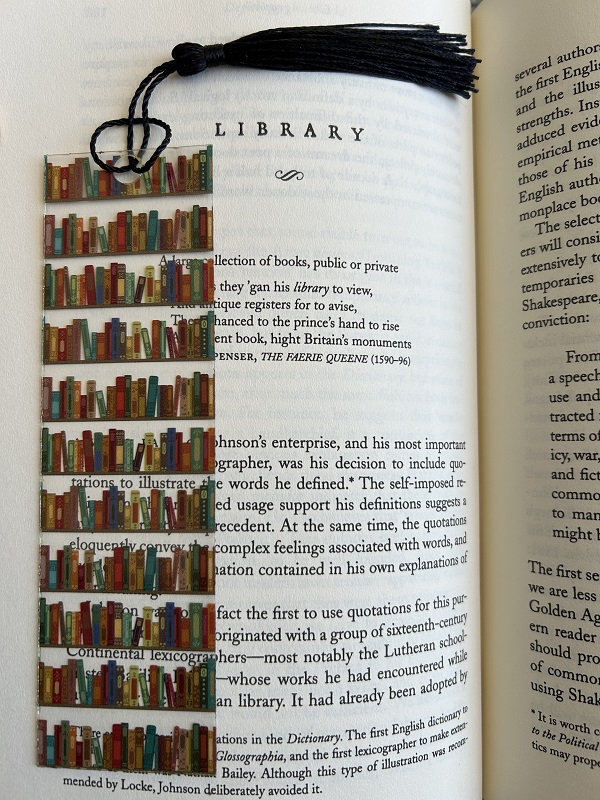
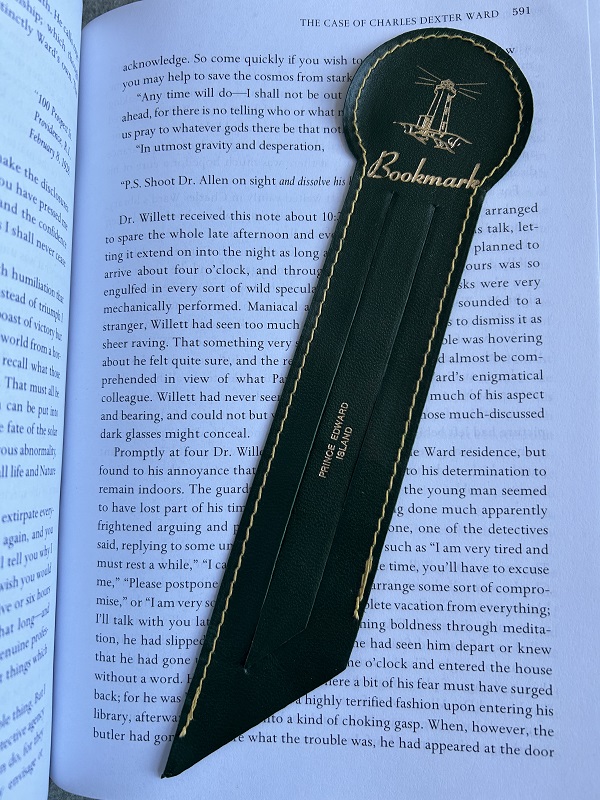
DNF files: Extreme Killers

Extreme Killers: Tales of the World’s Most Prolific Serial Killers

By Michael Newton

Page I bailed on: 18

Verdict: I’ve nothing against Michael Newton. I thought his Encyclopedia of Serial Killers adequate. But the fact is that he published “more than 339 novels and non-fiction books as of 2020,” and this more than suggests that he’d become a bit of a machine. In the author’s bio for his Encyclopedia (second edition published in 2006) the number given is only “more than 180 books.” In any event, he died in 2021.

I’ve also nothing against this Profiles in Crime series. I thought Killer Cults: Stories of Charisma, Deceit, and Death adequate, if only just. But as I said in my review of that volume, I didn’t see how there was much need for such books in the age of Wikipedia anyway.

I didn’t get far into this one. The first killer covered was Gilles de Rais, a French nobleman in the fifteenth century who may have been the original Bluebeard. The second was Erzsébet Báthory, the “Bloody Countess,” a Hungarian noble who may have been the original Dracula. Both figures have since entered into legend and the real nature and extent of their crimes is a matter of some debate. Their trials can’t be divorced from the historical context, where accusations of the most outrageous behaviour weren’t uncommon. Unfortunately, establishing that context takes time, and in an anthology like this that’s not what you’re going to get, with each chapter being limited to around 15 pages. So it just wasn’t adding up to anything more than what you’d expect from a quick Internet search and wasn’t any fun to read.

The DNF files

Doctor Strange: Strange Origin

Doctor Strange: Strange Origin

Yet another reboot origin story, this time for Doctor Strange. Except author Greg Pak doesn’t change up the original origin story (I had fun writing that) very much. It’s still Dr. Stephen Strange being an arrogant surgeon who loses use of his hands in a car accident and then seeking out the Ancient One, a mysterious figure who introduces him to the world of magic. While at the temple of the Ancient One, Dr. Strange meets Mordo, the bad student, and Wong, who will go on to become Dr. Strange’s manservant (he’s a little more independent than that here, but still fills the same role).

On the plus side it’s a pretty condensed retelling, with Dr. Strange getting up to speed just by memorizing a few incantations. After that, he and Wong and a sexy Italian sidekick are off hunting down the three rings of power to prevent Mordo from getting his hands on them. Yawn. Come on. We’re really doing this rings of power thing again?

At each stage there are portals opened and demons burst through that then have to be banished through an appeal to the Vishanti or else good ol’-fashioned fisticuffs. And Dr. Strange proves himself worthy to become a Sorcerer Supreme by renouncing the power of the rings and going back to the Ancient One to continue his training.

It wasn’t my thing. I liked the giant tiger of the Vishanti, and the art by Emma Ríos is distinct in a sketchy sort of style, but I also found it hard to read in places. The demons sometimes seem like balls of ectoplasmic yarn. And the story was underwhelming for the reasons given. Also included in this volume is a teaser for a different storyline (The Way of the Weird, which I already had a copy of), and that felt out of place even if it is just bonus content. The origin story there is presented as a flashback to the original, and not to the book we just read.

If you’re a Dr. Strange fan I’d give this a look mainly for the different style of the art, but otherwise it should be a pass.

Graphicalex

Bookmarked! #121: Stained Glass

I had to take this picture from a different angle because it’s a mirrored bookmark and I didn’t want to show my phone’s reflection. I like how you can see through the stained glass windows, and it’s really quite a striking bookmark when you hold it up to a window.

Book: Universe of Stone: Chartres Cathedral and the Invention of the Gothic by Philip Ball

Bookmarked Bookmarks

Archer: The Drowning Pool

This was the second of Ross Macdonald’s Lew Archer novels and it reads a lot like a rerun of The Moving Target. A damsel in distress, a rich lady unhappily married into money, comes to Archer with a problem. He heads out to the big house and meets the dysfunctional, decadent family, which includes a kittenish daughter with an eye for the wrong kind of guy. There’s a subplot involving real gangster types that leads to Archer getting roughed up, but that has little bearing on the family’s moral disintegration. Archer is slow on the uptake, which leads to the deaths of some innocents. Though being innocent is a relative term, since there are no heroes. As Archer recognizes at the end of this book: “Everyone had done wrong for himself and others. Everyone had failed. Everyone had suffered.”

Finally, I’m not even sure if Archer gets paid. Certainly not enough for the beatings he takes.

It’s written in the same cynically ornate style that stays just this side of parody. As so: “The thin scarp of moon hung in a gap of the mountains, like lemon rind in a tall dark drink of Lethe.” And then there’s tough guy patter delivered up with a seasoning of self-deprecating wit:

There had to be a difference between me and the opposition or I’d have to take the mirror out of my bathroom. It was the only mirror in the house, and I needed it for shaving.

Of course, right from the opening sentence Archer is assessing feminine charms, taking Maude Slocum in from top to bottom: “If you didn’t look at her face she was less than thirty, quick-bodied and slim as a girl. Her clothing drew attention to the fact: a tailored sharkskin suit and high heels that tensed her nylon-shadowed calves. . . . About thirty-five, I thought, and still in the running.” Later on he’ll see Maude in a zebra-striped dress, with “her breasts pressed together like round clenched fists in the V of her neckline.” Trust Archer to be able to identity a physical threat.

But Archer is no dumb brute. Ross Macdonald had a Ph.D. in English literature, after all. So when Archer meets a broken gambler in Vegas he refers to him as “the young Dostoevsky,” assuming that the reader will make the connection. And I guess a reader of pulp detective fiction in 1950 might have made it. I suspect fewer people will get it today. When Maude will later tell Archer that her “fairy” husband has retired to his bedroom, there to “spend the rest of his life . . . like Marcel Proust,” and Archer responds “This Marcel something-or-other, is he a friend of yours?” she has no time for his games: “So now you’re going to play dumb again?” She knows he knows his Proust. Though I think he’s being honest when he tells Cathy that he hasn’t read Coleridge’s “Ode to Dejection.” Oh, those were literary days indeed in the mid-century. Archer can drop lèse-majesté and impotentia coeundi into sentences as easily as he can tap someone on the head with the butt of his .45.

It’s a fun read that moves quickly. So quickly that at points I lost track of where I was. Then when I went back I found that such information had simply been left out. Where does it say that Archer is being picked up by the police and taken back to the Slocum’s place? They just put him in the car and the next thing we know he’s there, even though we haven’t been told where they were taking him or where “there” is when they get there.

And underlying everything is Archer’s disgust with the circles, high and low, that he moves in. In The Moving Target he had seen L.A. as an “excremental river” and in this book he has a moment of peace and communion with nature while swimming in the Pacific that’s set against the mess men have made of things:

I turned on my back and floated, looking up at the sky, nothing around me but cool clear Pacific, nothing in my eyes but long blue space. It was as close as I ever got to cleanliness and freedom, as far as I ever got from all the people. They had jerrybuilt the beaches from San Diego to the Golden Gate, bulldozed super-highways through the mountains, cut down a thousand years of redwood growth, and built an urban wilderness in the desert. They couldn’t touch the ocean. They poured their sewage into it, but it couldn’t be tainted.

Ah that was life in 1950 too. An ocean that couldn’t be tainted. Gone now, like everything else.

Archer index

The Uncanny X-Men: Red Wave

The Uncanny X-Men: Red Wave

Another franchise reboot. Krakoa, the living island of misfit toys, has fallen and the X-Men have disbursed around the globe. Beast and Cyclops are looking for new digs in Alaska while Rogue, Gambit, and Wolverine get together to toast wieners and drink beer in the Louisiana bayou. Charles Xavier’s School for Gifted Youngsters has been turned into Graymalkin Prison, a penitentiary for mutants run by Dr. Corina Ellis, which is where Professor X is currently being held. And Charles’s old flame Sarah Gaunt, after being turned into a Javier Botet/J-horror demon called the Hag, is out hunting for more mutants to add to Dr. Ellis’s collection. The Hag’s next stop is the bayou, where a foursome of young mutants, along with Jubilee, have found Rogue and company and are looking for protection.

I’m guessing none of that synopsis will mean anything to most people reading this. Suffice it to say that this is all about Gail Simone setting things up for a new X-Men run, with the usual generational dynamic. Right from the start with the X-Men there’s been the idea of educating and training young people in the responsible use of their powers. That looks set to continue, and the newbies seem like a fun bunch to follow. Especially emo-manga boy.

Also to the good is the character of the Hag. I didn’t like her backstory of romancing with Charles back in his Oxford days, but after her transformation in a hurricane that kills her kid she turns into a pretty fearsome foe, even taking down Wolverine handily. The way Rogue stops her though was corny as hell.

The romance between Rogue and Gambit was a little more advanced than I was expecting, but I guess comics are growing up. What I found hardest about having the two of them together so much was their silly accents. Rogue, a child of the Mississippi bayou, is all folksy (“I mighta coulda got a mite overconfident”), while the Cajun Gambit is all “dat” and “dem” and calling Rogue “chère.” A little of this goes a long way. Or, put another way, it soon gets annoying. Not quite as annoying as that silly script they started putting Thor’s speech into in his comics, but getting there.

Overall then a decent way of kicking off a new story cycle, with some good stuff and a few hiccups. Worth seeing what comes next anyway.

Graphicalex

Unspeakable

In his book Fire Weather John Vaillant, who is great at these kind of factlets, gives us this:

Words possess spell-casting, shock-inducing power, even in this jaded age, and the English language has accounted for this: something that  is “infandous” is a thing too horrible to be named or uttered.

I’ll admit that when I first read this I thought perhaps Vaillant had meant “infamous” and that there had been a typo. Even spellcheck tells me it’s a mistake. But no, infandous is a word. Dictionaries define it as something “too horrible to mention,” or “extremely odious.” It derives from the Latin infandus, “not to be spoken of.” Apparently Increase Mather spoke of things being nefandous, which meant the same thing but wasn’t as popular.

All of that was, however, long ago. The Oxford English Dictionary entry for infandous tells us “This word is now obsolete. It is last recorded around the early 1700s.” I did some digging and found where it had been used more recently than that, but I don’t think you’re likely to see it around much today.

Words, words, words

The Vault of Horror Volume 1

The Vault of Horror Volume 1

The Vault of Horror was one of three main horror comic titles put out by EC in the 1950s before they got shut down by the government. The others were Tales from the Crypt and The Haunt of Fear, and as I said in my review of The Haunt of Fear Volume 1 the three were basically interchangeable, with the same writers and artists and no difference in the kinds of stories included. They even did crossovers, so that the Old Witch (host of The Haunt of Fear) and the Crypt-Keeper (from Tales from the Crypt) will sometimes show up in these pages to introduce stories. The Vault-Keeper is the guiding force here, and he’s indistinguishable from the other two. To the point where I honestly thought he was an old woman, until he started shooting down rumours about his being romantically linked with the Old Witch.

OK, so what are you getting? Well, for starters it’s issues #12-17. Does that mean that Volume 1 is skipping anything? Not really. As with The Haunt of Fear, EC started publishing stories from The Vault of Horror in another comic called War against Crime. Then, when War against Crime became The Vault of Horror they didn’t change the numbering, for business reasons I don’t fully understand. So issue #12 is really the first issue of The Vault of Horror (something similar happened with The Haunt of Fear, which had started with issue #15 because previously it had been The Gunfighter, and Tales from the Crypt, which had been Crime Patrol).

The stories themselves don’t win any awards for originality. As I’ve previously noted, ripping off classic horror tales was an EC staple, so that’s on the menu again here. The first story is a version of The Wax Museum. “Doctor of Horror” is just the story of Burke and Hare. “Island of Death” is “The Most Dangerous Game.” “Voodoo Horror!” is The Picture of Dorian Gray. Throw in several werewolf stories (set, as always, somewhere on the English moors), a vampire, a couple of practical jokes that backfire, some premature burials, and you’ve got a pretty musty vault indeed.

Not that there’s much wrong with that. I always get a kick out of these comics even when they’re just playing the greatest hits. And there’s at least one story here, “Baby . . . It’s Cold Inside!” that I thought was quite original. Though if you showed me the source for it I wouldn’t be surprised. It was getting to the point where I was feeling that even the stories without an obvious inspiration had to be coming from somewhere. But in any event, I’d probably rate it the best.

Other features include short stories by editor Bill Gaines, some random chortlings by the Vault-Keeper, and a mail bag. With regard to this latter department, I always wonder how many of these letters were actually sent into EC’s (or Marvel’s, or DC’s) offices and how many were made up. Some of them are clearly fictional, but others might have been legit. It was a time when people actually did write letters. They sure don’t anymore.

There’s a sort of manic energy throughout, not just in the typical comic style of throwing exclamation marks at the end of every sentence (even something as banal as “They seat themselves on roughly hewn chairs!”), but in the crazy laughter on almost every other page. There are the “Heh-heh-heh”s of the Vault-Keeper, of course, but also some hee-hees, haw-haws, and lots and lots of “Ha-ha-ha-ha-ha-ha!”s. In a Foreword to this volume by R. L. Stine he writes that “What attracted me to these comics was that they were so hilarious. Has anyone ever concocted such a mix of horror and humor before?” I don’t know about that. It’s not like the stories here are all that funny. But they do trade in a kind of dark humour and even in the most extreme situations it all seems like a lot of fun. Not that that helped them any when the censors came calling.

Graphicalex

Snow squall

Leave the grocery cart! Run for your lives!

Luckily the wind was at my back while I was walking home through this.  Nasty to have it blowing in your face. (You can click on the pic to make it bigger.)

Holmes: The Resident Patient

You might think you know where things are going here. A mysterious man named Blessington offers to set young Doctor Percy Trevelyan up in a private consulting practice. This sounds like a cover, much like inviting Jabez Wilson to become a member of the Red-Headed League and paying him to copy out pages of the Encyclopedia Britannica, or offering Violet Hunter a job to sit in a window while wearing a particular dress.

The strange thing is that Blessington, though he has a shady background involving yet another historical crime that is chasing him down, is on the level. But then why does he want to be Dr. Trevelyan’s benefactor? I don’t know. I can certainly think of better, less complicated ways to drop out of sight.

Of course, you’ll suspect, this time entirely correctly, that the Russian nobleman and his burly son aren’t what they seem to be. All Holmes needs to be convinced is a look at the footprints they leave.

I didn’t think any of this was terribly interesting. What I found myself most intrigued by was the opening paragraph:

In glancing over the somewhat incoherent series of Memoirs with which I have endeavored to illustrate a few of the mental peculiarities of my friend Mr. Sherlock Holmes, I have been struck by the difficulty which I have experienced in picking out examples which shall in every way answer my purpose. For in those cases in which Holmes has performed some tour de force of analytical reasoning, and has demonstrated the value of his peculiar methods of investigation, the facts themselves have often been so slight or so commonplace that I could not feel justified in laying them before the public. On the other hand, it has frequently happened that he has been concerned in some research where the facts have been of the most remarkable and dramatic character, but where the share which he has himself taken in determining their causes has been less pronounced than I, as his biographer, could wish. The small matter which I have chronicled under the heading of “A Study in Scarlet,” and that other later one connected with the loss of the Gloria Scott, may serve as examples of this Scylla and Charybdis which are forever threatening the historian. It may be that in the business of which I am now about to write the part which my friend played is not sufficiently accentuated; and yet the whole train of circumstances is so remarkable that I cannot bring myself to omit it entirely from this series.

Accepting Watson’s division of cases into those that (1) show off Holmes’s analytical method to best advantage, despite being of little importance, and (2) more dramatic or remarkable cases where Holmes had less work to do, I wasn’t sure how such a scheme would work in practice. Even Watson’s two examples don’t strike me as obvious. Was he classifying A Study in Scarlet as of the first type: a “small matter” despite being an account of novel length and involving adventures on different continents with historical actors of some prominence? And was “The Adventure of the Gloria Scott supposed to be a more significant case, despite showing little in the way of method (as I put it: “Holmes’s great skills at detection aren’t put to much of a test”)? Or did Watson have them the other way around?

As it is, “The Resident Patient” strikes me as not sailing between the Scylla and Charybdis so much as foundering on both. It’s neither very remarkable (at least within the canon) nor a case where, as Watson admits, Holmes’s role was “sufficiently accentuated.” It is only a simple Holmesian entertainment.

Holmes index