Comments closed

This past week saw the opening of the case against Jian Ghomeshi on multiple counts of sexual assault, and it did not go well for the Crown. In the eyes of many that would be to put it mildly, as the defence used private emails from the first two complainants to raise concerns about their reliability and credibility as witnesses. In doing so, important questions also arose over the prosecution and defence of such cases in general.

This morning I was looking forward to going online and reading discussion of what happened, as well as commentary on its broader meaning. When I say “discussion” what I’m mainly referring to is not news coverage so much as public discussion in the comment threads that typically follow news articles on the Internet. I don’t comment myself on these, but I do like to see what other people are thinking and to take note of any trends and divisions taking shape in the public mind.

I was disappointed. In recent months, public commenting on news stories has become an endangered activity. In 2015 both Sun Media and the Toronto Star disallowed commenting on their websites. Other news sites will allow commenting on some stories but disable comments on anything smelling of controversy (that is, the stories that usually attract the most comments). As a general rule, criminal cases or anything involving Israel stand at the top of the list of taboo subjects.

And so I went looking in vain for some indication of what ordinary people were thinking about the Ghomeshi case. There were a few op-ed pieces in the Star but, as noted, you can’t comment on the Star website. There were also a couple of op-eds in the Globe and Mail, but the comments were closed on both of them, as well as on any story relating to the trial. Christine Blatchford’s reportage on the trial at the National Post, as well as any other story about the proceedings at the Post, have their comments disabled. The CBC’s Ghomeshi coverage does not allow commenting. Even across the pond the British Guardian did not allow any comments on its Ghomeshi story. As far as the mainstream media is concerned, Thou Shalt Not publicly express an opinion on these matters that has not been studiously vetted and approved.

I can see some of where this is coming from. These sources don’t want to be liable for everything said on their websites, though I’m unsure of just how liable they would be. A story like the Ghomeshi case might be expected to bring out the worst in troll behaviour, and board moderators might be expected to put in some overtime overseeing heated discussions.

But that said, I think this is a terrible loss. Open discussion of important, controversial current events was one of the great things the Internet brought to news coverage. Sure there are some bad apples, but I’ve found lots of informed, intelligent, provocative discussion in news threads, just as I find a lot of anonymous Amazon product reviews quite helpful. On occasion I’ve even seen the authors of op-eds forced to backtrack when shown to be wrong by anonymous posters with silly avatars and made-up names. Meanwhile, discussion of topics like foreign policy and criminal law, however heated, speak to the essence of the rationale behind the preservation of free speech: promoting greater engagement with politics and civil society.

What is the alternative? Only allowing acceptable, mainstream opinions to be expressed publicly? Are the rest of us just to be satisfied with commenting on celebrities (as long as we don’t say anything too negative) and arguing over who’s going to win the SuperBowl? Is criticism to be neutered, leaving us only with Facebook’s thumbs-up “like” icon (with no “dislike” available)? Are comment threads just a tool for driving up website traffic and selling stuff? I often hear complaints about how trashy, tabloid infotainment, click bait, and listicles dominate Internet “news,” but if that’s all that the public are allowed to engage with, while “hard news” remains in a roped-off V.I.P. reserve, who can blame us?

It’s a depressing trend that I can’t see any end to. Which leads me to ask: Did the trolls win?
Who is your friend?

Yesterday was, so I’m told, #FriendsDay on Facebook. I’m not sure what this means, in part because I’m not on Facebook but perhaps more because I’m finding it harder these days to conceptualize just what a “friend” is.

In the week leading up to Friends Day (or #FriendsDay, if you insist) there was a new study out from Oxford University that says that people who use social media — and in particular Facebook, with its handy tool for “friending” people — have no more friends offline than other people.

This isn’t surprising, though as always breaking down the numbers is complicated. At the heart of the problem is the very slippery label of friend.

The definition of friend varies widely between different cultures, meaning something different in America than in Europe, Africa, or Asia. Then there are degrees of friendship. The Oxford study speaks of the “hierarchically inclusive layers” of our personal social networks. The inner ring is the “support clique” of people who care about you, and which usually consists of around five “very close friends.” This is apparently a hard limit based on a combination of “cognitive constraint (the product of the relationship with neocortex size known as the social brain hypothesis) and a time constraint associated with the costs of servicing relationships.”

Outside of the support clique there is a “sympathy group” of maybe a dozen “close friends,” then a social network, then a larger number of acquaintances, and then maybe 1 500 or so faces that you might not be able to put a name to.

At least that’s one way of breaking it down. Other studies use different labels and different criteria for seeing who fits in where. So when it was recently reported that 1 in 10 people in the UK say they have no close friends it wasn’t immediately clear what that meant. In a 2006 study out of Duke University and the University of Arizona, “Social Isolation in America,” the key variable for determing a close friend was someone you could “discuss important matters with.” These people make up a “core discussion network.” The results of that study were depressing:

Researchers . . . found that the number of people who said they had no one with whom to discuss such matters more than doubled [in the past two decades], to nearly 25 percent. The survey found that both family and non-family confidants dropped, with the loss greatest in non-family connections.

The study paints a picture of Americans’ social contacts as a “densely connected, close, homogeneous set of ties slowly closing in on itself, becoming smaller, more tightly interconnected, more focused on the very strong bonds of the nuclear family.”

That means fewer contacts created through clubs, neighbors and organizations outside the home — a phenomenon popularly known as “bowling alone,” from the 2000 book of the same title by Robert D. Putnam.

It’s these definitions of friendship that are so frustrating. People like to speak of “social capital” a lot these days, which suggests a fairly utilitarian view of friendship. Such friends are people who in some way add material value to one’s life. They are people who can do things for you; as, for example, take care of you during an illness, help you out financially, or provide a source of free on-demand labour. Still other definitions suggest more of a psychological symbiosis, a network of people we find to be good company, something that is beneficial in many ways to our physical and mental health. Then there are definitions that stress the importance of trust. A close friend is someone we can “tell everything” to. The friend here may be a therapist, sounding board, or mentor.

All of this makes talking about friendship very difficult. What does seem real is a general though perhaps slight erosion, at lest in the hyper-individualist West, of close social bonds, and their replacement with ersatz, even parody forms of friendship like the “BFF” (best friend forever) and the Facebook friend. These aren’t “real” friends but are made to seem as though they’re worth more in some nebulous form of virtual currency. I wonder if, when the bait-and-switch is complete, we’ll be able to remember what being a friend once meant, or be able to get back to an authentic sense of self.

Warts and all

While I’ve long been a fan of the work of Philip K. Dick I have to confess I never knew more than the basics about his life. Which is to say, I knew he took a lot of drugs. This made Lawrence Sutin’s standard (and sympathetic!) biography, Divine Invasions, a depressing revelation. Dick appears to have been a truly awful person: “a dangerous, demanding, self-pitying, and manipulative man-baby.” Gak.

Dumbing down to Dumbledore

I don’t think of myself as being that much of an elitist culture snob, but I do have standards. I never gave in to Harry Potter-mania, for one thing. I did read part of the first book and thought it seemed like the kind of thing I might have enjoyed when I was eight years old. Good for the kids. Why any teenager, much less any adult, would want to read them was a mystery to me. I think I remarked at the time that I’d rather look at porn because at least its fantasies were post-pubescent.

Nevertheless, after about the third book in the series Pottermania officially became an adult phenemenon. Whether this was kidult or hipster culture coming to its full fruition, I don’t know. But it’s depressing. The current fad for adult colouring books is less worrisome, as at least that has an arts-and-crafts or therapy angle to it. Why grown-ups would want to bury their heads for hours in brick-like children’s fantasies is something else. Escapism yes, but escape from what? An adult world?

Leaving that question aside, I come to Stacy Schiff’s recent book on the Salem witch hysteria The Witches: Salem, 1692. What does this have to do with Harry Potter? Very little, or more likely nothing at all, I would have thought. But as an author of popular history Schiff knows her audience and so introduces the boy wizard into a chapter titled “The Wizard.” At the beginning of this chapter we are told of an investigator into the accusations of witchcraft in Salem who saw the whole affair as typical of the devil’s business, something which was “managed in imagination yet may not be called imaginary.”

This seemed like a fairly innocuous observation in itself, though one pregnant with danger.  A footnote, nevertheless, is provided by Schiff to help the reader with a modern paraphrase:

Or as Dumbledore assures Harry Potter: “Of course it is happening inside your head, Harry, but why on earth should that mean that it is not real?”

No reference is given for the Harry Potter quote, perhaps assuming that we all know which book (or film) it comes from. Neverthless, I found it to be remarkable. In the first place because I wouldn’t have thought any gloss on the text necessary, especially one that jumps forward over three hundred years to snatch a platitude from pop culture. But more than that I was amazed that in a semi-scholarly work such as Schiff’s Harry Potter would be brought in not just as a cultural/intellectual touchstone, but as an example of universal wisdom.

In an earlier post I talked a bit about how every culture has its sacred texts, works that are part of the collective consciousness. One suggestion I quoted in the post was that The Wizard of Oz (the movie, not the book) was one of ours. Perhaps Harry is next.

Murder and the single man

Added my review of Steve Lillebuen’s The Devil’s Cinema over at Good Reports. It’s a well-written true crime story about the “Dexter killer” Mark Twitchell, and one that I think has some interesting things to say about the directions psychopathy might take in the twenty-first century as well as how victims are targeted and identified. Who are among the most vulnerable members of society? Perhaps surprisingly, single men are one of the groups most at risk.

How to lose weight

When it comes to losing weight there’s a lot of silliness and faddishness out there being peddled by the diet industry. I’ve lost a fair bit of weight and kept it off. I’m posting what I’ve learned here as a public service announcement.

Exhortation

First of all, people need to stop worrying about the relative merits of carbs vs. no-carbs or other tangential issues and stay focused on the bottom line. The way forward is simple, if not easy. The basic principles are not complicated, or expensive to put into practice. In fact, losing weight will save you money, both in the short and in the long term. And it’s better for the environment too! Overweight people of the world rejoice! You have nothing to lose but a few pounds.

It’s a lifestyle thing.

Just as Aristotle said about cultivating virtue, the way to lose weight is all about establishing habits through a routine. The fundamentals are easy to grasp: eat less, do more. Just remember that these aren’t things you only do some of the time. “Cheating” doesn’t just have a minor impact around the edges. If you cheat at this game, you lose. It’s far easier, faster, and more enjoyable, to consume calories than it is to burn them.

It’s a lifestyle thing, but diet is the most important component (by far).

One corollary to the axiom that it’s easier to gain weight than it is to lose it is that exercise is less important than diet. Far less important. Indeed, there was a British report that came out this year saying that exercise (or lack thereof) had no relation to obesity at all. I think that’s overstating things, but you get the point.

Exercise provides all kinds of health benefits (for your heart especially), and is the only thing that is going to shape your body, but if weight loss is your goal then you’re going to have to watch what you eat.

If you do want to go the exercise route, keep a couple of things in mind. First of all, remember the importance of routine and how important the little things are to a routine. If you can, walk to the gym. That may do you more good than what you do when you get there. Walking is the best exercise there is. Second, if you’re going to exericse try and work up a sweat. Don’t just go to the gym to stretch and look good in your fitness gear. A rule of thumb is that if you’re on a machine you should barely be able to carry on a conversation with the person next to you.

Stop eating at restaurants.

You can’t eat healthy at a restaurant. You just can’t.

You eat too much.

No, I mean it. You do eat too much. Chances are that if you live in North America you’re consuming two or three times as many calories per day as you actually need. That’s too much. You don’t need to take in that many calories. So why do you?

Not only do you eat too much, but what you eat is junk.

Do you abide by the nutritional standards of the Canada Food Guide? Like hell you do. According to one recent report I read, only 2% of Canadians follow these guidelines. Two percent!

Be realistic. There was a health and lifestyle story a week ago where the author was trying to eat like a Victoria’s Secret model for a week. Here are some of the menus:

Breakfast: A Izabel Goulart-inspired green juice with scrambled egg whites and avocado toast on Ezekiel bread
Lunch: Kale salad topped with shrimp, lentils, avocado, raspberries, chick peas, and olive oil
Dinner: Salmon with wild rice, avocado, and roasted sweet potatoes

Breakfast: Overnight oats with chia seeds, cinnamon, a chopped dark chocolate square, and berries
Lunch: A farro salad with spinach, pistachios, sweet potatoes, lentils, avocado, and olive oil
Dinner: Homemade tilapia fish tacos with mango salsa and two corn tortillas

I don’t think any of this was meant as comedy, but it is funny. Now: let’s be serious. You don’t eat like this. You are not a model or a professional athlete and you don’t have an in-house dietician/cook.

No, you eat junk. Why? Because it tastes good and is convenient.

Junk food is junk.

Remember the first of Michael Pollan’s three simple rules for healthy eating: “eat food.” Not everything you stick in your mouth and digest is food. They call it junk food but that’s a misnomer. It’s not food at all. It’s junk. You are literally eating garbage.

Cookies aren’t food. Chips aren’t food. Chocolate bars aren’t food (but chocolate supposedly has some heart benefits so I sometimes indulge). Pop isn’t food. Ice cream (even “real” ice cream as opposed to the label of “frozen dessert”) isn’t food. This crap is the enemy. If you can’t beat the junk food habit, you are in trouble.

You only have to be disciplined two or three times a week.

On your trips to the grocery store. If it’s not in the house you can’t eat it. If it is in the house, you will eat it. Quickly.

If you want to keep the weight off you have to stick with the program that you lost weight with.

It’s a treadmill I’m afraid you can’t get off. You will always feel hungry. I hear lots of people say that dieting doesn’t work because you just gain the weight back again. Well of course you do. You have to stay on the diet to keep the weight off. You can’t lose fifty pounds on a diet and then consider it Mission Accomplished and go back to eating the way you did before. You’ll just revert to your old weight. I would have thought that was obvious, but it surprises some people.

Water is your friend.

It quenches your thirst, has no calories, and is better for you than energy drinks or even most fruit juices. Drink lots of it.

Boldly going

Over at Alex on Film I’ve added notes on a few of the Star Trek films. I grew up on the TV show and, for better or worse, it’s always going to be a big part of my mental make-up. That said, the movie franchise has been disappointing, starting with Star Trek: The Motion Picture (1979). This was followed up by Star Trek II: The Wrath of Khan (1982), which is the only one of these movies I can re-watch with any enjoyment. More recently the franchise has “re-set” with a couple of movies by J. J. Abrams: Star Trek (2009) and Star Trek: Into Darkness (2013). Despite being well cast, these are just generic twenty-first century effects movies, and didn’t interest me at all.

On the road, again and again

Gentlemen, start your engines.

Gentlemen, start your engines.

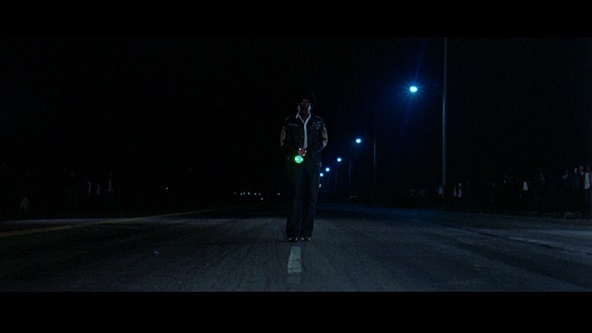
Over at Alex on Film I’ve added my notes on three classic counterculture road movies: Easy Rider (1969), Vanishing Point (1971), and Two-Lane Blacktop (1971). Easy Rider is the best known today, but mostly for its historical significance. It’s really not a very good movie, though still watchable. Vanishing Point I find the most interesting. Two-Lane Blacktop has Warren Oates as GTO, and not much else going for it. But that’s enough.

Intimations of the Internet

From Walden (1854) by Henry David Thoreau:

Our inventions are wont to be pretty toys, which distract our attention from serious things. They are but improved means to an unimproved end, an end which it was already but too easy to arrive at; as railroads lead to Boston or New York. We are in great haste to construct a magnetic telegraph from Maine to Texas; but Maine and Texas, it may be, have nothing important to communicate. Either is in such a predicament as the man who was earnest to be introduced to a distinguished deaf woman, but when he was presented, and one end of her ear trumpet was put into his hand, had nothing to say. As if the main object were to talk fast and not to talk sensibly. We are eager to tunnel under the Atlantic and bring the Old World some weeks nearer to the New; but perchance the first news that will leak through into the broad, flapping American ear will be that the Princess Adelaide has the whooping cough. After all, the man whose horse trots a mile in a minute does not carry the most important messages; he is not an evangelist, nor does he come round eating locusts and wild honey. I doubt if Flying Childers ever carried a peck of corn to mill.

From Myth and Meaning (1978) By Claude Lévi-Strauss:

What threatens us right now is probably what we may call over-communication –that is, the tendency to know exactly in one point of the world what is going on in all other parts of the world. In order for a culture to be really itself and to produce something, the culture and its members must be convinced of their originality and even, to some extent, of their superiority  over the others; it is only under conditions of under-communication that it can produce anything. We are now threatened with the prospect of our being only consumers, able to consume anything from any point in the world and from every culture, but of losing all originality.

Charters and Caldicott on the case

ladyvanishes5

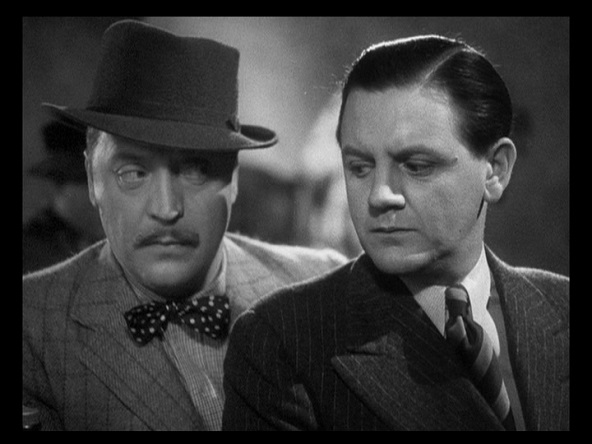
Over at Alex on Film I’ve added my notes on the first three movies featuring the not-quite-dynamic duo of Charters and Caldicott (played by Naunton Wayne and Basil Radford): their debut in The Lady Vanishes (1938), the follow-up Night Train to Munich (1940), and finally as the stars in Crook’s Tour (1941). They were very popular at the time, but quickly disappeared. In the 1980s they had their own BBC series but it only ran for one season and I had never heard of it before I started doing some research. Perhaps they were just a wartime phenomenon, or perhaps they just never grew up enough. They remained a charming couple, but representatives of a limited type. In a supporting role, however, they had a certain magic presence.