Holmes: The Unique “Hamlet”

This is an early Holmes pastiche, being first published in 1920. It’s also a favourite of many fans, and Vincent Starrett was himself a Holmes superfan, as well as a great lover of books. He was even born above his grandfather’s bookshop in Toronto, which seems fitting.

It’s not much of a mystery – the only clue is cut-and-paste from “Silver Blaze” – but it’s an engaging bit of fan service. Starrett doesn’t send anything up, but you get the sense that he’s having fun telling the story of the theft of a Hamlet quarto inscribed by Shakespeare himself. Mr. Harrington Edwards, book collector (a type of person “mad enough to begin with”), collapses at Holmes’s doorstep and explains the situation, which leads to Holmes and Watson catching a train to Walton-on-Walton and Poke Stogis Manor to investigate. Just the names make the story worth a read.

When upbraiding the thief Holmes does say something that stood out for me though. “Surely you must know that in criminal cases handled by me, it is never the obvious solution that is the correct one. The mere fact that the finger of suspicion is made to point at a certain individual is sufficient to absolve that individual from guilt.” While this is a general principle in most mystery fiction, it’s not one that’s well represented in the Holmes canon, and in any event it’s a bias that most mystery authors know how to exploit. My sense is that this wasn’t meant to be a reflection on Holmes’s method (Doyle’s own statements of those tend to be more honoured in the breach than the observance), but was just intended as another gentle poke.

Holmes index

Numbers Game 1: Back to School

According to a 2024 report by the charity Kindred2, which was based on a poll of 1,000 primary school staff in the UK, problems are increasing with school-readiness among the cohort of students entering Reception (which is what they call the first year of primary school, for kids around the age of 4 or 5).

Nearly half (46%) of pupils are unable to sit still, 38% struggle to play or share with others, more than a third (37%) cannot dress themselves, 29% cannot eat or drink independently and more than a quarter (28%) are using books incorrectly, swiping or tapping as though they were using a tablet, according to the survey.

The numbers give some indication of how much extra work teachers are having to do, and they are surprising. I’m not sure what it even means that a kid age 4-5 can’t eat or drink “independently.” But it’s that last statistic that got me. Over a quarter of these kids don’t even know what a book is? That’s scary. Apparently it’s also where the biggest gap in the survey showed up between what parents’ expectations were and the reality of where most kids were at, as over half of all parents thought children should be able to use books correctly upon entering the program. This gives some indication of how under the radar the problem is.

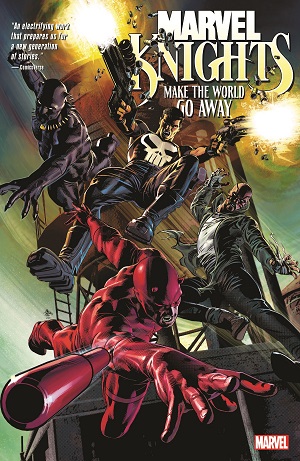
Daredevil: Identity

Daredevil: Identity

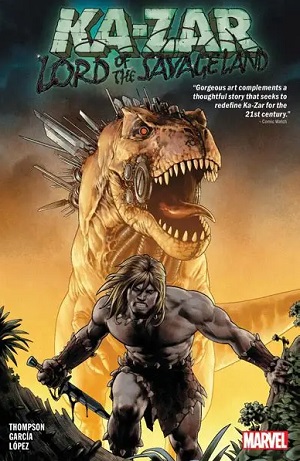
At the end of the previous Daredevil volume, Dark Art, poor Blindspot had been blinded. Specifically, he’d had his eyes gouged out by the mad artist known as the Muse. So now, as if Matt Murdock didn’t have enough good ol’ Catholic guilt already weighing him down (the cover art to issue #15 is an homage to the classic Born Again cover by David Mazzucchelli), he also has to live with blaming himself for what’s happened to his protégé. He’s so down he’s even pursuing a kind of death wish by putting a bounty on his own head as Daredevil.

It all sets up a story arc whose main purpose is to provide the backstory for why everyone in the world forgot that Matt Murdock was Daredevil. This is related by Matt in the confessional to a muscular priest (he’s a member of the Ordo Draconum) who absolves him by sending him on his way to go back to fighting crime. I won’t go into the details of the mass amnesia event, but it involves the Purple Man, who has built a machine that, along with his purple brood of kids, allows him to amplify his powers and control the minds of every human on the planet. Who knew this B-lister baddie would go on to have such an impact?

This plot device was criticized at the time, and fairly so. It’s all ridiculous, even for a superhero comic. And it’s most of what you get here. So the Back in Black series by Charles Soule continues its up-and-down progress. Chinatown good. Supersonic bad. Dark Art good. Identity bad. My hopes are up for the next instalment!

Graphicalex

TCF: The Peepshow

The Peepshow: The Murders at Rillington Place
By Kate Summerscale

The crime:

John Reginald Christie lived on the ground floor of a building at 10 Rillington Place in London. In 1949 a man named Timothy Evans lived on the top floor of the same building along with his wife Beryl and newborn daughter Geraldine. When Beryl and Geraldine were discovered to have been strangled, Evans was tried and found guilty of their murder and executed. Christie was a key witness at his trial.

In December 1952 Christie strangled his wife Ethel. In 1953 he would go on to kill another three women, concealing their bodies behind walls in his apartment. Shortly after he moved out the bodies were discovered and after a brief manhunt he was arrested, tried, and convicted of the murder of his wife. He was hanged in 1953. Subsequent investigations strongly suggest that Christie had also played a role in the murder of Beryl and Geraldine Evans, a crime for which Timothy Evans was posthumously pardoned.

The book:

I want to kick off with a bunch of comments specific to this book.

First: Where are the pictures? I’ve mentioned before in these True Crime Files how photos shouldn’t be considered an extra in a true crime book, any more than maps are in a military history. So why are there none here? Is it because Summerscale finds something prurient or in poor taste about photos? Perhaps in some cases that’s a valid criticism, especially if we’re talking about crime scenes. But why not a picture or two of Christie? Or of the house in Rillington Lane? At a couple of points in the text Summerscale makes reference to pictures, why not show them? We’re told that a newspaper published a panoramic photograph of Rillington Lane, “shadowy and stark as a film noir set.” Don’t just tell us about it! We also have a picture that appeared in the papers at the time described to us as “Christie in his garden, dwarfed by hollyhocks, his cat Tommy on his shoulder and his dog Judy at his feet.” That sounds interesting too. Where is it?

If not including pictures was a conscious decision made for some reason other than expense (and I find that hard to credit since Summerscale is a bestselling author and this is a major hardcover release), it may have been a desire to avoid the “peepshow” or voyeuristic effect. But why is this book even called The Peepshow? The main connection seems to be to a book published by Fryn Tennyson, a crime reporter who covered the case. Otherwise the notion of a peepshow doesn’t have much to do with these killings. Christie did like to take nude pictures of women but there’s no attempt made to build a psychological profile out of this.

Moving past the title, why is the book’s epigraph taken from the story of Bluebeard? Specifically, Bluebeard’s warning to his new bride to stay out of the room containing the bodies of his previous wives. As with the notion of a peepshow, I don’t see the connection to the Christie case. It’s true that at the time at least one newspaper did refer to Christie being “the Bluebeard of Notting Hill,” but this was mere sensationalism. Neither Evans nor Christie were Bluebeard figures. Not even close. And Summerscale doesn’t help her case by attempting to shoehorn in references to the classic fairy tale. After the police left 10 Rillington Place, for example, a pack of neighbourhood women tried to break into the place:

Perhaps their raid on Christie’s house was an act of defiance. Like Bluebeard’s wife, the trespassers wanted to enter the killer’s lair. They wanted to see for themselves the scene of domestic horror in which Ethel Christie had been trapped, and into which those young women had stumbled. Christie’s acts were as irresolvable as a dream or a fairy tale, difficult either to assimilate or to dispel.

An act of defiance? Defiance of what? The property rights of the guy who actually owned the building and was looking to sell it? They were just a bunch of nosey neighbours, destructive rubberneckers looking for a cheap thrill. And what about Christie’s acts made them irresolvable? The bodies were all recovered and Christie was tried, convicted, and executed. This is all just nonsense and again there is no connection to Bluebeard at all.

Moving on from issues I had with The Peepshow to say something about Summerscale more generally as a true crime writer, I’ll confess I’m not a fan of the way she likes to expand her focus in order to take in parts of the story that are only marginal to the main course. Here this takes the form of biographical sketches of two of the reporters covering the case: Harry Procter and the aforementioned Fryn Tennyson. Now these two were interesting characters in their own right, but I didn’t want to read a book about them and in the end they didn’t add anything to my understanding of the Christie case. And once again I was left wondering why Summerscale keeps doing this.

But now back to Rillington Place.

The year was 1953 and England was . . . a very different place. The Second World War took a heavy toll on Britain, and London spent a long time rebuilding from the Blitz. In the U.S. Eisenhower had just been sworn in as president and Leave It to Beaver was only a few years away, political and cultural landmarks of what is now seen in a rosy rearview mirror as a golden age of American greatness. Things weren’t as sunny back in dear old Blighty. Notting Hill and North Kensington have now been gentrified, with Hugh Grant even having a bookshop in the former location, but at the time they were slums. “The ugliest and the most unsafe and the most negro-populated part of London,” in the words of (the progressive, for her time) Fryn Tennyson. “I’ve been in plenty of tough areas in London,” a local business owner said to the Daily Mirror, “but this beats the lot.” I was frankly surprised at the “rank squalor of Rillington Place” described here. 10 Rillington Place was a three-story building (with the confusing British habit of not numbering the ground floor, so the second floor is the first) without electricity so that the rooms were lit with gas. The single lavatory was basically an outhouse. And here’s an account of one of Christie’s victims spending a night at his place, in the company of her boyfriend:

The temperature fell below freezing that night, and they all stayed in the kitchen, the only warm room in the flat. Ina sat in the deckchair strung with rope, Christie perched on a wooden board laid over a coal bucket, and Alex sat in a small wooden armchair. Ina and Christie remained in the kitchen for the next two nights, while Alex slept on the mattress in the bedroom.

Christie’s trial, one paper reported, would reveal a lot of this “shabby underworld of bleak lodgings and even bleaker homes.” But England wasn’t just a primitive, physical wreck. It was also a backward place in its public morality. I mentioned Tennyson’s casual racism, but that is as nothing to what a judge had to say at the trial of a Black man who was renting Christie’s place and also dealing in marijuana a couple of years later. He was arrested in the company of a (white) woman who had some reefers in her handbag. Apparently the man had been showing the flat to curious sightseers. The judge expressed outrage:

“You showed her where the bodies are stored, I suppose. . . . You are a foul beast. It’s a pity we cannot deport you. Very often people like you get hold of these fools of little white girls and supply them with Indian Hemp. Then the girls become the sluts you see in the court from time to time, and later on some of you live on their immoral earnings.”

This from a judge, speaking from the bench! The “little white girl” in the case apparently faced no charges. The man got six months in jail.

The grim social and cultural context doesn’t explain Christie, though it does put his racism into perspective. He was, as Summerscale finally concludes, a figure both familiar and exaggerated, conventional and unique:

Christie was a grotesque cartoon of the old-fashioned Englishman. Like many of his class and generation, he had seemed to adhere to a rigid moral code: he was emotionally reserved, courteous, disapproving of immigrants, prostitutes, pubs and strong liquor, devoted to his pets and his garden, deferential to his social betters, admiring of the police and the army. Because he appeared in many ways so conventional, some commentators were at pains to define his difference. A doctor who attended the Old Bailey trial on behalf of the Daily Herald described him as a “necrophiliac sado-masochist, a hair-fetishist and a psychopath.” A “psychopath,” a term popularised by the psychiatrist Hervey Cleckley in 1941, was an individual who appeared normal but was incapable of feeling love, remorse or shame. To label Christie in this way was to identify him as intrinsically alien, and to distance him from the society that had helped forge him, in the same way that calling him a “monster” or a “creature” discounted him as an exception.

It’s hard, but not impossible I think, to sort this out. The key is in understanding that Christie didn’t just present as a conventional or old-fashioned Englishman but really was one in many if not most ways. Summerscale’s evocation of the blighted nature of life in the ‘hood in 1950s London helps us see how this worked. And it might have worked for a lot longer but for the fact that Christie wasn’t very bright and was largely without resources.

The final point Summerscale addresses, as best she can, is Christie’s culpability in the murder of Beryl and Geraldine Evans. She discusses a note uncovered in her researches containing a report of Christie’s “confession” to a guard to both of their murders, but it’s next to impossible to figure out how much stock to put in this as Christie kept changing his story based on whatever temporary advantage he thought he could gain. That said, I thought Summerscale’s scenario was at least a plausible explanation for what really happened, and at this point plausibility is the best we’re going to get.

Noted in passing:

Christie worked a lot of odd jobs, often as a low-level government functionary, suggesting to me that he wasn’t much good at anything and didn’t get along with others very well. At the time of the murders he was unemployed. For a while during the war he worked as a police auxiliary in London, where the more unpleasant aspects of his personality came out:

When Christie was working for the Metropolitan Police war reserve force, from 1`939 to 1943, he had taken pleasure in his role as a law-enforcer. Mrs. McFadden remembered how bossy he had been, in his high-collared blue uniform and peaked cap. He would chastise neighbours for the slightest chink in their blackout curtains, she said: “He threatened to report practically everybody in the street.” A colleague at the Harrow Road police station agreed that Christie’s uniform “gave him a certain status and a sense of power over ordinary people.” He flashed his warrant card about, said his fellow officer, and boasted about the number of people he had arrested.

Whatever sort of closet case Christie was sexually, he was definitely a closet authoritarian. Give these guys a uniform and they think they’re God. We all know the type.

Takeaways:

Respectability is a front that’s almost always hiding something.

True Crime Files

Alien: The Illustrated Story

Alien: The Illustrated Story

This is, on the face of it, the graphic novel version of Ridley Scott’s 1979 film Alien, but there’s some backstory that has to be added to that.

It was published (after parts of it previewed in Heavy Metal magazine) at the same time as the movie’s release, and the writer (Archie Goodwin) and illustrator (Walter Simonson) hadn’t had a chance to see the film. Goodwin was working from the shooting script while Simonson had seen production stills and a rough cut. This helps explain the sense one has reading it that it’s something the same but different from the movie. The biggest difference I was struck by is the use of colour, which isn’t at all like the palette Scott was using. That giant emerald green spaceship, for example. Or the sickly shade of yellow of the facehugger.

It was a huge hit, becoming the first comic to appear on the New York Times bestseller list, and has gone on to be recognized as a classic in the genre of comic adaptations. I think it’s wonderful. The change-ups made to the paneling in the page layouts particularly stand out, though it’s hard to find fault with anything. Maybe the narrative voice, which they may have felt was necessary to explain things to an audience that didn’t already know the story cold. But that said, I don’t think any movie franchise has been better served, for so long, by its comics. And it all started here.

Graphicalex

Holmes: The Stolen Cigar-Case

I don’t think Bret Harte’s read much today, but during his lifetime he was quite popular. He primarily wrote Westerns, but also penned a number of parodies of contemporary authors. I also don’t know if he personally knew Conan Doyle, but Doyle had read some of his writing and even admitted an early debt.

“The Stolen Cigar-Case” came out in 1900, a time when Doyle was still cranking out Holmes stories at a good clip. It’s very much a parody pastiche, with the narrator being the assistant of the great detective “Hemlock Jones.” It’s quite funny, but I wonder what Doyle thought of it. It has a real edge, playing up Watson’s sycophancy as a sniveling codependent (the story begins with his throwing himself at Jones’s feet and then caressing his boot) while giving us a Holmes who is just a brainless, bullying airbag with delusions of grandeur. This isn’t a gentle satire and I got the sense that there was something about the Holmes stories that really bothered Harte. The thing is, I don’t know if that would have upset Doyle. He’d already had his fill of Hemlock too.

Holmes index

In the mountains of misreading

In doing some background work for a longer writing project, I’ve been going over examples drawn both from my own experience and in my reading of instances where people have fallen short of a basic level of competence in their supposed fields of expertise. Whether we’re talking about contractors or bankers, members of the medical establishment or waiters, I think we’ve all had occasion, occasions that are increasing in frequency, to be frightened at the realization that the people we are dealing with don’t actually know what they’re doing or what they’re talking about.

I recently found an example of this in a place I wasn’t expecting it, while reading a cultural study of the work of H. P. Lovecraft. In the Mountains of Madness: The Life and Extraordinary Afterlife of H. P. Lovecraft was published in 2016. It’s not really an academic book, though I think the best work of this sort now takes place outside of the academy now, and the author, W. Scott Poole, is a professor of history with a Ph.D. In any event, I thought I’d supplement my reading of it with some of Lovecraft’s fiction, which I haven’t revisited in years.

I’ve been enjoying In the Mountains of Madness, but reading it alongside Lovecraft’s stories I’ve found my confidence shaken in Poole as a trustworthy authority. While acknowledging that he’s writing “as a historian,” he plays pretty fast and loose with the literary evidence. A case in point is the very first Lovecraft story that he bores into, the early “Dagon.” Here’s how he begins talking about it:

The story’s absurdly unlucky protagonist escapes from the German U-boat that sank his merchant ship only to find himself a castaway on an island that’s no island at all.

We’re off to a bad start. The narrator’s ship isn’t sunk by a U-boat but by what is later described as a “German man-of-war.” Which makes sense, because how was he to escape from a submarine in a small boat? That’s quite a mistake, but while I’d also object to the narrator being a “castaway” (he escapes from the German ship) and the island as “no island at all” (then what is it?), even more significant errors were to come.

The story’s climactic moment comes when the narrator witnesses a sea beast slide out of the water and embrace a strange carved monolith. Or, as Poole describes it: “Falling into a troubled sleep, he [the narrator] wakes to a terrible sound, another upheaval from the shadowy sea that brings forth a slippery, slurping, sucking monstrosity that slithers its way to land and crawls over the monolith, almost seeming to sloppily absorb it in a cacophony of rubber menace.”

This is all wrong. In the first place, the narrator doesn’t awaken to this sight, he’s standing looking at the monolith when the monster comes out of the water. No terrible sound awakens him because he’s not asleep. Then it’s not clear why the monster itself is characterized in such a way. In the story it’s said to “dart” on the land, not slither. It’s also not clearly described here, and words like slippery, slurping, and sucking don’t appear. We’re only told that it has “gigantic scaly arms.” So it’s like a fish (Milton famously described the fallen idol Dagon as “upward man, and downward fish”), but perhaps only in terms of its flesh. We’re definitely not talking about a tentacle beast.

Finally, there’s the story’s ending. The narrator, rescued and now living as a morphine addict in California, has prepared us for it by saying in the opening paragraph that he’s going to throw himself from his window to the street below as soon as he’s finished. At the end he hears “a noise at the door” that startles him, and the sound of a body “lumbering against it.” Determined that “It shall not find me” he turns to “The window! The window!” And there the story breaks off.

What happens seems clear. But in Poole’s account it all kicks off when the narrator “hears something at the window.” Then he talks of “some Thing from out of the sea showing up on his window casement.” As with the escape from the U-boat, it’s hard to see how Poole even arrived at such a reading. Why would the monster be on his window casement? I don’t even know what it means to be “on” a window casement. And it’s made clear the monster, or a monster, is at his door.

“Dagon” is a short story, only five pages long in the edition I was reading it in. To find this number of errors in a thumbnail analysis of its meaning was more than a little surprising. I’ve still found In the Mountains of Madness to be a good read, and I’m sticking with it. But I can’t shake the feeling that standards are slipping.

Gideon Falls Volume 6: The End

Gideon Falls Volume 6: The End

I began my review of the previous Gideon Falls volume, Wicked Worlds, with the précis “Sheer chaos.” Well, I hadn’t seen anything yet!

In this final part of the story reality comes even more undone, exploding into a barrage of double-page spreads that make you turn the book upside-down to read, or that shatter the page layout or invoke the stairways of Piranesi, or that finally dissolve into ALL WHITE. NOTHING. That latter being the text description from the script for the comic that’s included in this edition as a bonus.

Also included is a visual essay by Andrea Sorrentino on “The Inner Workings of Gideon Falls.” I was hoping this would explain the comic’s multidimensional geography (or “Gideonverse”) a little better, as it even comes with maps that look borrowed from academic editions of Dante’s Comedy, but I ended up being just as confused after looking at them. I doubt there’s any way of explaining what’s going on adequately.

Which means there’s no way I can summarize things here. I’m not sure what happens or why. Our heroes dive into the evil half of the cosmos, confront the Bug God, and destroy the Pentoculus. This action turns out to be of more consequence than blowing up the Black Barn, which can always be rebuilt. And maybe the Pentoculus gets rebuilt too, since we get an inevitable, irritating final panel that suggests there’s no way of putting things right.

I did like this series, mainly as a showcase for Sorrentino’s art. But in The End I thought that art had taken over too much, shoving the story to one side and not bringing things together in a way I found very satisfying. I thought the story as it originally started out had more potential than this. To be honest, it felt like Lemire had checked out by this point and told Sorrentino to just draw anything before turning the lights out when he was done.

Graphicalex

You want fries with that?

Eight years ago I wrote up a visit I took to the burger joint Harvey’s, reviewing a meal deal that was $5.99. Flash forward to 2025 and my coupon for the same meal deal was $8.99. That’s actually not too bad in terms of the inflation in fast food prices that’s been widely reported. And by “widely reported” I mean the thousands of YouTube videos complaining about it.

I thought the price was reasonable, but this was with a coupon. I also paid for it with a gift card a friend had given me for looking after their house while they were away. As it turned out, I had $11 remaining on the gift card and with tax the meal deal came to a little over $10. So, not wanting to leave any money on the card, I figured I’d get an extra order of small fries and pay the balance with the extra dollar and change I had in my pocket.

Didn’t happen! Without the coupon, do you know what a small container of fries cost? $4.35 with tax! And we’re talking about a little box with maybe 20 fries in it. I said no to that. But it made me realize what people have been complaining about. I went online and checked out what I would have paid for the same items without a coupon. It came to $14.67 before tax. The kilter is the fountain drink, which was $3.09. But then fountain drinks have always been a scam, at restaurants or cinemas or wherever you get them. So in total it came to around $17 with tax. For not nearly enough food to satisfy an adult human. As I said in my review back in 2017, I could easily eat three of these and still be hungry.

At least I now understood then what all the fuss was about. I was left wondering how these places stay in business. I guess a lot of the chains are feeling the stress, but I still see people visiting them, and sometimes they’re even getting their orders delivered. This economy doesn’t make sense to me.