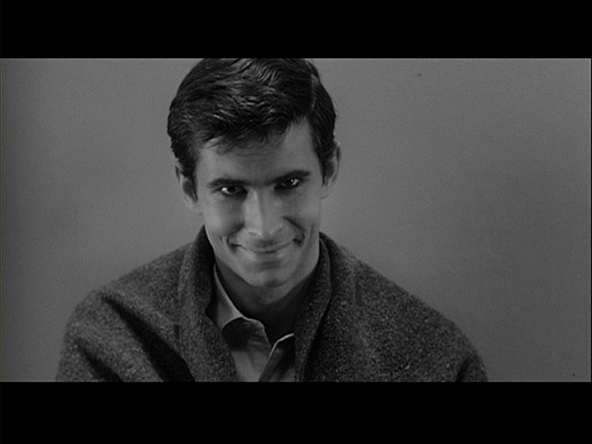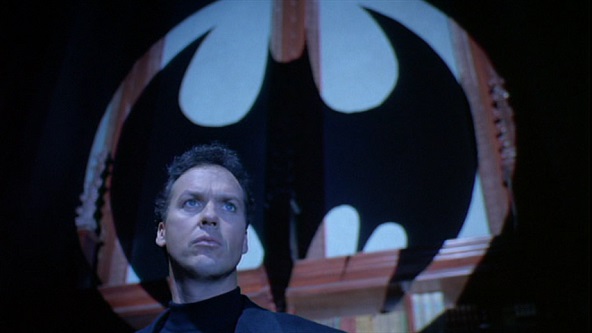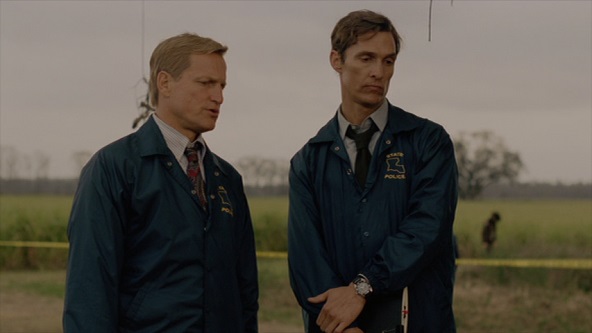
Over at Alex on Film I’ve added reviews of a couple of horror movies about youth run wild: Them (2006) and Citadel (2012). Ciarán Foy, the writer-director of Citadel refers to this genre as “hoodie horror,” but this doesn’t seem to be a label that has achieved a lot of traction yet. I suspect it goes back to films like Don’t Look Now and The Brood, though in Don’t Look Now it’s a hooded raincoat and in The Brood the little monsters are wearing hooded snowsuits and pyjamas. Today, the hoodie is a class marker, and the movies are more about juvenile delinquency than the supernatural. The hood is short for a ‘hood full of hoodlums. But either way, the hood retains a power to threaten. Personally, I just hate to see kids driving with their hoods pulled up over their heads. What is this doing to their peripheral vision?
Take, taken, took
Over at Alex on Film I’ve been watching the Taken trilogy: Taken (2008), Taken 2 (2012), and Taken 3 (2014). This was a surprise franchise hit for which I have no good explanation, since I don’t think any one of them is worth watching. That said, I did think the third was the best, which I believe is a minority critical opinion. Not that I thought the third one was good, just that the first two were both crap.
In conversation
There’s an interview with me up at the Carte Blanche website. You can read it here.
Just visiting
Those in wax houses
Over at Alex on Film I’ve been watching a bunch of movies dealing with the theme of the mad artist who makes wax sculptures out of his victims. The ball got rolling with Mystery of the Wax Museum (1933), which was a bit of a studio pot-boiler released without any great expectations. The source story had never even been published. With House of Wax (1953), however, the idea received its classic expression. They couldn’t really miss casting Vincent Price as the demented and disfigured sculptor. I then have some notes on a couple of cheap quickies — Nightmare in Wax (1969) and Crucible of Terror (1971) — that are nevertheless of some interest, with Crucible of Terror being well worth checking out just as a curiosity. Finally, I look at House of Wax (2005), probably best known today for being the one with Paris Hilton in it. She gets a pipe driven through her head. Though not a great movie, I was actually pleasantly surprised by this one, especially with the melting museum at the end. Apparently this caused some problems during production, with a big part of the Australian studio burning down and a subsequent lawsuit. That’s unfortunate, but I have to say it looks great.
You keep using that word . . .
Yesterday morning on CNN New Day co-anchor Alisyn Camerota was interviewing former Governor of New Hampshire and White House Chief of Staff John Sununu about investigations and broader speculations into the possibility of some kind of collusion between the Trump White House and Russia. Throughout the interview Sununu kept insisting on the lack of any evidence of “a veniality.” This is what it sounded like:
CAMEROTA: I’m trying to gauge your comfort level with all of this
SUNUNU: My comfort level? The only discomfort I have is with folks in the media trying to create a veniality without having the courage to specifically tell me what the veniality that I should be concerned about is. I don’t have . . . I have not identified a veniality. Have you?
Is “veniality” really the word Sununu wanted to use? It refers to a minor sin, easily forgiven. I don’t think that’s what anyone speaking about these matters is really interested in. My guess is that what he meant to say was “venality,” which means capable of being bribed or open to corruption. The two words are actually very different, coming from completely different roots. The weird thing is, I’m still not entirely sure what the intended meaning was, or if either veniality or venality were being properly used.
Killers!
Over at Alex on Film I’ve been watching three adaptations (I use the word loosely) of Ernest Hemingway’s short story “The Killers.” Of course, I just watched them together because they’re all included in Criterion’s DVD package. Robert Siodmak’s 1946 version is classic noir, and very good. For some reason Andrei Tarkovsky’s student film is the closest to the source. I’m not sure if he’d seen Siodmak’s movie. Finally, Don Siegel’s 1964 version, originally planned as a TV movie, has some interesting credits but struck me as a pretty lousy flick. It gave Lee Marvin a nice warm-up for Point Blank though.
That ’90s show
I was at university in the early 1990s, a period that we can now refer to in hindsight as the crest of the first wave of political correctness. There were even arguments over appropriation of voice and cultural appropriation that were loudly debated at meetings of the Writers’ Union of Canada. For those of you with an interest in such historical matters, Philip Marchand covered the moment in an essay later reprinted in Ripostes: Reflections on Canadian Literature (1998). Then things died down. When Russell Smith sent up the whole matter of identity politics in his novel Muriella Pent in 2004 he was very much looking back on matters that no longer seemed that relevant. Here is the first paragraph from my review of Muriella Pent, which I wrote 13 years ago:
Muriella Pent is a curious novel that could be easily mistaken as prematurely dated. It has, for example, a lot to say about fashions in the arts, about what’s in and what’s out, and it directs its satire toward subjects (like the debates over political correctness and appropriation of voice) that are now very out.
Ouch. In my defence, I did end the review by saying it would be wrong to write Muriella Pent off as “a blast from the past,” and closed with these now prophetic words: “I have a hunch it might be ahead of its time.”
Well, it’s been a while but the once “very out” topics of political correctness and appropriation of voice are now very much back in. For good and ill. Who would have thought in 2004 that in 2016 someone would come along and ride a crusade against the forces of political correctness all the way into the White House? That would have seemed even more preposterous than a President Trump.
Whatever you think of all this, it’s clear we’re now experiencing a second wave. Looking at the dates it’s hard to miss the generational ebb and flow. That may be one explanation anyway for the curious rise and fall and rise again of the same arguments, expressed with the same rhetoric, pro and con (roughly, freedom of speech vs. exploitation and oppression). We even have, in place of Smith’s Muriella Pent, Stephen Henighan’s Mr. Singh Among the Fugitives, a new satire on identity politics in Canadian cultural circles.
It’s déjà vu, but is it progress?
I’ll avoid entering into the arena here, mainly because I think there is a basic disagreement over the terms of the debate (or conversation, as it’s more gently styled). Well-meaning people seem to mean very different things when they use the term cultural appropriation. For some, every work of art necessarily involves cultural appropriation, while for others it is an act of genocide. Both sides have a point to make, but obviously, expressed in these terms, they have no common ground.
But why are these matters becoming so prominent now? Is it because of the generational ebb and flow I mentioned? Or the effect of so many highly publicized examples of the phenomenon in recent years, like the cases of Rachel Dolezal (the former head of the NAACP who was outed by her parents as being white), Joseph Boyden (whose Indigenous heritage has been called into question), and Pepsi’s Kendall Jenner commercial (co-opting the Black Lives Matter movement to sell cola)?
I’m sure that cases like these all provided fuel to the fire, but I don’t think they were the real drivers. For that, I’d point the finger elsewhere.
(1) The media. You can’t exaggerate how much the media plays this stuff up, and the effect that has. After the story broke about Hal Niedzviecki quitting his post as editor of the Writers’ Union of Canada’s magazine due to an editorial he wrote (that began “I don’t believe in cultural appropriation”) there was a barrage of high-profile, mainstream commentary. The CBC ran op-ed pieces, as well as broadcasting interviews and hosting discussions online and on their flagship news programs. I think the National Post had two columns a day for nearly a week talking about it, and other newspapers followed suit. When was the last time, if ever, that anything having to do with writers in Canada received half as much media attention?
(2) Universities. I’ve previously pointed out that matters of identity are now the only subject of interest in English departments. Identity politics now constitute the foundation of any English program, and are of far more importance than the practice of textual analysis or making judgments of aesthetic value. What this has led to is the current critical dispensation, where, for example, the only question we need to ask about Joseph Boyden is whether his voice can be established as authentic.
These were both drivers of the cultural appropriation debate twenty years ago, but they have since metastasized. The media, in transitioning online, is far more dependent on pushing people’s buttons in order to grab clicks and eyeballs, going after immediate responses and snap moral judgments. Meanwhile, universities have limited the accepted terms of critical discourse to include only such matters of identity as are now being re-argued. Working in tandem they have made this time around an amplified version of the same debate we had in the 1990s, but not one with much more to say. My guess is that the conversation will move away again after a while, but I don’t think we’ll be moving on.
Little people
Over at Alex on Film I’ve been looking at a couple of movies about guys who experience some excessive shrinkage. The Incredible Shrinking Man (1957), based on Richard Matheson’s classic novel The Shrinking Man, is a fun adventure story but also a surprisingly serious meditation on man’s place in the universe. I’m still not sure how they got away with that ending. Ant-Man (2015), on the other hand, is the usual Marvel fare, only sillier.
The Musgrave rituals
Over at Alex on Film I’ve added notes on a couple of adaptations of the Sherlock Holmes story “The Adventure of the Musgrave Ritual.” First up is Le Trésor de Musgrave (1912), which is, surprisingly, the most faithful to Conan Doyle’s story, despite being a silent short. Then we have Sherlock Holmes Faces Death (1943), which is a much freer interpretation but still a great movie in its own right.