Simpsons Comics Colossal Compendium: Volume Two

Simpsons Comics Colossal Compendium: Volume Two

This is more like it. I was a little underwhelmed by the Simpsons Comics Colossal Compendium Volume One, though this was mainly because I judge the writing in these Simpsons comics to a high standard. I know the Simpsons universe well, at least from its earlier years, and I’ve been impressed at how the stories in the comics are still so fresh and funny decades into the franchise now.

There are some good storylines here, including a number of superhero spin-offs. There’s a Bartman story where he meets a supposed Bartman of the future (one guess as to who that is!), another where all three of the Simpsons kids are superheroes (Stretch Dude, Clobber Girl, and Bouncing Battle Baby), a blast from the past courtesy of Comic Book Guy and issue #100 of Radioactive Man, and an adventure where Homer becomes a sort of accidental costumed crimefighter as a way of losing weight.

The best story though is “No Cause for Alarm,” a comic written and illustrated by the legendary Sergio Aragonés. This follows a series of mishaps that arise when Homer gets lazy with the alarm at the nuclear power station. It’s the kind of gag humour Aragonés does well, and the story has a lot of the chaotic crowd scenes he’s famous for, made all the better for the fact that Springfield is so full of easily identifiable characters you can enjoy these pages for a while as you try to locate where your favourite citizens are hiding.

If there’s any negative comment I’d make it’s the inclusion of a couple of short Itchy & Scratchy vignettes. I’ve never understood why they kept with these. Basically they’re an ultraviolent version of Tom & Jerry, with the cat (Scratchy) always being dismembered or destroyed by the sadistic mouse Itchy. I don’t find these comics offensive or shocking, but I don’t think they’re funny either. And they always play out the same, with no twists or surprise endings (unlike Mad’s Spy vs. Spy, for example), so they’re not very interesting in that respect either. But since these only amount to a few pages of filler it’s not a big deal.

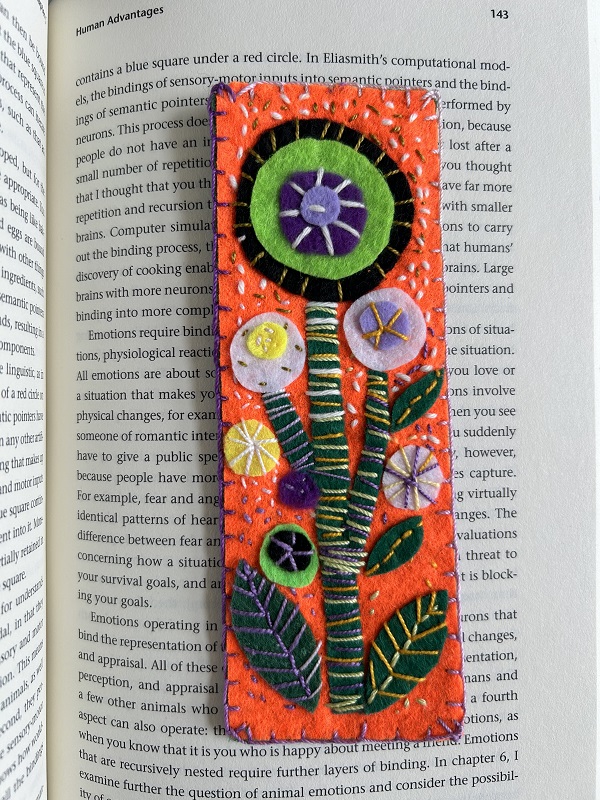
Finally, the papercraft Springfield landmark is of Moe’s Tavern.

Graphicalex

The long read

Just a note to let you know that after an eight-month hiatus I’m back posting book reviews at Goodreports.net. This was my first website, launched in 1998 (!) and I’ve operated it continually ever since. Seeing as I post a lot of reviews here, and I’m doing less reviewing in general, Goodreports hasn’t been as active in recent years. But I’ll try to keep things going with weekly updates. Most of the books are non-fiction, with a lot of current events and political matters being discussed. I kick things off with a quick look at Nouriel Roubini’s MegaThreats. Depressing stuff!

What does that even mean? Part V

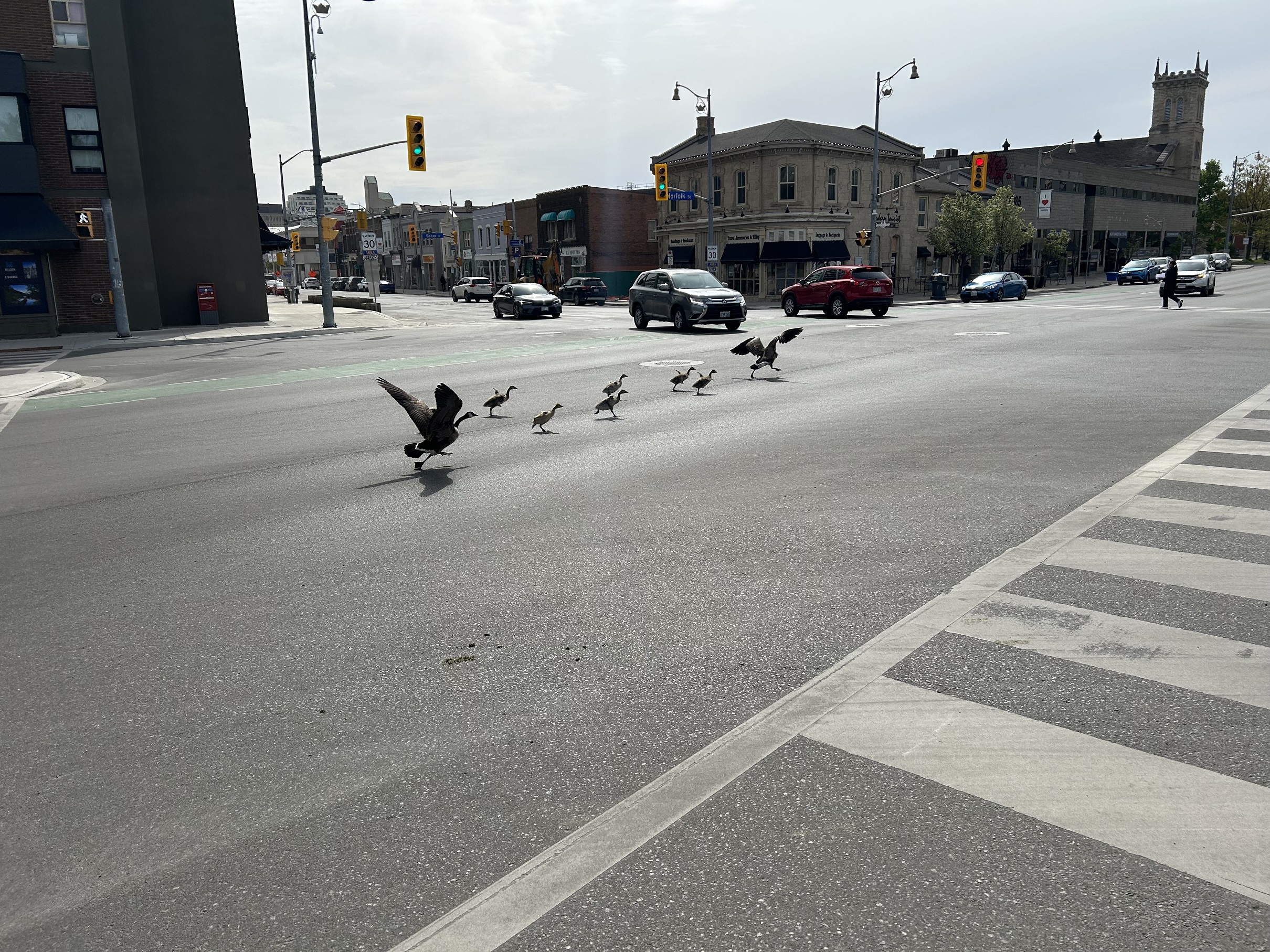
This is a crosswalk. I don’t know what the traffic rules and regulations are where you live, but around here these broad white stripes mean it’s a crosswalk. And that means vehicles stop for pedestrians.

But according to the sign this isn’t a crosswalk. It’s like any other stretch of road, where pedestrians yield to vehicles.

Except it’s painted as a crosswalk.

Of course, this particular bit of signage is on campus, which is a place with its own rules and regulations. So I guess anything goes.

Index

Malignant Man

Malignant Man

It’s likely the main initial selling point for Malignant Man is that, as the back cover tells us, it was “written by Saw director James Wan.” But even this needs some unpacking.

In the first place, on the title page inside James Wan is credited with “Created and story by.” The comic itself was “Written by” Michael Alan Nelson. This put me in mind of the way the BRZRKR comics were credited as co-written by Keanu Reeves. I expressed some doubt as to how much writing Reeves actually did on those comics, but since (to be fair, after getting off to a decent start) they were terrible, and his co-writer Matt Kindt was a capable hand, it’s possible he was at least somewhat involved.

The other thing to note is that Wan did go on to produce and direct a 2021 horror film with the title Malignant, but that movie has nothing at all to do with this comic (which came out in 2011). There was apparently a deal in place to make a movie out of Malignant Man, with Wan originally slated to direct, but it never got off the ground. At least I’ve never heard of it.

On to this comic. Our hero is one Alan Gates, a fellow who has been diagnosed as dying of brain cancer. But don’t worry, he’s not going to turn into the Jigsaw Killer. Instead, after being shot in the head by some punk who he tries to stop from stealing a woman’s purse, he’s taken in for surgery where the doctors find out that his brain tumour is actually an alien parasite called a malignant that gives him super powers.

Just as an aside, I think that’s supposed to be him on the cover, but that person doesn’t look anything like the guy in the comic. Which seems like the kind of thing someone should have flagged.

Unfortunately for Alan, there are other malignants out there. Actually there are two secret societies of them, one good and the other bad. The bad ones, who look like the Agent Smith clones from The Matrix, start sending hit squads after Alan. Along with a malignant buddy named Sarah Alan kills them all, utilizing his glowing malignant blade and prosthetic shotgun.

I didn’t think there was anything special or very new about this idea, and for a short run of four comics they tried to put too much mythology into the mix. For example, we never do figure out what the malignants are up to. Maybe if the series had gone on some of that would have been explained, but this seems to have been the end of the line.

Graphicalex

Holmes: The Reigate Squires

Or “The Adventure of the Reigate Squire.” Or (in the U.S.) “The Reigate Puzzle.” Apparently American audiences might not have been familiar with the concept of a squire, or resented its anti-democratic bias. But “puzzle” isn’t bad because this is a classic puzzle mystery.

Holmes is the sort of detective who is a bloodhound for material facts. He is observant not so much of behaviour as of clothes and the marks on them, or things seen while crawling around on the ground with a magnifying glass. As readers we aren’t always privy to these clues, but we’re likely to be ahead of Holmes when it comes to identifying the villain here because he (the villain) is such an obvious heel. One wonders if Holmes even notices things like “a rather malicious smile” though, absorbed as he is by footprints, powder burns, and the handwriting on a torn piece of paper. Motive rarely enters into the discussion in the Holmes oeuvre, as it’s usually just pecuniary gain. And so character doesn’t go any deeper than that. The Holmes mysteries are primarily grounded in the presentation and examination of things. Notes. Locks of hair. Balls of string. Traces of tobacco.

The main clue here, and one that is freely shared, takes the form of a torn piece of paper with a bit of handwriting on it. A facsimile of this is presented, and I suppose some readers may have been struck by the spacing of the words and so come to draw the same inferences as Holmes does. It also may be true that a family resemblance can be traced through handwriting. But the reproduction of the letter wouldn’t allow me to draw those kind of conclusions. I couldn’t even make out the Greek e’s. And the idea that “one can place a man in his true decade” of age based on his writing is a stretch. My own writing has changed, for the worse, as I’ve gotten older, but it hasn’t broken down by decades. And my handwriting can vary quite a bit even now, usually based on how big a rush I’m in.

Watson is particularly obtuse to Holmes’s game, but that doesn’t matter. A couple of pratfalls is all Holmes needs to gather the required evidence, and these have been prepared for in the intro, where we learn that he’s recovering from a nervous breakdown after his previous case. Our Holmes is a highly-strung character, or bipolar to give a modern diagnosis. Unfortunately for the squires, a visit to the country is just what the doctor ordered.

Holmes index

About this item

So I was just looking online for a new winter coat. As some of you may remember, I had a bit of trouble with this a few years back. Anyway, I was browsing through the discount offerings at the Wal-Mart and came across this product description that I first thought might be AI slop. Then I decided AI couldn’t be this bad. No, somebody, somewhere figured that this was the best way to sell a coat.

I resisted adding this particular item to my cart, as impressed as I was that it was made of “materials” and was guaranteed to make me look not just handsome but more handsome. I don’t know if the world could handle that.

Velvet Volume 2: The Secret Lives of Dead Men

Velvet Volume 2: The Secret Lives of Dead Men

I’m happy I stuck with this series. I thought Before the Living End was generic and uninteresting spy stuff, but The Secret Lives of Dead Men drew me in. It’s still terribly generic, but I found myself genuinely curious as to what the game behind the game was and who was being played. Even though the answer to that latter question seems to be everyone.

So sexy superspy Velvet Templeton, clad in her skin-tight prototype stealth suit (bullet proof, and with wings for gliding off of tall buildings) is running around Europe with stolen passports trying to find out who framed her for the murder of secret agent X-14. Apparently it all goes back to some shit that was going down in the 1950s (the story is set in 1973) and Velvet’s husband, codenamed Mockingbird.

Don’t think you’re going to get any answers here! Just a lot more questions. But I enjoyed all of it, and was even glued to long stretches of dialogue that take place between two people sitting in a bar or together on a train. You know these conversations are games as well, but it’s fun to watch Velvet playing them as she follows the bread crumbs to whatever final twist Ed Brubaker has up his sleeve.

Graphicalex

Back to the Books

This weekend marked the 17th Annual Friends of the Guelph Public Library Book Sale. I always go to these, though since they moved to a new location starting last year I haven’t gone on multiple days. It’s a good location in terms of space but it’s located at the opposite end of the city from me so I can’t just walk there, as I did when it was downtown. Going downtown is a hike for me, but doable. And the thing is, I much prefer a long walk to a short bus ride. Even if I have heavy bags to carry! But that’s the way it goes.

Where I started from.

When I hopped on the bus downtown there were a couple of other people who got on the same bus with me who were dragging shopping buggies. It was clear they were heading to the same place I was. One of them was a little old guy. I would put him in his mid to late 70s. Well, when the bus arrived and stopped, just on the other side of the street from the warehouse the sale was in, this guy flew off, and then charged across the street so quickly traffic had to slam on the brakes and honk at him. He didn’t care. And he didn’t stop running. He sprinted the length of the warehouse, dragging his buggy behind him the whole way until he got to the line waiting to get in.

He impressed me with what good shape he was in, but I was honestly shaking my head at this. We were early. Really early. Like 90 minutes before opening. There were only 20 people in line. By the time they opened the doors there would be close to 300, but there was no limit on how many people they were going to admit so it really didn’t make much difference where you were in line. So what on earth was the rush? There was almost nobody else around. As it turned out he was just ahead of me in the line and I was taking my time (looking both ways before I crossed the street). Did he just want to beat me? We weren’t even interested in the same parts of the sale.

Anyway, they had the same little signs posted along the line as they did last year. Things like this:

Not a question!

And honestly, right beside the guy in such a rush, this was the sign:

I wonder if this registered with him at all. I also wonder what the bottom two lines mean. I felt like it was a joke I was missing.

The doors opened promptly at 2. Luckily we didn’t get rained on while we were waiting. There was a lot of rain in the area, and storm clouds passing overhead, and no cover in the line. But we were lucky.

Inside it was the usual crowd scene. Here’s a picture of part of it:

Apparently they had over 85,000 volumes for sale. I think that was probably a low count. Anyway, it was very well organized and all the volunteers were very nice, which I can’t imagine is easy. I’m sure they have to deal with their share of idiots.

I didn’t get that many books. I think 9 or 10. But they were heavy enough and I didn’t have a buggy. My rule is that I can’t buy more books than I can carry home. Some sections of the sale seemed to have a lot less than in previous years. Comics/graphic novels were particularly weak, unless somebody just took whole boxes of them before I wandered over to that section. I’ve seen that happen before. As per usual, there were a lot of the sorts of books you’d expect (like bestsellers that nobody wants to hang on to), with a few treasures mixed in. But most of all, it does my heart good to see so many people still interested in physical books. They still believe!

Aliens: Dust to Dust

Aliens: Dust to Dust

In my thoughts on Aliens: Dead Orbit I offered up the opinion that sometimes with comics where one person does double duty as artist and writer you end up wishing they’d split the labour with someone else. In that case I loved the art by James Stokoe but had trouble following the story. Dust to Dust reverses this, as I thought Gabriel Hardman’s story was solid, if pretty basic, while his art wasn’t to my liking.

First the story. In his Introduction Hardman expresses his (in my opinion, correct) understanding of the mission. “You have to bring in different ideas while still fitting the tone of the Aliens universe or you’ll end up with a stagnant pool of a franchise.” This is what I meant when I said of the Aliens: The Original Years Volume 2 omnibus that the stories have to deliver fan service but also “just enough stuff that’s new that every story has its own character.” And in fact this is the challenge faced by every genre writer.

So in most respects Hardman presents us with a classic Aliens story here. On a planet that’s been undergoing an only partially successful terraforming program there is a Xenomorph outbreak. And, as is the nature of these things, pretty soon the nasty creatures have overrun the human colonies, leaving everyone scrambling to get on the last escape shuttle out. Two such people are 12-year-old Maxon and his mom, the latter having recently had an intimate encounter with a facehugger. So yeah, she’s expecting. After Maxon and mom get on a shuttle, mom gives birth in the usual way, and within a couple of minutes the chestburster is a full-grown adult Xenomorph. How do these things grow so fast?

Anyway, the shuttle has to crash land back on the planet, which is an inhospitable environment riven by dust storms. The passengers all survive the crash, but so does the Xenomorph, minus an arm. This is significant because it brings in the “different idea” that jazzes the story up. You see, as one character puts it, “everybody says the Xenomorphs take on the traits of their hosts.” And since this particular Xenomorph was born of Maxon’s mother that means there’s still a kind of shared bond. She (the one-armed Xenomorph) may kill everyone around Maxon, but she’ll leave him alone. Or even protect him, as needs be.

The idea that Xenomorphs borrow something from their hosts had, I think, been suggested in the Aliens mythology before this, but the step taken here goes quite a bit further. These aliens even take on the personality of their hosts. That’s new, and it’s an interesting twist in what turns out to be, as promised on the back cover, a story “equal parts the horror of Alien, and the action of Aliens!”

But then there’s the art. It’s very much the sketchy style of drawing (and lettering) that I’m not a fan of. The work of Jesús Hervás and Vanessa R. Del Rey on The Empty Man series being a good example. I like the art here better than in that title, but it suffers from the same drawbacks of being hard to read at times. There’s one fight with the Xenomorph, for example, where it gets knocked off its feet when attacking Maxon. How? I can’t make it out. I think a giant robotic arm is swung at it, but I had to wonder how that would work. It’s just not clear.

Now to be fair I do like an individual artistic style, and I’d rather see a comic drawn this way than in the plastic visuals of the mainstream Marvel manner. Also, the scratchy quality of the images goes with the fact that a lot of the time the characters are caught out on the surface in a raging dust storm. But still, it’s not my thing.

Graphicalex