Michael Reeves

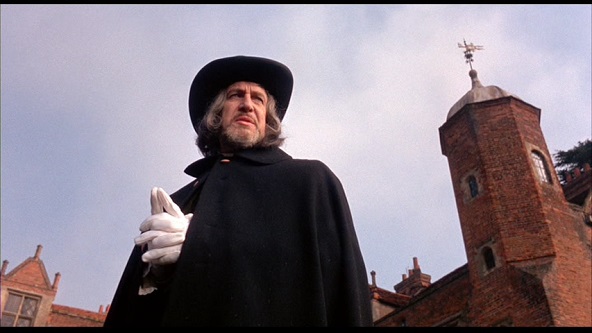
Over at Alex on Film I’ve been watching the movies — three in total, not counting Castle of the Living Dead that he only got called on to finish — of Michael Reeves. The three movies are She Beast (1966), The Sorcerers (1967) and Witchfinder General (1968). Aside from dying young, Reeves’ reputation rests mainly on Witchfinder General, which is a really good period piece. The Sorcerers is more a curiosity and She Beast barely that.

Go big

Humble beginnings.

So, over at Alex on Film I’ve been watching Godzilla movies (and a few of their close kin) for the past few weeks. Not the whole canon, which consists of 36 movies to date. Guinness World Records lists it as the longest-running continuous film franchise.

I grew up with the early Toho Godzilla movies. They were fun, and I think they still have a certain charm. I wasn’t aware of the original Gojira (1954) much later, and it really is a slightly different animal. More recently CGI has taken over, with mixed results. I can’t say I was blown away (or flattened) by anything though.

Here’s the list:

Gojira (1954)
Godzilla Raids Again (1955)
Godzilla, King of the Monsters! (1956)
Gorgo (1961)
King Kong vs. Godzilla (1962)
Mothra vs. Godzilla (1964)
Ghidorah, The Three-Headed Monster (1964)
Invasion of Astro-Monster (1965)
The X from Outer Space (1967)
All Monsters Attack (1969)
Bambi Meets Godzilla (1969)
Godzilla vs. Mechagodzilla (1974)
Terror of Mechagodzilla (1975)
Godzilla vs. Mechagodzilla II (1993)
Godzilla (1998)
Godzilla 2000 (1999)
Godzilla vs. Megaguirus (2000)
Godzilla, Mothra and King Ghidorah: Giant Monsters All-Out Attack (2001)
Godzilla Against Mechagodzilla (2002)
Godzilla: Tokyo S.O.S. (2003)
Godzilla: Final Wars (2004)
Godzilla (2014)
Shin Godzilla (2016)
Kong: Skull Island (2017)
Godzilla: King of the Monsters (2019)
Godzilla vs. Kong (2021)
Godzilla Minus One (2023)
Godzilla x Kong: The New Empire (2024)

Buckets of blood

They’re gonna rise again.

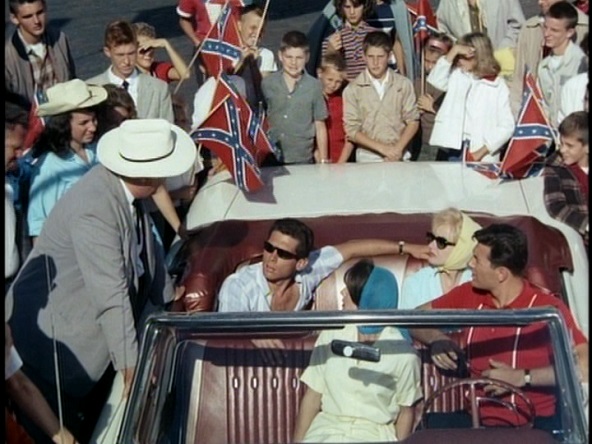
Over at Alex on Film I’ve been watching the so-called Blood Trilogy of the director Herschell Gordon Lewis: Blood Feast (1963), Two Thousand Maniacs! (1964), and Color Me Blood Red (1965). I say “so-called” because that’s not a name Lewis himself used. They were only dubbed a trilogy later by a new distributor. In fact they have little in common but blood.

Lewis if often credited — and even more often credits himself — with having “invented” gore. Whatever the case may be, most of his movies are very bad: cheap exploitation work that only just clear a low bar of competence. That said, Two Thousand Maniacs! deserves its reputation as a cult classic. It’s a genuinely disturbing movie, and it got the ball rolling (downhill?) on a lot of later trends in horror, like the murderous rednecks and the showrooms of theatrically staged killings. Maybe we didn’t need to go here, but we did and Lewis in many ways drew us the map.

Leaning together / Headpiece filled with straw

Come down off your cross.

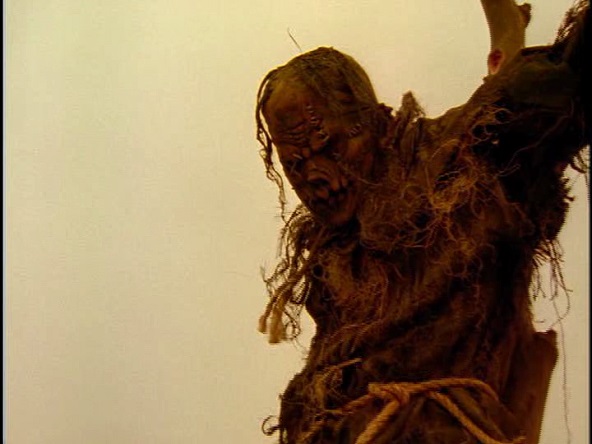
Ugh. Over at Alex on Film I’ve been watching the Scarecrow movies: Scarecrow (2002), Scarecrow Slayer (2003), and Scarecrow Gone Wild (2004). Only because I’m a bit of a completist when it comes to franchises and I got them all on one DVD at some bargain sale. Most horror franchises go downhill, and so does the Scarecrow series, but few start off as badly and then go downhill. By the third instalment they weren’t even trying.

Monster of the week

Don’t know about you, but I know what I’m thinking.

I’ve been spending some time recently watching crime shows and in the last month alone I’ve noticed a recurring theme: that of the murderous pedophile sex ring operated by a bunch of rich, well-connected types.

It first came up in Series 3 of Prime Suspect (1993), which had DCI Tennison investigating the death of a teenage “rent boy.” As the case progresses it turns out that there is a posh sex club that is trafficking in kids but which is protected from investigation because some of the members have powerful connections. Indeed, even high-ranking police seem to be involved.

Next up was “Sidetracked,” the first episode of the first season of the BBC’s Wallander, which aired in 2008 (the novel it was based on came out in 1995). Again there is a sex ring involving the abuse of underage girls, with the police involved in a cover-up.

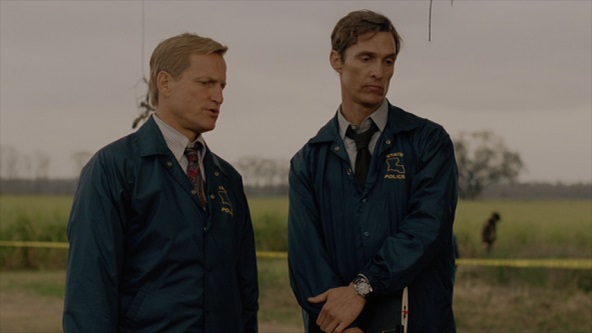
Finally I watched the first season of True Detective (2014). Once again our heroes are investigating a bunch of murders that seem to point to some kind of ritual sex cult involving wealthy, powerful people (politicians, police, the usual suspects). I’d say more about the exact nature of this cult but very little is explained. It’s an interesting show in some ways, but calling the writing lazy would be to give it too much credit.

Obviously the pedophile sex ring has fully entered the bloodstream of pop culture, becoming a nightmarish part of our collective mythology. As I recall (and my memory here is hazy) such sex rings also pop up in the the Red Riding Quartet (1999-2002) of David Peace and the Lisbeth Salander novels of Stieg Larsson (2005-2007). Both of which were made into series of movies and both of which follow the same script: a club of rich predators who operate above the law, brought down by courageous investigators.

What basis do such stories have in reality? I can only think of the Marc Dutroux case, which was much publicized but only went to trial in 2004. It was also so complex I’m not sure if anyone has figured out what was going on, though the controversy over its handling, which continues to this day, means that it has only grown in the mind.

It’s hard not to think that the pedophile sex ring involving corrupt police and politicians allied with secretive billionaires is mostly an urban myth and conspiracy theory. One of its more recent manifestations had a child sex-slavery ring being run out of the basement of a Washington pizza parlour (it became known as Pizzagate). Hillary Clinton was said to be involved.

Obviously sex trafficking is real. And it’s also true that such trafficking can involve victims who are under the age of consent. Rich people do pay a lot of money to indulge abusive behaviour. Hence sex tourism, or child prostitution more generally. These are, however, mainly solitary crimes. I find it curious then that pop culture is so obsessed with these rings when it’s not clear to what extent anything like what we see on TV has ever existed. There’s the Jeffrey Epstein story, involving lots of big money and politicians and maybe even corrupt law enforcement agencies, but as far as I know the young women in that case weren’t being murdered.

Why then did the pedophile sex ring become such a popular topos? Is it just a way of feeding a generally held belief that rich and powerful men are almost certainly up to no good? That the 0.1%, with their flunkies and enablers in government, are preying on the poor in the most horrible ways imaginable? The monsters we read about in bestselling novels and hit TV series exist to meet an imaginative demand.
Psychos

I’ll bet he wouldn’t hurt a fly.

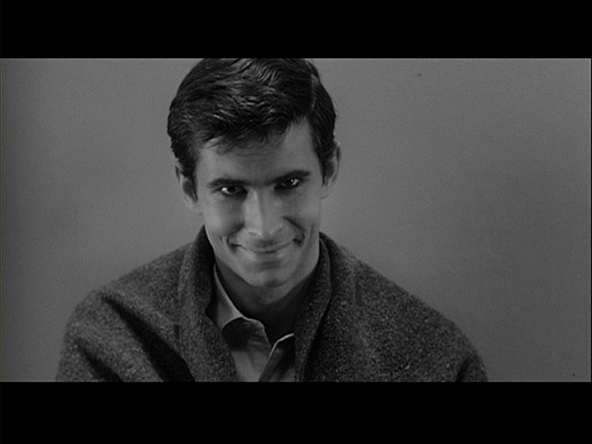
Over at Alex on Film I’ve been revisiting the extended family — I think that’s a good word — of Psycho movies: Alfred Hitchcock’s 1960 classic Psycho, Brian De Palma’s homage Dressed to Kill (1980), the three more direct lineal descendants Psycho II (1983), Psycho III (1986) and Psycho IV: The Beginning (1990), Gus Van Sant’s 1998 remake, and the 2012 biopic Hitchcock which takes as its subject the filming of the original.

Watched chronologically, these movies go, without exception, downhill. I’d certainly avoid the last two titles. The sequels were actually better than most people were expecting at the time, and though Dressed to Kill has dated badly in several obvious ways it’s still worth a look.

Spare time

H. G. Wells is usually credited with having invented the time-travel story in the 1895 classic The Time Machine. In his book Time Travel James Gleick does a good job putting Wells’s invention in context, though I still wonder why such a rich idea lay mostly unexplored until the twentieth century. Clearly we weren’t waiting for science to catch up to our imaginings, because it still hasn’t (and likely never will).

The novel has been freely adapted on film at least twice, by George Pal in 1960 and again, less successfully, in 2002. I would definitely recommend the Pal version, but if you really want a treat you should look for Time After Time, which has Malcolm McDowell playing H. G. Wells zapping forward to 1970s America in a hunt for Jack the Ripper. It’s a movie that’s not very well known these days but it’s very good.

First as scandal, then as farce

Over at Alex on Film I’ve been watching a bunch of movies on American politics: Oliver Stone’s George W. Bush biopic W. (2008); a fictional account of a Democratic primary that gets nasty, The Ides of March (2011); a couple of movies looking at historical political scandals: Chappaquiddick (2017) and The Front Runner (2018); and finally a biopic of Dick Cheney, Vice (2018)

What struck me watching these movies, as I think it would anyone, is how their catalogues of scandal, crime, and cynicism pale beside any ordinary week’s worth of news out of the Trump White House. What sorts of movies are we going to see made about the current administration? I think we’re past the point of parody now.