Damned kids

She already has it all figured out.

Over at Alex on Film I’ve been watching adaptations of John Wyndham’s classic SF novel The Midwich Cuckoos. The first of these was 1960’s Village of the Damned (they sure weren’t going to stick with Wyndham’s title). This was followed by the Cold War parable Children of the Damned (1964), a film very different in tone. Then John Carpenter took a turn with an uninspired remake of the original in 1995. I guess the 1960 version is the best of these, and the only one really worth watching. None of the movies, however, really digs into the main theme of Wyndham’s book, which has to do with a battle for survival between incompatible species.

Glub . . . glub . . . glub

Over at Alex on Film I’ve been revisiting the underwater thrillers of 1989: The Abyss, DeepStar Six, Leviathan, and The Evil Below. The Abyss is the best known: a big-budget James Cameron film that even won an Academy Award. But I think DeepStar Six is more enjoyable for only being an unabashed B-movie monster flick.

The last picture show

Last week I went out to see a movie in a cinema for the first time in close to fifteen years. The movie was Blade Runner 2049, and you can read my notes on it here. But I thought I’d write something on my response to the moviegoing experience. These are my notes.

It was expensive. My ticket cost $14.99. This was for a mid-range matinee. Mid-range meaning between a “general” showing ($11.99) and the deluxe treatment ($22.99). The deluxe pricing is for a theatre with larger seats that, I am told, jerk around and vibrate to match any turbulence on screen. People actually pay more for this!

Yes, I said 3D. I didn’t want to see this movie in 3D, but at the time I wanted to go it was the only format available. I don’t think I’ve ever seen a movie in a theatre in 3D. The latest 3D craze only started after I gave up on moviegoing.

I found it to be an annoying gimmick, but you can’t just take off the glasses and watch the movie normally. I know because I tried. About the only time where the 3D impressed me was a shot looking into a room through a window that was wet with rain. But I don’t know if my noticing the effect added anything to my enjoyment of the scene.

The volume was a physical force. I mean the gunshots were so loud I literally felt them in my teeth and in my stomach. Making matters worse, the bass was making a speaker in the ceiling vibrate noisily every time the soundtrack got really loud. Had no one complained about this? Did the theatre managers not know? I mean, the rattling was really annoying.

Remarkably, despite being so loud I still couldn’t hear some of the muttered dialogue. There was a scene at the beginning where someone said something to Ryan Gosling that seemed really important but I couldn’t make out a word of it. When they flashback to the same scene later in the film I really strained to catch what was being said but missed it again. I don’t blame my hearing. As I say, the speakers were set way too loud. It’s just that so few actors seem capable of delivering their lines clearly. At home I always watch movies with the subtitles on.

Matinees aren’t very popular, even on weekends, but even so there were only seven other people in attendance. Someone behind me said to their friend that it was like a “private showing.” Normally this would make me happy, but it’s hard not to feel like I was taking part in an antique ritual. And really, even given the eye-popping big-screen visuals I would have much preferred staying at home.

Denis Villeneuve

Over at Alex on Film I’ve been watching the movies of Denis Villeneuve. I like his work, but think that he needs to start choosing some better projects to work on. His one great movie thus far, Enemy, is also the only one with a really strong script. Even Blade Runner 2049 struck me as deeply flawed just on the level of its basic concept. Anyway, here’s the line-up:

Next Floor (2008)
Polytechnique (2009)
Incendies (2010)
Prisoners (2013)
Enemy (2013)
Sicario (2015)
Arrival (2016)
Blade Runner 2049 (2017)
Dune (2021)

Something old, something new

First comes love . . .

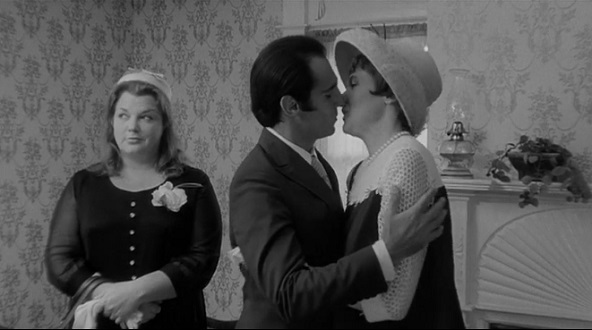
Over at Alex on Film I’ve been watching a couple of takes on the Lonely Hearts Killers case of Martha Beck and Raymond Fernandez. The story was most famously adapted by Leonard Kastle in The Honeymoon Killers (1970), which retains all of its original power as a low-budget cult satire. Less well known, but still well worth checking out, is Fabrice Du Welz’s Alleluia (2014), which is a darker contemporary interpretation.

The book of horror

Minimalist Poe. All pit and no pendulum.

Over at Alex on Film I’ve been watching anthology horror films. This is a genre that got off to a good start but later devolved into a lot of comic-book silliness. The stuff from the ’70s and ’80s is till entertaining, but most of it doesn’t hold up that well. In recent years there have been a number of quickie-franchises specializing in what might almost be called flash-filmmaking: up to a couple of dozen shorts jammed together in one feature. These tend to be very hit and miss. Here’s the full list:

Waxworks (1924)
Dead of Night (1945)
Tales of Terror (1962)
Black Sabbath (1963)
Twice-Told Tales (1963)
Kwaidan (1965)
Torture Garden (1967)
The House That Dripped Blood (1971)
Asylum (1972)
Tales from the Crypt (1972)
The Vault of Horror (1973)
Creepshow (1982)
Twilight Zone: The Movie (1983)
Cat’s Eye (1985)
Creepshow 2 (1987)
Two Evil Eyes (1990)
Body Bags (1993)
Necronomicon: Book of the Dead (1993)
Trick ‘r Treat (2007)
P.O.E.: Poetry of Eerie (2011)
The ABCs of Death (2012)
Horror Stories (2012)
P.O.E.: Project of Evil (2012)
V/H/S (2012)
V/H/S/2 (2013)
ABCs of Death 2 (2014)
Dead on Appraisal (2014)
Southbound (2015)
ABCs of Death 2.5 (2016)
XX (2017)
V/H/S/94 (2021)

Mad madhouse

Over at Alex on Film I’ve been watching some adaptations of the Poe story “The System of Doctor Tarr and Professor Fether.” It’s an odd story, and may be the first to develop the theme of lunatics taking over and running the asylum. It’s always been a bit of an awkward piece to adapt though, as the audience knows what’s going on well before the coup is revealed, meaning our attention has to be diverted elsewhere. Nevertheless, I thought The Mansion of Madness (1973) was really good. Don’t Look in the Basement (1973) is just cheap exploitation fare. Stonehearst Asylum was only OK, and nothing to be excited about despite the cast.

Waiting for the great leap . . . forward?

You mean, we’re all going to turn into Johnny Depp? No thanks.

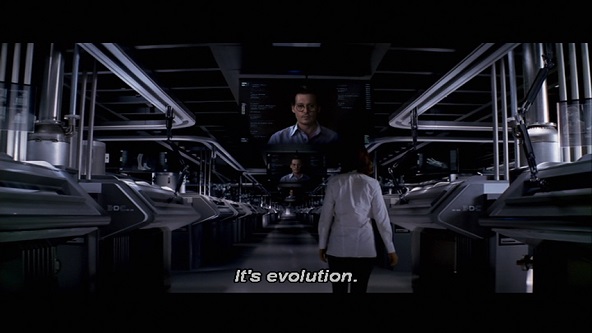
Over at Alex on Film I’ve been watching a bunch of SF movies dealing with the next step in humanity’s evolution. What surprised me the most was how upbeat and apocalyptic the response seemed to be to this. There’s nothing to be frightened of because it will be something truly incredible: the tipping point where we become as gods in the Singularity or digital rapture. I wanted to include my thoughts on Demon Seed just to provide an example of what an earlier generation (my own) thought about the wedding of humanity with our technology. In any event, I once again got more political than I probably should have, but that’s the fun part of having a blog. Here are the films I looked at.

Demon Seed (1977)
Limitless (2011)
Her (2013)
Lucy (2014)
Transcendence (2014)
Morgan (2016)

Hoodie horror

Another neighbourhood gone straight to hell.

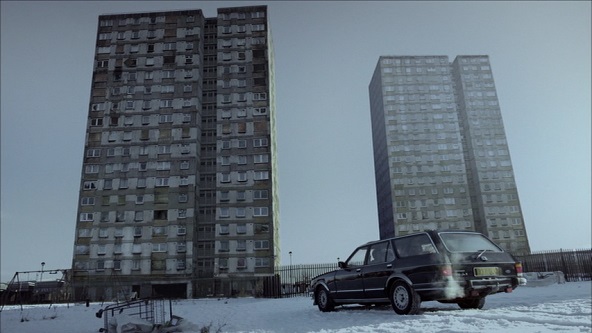
Over at Alex on Film I’ve added reviews of a couple of horror movies about youth run wild: Them (2006) and Citadel (2012). Ciarán Foy, the writer-director of Citadel refers to this genre as “hoodie horror,” but this doesn’t seem to be a label that has achieved a lot of traction yet. I suspect it goes back to films like Don’t Look Now and The Brood, though in Don’t Look Now it’s a hooded raincoat and in The Brood the little monsters are wearing hooded snowsuits and pyjamas. Today, the hoodie is a class marker, and the movies are more about juvenile delinquency than the supernatural. The hood is short for a ‘hood full of hoodlums. But either way, the hood retains a power to threaten. Personally, I just hate to see kids driving with their hoods pulled up over their heads. What is this doing to their peripheral vision?

Take, taken, took

This never ends the way you want it to.

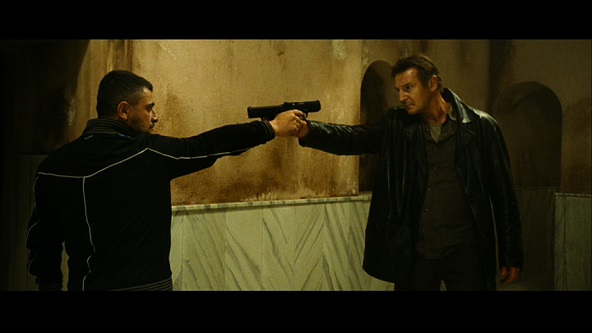
Over at Alex on Film I’ve been watching the Taken trilogy: Taken (2008), Taken 2 (2012), and Taken 3 (2014). This was a surprise franchise hit for which I have no good explanation, since I don’t think any one of them is worth watching. That said, I did think the third was the best, which I believe is a minority critical opinion. Not that I thought the third one was good, just that the first two were both crap.