Happy 1,000th

Party time.

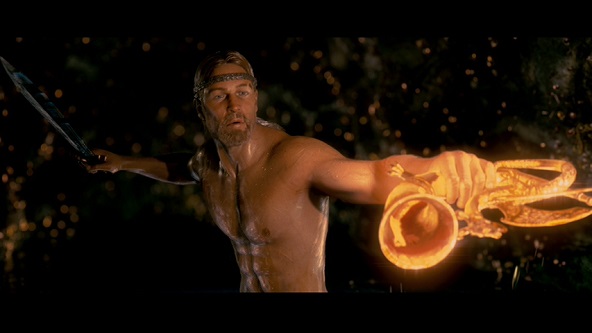
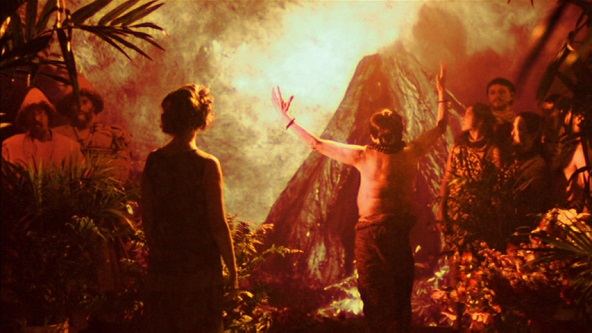
Over at Alex on Film I just put up my 1,000th post: some comments on Guy Maddin’s The Forbidden Room.

I wasn’t sure when I started my movie blog that I’d get to 1,000 posts. Then for a while I imagined I might try to do a special film to mark the occasion. Citizen Kane. Casablanca. Vertigo. Something like that.

One thing I’ve found as I’ve gone on, however, is that doing commentaries on those movies is nearly impossible. This is, in part, because so much (really, everything) has already been said about them. Just in jotting down some personal impressions and reflections, which is all I do at Alex on Film, would require too much work. I do listen to commentaries when available. I do try to read up on some of the basic background and criticism that’s out there. But the field has become so overgrown in many cases that the volume of it is self-defeating.

Who can hope to read everything that’s been written on Psycho? Who would want to tackle Blade Runner? These movies have millions of words dissecting their every frame in print, with millions more online. Nobody can read all of it. And what do you do when the DVDs for not-quite-great films like Fight Club or Hostel come with four full-length audio commentaries each?

I think this is the reason you find so many movie blogs talking about really obscure titles that almost nobody has seen. Critics want to feel like they have some elbow room, or aren’t just reinventing the wheel. What’s interesting is that the same attitude doesn’t seem to apply to fiction. A book that doesn’t find an audience, critical or otherwise, is just ignored. Nobody wants to go near it. Even if it’s a great book that somehow got overlooked. But even the dreariest exploitation flick from the 1960s seems to be able to find an audience today online. I’m not sure why that is.
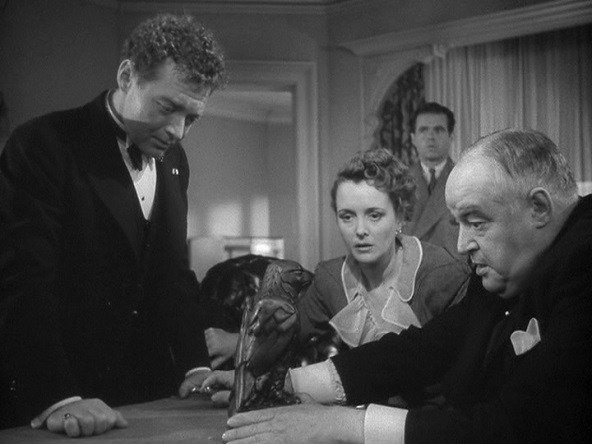
Beowulf on the big screen

Mr. Ray Winstone. No, not really.

Over at Alex on Film I’ve been watching some movies loosely (very loosely) based on the Old English poem Beowulf. I’m not sure what the attraction for filmmakers is, since despite having lots of classic fantasy elements (a powerful hero, a witch, a monster), the story is kind of bare bones. As a result, these movies indulge in a lot of freestyle reinterpretation. Some of it works, some doesn’t.

Despite its reputation as a box office bomb, which may not be wholly deserved, The 13th Warrior (1999) is actually pretty good. Beowulf & Grendel (2005) only has a few moments set amidst some nice scenery. Robert Zemeckis’s Beowulf (2007) has dated so badly in only ten years that it’s unwatchable.

Who ya gonna call?

I always wondered how she’d manage with a flat screen.

Over at Alex on Film I’ve been watching a bunch of horror movies that fit into what I call the Ghostbusters paradigm, where a team of specialists equipped with all the latest toys investigate weird goings-on. I believe the genre started with the BBC film The Stone Tape, and it’s had a long and varied history. Of course, this being the movie business science is always shown to be inadequate when it comes to combating the forces of evil. Just as religion also usually fails. Anyway, here’s the line-up of movies I looked at.

The Stone Tape (1972)
The Entity (1982)
Poltergeist (1982)
Ghostbusters (1984)
Prince of Darkness (1987)
1408 (2007)
The Conjuring (2013)
Ghostbusters (2016)
The Conjuring 2 (2016)
Rings (2017)

Gremlins again

Over at Alex on Film I just finished re-watching Gremlins and Gremlins 2: The New Batch. I was curious to see how well these movies held up thirty years later. Answer: pretty well, but they were never great movies in the first place. It’s interesting they haven’t been remade given how well-known the gremlin mythology still is (don’t get them wet, don’t feed them after midnight) and seeing as they came out just before CGI changed everything.

The nuclear family bunker

Over at Alex on Film I’ve been watching some horror movies dealing with families who have locked themselves away from mortal threats in a post-catastrophe future America. Horror reflects broader cultural anxieties, so I guess there’s something in these tales of families in a bunker — It Comes by Night and A Quiet Place — that people relate to. (I’d also include 10 Cloverfield Lane in the discussion, but there the “family” is a demonic parody construct.) Basically these films take cocooning (a word invented by Faith Popcorn in 1981, I was surprised to find out) to its furthest extreme. The bunker-cocoon insulates the family from threats real or imagined, which have come to define the entire external world.

Of course bunkers are nothing new, as fallout shelters became popular in America as early as the 1950s. What’s going on now feels different though, less afraid of things to come than what’s outside our doors right now. I wonder if there’s any connection to our use of the Internet and the way we consume media generally, where we increasingly inhabit silos of news that we feel comfortable with while being distrustful of everything else (that is, the reality beating on the door). Whatever else is going on, it seems paranoid to me.

TV movies

Actor down, in need of assistance.

Over at Alex on Film I’ve been watching movies based on (semi-)popular television shows. In most cases the idea was to cash in by hitching a ride on an established brand. What surprised me, given that these were all projects with some money behind them, was the awfulness of the writing. I’m not sure any of these movies has a coherent plot, and despite being action-comedies they don’t even have any good jokes. Try to avoid:

The A-Team (2010)
The Man from U.N.C.L.E. (2015)
Baywatch (2017)
CHIPS (2017)