TCF: Perversion of Justice

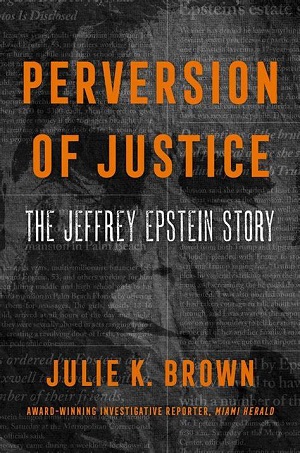
Perversion of Justice: The Jeffrey Epstein Story
By Julie K. Brown

The crime:

A full accounting of the crimes of Jeffrey Epstein will probably never be made, both because he’s dead now and because any accomplices (of which there must have been many) will want to keep the details hidden. At the very least he was involved for many years in underage sex trafficking and sexual assault. He died in prison, under mysterious circumstances, in 2019 while awaiting trial.
The book:

True crime has a cathartic function, in the Aristotelian sense of a purging of the emotions of pity and fear. But a book like Perversion of Justice aroused another feeling in me: anger. I got so angry reading it that it was hard to finish. What Julie K. Brown, the reporter for the Miami Herald who broke the story (or re-broke, by not letting it slip away), chronicles is an outrage to any understanding of justice or decency. Much of what was going on remains hidden by people intent on covering their own asses, but enough corruption has now been revealed to make you sick.

Even basic questions like how rich Epstein actually was and what he did to get so rich remains a mystery. How did he make his money? As his extensive Wikipedia entry puts it: “The exact origin of Epstein’s wealth is unknown.” Apparently he was a kind of money manager, but it’s not clear what this entailed, how good he was at it, or whether what he did was all legal. Some of it at least was very shady.

What really seemed to be going on was that he operated as a kind of parasite on the very rich. As one early observer remarked: “He was very smart and he knew how to woo people, how to schmooze. He’s personable and makes good company.” Not the sort of skill that one would have thought paid so well, but rich people are as susceptible to flattery and being manipulated as anyone else. A lot of them just gave Epstein their money. And I don’t mean gave it to him to manage, but just . . . gave it to him. Of course, to outsiders this made no sense. “I tried to find out how did [Epstein] get from a high school math teacher to a private investment adviser,” one unimpressed businessman remarks, “There was just nothing there.” Was there something suspicious then in his attachments to rich and powerful men, especially given all that later came out? Indeed there was, but all we can do is speculate now.

Epstein himself was a creepy guy who did nothing to conceal his perversions, which is another thing that makes you question why people would associate with him. An arrogant social climber, his hyperactive sex drive makes one wonder when he could have done any real work, had this ever been his ambition. Brown reports that girls were being brought to him “morning, noon, and night” and he was having sex “three or four times a day.” Which may sound nice to some, but really isn’t healthy.

But massages (which is how things usually got started, if they weren’t just a euphemism) were only a perk. The very rich, and even the semi-rich, have two abiding anxieties that always have to be addressed. In the first place, they have to feel secure in their lives of affluence and privilege. Private islands and offshore accounts can help with this. You certainly don’t want the government getting their dirty hands on your stash. Second, their wealth has to be justified in some way. This is mainly the work of staffers and a pliant press. Epstein knew the game here very well, presenting himself as a sort of intellectual philanthropist, despite having little claim to either title. Particularly nauseating were his forums on how to save the world from such challenges as climate change, which involved jetting celebs to the private Caribbean island that he’d had bulldozed in order to build his pedo playpen, paying off fines or donating to charity to get around environmental regulations.

In short, Epstein was a phoney. But isn’t great wealth always a bit of a fraud? Thinking about Epstein’s rise to a position of such wealth and status reminded me of how completely the myth of a meritocracy has been exploded in our own day. This is a subject I’ve written about in recent book reviews, most notably of Christopher Hayes’s Twilight of the Elites and Michael Sandel’s The Tyranny of Merit. But it goes back to such cases as the collapse of Enron (see my review of Power Failure: The Inside Story of the Collapse of Enron by Mimi Swartz and Sherron Watkins). Were the corporate heads of Enron The Smartest Guys in the Room? Only at being frauds. Which, granted, does require a certain kind of intelligence. But Team Enron were heralded as financial geniuses!

The belief that rich people have to be smart is hard to kill (though I’ve tried). That the emperor has no clothes is, I think, the defining fable of our time. But who was going to point out Epstein’s nakedness? Wealth provides a high degree of insulation, both from the media and the police. Epstein even bragged of owning the police, and it was not an empty boast, while Brown’s book shows how much of an effort it was just to bring Epstein’s case back into the public eye of the mainstream media.

“I didn’t really, at the time, believe that any media network would have succumbed to pressure to ignore or drop such an important story,” Brown confesses at one point. “I was, however, naïve and wrong.” It’s because of all the hard work she did, and the risks she took, that I cut Brown some slack for injecting so much of herself into the narrative. There’s a lot of me-journalism here, with most of it irrelevant to Epstein’s story. The way newsrooms were being squeezed in the twenty-first century is an important point worth addressing, but do we really need to know about Brown’s dating life with her Mr. Big? Or her kids getting into college? None of this adds anything to the book, even in just telling us where Brown is coming from as a reporter.

A final way that the Epstein case was emblematic of the times we live in was how it fit with the explosion of interest in pedophile sex rings. I’ve also written about this before, and it really is a cultural curiosity. Of course it would fully flower around the same time in the base mythology of the QAnon movement, but I can’t explain its roots given that Epstein is probably the closest reality has come to the kinds of stories that were so big in contemporary novels and TV shows. But Epstein’s crimes weren’t as lurid: he didn’t kill anyone (that we know of), and it’s hard to say if he was only part of a larger ring of rich and well-connected predators. Were his pals just casual acquaintances? Marks? Co-conspirators? Guilt by association went a long way with Epstein.

Even if his posse weren’t all onboard the Lolita Express (the name soon given Epstein’s private jet), the fact remains that Epstein had no shortage of powerful enablers. The most grating of these being in the criminal system and legal profession. Of course, the excuse made by criminal defence lawyers who have clients like Epstein is well rehearsed. Even if lawyers know their clients are guilty of terrible crimes an accused still has the right to a full and fair defence in a legal system that rightly puts the burden of proof on the state. The problem in this case was that Epstein had, at least in practical terms, greater resources than the state prosecuting him, and he used those resources to run a defence that while not breaking any formal rules involved the wholesale corruption of the system of justice: hiring friends of the prosecutors, essentially bribing others, attacking witnesses and complainants even before the case came to court or tampering with them in other ways. This is the sort of behaviour that I should have thought lawyers would have been bothered by or even refused to be involved in. I’m not sure if any of them demurred in the slightest.

Noted in passing:

Epstein was Jewish, which for some reason means he has to be linked to the Holocaust. But really, why? His grandparents on both sides were Eastern European Jews who emigrated to the U.S. around 1900. Some forty years later, as Brown reports, many of his maternal grandparents’ extended family were executed by the Germans. This seems a tenuous connection to me, and it’s never said what effect this might have had on Jeffrey. In A Convenient Death: The Mysterious Demise of Jeffrey Epstein the authors go further, describing Epstein’s parents as among “the lucky few from their respective families who had not perished in the Holocaust.” But both of Epstein’s parents were natives of Brooklyn, his father and mother born in 1916 and 1918 respectively. Of what significance is it to Epstein’s story to make them into Holocaust survivors?

Takeaways:

“This is not unique to one party over another. The divide is not Republican versus Democrat; it’s the rich and powerful versus everyone else.”

True Crime Files

TCF: Best American Crime Writing

Best American Crime Writing
Guest editor Nicholas Pileggi

The crimes:

“The Cheerleaders” by E. Jean Carroll: the tragic lives of cheerleaders at a high school in Upstate New York.

“Our Man in Mexico” by Charles Bowden: a DEA agent working on the Mexican border gets dirty. It comes with the job.

“Should Johnny Paul Penry Die?” by Alex Prud’homme:  a brutal rapist and murderer with a mental disability sits on death row.

“The Outcast” by Pat Jordan: hanging out with O. J. Simpson in Florida.

“Fatal Bondage” by David McClintick: J. R. Robinson escalates from a life of fraud to kinky sex and serial killing.

“Flesh and Blood” by Peter Richmond: ex-NFL player Rae Carruth puts a hit out on his pregnant girlfriend.

“A Prayer for Tina Marie” by Robert Draper: a young woman with lots of personal issues kills her two small children by throwing them off a cliff.

“Bad Cops” by Peter J. Boyer: the L.A.P.D.’s Rampart scandal (bad cops involved with drugs and murder).

“The Chicken Warriors” by Mark Singer: a look into Oklahoma’s cockfighting subculture.

“The Crash of Egyptair 990” by William Langewiesche: a depressed pilot crashes the plane he’s flying, killing everyone on board. Under political pressure, Egyptian authorities don’t accept that narrative.

“Judgment Day” by Doug Most: a man who killed a convenience store clerk twenty-five years earlier faces his parole board.

“The Killing of Alydar” by Skip Hollandsworth: a famed racehorse breaks its leg in what was probably not an accident and then has to be put down.

“The Chicago Crime Commission” by Robert Kurson: an ex-cop now working for the Chicago Crime Commission is still committed to taking down the Outfit, which in the twenty-first century is seen by many as a quixotic quest.

“Under Suspicion” by Atul Gawande: thoughts on delivering better justice through science.

“X Files” by Julian Rubinstein: an Israeli-American TV salesman becomes a high-profile ecstasy dealer but his gangsta life implodes.

“The Day of the Attack” by Nancy Gibbs: an on-the-ground account of the 9/11 terrorist attacks.

“Anatomy of a Jury” by D. Graham Burnett: a university prof serves on the jury of a murder trial in New York City.

The book:

I was sorry to see this series canceled. This was the first volume (2002), and it was still called Best American Crime Writing. In 2007 it would change its title to Best American Crime Reporting. I’m not sure, but I think 2010 was their last year. When I went to look it up, I couldn’t find any mention of it on the Best American Series Wikipedia page, even under titles “formerly included in the series.” It’s like they hadn’t just canceled the series but tossed it down a memory hole.

That’s too bad, as it was an excellent annual anthology. There was always a good mix of stuff from top-shelf publications like The New Yorker, The Atlantic, and GQ as well as less well-known regional outlets. The different sorts of crime, and perspectives on them, were also enjoyable, even if some stories seemed to go outside the series’ remit. In this book, for example, there’s a story on cockfighting but cockfighting, however disreputable, isn’t a crime, or at least wasn’t in Oklahoma at the time.

Because these are examples of crime reporting they are very much of the moment, which led me to go to the Internet to find out how some of them turned out. For example, in 2008 Penry reached an agreement where he is now serving three consecutive life sentences and is off death row. Subsequent U. S. Supreme Court jurisprudence has held that executing individuals with intellectual disabilities is unconstitutional, but the question of defining intellectual disability and whether a person is eligible for the death penalty remains the tricky part.

Some of the stories I didn’t care for. The 9/11 piece by Nancy Gibbs felt slapdash and overly dramatic, but apparently it was written in a day or two on a tight deadline after the attack. Something about Burnett’s account of jury duty sounded familiar and when I checked (I had to check) I found I’d reviewed his book-length treatment of the same material over twenty years ago. I called it “pretentious, self-dramatized nonsense” then, and reading over my review I’m inclined to agree with my younger self. With the benefit of hindsight, it also stands as an early example of the genre of true-crime memoir that I’ve since come to despise so I’d probably be even harsher on it today. But that’s a judgement I won’t be putting to the test as reading the story sure didn’t want me to go back and take another look.

For a collection like this it’s hard to point to much in the way of connecting threads. At least among the early stories though I did find the recurring theme of bad fathers to be interesting. In the O. J. Simpson story the refrain that he’s a family man becomes a sort of punchline delivered by his lawyer at regular intervals. When J. R.  Robinson was released on parole in 1991 (he’d been convicted of a series of frauds) his supervising psychiatrist described him as “a devoted family man who has taught his children a strong value system.” That wasn’t meant as a joke, but it registers as bitter irony. Tina Marie may have been sexually abused by her stepfather, and is, at least on some level, described as searching for a father for her young children before giving up on the quest, and them. And Rae Carruth is the ultimate bad dad, thinking nothing of having his latest baby mommy murdered. I’m sure being a father isn’t always easy, but these are all examples of epic fails. And bad parenting is really what gets a lot of things rolling downhill.

It’s a first-rate collection, and as I said at the top I’m sad the series didn’t stick. With most news media, “if it bleeds, it leads” is still a good rule of thumb that especially holds true in cases of crime writing/reporting. Maybe what this series needed was more violence. Honestly, I don’t understand why it wasn’t more successful. Perhaps the writing, which only on a couple of occasions strays into “literary” territory, was a little too polished and highbrow. When targeting a genre audience it’s important to know your market.

Noted in passing:

In 1993 Robinson moved into a mobile home development in Missouri named Southfork after the family ranch on the TV show Dallas, which had ended its run a couple of years earlier. The streets were all named after characters on the show: Sue Ellen Avenue, Cliff Barnes Lane, etc. I thought this was so bizarre I went online to see if it still existed. I’m not sure if it does, but there are apparently other such communities in other states even today. I just can’t imagine.

Everyone, or nearly everyone, who has had the misfortune of actually having to deal with an insurance company (aside from just giving them money) knows how difficult and unpleasant a process it can be. No, they don’t just show up on your doorstep with a cheque to compensate you for your loss. They’d like to, but there’s some fine print that says they can’t. And then there’s the deductible and other issues like if you’re going to replace whatever it is you’ve lost and with what. So whatever money you do get turns out to be a joke.

That is, unless the payout is really, really big. Then they don’t care at all. They’ll just give you a boatload of money, no questions asked. This is the standard operating procedure that at least one insurer pushed back against in Dead in the Water, while others just figured it was easier to give the scuttled ship’s owner whatever he wanted, despite the fishy circumstances. It was also the case in the story here about the racehorse Alydar. Again there was plenty of reason to be suspicious, but the insurer made no attempt to investigate or challenge the initial findings with regard to Alydar’s death and simply paid off the claim.

“It was as if those who made a living off the big horse farms – like the insurance adjusters and the veterinarians – realized it was not in their best interests to rock the boat,” Tomala [the FBI agent who pursued the case] says now. “Why risk losing any future business by asking too many questions?”

This is exactly the line taken by the ship insurance companies. Basically they’re fine with eating huge losses from rich clients but will rarely miss the chance to nail the little guy to the floor. That’s the way the system works. It’s the way it’s designed to work.

Takeaways:

You should probably be suspicious of anyone who presents himself as a devoted family man. Devoted family men are not that common, and they certainly don’t brag about it.

True Crime Files

TCF: In the Wake of the Butcher

In the Wake of the Butcher: Cleveland’s Torso Murders
By James Jessen Badal

The crime:

A serial killer stalked Cleveland in the 1930s, leaving chunks of his dismembered victims scattered about in different places. He was never captured, and to this day it’s still debated how many people he may have killed, though he’s usually credited with an even dozen.

The book:

In his Introduction to what is still the most comprehensive and authoritative account of the Cleveland killings, James Jessen Badal mentions how he complained to a newspaper staff writer “about the sheer amount of digging sometimes required to nail down relatively minor facts,” and how he “could work for days hunting information that would yield only half a sentence of finished text.” “‘You’re writing a book of record,’ he [the staff writer] remarked casually – his way of reminding me such frustrations went with the territory.”

In the Wake of the Butcher is the kind of book that true crime aficionados really appreciate, being “a book of record” on the famous series of killings that rocked Cleveland in the 1930s. Badal mentions Philip Sugden’s masterful The Complete History of Jack the Ripper as a sort of model, which is aiming high indeed but I don’t think he’s far off. A later, more popular book, American Demon: Eliot Ness and the Hunt for America’s Jack the Ripper by Daniel Stashower, covers a lot of the same ground (while putting more of a focus on Ness), but I still prefer Badal’s work not just as a source but for its quickness and readability.

Of course, being a book of record does involve the odd “just the facts” data dump. For example, this isn’t how you want to set a scene:

Monday, September 23, was a pleasant fall day in Cleveland with a high of 71 degrees. After school at about 5:00 in the afternoon, two young boys – sixteen-year-old James Wagner of 4511 Gallup Avenue and twelve-year-old Peter Kostura of 4465 Douse Avenue – tossed a softball back and forth along the upper edge of Jackass Hill, a sixty-foot slope on the south side of Kingsbury Run where short stretches of both East 49th and East 50th meet the gully.

Thankfully, there isn’t too much of this. Instead, Badal moves things along briskly and the material is well organized around chapters dealing with each of the discovered bodies followed by a round-up of the possible suspects.

There’s no denying it’s a puzzling case. There was an abundance of evidence, but it pointed in different directions and the police didn’t have the forensic capabilities to test it as thoroughly as they would today. And so questions proliferate.

So, for starters: “When he disposed of his victims, the Butcher seemed to manifest an odd combination of obsessive neatness and casual sloppiness. Or, despite appearances, was everything carefully arranged? Was there some dark, obscure personal meaning behind every detail of the scenes he left behind?”

Moving on to other basic questions: Was there any significance to the way the bodies were cut into pieces, or was that just something the killer did to make their disposal easier? Was there a sexual element to the killings, given that some of the male victims had been emasculated? But then women were killed as well and there was no evidence of specifically sexual violence. Some heads were never found – did the killer keep them, or just dump them some place where they were less likely to turn up? And why did the killer drop off body parts, even from the same body, in different places? Why were they wrapped up or put into boxes? “Is there some pathological explanation for this,” Badal asks, “or are the reasons purely practical?” Why was there evidence that some of bodies had been chemically treated? Did the Butcher kill all of them or were some of the bodies stolen from a morgue? Was there a single killer, or a pair of killers at work? Or perhaps a killer cult? Were the victims linked in some way? And who were the victims? Only two, possibly three, were ever identified. Were they all transients?

All of these questions have to be kept in mind when evaluating the various suspects. Though in fact there seems to have been only one suspect  who was seriously considered. Despite the arrest and eventual police murder (as it almost certainly was) of the pathetic Frank Dolezal, he almost assuredly had nothing to do with the killings. Nor did any of the other individuals Badal mentions. Which leaves us with Dr. Francis (Frank) Edward Sweeney.

Sweeney fit the very basic profile that detectives came up with, ticking the boxes of being a former doctor, a big man, and mentally disturbed. Eliot Ness, for one, seemed convinced of his guilt. But despite hauling him in for extensive (and extra-legal) questioning, there was never any hard evidence connecting him to the murders. One thinks of the oft-quoted wisdom of Sherlock Holmes (oft-quoted by Holmes himself): that when you have eliminated all which is impossible, then whatever remains, however improbable, must be the truth. I’ve never understood this, as when you rule out the impossible all you’re left with is the possible, which is not necessarily the truth, or the actual.

The reason such an aphorism is misplaced in the case of the Butcher is that it suggests that when you rule out all the other suspects, the only one left, Sweeney, must be the perp. But this is a step that goes much too far. Sweeney is only the most likely of the available suspects. “I roughly estimate that we have checked approximately 7300 suspects in connection with these crimes,” the lead detective on the case, Peter Merylo, would relate in his memoirs, “and it is very doubtful whether the real torso killer was ever amongst them.” Of course, at this distance, and with all of the original police reports having disappeared, it’s impossible to be conclusive, but I’m inclined to agree.

I’ll end with just a couple of notes on the supporting material. On the plus side, for those with strong stomachs there are lots of pictures, including grisly shots of body parts both in situ and at the morgue. On the other hand, there are only a few maps and these are lousy: difficult to read (unless you’re already familiar with Cleveland streets) and with none of the key locations marked (accompanying text tells you where to look). So a hit and a miss there.

Noted in passing:

Americans have gotten bigger over the last several generations, growing both taller and wider. Obesity has been described as an epidemic, affecting some 1/3 of the population and contributing to a decline in average lifespans for the first time since they started keeping records of such things.

What has also changed is the public perception of obesity. Once upon a time appearing to be well fed was a sign of one’s affluence, which it may still be in certain parts of the world. But in the U.S. being overweight is now largely seen as a marker of lower class lifestyles involving little exercise and lots of junk food.

Given this sad state of affairs, it was interesting to return to the world of yesteryear when people, and especially poor people like the denizens of Kingsbury Run, were smaller. This is where Badal’s attention to detail turned up something interesting. Here are the height and weight of some of the Butcher’s (adult male) victims: 5’11”, 150 pounds; 5’11”, 165 pounds; 5’5”, 145 pounds; 5’10”, 145 pounds; 5’5”, 155 pounds; 5’7”, 145 pounds. No evidence of super-sizing there.

By comparison, in 2020 the average U.S. man’s weight was 195-200 pounds.

Takeaways:

There are suspects in any unsolved crime. And some of those suspects may seem more likely than others. But you have to keep in mind that the “most likely suspect” can only be a judgment made from a line-up of available suspects, and in many cases, “none of the above” might be likelier still.

True Crime Files

TCF: Wicked Beyond Belief

Wicked Beyond Belief: The Hunt for the Yorkshire Ripper
By Michael Bilton

The crime:

From 1975 to 1980 Peter Sutcliffe, dubbed the Yorkshire Ripper by the press, killed thirteen women and assaulted many others. The police investigation was widely recognized as having been badly mishandled, leading to a formal inquiry into what went wrong. Sutcliffe himself died in prison in 2020 of COVID-19-related complications.

The book:

A lot of true crime books are ephemeral, rushed into print to take advantage of the particular notoriety of a case in the public’s mind. As a general rule, and it’s only a general rule, the ones that look back with the benefit of hindsight tend to be better. Michael Bilton’s Wicked Beyond Belief is a case in point. It’s more concerned with the Yorkshire Ripper investigation, and draws on a lot of first-hand reporting as well as the Byford Report, which was completed in 1981 but not released to the public until 2006. Bilton had seen the report before then, however, and incorporated some of its findings into the first edition of this book, which came out in 2004. Then in 2006 an updated edition was published with a chapter on the capture of John Humble (“Wearside Jack”), the individual who had pretended to be the Ripper and sent hoax letters and tapes to the police while Sutcliffe was active. So while speculation continues about things like just how many murders and assaults Sutcliffe committed, I think this book will probably stand as the most complete account of the case. At over 700 pages it certainly should be.

That said, it is very much directed at one aspect of the case: the investigation. The depth of detail in Bilton’s coverage, and the length of the investigation, make this the mother of all police procedurals. But luckily for readers, the Ripper killings spawned two classic works of true crime, one being this book and the other Gordon Burn’s Somebody’s Husband, Somebody’s Son, a tour de force of immersive journalism which tells the story more from Sutcliffe’s point of view. Some of Burn’s conclusions haven’t held up (his book was published in 1984), but it’s an amazing bit of work that’s full of insight.

Bilton’s book forces us to experience, along with the police, what was a chronicle of frustration. Sutcliffe was interviewed by the police as a person of interest nine times before he was finally arrested on a minor charge having to do with driving with stolen plates. And yet in the final year of the investigation he wasn’t even on a list of “high-grade suspects.” The various threads linking Sutcliffe to the murders were never pulled together.

But what also becomes clear here is that the police not only drove hard, but did some great work as well. The tracking of the five-pound note found at one of the crime scenes and the mapping of the dialect and accent of the voice on the hoax tape to a precise neighbourhood being perhaps the most impressive examples. Unfortunately, the (pre-computerized) system for keeping track of all the leads the police were getting soon broke down under the weight of too much information. The task force also ignored some of the most promising avenues while speeding down a number of dead ends (for example: putting too much emphasis on a specific model of car, and believing the hoax letters and tape to be genuine). Finally, they also had a long run of very bad luck. For example, Sutcliffe’s family gave him alibis, perhaps inadvertently. Witnesses made false or misleading identifications. That sort of thing.

Sutcliffe himself is someone I find to be a real curiosity. He was apparently very low-key and calm in his demeanour, with a stultifying and sterile home life, but his crimes were brutal in the extreme. Beating, stabbing, and biting his victims. Trying to decapitate one with a hacksaw and stabbing another in the eye. Stomping and kicking others. Meanwhile, the sexual motive is blurry. The strange leggings he’d fashioned certainly suggest a kink, but the women don’t seem to have been raped. He targeted prostitutes because they were available, not to have sex with them, either before or after his assaults. Near the end the killing seems to have become almost a chore, though his methods were no less savage.

As I’ve said though, Bilton’s focus isn’t on Sutcliffe but on the debacle that was the investigation. That debacle, with its enormous publicity and expense as well as attendant political fallout, combined to make this “the most important case in British criminal history.”

Noted in passing:

Survivors of Sutcliffe’s attacks described a man with a “Jason King” moustache. This forced me into some online sleuthing, as the television crime/spy drama Jason King only aired for a single season (1971-72) and I’d never heard of it before. In the show, the actor Peter Wyngarde plays Jason King, an author who gets mixed up in various thrilling adventures. He had a long, droopy moustache like Sutcliffe’s but no beard. To be honest, I don’t see much of a resemblance, but as a clue it was better worth following up on than many of the other false leads the police hunted down.

Also, a condom is called a “contraceptive sheath” in England. I thought we got the word “rubber” from over there.

Takeaways:

Bilton helpfully includes in an appendix transcripts of the two police interviews of Sutcliffe where he confessed to the killings. Or at least to most of the killings. What’s interesting about what he says in the interviews is that despite giving himself up he still manages to be extremely dishonest. Some of this is psychologically understandable, even relatable, especially as it pertains to his sexual motivations. But he also lied about things that he seemingly had no reason to lie about. In his first interview, for example, when asked about the murder of Marguerite Walls he responded “You’ve got a mystery on your hands with that one.” But later he had to admit that he’d killed her as well.

I don’t think he’d forgotten. There’s a tendency among the general public anyway to see jailhouse confessions as being reliable, especially where nothing is to be gained from lying. But Sutcliffe wasn’t just a homicidal psychopath, he was a habitual liar as well. Indeed he pretty much had to be the latter out of necessity. Such people don’t stop lying because they’ve been caught. In some ways, I think they basically forget how to tell the truth.

True Crime Files

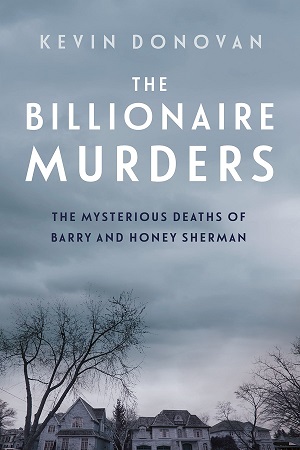
TCF: The Billionaire Murders

The Billionaire Murders: The Mysterious Deaths of Barry and Honey Sherman
By Kevin Donovan

The crime:

On the morning of December 15, 2017 the bodies of Barry Sherman, the billionaire founder and owner of Apotex, a generic pharmaceutical company, and his wife Honey were found in their North York (Toronto) mansion. They had been strangled in what appeared to be a double-homicide. To this date no one has been charged in the killing.

The book:

The police investigation got off to a rough start, bizarrely assuming that the deaths were the result of a murder-suicide. I can’t understand how this happened, and Kevin Donovan seems to be just as mystified. My own hunch is that, as so often, laziness was more at fault than incompetence. But in defence of the police (and regular readers will know this isn’t something I do reflexively), a couple of things about the initial timeline of the case, items that Donovan glides over to the point where they’re nearly invisible, really leapt out at me.

The bodies of the Shermans were discovered by the realtor who was showing their house to prospective buyers. She was immediately advised by the cleaning lady, who she’d asked to verify that the Shermans were dead, to call the police. She didn’t, and instead called her boss. Then she tried to get in touch with the four Sherman children. “Finally, after a delay of almost ninety minutes from the discovery of the bodies, a call was made to the Toronto Police 911 system.” Within a minute the police were on their way.

My jaw dropped at this. Given the shock of the situation – the bodies of the Shermans had been arranged in a macabre tableau by the side of the home’s underground pool – I think most people would have been phoning 911 as fast as their fingers could punch in the numbers. To have delayed making that call for so long was something I could hardly believe. Then later that evening, when a police detective came to a family gathering to speak to the children, he was questioned why “he was so late in coming to speak to them.” When the detective responded that he had to pick his kids from daycare this “admission struck family members as an indication that the police did not consider this a high priority case.”

From my own experiences dealing with the police, having someone meet with the family later the same day doesn’t indicate any great delay. Coupled with how long it took for the police to be notified of the discovery of the bodies I can’t imagine they were impressed.

The second point in the timeline I flagged was that later that same evening the family received a phone call from a friend advising them to hire private investigators to look into the killings. They were also advised to put “pressure on the police” by getting in touch with friends in high places. What’s striking about these moves is that they came before there was any public reporting of the murder-suicide theory. Only twelve hours after the discovery of the bodies, an adversarial relation to the police (and the media) seemed already well advanced, and that through no fault of the police or the media. The wagons were being circled.

Donovan found the family’s antagonism to the media beyond his understanding, something he could not fathom. My guess is that it comes from a new attitude among the very rich that if you have enough money you get to “control the narrative.” It also goes by the name of entitlement and privilege. I was shocked, again, to find that Donovan’s request to interview the Shermans’ son was rebuffed unless Donovan “agreed in writing to allow him editorial control over any portions of the book or newspaper story that concerned him.” On what planet, I had to wonder, was the son living on to even consider making such a request of a journalist? It’s no place I’ve ever visited.

As of Donovan’s writing, and indeed of my writing this review, the case remains unsolved. This is one way that cases like these hang around. They give rise to all kind of speculation. Everybody has a theory. Donovan’s penultimate chapter, “The Most Likely Scenario,” puts forward a basic outline of how the murders went down, without naming who he thought was behind them. This is understandable, since having finished the book, and followed the case irregularly the few times it’s been in the news, I don’t see any likely suspects. Barry Sherman certainly made enemies, but people who hated him enough to kill both him and his wife? Donovan does narrow things down somewhat though:

Did Barry and Honey Sherman know their killers? I believe so. After spending a year and a half delving into this case, I believe that the killer or killers had an intimate knowledge of the Shermans, including their routines. I also believe that the killer or killers were not trained professionals and that the attempt to make it look like a murder-suicide was a poor one, though it obviously worked for a while.

I’m not sure about that final point. Killing people isn’t easy, and the killer (or killers) here seem to have done a good job of it. Obviously, they didn’t get caught. Furthermore, it’s not clear to me if the aim was to make the deaths look like a murder-suicide, but if it was, working “for a while” was all that was required. I think it’s very possible, perhaps even likely, that whoever actually did the killing was a hired gun.

All of which only gets us so far. Hence the fascination with cases like this. A fascination that’s unlikely to go away, as cold as the trail becomes. I think Donovan’s book is an excellent account of what we know so far, well written and fair minded. The way it’s structured, alternating chapters for most of the way between telling the story of the Shermans and the investigation, helped make up for the fact that I wasn’t that interested in the Apotex story. I didn’t come away with any theory of my own on who was responsible, but if I were a betting man (and I’m not) I’d bet that we will find out eventually. I think more than one person, and probably more than two, know what happened and somebody will talk. But we’ll probably have to wait a while.

Noted in passing:

I remember that as home prices skyrocketed during these years I often found myself asking “Who is buying all these multimillion dollar properties?” The average price of a house in the city I live in was nearly $700,000 at the time of the Sherman murders, and continued going up over the course of the next five years. That’s the average! And my hometown is cheaper than Toronto. Was the average family able to afford housing at this price? And if not, who was feeding this frenzy?

My sense was that the high prices were being driven by big money looking for investment properties or just a place to park some cash. Not a lot of people could afford to buy an average-priced home at this time, especially in cities like Toronto. So was it a relatively few people with a lot of money who were making the market?

The Shermans weren’t average homebuyers. (The house they were killed in was listed for $6.9 million – underpriced, in Barry’s opinion – and they had plans to build a new mansion in Forest Hills that was going to cost them around $30 million all-in.) But apparently they did buy a lot of houses. For example, their youngest daughter “through a series of companies headquartered at Apotex, purchased several residential properties in Toronto (each cost between $2 million and $4 million), which she rent[ed] out to tenants. Sherman friends say Barry supported her financially in this venture as a way to provide her income she could consider her own.” Elsewhere in the book various other instances are given of his involvement in buying multi-million dollar properties in different sorts of arrangements. “Barry did so many unusual things with real estate,” one family friend tells Donovan.

Takeaways:

The difference between being rich and being poor is that when you’re poor nobody cares if you live or die and when you’re rich people want to kill you. Most people would still prefer to be in the latter group.

True Crime Files

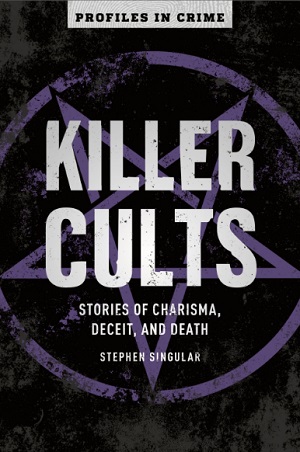
TCF: Killer Cults

Killer Cults: Stories of Charisma, Deceit, and Death
By Stephen Singular

The crimes:

Nineteen stories of charismatic gurus and false prophets, most of whom were only interested in grabbing money and acquiring lots of submissive sexual partners.

The book:

I don’t see there being much of a market today for a book like this, or any of the Profiles in Crime series of which it is a part. For starters, there are already a couple of anthologies dealing with the same material and even with the same title already out there. In this one the entries on the different cults are little more, and sometimes even less, than you get on a Wikipedia page, the writing is nothing special, the editing poor (it’s the Book of Revelation, not Revelations), and the few pictures are of low quality. There’s only a very brief introduction and no conclusion or summary, so we get little sense of any big picture of the cult phenomenon. Stephen Singular suggests at one point that “a common thread in almost all of them [these cults] is an attempt to control sexual behavior.” But even here more needs to be drawn out. To be sure, many, if not most, of these cult leaders were sexual predators. But to what extent was an out-of-control libido the driving force behind their cults?

Of course, in any book of this nature you’re not expecting a deep dive. But even so the analysis is cursory. I couldn’t even be sure how much research Singular (a veteran true crime author) put into it. The sources referenced at the back seemed very inadequate, mostly consisting of news stories pulled from the Internet. In the section on Jim Jones reference is made to Jeff Guinn’s book The Road to Jonestown, but it isn’t listed in the sources. Nor is Tim Reiterman’s Raven: The Untold Story of the Rev. Jim Jones and His People. In the section on Charles Manson, missing as sources are Vincent Bugliosi’s classic Helter Skelter and Jeff Guinn’s Manson: The Life and Times of Charles Manson. In the section on Aum Shinrikyo particularly noticeable is the absence of any reference to a couple of pertinent books on the subject and on cults in general: Haruki Murakami’s Underground: The Tokyo Gas Attack and the Japanese Psyche and Robert Jay Lifton’s Destroying the World to Save It.

There were at least a couple of directions that Singular might have gone in that occurred to me while I was reading. The first he does touch on, but again only briefly. This has to do with the advent of the Internet and cults going online. The Heaven’s Gate cult was a pioneer in this regard, though their web-page looks laughable today. Singular mentions how The Order had a vision of spreading their white nationalist message online but in the mid-1980s they weren’t there yet. It would take time, but that future has now arrived, as witness the dark fandom of the Columbine cult. But has this made cults more dangerous, or does the intense personal charisma of the leader get watered down, to the point where he or she just becomes another star of YouTube, or Instagram influencer?

The other point I would have liked to hear discussed more has to do with America as the natural home or breeding ground of modern cults. So much so that even people from as far away as India (Bhagwan Shree Rajneesh) would come to the U.S. to set up their cult communes. Is there something in the American psyche, its status as (in Kurt Andersen’s name for it) Fantasyland, that lends itself to the sort of magical thinking and instinctual worship of gurus? Or something about the link between cults and the anti-government movements and conspiracy thinking that have always been so much a part of the American cultural tradition?

These are the sorts of questions Killer Cults doesn’t ask. Instead, it remains a light read that won’t tell you anything new about the famous cases it discusses and will only whet your appetite for seeking out more information on its more obscure cases elsewhere.

Noted in passing:

What is the link between cults and the products of pop culture? Charles Manson thought the song “Helter Skelter” from The Beatles’ White Album contained a hidden message about a coming race war. Adolfo Constanzo based his brutal crime cult on a 1987 flick called The Believers starring Martin Sheen and Jimmy Smits that I have only the vaguest recollection of today. The Heaven’s Gate cult took its lead from Star Trek mythology, with its members thinking of themselves as parts of an “Away Team” as they killed themselves. Why do so many people put so much faith, or even find any meaning, in such crap? I know that’s a question every outsider asks of any belief system, but Star Trek? I guess fandom and cult membership have to be plotted on a spectrum.

Takeaways:

Not every cult leader is just a scammer looking to score a fleet of Rolls-Royces and a harem of young lovers. Unfortunately, the true believers are no less toxic than the cynical ones.

True Crime Files

TCF: A Deal with the Devil

A Deal with the Devil: The Dark and Twisted True Story of One of the Biggest Cons in History
By Blake Ellis and Melanie Hicken

The crime:

Maria Duval was the name and face behind one of the biggest mail frauds in history. People (usually the elderly and vulnerable) sent money to her hoping that her psychic powers would bring them good fortune. But when a pair of CNN reporters tried to track down Ms. Duval they found that she was just a front for a much deeper scam being operated by a variety of mysterious and shady characters.

The book:

I don’t say this very often, but this is one of those books I couldn’t put down. It sucked me in and I kept reading it all in a rush.

I think it helped that it was a mystery, and no less satisfying for being a mystery without a full solution. Ellis and Hicken are intrepid reporters, and seem to have been having a lot of fun along the way while trying to track Duval (or “Duval”) down, but as with any great conspiracy story we only get past one wall (or e-mail address, or shell company) to find another standing behind it.

This is what I found so fascinating about A Deal with the Devil. I think everyone agrees that we live in a time that’s rich with magical thinking and dense with conspiracy theories. What doesn’t get enough attention are the background cultural factors that contribute to this.

In some ways it all goes back to the way the world itself has become more complicated through science and technology, making us feel increasingly alienated from and powerless in the grip of tools that we use and depend on every day but don’t understand a thing about. But there is a political and economic side to this as well, as we feel both left behind and in the dark by governments and big corporations that operate so much in the shadows that there’s often no way even investigative reporters working for major news outlets can figure out what it is they do.

This leaves A Deal with the Devil reading a bit like a Pynchon novel for the Google Street View age. All the indeterminacy and mystery in our everyday lives naturally leads to unexpected lapses into credulity and conspiracy mindsets. Near the end of their investigations the authors are even entertaining one tip from Romania suggesting that a cult of Satanists might be behind the whole thing. Shades of QAnon! But the truth, though less sensational, is even more unnerving: a cabal of international money people and crime bosses running a global scam taking in hundreds of millions of dollars. If this is so, might there not also be some truth to ESP and the power of magic crystals? Given the existence of such real conspiracies, wouldn’t it be a kind of survival technique to just believe everything?

The one part of the book I felt resistance to came at the end where the authors finally get to meet Maria Duval and find the perfect image for the wall of unknowingness they’ve come up against in the blank eyes of an old woman afflicted with dementia. There is a suggestion made of this being a final irony, in that Duval herself might be seen as a victim of the fraudsters who bought her name and monetized it by attaching it to their scam. That may be, but I had zero sympathy for Duval. She cashed out and was in no way a victim in all of this.

Noted in passing:

Is it the case that native speakers can’t hear themselves speaking with any kind of accent? That they just see their own accent as “normal”? I think this might happen, which is why I was surprised when the authors (both born and bred in the United States) described the Canadian characters they meet as having “a charming Canadian accent” or “a distinctly Canadian accent.”

According to Wikipedia, most North Americans “cannot distinguish the typical accents of the two countries [that would be Canada and the U.S., though Mexico is also in North America] by sound alone.” Of course there are regional differences. People from Texas, Boston, or Newfoundland have easily recognizable accents. But I don’t think there’s any difference between the speech of someone from Toronto and a native of Cincinnati. The old joke from South Park where Canadians are heard pronouncing “out and about” as “oot and aboot” always baffled me. We don’t sound like Scots.

When I went and watched some videos about Canadian accents I was just as confused. The way words were being pronounced in a “Canadian accent” didn’t sound like anything I’d ever heard. I don’t think I’ve ever heard “sorry” pronounced as “sore-ee.” There are some Canadianisms, like the particle “eh?” that I guess are a tag, but to be honest I don’t even hear “eh?” very much anymore. Certainly not as much as it was used thirty or so years ago, when you did hear it all the time. Place names are a specialty in any language, so I don’t know how many people from elsewhere pronounce Toronto as Trahn-toe (which is how we do it). Probably as many as pronounce New Orleans as New Orleens or New Orlee-ans, when I think it’s supposed to be New Orlins or New Awlins (but not Nawlins, which I’ve heard is a myth).

In any event, Ellis and Hicken don’t give any examples of what makes the Canadians they talk to sound so charmingly or distinctly Canadian, so I don’t know what it was they were responding to.

Takeaways:

It’s lucky the Duval mail fraud was shut down, though I doubt it has been shut down so much as it’s just been diverted into other channels. These operations know how to stay two or three steps ahead of the law. It’s exasperating reading about scams like this because they’re like junk mail, telemarketers, and spam: at any point the government could step in and put an end to all this but they won’t because there’s too much money involved.

What’s worse, in accepting, as I think we do, that so much of normal capitalist activity is a fraud or a scam, or something very like it, we tend to valorize the scammers as heroes and see their victims as clueless suckers who are, in the words of one of the people involved in the fraud here, “too dumb to live.” Taking the life savings of these people is a sort of cull. And this is old school mail fraud we’re still talking about. The Internet takes this heartlessness to a new level.

True Crime Files

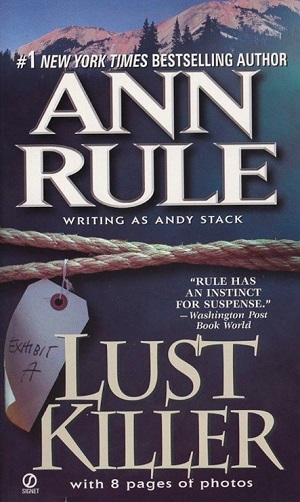
TCF: Lust Killer

Lust Killer
By Ann Rule

The crime:

In the late 1960s, Jerry Brudos killed four young women in Oregon. A closet transvestite with a particular obsession for high heels, his method involved strangling the women and then having sex with their dead bodies. He was apprehended and pled guilty to three counts of first-degree murder. In 2006 he died in prison.

The book:

I’ll start at the end. Lust Killer was one of Ann Rule’s earlier efforts, written under the pen name “Andy Stack” and first published in 1983 (The Stranger Beside Me, a work of memoir-true crime that drew on Rule’s acquaintanceship with Ted Bundy, came out in 1980). Later editions included an Afterword published in 1988, where Rule speculates on the possibility of Brudos getting early release. We now know that didn’t happen, and indeed Brudos was told by authorities that he was never getting out.

It’s also in the 1988 Afterword that Rule talks about how Brudos stands as “one of the classic examples” of a lust killer, but at the time even the label “serial killer” was something new (Rule herself has credited its first use to Pierce Brooks, the creator of the ViCAP system, in 1985, though others have found earlier instances). Today Brudos is a familiar type, with sexual fetish escalating into violence and necrophilia (in Rule’s account, a “constantly accelerating process – a juggernaut of perversion”). Apparently Ted Levine based his performance as Buffalo Bill in the film The Silence of the Lambs on Brudos, and it’s possible author Thomas Harris had him in mind as well when writing his 1988 novel.

What was different about Brudos? What first jumps out is that he was a married man, with two young children. This was seen as being so odd at the time it led to his wife Darcie being charged as an accessory, mainly on the suspect evidence of a busybody neighbour. She (Darcie) was found not guilty, and at least as Rule tells the story her complicity in the murders seems a stretch.

This isn’t unheard of with serial killers. Dennis Rader, the BTK Killer, was another lust killer who was married with two children (not to mention president of his local church council). Russell Williams, who also had a fetish for taking pictures of himself in women’s clothing, was married. So it does happen, even though I think it’s considered rare. Everyone compartmentalizes their life to some extent, but being a married serial killer, not to mention sexual deviant, is a hard act to maintain.

Noted in passing:

It was 1968, and Brudos had shag carpet (colour: blue) in his garage workshop. He said he needed it to keep his feet warm.

I’ve mentioned the process of escalation in Brudos’s criminal career, and it’s clear he was well on his way to becoming another Ed Gein at the end. When Rule mentions Gein, however, she says of him that “he hated his mother so much that he had killed her and other women and made vests of their dried flesh.”  This is actually a myth, reinforced by Hitchcock’s film Psycho. In fact, Gein seems to have doted on his mother, who died of a stroke and whose body he left intact and undisturbed in its grave.

Takeaways:

Rule emphasizes the key point: if you’re being abducted, even at gunpoint, you might as well take your chances and fight it out, because things aren’t going to get any better for you once you’re tied up in someone’s basement.

True Crime Files

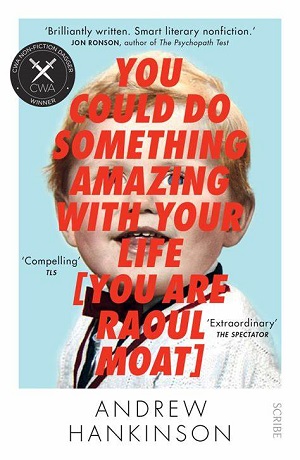
TCF: You Could Do Something Amazing with Your Life [You are Raoul Moat]

You Could Do Something Amazing with Your Life [You are Raoul Moat]
By Andrew Hankinson

The crime:

A couple of days after being released from prison (on July 1, 2010) Raoul Moat shot his estranged girlfriend and shot and killed her new boyfriend. The next day he shot a police constable in the face, blinding him (the constable would later take his own life). A massive manhunt for Moat ensued, ending with his killing himself.

The book:

You Could Do Something Amazing with Your Life [You are Raoul Moat] announces itself as literary non-fiction by being written in the highly unconventional second person. Despite all the rave reviews, I was on edge, thinking this a bit of a stunt.

It isn’t, and it works.

There’s a boldness to proceeding in this way. The stated “aim was to stay in Raoul Moat’s mind,” which presupposes an ability to inhabit that mind, to directly state what Moat was thinking at any given time. What allows Hankinson to go this route is the documentary evidence available. Moat left a record that speaks to us directly in his own voice:

The main source for this book was Raoul Moat, who left behind spoken and written material including audio recordings he made on the run, a 49-page confession he wrote on the run, recordings of this 999 calls before and after shooting PC David Rathband, recordings of phone calls he made while in prison, audio recordings he made during the final years of his life, training diaries, a psychological questionnaire, his correspondence, and six suicide notes he left in his house.

For all its literary qualities then, it’s also a very simple book, being a sort of Raoul Moat Reader or even oral history, with slight editorial asides inserted in square brackets instead of footnotes. But it makes for a great read and effectively delivers on the promise of taking us into Moat’s head by serving him up in his own words, even down to his employment of obscure local slang (“micey” being a word the exact meaning of which I’m still not sure of). The comparison most often made by reviewers was to the work of Gordon Burn, who did something similar in his immersive account of the Yorkshire Ripper, Somebody’s Husband, Somebody’s Son. That both authors are natives of Newcastle upon Tyne is only a coincidence, but one that probably carries some meaning. On some level our language, even if it’s just a dialect or regional voice, reflects a type of consciousness, and for an author wanting to get inside his subject’s head in particular, I think being steeped in that language and being a native of that place makes a difference. (As an aside, I’d mention Michael Winter’s attempt to do something similar in his “non-fiction novel” The Death of Donna Whalen, though the results there weren’t as successful.)

We shouldn’t be surprised, however, that nothing remarkable is revealed. Moat wasn’t so much a monster as just a dull brute. He was a big guy – 6’3” and around 240 pounds – and took various supplements as a bodybuilder to turn himself into a hulk. This came in handy when he worked for a while as a doorman or bouncer at local clubs, but the thing about big guys like this – or any athlete, or young beauty – is that you have to be able to manage the decline. Your physique is a diminishing asset. Moat was deeply depressed at no longer being as big or strong or tough as he was as a younger man – “I’m well aware that I’m past my prime” – and saw the best years of his life as over. At 37 he was “too old to start again.” “I’m not 21 and I can’t rebuild my life,” he remarked after coming out of jail. “I’ve got no life left,” he told the police operator after shooting PC Rathband. The suicide note or recording was his obsessive genre. He was paranoid too, to the point of delusion, and could be downright whiny when it came to how he was being “bullied” and “stitched up” (framed) by the police, but taking his own life was always where this was heading.

Hats off then to Hankinson’s largely editorial skill in making such a depressing and limited figure so interesting. I guess I could call it “revealing” too, but it’s a case where little is revealed that you probably wouldn’t have figured out after reading a quick news report on the case. Instead it’s exactly what it sets out to be, which is a trip into Raoul Moat’s mind. Not a place you may want to go, but one that it’s worth knowing about.

Noted in passing:

The level of self-pity even among the worst members of society has few limits. This was brought home to me years ago when reviewing Stevie Cameron’s On the Farm: Robert William Pickton and the Tragic Story of Vancouver’s Missing Women. Pickton was the B.C. pig farmer who confessed to killing 49 women. After being arrested he referred to himself as being “crucified” by the police (apparently he also found God behind bars). I can’t recall now if Moat ever referred to himself as being crucified, though I think he does at some point. He uses a more unconventional image in saying “I feel like King Kong when he’s at the top of that flaming building, you know.” Jesus, King Kong: both persecuted martyrs hounded to death by the authorities. It’s a weird way killers have of justifying themselves, while also plugging into the contemporary cultural imperative (that’s not too strong of word) of always casting yourself as a victim.

Takeaways:

Suicide can be a wrecking ball – just think of the prevalence of “murder-suicides” – and once someone’s course is set on self-destruction you should leave them to the professionals to deal with. Especially if guns and a history of violence are in the mix.

True Crime Files

TCF: Obsessed

Obsessed
By M. William Phelps

The crime:

Sheila Davalloo had a crush on her co-worker Nelson Sessler so she killed Sessler’s girlfriend Anna Lisa Raymundo. This meant she now had Nelson all to herself, but she hadn’t told him that she was already married. So Davalloo then tried to kill her husband, Paul Christos, but he managed to survive her attack, which led to Davalloo finally being connected to the Raymundo murder, for which she was convicted a decade later.

The book:

A great read, and very well paced given how long it is and the fact that not much actually happens. But Phelps’s description of Davalloo’s attempt at killing Christos offers up a master class on how to use point of view to slow down the subjective experience of time. It’s a scene that goes on for nearly fifty pages, and feels like it could have been written by Stephen King.

Another pacing problem that a lot of true crime books fall into and that Phelps avoids is expanding the trial to the point where it become tedious. I think this is just because trials throw up so much material it’s too easy to just transcribe the transcripts. But here the fact that Davalloo represented herself (rarely a good idea) made it more entertaining, and let Phelps give free play to a lot of judgmental asides. Phelps walks a fine line with getting too chatty on occasion (“Oh, how the guy should have listened to his inner voice!” “That, my friends, is the description of a desperate woman . . .”), and during the trial this is something he really indulges, sometimes overdoing the sarcastic play-by-play. But overall I think the tone he adopts works.

The pitfall that Phelps doesn’t avoid is that of larding praise on the police. Again, the reason this happens so often is pretty obvious: the police are the good guys and in most cases have been generous in providing access and interviews to the author. But this sort of guff too often turns into hero-cop boilerplate. For example:

Richard Conklin . . . is a top-notch cop. There’s nothing Hollywood about Conklin. He’s sharp and does things by the book. If Anna Lisa could have chosen the cop she wanted to manage the investigation of her murder, she could have never chosen a better investigator than Conklin to lead the task . . .

. . . there was no mistaking the tenacity and drive or compassion that motivated [Greg Holt] to solve crimes perpetrated against the people of the town he worked in. Hold was a doer. He believed in working cases the old-fashioned way: Hit the bricks. Track down sources. Bang on doors. Ask questions repeatedly. Allow his gut to guide him. And when he thought he’d exhausted every possible lead, every palpable clue a case had to give up, he would dig even deeper, go over it all again, and find that missing link –that one needle sending him running toward an entirely new haystack. For Holt, a cop didn’t stop because the answers were hidden. He persevered and made them emerge.

Alison Carpentier is one of those no-nonsense cops. She hardly took any crap from anyone. . . . Carpentier is one of those officers never satisfied with a case until it is looked at closely and all the questions answered. She doesn’t accept what is generally the norm: Most cases are what they seem, and are nothing else. Carpentier is one of those hungry cops, motivated by her instincts. During her ten years on patrol, Carpentier had done two years of undercover drug work, where she learned how to rely on her gut.

How could any perp hope to beat this team of all-stars? Holt is even presented as a human lie-detector: “Hold had interviewed countless suspects and witnesses. When a professional does that for years and years, he develops a sixth sense about people in general. He’s able to read human beings fairly accurately.” You’d think this would be true, but apparently it’s only a common misconception. Even experienced police interrogators apparently do no better than anyone else in being able to tell when someone is being truthful or not.

Well, I can certainly tell you who wasn’t going to beat these supercops, and that’s the blockheads in this case. I’ve read true crime books with stupider villains, but rarely one with so many outright dummies. You have to just shake your head at how dense Paul was in not picking up all the red flags and air-raid warning sirens that Sheila was sending out. What Nelson thought he was doing in playing games with the police is anybody’s guess. And Sheila herself was just a trainwreck, though she did almost get away with Anna’s murder. It was her attempted murder of Paul that undid her, leading the detectives to conclude that “as much education as she’d had, she was not at all intelligent.”

I don’t think this final point is fair though. I think it just goes to show that nobody is smart, or dumb, all of the time. We all have our areas of expertise, and other areas where we can’t function at all.

Noted in passing:

At one point Phelps refers to Davalloo as Sessler’s “mistress.” This is not how I use that word. I would have said “girlfriend” or “lover.” Isn’t mistress reserved for a lover outside of marriage? Yes, Davalloo was married, but Sessler’s relationship with Raymundo at the time was on the backburner so I don’t think his girlfriend would count as a mistress.

Something that never ceases to surprise me, no matter how many fresh instances of it I’m exposed to, is the inability of people younger than me to write (or even read) cursive. I realize it hasn’t been taught in school for a while, but I guess I’ve always figured that kids were still picking it up somewhere, somehow.

They aren’t.

Sheila Davalloo was a highly-educated woman – private school, university, post-graduate work at a medical centre – and was “a manager of medical coding and thesaurus administration, a select group within Biostatics and Clinical Data Management” at Purdue Pharmaceuticals. (I should say here that “thesaurus” in this case doesn’t refer to the helpful reference book I have on my desk, but rather “a form of controlled vocabulary that seeks to dictate semantic manifestations of metadata in the indexing of content objects.” I looked it up.) So when Phelps describes her handwriting as he does I was expecting something pretty special:

Sheila’s handwriting is something to take note of. It is nothing short of perfect. Not good, but flawless. It’s like staring at a specific font a computer has generated. She could write letters after letters, without any margins or lines on the page, straight and methodical, in this highly stylized penmanship of hers, which is so clear and precise that any recipient is inclined to think she had used a computer. Beyond the perfection of the letters, what emerges is how calm the hand is writing out the words. One would have to have a perfectly steady hand, along with an abundance of composure within, to achieve the precision Sheila does in these letters.

Whew! I was thinking to myself this must be some pretty fancy handwriting! Like expert-level calligraphy with its “highly stylized penmanship.” At the end of the book Phelps will get a letter directly from Davalloo and remind us of how he’s “incredibly fascinated by her penmanship. I have never seen anything like it.” Wanting us to feel as impressed as he was, Phelps even includes a sample of it in the photos section.

It is very neat and meticulous.

It is also all block caps. Back in the day (my day) that wasn’t even considered to be “writing.” We called it “printing.”

On top of that, of the nine words shown in the sample, one of them has a howler of a spelling error, with Davalloo writing “solider” for “soldier.” Which is the sort of mistake you make all the time when typing but rarely when you’re holding a pen.

Takeaways:

Sessler was one very lucky young man. Even given strong exculpatory evidence, like the fact that he was known to be at work at the time of the murder, being Raymundo’s boyfriend made him a prime suspect (or “person of interest”). The availability heuristic is powerful in criminal investigations, and he was all the police initially had. And if you only have one suspect then you get tunnel vision.

Then you can add to this the fact that he rubbed everybody the wrong way. And if you don’t trust someone you start looking for evidence that implicates them. The lead detective thought he was hiding something right from the start and took an instant dislike to him. And one of the jurors at Davalloo’s trial said that all of the jury members “hated him” and “thought he was a scumbag and a dirty liar.”

If the police only have one suspect then they get tunnel vision. If they don’t like him, and don’t trust him, they start looking for evidence that implicates him. Yes, things could have gone south for Mr. Sessler very quickly.

True Crime Files