TCF: The Man in the Rockefeller Suit

The Man in the Rockefeller Suit: The Astonishing Rise and Spectacular Fall of a Serial Impostor
By Mark Seal

The crime:

In 1978, when he was seventeen years old, Christian Karl Gerhartsreiter came to America from Germany as a foreign exchange student. He had no intention of leaving, and never did. Constitutionally incapable of telling the truth about pretty much anything, the longer he stayed in the U.S. the more bogus identities Gerhartsreiter adopted. Moving from coast to coast and back again, he finally settled on presenting himself as an obscure member of the Rockefeller family, which in turn led to his marrying a successful and wealthy woman with whom he had a daughter. Never able to maintain any of his disguises for long, the marriage broke down and his kidnapping of his daughter led to his ultimate arrest and exposure as a fraud, as well as a conviction for a murder he’d committed years earlier in California.

The book:

One of the reasons we read true crime is to pick up helpful advice on how to avoid becoming victims. Forewarned is forearmed, and in these True Crime Files what I like to focus on are the red flags we should be paying attention to.

Seeing as it’s unlikely we’ll ever cross paths with a serial killer, it’s worth taking more extensive notes on the criminal careers of frauds and con men. Chances are we’re all going to have to deal with these types, not just once or twice but several times throughout our lives. Few of them, to be sure, on the scale of Christian Gerhartsreiter, but it’s the extreme cases that help us better see the warning signs.

With hindsight it’s easy to wonder how anybody could be fooled by what later seems an obvious scam. But nobody is immune. I’ve been suckered a few times in my life, albeit for minor amounts. You should realize that everyone is vulnerable, and identify both general guidelines as well as know your own personal weak points, what might make you a soft target.

One Gerhartsreiter acquaintance puts it well: “A con man gets by because you want to believe what he’s telling you. That’s how a con works. People already have their preconceptions, and he just plays into what they’re thinking.” This is the essential point, and it’s the weakness any successful con is able to sense in others. We all believe in things that aren’t true because they fulfill some need or desire. And as Mark Twain observed, it’s precisely these beliefs that get us in trouble. Find out what those needs and desires are, and you can count on the mark doing most of the work.

For Gerhartsreiter this was made easy because what he could sense other people wanting was the same thing he wanted: Money. Status. Class. So what he was selling was a connection to all of the above, represented in a simple change of name to the overloaded James Frederick Mills Clark Rockefeller. A name that would open a lot of doors, at least among the kind of people who would love to open a door for a Rockefeller.

And so he didn’t even have to get it right. A student of American pop culture but not to the manner or the manor born, he dressed up like a cartoon version of a plutocrat, taking Thurston Howell III from Gilligan’s Island as his model (honest!). Even children mocked his colourful attire, calling him “Purple Pants.” And sometimes the pants were red. And there was a preppy uniform consisting of a Yale cap, a sweater draped over his shoulders and tied at the neck, an Izod shirt (blue or red, with the collar turned up), and always Top-Siders without socks. Tootling about his adopted New Hampshire community on his Segway he must have seemed a total clown, but locals shrugged him off as a wealthy eccentric. “In twenty-twenty hindsight,” one resident later remarked, “there were so many visual hints that it was all wrong, and all phony, and just plain stupid.”

But it worked. One artist thought Gerhartsreiter’s ridiculous preppy persona “reeked of old money, good breeding, and impeccable taste.” But then the same artist, a self-professed expert on abstract expressionism, would be snowed by an apartment full of fake paintings by modern masters. “I was looking at them very closely,” he would explain. “I never had any doubts that they were legitimate, never thought that they were reproductions or anything.”

“Clark knew more about the history of art and aesthetics of art than most artists I meet,” the artist would later say in a released statement. Which is probably true. The death of expertise, indeed our rage against it, is something real, and in some cases can have painful consequences.

I don’t think Gerhartsreiter was as smart or well-read as he was made out to be, but he was a quick study and had, consciously or not, targeted a demographic where smarts didn’t matter because the people he came into contact with weren’t very smart or well-read either. He didn’t have a deep knowledge of anything, but in almost every situation he found himself in his interlocutors had even less. Before he adopted the Rockefeller mantle he claimed to be a member of the English peerage, a baronet and scion of the Mountbatten family who owned Chichester Cathedral. He even said he was thinking of moving the cathedral to the United States. People thought that was a wonderful idea. He had cards printed claiming to be the thirteenth baronet of Chichester. People were impressed. But “If the citizens of San Marino had been motivated to do some research, they might have discovered then and there that the eleventh baronet, Sir Edward John Chichester, was still alive, which meant that a thirteenth baronet cold not yet exist.” He could boast about having produced the TV series The Prisoner, despite the fact that it had broadcast when he was seven years old. He also boasted of producing the television show Alfred Hitchcock Presents, but again the dates didn’t match up. He claimed to be the daughter of the actress Ann Carter, and talked about her death, when she was in fact very much alive. Perhaps the funniest moment though was when, claiming to have sailed for the America’s Cup team, he took some friends out on Boston’s Back Bay and didn’t have a clue how to handle the little sailboat he’d rented (he said his yacht was in the shop). They had to get towed back to shore by a kayaker.

So how hard is it to hang around people who don’t know much about anything? Not hard at all. And indeed, the higher Gerhartsreiter climbed the ladder the easier it got. Rich enclaves of inherited wealth are full of privileged dummies who “fall upward” (as Gerhartsreiter continually did) and are only interested in keeping up appearances. Being old money is mostly a performance, an act. You have to walk the walk, talk the talk, and dress the dress. But you don’t have to actually do anything. Gerhartsreiter was a despicable phony, but he was moving through a world of phonies. In what sectors is it easiest to fake it until you make it? Art and finance come to mind. And so he never stood out, even when dressing like a complete idiot. His very phoniness was perfect camouflage in the circles he moved in. Because if everyone around you is a phony then chances are pretty good you’re a phony too. Which means it’s best to not say anything.

Of course, the big con here, the whale that really made everything else possible, was his marriage to Sandra Boss, a very upwardly mobile, high-earning woman who was a graduate of Harvard Business School and a partner at the ultra-high-powered McKinsey & Company. How did Gerhartsreiter manage to sucker her and turn her into a cash cow for years? It’s something that his defence counsel drove hard at during his trial. It just didn’t make sense. Her excuse was that “One can be brilliant and amazing in one area of one’s life and really stupid in another.” Which is true, but the even easier explanation is that she wanted the name. She wanted to believe the pack of lies he was telling her. As one of her friends put it, “Everybody knew she was married to a Rockefeller, and she could be all modest about it, like she didn’t care. But she cared.” If he turned out to be a bully and a fraud, well, the name would make it worth it. Women have put up with far worse for less. And Boss did stick with him for a very long time, despite the fact that in most cases people grew sick of him quickly. Like a lot of people with superficial charm he made good first impressions but had no depth, so it was hard to make any relationship last.

Gerhartsreiter wasn’t a subtle or sophisticated fraud but a firehose of bullshit, flooding every zone he entered with lies. Would he have fooled me? I don’t think so, but not because I’m immune to bullshit. It’s just that if he really was everything he said he was I would have still despised him. Even as a college student he was dropping lines like “Do you know who I am?” In later years he would adopt the pose of “a very famous person” (who nobody knew) and threaten people with lawsuits for talking about him.

Clearly he was a narcissist. At trial his defence tried to paint him with “delusional-disorder, grandiose-type insanity” but all along he knew what he was doing. Even his daughter was only a pawn, someone he tried to mold into the snob he so enjoyed playing. He wanted money more than custody, but his need for attention, for recognition of what he felt was his superiority, kept driving him on. In reality he was just a useless twerp who was full of himself. These people usually give themselves away, and they’re becoming a lot easier to expose now that you can check their claims immediately online. We can thank the Internet for something, I guess.

Noted in passing:

The curator of a museum holding many of the works of the Cornish Colony describes “two great intellectuals” who lived in Cornish, J. D. Salinger and Salman Rushdie, who wanted to arrange a private showing. “Both Salinger and Rushdie asked me to open the museum on days when there would be no one here,” she said, “so they wouldn’t see people. And I opened the museum so they could go through.”

Oh please. They actually said, not that they didn’t want to face a crowd (which I would have thought highly unlikely), but that they didn’t want to “see people.” They didn’t want to avoid people seeing them (and I don’t know who would have even recognized the reclusive and camera-shy Salinger), but didn’t want to see other people. This is celebrity privilege dialed up to the max. And again you can see how Gerhartsreiter would fit right in.

Takeaways:

We all believe things that aren’t true. But you have to be aware of this natural predisposition, and always be asking yourself why you want to believe in something that you know is bullshit.

True Crime Files

TCF: The Yoga Store Murder

The Yoga Store Murder: The Shocking True Account of the Lululemon Athletica Killing
By Dan Morse

The crime:

On the night of March 11 2011 twenty-eight-year-old Brittany Norwood beat her co-worker Jayna Murray to death in a Bethesda, Maryland Lululemon Athletica store. Norwood claimed the store had been invaded after hours by a pair of masked men who had killed Murray and tied Norwood up in the course of robbing the place, but that story soon unwound and it became clear that Norwood had staged the murder to make it look like a break-in. Norwood was convicted at trial of first-degree murder and sentenced to life without parole.

The book:

This was a very dumb crime that was easily figured out by the police after Norwood’s initial explanation of what happened started to come undone. You have to put a lot of planning and work into such a complex false narrative to pull it off, and Norwood seems to have given little thought into what she was doing at all. And that’s where the real mystery comes in.

It’s the same mystery that Dan Morse returns to again and again in this book: Just why did Norwood kill Murray? And in such a savage way?

Murray was beaten on by at least five and maybe as many as seven or eight different weapons. Norwood just grabbed whatever was at hand, including a knife, a hammer, a wrench, and a merchandise peg (a short, bent iron bar with a plate at the end used to hang clothes from). Forensics figured Murray was struck over three hundred and thirty times. There were also slicing and cutting wounds that experts interpreted as signs of sadism. It’s estimated that the beating continued for around fifteen minutes.

Obviously this was an act of extreme rage. But investigators couldn’t figure out why Norwood went off like this. The lead prosecutor even made the decision to try the case without putting forward a motive: “he knew he had to leave out one important detail that might prey on jurors’ minds: he couldn’t tell them why Brittany killed Jayna.” Later, during their deliberations, the jurors did indeed puzzle over this but finally had to shrug their shoulders and move on. They didn’t need to know her motive. “You know what?” one of them said. “Maybe in ten or fifteen years, Brittany Norwood will come out and explain why she did this. But the fact of the matter is we don’t have to know.”

It remains a mystery – Norwood didn’t testify at her trial and refused to be interviewed for this book – but maybe not as big a one as Morse makes it out to be. The murder was not deeply premeditated but a crime of passion. And Norwood was a hothead already, whose life was coming undone. She enjoyed living a lifestyle beyond her means, and working in a high-end shop in a tony neighbourhood probably didn’t help with her bad financial habits (a.k.a. “a taste for nice things”): eating at pricey restaurants and bars, buying fancy clothes, getting a membership at expensive gyms, attending NFL football games (in good seats), and having her hair done by top stylists.

No need to ask how she could afford any of this. She couldn’t. By the time of the murder she had ambitions to become a personal trainer but was in fact working as an escort as a side hustle, finding dates on sugar-daddy websites. Having reached such a point, and then being confronted by Murray with being fired (for a second time) on proof of theft from the store, she lost her shit. Or as her attorneys more diplomatically put it, “Ms. Norwood became overwhelmed with emotion during a confrontation, and before she could regain her composure, she committed the unthinkable.”

Morse looks into the possibility of psychopathy as well, but I’m not sure I’d go that far. Norwood was immoral, self-centered, and had a lack of empathy and poor impulse control (her out-of-control spending is evidence of that). But I don’t think she was a full-blown psycho. She wasn’t a good person, but I think her meltdown was the kind of thing that happens to a lot of people. It played out in a spectacular and tragic fashion though.

Noted in passing:

Morse puts Lululemon Athletica in lowercase throughout the book. So “lululemon athletica.” I think this is the way the company styles it for branding reasons but I don’t think it’s necessary or appropriate for a writer or journalist to follow those same guidelines and I found it really irritating.

Lululemon is a successful Canadian brand of athletic wear. I don’t know much about them, even though they seem to be what all the women are wearing at the gym these days. I guess they’re a good product, but the whole lifestyle-branding thing they push makes them sound like a cult to me. And a creepy corporate one at that. But this seems to be the way brands work these days.

Takeaways:

Norwood had worked previously at another Lululemon location but been fired by the store manager for suspicion of theft and abusing the discount privileges given employees. However the company did an internal investigation and found there were other cases of “discount abuse” that did not result in termination so they overturned the store manager’s decision and reinstated Norwood, telling her she could work at another location.

This is not the way to do it.

I’ve dealt with difficult and maybe even crazy people in workplace environments. People who just get warnings or who get moved around. I’m not saying it should be easier to fire people in general, but what I do advise is avoiding any half measures in cases like this. You can’t call bad employees in for a little talk and think things are going to improve. You get your ducks in the row and once you’re sure, you fire them. Lululemon should have got rid of Norwood when they had the opportunity – that is, before she came to the Bethesda store – but they dropped the ball.

True Crime Files

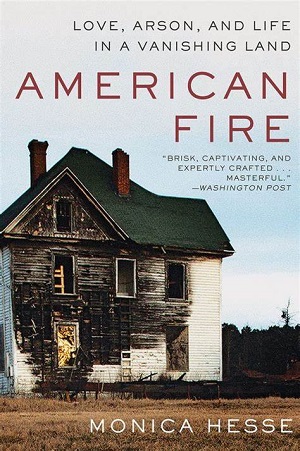
TCF: American Fire

American Fire: Love, Arson, and Life in a Vanishing Land
By Monica Hesse

The crime:

From November 2012 to April 2013 arsonists Charlie Smith and Tonya Bundick went on a rampage through Virginia’s Eastern Shore. They ended up setting over 80 fires, mostly burning down abandoned homes. Upon their arrest, Smith pled guilty while Bundick maintained her innocence. Both were convicted and sentenced to long prison sentences.

The book:

I thought this was a terrific book, shining a light on a crime (arson) that probably doesn’t get as much attention as it deserves. Given just how prolific Smith and Bundick were as fire bugs, however, this was a fairly well reported case and one that tells us a bigger story, which is what drew Hesse to it. “Big-name crimes have a way of becoming big names not only because of the crimes themselves, but because of the story they tell about the country at the moment.”

That story is the familiar one of a rural region suffering from long-term economic decline. This was reflected both in terms of the Eastern Shore’s population, which actually declined nearly 20 percent from 1910 to 2010, as well as in the nature of its industry, with potato farming replaced by chicken processing plants. Compared to the rest of the state, the Eastern Shore had lower numbers of college graduates as well as lower incomes, all of which helped make it a tinder box.

“In November of 2012, the Eastern Shore of Virginia was old. It was long. It was isolated. It was emptying of people but full of abandoned houses. It was dark. It was a uniquely perfect place to light a string of fires.” All you had to do was strike a match and you’d have a story perfectly suited for what political observers were beginning to take note of as one of twenty-first century America’s defining qualities. “America fretted about its rural parts, and the arsons were an ideal criminal metaphor for 2012.” The Eastern Shore was Evan Osnos’s Wildland, or Donald Trump’s landscape of American carnage. It was the land of the left behind, and in this case that meant left behind to burn.

I have to wonder if I would ever have read or heard anything about some of these places if not for being a fan of true crime. The declining population of the Eastern Shore immediately reminded me of the similarly stagnant or falling numbers in South Carolina’s Lowcountry as described in Valerie Bauerlein’s account of the Alex Murdaugh murder case The Devil at His Elbow. Reading both books I found myself having to consult atlases to familiarize myself just with the location of their depressed regions, as I knew nothing at all about them. And I suspect I’m not alone in that. These are places most people don’t even drive through on their way to somewhere else.

In addition to the political allegory, American Fire is also a love story. To be sure a crazy, tragic sort of love story, but then love itself is always a bit bonkers and frequently ends in tears. The specific kind of crazy here wasn’t so much a case of folie à deux or shared criminal conspiracy like Bonnie and Clyde (though these paradigms are discussed) as it was a neo-noir. Seen through this lens, Charlie and Tonya are easily identifiable genre types: the lovestruck, hard-luck loser and the mysterious, corrupting femme fatale.

“The psychologists who study criminal couples have discovered that the partnerships are rarely equal ones. The crimes are usually spurred on by one dominant partner.” And that’s definitely the takeaway here. It was clear not just to everyone but to Charlie himself that Tonya was out of his league. He’d noticed her at bars but wisely “avoided her on purpose. Women like that he always ended up making himself a fool in front of, and it seemed safer to stay away entirely.” Alas, easier said than done, and one fateful night, with only “an eight ball of cocaine in his pocket and a vague plan to kill himself,” they hooked up. You could even say she saved his life.

Things might have worked out, but Tonya seems to have always wanted something more while Charlie’s insecurities developed into performance issues. Inadequacy and low self-esteem led to impotence. Or as he put it, his belief that she was too good for him led to his dick not working. After a while it seemed the only way she could get her kicks with him was by their driving around setting fires together. Arson became a surrogate for sex. And whatever else you want to say about that as a basis for a relationship, it’s basically unsustainable. After a while you’re going to run out of fuel.

It’s this love story that I think is the real selling point for American Fire. Hesse actually makes both Charlie and Tonya into sympathetic figures, though her dislike for Tonya does come through in some uncharitable comments at the end. My own sense was that their love and their crimes were both representative of the human wreckage left behind by the fires that have been burning in America for the past fifty years. And not always burning in such a spectacular fashion, but with Robert Frost’s “slow smokeless burning of decay.”

Noted in passing:

“It’s amazing how boring trials can be. How even the most salacious of crimes committed under the most colorful of circumstances can result in testimony that is tedious and snoozy.”

This is why we have books, and why books have editors.

Takeaways:

As flattering as it is to have a woman who is clearly out of your league taking an interest in you, you need to see it as a red flag. Charlie should have trusted his gut, as it’s safer “to stay away entirely.”

True Crime Files

TCF: Women Who Murder

Women Who Murder: An International Collection of Deadly True Crime Tales
Ed. by Mitzi Szereto

The crimes:

“Down in the Ditch: Joanna Dennehy, Serial Stabber” by Charlotte Platt: a woman in southern England goes on a murder rampage with some help of from a pair of friends.

“Ruth Snyder: The Original Femme Fatale” by Ciaran Conliffe: in 1920s New York an unhappily married woman kills her husband in order to be free to marry her lover. After a sensational trial she ends up in the electric chair.

“Innocence Taken: The Murder of Karissa Boudreau” by Mike Browne: a Nova Scotian woman kills her daughter when the girl becomes an obstacle in her mom’s new relationship.

“Mahin: Monster or Victim?” by Mitzi Szereto: an Iranian woman drugs and strangles other women in order to steal their jewelry. She was in need of money as her husband was a worthless layabout and she had a disabled daughter.

“Twisted Firestarter” by C L Raven: a difficult woman in Wales deliberately burns down the house she rents an apartment in, killing the people (two adults, three children) in the apartment upstairs.

“On the Courthouse Steps: The Trial of Susan Smith” by Cathy Pickens: reflections on the famous 1995 trial of Susan Smith, the South Carolina woman who drowned her two children in a car she rolled down a boat ramp into a lake.

“Angela Napolitano: ‘I Am Not a Bad Woman’” by Edward Butts: an Italian immigrant woman living in northern Ontario kills her abusive husband with an axe.

“The Strange Case of Keli Lane” by Anthony Ferguson: a young woman with a thing for concealing her pregnancies apparently kills her fourth baby, though she maintains her innocence and the baby’s body is never found.

“Jolly Joseph: The Kerala Cyanide Serial Killer” by Shashi Kadapa: an Indian woman finds her path to social advancement made easier by poisoning everyone who gets in her way.

“Women Fight Back” by Tom Larsen: a pair of stories about (feminist?) women killing macho men in Mexico.

“Beauty and Beast” by Ily Goyanes: the life and trials of the sadistic Nazi death camp warden Irma Grese.

“Anno Bisesto, Anno Funesto” by Alisha Holland: Katherine Knight slaughters her on-again, off-again partner and cuts his corpse into pieces.

“Dead Woman Walking” by Joan Renner: in 1950s California the mama of a mama’s boy pays to have her son’s pregnant wife murdered so she can keep him all to herself.

“Mona Fandey: The Malaysian Murderer” by Chang Shih Yen: a money-hungry Malaysian witch doctor cuts an aspiring politician’s head off with an axe as part of a ritual meant to make him invincible.

The book:

For some reason women who kill have always been of special interest. As Mitzi Szereto puts it: “There’s something infinitely fascinating about women who commit murder. It pushes our buttons.” I remember when I was just starting out as a book reviewer in 1997 one of the first assignments I had was a joint review of Caleb Carr’s Angel of Darkness and Patricia Pearson’s When She Was Bad: Violent Women and the Myth of Innocence. And just recently, for the True Crime Files, I reviewed Harold Schechter’s Fatal, which spent a lot of time in the early going talking about the differences between male and female serial killers.

Well, there’s nearly thirty years between those two bookends and I’m pretty sure the subject came up several times in-between. It does push our buttons.

I don’t think there’s any particular argument being put forward here about women who murder. Szereto canvases some of the usual talking points in her Introduction, like the differences (real or imagined) in opportunity and motivation, but mainly does so to show that they’re no more than general rules at best. So when Ily Goyanes kicks off her account of the sadistic Nazi Irma Grese by saying “When a woman kills, it is almost always for one of three reasons: financial gain, revenge, or pleasure,” we almost automatically think of exceptions. Exceptions that we wouldn’t have to go far to find, as there are several provided in this anthology. Sometimes, for example, and not to worry about being too precise about it, women who kill are just nuts.

Instead of advancing any kind of general argument, and as with the previous Szereto anthology I reviewed, The Best New True Crime Stories: Small Towns, the main emphasis here is on the “international” angle. There are stories from the U.S., Iran, India, Mexico, the U.K., Malaysia, Canada, and more. Yes, there are women who kill featured in all of them. But some are young and some are old, some poor and some well off, and their motives for murder have a similar variety, ranging from self-defence to psychopathy. In some cases it’s not even clear how responsible they were or what exactly they did. On that latter point, in her Introduction Szereto name-drops “Britain’s baby-killing nurse, Lucy Letby,” and in the first story Charlotte Platt also refers to Letby as “the serial killer nurse who killed seven babies and permanently injured six others.” Since this book was published in 2024 this is something they could say, as Letby had been convicted, but there are a lot of questions being asked about that case now. Canadian readers of a certain age may remember the investigation into the series of baby deaths at Toronto’s Hospital for Sick Children in the early 1980s and what a mess that turned into. I imagine there will be a fair few books coming out on the Letby case before long and it’s possible what we know about it will have to be revised.

Because the crimes recounted literally span the globe, one thing I found interesting was noting what seem to be cultural universals. To take just a few:

Investigating a serial killer case in Iran, the police ran into what, to Western eyes, will seem a very familiar problem:

As is the case in crimes such as these, people began to crawl out of the woodwork, all claiming to have important information that will help solve the crimes. Qazvin police receive several tips a day from supposed eyewitnesses, including melodramatic accounts from “victims” who say that they too, were taken by the killer, but had fought back, narrowly escaping death. Having no choice but to follow every lead, police investigate these claims, only to find that they’re bogus. Unfortunately, it’s not uncommon for people to invent stories or to provide false evidence to police.

Even in Iran. For some reason that surprised me.

Meanwhile, in India, another familiar script played out, that of state corruption. Need a forged will? Anything is possible “provided government officers, land registrars, and other authorities are willing to cooperate.” Need to stymie a police investigation after an autopsy report indicates poisoning? Perhaps the police sub-inspector can be bribed with money or “something more.” No matter where you live, you don’t have to be a particularly careful killer if you grease enough wheels.

Finally, the Mona Fandey trial was apparently a factor in speeding up the process of abolishing jury trials in Malaysia. I don’t think that’s likely to happen in the West (getting rid of juries, I mean), but the reasons for Malaysia taking this step may strike close to home. The Fandey trial was a circus, fueled not just by the bizarre nature of the crime but by the local celebrity of the people involved. As a result, it was a test case for the proposition that “the jury could be influenced by emotions and the media when reaching their verdict.” Better, Malaysia decided, to leave these matters in the hands of a judge.

This is the sort of information I enjoy learning about in an international anthology, and I found a lot of it here. Also, many of the individual crimes were ones I’d never heard of, probably again due to where many of them occurred. And finally the writing is mostly pretty good, with only a few duds in the line-up. Given that these are all new pieces of writing, I credit the job Szereto did in pulling them together.

Noted in passing:

“The Strange Case of Keli Lane” really was strange. Lane was a championship water polo player who got pregnant a lot as a young woman. One would have thought (that one being me) that pregnancy would have put a bit of a crimp in her training, especially as she didn’t want anyone knowing she was pregnant. This is something that’s hard to hide when wearing a swimsuit, but Lane was apparently built differently and perhaps people didn’t want to say anything. I’m not sure what the explanation was. But this part really surprised me:

It also transpired that Lane played in a grand final match while nine months pregnant. Anyone who knows water polo will be aware that it is a brutal sport. There is no way heavily pregnant woman should have taken part in such a match.

I second this. Water polo is a brutal sport, with a lot of grabbing and kicking going on below the water. It isn’t safe at all for a pregnant woman. But leaving aside how anyone nine months pregnant wouldn’t have shown wearing a swimsuit, or whether a woman in such condition should have taken part in such a match, the question I had was how she could have participated. This wasn’t some intramural match. Lane was playing at an elite national level. How could she even keep up?

Katherine Knight didn’t just kill her partner. She butchered him and cut his body up into steaks. In doing so she used tools and skills she’d become familiar with in her job at a slaughterhouse. This makes for an interesting digression. An academic study

found that counties in the United States that have a slaughterhouse, and are therefore home to slaughterhouse employees, have measurably higher crime rates, leading to more than twice as many arrests as a county without one. In fact, for every one thousand slaughterhouse employees in a factory, the surrounding area’s arrest rate can be expected to increase by 1 percent. Violent and sexual crimes also occurred at higher rates for slaughterhouse workers than those in similar industries, such as mechanics, truckers, and steel workers.

It’s believed this is due in part to the normalization of the extreme violence inflicted on animals – all in the name of the “greater good.” An employee may think: “I am killing this animal to feed the people,” with the violent methods being approved by their boss, their company, and their state. But the lines blur when these employees go home. Society has approved of, and even paid for them to kill, and, for some, the species becomes irrelevant.

I’m not sure I’d go that far, but it seems likely that some degree of desensitization occurs working in such places. Tobe Hooper was on to something.

Takeaways:

Why do women kill? Pretty much for all the same reasons men kill. They tend to use different methods, but things end up the same.

True Crime Files

TCF: The Best New True Crime Stories: Small Towns

The Best New True Crime Stories: Small Towns
Ed. by Mitzi Szereto

The crimes:

“Snowtown” by Anthony Ferguson: a bank building in a dusty Australian town becomes the storage facility for the “bodies in barrels” serial killers, and subsequently becomes a dark tourism destination.

“A Tragedy in Posorja: When ‘People’s Justice’ Goes Horribly Wrong” by Tom Larsen: a lynch mob storms a police station in Ecuador, killing three people falsely believed to be child kidnappers.

“About a Boy” by C L Raven: in the 1920s a teenage boy kills a couple of little girls in a Welsh town.

“Twenty Cents’ Worth of Arsenic” by Edward Butts: a woman in a small town in Ontario is convicted of poisoning her husband.

“I Kill for God” by Mitzi Szereto: a mentally disturbed man goes on a shooting rampage in Washington state, killing six people and injuring several others.

“The Summer of ‘The Fox’” by Mark Fryers: a spate of home invasions and rapes terrorize the English town of Leighton Buzzard in the summer of 1984.

“Who Killed Gabriele Schmidt: The True Story and the Mystery Surrounding a Forgotten Murder” by Alexandra Burt: a young girl is killed in a town in central Germany.

“Bullets and Balaclavas: The Long, Cold Orkney Shooting” by Charlotte Platt: a teenager wearing a balaclava walks into a restaurant and kills the owner by shooting him in the head.

“The Black Hand and Glass Eye of Earlimart: A Killer’s Perspective” by Christian Cipollini: a hitman tells the story of his murder of a small-town drug dealer.

“Crime Has Come to Penal!” by Iris Leona Marie Cross: a brutal home invasion and murder in Trinidad.

“The Voodoo Preacher” by David Brasfield: in 1977 a minister is shot dead while attending a funeral in Alexander City, Alabama.

“La Bella Elvira: Murder in the Tuscan Hills” by Deirdre Pirro: a young woman is killed in postwar Italy.

“The Doctor, the Dentist, and the Dairyman’s Daughter” by Paul Williams: a young woman dies in a town in Wales and a local doctor is suspected of her murder in what might have been an abortion gone wrong in 1884.

“In the Home of the Cannibal” by Joe Turner: an aspiring cannibal advertises online for a willing victim, and finds one.

“Nameless in Van Dieman’s Land” by Stephen Wade: the 1996 Port Arthur massacre.

The book:

As with a lot of these themed anthologies you’re led to ask what the significance of the connecting idea is, and how it might influence the way we think about crime in general.

In the present case, are these stories of small-town crime just meant to show the “dirty fingerprint,” in the language of Mitzi Szereto, on the “postcard images of picturesque town squares, parades down Main Street, bake sales, [and] church socials”? To reveal the dark side of places where it’s assumed “people look out for each other” and a time when “neighbor helped neighbor and people and property were treated with respect, and no one had to worry about locking doors”?

Well, Miss Marple had a thing or two to say about how crime and the universality of human evil undermines that vision of small-town life. I think we have to dig deeper.

So for starters, what is a small town? Does it depend on where the town is located? To take the first two stories, the current population of Snowtown, Australia is 356. The population of Posorja, Ecuador is 15,000. From what I could gather, they are very different communities. And it’s also the case that a lot of the crimes described here didn’t take place in small towns. Snowtown, for example, was only a place the killers stored the bodies of their victims, and many of the other killers we meet lived in homes outside of towns, in semi-rural areas.

We also span the globe in this book, with what are Australia’s two most notorious crime stories providing bookends, a couple of trips to Germany, one to Italy, two stories from Wales, a few set in the U.S., and some exotic locations like Trinidad, Orkney, and Canada also in the mix.

And what of the passage of time? Is the myth of the idyllic small town inextricably linked to “the values of the past, [and] the ‘good old days’”? Here as well the stories cover a lot of ground, being culled from headlines drawn from anywhere in the last century and a half. What does a small town in Wales in the 1880s have in common with a small town in Trinidad in 2018? Are small towns everywhere and at any time that much the same?

It’s an interesting question, but to be honest I don’t think it’s one this volume is all that interested in addressing. Instead, this is pretty much just a pot-pourri of crime stories characterized mainly by its geographical diversity. And that is in turn one of the more interesting connecting threads. The first story introduces us to the idea of “dark tourism”: the international rubberneckers of the true crime world. For the most part the towns here are not regular tourist destinations. I think Port Arthur might be the only place normal people would care to visit. But if you’re a reader of true crime and don’t like to travel you should enjoy this sampling of off-the-beaten path locales. If nothing else, you’ll learn a bit along the way about places you might not know anything about. I know I did.

Is dark tourism wrong? Years ago I remember my father and I going for a drive to see where Albert Johnson Walker lived in Paris (Ontario), but I think that was mainly because it was near where my father grew up. Most such places don’t have much to tell us though, or relate very much to the crimes they witnessed. The only stories where I thought place was really relevant were the lynching in Ecuador (with the background of that country’s indigenous justice movement), the home invasion in Trinidad (an island paradise that has become “a crime-ridden hellhole”), and the walk-through tour of Armin Miewes’s dilapidated farmhouse — or rather mansion (43 rooms?) — with Miewes’s pornography still left lying around years later. That struck me as weird.

Another connecting thread, and one less welcome, was the first-person voice adopted by many of the authors. I’ve mentioned before how much I don’t like this development, and how the “true crime memoir” is a sub-genre I avoid like a case of the clap. These stories don’t go that far, but many have a memoir flavour. To give you some idea of what I’m talking about, here’s a sampling of first lines:

I remember a sense of eeriness and palpable shame.

In 1984, as a six-year-old child, I moved to a small town in the South of England, where I would remain for the next twenty years.

We all have a story to tell about the summer of 1983: I was on vacation; I visited my grandmother; I took the train to Paris. I have told my very own story numerous times over the past thirty-seven years, a story that has morphed into the very reason I write about crime.

I had been temporarily resident in London, England, for eleven years and was fearful of returning to my home country.

It was a roasting Alabama day in June of 1977. I was three years old and living in a house down the street from the House of Hutchinson funeral home at the moment a vigilante shot Reverend Willie Maxwell in the face in front of two hundred mourners.

I went to this place as a tourist. I came away from it a true crime writer.

I wish non-fiction writers didn’t do this so much. In some very special situations it works, but most of the time I just want to say to them “It’s not about you.”

That said, I really enjoyed this collection. The international flavour (something that Mitzi Szereto’s anthologies tend to specialize in) was a plus, as was the fact that aside from a few of the more notorious cases, I wasn’t familiar with the crimes being discussed. Also, the fact that several of the crimes were either unsolved or their resolutions still open to dispute, added a bit of an edge. There were a couple of real clunkers, as you’d expect from a collection of what are all-new pieces, but overall the quality of the writing was pretty high.

Noted in passing:

In the story “Crime Has Come to Penal!” a married couple, along with the husband’s mentally ill adult  brother, are brutally murdered (shot, throats slit) in their home. In the house at the time were the couple’s two children: a four-year-old girl and her infant (eight-month-old) brother. The rotting bodies of the adults were not discovered for four days, and in that time the little girl “cleaned the infant, changed his diapers, and bottle-fed him with milk from the open can that was found on the living room floor. She also gave him juice and snacks.” To be sure, both kids were in bad shape when they were discovered, but the girl did keep her brother alive.

That’s an impressive little girl! But the author points out that just a few months earlier a similar case had occurred in California, when a four-year-old girl cared for her two-month-old brother for three days following the murder-suicide of their parents.

Damn. Those are some resourceful four-year-olds!

Ranging as far afield as we do here, I picked up some proper geographical nomenclature. It is, for example, no longer considered correct to refer to the Orkney Islands as the Orkneys. The islands now simply go by the collective name of Orkney. I didn’t know that. I also didn’t know that residents of Trinidad and Tobago are known as Trinbagonians (or “Trinis” for short).

The bodies in the Snowtown case were put in barrels of hydrochloric acid, which didn’t have the desired effect of dissolving them but instead preserved them. Apparently what the killers should have used was sulfuric acid. The author chides them for being not too bright, but I would have probably made the same mistake. I’m not a chemist!

Takeaways:

When it comes to the violent expression of our basest emotions, human nature is pretty much the same everywhere.

True Crime Files

TCF: The Devil at His Elbow

The Devil at His Elbow: Alex Murdaugh and the Fall of a Southern Dynasty
By Valerie Bauerlein

The crime:

Alex Murdaugh, a prominent lawyer in South Carolina’s Lowcountry, shot and killed his wife and son just as the series of frauds he’d perpetrated on his clients over the previous decade was unwinding. He was found guilty of murder and sentenced to life in prison.

The book:

The Devil at His Elbow is the second book I’ve read on the Murdaugh murder case. It came out exactly one year after John Glatt’s Tangled Vines, most of which was written before Murdaugh even went to trial. You have to get out of the gate pretty fast to beat John Glatt to press on a hot crime story! But even Glatt was behind the curve in our up-to-the-minute media environment. As reported here, two different Murdaugh podcasts launched within days of the murders, “along with multiple Reddit threads and Facebook pages on which amateur sleuths picked apart the case.” Those must have been some piping hot takes.

What Valerie Bauerlein offers is a more thorough and I thought better-written account of the events, with particular attention given not only to the family background but the broader cultural environment. The following scene-setting is an excellent example:

The Murdaugh law firm was an engine that ran on suffering, specializing in personal injury and wrongful death in a place with no shortage of it.

Rural South Carolina had shamefully dangerous roads, thousands of miles unspooling through the swamp with no tax base to support repairs. Poor folks with rusting clunkers and little insurance navigated narrow and crumbling roads with no shoulders. Those same residents often worked in industries like trucking and logging that survived on the workers’ willingness to do dangerous work for low pay. The wrecks, the on-the-job injuries, the multiplicity of other woes that defined the lives of so many people in a poor and rural area – all of it was distilled into lawsuits that enriched the firm.

Hampton County had a population of roughly twenty thousand people when Alex’s great-grandfather was elected solicitor in 1920. When Alex signed the Pinckneys on as clients in 2009, the population was exactly the same. Hardly anyone ever moved away. Hardly anyone ever moved in. The place existed  in a state of suspended animation. Hampton had no department store, no Walmart, no bowling alley, not even a Ramada Inn, only a few mom-and-pop motels that had been hanging on since the fifties. The closest mall was in Charleston, more than an hour away. The tallest structures were two smokestacks from a shuttered factory. The only grocery for miles was a Piggly Wiggly that smelled like fried chicken.

I’ve never shopped in, or even been anywhere near a Piggly Wiggly. Do they all smell like fried chicken? Is that something they specialize in?

In any event, given those demographics you can imagine how jury selection went. With such a small pool, not to mention such a headline case, finding twelve people who you could expect to be neutral was a challenge. “Nearly all of the potential jurors had some connection to someone involved in the case, leaving Judge Newman to decide how close was too close.” Friends? Cousins? Co-workers? They all made the list. I wonder why, given the circumstances, a motion wasn’t made to move the trial to another jurisdiction, especially given the prominence of the Murdaugh family locally.

What I found myself most interested in, going through this case in more depth a second time, was the matter of motive. To be sure, Murdaugh’s life was spiraling out of control. His son Paul had recently been the cause of a boat crash that had led to a fatality, requiring the family to go into overdrive covering it up. There was his ongoing heavy drug use. There was the fact that his financial crimes, amounting to the theft of some $11 million from clients, were on the cusp of being exposed. There was the health of his parents: his mother with dementia and his father dying only days after the murders. This all must have been very stressful. But how did he jump from this state of chaos to the murder of his family? And in such a brutal manner? There doesn’t seem to be any evidence that he hated his wife and son or wanted them out of the way for any reason.

Here is Bauerlein’s account of the initial address to the jury made by Creighton Waters, the lead prosecutor:

Alex Murdaugh, the prosecutor said, was a person of singular prominence who had never been questioned about anything his entire life. When he stumbled into a series of very bad land deals and was pinched for cash to fund his extravagant lifestyle, Waters argued, it had been easy enough to start stealing. Alex was addicted, yes, but his addiction was to money, and he stole millions of dollars over the course of a decade to maintain the illusion of his own image.

His thievery had gone unchecked until the boat crash. Then Mark Tinsley had pushed for his financials and Jeanne Seckinger had asked for answers about the missing check. That evening, Waters said, Alex had killed Maggie and Paul to buy himself time. He had valued his family name more than his family itself.

He had killed Maggie and Paul to buy himself time? How would that even have worked? And buy time to do what? This was a crime so senseless I don’t know what to make of it. My conclusion is that for all his wealth and status, Murdaugh was just a drug-addled moron who had a breakdown that expressed itself in the worst possible way. And the thing is, he might have got away with it given how weak the case against him was. I mean, I think it was obvious to everyone that he was guilty, but there was surprisingly little proof. He managed to do a good job getting rid of any evidence, of which there must have been a lot. The main thing against him was the video proof that he had lied repeatedly about being at the scene of the crime around the time of the murder, which is something he couldn’t explain. Then he took the stand – rarely a good idea – and doesn’t seem to have handed in a convincing performance as an innocent man.

I thought Glatt’s book was fine, but early, and if you’re looking for what’s likely to remain the definitive account of the case then I’d definitely recommend this. There are some digressions that I thought were unnecessary, like all the stuff on the lawyer representing the family of the deceased girl in the boat accident, but most of the early background material reads well and the pace picks up nicely in the second half with the investigation and trial. There were a few places with novelistic flourishes that I couldn’t find any source for, but they were relatively minor and easy to skim. I don’t think this is a case that will last in the public memory long now that there are no more headlines and the Netflix and Lifetime adaptations have aired, but I’m glad we have this responsible and well-handled a record of it.

Noted in passing:

“The courtroom was kept at 67 degrees, prompting some in the audience to wear puffy coats.” Oh please. I keep my house at 60 degrees in the winter. At 67 degrees I’m wearing a t-shirt. And yet the bailiff here would give a blanket to certain jurors here “on days when the courtroom was particularly chilly.” Why didn’t they just bring sweaters, or wear jackets? Clothes they could put on or leave in the jury room?

For what it’s worth, a recent survey of 2000 Britons found that the ideal temperature to set your home at is 19.5°C (67.1°F). But a report from the World Health Organization recommends 18°C (64.4°F) as “a safe and well-balanced indoor temperature to protect the health of general populations during cold seasons.”

Takeaways:

Drugs and guns don’t mix with anything, and especially not with each other.

True Crime Files

TCF: Murder of Innocence

Murder of Innocence: True Crime Thrillers
By James Patterson

The crimes:

“Murder of Innocence”: Andrew Luster, the rich descendant of a cosmetics fortune, lived in California and spent his time surfing by day and drugging and raping women he picked up in bars at night. He also videotaped all of this. After jumping bail during his trial he was apprehended in Mexico and is now in prison.

“A Murderous Affair”: Mark Putnam, an FBI field agent in Kentucky, had an affair with an informant named Susan Smith. When Smith got pregnant Putnam strangled her. He pled guilty at trial and served 10 years of a 16-year sentence before being released for good behaviour in 2000.

The book:

I want to start off addressing a lot of things about this book rather than the book itself.

In the first place we have the name “James Patterson” on the cover. It’s not in quotation marks but I put them in because Patterson is a brand now and his name goes on the cover of a number of books that he oversees the production of but that he doesn’t write all of himself. In fact, I don’t know how much of them he writes or what the extent of his involvement is. In any event, Patterson is also the only name on the title page, and it isn’t until you get to the individual stories that you find they were written “with” Max DiLallo and Andrew Bourelle, respectively.

The cover also declares Patterson to be “the world’s #1 bestselling writer,” and that at least is a claim that is inarguable. He’s sold well over 400 million books and is the highest-paid author on the planet. You know the page at the front of some books where it lists “Other books by this author”? You don’t get that here, just a note telling you that “For a complete list of books, visit JamesPatterson.com.” I did. I couldn’t count them all.

In the “About the Author” blurb at the back of this book Patterson is also called “the world’s bestselling author and most trusted storyteller.” The first part of that statement is, as I’ve said, inarguable. I don’t know what it means to be a trusted storyteller though. Trusted to deliver a generic reading experience? Or trusted in some other way? And how do you measure trustworthiness? What would make Patterson more trusted than anyone else?

Patterson is, of course, primarily a novelist and this book is an exercise in growing the brand outside of his various fiction franchises into the lucrative world of true crime. Can we trust the author(s) not to be making things up? A note on the copyright page tell us this:

The crimes in this book are 100% real. Certain elements of the stories, some scenes and dialogue, locations, names, and characters have been fictionalized, but these stories are about real people committing real crimes, with real, horrifying consequences.

Whoa, there. You often read true crime books where the names have been changed to protect the innocent. That comes with the territory. But how much of these stories has been “fictionalized”? The “certain elements” mentioned – scenes and dialogue, locations, names, and characters – would seem to cover pretty much everything. I mean names and characters? There are people described here who don’t exist?

How can we even tell what is true and what’s made up? There are no notes on sources so no way to check any of it out. Did Patterson or one of the other authors do interviews? Did they do any original research? I don’t know.

I don’t ask these questions just as a knee-jerk response to true crime being written by novelists (which is how both of Patterson’s co-authors are also described). It’s also something triggered by the style of writing, which is very . . . novelistic. Here’s how the book begins:

Carey flutters open her eyes, but she can’t see much of anything.

Hot water is running down her fact. Swirls of rising steam engulf her.

Her head is spinning, and her legs and arms feel wobbly, like the Jell-O shots she and her sorority sisters make for their house parties.

Carey had been drunk before. And stoned. More times than she can count.

But this feeling, what’s happening to her right now, is different.

Very different.

Carey gropes blindly for something to hold on to. Her fingertips make contact with a wall of wet tile. She claws at the slick surface, feeling dangerously shaky. Then she forces herself to take some slow, deep breaths. And think.

Well, there was a Carey and it was her complaint that led to Andrew Luster’s initial arrest. And from reading about Luster’s crimes in other sources I looked up it seems as though most of the story told here checks out, as does the story about Mark Putnam’s murder of Susan Smith. That said, a note like the one on the copyright page is disturbing. Time and again in both stories I found myself wondering how the action and character’s thoughts could be related so novelistically and still be credible. In the second story, which is written in a noticeably different style that leads one to suspect that the co-authors really were doing most of the work, we find a passage like this in the early going:

Mark and Whittaker step out of the car to wait. The wild grass in the clearing is two feet high, and grasshoppers jump from stalk to stalk. The air is loud with insects and birds. They hear the long, low honk of a semi in the distance, probably a coal truck leaving a mine. Mark closes his eyes and tries to enjoy the sound of the insects and the warmth of the sun on his face.

How does he (the author) know this? Did he measure the grass? Keep in mind that this is a 2020 book and the events being described occurred in 1987. There’s just no way. Perhaps something like this actually happened, but that would be the best anyone could say. And then the action gets hot and heavy with Putnam and Smith making out in his car:

Mark reaches up and gently guides her face down to his. Their lips meet, and they begin to kiss slowly. She tastes his tongue and the sweat on his lips. His stubble scratches against her chin.

I had a hard time finishing “A Murderous Affair” and this is the main reason why. I know I’ve given up on books for less. And remember: this is ostensibly a work of non-fiction. And we’re not talking about little things like the taste of a lover’s tongue either. As a reader you just have to toss up your hands at the account given here of the murder of Susan Smith, which goes on for several pages. I didn’t believe a word of the dialogue or any of the escalation to violence that’s described, and can only assume it’s based, somehow, on Putnam’s confession (as I’ve said, there is no note on sources). And this despite the fact that Putnam does deserve a lot of credit for coming forward to confess to the murder even when he likely would have gotten away with it and his lawyer was advising him not to say anything. But that doesn’t mean you have to buy all of his spin on what actually happened.

This particular book is a tie-in to a series of true crime documentaries that showed on the Investigation Discovery channel and it reads a bit like a novelization of one of those documentaries where actual events get dramatized by actors. Or, in the Putnam case, made into the feature film Above Suspicion (2019). I don’t like that style of documentary, and I didn’t like the way this book was written either. At some point when writing true crime, or any non-fiction, you have to draw a line as to how far you’re going to let creative license go. And Murder of Innocence crossed over any line I would have drawn.

Finally, while I’m still going over this preliminary stuff, I have to call out the lazy title. Sure, a lot of true crime books have generic titles that may or may not give you any indication as to what they’re about, but the title here seems particularly off base. It’s the title of the first story, which is about a rich guy who gives girls a date-rape drug and then films himself having sex with them. Nobody is killed and Luster isn’t a murderer. I guess you could say that it’s the innocence of the women he raped that was murdered, metaphorically, but that’s a stretch. The title is just a generic placeholder.

But I don’t want anyone to think I’m knocking Patterson, or “Patterson.” He’s a popular writer for a reason. He’s not a great writer, but he’s an easy one. Very easy. And that counts for something, at least for a lot of people. As I’ve said, I found the second story here hard to finish but I’ll chalk that up to my having higher standards. If you want, you can call me a snob. If you’re not a snob and don’t care how much the facts have been massaged in the interest of writing something more cinematic, than this is a book you might enjoy.

Having said all that, and I warned you it was going to be a lot, what about the crimes that were committed? One thing that unites them is the way they both highlight an attitude toward others grounded in a sense of privilege. They are, sadly, not exceptional in any other way. The use of date rape drugs is reported to be fairly common, and is a global phenomenon. What Luster did reminded me a lot of the case of Lucie Blackman as recounted in Richard Lloyd Parry’s People Who Eat Darkness. That book (which is excellent) involved a young man (Joji Obara) possessing a large inherited fortune who regularly drugged and raped women he picked up at bars in Japan. Like Luster he also videotaped the events.

Meanwhile, men cheating on their wives is nothing new, and sometimes these affairs do end in murder. I think it’s more common for men to get rid of their wives to be with the new woman though. What made the Putnam case different was that he was reported to be the first FBI agent convicted of homicide. Like the rich rapists he probably thought he was untouchable, above suspicion. But as a note from Patterson that appears on the flyleaf puts it, in these cases “The bad guy always gets caught.” That’s another thing that’s shared by popular true crime titles. You want to see justice being served, especially when it involves people who seem to be above the law.

Privilege has become a moral and political pejorative of some weight in today’s discourse, and not without reason (see a good recent true crime example of toxic privilege here). But is privilege always such a poison? I don’t think so, but I do think it breeds a certain attitude towards others. The less privileged come to be seen as inferior or, worse, only there to be exploited. At the same time, having privilege gives one a sense of immunity from the consequences of one’s actions. People with privilege feel free of responsibility for any of the damage they might cause or any fear that they might be caught. Combine these two effects and you’ve certainly opened the door for all kinds of bad behaviour. A door that weak people will almost unconsciously walk through.

Noted in passing:

In my notes on The Count and the Confession I asked why lie detectors were even still in use. One answer I suggested was that they’re a $2 billion-a-year industry. It’s hard to understand why Putnam would have agreed to take such a test, especially given that the results would have been inadmissible in court anyway. I can only chalk it up to his wanting to be caught at that point.

Takeaways:

“True crime” is a genre label. It doesn’t necessarily mean the book is all true.

True Crime Files

TCF: On the Trail of the Serpent

On the Trail of the Serpent: The Epic Hunt for the Bikini Killer
By Richard Neville and Julie Clarke

The crime:

Charles Sobhraj was the child of an Indian father and Vietnamese mother born in Saigon in 1944. He took early to a life of petty crime and ran afoul of the law a lot as a juvenile. When his mother moved to France with a new partner Sobhraj went with her and got into trouble there as well. Ingratiating himself with various enablers, he left France and became an itinerant crook involved in a bunch of different scams in South-East Asia. He seems to have mainly been involved in gem and drug smuggling, and would often drug Europeans to rob them and steal their passports. For some reason, and this is the great mystery, Sobhraj’s criminal career took a much darker turn in the mid-1970s as he went on a killing spree while living in Bangkok, mainly targeting European tourists on the so-called “hippie trail.” He killed at least 12 people but perhaps twice that many. He was finally arrested in 1976 and imprisoned in India. He escaped from prison, though perhaps only to be rearrested so that he would not be extradited to Thailand, where he faced the death penalty. After serving his time in India (and with the statute of limitations on his crimes in Thailand having passed) he was set free and enjoyed a life of minor celebrity in France but in 2004 he was re-arrested while visiting Nepal (where he had also murdered a pair of tourists). In 2022 he was released from prison in Nepal on account of his age and good behaviour and now lives in France.

The book:

This is a 2021 update of a book that came out in 1979 under the title The Life and Crimes of Charles Sobhraj. That was actually a better, or at least more accurate, title. I don’t recall any mention here of Sobhraj being called “the Serpent,” and the sobriquet “bikini killer” was only something he picked up because that’s what one of his victims was wearing when her body was found.

I suspect the book was reissued (and so retitled) in part to cash in on the spark of interest created by the 8-part BBC series The Serpent that came out in 2021. But an epilogue also brings the case up to date on Sobhraj’s later convictions and imprisonments. Though not totally up to date, since it leaves off with Sobhraj still in a Nepalese prison.

It’s likely to remain the standard work on Sobhraj then, as it’s quite well written by a pair of authors who seem to have really understood the milieu (Neville had authored an early guidebook to the hippie trail) and who had also interviewed Sobhraj extensively. This really helps because it’s a very complicated story that even now remains shady in several places. But Neville’s familiarity with Sobhraj is also problematic, which is something that Clarke (his wife as well as co-author) flags.

The thing is, Sobhraj was an accomplished con and a fraud before he was a killer and he had charm to burn. And he wasn’t just a natural but made a study of it, constantly reading books on psychology and how to influence (read: manipulate) people. So Clarke was right to feel nervous about Neville being played, which is something I think Sobhraj was definitely trying to do. But it’s also something that as readers we have to be on guard against, because so much of the story as we have it comes from Sobhraj himself. His besotted French-Canadian lover Marie-Andrée Leclerc died in 1984. His accomplice Ajay Chowdhury was last seen in 1976, with most people believing that Sobhraj killed him around that time. Add to this the fact that Sobhraj was a fluent and congenital liar, with a great deal to lie about, and parts of the story will likely always remain pretty murky.

The most obvious question, which I flagged earlier, relates to motive. Why did Sobhraj become a prolific murderer so suddenly? Usually in such cases there is a history of slow escalation. But that’s mostly with sexual serial killers and one of the distinguishing features of Sobhraj’s murder spree is that sex was not a driver. He seems to have killed as many men as he did women and I don’t think there was any evidence of sexual assault being involved. Nor does there seem to have been much if anything in the way of a financial motive. Sobhraj was certainly a thief, but seems to have made a good living off of whatever scam he was working or just drugging his victims and tossing their rooms for money, jewelry, and passports. So why did he go through the difficult process of killing so many people and then having to dispose of their bodies?

Sobhraj’s own story was that he was operating on orders given from drug cartels based in Hong Kong, who wanted him to get rid of rogue mules. Or at least that’s how I understand it. I don’t think this makes any sense at all, however, and the accounts Sobhraj gave of several of the killings didn’t match up with what we know, especially with regard to the timelines. I agree with the opinion of Herman Knippenberg, the Dutch diplomat stationed in Thailand who did so much to hunt Sobhraj down, that the hit-man explanation was “pure cant.” I would say the same about Sobhraj’s (much later) claim that he was fighting a kind of anti-colonial struggle against Western exploiters, represented by the young backpackers on the hippie trail. To be sure, he probably did feel some resentment toward Europeans in general, and the book adverts to that.

But this doesn’t explain why he started killing so many people in the mid-1970s, and I think it’s more likely that he just didn’t care for anyone very much, including members of his immediate family. And when I say he didn’t care for them I only mean he thought they were disposable, not objects of obsessive hate. It’s typical of a lot of hardened criminals that they have a near complete lack of empathy, and what’s more disturbing than the passion killers are the ones who would just as soon kill you as look at you. The lives of others, and their suffering, mean nothing to them.

I think Knippenberg gets closer to the truth when he suggests that Sobhraj just couldn’t stand the thought of anyone drifting out of his control. In her epilogue, published after Neville’s death in 2016, Clarke talks about how Sobhraj “ticked every box in the Hare Psychopathy Checklist”:

Glib and superficial charm; grandiose (exaggeratedly high) estimation of self; need for stimulation; pathological lying; cunning and manipulativeness; lack of remorse or guilt; shallow affect (superficial emotional responsiveness); callousness and lack of empathy; parasitic lifestyle; poor behavioral controls; sexual promiscuity; early behavior problems; lack of realistic long-term goals; impulsivity; irresponsibility; failure to accept responsibility for own actions; many short-term marital relationships; juvenile delinquency . . . criminal versatility.

Sobhraj, she concludes, “is the perfect psychopath.” And it’s true he really did cover all of the bases. One thing that’s left out of this checklist, however, is his need to control others. Maybe this is the flipside of the lack of personal control (among his other self-destructive habits, Sobhraj was a compulsive gambler), and maybe it comes with his narcissistic power-tripping. But however you explain it, he seems to have got some psychological satisfaction out of getting people to rely on him, submit to him, and even blindly follow him into some very dark places. I don’t think he ever loved any of the women he seduced, but his ego reveled in how much they adored him. Just before his arrest Marie-Andrée wrote in her diary “I love him so much that I can only make one being with him. I can only exist because of him, I can only breathe because of him. And my love is increasing.” This was well after she realized that she was “just an employee satisfying his whims” and even after when she must have known he was a serial murderer and after he had long been physically abusing her as well. This sort of toxic love, if you can call it that, is a drug, and it’s bad for everyone.

So, to round out the point I raised earlier, Clarke had good reason to suspect Sobhraj was working his charm on Neville while being interviewed. And there were places in the text I could see that happening. Indeed, Sobhraj has continued to cast his spell, as his sickening celebrity has continued even up to this day. It’s a point I’ve made over and over again in these True Crime Files, and elsewhere as well: Wicked people are limited in what they can achieve on their own. They need enablers. Sobhraj’s criminal career highlighted this phenomenon. Like most such operators he had a kind of sixth sense for their weakness, most evident here in the devotion of “Alain Benard” (the pseudonym given Felix d’Escogne) a soft-hearted and soft-headed prison volunteer he charmed while incarcerated as a youth in France. And later he was always surrounded by a gang of flunkies under his spell, without whom he couldn’t have operated. Yes, some of them were victims too, but we can’t let such people off that easy.

Noted in passing:

When escaping from jail in Afghanistan Sobhraj drugged his guards with sleeping pills and had to calculate a dosage based on the fact that “They were big men, more than six feet, like most Afghans.”

This surprised me enough to want to check it out. According to the most recent statistics I could find online the average height of an Afghan male is 5’6”, which ranks them in the bottom quartile of all nations. I’m sure there are regional and tribal differences, but still this is quite a miss.

I’m not sure if it was a lack of feeling that led Sobhraj to keep a pet gibbon monkey named Coco in a cage on the balcony of his Bangkok apartment. It might have been more the custom at the time. It struck me as very sad though, especially as the only time it gets referenced is when a neighbour spies it sitting in its cage “with its head in its hands” just before it is found dead one morning. Marie-Andrée then accuses one of the itinerant residents, who Sobhraj was poisoning, of poisoning the monkey. More likely, Sobhraj was using it as a guinea pig. But keeping a monkey in a cage in your apartment even without testing drugs on it just struck me as terribly cruel.

Takeaways:

You can’t spell charm without harm. If you meet someone you suspect of being charming you should at the very least be on your guard. They’re never up to any good.

True Crime Files

TCF: Fatal

Fatal: The Poisonous Life of a Female Serial Killer
By Harold Schechter

The crime:

At the end of the nineteenth century the Boston-area private nurse Jane Toppan went on a killing spree that would end up seeing her claim at least 12 victims before she was finally arrested in 1901. At trial she was convicted of murder but found not guilty by reason of insanity and so was sentenced to spend the rest of her life in an asylum.

The book:

There have been many attempts to psychologize the differences between male and female serial killers, and given the gender stereotypes at play in the story of Jane Toppan’s criminal career it’s not too surprising that Harold Schechter begins with this. But while I’ve found Schechter to be a trustworthy guide when it comes to historical true crime, I often pull back at some of his more speculative conclusions, and I did so again here with what he says about lust-murder being “a specifically male phenomenon” and the “quintessential male form of serial killing” (emphasis in the original). I think it’s worth quoting from what he has to say on the subject here at length:

Generally speaking, female serial killers differ from their male counterparts in roughly the same way that the sexual responses and behavior of women typically differ from those of men.

A useful analogy here (and one that seems particularly apt to so lurid a subject) is pornography. It is a truth universally acknowledged that – while men are aroused by extremely raw depictions of abrupt, anonymous, anatomically explicit sex – women in general prefer their pornography to involve at least a suggestion of emotional intimacy and leisurely romance. Whether these differences in taste are a function of biology or culture is a question I’ll leave to others. The indisputable fact is that the differences are real.

An analogous distinction holds true for serial killers. Female sociopaths are no less depraved than their male counterparts. As a rule, however, brutal penetration is not what turns them on. Their excitement comes not from violating the bodies of strangers with phallic objects, but from a grotesque, sadistic travesty of intimacy and love: from spooning poisoned medicine into the mouth of a trusting patient, for example, or smothering a sleeping child in its bed. In short, from tenderly turning a friend, family member, or dependent into a corpse.

To be sure, there may be other motives mixed up with the sadism – monetary gain, for example. Indeed, certain female serial killers may never admit, even to themselves, the true nature or extent of the gratification they deprive [sic] from their crimes. Their actions, however, speak for themselves. Whatever other benefits may accrue from their atrocities – a windfall of inheritance money, for example, or a release from the burdens of motherhood – there is, at bottom, only one reason why a woman would, over the span of years, kill off the people closest to her, one by one, in ways that are to guaranteed [sic] make them undergo terrible suffering: because she gets pleasure from doing it.

There is no doubt that male serial sex-murder tends to be more lurid – more gruesomely violent – than the female variety. Whether it is more evil is another matter. After all, which is worse: to dismember a streetwalker after slitting her throat, or to cuddle in bed with a close friend you’ve just poisoned, and to climax repeatedly as you feel the body beside you subside into death? Ultimately, of course, it’s an impossible question to answer.

I’m not sure how persuasive I find this. Isn’t, for example, the main reason for the different forms male and female homicide take the fact that women aren’t strong enough to strangle or bludgeon their male victims to death? Every killer has different opportunities.

But digging a bit deeper, this is the sort of analysis I see a lot of, especially online. The core issue being addressed is probability. Reality is always only probabilistic. Even the laws of physics allow for the craziest, most counterintuitive results. How much more is this the case when it comes to speaking of laws of human behaviour? All we can really speak of is the chance that some particular outcome will occur, or that some particular cause will be determinative. The long passage quoted is typical of the slippery rhetoric you get so often in such discussions. We go from what seems true “generally speaking” or “typically” to “truths universally acknowledged” and “indisputable facts.” “There is no doubt,” we are told about some matter that “tends” toward being seen a certain way. Actions “speak for themselves,” but then need to be interpreted. And finally there is the shrug at the end. Some questions, at least in the moral sphere, are impossible to answer.

Schechter has to be given some leeway here though, as what he’s trying to do is fill the gap in our understanding of Jane Toppan’s motives at a century’s distance. And since some speculation is necessary we have to go with generalizations and the perhaps questionable “confession” she made to the yellow press of the day.

Among female serial killers the two most common sub-types are the Black Widow and the Angel of Mercy. Not surprisingly, these identities plug into two stereotypically feminine roles: wife and nurse. Jane was the Angel of Mercy, and occasionally made use of the killer-nurse justification for her homicidal proclivities. She would conclude that a patient would be better off dead and take it from there.

During her nursing school days, she had made that decision about at least a dozen people, who – in her estimation – were too old, sickly, or just plain bothersome to live. Telling herself that she was doing them a favor by ending their miserable existences was, of course, simply a way of rationalizing her own sadism.

As I’ve said before in one of my film reviews, a nurse is the most terrifying figure in all of modern life. “A bureaucratic guardian at the gates of life and death. A dark fetish stereotype, invasive and maternal. Helpless in our hospital beds, they have us at their mercy.” You don’t mess with these people.

Schechter is right, however, to dismiss this as only a flimsy rationalization. And I don’t think the favoured analogy reached for by the newspapers of the day was any better. Toppan was repeatedly likened to a Borgia, on the basis of that family’s supposed fondness for poisoning their enemies. But I’m not sure how historically accurate this is (a book I reviewed a while back cast doubt on the “black legend” of the Borgias), and in any event I don’t think Jane Toppan was cut from the same cloth as Lucrezia Borgia at all. This was just something to sell papers.

What would have probably sold more papers was a more honest account, but given what you could put in print at the time Toppan’s sexual drives had to be talked around. This is where the kind of analysis that Schechter meditates on in his introduction comes in to play. As far as we can tell, Toppan did find killing people to be arousing. She would climb into bed with her patients after poisoning them and (in the language used by reporters) experience “a stress of passion, a craving for the satisfaction of her strange emotions. It amounted to the strongest uncontrollable impulse.” Then, after “the climax of her paroxysm came, she became normal once more.”

So Jane Toppan was a sexual serial killer, but I don’t know if we can ascribe any gendered psychological difference to her methods. She was a poisoner because that’s what she knew and it’s what she had the best opportunity to employ, with the added benefit of the poison she used being hard to detect. If a knife or a hammer would have made more sense, she probably would have used them.

Noted in passing:

Nursing is a demanding job, especially when you’re just starting out. But at the end of the nineteenth century they really put you to it:

For the two years of their training, student nurses were subjected to a brutal regimen. They worked seven days a week, fifty weeks a year, with no Christmas, Easter, or Thanksgiving holidays. They slept in cramped, dimly lit, unheated cubicles, three women to a cubicle. Typically, they were roused from their cots at 5:30 A.M. by the clanging of a wake-up bell. After making their beds, dressing, and consuming a hurried breakfast (which they were required to fix for themselves), they repaired to a parlor for morning prayers. By 7:00 A.M., they were on the job. Between their shifts on the various wards and their professional instruction, they typically worked twelve- to fourteen-hour days, with about seventy-five minutes off for lunch and supper. Their meals tended to be so sparse and unpalatable that many of the women spent all their meager wages on extra food.

***

Typically, the trainee had charge of about fifty patients. Besides her medical duties – which involved everything from catheterizing patients to draining their suppurating wounds – she was responsible for keeping her ward in proper shape. Among her daily housekeeping tasks, she was expected to sweep and mop the floors, dust the furniture and windowsills, keep the furnace fed with coal, make sure the lamps were filled with kerosene. She was also required to prepare and serve the patients’ meals, change their beds, launder their clothes, roll bandages, and keep her writing quills sharply whittled so that her records would be legible to the head nurse and attending physicians.

As a young woman in her late twenties, Toppan started getting plump, reaching 170 pounds while standing 5’3”: “unattractively plump even by the generous standards of her age, when, according to one guidebook, the ‘recognized perfection for a woman’s stature’ was five-feet-five inches tall and 138 pounds (‘if she be well formed,’ advises the book, ‘she can stand another ten pounds without greatly showing it’).” Ah, they liked thick girls back in the day. And I approve. But after her arrest and a diet of “hearty meals” in jail combined with a lack of physical activity Toppan packed on another fifty pounds (!) which meant she was no longer plump but “now bordered on the obese.” That’s a pretty wide border, and I think she may have crossed it. Then, after this, when she was moved from her jail to the asylum the medical superintendent wrote that under their care she “grew fat and was in excellent physical condition.” She got even bigger? And was considered in excellent condition? Now that’s generous!

Takeaways:

Nurses are great, but they’re scary.

True Crime Files

TCF: When the Moon Turns to Blood

When the Moon Turns to Blood: Lori Vallow, Chad Daybell, and a Story of Murder, Wild Faith, and End Times
By Leah Sottile

The crime:

Lori Vallow, her lover (and soon-to-be fifth husband) Chad Daybell, and Lori’s brother Alex Cox conspired to kill Lori’s then-husband Charles, Chad’s then-wife Tammy, and Lori’s two children, Tylee and J.J. Alex later died of natural causes, while Chad was sentenced to be executed and Lori to life in prison.

The book:

I’ve already gone over a lot of the facts in this case in my notes on John Glatt’s The Doomsday Mother. Both books came out before either Lori or Chad went to trial, but I don’t think they miss a lot. There are pros and cons with being timely. All too often true crime books spend far too much time on trial coverage, but trials do add information previously unknown to the public and it would have been nice to read an account of this case that took us to closure. In any event, I don’t expect more books about these events anytime soon so it looks like Glatt and Sottile are the last word. Public attention has moved on.

What makes this book different from Glatt’s is the focus Sottile places on the religious and cultural milieu that Lori and Chad were a part of. Here’s how she sets it up:

In one interview with a podcast about the Vallow/Daybell case, the managing editor at East Idaho News said people had made the case out to be a story of religion, when it in fact had everything to do with sex and greed. And to an extent, that became an early theory of the case, the reason two children were found dead in the yard of Chad Daybell was actually quite simple: two people wanted to be together and killed the people in their way. Even Lori’s own father seemed to imply that was his theory in his email to me.

But the more I sunk into the world of Lori Vallow and Chad Daybell, the more clear it became that their story could only have happened inside a culture that festers in the LDS Church: a cancer that even men of God cannot seem to cut out.

Does Sottile make good on this claim? Well, she does her best. Personally, I think this was, mainly, a case of sex and greed. But those motives were mixed with religious views that take some time to unpack.

While they were both part of the LDS (Mormon) Church, Chad and Lori’s personal belief system was more a kind of pop-culture amalgam of stuff ranging from the Bible and the Book of Mormon to the Left Behind and Harry Potter series of novels. I don’t know if Chad wanted to be the head of an end-times cult or a bestselling author, or if there’s a distinction to be made there. There’s really no sorting any of it out, what with the possession by light and dark spirits, people being transformed into zombies, and a magic crystal on a pendant used to do readings.

Two things stand out however as key ingredients in Chad and Lori’s peculiar personal religion, and both are pretty familiar to cult watchers. In the first place there’s the idea that the members of the cult are among the saved. Chad took his lead from the Book of Revelation in figuring that only 144,000 individuals were going to be counted among the elect, which in a global population now of 8 billion is around 0.01 percent of us. Considering that all the immediate members of Chad’s circle were among this elite, that’s a serious sense of exceptionalism.

That exceptionalism is also seen in the way that in their past lives cult members enjoyed a lot of upward social mobility. Throughout all of human history, the vast majority of humanity have been peasant farmers or labourers who have left behind no material or historical record of their ever having existed. But if you’ve ever listened to anyone talk about their past lives all you’ll hear is of how they were Napoleon or Cleopatra. And so Chad, according to his own testimony, had previously lived as James the Just (the brother of Jesus), while Lori had been James’s wife Elena. Nor did it end there. “Almost everyone but Chad and Lori was a granddaughter or a spouse of a saint – some peripheral biblical character. But Chad and Lori were special, more important. Lori, in yet another life, had been married to Moroni, the Nephite warrior who appeared as an angel in a blinding holy light at the bedside of Joseph Smith.” That’s Mormon royalty for the rest of us.

As always when reading about the operation of a cult one is left wondering just how much of this anyone really believed. Tragically, I think in this case they believed a lot. But one can understand a lot of the psychological and cultural factors at play. Everyone has the need to feel they’re special, if not one of the elect. Having been a king or a saint in a previous life fills the same need to think that we’re somehow destined for greater things, that we have some biological marker that makes us better than the herd.

Take the matter of Chad’s “zombies.” These were imagined to be people whose souls were dead and who were inhabited by evil demons. But zombies are a big part of contemporary media culture (books, movies, videogames), fitting especially well with our sense of living at or near the end times. As I’ve argued at greater length elsewhere (see my review of Glenn Kay’s book Zombie Movies), what the zombie represents is simply other people, the apocalypse is only the revelation that all these creatures that look like human beings that we encounter every day aren’t even truly alive, or at least not as alive as we are. And so it’s no surprise that in addition to Chad’s theory of evil possession, Lori’s father also argued that anyone who paid taxes was a zombie. “Like hypnotized zombies the general population systematically and begrudgingly allow the IRS operations to steal their hard-earned money,” he wrote in a book. General population = zombies. Which means the elect, those 0.01 percent, are like the gang of survivors in The Walking Dead. And from here, how big a step is it to just getting rid of (that is, killing) other people? I mean, they’re already dead anyway.

The impression I had is that Lori was a hot mess from the get-go. Her family was likened to a psychological “hornet’s nest” that may have involved some form of sexual abuse. As early as 2007, more than ten years before the killing started, a court-appointed mental health examiner assessed her during custody proceedings as being someone whose “belief system is riddled with ghosts and seemingly fanatical religious dogma.” Once she fell in with Chad’s end-times cult she was casting witchy hexes and curses on her enemies by way of texts and seeing all kinds of bizarre spiritual phenomena operating in her daily life. It should go without saying that none of this had anything to do with Mormonism. I’m no apologist for the LDS, but you can find wingnuts in every religion, and at the end of the day I was left unconvinced by Sottile’s argument that there was something peculiar to the Mormon Church that gave rise to a case like this. Lori and Chad “had grown up with some elements of the far-right fringes of Mormon culture in their lives.” But while she mentions the Rafferty brothers (whose story was told by Jon Krakauer in Under the Banner of Heaven) and Warren Jeffs, and it’s true they based their crimes on what they took to be divine direction, there have always been people of every faith you can think of who have justified bad behaviour in such a way.

At first, the story of Chad and Lori and their missing children looked like a complicated version of a stock true-crime trope: a love affair gone wrong, a story of sexual desire so intense it drove two people to kill. They collected the insurance money from former loved ones and ran away together. But the story is so much more complicated than that. This is a story of faith, and of all the things we allow ourselves to believe.

I just can’t get totally on board with this. Yes, faith played a role in what happened, but it wasn’t “so much more complicated” than the stock true-crime trope. This was a case, primarily, of sex and greed. And failure. Lori and Chad were a pair of not very bright losers who wanted more out of life but felt they’d come to the end of the line. I found it most telling that neither of them invited any friends or family to attend their beach wedding in Hawaii. That just seemed sad. Then, recognizing that they’d come to their own, personal end of the line they projected this onto the rest of the world, seeing this as the end times. It’s the narcissistic apocalypse, and speaks very much to the spirit of the age.

Noted in passing:

It’s not clear what happened the morning Charles Vallow was shot and killed by Alex Cox (Lori’s brother). Charles and Alex are both now dead, as is Tylee, who may also have been present. And the only other possible witness is Lori, who says she wasn’t there. The story that Lori and Alex came up with, and that Tylee went along with when questioned by the police, is that Tylee had grabbed a baseball bat and tried to come between Charles and Lori when Charles was threatening his wife. Charles then wrenched the bat away from her and she ran out of the house. Alex then shot Charles after, he said, Charles started swinging the bat at him.

I don’t think this is what happened. It doesn’t seem to fit at all the kind of guy Charles was, or the frame of mind he was in. But Sottile takes it as established that Tylee “hadn’t flinched to stand between Lori and Charles Vallow with a baseball bat, ready to protect her mother.”

I was really surprised to read this. As I’ve said, I don’t think there’s any way now we can be sure of exactly what happened, but I really doubt it went down like this. I think it more likely Lori coached Tylee what to say, and even then their stories didn’t agree with each other anyway. There were plenty of reasons to be sceptical about it then, which is something Sottile should have registered.

Takeaways:

If you think everyone else is a zombie, perhaps you are the zombie.

True Crime Files