A few more words from our sponsors

Fascinating.

Here’s something I wrote three years ago:

Wow, the Super Bowl ads really sucked.

They’ve probably been bad for a while now, but to be honest I haven’t been paying any attention. This year I managed to check a bunch of them out. And they were . . . terrible.

I’m honestly surprised they were this bad. No intelligence or creativity at all. They just seemed like they were throwing around lots of money, big stars, and brand IP, and then hoping for the best.

Well, guess what? In 2025 the Super Bowl ads were even worse!

I didn’t make notes on all of them, but what I saw was just a lot of expensive junk with random celebrities and lame jokes. Eugene Levy’s distinctive shaggy eyebrows take off and fly away, scaring people before settling back where they belong. This is funny because flying eyebrows are funny? They spent millions of dollars on this. Levy is a veteran comedian as well as a very funny and very smart guy. I can’t imagine what he thought when he saw the script.

Shane Gillis and Post Malone showed up as a pair of bros who know how to party like it’s a beer commercial. Because it’s a beer commercial. Some girl in a bikini ate a really unappetizing looking hamburger. Chris Hemsworth and Chris Pratt combined their star power to deliver a weak punchline about eating that $6 million banana duct-taped to the wall. I didn’t even know what it was a commercial for, which is the same I could say about most of these ads. The singer Seal is transformed into a seal, which was horrifying. I think that ad was for some kind of beer. Häagen-Daz did a Fast & Furious commercial that just left me thinking “Why?”

No laughs. Not even a smile. The one, single, good line I culled from all of these ads was Willem Dafoe saying “Fascinating.” That was fantastic. I’m sure it’s already a hit meme. The rest of the commercial was crap though. It was for some kind of beer.

Moving away from the humour, the Clydesdale horses were sentimental favourites again, as they have been for years (decades?) now. Nothing new. And Nike had that angry “girl boss” message going again. Just spinning the classics for us, barely even trying.

These ads cost a lot of money to make. They cost a lot of money to run during the Super Bowl. A lot of work goes into them. And every year now they are almost complete crap. They don’t sell a product and they aren’t in any way memorable or funny or entertaining on their own. What is going on in the world that even our advertisers can’t do their job properly? That they aren’t even competent at creating effective 30-second spots? How can they be this bad?

TCF: The Man in the Rockefeller Suit

The Man in the Rockefeller Suit: The Astonishing Rise and Spectacular Fall of a Serial Impostor
By Mark Seal

The crime:

In 1978, when he was seventeen years old, Christian Karl Gerhartsreiter came to America from Germany as a foreign exchange student. He had no intention of leaving, and never did. Constitutionally incapable of telling the truth about pretty much anything, the longer he stayed in the U.S. the more bogus identities Gerhartsreiter adopted. Moving from coast to coast and back again, he finally settled on presenting himself as an obscure member of the Rockefeller family, which in turn led to his marrying a successful and wealthy woman with whom he had a daughter. Never able to maintain any of his disguises for long, the marriage broke down and his kidnapping of his daughter led to his ultimate arrest and exposure as a fraud, as well as a conviction for a murder he’d committed years earlier in California.

The book:

One of the reasons we read true crime is to pick up helpful advice on how to avoid becoming victims. Forewarned is forearmed, and in these True Crime Files what I like to focus on are the red flags we should be paying attention to.

Seeing as it’s unlikely we’ll ever cross paths with a serial killer, it’s worth taking more extensive notes on the criminal careers of frauds and con men. Chances are we’re all going to have to deal with these types, not just once or twice but several times throughout our lives. Few of them, to be sure, on the scale of Christian Gerhartsreiter, but it’s the extreme cases that help us better see the warning signs.

With hindsight it’s easy to wonder how anybody could be fooled by what later seems an obvious scam. But nobody is immune. I’ve been suckered a few times in my life, albeit for minor amounts. You should realize that everyone is vulnerable, and identify both general guidelines as well as know your own personal weak points, what might make you a soft target.

One Gerhartsreiter acquaintance puts it well: “A con man gets by because you want to believe what he’s telling you. That’s how a con works. People already have their preconceptions, and he just plays into what they’re thinking.” This is the essential point, and it’s the weakness any successful con is able to sense in others. We all believe in things that aren’t true because they fulfill some need or desire. And as Mark Twain observed, it’s precisely these beliefs that get us in trouble. Find out what those needs and desires are, and you can count on the mark doing most of the work.

For Gerhartsreiter this was made easy because what he could sense other people wanting was the same thing he wanted: Money. Status. Class. So what he was selling was a connection to all of the above, represented in a simple change of name to the overloaded James Frederick Mills Clark Rockefeller. A name that would open a lot of doors, at least among the kind of people who would love to open a door for a Rockefeller.

And so he didn’t even have to get it right. A student of American pop culture but not to the manner or the manor born, he dressed up like a cartoon version of a plutocrat, taking Thurston Howell III from Gilligan’s Island as his model (honest!). Even children mocked his colourful attire, calling him “Purple Pants.” And sometimes the pants were red. And there was a preppy uniform consisting of a Yale cap, a sweater draped over his shoulders and tied at the neck, an Izod shirt (blue or red, with the collar turned up), and always Top-Siders without socks. Tootling about his adopted New Hampshire community on his Segway he must have seemed a total clown, but locals shrugged him off as a wealthy eccentric. “In twenty-twenty hindsight,” one resident later remarked, “there were so many visual hints that it was all wrong, and all phony, and just plain stupid.”

But it worked. One artist thought Gerhartsreiter’s ridiculous preppy persona “reeked of old money, good breeding, and impeccable taste.” But then the same artist, a self-professed expert on abstract expressionism, would be snowed by an apartment full of fake paintings by modern masters. “I was looking at them very closely,” he would explain. “I never had any doubts that they were legitimate, never thought that they were reproductions or anything.”

“Clark knew more about the history of art and aesthetics of art than most artists I meet,” the artist would later say in a released statement. Which is probably true. The death of expertise, indeed our rage against it, is something real, and in some cases can have painful consequences.

I don’t think Gerhartsreiter was as smart or well-read as he was made out to be, but he was a quick study and had, consciously or not, targeted a demographic where smarts didn’t matter because the people he came into contact with weren’t very smart or well-read either. He didn’t have a deep knowledge of anything, but in almost every situation he found himself in his interlocutors had even less. Before he adopted the Rockefeller mantle he claimed to be a member of the English peerage, a baronet and scion of the Mountbatten family who owned Chichester Cathedral. He even said he was thinking of moving the cathedral to the United States. People thought that was a wonderful idea. He had cards printed claiming to be the thirteenth baronet of Chichester. People were impressed. But “If the citizens of San Marino had been motivated to do some research, they might have discovered then and there that the eleventh baronet, Sir Edward John Chichester, was still alive, which meant that a thirteenth baronet cold not yet exist.” He could boast about having produced the TV series The Prisoner, despite the fact that it had broadcast when he was seven years old. He also boasted of producing the television show Alfred Hitchcock Presents, but again the dates didn’t match up. He claimed to be the daughter of the actress Ann Carter, and talked about her death, when she was in fact very much alive. Perhaps the funniest moment though was when, claiming to have sailed for the America’s Cup team, he took some friends out on Boston’s Back Bay and didn’t have a clue how to handle the little sailboat he’d rented (he said his yacht was in the shop). They had to get towed back to shore by a kayaker.

So how hard is it to hang around people who don’t know much about anything? Not hard at all. And indeed, the higher Gerhartsreiter climbed the ladder the easier it got. Rich enclaves of inherited wealth are full of privileged dummies who “fall upward” (as Gerhartsreiter continually did) and are only interested in keeping up appearances. Being old money is mostly a performance, an act. You have to walk the walk, talk the talk, and dress the dress. But you don’t have to actually do anything. Gerhartsreiter was a despicable phony, but he was moving through a world of phonies. In what sectors is it easiest to fake it until you make it? Art and finance come to mind. And so he never stood out, even when dressing like a complete idiot. His very phoniness was perfect camouflage in the circles he moved in. Because if everyone around you is a phony then chances are pretty good you’re a phony too. Which means it’s best to not say anything.

Of course, the big con here, the whale that really made everything else possible, was his marriage to Sandra Boss, a very upwardly mobile, high-earning woman who was a graduate of Harvard Business School and a partner at the ultra-high-powered McKinsey & Company. How did Gerhartsreiter manage to sucker her and turn her into a cash cow for years? It’s something that his defence counsel drove hard at during his trial. It just didn’t make sense. Her excuse was that “One can be brilliant and amazing in one area of one’s life and really stupid in another.” Which is true, but the even easier explanation is that she wanted the name. She wanted to believe the pack of lies he was telling her. As one of her friends put it, “Everybody knew she was married to a Rockefeller, and she could be all modest about it, like she didn’t care. But she cared.” If he turned out to be a bully and a fraud, well, the name would make it worth it. Women have put up with far worse for less. And Boss did stick with him for a very long time, despite the fact that in most cases people grew sick of him quickly. Like a lot of people with superficial charm he made good first impressions but had no depth, so it was hard to make any relationship last.

Gerhartsreiter wasn’t a subtle or sophisticated fraud but a firehose of bullshit, flooding every zone he entered with lies. Would he have fooled me? I don’t think so, but not because I’m immune to bullshit. It’s just that if he really was everything he said he was I would have still despised him. Even as a college student he was dropping lines like “Do you know who I am?” In later years he would adopt the pose of “a very famous person” (who nobody knew) and threaten people with lawsuits for talking about him.

Clearly he was a narcissist. At trial his defence tried to paint him with “delusional-disorder, grandiose-type insanity” but all along he knew what he was doing. Even his daughter was only a pawn, someone he tried to mold into the snob he so enjoyed playing. He wanted money more than custody, but his need for attention, for recognition of what he felt was his superiority, kept driving him on. In reality he was just a useless twerp who was full of himself. These people usually give themselves away, and they’re becoming a lot easier to expose now that you can check their claims immediately online. We can thank the Internet for something, I guess.

Noted in passing:

The curator of a museum holding many of the works of the Cornish Colony describes “two great intellectuals” who lived in Cornish, J. D. Salinger and Salman Rushdie, who wanted to arrange a private showing. “Both Salinger and Rushdie asked me to open the museum on days when there would be no one here,” she said, “so they wouldn’t see people. And I opened the museum so they could go through.”

Oh please. They actually said, not that they didn’t want to face a crowd (which I would have thought highly unlikely), but that they didn’t want to “see people.” They didn’t want to avoid people seeing them (and I don’t know who would have even recognized the reclusive and camera-shy Salinger), but didn’t want to see other people. This is celebrity privilege dialed up to the max. And again you can see how Gerhartsreiter would fit right in.

Takeaways:

We all believe things that aren’t true. But you have to be aware of this natural predisposition, and always be asking yourself why you want to believe in something that you know is bullshit.

True Crime Files

Do Androids Dream of Electric Sheep? Volume 1

Do Androids Dream of Electric Sheep? Volume 1

I signed this one out of the library after just glancing through it, thinking it might be an interesting take on Philip K. Dick’s classic novel. As the front cover tells us Do Androids Dream was the “inspiration” of Blade Runner, “inspiration” being a word that’s used whenever an adaptation is only very loosely based on its source. So instead of a graphic novel version of the film, what this promised to be was a return to the story’s roots.

I should have flipped the book over and read the back cover, where it says this is the “complete text” of Dick’s novel. When I started reading I was struck by just how much text there was. This was to be expected (I’d noticed the same thing in Fido Nesti’s adaptation of Orwells’s 1984), but complete text is on another level. And since I’d just recently re-read Do Androids Dream I found myself skimming a lot and focusing more on the pictures.

Pictures that weren’t that inspiring. Not bad, but I didn’t get the feeling Tony Parker (a Warhammer artist primarily, and someone whose name doesn’t appear on either the front or back cover) was offering a really creative new vision of the text. There’s nothing at all like the cubist style of the cover. Instead, and not surprisingly, I detected a lot of influence from the iconic look of Ridley Scott’s film. Even down to the movie-star appearance of the bounty hunter (don’t call him a “blade runner”) Rick Deckard. In the novel he “seemed a medium man, not impressive. Round face and hairless, smooth features; like a clerk in a bureaucratic office.” I see him as a bit of a schlub. But here he’s more a plastic sort of movie star, smoother than Harrison Ford but well-built and obviously a tough guy. Not an office worker.

Obviously this volume doesn’t contain the entire comic, though there is an omnibus edition out there that weighs in at over 600 pages. What we have here is the first four issues of a 24-issue series that ran in 2009. According to the back cover these first four issues are “hard-to-find,” which struck me as odd since this collected volume was also published in 2009. So why would the individual comics be hard to find, unless they just didn’t print very many of them? Then there are also some supplementary essays that are worth a look.

But the bottom line here is that I don’t think I’ll be reading any more of these. And I’m not even sure what the target audience is. Hardcore fans of the book will probably still prefer to read the book, and find lots to carp about in the adaptation. Hardcore fans of the movie will probably be disappointed it isn’t more like Blade Runner. Personally, I would have liked it if Parker had taken a freer hand visually, and that they’d cut a lot of the text, while maintaining the original story. I can’t fault them too much for what they’ve done here, but at the same time I don’t think it was necessary.

Graphicalex

Bookmarked! #77: Bookstores No More XII: Longhouse Bookshop

An interesting, not to mention risky, business idea: Longhouse Books was launched in 1972 as a  bookstore that only sold Canadian titles. These were the heady days of peak Canadian cultural nationalism though and it did well for a while. The original owners sold it in 1989, and after relocating to the Bloor Street address you see printed on this bookmark it closed six years later. I lived on Bloor West for a while in the early ’90s but don’t remember ever visiting, though I must have dropped in at some point.

Book: Evelyn Waugh: A Life Revisited by Philip Eade

Bookmarked Bookmarks

Holmes: A Case of Identity

One for mystery lovers who are having a bad day and want something to make them feel good about themselves.

Why? Because this is one easy mystery. I mean, the title gives it away. That’s a tip-off you’d never see a mystery writer handing out today. In the last hundred and thirty years we’ve become more sophisticated and we expect authors to try harder to trick us.

Even if the title didn’t register you’d likely twig to the way “Mr. Hosmer Angel” speaks with a whispery voice, and wears tinted glasses and bushy whiskers. “There was never any mystery in the matter,” Holmes tells Watson, though “some of the details are of interest.” I wonder if what he meant by that is the creepy sexual angle, with a guy pretending to be his stepdaughter’s lover. That might have been pushing the envelope for Victorian readers.

We begin with some general pronouncements of the kind that Holmes is fond of making but that I always wonder about. “Depend upon it, there is nothing so unnatural as the commonplace.” Is “unnatural” the correct word? Doesn’t he mean something like “telling” or “significant”? Or later: “The larger crimes are apt to be simpler, for the bigger the crime the more obvious, as a rule, is the motive.” Well, maybe. But then a large crime might have a lot of different moving parts, fed by a combination of motives. Don’t small crimes have simple motives, like immediate gratification? Why would a small crime be more complicated? And what is meant by a small as opposed to a big crime anyway? The value of what’s stolen? The number or status of the victims? I have to say I don’t like either of these very much, and I suspect Doyle was sometimes having fun with making Holmes just sound like he’s blowing smoke.

Holmes index

Mini-carts

I had an earlier post about a shopping cart that I saw oddly placed on a shipping container one morning. In the discussion that followed I mentioned how my local library branch has little shopping carts for the kids to play with. I think they’re only a foot-and-a-half tall. I guess the idea is that the kids can fill them up with books, but I’m told they just like pushing them around. I think they’re adorable.

Superior Spider-Man Team-Up: Superior Six

Superior Spider-Man Team-Up: Superior Six

A pull quote on the cover says “This comic is a must read.” Meh. That’s generic praise. But then the source is a website called Unleash the Fanboy. What? Well, I’d like to tell you something about that site but when I went and checked it wasn’t there. So some pop-up blurb farm I guess.

I wouldn’t call Superior Six a must read but it is very good, continuing the high level of superhero action and storytelling chops on display in Versus. I think the character of the Superior Spider-Man was probably a lot of fun to write, given how he’s such a super-intelligent snob. But the different adventures he gets into are also well crafted and had me hooked.

There are three mini-stories in this volume. In the first Spidey has somehow gained mind control over the Sinister Six, rebranding them as the (you guessed it) Superior Six. Together they get in a fight with the Wrecking Crew and when Spidey’s control over his gang comes undone it looks like he’s in real trouble until a MacGuffin blows up and saves the day. In a coda, Superior Spider-Man wonders if maybe his arrogance is getting him into trouble and putting innocent people at risk. But a meeting with Namor (no slouch in the arrogance department himself) soon has him believing in himself again. That is, being an asshole. Thank goodness!

In the second story Spidey teams up with the Punisher and Daredevil to take on the Green Goblin’s crew, which has infiltrated the Spider-Base. This was just OK. It didn’t seem to go anywhere (because it’s part of a larger storyline), but I liked seeing the Punisher and Daredevil. Then in the final part we get a bunch of backstory about Doc Ock (as he then was) and Norman Osborn. This story ends up with the personality (soul?) of Peter Parker reasserting itself and Doctor Octopus fading away, leaving us with the original “Amazing” Spider-Man. And I think that was it for this series.

So good writing by Chris Yost and Kevin Shinick, but it’s kind of disjointed because with all the crossovers Marvel was running you feel you’re only getting pieces of other, larger arcs. Which sort of defeats the purpose of having these collected volumes in the first place.

Graphicalex

TCF: The Yoga Store Murder

The Yoga Store Murder: The Shocking True Account of the Lululemon Athletica Killing
By Dan Morse

The crime:

On the night of March 11 2011 twenty-eight-year-old Brittany Norwood beat her co-worker Jayna Murray to death in a Bethesda, Maryland Lululemon Athletica store. Norwood claimed the store had been invaded after hours by a pair of masked men who had killed Murray and tied Norwood up in the course of robbing the place, but that story soon unwound and it became clear that Norwood had staged the murder to make it look like a break-in. Norwood was convicted at trial of first-degree murder and sentenced to life without parole.

The book:

This was a very dumb crime that was easily figured out by the police after Norwood’s initial explanation of what happened started to come undone. You have to put a lot of planning and work into such a complex false narrative to pull it off, and Norwood seems to have given little thought into what she was doing at all. And that’s where the real mystery comes in.

It’s the same mystery that Dan Morse returns to again and again in this book: Just why did Norwood kill Murray? And in such a savage way?

Murray was beaten on by at least five and maybe as many as seven or eight different weapons. Norwood just grabbed whatever was at hand, including a knife, a hammer, a wrench, and a merchandise peg (a short, bent iron bar with a plate at the end used to hang clothes from). Forensics figured Murray was struck over three hundred and thirty times. There were also slicing and cutting wounds that experts interpreted as signs of sadism. It’s estimated that the beating continued for around fifteen minutes.

Obviously this was an act of extreme rage. But investigators couldn’t figure out why Norwood went off like this. The lead prosecutor even made the decision to try the case without putting forward a motive: “he knew he had to leave out one important detail that might prey on jurors’ minds: he couldn’t tell them why Brittany killed Jayna.” Later, during their deliberations, the jurors did indeed puzzle over this but finally had to shrug their shoulders and move on. They didn’t need to know her motive. “You know what?” one of them said. “Maybe in ten or fifteen years, Brittany Norwood will come out and explain why she did this. But the fact of the matter is we don’t have to know.”

It remains a mystery – Norwood didn’t testify at her trial and refused to be interviewed for this book – but maybe not as big a one as Morse makes it out to be. The murder was not deeply premeditated but a crime of passion. And Norwood was a hothead already, whose life was coming undone. She enjoyed living a lifestyle beyond her means, and working in a high-end shop in a tony neighbourhood probably didn’t help with her bad financial habits (a.k.a. “a taste for nice things”): eating at pricey restaurants and bars, buying fancy clothes, getting a membership at expensive gyms, attending NFL football games (in good seats), and having her hair done by top stylists.

No need to ask how she could afford any of this. She couldn’t. By the time of the murder she had ambitions to become a personal trainer but was in fact working as an escort as a side hustle, finding dates on sugar-daddy websites. Having reached such a point, and then being confronted by Murray with being fired (for a second time) on proof of theft from the store, she lost her shit. Or as her attorneys more diplomatically put it, “Ms. Norwood became overwhelmed with emotion during a confrontation, and before she could regain her composure, she committed the unthinkable.”

Morse looks into the possibility of psychopathy as well, but I’m not sure I’d go that far. Norwood was immoral, self-centered, and had a lack of empathy and poor impulse control (her out-of-control spending is evidence of that). But I don’t think she was a full-blown psycho. She wasn’t a good person, but I think her meltdown was the kind of thing that happens to a lot of people. It played out in a spectacular and tragic fashion though.

Noted in passing:

Morse puts Lululemon Athletica in lowercase throughout the book. So “lululemon athletica.” I think this is the way the company styles it for branding reasons but I don’t think it’s necessary or appropriate for a writer or journalist to follow those same guidelines and I found it really irritating.

Lululemon is a successful Canadian brand of athletic wear. I don’t know much about them, even though they seem to be what all the women are wearing at the gym these days. I guess they’re a good product, but the whole lifestyle-branding thing they push makes them sound like a cult to me. And a creepy corporate one at that. But this seems to be the way brands work these days.

Takeaways:

Norwood had worked previously at another Lululemon location but been fired by the store manager for suspicion of theft and abusing the discount privileges given employees. However the company did an internal investigation and found there were other cases of “discount abuse” that did not result in termination so they overturned the store manager’s decision and reinstated Norwood, telling her she could work at another location.

This is not the way to do it.

I’ve dealt with difficult and maybe even crazy people in workplace environments. People who just get warnings or who get moved around. I’m not saying it should be easier to fire people in general, but what I do advise is avoiding any half measures in cases like this. You can’t call bad employees in for a little talk and think things are going to improve. You get your ducks in the row and once you’re sure, you fire them. Lululemon should have got rid of Norwood when they had the opportunity – that is, before she came to the Bethesda store – but they dropped the ball.

True Crime Files

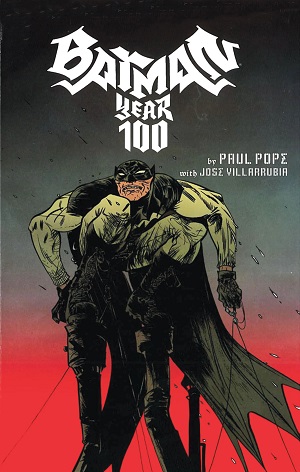
Batman: Year 100

Batman: Year 100

Batman: Year 100 begins with our hero being chased across the rooftop of an apartment building by a pack of dangerous-looking dogs while helicopters hover overhead and a police dragnet draws tighter. It’s a moment that’s effective for a couple of reasons. In the first place it throws us right into the middle of the action, which is set in the year 2039 (that’s a hundred years after Batman’s first appearance in 1939). What is Batman doing here? Did he invent a time machine? Get sucked into a dimensional vortex? Is this even the same, original Batman, now dimly remembered only as an urban legend or bogeyman? We don’t know the answers to these questions and indeed we never find out. It’s all just a given, and I think the comic is stronger for not trying to explain any of it.

The second reason I like this way of starting out is that it sets the tone for much of what follows. Batman is constantly being chased in this series, a wanted man in a dystopic future police state. The federal police (“wolves”) are the usual jackbooted thugs, but they’re only the foot soldiers of an oppressive surveillance apparatus that puts cameras in eyeballs and even includes the use of mind-reading telepaths. It’s all Batman can do to stay one jump ahead of these guys, and when they do catch up he really takes a beating.

One reason he suffers so much damage is that he’s not encased in his usual body armour. Instead, his costume looks like a lumpy pair of sweats. Paul Pope even deliberately made the sleeves too short so that his wrists poke out of the gap between the cuffs and his gloves, giving “a sense of his concealed human vulnerability.” This isn’t the mecha-Batman of Justice Buster or the more conventional massively-muscled All-American Batman. He looks more like a guy in burlap pyjamas, and I loved it.

In fact I loved almost everything about this comic. I’m constantly being impressed at how writers and artists can continue to make something not only new out of this old warhorse of a character but something really good. The story here is first-rate, with a really neat plot twist I wasn’t expecting, and while I’m not personally fond of Pope’s style of drawing I did get used to it and thought it made for an interesting complement to the violence the characters endure. Faces seemed slapped together out of clay, especially with regard to mouths, and when the beatings come they look like they’re being slapped apart again. There’s also a lot of room for ambiguity, beginning with the cover of the trade paperback which I had to look at for a long time to figure out. I think I finally got it, but there I felt like they should have gone with something different.

This collection of the full four-part series runs without breaks, which were so seamless I couldn’t identify them. Also included is Pope’s “The Berlin Batman,” which re-imagines Batman as a crime fighter in Weimar Germany. Batman in this story is the alter ego of “Baruch Wayne,” a wealthy socialite. I wasn’t blown away by this story, but it makes for a nice extra.

So there you have it. Off the top of my head I’d rank it only behind classics like Frank Miller’s The Dark Knight Returns and Loeb and Sale’s The Long Halloween in the running for my favourite Batman storyline. Maybe every ten years you can count on something this good coming out.

Graphicalex

Bookmarked! #76: Bookstores No More XI: The Book Cellar

This store wasn’t actually located in a cellar. I think they just liked the pun. It operated at street level, across from the fashionable Four Seasons Hotel in Yorkville (as the bookmark here proudly points out). Perhaps because of its convenient location it was apparently known as the book store to the stars because people like Elizabeth Taylor, Mick Jagger, and Madonna were seen shopping there. I believe it closed its doors in 1997.

Book: The New Princeton Encyclopedia of Poetry and Poetics (ed. Alex Preminger and T. V. F. Brogan

Bookmarked Bookmarks