Dangerous Dining with Alex #2

Healthy Choice Gourmet Steamers — Sweet Sesame Chicken

Overview: I like it when people ask what I had for dinner and I can tell them “sweet sesame chicken with rice, vegetables, and sweet and spicy sesame sauce.” Of course, if they know me they immediately say “that sounds like a prepared meal.”

Label: A healthy choice indeed! And for once the label gives you the all the nutritional facts up front with no need to do complicated calculations. Because really: it’s all in the bowl. You aren’t eating half of one of these. So here goes: 330 calories, 5 g of fat (no trans fat), and 330 g of sodium (only 14% of my daily recommended intake!). I could eat five or six of these things and still be coming in at numbers lower than a frozen pizza. Cancel my doctor’s appointment!

Review: Actually, it’s not hard for one of these individual meal packages to come in at a less-than-deadly nutritional rating. That’s because there’s really not very much to them.

The Gourmet Steamers give you slightly larger servings than the usual run of TV dinner, but just one of them isn’t going to fill you up. Even so, I very rarely eat more than one at a time so I get to feel healthy for a whole day.

This particular edition of the GS line is tasty and, as long as you’re not too hungry, satisfying. Though there’s no denying the unfortunate effect microwaving has on the texture of your food, and especially ingedients that are supposed to be a bit crispy, like the snow peas and carrots here. Once you mix it all together it’s just mush. The chicken pieces have the exact same mouth feel as everything else. But the spicy sesame sauce is nice and the different ingredients go well together.

Price: $2.99 on sale. A very good deal.

Score: 7.5 / 10

Dangerous Dining

Dangerous Dining with Alex #1

McCain Thin Crust Canadian Pizza

Overview: What makes a “Canadian” pizza Canadian? The bacon? It’s an industry-wide label so it must have an origin story somewhere. The box here says “Canadian cheddar” so maybe that’s it.

Label: “Made with simple and wholesome ingredients, our pizzas are so delicious they come back with a money-back taste guarantee.” I went online and checked this out. Seems legit, but you have to have kept your original receipt.

The nutrition label gives information for 1/5 of a pizza. What use is that? Who cuts a pizza into five slices? Is it possible to cut a pizza into five slices? Anyway, when I eat a frozen pizza I eat the whole thing. What this added up to then is 1,250 calories. I got 120% of my daily fat (55 g), including 22.5 g of saturated fat and 1.5 g of trans fat. Trans fat is not illegal in Canada. Perhaps this is what makes it a Canadian pizza. I also got 135% of my daily sodium (3,200 mg). They don’t call frozen pizza a heart attack in a box for nothing.

Review: I only eat thin crust pizza, whether it’s home or delivery. Otherwise I just end up throwing away half the crust. And don’t get me started on that “stuffed-crust” business. That looks disgusting, and I have a pretty high threshold when it comes to eating disgusting food.

But a thin crust is supposed to be light and crispy. The crust here is heavy, dry and hard. It isn’t crispy at all but has the texture of baked cardboard. And despite all the sodium and other badness I found the whole thing to be almost tasteless. In particular there’s no zip to the “Canadian” cheddar. Maybe it’s the blandness that makes it Canadian!

The Italian sausage pellets don’t even look appetizing in the picture they have on the front of the box. What they look like is shiny rabbit turds. In my mouth they felt like little pencil erasers.

Price: $3.99. I picked it up on sale. That’s a cheap meal.

Score: 4.5 / 10

Dangerous Dining

Doing it to ourselves

He seems like a nice enough guy.

He seems like a nice enough guy.

The problem isn’t a new one. It’s been sixteen years since Scott McNealy, co-founder of Sun Microsystems, famously opined “You have zero privacy anyway. Get over it.”

It’s also not an obscure bit of news. The revelations by Edward Snowden about the extent of government surveillance made headlines, at least once they finally broke through the political barriers (there was some initial reluctance to run with the story, especially in the American media).

So the war on privacy is no secret. Nor is the identity of who is behind it: an alliance of big business and big government. Their goal is also openly acknowledged: profit and control. In the digital age information is an asset, identity a commodity.

The more troubling question is why this has been happening, given all of the warnings, and all of the reports of the immense personal costs involved. We may forget, for example, that in the United States a woman’s right to an abortion was located by the Supreme Court in the right to privacy in the landmark Roe v. Wade decision. And the disastrous results of exposing ourselves on Twitter and social media have been recently documented by many commentators, including Jon Ronson, who recently looked at cases where jobs have been lost and lives destroyed by momentary lapses of judgment leading to mass social shaming. At the same time, employers have taken workplace electronic surveillance to new extremes, giving rise to an entire industry described by Esther Kaplan in the most recent Harper’s, in an essay titled “The Spy Who Fired Me.” And it seems there’s no end to the invasiveness, as a report from CBC News (I at first thought it must have been satire from The Onion) indicates:

Workers at a new high-technology office building in central Stockholm are doing away with their old ID cards on lanyards, and can now open doors with the swipe of a hand — thanks to a microchip implanted in the body.

The radio-frequency identification? (RFID) chips are about 12 mm long and injected with a syringe.

“It’s an identification tool that can communicate with objects around you,” said Patrick Mesterton, CEO of the building, Epicenter Office.

“You can open doors using your chip. You can do secure printing from our printers with the chip, but you can also communicate with your mobile phone, by sending your business card to individuals that you meet,” he said.

Mesterton thinks some of the future uses for implanted chips will be any application that currently requires a pin code, a key or a card, such as payments.

“I think also for health-care reasons … you can sort of communicate with your doctor and you get can data on what you eat and what your physical status is,” Mesterton said.

“You have your own identification code and you’re sending that to something else which you have to grant access to. So there’s no one else that can sort of follow you on your ID, so to say. It’s you who decides who gets access to that ID,” he said.

The implant program is voluntary for the workers in the office complex.

“It felt pretty scary, but at the same time it felt very modern, very 2015,” said Lin Kowalska shortly after she had a microchip implanted in her hand.

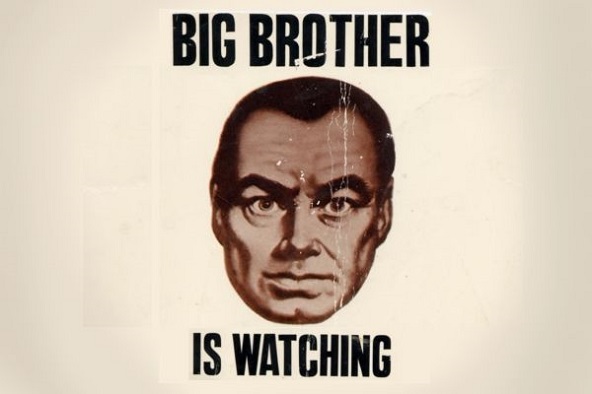
Yes, it’s voluntary. Any resistance to Big Brother is made all the harder by the most sinister aspect of this erosion of the private sphere: we’ve done this to ourselves. A piece by Andrew Couts in Digital Trends explains the real problem:

Nearly 1 billion people around the world have signed up to divulge endless details about their lives on Facebook, which has in turn used our willingness and need to share ourselves into a multi-billion dollar business. The same goes for Google, Amazon, Twitter, Pinterest, Foursqure, and countless other companies that trade the ability to connect for our personal data.

Yet, despite the growth of these services, an opposing undercurrent still flows through a segment of the population. Anytime Congress or corporations make a grab for our data, “privacy advocates,” that dying breed, cry out “Injustice!” for the rest of us. They warn us of the dangers of allowing such information sharing. “Do you really want the corporations and the government reading your emails and text messages?” they ask in a grave, incredulous tone. Based on the relative quietness of our public outrage, the collective answer seems to be, “Sure, why not?”

McNealy said privacy was dead 12 years ago, and things have only gotten worse. This isn’t just troubling, it’s downright weird. Why do we freely handed over the details of our lives? Is privacy really that invaluable?

…

Regardless of which came first — Facebook’s desire for greater openness, or ours — it is clear that we have given the social network, and all other companies and governments that benefit from voluntary personal information sharing, exactly what they want without putting up a fight. The death of privacy as a common value is our own fault. We allowed it to die, and continue to expedite the smothering by making it appear as though anyone who wants to maintain pre-Facebook levels of privacy has something to hide. Privacy is no longer an ideal, it’s a dirty word.

In other words, we have come to love Big Brother. But why? In an essay I wrote for Canadian Notes & Queries several years ago I found myself asking the same question with regard to why we were so eager to toss so much of our cultural infrastructure onto a digital bonfire. The resulting “culture crash” was widely predicted (indeed its effect were already being felt), but the warnings were just as widely ignored.

The answer I came up with then was that it was part of the larger culture of narcissism. As we have become less politically active and involved we have retreated into a smaller circle of self, a process predicted by Alexis de Tocqueville and analysed by Robert Putnam (in Bowling Alone). As Colin Robinson, writing in the London Review of Books, put it a few years back: “In an increasingly self-centered society a premium is placed on being heard rather than listening, being seen rather than watching, and being read rather than reading.” When posting status updates on Facebook trumps looking at porn, and studies have shown this is now the case, then you know some kind of threshold has been passed.

It’s a downward spiral. As we’ve become less connected to others we’ve begun to fear them more. We crave security, though not from any of the people collecting all this information. Ten or perhaps twenty years ago anyone suggesting a national DNA registry would have been met with incredulity or even outrage. Now I know a lot of people who support the idea. In the face of such an abject and willing surrender of one’s personal identity to the powers-that-be (both corporate and governmental), what hope is there of mounting popular opposition to such invasive data collection? Humanity is being reduced, and it seems we’re good with that.

Just don’t kid yourself into thinking there’s any way back to the garden.

The blinding backlash

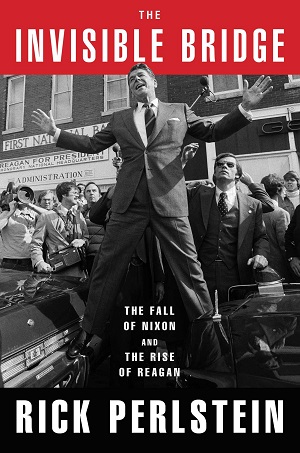
theinvisiblebridgeAdded my review of Rick Perlstein’s The Invisible Bridge over at Good Reports. This is a must-read for political junkies, offering a thorough and insightful interpretation of the ’70s. (For another book on the same subject written by a kindred spirit I recommend Dominic Sandbrook’s Mad as Hell. For a more academic analysis, James T. Patterson’s Restless Giant. Or, if your tastes are more right-wing, David Frum’s How We Got Here.) Perlstein’s book is quite long and detailed, but manages to forcefully argue a single thesis: that in these years Reagan turned America away from self-criticism toward simple optimism and feel-good nationalism. It describes, in other words, yet another example of the deep and abiding anti-rationality that seems to be inherent in most societies. We should stop being surprised by this. As Perlstein remarks at one point near the end of his survey:

Liberals tend to get into the biggest political trouble when they presume that a reform is an inevitable concomitant of progress. This is when they are most unprepared for the blinding backlash that invariably ensues.

Blinding and blind. “Progress” is neither natural nor ineluctable. We can, and do, go into reverse.


Ignoring the obvious

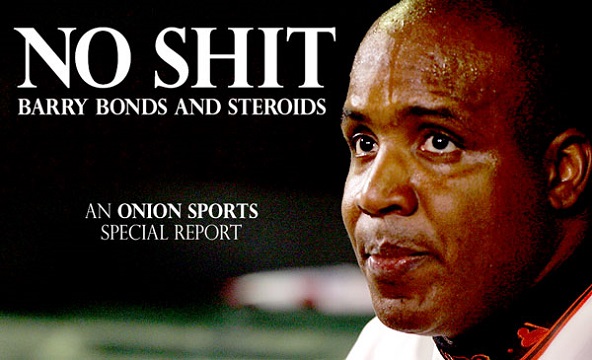
'Nuff said. (The Onion)

‘Nuff said. (The Onion)

In a recent comeback fight in the UFC, Anderson “Spider” Silva, considered by many to be one of the greatest MMA fighters of all time, tested positive for performance enhancing drugs. The news has been met with expressions of shock. Silva himself has denied any doping. And maybe, just perhaps . . . But when are we going to stop being surprised by stories like this? Barry Bonds, Lance Armstrong . . . and these are only to name a couple of titans. Rumours have circulated for years about other major figures, even in sports like golf. But of course little has been proven. The reason for this is simple. Aside from the fact that people don’t really want to know (hey, some people insist that professional wrestling is “real to them”), doping is almost impossible to prove. Testing is expensive and easy to beat. The legal process is even more expensive, ultimately less conclusive, and interminable (the long-drawn out Roger Clemens story being one example). Armstrong often roared that he was “the most tested man in sports,” which was probably true. And he was doping all the time. It’s common knowledge that you have to screw up or be really stupid to get caught, which is why Armstrong could lie about it so loudly and for so long. Or why UFC president Dana White could berate journalists only a year ago for suggesting that any of the organization’s fighters were juicing. From Kevin Iole’s report:

Nearly two dozen reporters sat silently around a long conference table as Dana White challenged them. Give me a name of any fighter you think is on steroids, the UFC president spat, and I’ll have them drug tested today.

He held his flip phone open in the palm of his hand, ready to dial.

No one said a word as White shot hard glances at the reporters staring at him.

Give me a name, he demanded, and I’ll test them today, or don’t ever say it to me again. He was yelling, his face reddened, the fury evident. He sounded more like he was looking for a fight than trying to promote one.

“Give me one [expletive] name right now, I’ll get them on the phone, and somebody will drive to their [expletive] house today and will test them,” White said. “Say it. Say it.”

After pausing for a second to silence, he resumed.

“Then don’t ever [expletive] say it to me again,” he said, defiantly. “You guys like to play these [expletive] games. Let’s do it. I’m ready. I’m down. Let’s do this right now. Give me one name. Give me 10 names. Give me all the names you want; I’ll test all these [expletives] right now.”

The reporters remained silent. It’s not a reporter’s job to make news; it’s to report the news. But White was gunning for a fight.

He raved on, often shouting loudly, as he defended his fighters against claims their ranks are full of performance-enhancing drug users and his company against allegations that it turns a blind eye to their usage.

The best defence is a good offence, as they say. Given this state of affairs, it’s only reasonable to be sceptical. As a general guide, here are the big three tip-offs that someone is doping:

(1) The eye test: Much derided as unscientific, in fact it’s a pretty good diagnostic. You know what an impossible physique looks like. Just think of a professional bodybuilder. Forget about good genetics, a healthy diet, or a non-stop training regimen — the usual excuses that are trotted out. That’s all smoke.

(2) The fountain of youth: Physically, an athlete is in his prime in his late 20s. Sometime after 30 you start to go into a decline that gradually picks up speed, with no reversals. Drugs can arrest this inevitable effect of aging. So when you hear about a sports star who is experiencing a career “resurgence” or who is described as “ageless” and is still competing at an elite level against people ten or even twenty years younger than he is . . . that’s probably the drugs talking.

(3) Quick recovery: Has an athlete come back at spectacular speed from a gruesome/catastrophic/(supposedly) career-ending injury? Have they come back even stronger? No doubt that’s all due to their superstar doctors, or X-men mutant healing powers! Or maybe not. Perhaps it was the drugs. All of which is pretty obvious. But then, we only believe what we want to believe.

Dreams of dark and troubled things

lagedor4

Added my notes on Un Chien Andalou (1928) and L’Age d’Or (1930) over at Alex on Film. It’s hard not to envy Buñuel a bit. It was easier to shock the bourgeoisie back in the day. I mean, back in the day when we still had a mass bourgeoisie. Of course you can still be a radical, but the propertied classes are both more powerful and angrier than they were. Taking them on isn’t as much fun, or as safe.

How secretive is the bourgeoisie!

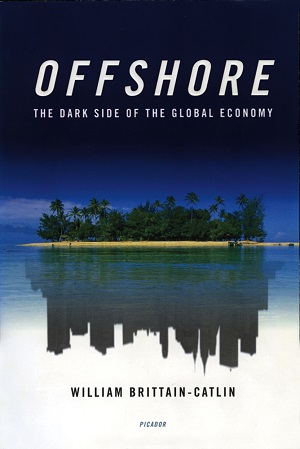
offshoreFrom William Brittain-Catlin’s Offshore:

Yet no one was more adept at preserving himself in modernity than the bourgeois. Like the criminal, he would go undercover, but his cover was the interior of his home. He would escape into his private dwelling, where secrecy would become a fetish against the outside world. The bourgeois would cover up his traces in the interior as he would no doubt cover up the traces of his expropriation scams during the Hausmannization of Paris, with the proceeds and evidence of his criminality kept out of sight of the authorities. “To live in these interiors was to have woven a dense fabric about oneself,” wrote Benjamin: as the crowd was a veil for the criminal, so the interior became a veil for the bourgeois.

The criminal and the bourgeois both hid undercover from modernity, obliterating their traces and protecting their freedom. The criminal hid his traces from the police — undercover, underground. In the bourgeois interior, objects and ornaments were covered in plush and velvet, sealing away what was under them. The bourgeois preserved his freedom with covers and boxes; his home became a shell, his possessions and wealth “removed from the profane eyes of non-owners.” The bourgeois would seek refuge in his library, his art, in his assets, which were the sacred objects of his ideal, free identity.

That the bourgeois continues to preserve his traces in a shell is evident to this day in the private banking and asset management schemes that run through the global offshore financial system, where wealth is protected against its uncovering through mechanisms that completely remove the identity or trace of ownership. The offshore system, built for the bourgeois by a network of other bourgeois — lawyers and accountants — also provides cover for the proceeds of organized crime and white-collar financial crime, money launderers, and corrupt presidents who have stripped their countries bare of assets, proving Benjamin’s point that “a career criminal is a career like any other.” The offshore system today it to corporate, private, and criminal wealth what the nineteenth-century interior was to the bourgeois and what the crowd was to the criminal: a cover behind which to hide their traces from modernity, where the criminal is masked as a bourgeois and the bourgeois unmasked as a criminal.

Or, as the great chronicler of the bourgeoisie had it: The secret of great fortunes without apparent cause is a crime forgotten, because it was properly done.

What we talk about when we talk about conflict of interest

Why is the concept of conflict of interest so hard to understand? True, like any misdemeanour that has certain penalties attached to it, there is some room for debate when assessing culpability. But the thing is, we know it when we see it. And it’s precisely because we know it when we see it that we can say when it exists.

I say “exists” because conflict of interest is not a specific action or event. It doesn’t “occur.” One doesn’t have to actually do anything at all. Conflict of interest is a state of being. You are in a position where there is a conflict of interest or you are not.

This makes all the confusion over Amanda Lang’s “potential” conflict(s) of interest very strange. In brief, Lang, who is the chief financial correspondent for CBC news, has been hauled onto the carpet for supposedly trying to kill a story critical of the Royal Bank of Canada. Lang has accepted paid speaking engagements from the Royal Bank, went on to write an op-ed piece for the Globe and Mail on the subject (taking the bank’s side), and was in a relationship with an officer of the bank at the time.

A position of conflict? Of course. Writing in Britain’s Guardian newspaper, columnist George Monbiot even expressed amazement that “she remains employed by CBC, which has so far done nothing but bluster and berate its critics.”

This is probably a reference to a note from Jennifer McGuire, CBC’s general manager, seeking to “set the record straight.” If that was McGuire’s intention then she failed entirely. As did Lang herself, who had a remarkably tone-deaf piece in yesterday’s Globe and Mail.

Lang writes that “it is painful to me that public perceptions of my integrity may have been compromised because I have been accused of acting improperly by allowing myself to be seen to have been in a conflict of interest.” This is a mind-wrenching circumlocution. Apparently her crime was not that of being in a conflict of interest. Instead, her improper action was to allow herself to be seen in such a conflict. Is Lang saying it’s only a crime if you get caught?

This may sound like nit-picking, but one suspects this is a piece that went through many, many drafts, every word of which was carefully parsed before submitting it for publication.

Nevertheless, Lang may have twisted herself into the truth, which is that in cases of conflict of interest, perception is everything. What I think confuses the matter is the use of terminology like “apparent,” “perceived,” and “potential” conflict of interest. These words shouldn’t apply. As I began by pointing out, conflict of interest isn’t an act, it’s a position one finds oneself in. And it is all a matter of perception: perceived conflict of interest (by an objective observer) is conflict of interest. When Lang responds to “exact allegations” of improper behaviour she’s changing the subject.

Lang goes on to say: “It did not occur to me that others would question my motivation. That they would raise doubts about my integrity. That they would believe my perspective on this story was affected, for example, either by a relationship or by the fact that I have spoken for pay at events organized by business groups and companies.”

So what? That Lang thought (and apparently still thinks) there was nothing wrong with what she was doing only tells us that she possesses a typically Canadian attitude about what it means to hold a position of power within any group or establishment (media, financial, or both, as the case may be): that it entitles you to do whatever you want without being questioned or criticized.

Those who say I acted improperly seem not to care that they, in effect, are alleging deeply unethical behaviour, or worse. I’m not sure how to convince people that my principles, integrity and career are fundamentally important to me, that I have no trouble understanding right from wrong and reporting honestly and independently. Unfortunately, it appears that I can assert that as long as I wish and still not overcome suspicions that originate from unshakeable and, in my view, utterly unwarranted presumptions of venal behaviour.

But the problem is not an allegation of any unethical behaviour. You certainly can question that in the present case, but it’s not necessary to do so. The problem is simply being in the position of a conflict of interest, not exercising that position in any unethical way. And the reason for having such a hard rule is simple: because in most cases proving any wrongdoing or quid pro quo is impossible. The accused can then simply respond with a blank denial and that’s the end of it.

As Monbiot registers, it’s easy to be cynical about the “impartial media” having become “mouthpieces for the elite.” And the fact that in Lang’s case this is happening with regard to public broadcasting makes it even worse. The public has, with some justification, little faith in the news media in general, but Caesar’s wife (the CBC) must be above suspicion. What makes the Lang story remarkable, at least to my eyes, is the obliviousness on the part of the CBC and Lang to there being anything wrong with what happened. As I’ve suggested, they may simply be taking for granted the culturally ingrained deference toward authority in this country: that our betters know better than we do what’s right and wrong. Or perhaps they’re taking the matter to the next level with a sort of “everybody does it because that’s the way the system operates” argument. Which may be true as well, but doesn’t help build trust.

Update, January 23 2015:

Media critic John Doyle, writing in the Globe and Mail, has this to say: “It’s always bracing when outsiders look at Canada, its cronyism and system of privilege. Monbiot is correct – it is grotesque. ”

Update, March 6 2015:

An internal review by the CBC has found that Lang’s reporting “met CBC’s journalistic standards.” The review did however find problems with the CBC’s conflict of interest policies, concluding that they were too open to interpretation. “Going forward, CBC News will ensure that all of our staff adhere to the most rigorous interpretation of this standard.” This sounds good, but I’m curious as to what this rigorous interpretation will be.

Update, August 27, 2016:

The issue reared its head again during the 2016 U.S. presidential campaign.