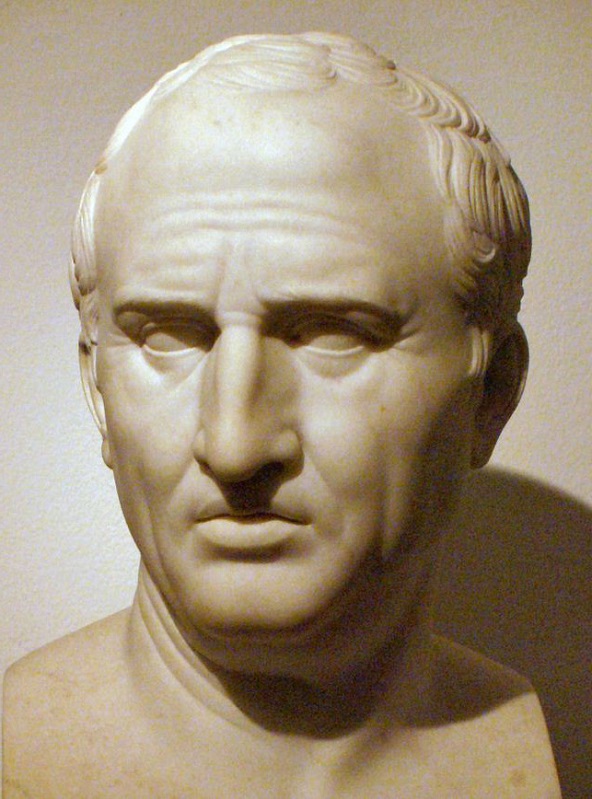
“Waive the laws of history.” Cicero
Long-time readers of this site will know I have a pet peeve about celebrity bios, and the way people who enjoy wealth, power, and fame use them to carefully fashion their image and brand. See, for example, the posts here and here. I also had a post a while back mentioning how old a story this is, and how Michelangelo, upset at the (worshipful, not to mention truthful) account of his life written by Vasari, got one of his students to write a more flattering, inaccurate portrait.
But the great tradition of phoney, fawning biography goes back further than this. I recently came across this little gem while reading Anthony Everitt’s Cicero:
Aware that his public image needed burnishing but sensing the public would not welcome any more self-praise from his own pen, Cicero tried to interest a respected historian, Lucius Lucceius, in writing a history of his Consulship, exile and return, the main purpose of which would be to expose the “perfidy, artifice and betrayal of which many were guilty towards me.” He was candid about his expectations, and asked Lucceius to write more enthusiastically than perhaps he felt. “Waive the laws of history for once. Do not scorn personal bias, if it urge you strongly in favour.” Lucceius agreed, although for some reason the books seems never to have appeared.
Maybe it just wasn’t any good, much like Cicero’s own self-indulgent epic poetry. And for that we may be thankful.
What brought this to mind again was the publication this past month of a couple of instant bestsellers written by two of the most prominent biographers working today: Elon Musk by Walter Isaacson and Going Infinite: The Rise and Fall of a New Tycoon (on Sam Bankman-Fried) by Michael Lewis. I haven’t read either book, but reviews have called out both authors for an overly deferential attitude taken toward their subjects, accompanied by a shrug at their various “demons” (the handmaid of “genius”) and other failings.
I would have thought that the mere fact of the special access they were given in writing “authorized” bios would have been enough to set off all kinds of alarms. In her New York Times review of Going Infinite, Jennifer Szalai criticizes Lewis for being “stubbornly credulous” and for having “a front-row seat — from which he could apparently see nothing.” This is, just to repeat the point I’ve been banging on in all these posts, to mistake the reason why someone is given access, or “a front-row seat,” in the first place. It’s precisely so the author won’t see anything, or at least want to talk about it.
Making matters even more embarrassing, Isaacson and Lewis were going into print when their subjects were on the verge of imploding, leading some to question the divine status of figures like Musk and Friedman as masters of the universe.
What can I do but keep repeating myself? So I will: “if you’re reading the bio of a living celeb (meaning one who still has the ability to have any influence over what someone is writing about them) you have to assume that it’s going to be, at best, only the loosest facsimile of the truth. It has always been thus.” Remember: if you’re not reading something that the subject of the biography didn’t want written, it’s just an ad.
 Alex Good
And you can’t even trust that them dying will help. Their family will continue the game. I found that out the hard way with the Jim Henson biography 😦
So I am in full agreement with you…
LikeLiked by 1 person
Yeah, if there’s an estate and a cult then you also have to be on alert. Ayn Rand is a good example. Apparently if you want access to any of her papers they have to preapprove anything you write. Some literary heirs also really try to control their parent’s image. People just have to be aware of what’s going on whenever they’re reading an official or authorized biography or one where the author got special access.
LikeLiked by 2 people
I didn’t know that about Rand, but it doesn’t surprise me one bit. After reading Atlas Shrugged, I was done with her philosophy AND her writing.
LikeLiked by 1 person
I can’t remember ever reading a celebrity bio, (apart from post mortem Monroe back in the day) so I’ll keep not doing that.
LikeLiked by 1 person
The official ones are trash. Even extending the meaning of celebrity to politicians and business tycoons, etc.
LikeLiked by 2 people
Yeah, not my thing, though I enjoyed some rock n roll autobiographies.
LikeLiked by 1 person
I don’t recognise the picture at the top, but is this the same guy?
LikeLike
Great x42 grandson I believe.
LikeLike